← NPR's Book of the Day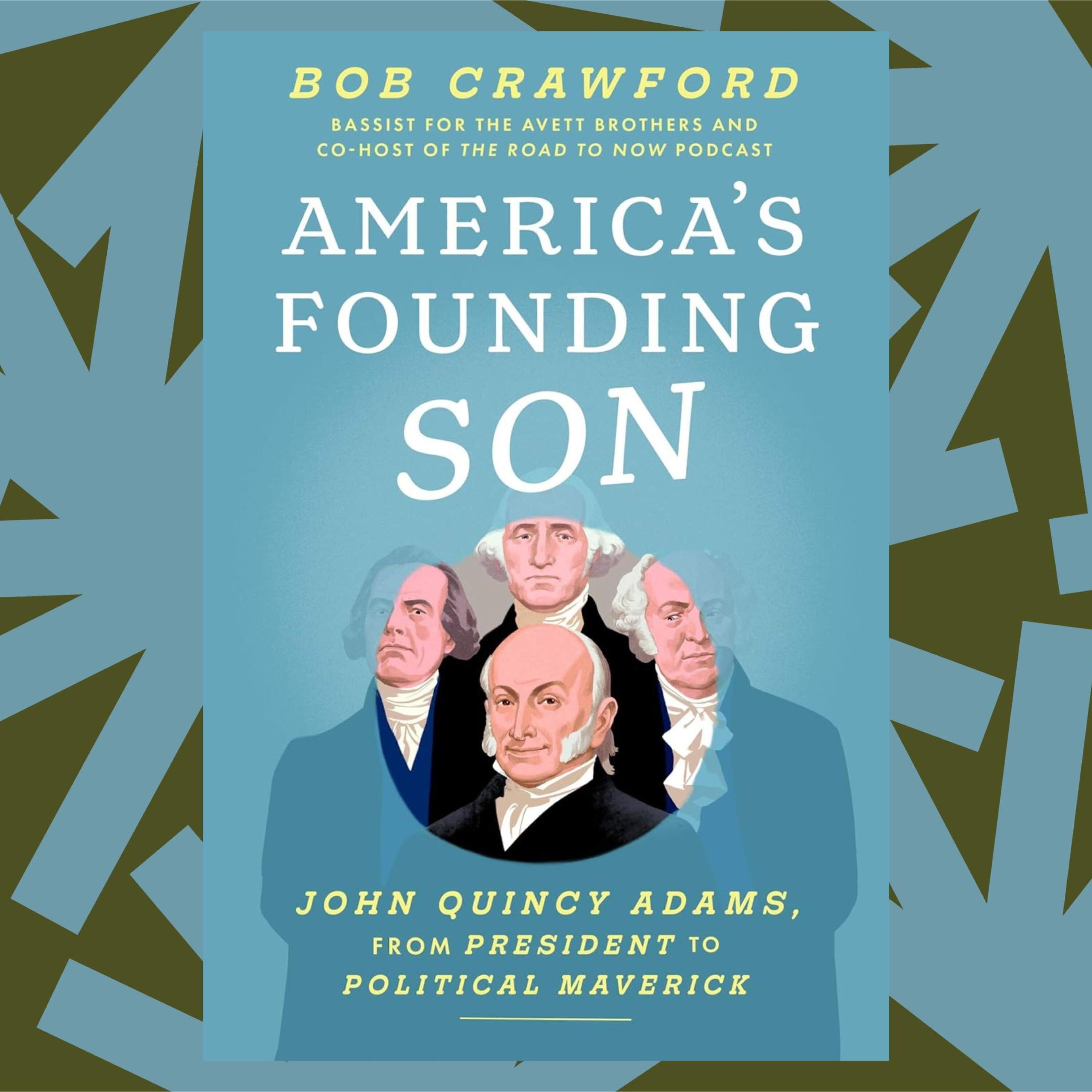
NPR's Book of the Day
'America's Founding Son' documents John Quincy Adams' influential post-presidency
00:07:51
Loading summary
Transcript30 lines
- [00:02]
A
Hi, I'm Alyssa Nadworny, and this is NPR's book of the Day as we continue to celebrate the 250th birthday of the US this week, all week on the NPR bookspot, we are revisiting some author interviews on important topics that speak to U.S. history. Today we have a musician turned author, Bob Crawford of the Avett Brothers, talking about his book America's Founding Son, John Quincy Adams. From president to political maverick, here's NPR's Layla Fadel introducing the interview he did with Steve Inskeep.
- [00:34]
B
This message comes from NPR sponsor Carvana. Carvana believes selling your car should be easy. Get a real offer down to the penny picked up from your driveway. You may keep waiting for a catch. There isn't one. Sell today@carvana.com Pickup fees may apply.
- [00:51]
C
This message comes from Capella University. That spark you feel, that's your drive for more. Capella University's Flexpath learning format lets you earn your degree at your pace without putting life on pause. Learn more at capella.
- [01:04]
D
Edu Bob Crawford has two careers. One is as the bassist for the Avett Brothers, a folk rock band that's had a following for more than 20 years.
- [01:15]
E
There ain't no man can't save me. There ain't no man can enslave me. Ain't no man or men that could change the shape my soul is in.
- [01:25]
D
Crawford's other career is history. He's been researching and writing a book in between concerts.
- [01:31]
F
I came about this work in the quiet hours of driving eight, nine hours a day, filling the time up with reading American history.
- [01:40]
D
Crawford wrote a book about one of the less distinguished presidents. John Quincy Adams was defeated for reelection, just as his father, President John Adams, had been a generation earlier. But Quincy Adams post presidency became something more. He returned to Washington as a member of Congress, and he spent his days tormenting the supporters of slavery. Steve Inskeep spoke to Bob Crawford about his book, America's Founding son, John Quincy Adams. From President to political maverick.
- [02:09]
G
What was Adams place in American life in that moment? As he was leaving office in 1829,
- [02:17]
F
he was swept out of office by a populist wave that was led by a guy named Andrew Jackson. They elected a war hero, a common man for the common man who they thought was Andrew Jackson. So John Quincy Adams, he is the epitome of the establishment, son of a president. He had an incredible career as a diplomat, and so he was a Washington insider who got swept out with the tide of a populist wave.
- [02:46]
G
Why in the aftermath of that defeat, would a former president run for Congress?
- [02:52]
F
He was raised to serve this country. His parents sacrificed so much to establish this country, and it was up to his generation to preserve it. And there was some ego, I'm sure, and maybe a little wanting to settle some scores. So I think all of the above.
- [03:09]
G
How did he come to present anti slavery petitions in Congress?
- [03:14]
F
So back in this day, we didn't reach out to our politicians by going on their website and filling out a form to petition the government for a redress of grievances. You literally sent a petition to your congressman, and congressman would literally read a petition from a Mr. Inskeep in my district. But they also came in from abolitionists. And so while Adams didn't agree with the abolitionists and their tactics, he nonetheless felt it was his job to, as a congressman, to read their petitions and have their voices heard.
- [03:50]
G
Maybe you should explain why he would not agree with abolitionists when most of us would obviously agree with them today.
- [03:57]
F
Right. They were radicals. They were a minority group, mostly in the north, of a religious bent. Right. They were the radical Christians. You know, this is 1831. By 1835, these things are arriving at the Capitol by the wagon load to the point where Southern congressmen begin to get unnerved by them. To raise the issue of slavery was to disrupt the status quo, and this could cause a civil war.
- [04:27]
G
Okay, so Adams did not agree with slavery, but accepted that it existed in some states, that it was constitutionally protected, that it'd be dangerous to. To be an activist against. And yet he decided it was his duty to read these anti slavery petitions. What was the response?
- [04:42]
F
They want to shut them up. They want to stop them. Because what happens here in these years is you have the Nat Turner uprising, you have these, like, uprisings of slaves in the South. And so they feel like the noise being made by the abolitionists and very few people in Congress is being heard and filtered down to the south, and it's creating instability in the slave regime. And so they passed this rule in 1836 called the gag rule, which essentially says, these petitions arrive, they're immediately tabled, which means they don't exist. And in some ways, it was an anti John Quincy Adams rule, because by this point, he kind of becomes the leader of the offering of these petitions. But now you're not talking about abolition. You're talking about the First Amendment. You're talking about the right to petition the government, which is protected. And so he becomes a defender of the abolitionists, not necessarily on the grounds of Abolition, but on the grounds of free speech.
- [05:46]
G
So they passed this gag rule that just says no one can talk about slavery in the House of Representatives.
- [05:52]
F
Essentially, yes.
- [05:53]
G
How did John Quincy Adams respond to that?
- [05:55]
F
He lost his mind. He began to devise these ways. See, the thing about Adams is when he went into Congress and he memorized all the rules like he's a former president, he's a lifelong diplomat. He took the gig seriously. So he knows all the parliamentary maneuvers and he begins to use these things as ways to talk about slavery. He would like provoke them. Like he would offer a petition that may or may not have been real. At one point he offers this petition and it's from a group of enslaved people. And the whole body like loses their mind. Like Southerners are like, can we burn it? Just burn it on the floor. And then he goes on and says, but this petition, you didn't let me read on it says that they want to continue slavery. Like, so he would do all these things.
- [06:45]
G
He was trolling them.
- [06:47]
F
He would troll them and then they would try to censure him. And he'd be like, well, if you're going to censure me, I need to be able to defend myself. And he would take weeks defending himself and then they would give up.
- [06:58]
G
Did the pro slavery members of Congress ultimately provoke more conversation about slavery and more attention to slavery by trying to censor that discussion?
- [07:08]
F
Absolutely. You can't snuff out an idea. The attempt to snuff it out becomes the story. He says, I can do more good for this movement arguing about freedom of speech. But then Steve, he represents. There's a slave ship that is mutinied off the coast of Long Island. It's called the Amistad. Steven Spielberg made a movie about it. The case rises all the way to the Supreme Court. And the leaders of the abolitionist movement ask John Quincy Adams to defend these captives before the Supreme Court. And he does and he wins. And it's at that moment that I believe all the hurt and the bitterness of being a one term president. He is finally appreciated by his fellow Americans. That is when he becomes elevated to kind of an American hero.
- [07:58]
G
It seems that he was comfortable being hated by large numbers of people.
- [08:02]
F
He had no problem with that. He hated large numbers of people.
- [08:09]
D
That was Bob Crawford talking to our co host, Stevenski. Crawford is the author of America's Founding Son, John Quincy Adams. From President to Political Maverick.
- [08:23]
C
This message comes from Rosetta Stone and their newest language learning experience, Rosetta Stone Sapphire Personalized learning. So you can focus on what matters most to you. Practice real life conversations in an interactive setting before you use your skills in the real world. Take your language skills to the next level. Get unlimited access to all 25 Rosetta Stone languages, plus all the new Sapphire learning tools. Visit RosettaStone.com NPR and receive 20% off today. This message comes from BetterHelp, whose survey found that while 85% of Americans believe getting mental health support is wise, 74% say society discourages it. Don't let stigma stand in the way. Visit betterhelp. Com NPR As America marks 250 years, remember, we the people make a free press possible. Together, we hold the powerful to account with reporting for the public, funded by the public at +npr.org.