← NPR's Book of the Day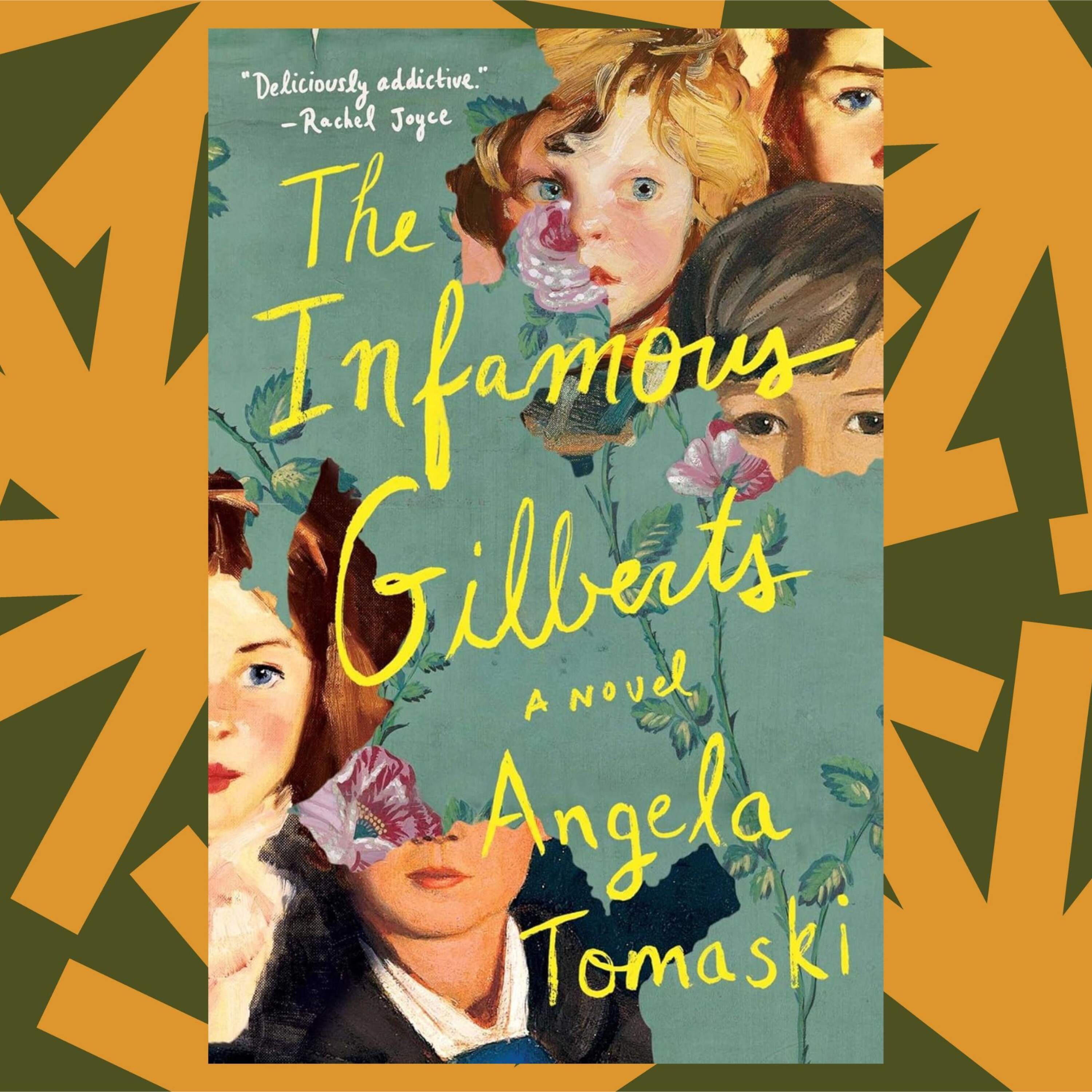
NPR's Book of the Day
Angela Tomaski’s debut novel takes readers on a tour of an English manor in decline
00:08:43
Loading summary
Transcript32 lines
- [00:02]
A
Hey, it's NPR's Book of the Day. I'm Andrew Limbong. A home isn't just four walls, a roof and a place to hang your hat. It's a symbol. It holds the meaning of all your successes and failures. Or at least it can if your home is the center of a literary fiction novel about a crumbling family dynasty adrift without its patriarch. Angela Tomaski is on the pod today talking about her debut novel, the infamous Gilbert's. It's about an old English mansion on the precipice of being sold and the decaying objects within it. Tamaski's been living without her own father for years now. And in this interview with npr, Scott Simon, she talks about how this book was a 20 year process in sorting her feelings out and how she feels now that it's out there. That's coming up.
- [00:49]
B
This message comes from Ali offering their daily women's multivitamin to help support your immune system, heart, bone, health and more. It's that easy. Just two gummies a day. Go to o l l y.com to learn more. These statements have not been evaluated by the Food and Drug Administration. This product is not intended to diagnose, treat, cure or prevent any disease.
- [01:13]
C
This message comes from Carvana Finance. And buy your next vehicle with Carvana. Shop a huge selection, customize terms to fit your budget and buy completely online. No hassle, no pressure. Get the car you love the easy way with Carvana.
- [01:28]
D
Thornwalk House is a mighty English mansion of the Winford Gilbert family that has been sold and will be turned into a hotel. So there is a last tour of the objects inside and around the decaying gothic building. The empty bed, a bump in the lawn, the shadow of the taxidermied moose head. What will become of them and the stories they tell about the people who once lived there. The Infamous Gilberts is Angela Tomasky's debut novel. She has held a variety of jobs which we will ask her about. She joins us now from the studios of the BBC in London. Thanks so much for being with us.
- [02:05]
C
Thank you so much for having me.
- [02:07]
D
And tell us please, about our tour guide, Maximus.
- [02:11]
C
Maximus takes the reader on a tour of this house and he's someone who loves the family deeply. He knows all their secrets, all their stories. So I think there's quite a bit of darkness in the story. And because of the, the love he has for them, I think it sort of balances that darkness.
- [02:28]
D
Yeah. Five children, Lydia, Hugo, Annabelle, Jeremy and Rosalind. As children, they're pretty much left to their own Devices, aren't they? Why?
- [02:38]
C
Well, there's no father, so the father is absent and the mother is unable to sort of compensate for that absence. So, yes, they are left without really the tools that they need to go forward.
- [02:51]
D
And tell us about Hugo. The eldest son comes back a changed young man from the war, doesn't he?
- [02:57]
C
He does. So he's obviously scarred by his experiences, but I think for me, the bigger issue is the fact that he has a role to fill. And because there is no father there, he has to take on, you know, far too much responsibility from an early age. And he's unable to do that. He's not equipped for me, he was a sort of thwarted hero. He wants to save people and when he's unable to do, the darkness sort of comes out.
- [03:24]
D
Are we right to see Hugo's challenges to be of a piece with the desiccated condition of Thornwalk?
- [03:32]
C
Yes. I mean, the decay of Thornwalk, it's that this idea of the disintegration, I suppose, of traditional family structures, traditional power structures. So this family is falling apart and Hugo is unable to hold it together. So, yes, he disintegrates, you know, with it. He refuses to leave it. The two sort of decay together.
- [03:55]
D
What put this house in mind for you as a vehicle by which to tell stories?
- [04:00]
C
In 2002, there's this beautiful magnificent neo Gothic mansion called Tintsfield, near Bristol. And I went on a tour of that house just after it was acquired by the National Trust. The sort of. The last owner had died there and I saw the bed in. In which the sort of reclusive last baron was said to have died. And it was such a powerful sort of scene. I remember the smell of a little tablet of coal tar, soap and a pair of slippers under the bed. And when I went back on a tour later, the bed had been removed, the soap, the slippers, everything had gone. And that vivid link to the past obviously was lost. So that was what put in mind this idea of the importance of these objects. Just that the smell of the soap and something that he had held and the things that are important to us and that do hold meaning. So I wanted to tell a story in the form of a tour, using objects like that that seem inconsequential but actually hold a lot of meaning.
- [04:59]
D
Can you tell us, without giving away too much about the burn on the library rug?
- [05:04]
C
What happens is that there's a fire. A spark lands on the rug and sets it alight. And Annabelle is having a sort of blackout and she can't see the fire. So this signals to the reader the fact that Annabel has a sort of medical condition, that she has some sort of challenges which make her vulnerable. So with the absence of the father for her, you know, she is then damaged in a way that wouldn't have happened had someone been there to sort of protect her. And I think in life, for me personally, and things I've seen in people around me, when you don't have a father there to protect you, it seems like a simple thing, but people do treat you slightly differently. You're almost like a little bit of a sitting, you know, and she was vulnerable to certain forces that wanted her to be a little bit different, to sort of normalize her.
- [05:52]
D
Do you know what it's like to grow up without a father?
- [05:55]
C
I do. Yes, I do. And this was the story that's been in me for a long time. You sort of, you know, 20 years thinking about the Gilberts and how they might tell the story. But, you know, obviously my whole life, you know, you know, since the age of nine, feeling I had something to say about this. And, yeah, all the issues that we see in the Gilberts, you know, I've experienced myself to some extent, you know, so. Yes, I know.
- [06:18]
D
Does it make it painful or cathartic or a little of both to write about in a novel?
- [06:23]
C
Cathartic, yes, absolutely. And it's strange, but it feels better not just to write it, but to be heard. For people, to be reading it, to be able to share it with people, is like a weight has been lifted somehow.
- [06:36]
D
Oh, good. Your bio says you have been, I'm going to quote now, a waitress, cleaner, English teacher and activity coordinator in a care home.
- [06:45]
C
Yes.
- [06:46]
D
What did you learn from each of those jobs that you might call on now to become a novelist?
- [06:52]
C
Just people, I suppose. Ordinary people. The care home, particularly was wonderful. Seeing people at their most vulnerable, really, and open and finding such beauty and at such precious moments. I think I never would have worked in a care home if I hadn't been sort of, you know, desperate for money. It's a difficult job for someone who's actually quite introverted, you know, leading singing sessions and things like that. It's not my normal sort of thing, but it's one of the best things I've. I've ever done. And I look back on it with. I just feel really grateful to have done it.
- [07:25]
D
Sounds like it opened a lot of human lives to you.
- [07:28]
C
Yes, and beautiful human lives. And at the time, I didn't know. I was very open to it. So I'd lived, you know, I'd been working from home for a long time, and I just needed an extra job, a little bit of extra money. But I'd been quite isolated. So I was very open to forming sort of friendships with these people, sort of forming relationships, perhaps too much, really. And it was only in a training session sort of 18 months later, they said, remember, you're not meant to be their friend. And I put up my hand and queried this because I thought you were, as an activity coordinator, meant to sort of form this sort of bond. But of course, it's a professional relationship. Of course it is, and it stands to reason. But I think they meant so much to me and I did grieve when they died, you know.
- [08:11]
D
Yeah. I'm really struck by a line toward the end of your novel where you say, narrator says we are all the ruins of castles.
- [08:22]
C
Yeah. Yeah. It's my, it's just very strange because it's my favorite line because this beautiful gothic mansion, even though it inspired the book, you know, it is really rather, it's sort of incidental. These are ordinary people with ordinary issues, you know, And I just wanted this beautiful gothic mansion as, as a sort of frame to them, to elevate them, to signal how important these people are as, as we all are. You know, all our stories are important. And that this idea that when a person dies, it's a castle that crumbles, you know, there are no unimportant people. We're all the ruins of castles once mighty. And when we have to fall, you.
- [09:00]
D
Know, Angela Tomasky's debut novel, the Infamous Gilbert. So good to have you. Thank you very much for being with us.
- [09:08]
C
Thank you. Thank you so much for having me.
- [09:21]
B
This message comes from NPR sponsor Capella University. Interested in a quality online education. Capella is accredited by the Higher Learning Commission. A different future is closer than you think with Capella University. Learn more@capella.edu. this message comes from NPR sponsor 1Password. Anyone else feel like 99% of your emails and texts are password reset codes trusted by millions of users and over 175,000 businesses? 1Password lets you skip the resets and sign in securely. With strong, unique passwords that autofill across all your devices, you can safely share logins, store cards and files. And finally, stop using your pet's name as a password. Try it free for two weeks at 1Password.com NPR this message comes from Bombas. You need better socks and slippers and underwear because you should love what you wear every day. One purchased equals one donated. Go to bombus.com NPR and use code NPR for 20% off.