Loading summary
Transcript24 lines
- [00:02]
A
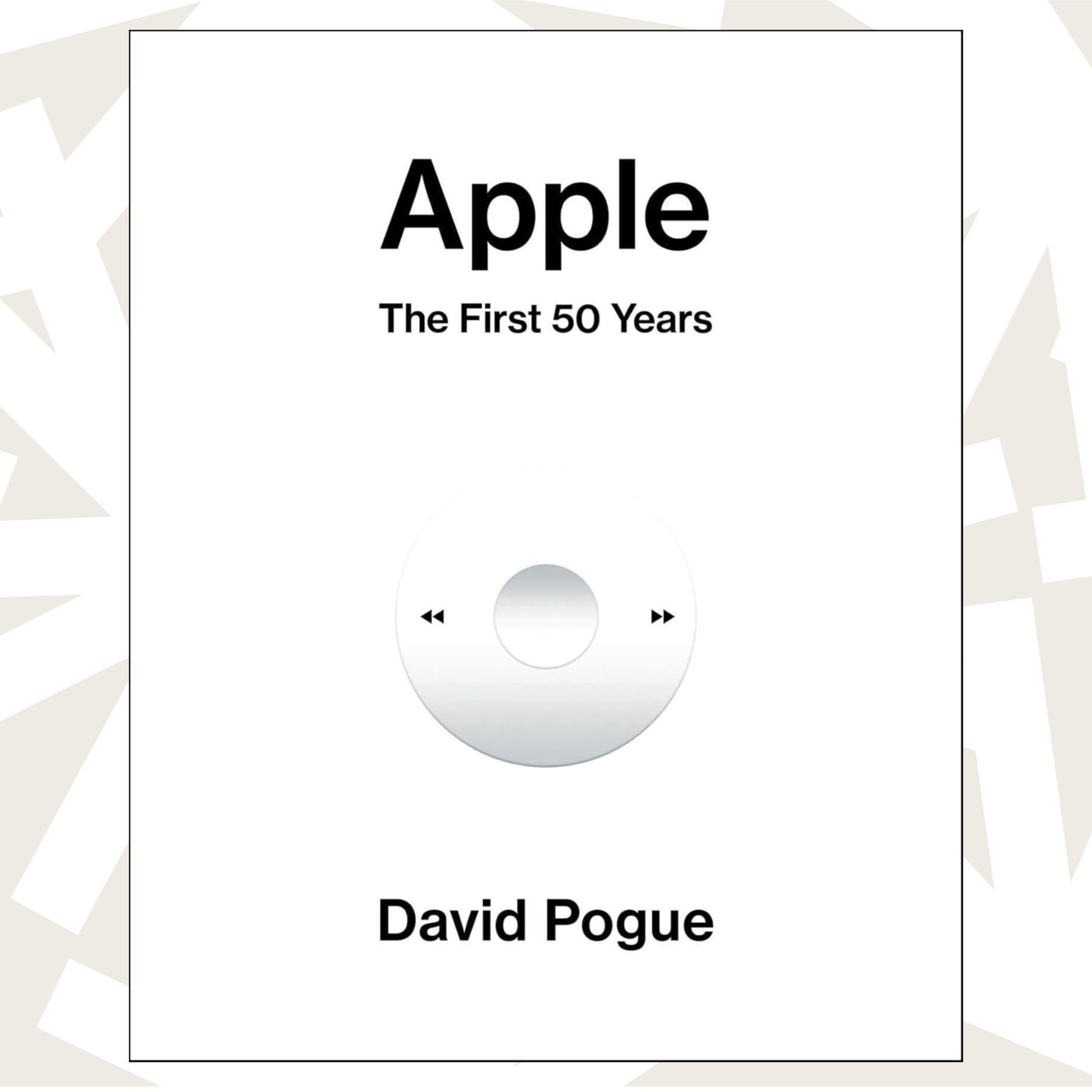
Hello, it's NPR's Book of the Day. I'm Timbi D'. Ermias. I'll never forget the first time I saw an iPhone. I'm Talking about the OG iPhone around 2007, when they were still a relative rarity. I remember how simple yet powerful it was. Everything about it was new and exciting. Now, nearly 20 years and many upgrades later, it's still one of the most popular smartphones in the world. And I think it's safe to say Apple is among the most identifiable companies in the world. The story of that company and the triumphs and tumult that made it are the subject of a new book, Apple the first 50 years. Its author, CBS News correspondent David Pogue, spoke with NPR's Michelle Martin about the book and how the company became a tech giant.
- [00:56]
B
Support for this podcast and the following message come from Wayfair. Refresh your space this spring and make your home work better for you with Wayfair. Find furniture, decor and essentials that fit your unique style and budget with outdoor furniture, patio decor and lighter bedding, installation and assembly services available. For a truly seamless experience. Head to Wayfair.com right now to shop all things home. That's W A Y F A I R.com Wayfair Every style, every home this message comes from Prolon. Feeling heavy and depleted, Prolon's five day Fasting Mimicking diet aims to make it easy to reset your body habits and energy. Developed at USC's Longevity Institute, the goal of Prolon's nutrition program is to rejuvenate you from within by working at the cellular level to support fat loss, glowing skin and Sharper Focus. Get 15% off plus a bonus gift when you subscribe at prolonlife.com NPR odds
- [01:59]
C
are you're listening to my voice at this very moment on a device made by Apple, few brands have matched its ingenuity and a reach that's both global and intimate. Apple products are not just in our offices, but in our schools, homes, pockets and our ears and the company itself, one of the most valuable in the world. But 50 years ago, it was a very different story. And as insiders remember, it was by no means assured that the company would make it to 50 years. CBS correspondent David Pogue tells this fascinating story in 600 pages of reporting, photos and interviews with 150 people who shaped the company. The book is Apple the first 50 years, and he's with us now to tell us more about it. Good morning, David. Thank you so much for joining us.
- [02:42]
D
Good morning. Thank You.
- [02:44]
C
So start with the environment in which Apple the company, was born. A lot of people know that story, but I'm guessing that some people don't.
- [02:52]
D
I mean, in the late 70s, no one had ever seen a computer, no normal person. Computers were in governments and in corporations and the military. It wasn't something for average people. And that was where this super shy, super genius nerd, Steve Wozniak, came along. He thought that computers should be for everyone. And so he made this first computer, later called the Apple one, And his plan was to give it away, to give away the design to anyone who wanted to build one. And it was his buddy Steve Jobs who said, no, no, we should sell that. What I find super interesting is that that mission of taking advanced technologies and trying to put it in everybody's hands hasn't changed in 50 years.
- [03:40]
C
I, for some reason, did not know that there was actually a third founder of Apple. Yes. But what happened?
- [03:47]
D
This is amazing. Yeah. So the two Steves, Wozniak and Jobs, thought that they should start up a little company to market their Apple one. But Steve Wozniak had a job. He loved designing calculators at hp. And they got into a big fight over whether Wozniak's work for Apple would be owned by Apple or hp. So they got this much older guy that Jobs knew, guy named Ron Wayne, who's a serial entrepreneur and an engineer, to sort of help them arbitrate this disagreement. And Jobs was so impressed, he said, you know what? Let's draw up the papers for our new company, and we'll cut you in for 10%, Ron. So, of course, had Ron Wayne held onto that share, he would now be worth many hundreds of billions of dollars. But he got cold feet. I mean, remember, Steve Jobs was scruffy, smelly, barefoot, stringy hair, didn't use deodorant. He was really a hippie. So Ron Wayne took his name off the agreement 12 days later. And, you know, I've spoken to him. He said he's made peace with it. He's never starved. And at the time, it seemed like the right decision.
- [05:02]
C
So there's a lot of lore around Steve Jobs, but is there something about that? He was sort of hard on people, and that's something that started pretty early in his tenure. But is there something about him that you would want to leave people with?
- [05:17]
D
Yeah, very much so. You know, you hear people say, no, he was super nice to me. And then you hear people say, he was brutal. He would rip us apart. And the truth is, he was all of those things. He could be different things at different times to different people. And the berating of his underlings, even that. Some people said it was just cruelty and other people told me, no, no, he inspired us that way. That's how he got better work out of us.
- [05:47]
C
It's kind of like his a Rorschach test, right? People who, in a way, they see what they want to see. He also had a deep value system. He really believed that, you know, the product should do good things in the world. Steve Jobs as an ideal kind of lives on, but it lives on in whatever form people want it to take. Isn't interesting.
- [06:04]
D
I think that's really a good way of putting it. And, you know, long after he's gone, as you say, he said while dying, to his successor, Tim Cook, never ask, what would Steve do? Just do what's right. And that, that's a great story. But at the same time, Apple today does still live by many of Jobs principles and ethos.
- [06:27]
C
Tell us about the time when the company almost didn't make it.
- [06:30]
D
Yeah, when Steve Jobs was gone for those 11 years, they grew worse and worse. They had fiefdoms, different departments had their own leaders, and they didn't work together. They didn't get along. When Steve Jobs returned, Apple had 22 ad campaigns going on from different agencies, some of which contradicted each other. So Jobs engineered what is widely hailed as the greatest turnaround in business history in a single year. He replaced the whole board. He replaced all 22 ad agencies with just one. And they had, at the time, 50 different computer models that they were selling. Nobody could tell the difference. So Jobs killed them all but four. He said, this entire company is going to make only four products. And incredibly, this guy who never finished college, never went to business school in a year, made the company profitable again.
- [07:31]
C
When you sort of take a step back, is this a story of luck? Is it a story about timing? Is it a story about drive? What's it about?
- [07:40]
D
I really think it's a story of focus.
- [07:43]
C
Focus.
- [07:43]
D
I mean, from Steve Jobs first day on the scene, he had one goal, and that was making technology beautiful and powerful for everyday people. That was a uniquely Jobsian viewpoint. And it's something that obviously Apple never stopped doing.
- [08:05]
C
So what's Apple gonna do to celebrate their 50th in April, Apple told me
- [08:13]
D
repeatedly, we don't look backward, we look forward. But lately, we are told that Tim Cook is planning something. I'm guessing it might be some special videos or podcasts, but working on something, we don't know quite what it is. I can say for certain it's not a 600 page full color book.
- [08:32]
C
Well, you took care of that. That's David Polk. He's a correspondent for CBS Sunday MORNING and the author of Apple the first 50 years. David Polk, thank you so much for talking with us.
- [08:42]
D
Thank you. That was so much fun.
- [08:51]
B
This message comes from Prolon Feeling heavy and depleted? Prolon's five day fasting mimicking diet aims to make it easy to reset your body habits and energy. Developed at USC's Longevity Institute, the goal of Prolon's nutrition program is to rejuvenate you from within by working at the cellular level to support fat loss, glowing skin and Sharper Focus. Get 15% off plus a bonus gift when you subscribe at prolonlife.com n this message comes from Sony Pictures Classics with a Magnificent Life. When the editor in chief of a magazine commissions a column about Marcel Pagnol's childhood, he is forced to confront his failing memory. It isn't until a vision of his younger self visits him that he can relive his colorful past. A new animated film from Sylvain Chaumet, the director of the Triplets of Belleville, Sony Pictures Classics presents A Magnificent Life in select cities, March 27th.
- [09:51]
C
This message comes from IXL. Spring is here and school testing is just around the corner. IXL can help make an impact on your child's learning. Receive 20% off an IXL membership if you sign up today@ixl.com NPR.