← NPR's Book of the Day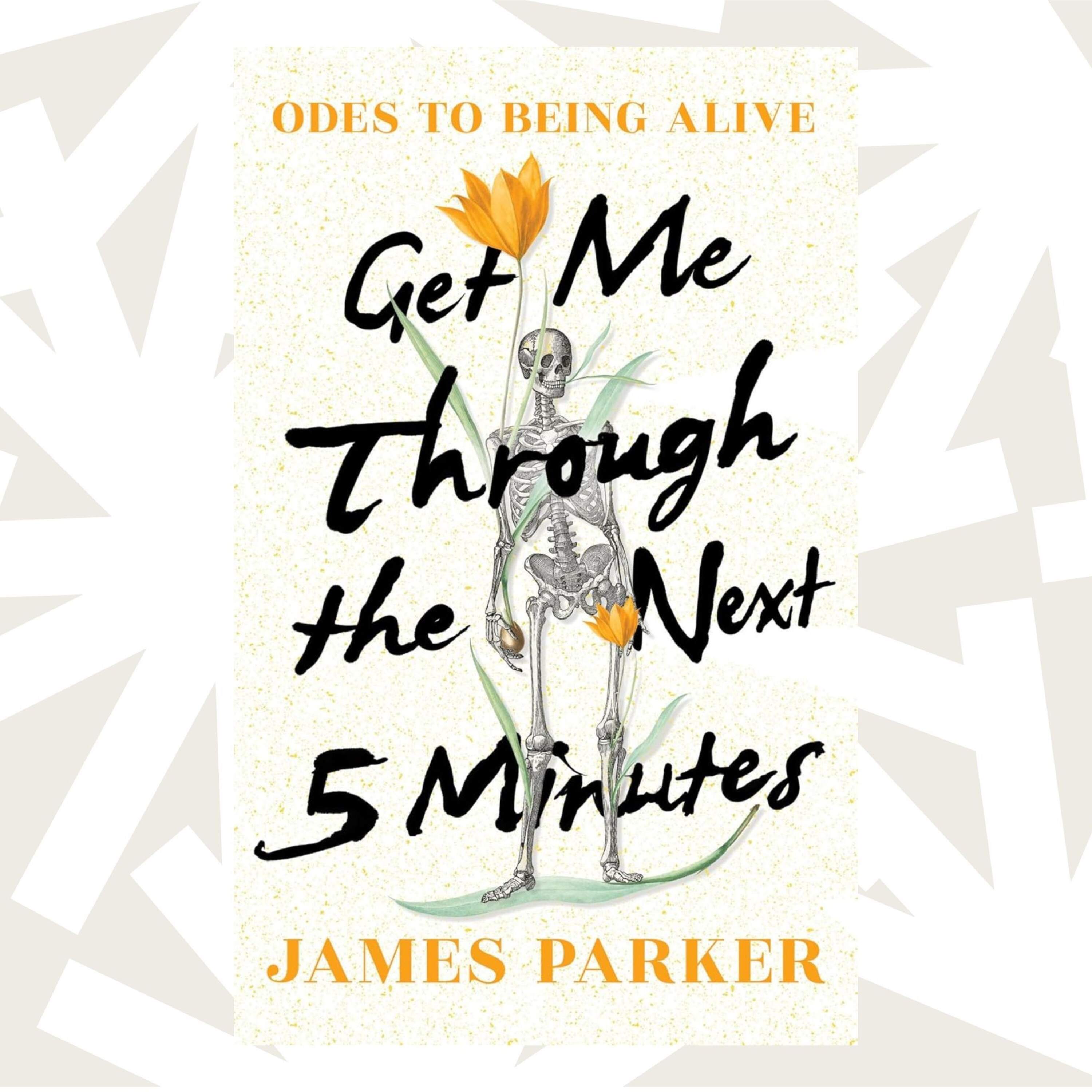
NPR's Book of the Day
‘Atlantic’ writer James Parker says his odes are exercises in gratitude and attention
00:10:41
Loading summary
Transcript49 lines
- [00:02]
A
Hey, it's NPR's Book of the Day. I'm Andrew Limbong. We all take things for granted. Well, maybe I won't speak for you, but I know I'm guilty of complaining about how, I dunno, the curly fries at the bar by me don't taste as good anymore when really the existence of curly fries themselves is a thing of beauty on this earth. James Parker is a staff writer at the Atlantic, and last year he came out with a book of poetry filled with appreciation for the little things in life. It's titled Me through the Next Five Minutes, Odes to Being Alive. And when I first listened to the first half of his interview with Here and Now's Anthony Brooks, I thought, oh, that's a cute and funny concept, writing odes to things that don't really matter. But then I realized, no, it's the little things in life that really do matter.
- [00:50]
B
More after the break, support for this podcast and the following message come from Indeed. You just realized your business needed to hire someone yesterday. Indeed's sponsored jobs helps you stand out. According to Indeed data, sponsored jobs posted directly on indeed have 45% more applications than non sponsored jobs. Speed up your hiring right now with Indeed and get a $75 sponsored job credit to get your jobs more visibility@ Indeed.com book terms and conditions apply. Hiring Indeed is all you need.
- [01:25]
C
Are you paying attention to the big things like history or America or Pablo Neruda or, or maybe quantum physics? And what about the little things like balloons or the way a refrigerator hums or the way your dog farts? These are all inspirations for odes by writer James Parker. He describes them as short exercises in gratitude or in attention, which he says may in the end be the same thing. James Parker is an author and staff writer at the Atlantic, where his odes, beautifully written, often witty, and always smart, were published on the inside back page of the magazine. His new book is a collection of many of them. It's called Get Me through the Next five Odes to Being Alive and James Parker. Thank you for coming in. It's great to have you.
- [02:10]
D
Thank you for having me. Anthony. What a thrill.
- [02:12]
C
Well, it's a thrill for me, so let's start with the definition. What is an ode?
- [02:17]
D
An ode? Well, Pindar the Greek, so they say, invented the ode back in whenever it was 500 B.C. for him, they were ways to celebrate athletes. Basically, that's how it started. The winner of the chariot race, the winner of the boxing match, the winner of the pole vault. If that's what they did back then. I don't know. So they began as ways of celebrating, basically. And, you know, there have been many odes written in many different styles, but basically, I look on it as a way to get under the skin of things, through the membrane a little bit and see what's. You know, see what's wriggling around underneath.
- [02:51]
C
Now, your odes are not limited to big subjects. They're not exclusively small either. So I just want to read a short list of the titles of the odes in this book.
- [03:00]
D
Yeah. And can I say that the table of contents is what I'm actually most proud of in the whole book. I think that might be the best. The best bit.
- [03:06]
C
Well, it's a great bit, but it's all great. So here's from the table of contents. Ode to America. Ode to Falling Off a Horse. Ode to Meditation. Ode to the Pandemic, Ode to Brain Farts. Ode to My Flip Phone, Ode to Crying on Airplanes, which made me laugh out loud, a lot of them did. And Ode to Cold Showers.
- [03:26]
D
Yes.
- [03:28]
C
So why don't we start there? And I was wondering if you could read a little bit from Ode to Cold Showers.
- [03:33]
D
Yes. So. So I have a cold shower every morning, and it's been a great help to me in my life, and I'm not a prescriptive type of guy, but I actually really do recommend the cold shower, if you can. If you can handle it. So, yeah, so this is midway. You're in the shower, or you've just turned it on and just climbed in. The water hits, and biology asserts itself, you are not a tired balloon of cerebral activity. You are a body, and you are being challenged. You gulp air. Your pulse thumps your brain. Meanwhile, your lovely furry old brain goes glacier blue with shock. Thought is abolished. Personality is abolished. You're a nameless mammal under a ravening jet of cold water. It's a species of accelerated mindfulness, really. In two seconds, you're at the sweet spot between nonentity and. And total presence. It's the cold behind the cold, the beautiful, immobile zero. A flame of numbness bending you to its will.
- [04:35]
C
I love that. And we should say that the first half of the ode explains the way it used to be when you would wake up before you discovered the sort of ecstatic benefits of a cold shower.
- [04:45]
D
Yeah, I mean, I have a great seam of sluggishness and depression in my personality, which I have to regularly attack with heavy metal or cold showers or poetry or. Or whatever it may be.
- [04:58]
C
So what kind of subjects lend themselves to a note. When do you know that you have found a good subject for a note?
- [05:05]
D
When you're about halfway through writing it. I mean, there's a few that I've wanted to write forever and have for some reason been unable to owe to repetition. I'm always thinking about, well, tell me.
- [05:16]
C
We'Re gonna read some others. But what was one that just really kind of hit the mark for you in terms of getting to what you refer to as the odess?
- [05:24]
D
I was very pleased to be able to write Ode to Coming Round on the Bathroom Floor, which is about fainting, which I had a little spell of fainting in my. In my 30s, and fainting is ghastly. But coming round for me at least, was very beautiful, a very orderly kind of restoration and generous, or so I felt. Restoration of your faculties. And you end up kind of marveling at the solidity of the bathroom floor and. And the steadiness of the light and the coolness of the tiles and the base of the toilet. How kind of actual it is. And, yeah, I love that. What that ends up being is an ode to kind of being at home in the universe, which I think we all are, basically, even though we don't feel it most of the time.
- [06:07]
C
So I loved it that you gave us that history about Pindar the Greek, the originator of the ode. You also mention in the introduction, Horace the Roman. He also wrote odes. So did Keats. And this is what I wanted to ask you about Pablo Neruda, for whom you say the ode was more like a perceptual Swiss army knife. It's like the. The ode is something super useful that can be sort of pulled out at any point.
- [06:31]
D
Exactly. You pull it out of your back pocket and you get jimmying and you get chiseling and you get poking. And the idea is that you get through to the. You know, to the more essential layer of being.
- [06:41]
C
So let's hear a few more of the very short ones, or at least a couple more. So can I read one? Super short. So I love this one. Here's your ode to not drinking. I note the change when I resist my alcoholic whim. The mornings are more sparkling, but the evenings are more dim.
- [06:59]
D
Yes. I mean, that pretty well sums up.
- [07:01]
C
The quandary for many of us.
- [07:02]
D
Right. Because, I mean, the times in my life when I've given up drinking, I thought, my God, how long is this day? Like, it's still going. But then, of course, if you do drink, you know, you will pay the next morning promptly.
- [07:14]
C
I Love that. So some of these odes are written as short poems, some in prose. Do they just come out that way or do you decide that that some subjects work better as poems?
- [07:24]
D
No, they just kind of come out that way, you know, I'll be banging bits of language together and if it starts to rhyme, basically then I know I'm in a poem.
- [07:33]
C
Do you have a preference though? I mean, do you like.
- [07:35]
D
I am at my most psychologically healthy, I think, when I've just completed a poem that's my optimum at that moment.
- [07:42]
C
Nice. So I want to hear another one. And this is Ode to Hugs, which I absolutely love. And I just want you to read the sort of first half of that Ode to Hugs.
- [07:54]
D
Not everyone likes them as much as I do. I know that. Why should they? And I'm not totally crass. I am aware sometimes as I blunder in open armed, as I surge uninvited into the ozone of another's bosom, of being received with a certain diffidence or stillness. There are non huggers in the world, they exist. But me, I'm wired for hugs and there's not a lot I can do about it. Full contact, lingering pressure, the works, with sound effects if possible. A communion of groans ribcage to rumbling ribcage. That's the kind of hug I'm always looking for. It was ecstasy that set me off or opened me up back in the raving 90s, in the clubs, in the warehouses, in the cellars of houses in the East End of London. I was a drug hugger, a hugging bug, frug drug bug, and then get snug in a hug, shambling in bliss across those laser tormented dance floors, floating through twists of dry ice with my eyes turned to dizzy black discs, absolved from Englishness, absolved from private education, magically licensed to throw my arms around the nearest hard looking rave geezer. What a feeling.
- [09:11]
C
It's so great and it goes on. So people are just going to have to get the book to read the rest of it. But say more about your Ode to Hugs.
- [09:19]
D
Well, so ecstasy was a huge thing for me. It was a huge thing culturally and yeah, so. So I was from a boys boarding school, you know, great privilege, very expensively, privately educated and with the advent of ecstasy culture, suddenly everybody was going bananas and hugging each other and kissing each other and going wild on the dance floor. And that was a great deliverance for me. Again, you pay. Not in quite as prompt a manner as you do with alcohol, but you do pay. In the end, the odds also about that. But it was very important to me and that was the beginning of me being hooked on hugs. And that has never gone away.
- [09:52]
C
The ecstasy not so much. But the hugs are still here.
- [09:54]
D
The ecstasy went away about 20 years ago, but the hugs are still there.
- [09:58]
C
So you write that the point about ode writing, and I love this, is that it's a two way street. You say the universe will disclose itself to you, give you occasions for odes. It will blaze with interest and applicability to. But you've got to be owed ready.
- [10:12]
D
Yeah.
- [10:12]
C
So what does that mean, to be owed ready?
- [10:14]
D
That means, you know, the rightness is all basically like you have to be in a state to receive what is coming at you.
- [10:19]
C
So being owed ready means paying attention, being alert, being alert, being in the.
- [10:24]
D
Attention, being in the moment. Don't use boring words. Don't use other people's words. Use your own words. Trust your own perceptions, trust your own feelings, trust your own insights, trust your own ears and eyes. Yeah, all of that.
- [10:34]
C
And are you thinking right now about your next ode?
- [10:38]
D
No, I'm not. And I probably should be because it's a good way of being and I'm kind of at my. I think I'm kind of at my best as a writer when I'm on the lookout for an ode.
- [10:46]
C
Actually, that sounds like good advice for anybody listening. Be on the lookout for your next ode.
- [10:51]
D
Yeah, exactly. Right. Yeah.
- [10:53]
C
James Parker is a staff writer at the Atlantic. He's always ode ready. His new book is called Get Me through the Next five Odes to Being Alive. James, thank you so much.
- [11:03]
D
Thank you, Anthony. This message comes from Square. Your favorite neighborhood spots are using Square to do everything from covering cash flow gaps to expanding to new locations. Wherever your business is growing, Square meets you there. Go to square.com go NPR to learn more.
- [11:33]
B
If you're a robot, this might not be the show for you. But if you're a human with hopes, dreams and bills to pay, the Life Kit podcast might be just what you need. Three times a week, Life Kit brings you a fresh set of solutions to help you tackle topics big and small. From how to save money on groceries to how to bring the house down at karaoke. You know, human stuff. Listen to the Life Kit podcast from npr. Presentado por mi Mariel Segarra Stars. They're just like us. John Legend goes to cvs. Well, that's because he has his own skincare line.
- [12:04]
D
It was so exciting to actually go into one of those stores. We had the end caps.
- [12:09]
B
Were you like, I don't want this locked up. Joe Legend is one of many stars riding the celebrity branding wave. He tells us about it on the indicator from Planet Money. Listen in the NPR app or wherever you get your podcasts.