← NPR's Book of the Day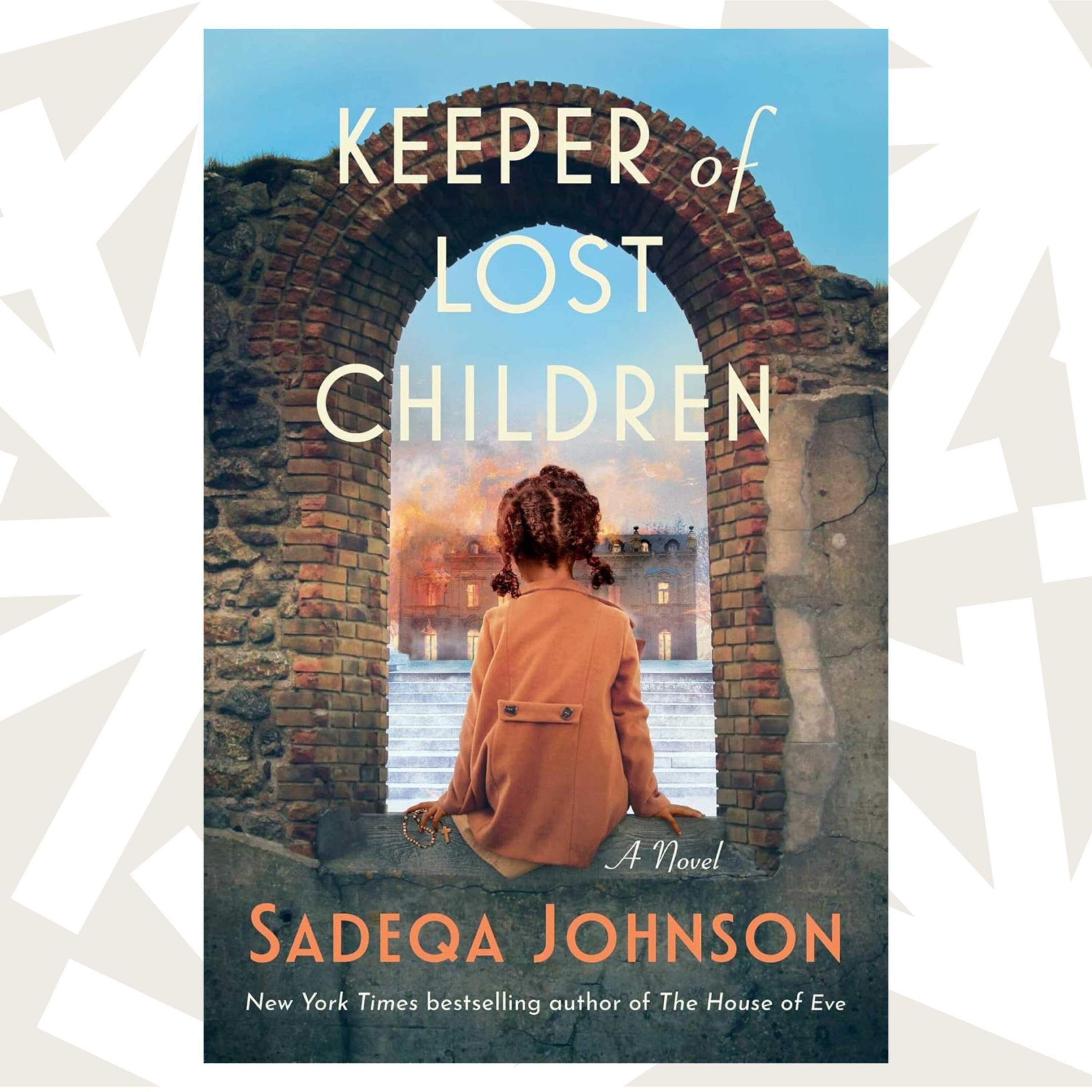
NPR's Book of the Day
Author was struck by story of mixed-race orphans behind 'Keeper of Lost Children'
00:08:13
Loading summary
Transcript27 lines
- [00:02]
A
Hey, it's NPR's Book of the Day. I'm Andrew Limbong. You know, with all the books and movies and documentaries made about World War II and its aftermath, you'd think that by now there'd be nothing new to explore. And yet I'd never heard of Mabel Grammer until I listened to today's interview. She was a journalist who went to Germany after the war and found all these mixed race children in orphanages. Children, children who were not being adopted because of their skin color. The author, Sadiqwa Johnson, also had never heard of Mabel Grammar until she went down a random Google rabbit hole and discovered the subject of her new novel. It's called the Keeper of Lost, a fictional story based on Grammer's life here. Mabel is the basis for her character, Ethel Gathers. This is Johnson's first historical fiction novel and she spoke to NPR's Emily Kwong about the the responsibility she felt working in the genre.
- [00:55]
B
This message comes from BetterHelp International Women's Day is this March time to celebrate all women, the leaders, the caregivers, the hype friends, the how do you do it? All types. Women deserve to be reminded how much they matter and that therapy offers a space to care for themselves. BetterHelp makes it simple by matching you with a qualified therapist based on your needs and preferences. Visit betterhelp.com NPR for 10% off.
- [01:22]
C
When writer Sadiqua Johnson gets an idea for a story, the hairs stand on the back of her neck. And that's exactly what happened when she learned about Germany's Mischlingskinder, the thousands of biracial children with German mothers and black American GI fathers born during and after World War II. Many of these children were abandoned to orphanages until one woman decided to intervene and find them homes. And that history inspired Sadiqa Johnson's new novel, the Keeper of Lost Children. She joins me now. Welcome to ALL THINGS Considered.
- [01:54]
D
Thank you, Emily. It's so great to be here.
- [01:57]
C
What's striking about this novel is it's told from three vantage points by three characters. Who are they and what are they each struggling with?
- [02:04]
D
We have Ethel Gathers, who is inspired by the real life Mabel Grammar, who is a journalist, who was a journalist who went over to Germany and she discovered these mixed race orphans, a little known consequence of World War II in orphanages. And she decided that something needed to be done. And then we have Sophia, who is a young girl living on a farm. Her story takes place in 1965 and she's in a family that she feels just doesn't love her. And she's offered this very rare opportunity to go to a boarding school on scholarship. And when she gets there, she realizes she's one of the first African American students there. And that comes with a host of issues for her.
- [02:49]
C
Yeah.
- [02:49]
D
And then we meet Ozzie Phillips. He's a 19 year old black American in South Philadelphia. He really wants to go to college, but he can't afford it. And so he volunteers for the U.S. army as a way to elevate his life. When he gets to Germany, he's there during the occupation and he realizes that freedom in Germany is something very different than the Jim Crow laws that he experienced in America.
- [03:17]
C
It is amazing. You tackled all three of these characters, actually, when you list them out like that. They each could be their own book, but they're in fact woven all together.
- [03:26]
D
Yeah, they really could have been their own story. I mean, there were certain times where I had to cut chapters because I was going a little too far with Ozzy or I was going a little too far with Sophia. And I had to remember the heart of the story is Ethel's story, which is inspired by this amazing woman, Mabel Grammer, who you know, is just a footnote in history. I was really taken aback that she was someone who I didn't know about yet.
- [03:52]
C
Tell us about Mabel T. Grammer. How did you come across her?
- [03:56]
D
So Mabel Grammar. I came across her by accident. I was tucked away at a writing retreat working on my previous novel, the House of Eve, and I popped into my Google search, orphans, unwanted children, and up popped the story of Mabel Grammer. And she was an American journalist. She married a chief warrant officer in the United States Army. She went over to Manhattan, Germany with him. He worked a lot and she didn't speak the language, so she felt isolated. She also could not have children because of a childhood illness. And she stumbled across a bunch of nuns who invited her to this orphanage. And there she saw a gaggle of mixed race children and she decided that something needed to be done. And so she and her husband adopts 12 of these children themselves and she's responsible for moving over 500 into loving American homes.
- [04:51]
C
And you had never heard of this
- [04:53]
D
person, never heard of her. And those are the stories that really, as you mentioned, get the hairs on my arms standing up because I see myself as the person who is supposed to go into these dark spaces of history and bring back these women, these ambitious women who have been footnotes, who have been marginalized, who have been erased, who have largely been forgotten. Those are the Stories that I like to write about.
- [05:18]
C
Yeah, there's those stories and then there's stories that haven't even been written down in a way. And it makes me think about. You reveal at the end of the book that Ozzie the service member was inspired in part by a conversation you had with your great Uncle Edgar at a family reunion who served in the Air Force. What did you learn from him?
- [05:38]
D
Yeah, when I was talking to my Uncle Edgar, you know, I had already knew that I wanted to write this story, and I realized that he had served around the time that Ozzie would serve in my. No. You know, I really just picked his brain. What was it like living in a foreign country where you had more freedom and you didn't have that freedom here in America?
- [06:00]
C
Wait, I have a question. I haven't read your other books. This has just randomly popped into my head. Is this your first time writing from the historical perspective of a man?
- [06:07]
D
It is the first time, which was really scary for me. Ozzie was the character that I felt I needed to write because oftentimes the black man gets left out of the story. There are Thousands World War II movies and books, and you don't see them. And I know that they were there because they're related to me and they're related to my readers. And so it was really important for me to hone in on who he was and paint him as a three dimensional characters. The Good, the Bad and the ugly.
- [06:40]
C
I think that was one of the most moving parts of the book for me, was, without giving too much away, when Ethel reflects on how she, the woman who, you know, helped these babies find homes, that she hadn't considered the perspective of the servicemen who, for one reason or another, lost touch with their children.
- [06:59]
D
Yeah, that was a powerful moment for me as well. And that was one of the moments of the book that I sort of didn't see coming. It touched me probably as deeply as it touches the readers.
- [07:10]
C
Yeah. How do you see your responsibility different than that of a writer who is not writing historical fiction?
- [07:18]
D
Oh, I take it really seriously, especially now with everything sort of being erased and monuments being taken down. And I think that what I'm doing is sort of leaving a roadmap for the younger generations. I always tell my kids, if we don't know where we came from, we have no idea of how to make sense of the times that we're in now. I see historical fiction as a way to make our American history a little bit more palpable. You know, it's easier to swallow than a textbook. And so I'm giving you all the facts, I'm giving you all the truths, but I'm sort of mixing in the sugar of fiction. That makes it a little bit easier
- [07:58]
C
to swallow the sugar of fiction. Sadiqua Johnson. Her new novel is Keeper of Lost Children. It is out now. Thank you for speaking with us.
- [08:09]
D
Thank you so much for having me. This was such a joy and a pleasure.
- [08:13]
A
And just a reminder that signing up for Book of the Day plus is a great way to support NPR's book coverage and public media. And you'll get to listen to every episode sponsor free. So please go find out more@plus.NPR.org BookOfTheDay.
- [08:41]
C
This message comes from Bombus. Your feet hit the ground an average of 2,000 times in a mile. Bombas Sports socks are designed to support you every step. Sprint to bombus.com NPR and use code NPR for 20% off. This message comes from Midi Health introducing Agewell Longevity Care, designed by women for women. Whether you're looking to prevent future health issues or just feel more like yourself, learn more@joinmidi.com that's joinmidi.com.
- [09:13]
B
this message comes from Rosetta Stone. Spring Travel coming up. Rosetta Stone has been the trusted leader in language learning for over 30 years. Ready to start learning a new language this spring? Visit rosettastone.com. nPR today.