← NPR's Book of the Day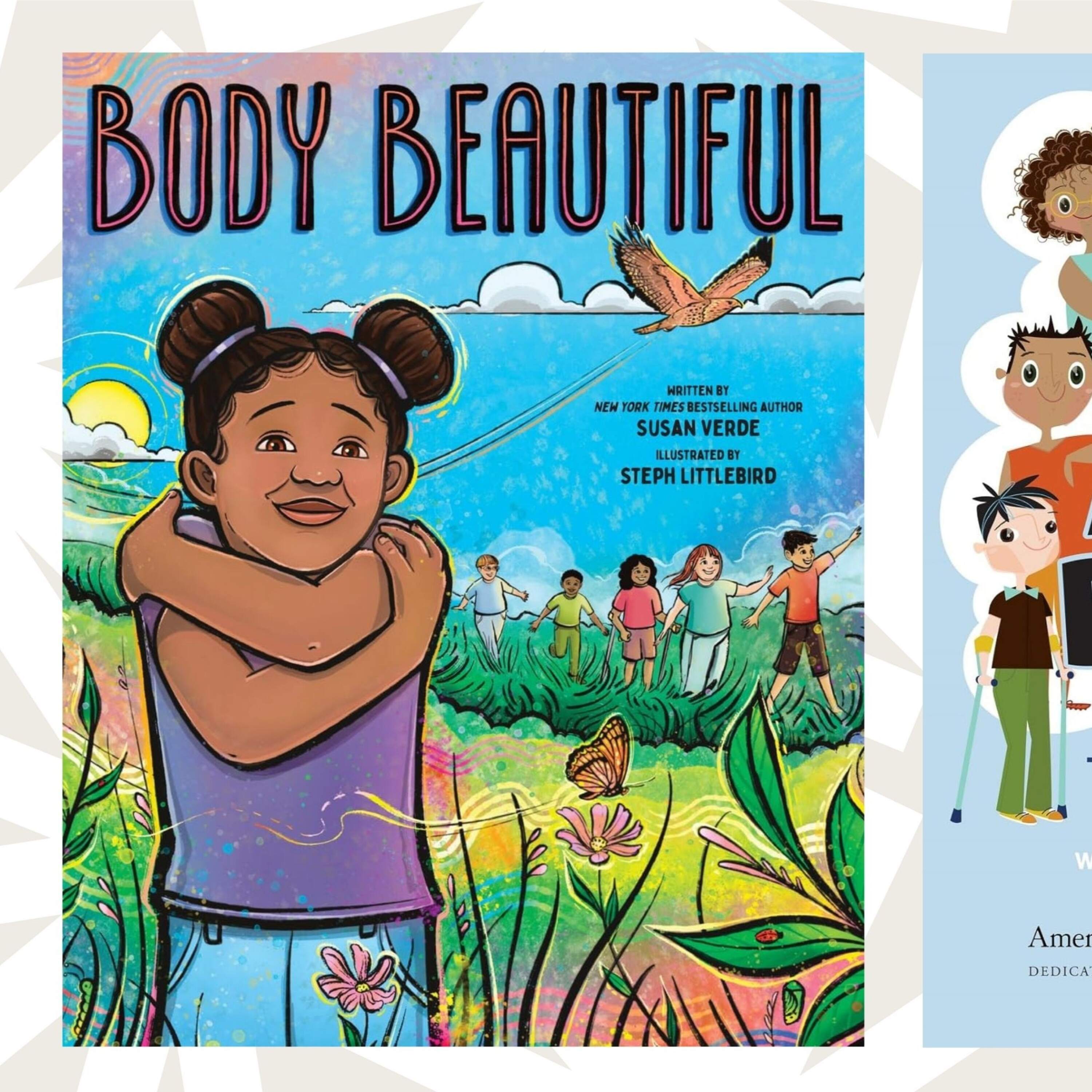
NPR's Book of the Day
'Body Beautiful' and 'My One-of-a-Kind Body' aim to cultivate kids’ body positivity
00:17:00
Loading summary
Transcript58 lines
- [00:02]
Andrew Limbong
Hey, it's NPR's Book of the Day. I'm Andrew Limbaugh. If you ever, as a kid felt bad about your body, it sucks, right? We know, too, that adults can also suffer from these feelings and that they would not want their kids to feel this way. But sometimes parents can impart their body image issues onto their kids unwittingly. So today we've got two books about kids and body image. Up ahead, a book aimed at tweens. But first, apparently, kids even younger than that can have issues with their body. Susan Varaday's book body Beautiful is for those really little ones. And in this interview with npr, Scott Detrow Verday talks about why she spent a large chunk of her book talking about how cool and awesome and kind of magical our bodies really are. That's up ahead.
- [00:50]
NPR Sponsor Announcer
This message comes from Prolon. Feeling heavy and depleted after the holidays. Prolon's five day Fasting Mimicking diet aims to make it easy to reset your body habits and energy heading into the new year. Developed at USC's Longevity Institute, the goal of Prolon's nutrition program is to rejuvenate you from within by working at the cellular level to support fat loss, glowing skin and Sharper Focus. Get 15% off, plus a bonus gift when you subscribe at prolonlife.com NPR.
- [01:24]
Scott Detrow
Studies show that kids as young as 3 years old can have body image concerns. Author Susan Verde was an elementary school teacher who saw kids forming judgments about their bodies very early on and wanted to introduce them to a concept she calls Body Beautiful. So she wrote a picture book with that name. The opening line of the book is, do you know your body is beautiful? Susan Verde joins us now to talk about the answer she's heard to that question and the reception to her book. Welcome to the show.
- [01:51]
Susan Verde
Thank you. Thank you so much for having me.
- [01:53]
Scott Detrow
Where did this idea first come from?
- [01:55]
Susan Verde
Well, body image is something that I have personally struggled with for a long time. And you know, as someone who writes children's books that I think about supporting kids through a lot of their difficult emotions or negative self talk and body image and your body is one of those areas. And I just felt like if I could get to kids a little bit earlier, maybe we could interrupt some of these concerns and thoughts that they have as such a young age.
- [02:25]
Scott Detrow
We're talking about young, really young kids in a lot of these in a lot of these examples. Is there one specific moment that you recall being surprised by the way a younger kid was talking about their body or somebody else's Body.
- [02:38]
Susan Verde
I actually have an example from my own kids life. My kids were probably 6, 7 and they had friends over and they were going to go swimming and, and I heard their female friend say, oh, I'm, you know, I don't really want to be in a bathing suit because I don't know, I have bumps and lumps and whatever. Which was already jarring. Right. At age 6, 7. And then I heard my son say, well, that means your body's growing exactly as it should be.
- [03:13]
Scott Detrow
Oh.
- [03:14]
Susan Verde
And I was like, whoa, pat myself on the back. There you go.
- [03:18]
Scott Detrow
Take a victory lap.
- [03:20]
Susan Verde
But yeah, I mean, that really surprised me. So there had to have been, you know, some kind that each one of them had picked up on and they were sort of reflecting back.
- [03:31]
Scott Detrow
So it's one thing to just tell a kid, hey, you should think differently. Hey, that's not a good way to think about yourself, you know, it's another to tell a story. Tell me how you thought about the story of this book, how you put that together, what you wanted to emphasize.
- [03:44]
Susan Verde
First of all, you know, when adults come in and they tell a child you should or should not, that immediately shuts off something in the childhood.
- [03:53]
Scott Detrow
I have a lot of experience and can confirm with my kids it doesn't work.
- [03:58]
Susan Verde
It's just like, click, I don't hear you anymore. But I feel like books are such a wonderful way to share these messages without being super didactic, without it being a should or a should not. And in a way that kids can see other kids like themselves and sort of take the story from another child. Right. Take the opinion or the information from someone their own age.
- [04:24]
Scott Detrow
Yeah. One thing I liked about the book is you spend time just kind of walking through all the things that a body does, all the functional ways. And like a lot of them are really kind of when you take a step back, amazing that your body is able to do a certain task a certain way, you know.
- [04:38]
Susan Verde
I totally agree. That's why I definitely wanted to make sure there was a lot of that in the book. Because your body is pretty amazing if you think about it. I mean, the things we can do, you know, grasping things or walking or sitting, sitting or twisting or all of those things are pretty miraculous in their own right.
- [04:56]
Scott Detrow
I feel like even a cut healing is kind of a crazy thing when you think about it.
- [05:00]
Susan Verde
Yeah, it's a bit like magic, but it's true. Your body, you know, all of a sudden it senses something went wrong and it brings all these pieces together to try to help heal you. I mean, what an amazing concept as.
- [05:14]
Scott Detrow
Many topics are in the world. This topic has become politicized and there is this interesting backlash to the basic ideas that you're talking about of appreciating the body you have. And I'm wondering how much or how little you thought about that as you approached this book.
- [05:28]
Susan Verde
Unfortunately, I agree with you that there is this backlash, but I think that, you know, we kind of have to turn that off and turn the politicization of all of this off and just get down to the child and how much we love our children and how much we want them to feel great about themselves as they move through the world.
- [05:49]
Scott Detrow
Can I ask you to read the last passage from the book?
- [05:51]
Susan Verde
Sure. All right. The most beautiful thing about your body is and always will be that your body is you. And there is nothing more beautiful than that.
- [06:06]
Scott Detrow
Why was that such an important point to end on?
- [06:09]
Susan Verde
Because I think we bring all these self criticisms and all these things we hear and we compare ourselves so much. And I just wanted to bring it all back to the fact that, you know, no matter what your body looks like, no matter what you can or cannot do, the most important thing is that you are you. And that's beautiful. Just like flowers in nature, just like, you know, nobody is the same. Nothing is the same. You are your unique self. And that is really the most important thing to remember.
- [06:41]
Scott Detrow
The book Body Beautiful is written by Susan Verde and illustrated by Steph Littlebird. It comes out September 23rd. Thank you so much for talking to us.
- [06:48]
Susan Verde
Thank you so much.
- [06:51]
NPR Sponsor Announcer
This message comes from Wayfair. The new year is here. Wayfair's huge selection of home decor items makes it easy to elevate your space and find exactly what's right for you. From bedding and mattresses to storage solutions for every room in the house, Wayfair is your one stop shop, get organized, refreshed and back on track this new year. For Way less, head to Wayfair.com to shop all things home. That's W A Y F A I R.com Wayfair Every style, every home okay.
- [07:25]
Andrew Limbong
This next book is for kids a little older. It's titled My One of a Kind Body by Whitney Kasaris. And in this interview with Here Now's Robin Young, Casaris talks about how to help kids through the onslaught of messaging that they get from the Internet from their friends about their bodies. And the key, she says, is to be a screen, not a sponge.
- [07:45]
Robin Young
Here's Robin Remember when kids learned about their bodies from their friends or snickering in the back row of a health class. Well, now kids are bombarded with information from social media movies where no one ever has a zit or a bad hair day because they have filters. And this is hurting kids. In a recent study, children as young as three expressed body confidence issues. Another culprit, Parents. A study in the International Journal of eating disorders found 76% of parents denigrated their own bodies in front of their kids. 43% commented negatively on their kids bodies. What if kids were taught to talk to themselves to offset all these negative messages? Whitney Casaris is a mom, a pediatrician, and a sometimes spokesperson for the American Academy of Pediatrics. She's written a slim little guide that's also a workbook for kids. It's called my one of a Kind Body, the Ultimate Guide to Caring for Me. It's for kids from about seven to 12, with a cast of characters and worksheets for the readers. Dr. Casares, Whitney, this idea was born, we understand, when your own daughter put down her body.
- [08:54]
Whitney Casaris
Absolutely. I was in the bathroom one day with my daughter, who must have been around 9 or 10, and she looked at me and asked, am I fat? And that stopped me in my tracks. I remember being about the same age when I first asked that question of my own mom. But I grew up at a time when baby boomer moms covered themselves up with towels to hide their bodies when they got out of the shower, you know, and they were fully immersed in diet culture. And that's not me. So I realized even though we've come a long way since all the fat shaming shows the Biggest Loser, the America's Next Top Model, we still have so far to go. And my own daughter had internalized this message that her worth hinges on a number. I had been actively trying to not body shame myself in front of her, but she needed more active guidance.
- [09:46]
Robin Young
So, okay, let's get going with some of your advice. It's one thing to tell kids your body is special, you're unique, which you do. It's another to ask them to tell themselves which you do. Through these worksheets, a kid can have checklists.
- [09:59]
Whitney Casaris
Yep. They can choose foods that they'd like to try. They can identify the body bullies in their lives or online. They can track their energy changes depending on how much sleep they got.
- [10:11]
Robin Young
On one list, a kid can check how my body maintenance is going. Washing my hands, brush my teeth, bathing, showering regularly, using deodorant. Here's another one my individual body maintenance needs. Write down three specific Needs you have for taking care of your body, what might those be?
- [10:27]
Whitney Casaris
Yeah, so I wanted there to be diversity within this book. Having all types of different kids who are potentially autistic, like my own daughter, or there's a character in the book who has cerebral palsy. Those things might be. If you're living in a wheelchair, how do I need to make sure that my skin is well cared for so that I don't develop sores? If I have autism, how do I need to make sure that I'm taking care of my mental health when I'm feeling overwhelmed? You know, growing up, every health guide I read featured the same ideal. This thin, white, really able bodied, effort, at least perfect person. And so I wanted the kids in this book to reflect the real world. And when I shared advanced copies of the book at the American Academy of Pediatrics conference this year, I really thought that people would be enthusiastic about it and providers were. But what I didn't expect were the tears. I had a mom whose child uses a wheelchair who said she'd never seen something like this before. And all kids deserve to recognize themselves in stories about health.
- [11:26]
Robin Young
Well, you said a couple things. You know, this idea, as you just said, somebody who is thin and white and appears the perfect. I'm doing air quotes. But this book is for them too, because someone else can think you look perfect and you can still hate your body or you can have a kid with what's seen as a perfect body and they're well adjusted and could still learn protection from messages.
- [11:50]
Whitney Casaris
Yes. I mean, we had the first AI generated commercial model this year in vogue in an ad. And so between all of these AI generated, quote, unquote, again, perfect faces, these TikTok glow up trends, the Sephora kid culture, kids are getting nonstop messages about what they should look like and screen time that's focused on beauty culture or diet culture. It does severe harm to kids. And so the goal is to be a screen, not a sponge. When you are a sponge, you absorb every message that comes your way and you internalize it. When you are a screen, you're able to filter and to decide and to become a detective, detecting when someone is trying to sell you something or when someone is trying to make you feel bad so that they can make a profit.
- [12:36]
Robin Young
So for instance, a child can have a list avoiding content. I don't want to mimic. How often do they show inappropriate content, violence, bad words, you know, bullying. Bullying. Let's just stay there for a second because I thought it was so interesting that one of the scenarios Is a pediatrician came and talked to a child who had been body bullied. Is that something pediatricians normally do?
- [13:01]
Whitney Casaris
Pediatricians talk about mental health all the time with kids and we aren't as pediatricians talking about body bullying enough. And also pediatricians and the healthcare system has been part of the problem for a long time. We were trained to monitor things that now we know are really flawed measures of health, like bmi. But those, those measures, the BMI specifically, it's based off of white men. It doesn't take into account cultural differences, the fact that muscle weighs more than fat. And so part of the sneaky mission of this book was to give pediatricians tools to be able to talk about there being health at every size. With kids.
- [13:46]
Robin Young
What do you do when there is real concern that maybe a child does have unhealthy weight? What's the language you might use without shaming that child?
- [13:56]
Whitney Casaris
Yeah, I think it's about extremes and it's about trends. You are loving cooking, you have a great relationship with food, and also your weight has gotten to an extreme over.
- [14:07]
NPR Sponsor Announcer
The course of the last year.
- [14:09]
Whitney Casaris
We've seen a trajectory for a child who was going to an extreme in one direction or another.
- [14:15]
Robin Young
It includes too thin.
- [14:16]
Whitney Casaris
Yes, it includes both extremes. That's part of our job as pediatricians, is to watch the trends. If you give kids body confidence without body literacy, so them understanding how their body works and what it needs to function well and to feel good for a lifetime, we are doing kids a disservice. We have to teach them, of course, that not all foods are bad, with the exception of maybe giving your fourth grader a Red Bull or something like that, but that some foods are more nutrient dense and also that food can be a great way to cope with bad feelings or with good feelings. We all do that to celebrate. And sometimes, you know, I have a piece of chocolate cake if I'm not feeling great. But also there are other ways to manage our really hard emotions, like developing self compassion or listening to music or talking to a friend.
- [15:02]
Robin Young
There's a list of things that I can do to feel better. Go for a walk. Listen to my favorite song. Take a nap. My feelings tool belt. You want kids to know the difference between a growth mindset and a fixed mindset?
- [15:16]
NPR Sponsor Announcer
Yeah.
- [15:17]
Whitney Casaris
So a growth mindset is that I will make mistakes and it's the way that I learn from those mistakes that helps to be a strong person. A fixed mindset is this is the way that I am and it's not going to change. So a Fixed mindset really gets kids stuck. It makes them feel like, oh, well, then if I fail that I'm a fraud. And I had a moment with my own daughter. I told her, oh, you can't have dessert if you don't clean your room. And she said, what does cleaning my room have to do with eating dessert? Which is absolutely right. And I had to repair to go back. That's having a growth mindset. To say to my own kid, you're absolutely right. Food is not a reward. We can figure out some other thing, but it's not going to be food because you're so right that I don't want to make that association for you.
- [16:03]
Robin Young
Right. And it also brings us to the last piece of Caring for Yourself, which is kindness, where you ask kids to say kind things to themselves. We spend so much time, we have to telling kids what they're doing wrong, you know, so they don't do it again. But to teach them how to use those words. Body love.
- [16:22]
Whitney Casaris
Yeah, for the girls, but also for the boys. Boys are really taught to harden and we're seeing this trend where boys are searching out terms like cutting carbs and counting protein and pushing through pain. And so I wanted them to have a moment for them to be able to talk with kindness to themselves. Otherwise their health is gonna be, you know, hyper masculinity dressed up as self improvement. And no one wants more of that. We don't wanna plant these seeds of shame and silence because we know they grow into loneliness and aggression.
- [16:53]
Robin Young
Well, here's the list. Write how youw Body Fits these body Love words. Amazing. Special. Magical.
- [16:58]
NPR Sponsor Announcer
Unique.
- [16:58]
Robin Young
Beautiful. Strong. Resilient. Different. Healthy. Sturdy, Flexible. Wonderful. The wonderful things I can just say to themselves to offset the negative messages they get, we've been talking to pediatrician Whitney Cazares, who's and a sometimes spokesperson for the American Academy of Pediatrics. Her guide for kids 7 to 12 to love their bodies is my one of a kind Body. The Ultimate Guide to caring for me. Dr. Cazares, thank you so much.
- [17:26]
Whitney Casaris
Thank you for having me.
- [17:27]
Andrew Limbong
That's it for this week on NPR's Book of the Day. Let us know what you think. You can write to us@bookofthedaypr.org I'm Andrew Limbong. The podcast is produced by Chloe Weiner and edited by Megan Sullivan with help from Ivy Buck. Our founding editor is Petra Maher. The show elements for this week were produced and edited by Justine Kennan, Gurjit Kaur, Samantha Balaban, Martin Patience, Shannon Rhodes, Danny Hensel, Samantha Rathelson Katherine Welch, Sarah Robbins, Avery Keatley, Karen Miller Medson and Mark Navin. Yolanda Sanguine is our executive producer. Thanks for listening.
- [18:07]
NPR Sponsor Announcer
This message comes from Sony Pictures Classics with the Coral, directed by Nicholas Hittner, written by Alan Bennett, starring Ralph Fiennes as a choir master in 1916. Yorkshire making music as war rages on, now playing only in theaters.
- [18:22]
This message comes from NPR sponsor Capella University. Interested in a quality online education. Capella is accredited by the Higher Learning Commission. A different future is closer than you think with Capella University. Learn more@capella.edu. this message comes from NetSuite. Every business is asking, how can they make AI work for them? No more waiting. With NetSuite by Oracle, you can put AI to work today, trusted by over 43,000 businesses. It's the unified suite that brings your financials, inventory, commerce, HR and CRM into a single source of truth. That connected data is what makes your AI smarter, helping you make fast decisions. Right now, get the business guide demystifying AI free@netsuite.com story.