← NPR's Book of the Day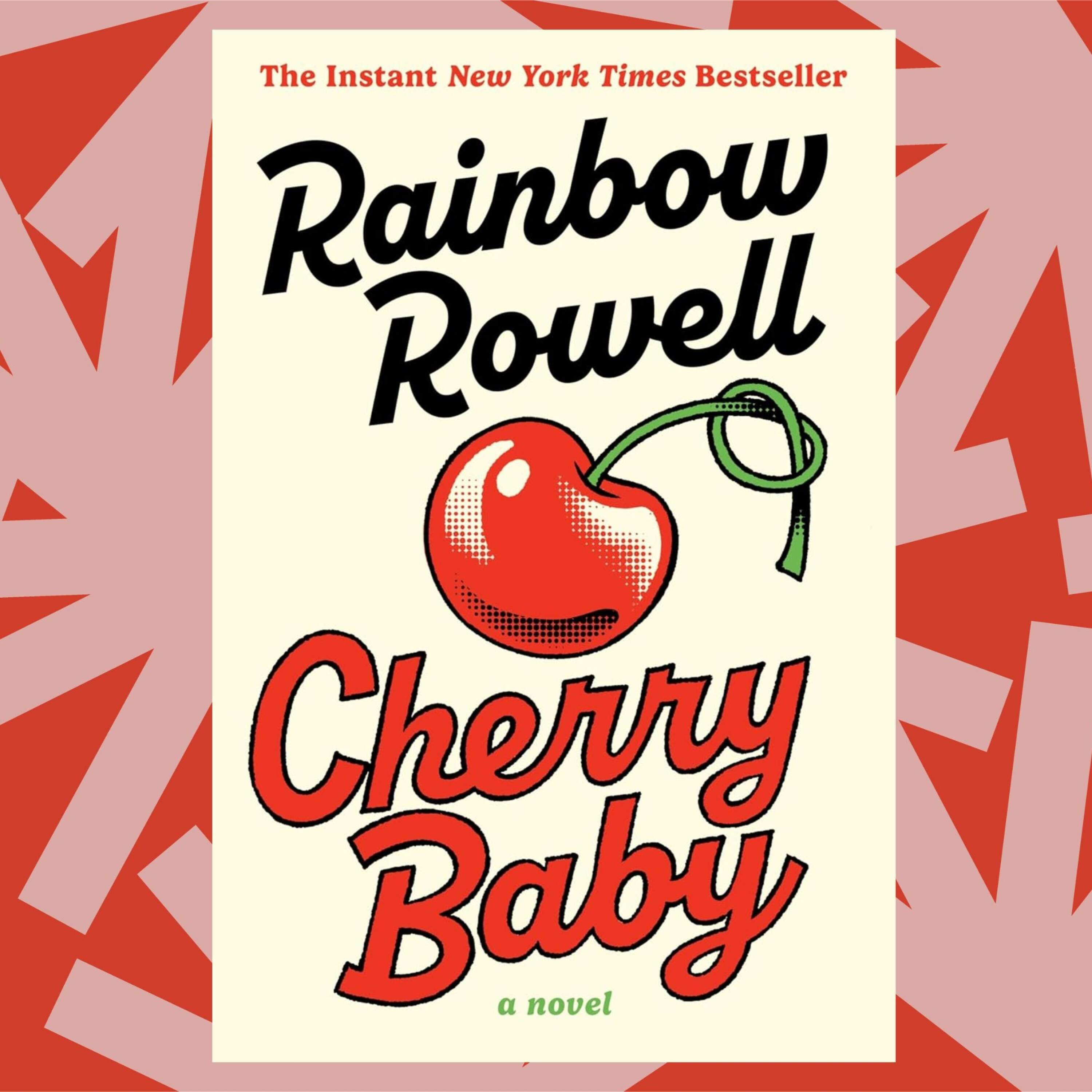
NPR's Book of the Day
'Cherry Baby' holds a mirror to its main character - and to the GLP-1 industry itself
00:10:32
Loading summary
Transcript36 lines
- [00:02]
A
Hi, I'm Alyssa Nadworny and this is NPR's book of the Day. Cherry, the main character in bestselling author Rainbow Rowell's latest novel, Cherry Baby, is having a hard time. Her very public marriage is disintegrating into a very public divorce. And while her life falls apart, her husband's star is on the rise. He's getting a ton of notoriety from his comic strip, which just happens to feature a wide hipped, double chinned character named Baby who who fans continually conflate with Cherry. Rainbow Rowell talked with here and now host Debra Becker about the book.
- [00:40]
B
Author Rainbow Rowell has pushed a lot of boundaries in the writing world. Though she might be best known for young adult books like the best selling Eleanor and Park, she also writes adult fiction, short stories and comics. Her latest book, Cherry Baby, is an adult novel, but it takes up issues of identity, marriage, body image, and the weight loss drugs known as G. The novel's out this week and Rainbow Rowell joins us to talk about it. Welcome to Here and Now.
- [01:10]
C
Oh, thank you so much for having me.
- [01:12]
B
So right at the beginning, we learn that your main character, Cherry, is fat. I mean, that's how she defines herself. She calls herself beautiful and fat. And although Cherry says she is beautiful, she takes pride in her appearance. She's always ruminating about her weight. Why is that something that you wanted readers to understand right from the start?
- [01:35]
C
Well, I think that she is just always thinking about how people around her are reacting to her body and knowing that her body is not the ideal. She also works in marketing and pr, so it's almost like she's thinking about how she has to spin herself as she moves through life, how she can present herself in the best way, but also always feeling people's judgment of her
- [01:58]
D
and knowing that people are evaluating her and that she's not measuring out the way that the world wants her to.
- [02:03]
B
Right, right. And she's really defiant. And you outline this in one of the short chapters in the book. And I'm wondering if you could read a little bit of that for us because I really think it sort of shows her her spirit here.
- [02:18]
D
Sure. This is chapter 40, when Cherry was a girl, when she was 8, when she was 12, when she was 16, she figured that she'd lose weight someday, that she would reach some point and there would be a transformation. That was the story arc of every fat girl in fiction, of every good girl who was there was before and after. At some point you changed, you blossomed or tightened into a bud. You Assumed your true form. Cherry believed in herself, and she believed in hard work. And she really believed that someday she would flip a switch and she'd master her weight. She'd put it behind her. Her face and body would sharpen into focus, and she would step into her after. She came to her senses earlier than most women, the evidence around her was stark. And Cherry wasn't prone to magical thinking.
- [03:04]
C
There was no after, no switch, no amount of hard work or self control or even self abuse that would change her. This was her true form. This was the body that would carry
- [03:15]
D
her through the world.
- [03:16]
C
This was her only vehicle for pleasure. Cherry refused to dream skinny dreams for anyone.
- [03:22]
B
Yeah, very nice. So she was. She was defiant. She was going to make sure that her spirit was clear, regardless of what societal ideals might be.
- [03:33]
C
I don't know if it's defiance so much as it's making peace. She doesn't have much choice. You know, speaking as a fat person, for most of my life, I felt like, you know, this is the body that I have.
- [03:44]
D
And so I think Cherry in the book decides she can make peace and live a full life in the body that she has. But that means kind of giving up the dream of being skinny.
- [03:55]
B
The other thing that we quickly learn about Cherry is that her estranged husband Tom, who writes this webcomic series, Thursday, has a character in it based on Cherry called Baby. Now these comics become wildly successful and fans start recognizing her as Baby, something she doesn't care for.
- [04:17]
D
Well, and he's drawn her as she is. So he has drawn this character, which is based on their life, to look like Cherry. And Cherry is a fat woman. So it's a fat character. And for her, it feels like she's the brunt of a joke, like he's parodying her or doing a caricature of her. She keeps thinking, you know, couldn't he have drawn me with, like, no to? Or couldn't he have, you know, made my hips smaller? So she's walking through the world and people are recognizing her, and she's got all of this fame, and it's not fame that she has any control over. It's not even her success. It's her husband's. So it's taken this feeling like, okay, I'm a fat person.
- [04:54]
C
Everyone sees me as fat, and it's leveled it up into. And also I get recognized and I'm famous, and maybe I'm famous for being fat.
- [05:01]
B
Yeah. And then to make things even worse, the comic Thursday becomes a movie, and the trailer comes out and Cherry Says it made her feel like a cartoon. You know, what did you want to show by having her confront that sort of publicity and fame really about herself?
- [05:20]
C
We're at a time where everything that we understood about our weight and our bodies has been changed by GLP1. So if you're a fat person and you've been struggling with your weight or making peace with your weight your whole life, you largely didn't have a choice. There may be a few variables you could control, but you didn't have that. You have now. Now these drugs have really changed everything. So one of the reasons I wanted to write this book wasn't to write about the drugs necessarily, but to write about a person just living a life where all of the rules have changed and where the landscape has changed. So they're making this comic into a movie, and they have to cast an actress to play Cherry, basically. And all of the actresses in Hollywood who could have played this part have lost weight on Ozempic. And so they end up casting someone and making her wear padding so CH has to see herself on screen and
- [06:12]
D
think they couldn't even find someone in Hollywood who was fat enough to play me.
- [06:17]
B
So wouldn't Sheri consider GLP1s to be the after?
- [06:22]
D
Yeah, I think she is considering it. I think it's just happening so fast for her. So she's talking about watching other fat people in her life or overweight people in her life change, and I think it's in her consideration set. But to be honest, it's, like, not her biggest problem. She's going through a divorce. She's losing her husband. Her weight and her body are a part of what's happening for her, but it's not the main thing for her. And so we're watching her go through this relationship change.
- [06:47]
B
Mm. Well, let's talk a little bit about that, because the success, the movie, the comic strip that leads to Cherry and her husband separating, and she starts actually dating. But she keeps having these doubts. Right. She can't seem to accept that men would choose her. What do you think that story navigating relationships and intimacy. What are you trying to say there through Cherry's story?
- [07:14]
D
I think with Cherry, partially because of the way she sees herself and the way she sees her weight, but also because of other factors in her life, you know, and her parents and her family, she does have a hard time believing in a happy marriage or a happy relationship. And I also think that fame has been very destabilizing for Cherry. You know, she married one person, right?
- [07:34]
C
She married Tom, the graphic designer, who had never really dated before and was very quiet. And now she's married to Tom, the internationally bestselling graphic novelist, who is very wealthy and, you know, in demand, who people on the Internet have a crush on. And it's hard for her to believe that this person is still going to want to be married to her. You know, he has the whole world on a plate now. Why would he want to still be married to her?
- [08:05]
B
Do you see her as a role model?
- [08:07]
D
Oh, gosh, no. I don't see any of these characters as role models, no, no. What I'm always trying to do is just write something real. I've often written about plus sized characters. Usually their weight is more in the background. It's just a fact about them. But something I noticed was that people would notice and make that the headline sometimes if they were talking about a book. My book, Alan Warren park, has a plus sized teenager. And people would often talk about that book being about a fat girl. And I would think, oh, I don't think the fact that she's fat is the top of the story here. So with this book, I thought, okay, well, what would happen if I did make fatness and weight and body issues more tied into the plot? What if it was more core of the story?
- [08:48]
B
And I just wonder, you know, you've obviously thought about this a lot and now written about this in a novel, but do you think that GLP1s have made it more difficult for people who are struggling to accept their weight? And we should say that they don't work for everybody, right? There are a lot of things that go on there. Do you think it's, it's changed things for people who are struggling with their weight or, or trying to accept their weight? I guess.
- [09:14]
D
Well, I think that the drugs have
- [09:15]
C
had a huge positive effect for a lot of people.
- [09:17]
D
Right.
- [09:17]
C
But I think if you are not on the drugs, you can't afford them, you're choosing not to. Or maybe you tried them and they didn't work for you. There is this feeling that the whole world is changing around you and that what it means to be fat is changing. You're seeing the fat people disappear. You know, if there are no more fat people on television and maybe there are no more fat doctors or no more fat people sitting in first class, you're just seeing that everyone who can change is changing. And that makes you feel like maybe it's going to be less. Okay, maybe people are going to be even more judgmental of you if you're still fat. It almost is this feeling of like fat people are going extinct. But not me. Here I am, I still look this way. It does feel less safe. It feels upsetting.
- [10:03]
D
Yeah.
- [10:05]
B
Best selling author Rainbow Rowell. Her new novel is Cherry Baby. Thanks for being with us.
- [10:12]
D
Thank you so much for having me.
- [10:16]
A
And just a quick reminder that signing up for Book of the Day plus is a great way to support NPR's book coverage and public media. And you'll get to listen to every episode sponsor free. So please go find out more@plus.NPR.org BookOfTheDay.