← NPR's Book of the Day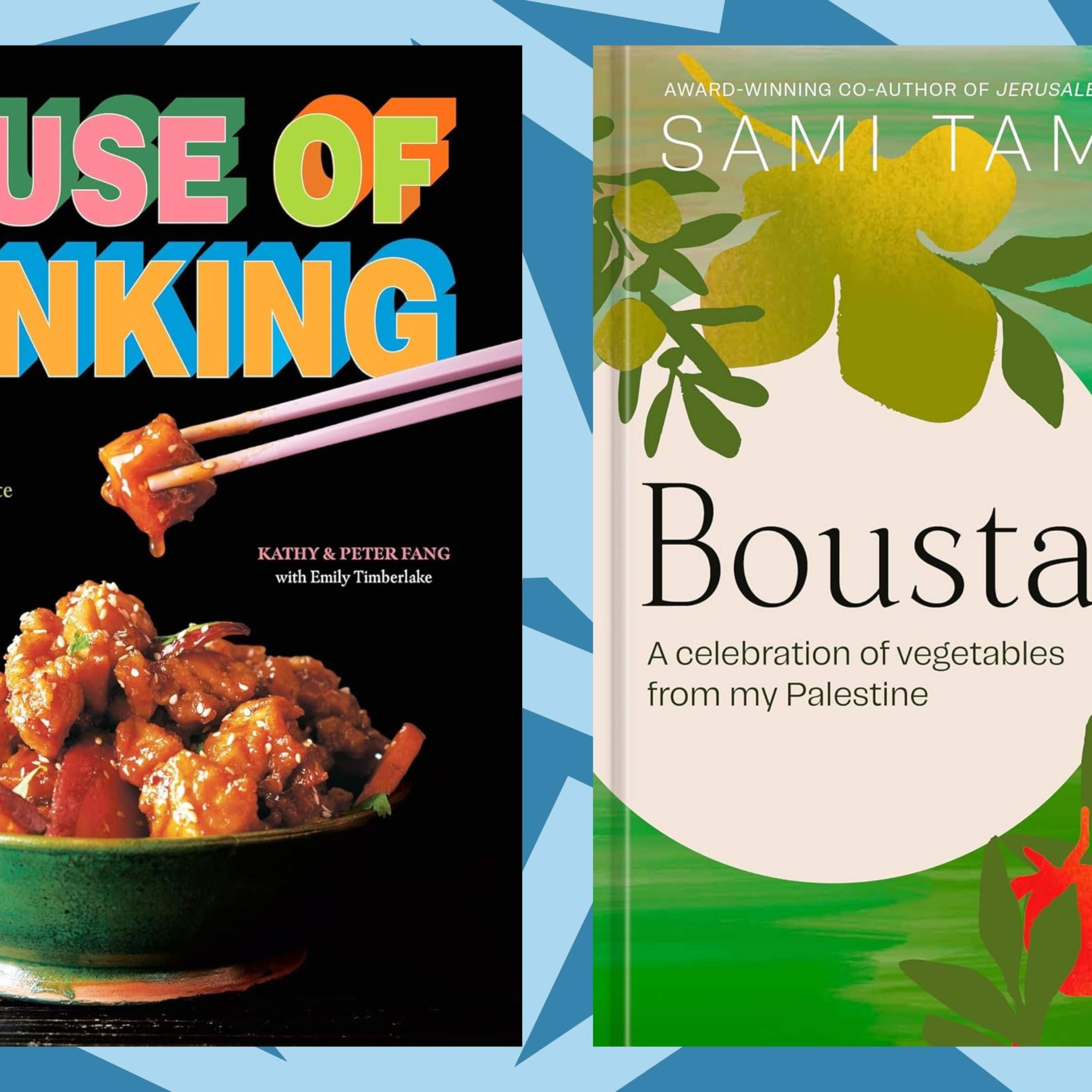
NPR's Book of the Day
Cookbooks 'House of Nanking' and 'Boustany' honor rich family legacies through food
00:19:57
Loading summary
Transcript117 lines
- [00:02]
A
Hi, it's NPR's Book of the Day. I'm Linda Holmes. I'm in this week for Andrew Limbong. We've got two books about food and family today. In a minute, we'll hear about the use of vegetables in Palestinian cooking. But first, it would be tempting to say. NPR's Elsa Chang sat down with chefs Kathy and Peter Fang to talk about their new cookbook. It seems, though, like they barely sat down at all. Instead, the three went on a lively tour of the family's restaurant and the book named after it, House of Nanking Family Recipes From San Francisco's Favorite Chinese Restaurant. They talked about food, family and why there are so many pictures of Keanu Reeves on the walls. Here's Elsa.
- [00:47]
B
This message comes from Schwab. Everyone has moments when they could have done better, like cutting their own hair or forgetting sunscreen. So now you look like a tomato. Same goes for where you invest. Level up and invest smarter with Schwab. Get market insights, education and human help when you need it. Learn more@schwab.com this message comes from Wise, the app for using money around the globe. When you manage your money with Wise, you'll always get the mid market exchange rate with no hidden fees. Join millions of customers and visit wise.com Ts and Cs apply.
- [01:24]
C
Peter Feng opened a restaurant here way back in 1988, shortly after immigrating here from Shanghai. He called it House of Nanking. And for years he was the only chef and cooked every single dish in one walk. Now House of Nanking has become an iconic restaurant, and for the first time in 37 years, the Feng family is sharing their culinary secrets in a new cookbook. And today they're going to cook our team a few of those dishes. We make a stop at their favorite vegetable market in Chinatown to pick up ingredients.
- [01:58]
D
This is just called New Asia. You can see it used to be a restaurant.
- [02:01]
E
Yeah.
- [02:02]
C
It's got crystal chandeliers. There's like six of them. Peter zips inside and makes a beeline straight for the baby ginger.
- [02:08]
F
Beautiful. Like a baby.
- [02:09]
C
It's like a baby. Baby skin, smooth baby skin ginger.
- [02:14]
F
This is grandfather, right?
- [02:16]
C
Wrinkly and tough skin.
- [02:17]
B
I know.
- [02:18]
C
Peter. A man on a mission swipes an entire shelf of roasted gluten into his basket. Oh my God, Peter, how many boxes are you getting?
- [02:27]
F
They don't have all the time.
- [02:30]
C
By the time we're leaving this market, our bags are fully loaded.
- [02:33]
D
We brought dried shrimp, silk squash, Wawa Thai, which is baby napa cabbage. And we Also got Chinese bacon. This is gonna be going into a few of our dishes today.
- [02:45]
C
I can't wait. All of these ingredients feature in their new cookbook, which chronicles stories not only about their restaurant, but also about the family's struggles building it.
- [02:56]
D
We're gonna go up this way.
- [02:58]
C
We head a few blocks down and into House of Nanking right here. And the first thing you notice when you glance at the walls is Keanu Reeves staring back at you from, like, every direction. Peter, there's so many pictures of Keanu Reeves visiting your restaurant here. 1, 2, 3, 4, 5, 6.
- [03:19]
F
Because he made the movie here.
- [03:22]
C
Which movie?
- [03:23]
F
The new Matrix of Four.
- [03:24]
D
Oh.
- [03:26]
C
But seriously, way before people like Keanu ever came here. Times were really tough in the early days. Peter says this place was empty most every day and night. That is, until a review in the San Francisco Chronicle in 1989. It changed this place's fate literally overnight. And people started lining up outside, just waiting to get in.
- [03:51]
F
And then it just. A bong, bong. Oh, wow. People, they're waiting for you. Open the door.
- [03:58]
C
Was that stressful or more exciting than stressful?
- [04:01]
F
Okay. Both.
- [04:02]
E
Both.
- [04:03]
F
I know it's a challenge. So first of all, you have to take these. So many people cook a lot of food. Well, I only have one walk.
- [04:11]
B
Yes.
- [04:12]
C
Yeah. Remember, there was only one wok in those days. And as a little girl, Kathy was put to work folding napkins, filling up chili oil jars. Today, she is a full business partner with her dad, who's now 76 years old. I asked Peter to tell me what he thinks made House of Nanking such an enduring presence in a city that's already so full of Chinese restaurants.
- [04:38]
F
The basic traditional Chinese cooking philosophy, that kind of thing won't change. But for the ingredients, we have to use the local ingredients to learn how to use that. And you have to study what the other people, they want. So if you cook your Shanghainese, very blameful. They won't come back again. There was no right or wrong. It's just that people, like it or not, dislike.
- [05:08]
C
And you think it's a good idea to adapt your cooking to please people. Because some chefs, they say, this is.
- [05:14]
E
The way I cook.
- [05:15]
C
If you don't like it, you don't need to come.
- [05:17]
F
Yeah, I understand them. A lot of chefs say, I do.
- [05:20]
C
This, I do it my way.
- [05:21]
G
Yeah.
- [05:22]
F
I don't care you like or you dislike.
- [05:26]
D
Right.
- [05:26]
F
Well, I think that sometimes is not right.
- [05:29]
C
Your purpose is to make people happy.
- [05:31]
F
Make people happy.
- [05:33]
D
I would compare this to the way that we treat the dining room as the way that we would treat, like, if you invited guests to your home. Because, let's face it, this is our home, right? Like, we spend more time here than our actual home.
- [05:44]
B
Right?
- [05:44]
C
This is a House of Nanking.
- [05:46]
D
Yeah, House. There you go.
- [05:48]
F
House of Nanking.
- [05:49]
E
House.
- [05:50]
C
So, Kathy, what was it like to grow up around House of Nanking when you were a little girl?
- [05:55]
D
I think in the very beginning, it was very exciting and new to me. Right. I was seeing the restaurant getting built. My. My dad built all the shelves himself. So I saw something kind of come to life from nothing. And then I got to kind of experience the food that my dad was creating, how it started to evolve and change the smells, learn how to interact with people. It was just, like a very rambunctious and lively place to grow up in. And then I think, like, as I got older, through high school and college, my parents knew that this was a very tough life, and they came here to give me better opportunities. So I never thought I would actually come back and do this. It wasn't until, like, later, when I did work in corporate America, when I realized that this is incredibly boring, uninspiring. And what I grew up with was something that was far more exciting. So I came back.
- [06:53]
C
Peter, how does it make you feel to watch your daughter do what you're doing, to eventually come back and enter the restaurant business and really appreciate the way she grew up and make it a permanent part of her own life?
- [07:07]
F
First of all, I'm proud of my daughter. I say that, but she is going to. Better than me.
- [07:16]
C
You believe she's going to be better than you?
- [07:18]
F
Better than me in many ways.
- [07:21]
C
Your dad says he's so proud of you. What is it like to share his legacy with him now, to work alongside him?
- [07:28]
D
The legacy aspect, I think, is very special because they were able to build an institution that, you know, has become, like, an icon, and I get to be a part of it, and I happen to be good at it. There's no way my dad would let me even touch this if I was, like, not good at it.
- [07:45]
A
Right.
- [07:46]
D
And so, yeah, I can continue it on for them.
- [07:50]
C
Well, I know that, Peter, you never liked writing menus, and you are known for ordering for your guests. So will you do us the pleasure of ordering some dishes for us that we can try today?
- [08:01]
F
Sure. I love to do that.
- [08:05]
C
Kathy then dashes into the kitchen, and in mere minutes, a parade of dishes arrives at our table.
- [08:11]
D
So this one is the Wawa Thai baby Napa catch.
- [08:13]
C
Wawa yeah.
- [08:15]
D
So for this one, I did it with like the little dried baby shrimp that we got.
- [08:18]
C
Then comes flowering cauliflower speckled with Chinese bacon.
- [08:23]
E
Oh, that's good. That's so good.
- [08:26]
C
And never forget the restaurant's first fried onion cakes with peanut sauce. Delicate layers of flaky dough stuffed with.
- [08:33]
D
Scallions, which is like a house favorite. House of Nanking favorite.
- [08:38]
C
Do you want me to put some onion cake on yours plate? We eagerly scoop food onto each other's plates, making ourselves at home. Just as chefs Peter and Kathy Feng have always intended, don't let the food get cold. Their new cookbook is called House of Nanki Family Recipes from San Francisco's Favorite Chinese Restaurant.
- [09:05]
B
This message comes from Babbel. Babbel's conversation based language technique teaches you useful words and phrases to get you speaking quickly about the things you actually talk about in the real world with lessons handcrafted by over 200 language experts and voiced by real native speakers. Start speaking with Babbel today. Get up to 55% off your Babel subscription right now at babel.com npr spelled b a B-B-E-L.com npr rules and restrictions may apply.
- [09:39]
A
Palestinian chef Sami Tamimi talked to Here and Now's Robin Young about Bustani, his new cookbook that highlights vegetables in Palestinian cooking. He shares family memories and he talks about what it's like to speak so lovingly of beloved foods at a time when so many Palestinians are going hungry.
- [10:00]
E
Sami Tamimi is a chef, a food writer, a restaurateur, an innovator and a traditionalist. He won the James Beard Foundation International Book Award in 2013 for the Jerusalem Cookbook, one of his exquisite cookbook collaborations with Yoda Modulengi. More recently, Sami Tamimi co authored the award winning Philastin Cookbook. But his newest cookbook, Bustagni, is piercingly beautiful and just piercing. Written before the recent war as a celebration of Palestinian food culture, tradition, it's also a reminder of what's being lost. Breads, spices, sauces, honoring the legacy of Sammy's grandparents, the flavors of his childhood, a way to pass on his memories through the foods that have fed, comforted and nurtured the generations that came before him. A heavy burden for a humble cookbook, by all accounts a success. Also a cookbook at a very painful time. Sami Tamimi joins us in the studio. Sami, welcome.
- [10:57]
G
Thank you very much for having me.
- [10:59]
E
You say in the book you describe Palestine before 1948. Of course, then the divisions you ask people to imagine how difficult it might have been. This is the only time you touch on the politics of the region. And as you're reading it, of course, we realize you had written this, finished this before the recent conflict, because now the difficulty is starvation. That conflict we cover in other segments. What we want to do here is, what it seems like you want to do is talk about maybe what's been lost right now. It's. It's difficult to talk about these beautiful foods when people are starving though, isn't it?
- [11:35]
G
Yeah, it is. I mean, it. It really heavy and it's horrible what's happening. And it's super sad for me as a chef who made a career from this whole kind of celebration of food which came from my ancestors, Palestinians. And they are known for being very hospitable and love having people around and cooking for people and feeding you and for somebody to be able to take that off you. I dwell about it quite a lot, but at the same time, I still have family. They're all in Jerusalem. And I know a lot of people back home. They want to live, they want to make their life better, their family and the community. And food is something that we always enjoyed.
- [12:25]
E
Yeah, well, you say Palestinian food, tradition, culture have a lot to offer the world and are a great testimony to resilience. And you've also told an interviewer that the responsibility of writing these recipes weighed heavily on you because I'm sure you want to get it right.
- [12:44]
G
And also, I mean, you think about it, it is almost like a memoir. I have memories from Palestine. I think about a lot of the new generation that haven't been to Palestine and they are Palestinian. They don't share these memories that I do. And it's really important for me for them to get access to that and see a different time, but also different Palestine than, you know, what we are experiencing right now. And I still call it home as well.
- [13:15]
E
And the book Bustani comes from Bustan, a garden, and specifically in this case your grandparents garden in the southern West Bank. Just talk about the garden and the fresh foods and those memories that you have.
- [13:30]
G
I mean, I have so many beautiful memories of our visits and sometimes used to. My grandfather is kind of taking care of this piece of land and planning the whole year of, you know, the produce that they have to plant. And it took a lot of love and passion and also didn't mind us as a kid kind of running around like crazy. And he always say, you can eat whatever you like, just don't destroy anything.
- [13:56]
E
Well, and a chef is born in that Garden. So let's talk about again. It's so beautiful. The pictures. The roasted vegetables with lemon and za'. Atar. Anything with tomatoes pops off the page. Cause tomato off the vine is so much better. So talk about some of these recipes. Smoky chickpeas with cilantro tahini.
- [14:18]
G
When I was a kid, we always bought these roasted chickpeas, or sometimes they are totally salted dried chickpeas. And the idea came from that. But also after I finished it, I realized that it's a deconstructed hummus.
- [14:34]
E
It's deconstructed hummus. It sounds so much better when you say, you know, smoky chickpeas.
- [14:39]
G
But that wasn't deliberate. My focus was these roasted chickpeas that I used to have as a kid. And I wanted to do something to enjoy the flavor of these chickpeas and tahini with the cilantro and lemon. It's just perfect.
- [14:52]
E
It's mouth watering. Chilled tomato and avocado soup with burnt chili. Yeah, looks like topped with fresh mint, cucumber, some kind of croutons. The texture. Talk about texture.
- [15:03]
G
For me, it's really important. A dish should kind of deliver in a lot of aspects, from the spiciness to the sweetness. Acidity. Crunch is very, very important, whether, you know, it's a bread or crispy onions or crispy shallots. And this particular soup was kind of take on gazpacho.
- [15:25]
E
Yeah. It's got a thickness to it.
- [15:26]
G
Yeah.
- [15:27]
E
It's a dish more than it's a dish.
- [15:30]
G
And it's easy. And you can just keep it in the fridge for a few days. And for the summer days, it's just perfect. Yeah.
- [15:36]
E
Where would you be without an eggplant? It's just. It's such a basis of things. Yeah.
- [15:42]
G
It's funny because when I started my career in London, people didn't really eat eggplant. And so it kind of tickles me that, you know, I kind of changed the way people eat aubergine or, eg, wonderful vegetable, because it's so versatile. And people that don't eat meat find eggplant a good alternative to meat. But also for me as a Palestinian, the cuisine is packed with recipes with aubergine.
- [16:12]
E
I mean, talk about that, though, what you just said. You and Odolenghi, you know, you have changed the way people eat. It's a big deal.
- [16:21]
G
It's a big deal. But I'm humble enough not to kind of get into my head, but am aware of it. And I am cherishing the fact that I had the influence to do that.
- [16:35]
E
Yeah. Fatoush. What is fatoush?
- [16:37]
G
Fatush is a hero thing. I mean, in Palestinian kitchen, they don't want to waste anything. Stale bread take another transformation. Bread is very important. And to be able to do something to turn stale bread into something that delicious, it's an artful. And I have that quite a lot in the book where the fette with the bread, or lentil fette, which is basically adding stale bread into the soup.
- [17:07]
E
Eggs cooked on top of pita bread. And I'll just read a little of the fridge raid. Fattoush, which is a hint. You're gonna just everything so stale. Whole wheat, pita breads, mixed color tomatoes, a cucumber, a red pepper, a garlic clove, lemon juice, white wine vinegar, pomegranate molasses, olive oil, cumin seeds, coriander. I'm only halfway through. Sumac radishes, green onions, fresh parsley, fresh mint, fresh cilantro. I mean, talk about that flavoring.
- [17:35]
G
Yeah. I mean, the fattoush is very defined. But I called it this way because I thought you need to use whatever you have in the fridge. And if you don't have it, then you can stick to the classic fattoush with tomatoes and cucumbers and the bread, lots of sumac and onion, herbs.
- [17:53]
E
Yeah. And that's it. Just stir it up. Dinners loaded. Sweet potatoes with black eyed peas. Just bake.
- [18:01]
G
Yeah. It's delicious. It's easy, it's really nutritious, and it looks really good every time I make it. People like.
- [18:10]
E
Beautiful. And you do substitute these kind of sturdier vegetables a lot of times for meat. You know, eggplants, sweet potatoes, they become the dish.
- [18:20]
G
Because for me, substitute the meat is not manufactured sausages or burgers or patties. It's more real food.
- [18:30]
E
Yeah. Talk about some of the spices, the ingredients that people might not know and shouldn't be afraid of. Za'. Atar.
- [18:41]
G
Za' atar is. It's like dried oregano.
- [18:44]
E
Yeah.
- [18:45]
G
You can get it pretty much everywhere now. And if you don't, then you can just use a bit of dried oregano.
- [18:52]
E
And what else should people make a statement?
- [18:54]
G
Sumac is another really Palestinian spice.
- [18:58]
E
I went quickly by pomegranate molasses.
- [19:01]
G
Yeah.
- [19:01]
E
Is that just like a glaze? Like when you take a glaze of.
- [19:04]
G
Balsamic, it's basically cooked down grape juice. They cook it down so much that it becomes this kind of thick, sweet, wonderful and sour, almost like a syrup. If you don't have pomegranate molasses, available. You can mix a bit of balsamic vinegar and a bit of honey or vinegar and honey, and they'll give you almost the same flavor profile.
- [19:30]
E
What is one thing you want to leave us with, Sami Tamimi, if one wants to, you know, dive into these recipes, cooking of the Palestinian people, cooking of your homeland, cooking of the Middle.
- [19:40]
G
East, cooking the recipes in a book and also connect with them. And also, like I said before, these recipes have history and have tradition and have their names and they come from somewhere and it's really important to highlight that. But also I'm hoping that people through the food connect also with the place and with the people. There's a beautiful side, and this is what I'm trying to do in this book.
- [20:06]
E
Yeah, that's an ingredient. Think about the place, think about your grandfather in the garden. Think about where it came from. That's Sami Tamimi, his new cookbook, A Celebration of Vegetables from My Palestine. Thank you so much.
- [20:21]
G
Thank you for having me.
- [20:24]
A
That's it for this week on NPR's Book of the Day. Let us know what you think. You can write to us@bookofthedaypr.org I'm Linda Holmes. The podcast is produced by Chloe Weiner and edited by Megan Sullivan. Our founding editor is Petra Maher. The show elements for this week were produced and edited by Melissa Gray, Gabe o', Connor, Samantha Balaban, Christopher Antagliotta, Elena Burnett, Todd Mundt, Karen Miller Medzon, and Janaki Mehta. Yolanda Sangweni is our executive producer. Thank you for listening.
- [21:08]
B
This Message comes from NPR. Sponsor 1Password Protect your digital life with 1Password if you're tired of family members constantly texting you for the passwords to streaming services, 1Password lets you securely share or remove access to logins access from any device anytime. 1Password lets you securely switch between iPhone, Android, Mac and PC with convenient features like autofill for quick sign ins. Right now, get a free two week trial for you and your family@1Password.com NPR this message comes from Vanguard. Capturing value in the bond market is not easy. That's why Vanguard offers a suite of over 80 institutional quality bond funds actively managed by a 200 person global team of sector specialists, analysts and traders. They're designed for financial advisors looking to give their clients consistent results year in and year out. See the record@vanguard.com audio that's vanguard.com audio all investing is subject to risk. Vanguard Marketing Corporation, Distributor.