← NPR's Book of the Day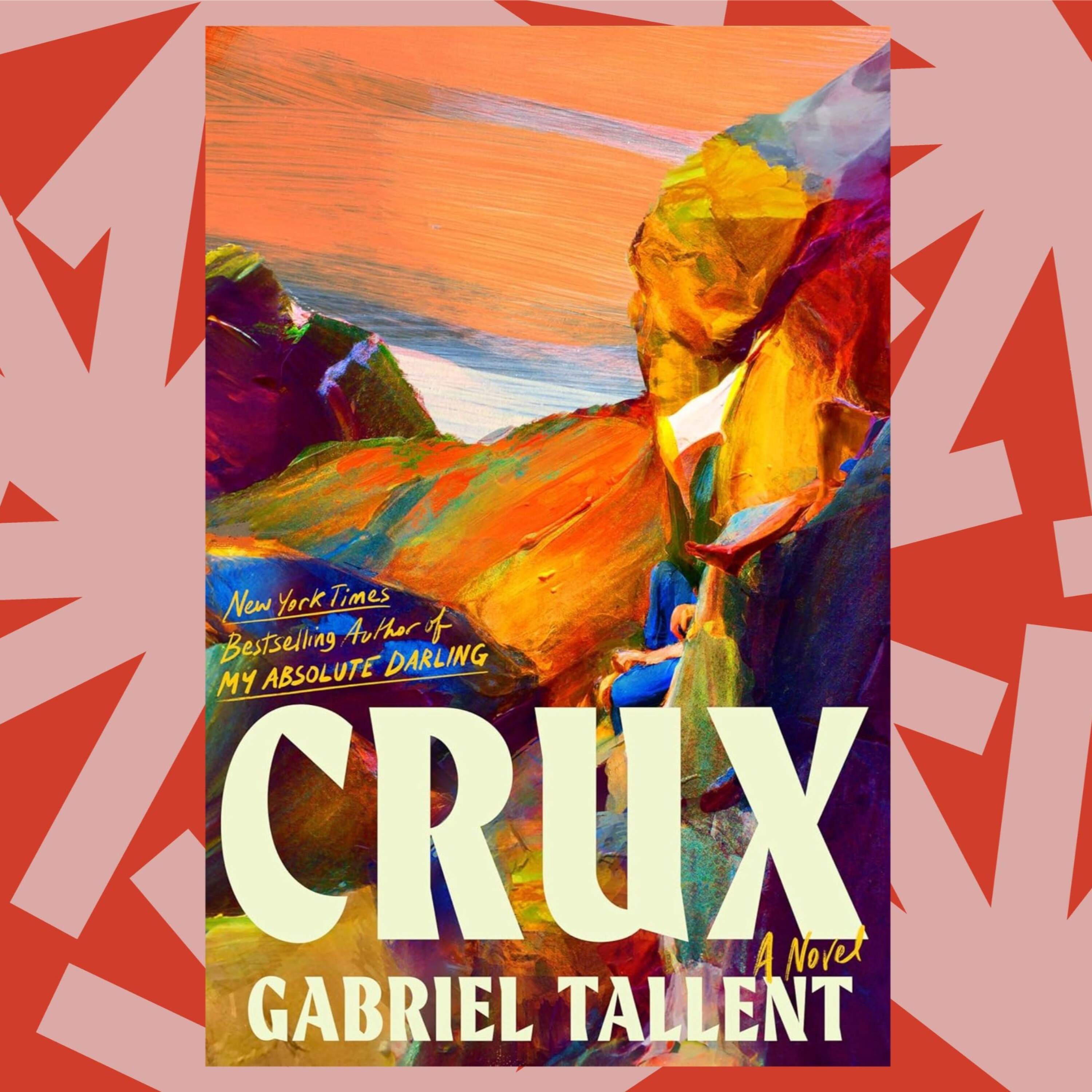
NPR's Book of the Day
'Crux' is a novel about rock climbing, but risk exists far beyond the mountain’s edge
00:08:55
Loading summary
Transcript23 lines
- [00:02]
Andrew Limbong
Hey, it's NPR's Book of the Day. I'm Andrew Limbong. What is risk? How do you think about risk? I figure that most of us don't do a quick risk analysis before getting into our cars and driving to the grocery store. When I pop a hard candy into my mouth, I don't start thinking in terms of actuarial tables and the likelihood of choking. But when I see the kids on the street skateboarding without a helmet or someone texting and driving, I do think, huh, that's risky. But maybe it's all risky. These questions come up in today's interview. It's with the author Gabriel Tallant about his novel Crux. It's about two close friends from different tax brackets who bond over a love of climbing. Talent himself is a climber, and he talks to NPR's Juana Summers about the risks worth taking and how trying to avoid risk doesn't always keep you safe. That's after the break.
- [00:54]
NPR Sponsor Announcer
This message comes From NPR sponsor 1Password. Anyone else feel like 99% of your emails and texts are password reset codes trusted by millions of users and over 175,000 businesses? 1Password lets you skip the resets and sign in securely with strong, unique passwords that autofill across all your devices. You can safely share logins, store cards and files. And finally, stop using your pet's name as a password. You can try it free for two weeks at 1Password.com NPR this message comes from Kachava, that wellness goal you set at the start of the year. It's not too late to stick with it and make your future self proud, especially with the all in One Nutrition Shake from Cachava. With 25 grams of protein, 6 grams of fiber, greens, adaptogens and more. No fillers, no nonsense, just the highest quality ingredients. Stick with your wellness goals. Go to cachava.com and use code NPR for 50, 15% off. That's K-A C-H-A-V A.com code NPR.
- [02:01]
Juana Summers
Crux is a term that rock climbers know well. It's the most challenging section of a route, the place where, quote, everything inside yourself told you to wait, to stall, to cling to safety. And yet where, if you wanted to live, you had to take the risk. That is how author Gabriel Tallent describes it in his new novel called Crux. It's his first since his debut, My Absolute Darling made its own ascent on bestsellers list back in 2017. Talent is a climber himself and embraces that fear that accompanies the Exhilaration.
- [02:32]
Gabriel Tallent
I love that climbing can have this inch by inch terror. And it just takes you to spectacular settings that you would never reach in your ordinary life with just wild people. So you're on the journey with someone else and it's cooperative, you're working together, which is something that I have always loved about the sport. It tends to open people up a little bit. Like I have had some of my wildest and most confessional moments, like sitting on ledges with friends.
- [03:01]
Juana Summers
Talent's new novel begins with one such moment high on a ledge In California between 17 year old best friends Tama and Dan.
- [03:09]
Gabriel Tallent
Dan is a little bit like a disaffected golden child. He's tall, handsome, good at school, well liked by his teachers, and it's believed that he's going to go on to have a promising future at college. But it's not something that he wants. He's sort of living through the onset of major mental illness or depression. And every night he goes out and climbs with his best friend Tama, who is this sort of mouthy burnout. She's a little bit provocative. She's equally smart, but in ways that don't lend to success at school. So she's not well liked by her teachers and peers, but they're really bonded and they go climbing together and that's the future that he wants. And Tamma herself is a little bit more. Her family is a little bit more working class. There's no chance at college for her if she's not able to make climbing work as a vocation and a future. She doesn't really see anything for herself other than slowly becoming her mother, like a sort of a burned out waitress at diners, which is not a future that inspires her. So she's filled with sort of desperate urgency to escape.
- [04:19]
Juana Summers
I couldn't help thinking about my own friendships at that stage of life when you're like on the cusp of adulthood and trying to figure out who you are and who you want to be. What was interesting to you to explore about that stage of transition that Dan and Tama find themselves in?
- [04:34]
Gabriel Tallent
The dream of climbing is for them knit together with their friendship because they climb together. But friendship is itself not a relationship that I think is highly valued in the culture that we have a lot of cultural narratives about. So they don't necessarily necessarily have a model for striking out together as friends. And that makes it seem in some ways impossible or risky. So I'm interested in that and the idea of betting a lot on a friendship, believing in a Friendship when the culture doesn't believe in it, how do you make the decisions then?
- [05:08]
Juana Summers
Another thing that comes up as I think about Dan and Tamma's shared love of climbing is this element of risk inherent in this passion that they share throughout the book. They attempt these ambitious climbs, they fail, they get hurt just to keep doing this thing that they love. They're literally putting their bodies on the line. Can you talk about that part of the story?
- [05:27]
Gabriel Tallent
Sometimes we think about risk as if it's something we take on or don't take on, as if Dan and Tamma's life is somehow riskless if they never go climbing. But that's not true. Like, they are seeing people around them who, by not taking risks day after day, end up hedged into lives they don't love. So. So there is this way that just by avoiding risk, you can end up losing everything in just the same way. To, like, chase that sense of aliveness and meaning, sometimes you have to embrace the risk, and that's scary and also important. But never doing that doesn't keep you safe.
- [06:10]
Juana Summers
I read somewhere else, Gabriel, that it took you somewhere around eight years to get your debut novel, My Absolute Darling, into a form where you felt it was publishable. What about this book? When did you start writing?
- [06:20]
NPR Sponsor Announcer
Yeah.
- [06:21]
Gabriel Tallent
How long it did take? It took me eight years with this one as well. I mean, I started this book in. In. In 2015, but that's misleading, because what I did is I wrote novel after novel that didn't work. And then when our first son, Hayden, was born, it was the depths of the pandemic, and I. I had this experience of holding him after he was born and thinking a lot about my life and his life and what I would tell him would matter. And thinking about it, I found that I didn't really believe it was climbing that mattered. And I had written a book about climbing at the highest echelons of the sport, about climbing at important climbs, you know, climbs of substance, famous climbs in some of the most beautiful destinations in the world. And as I was holding this baby, it was like, that's not what you love about a person, that they succeed or that they climb at the highest levels. I felt it lay somewhere else, and so I threw those books away. I really started this book then, and it came together kind of quickly after that, like, after I had the heart of it, and I realized it wasn't about climbing at the cutting edge. It was. It was something else. It was the story of friendship and chasing meaning in your life and pursuing.
- [07:43]
Juana Summers
That the other thing that I found really interesting, and I'm gonna try to ask this without spoiling your beautiful book for people, is that later in the book, we see Tamma thrust into this family conflict where she ends up having to step in and step up and care for her sister's children as her sister's trying to juggle work and a parenting crisis. And I think it shows this sort of different side to Tamma rather than sort of the brash and brusque and say anything, do anything person that you meet. In the early pages of the book, what did you hope to show about Tamma as a caretaker versus the Tamma that you see when she's with Dan and when she's doing these climbs?
- [08:21]
Gabriel Tallent
I mean, for one thing, this just happens in people's lives. Like in my life, it seems like you're pursuing a dream, and then a comet comes out of nowhere and changes your entire life. And so I think with writing, something I am trying to do is subject the protagonist to so much pressure that they are destroyed, that they come apart so that we can see their guts. We can see who they are. We can see who they are in their worst moments. So a lot of times, what you're trying to do is you're trying to make a character's worst fears come true. Ask of them the thing that they are worst at. You ask the same thing of Tamma, right? You ask her to be in this role of caregiver that she's terrified of because she doesn't have a good model for it and because it's going to take away from her climbing. So, yeah, I guess you're trying to ruin a character so that we can see how they muster, how they survive, what they do in the darkest nights of their lives. Because that's something that readers are going through. Readers themselves are sometimes going through hard things. So you want to show, like if you want to put hope and joy and aliveness in a book, you have to take your characters to dark places because real people are searching for hope and aliveness and joy and from dark places.
- [09:45]
Juana Summers
We've been speaking with Gabriel Talent. His new novel is Crux. Thank you so much.
- [09:49]
Gabriel Tallent
Thank you.
- [10:03]
NPR Sponsor Announcer
This message comes From NPR sponsor NetSuite. Every business is asking the same question. How did they make AI work for them? With Netsuite by Oracle, you can put AI to work. Today, NetSuite is the number one AI cloud, ERP, trusted by over 43,000 businesses. It's the unified suite that brings your financials, inventory, commerce, HR and CRM. Together. If your revenues are at least in the seven figures, get the free business guide demystifying AI@netsuite.com story this message comes from BetterHelp. February is full of relationship talk, making it feel like everyone has it all together in their love lives. But most people are still figuring it out. Therapy can take that pressure off. Visit betterhelp.com NPR for 10% off.
- [10:56]
Juana Summers
This message comes from Bombas.
- [10:58]
Gabriel Tallent
Your feet hit the ground an average.
- [11:00]
Juana Summers
Of 2,000 times in a mile.
- [11:02]
Gabriel Tallent
Bombas sports socks are designed to support you every step. Sprint to bombus.com NPR and use code.
- [11:09]
Juana Summers
NPR for 20% off.