← NPR's Book of the Day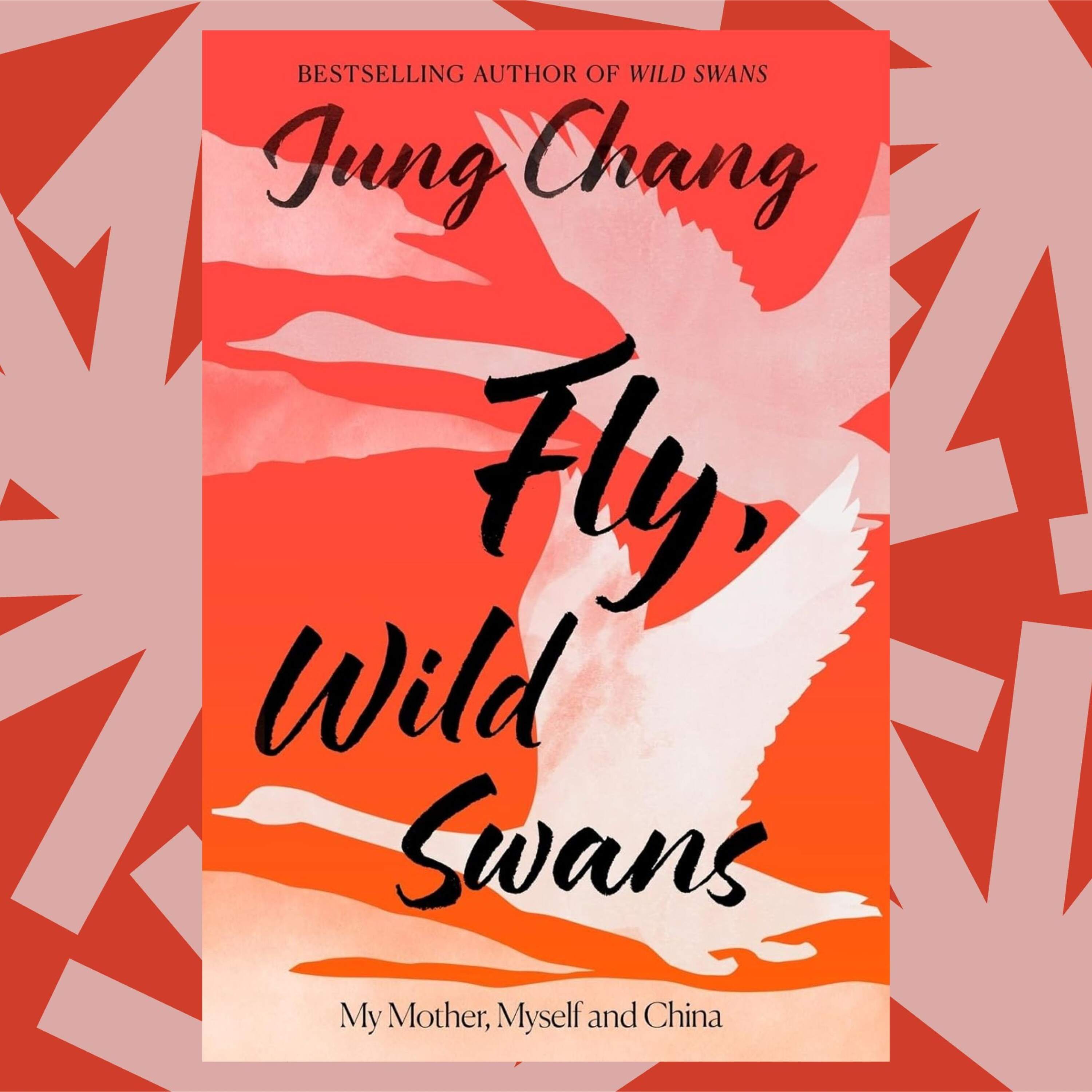
NPR's Book of the Day
'Fly, Wild Swans' weaves Jung Chang’s family history with the history of China
00:10:32
Loading summary
Transcript21 lines
- [00:02]
A
Hey, it's NPR's Book of the Day. I'm Andrew Limbong. When we talk about decisions writers make on this podcast, we're often talking about storytelling decisions or structural choices. But sometimes writers make decisions that have much more drastic consequences. The writer Yoong Chang cannot go back to China, where she was born to visit her aging, dying mother. That is in part because because of a book she wrote about Mao Zedong titled the Unknown Story. Yoon Chang has a new book out titled Fly Wild Swans. It's dedicated to her mother. And in this interview here and now, Scott Tang asks Yoong Chang if she ever looks back on that decision that has kept her out of China and regrets it. That's up ahead.
- [00:46]
B
Support for this podcast and the following message come from Strawberry Me. Be honest our Are you happy with your job? Are you stuck in a job you've outgrown or never wanted in the first place? Are your reasons for staying really just excuses for not leaving? Let a career coach from Strawberry Me help you get unstuck, discover the benefits of having a dedicated career coach in your corner and get 50% off your first coaching session at Strawberry Me, NPR.
- [01:17]
C
Jung Chang is the author of the international bestseller Wild Three Daughters of China. It's an intensely personal family story of China's famine and political witch hunts in the 20th century. And now she's got a sequel. Fly Wild Swans picks up where the first book left off. When Yung Chang, a young adult, left China for the west, she would go on to write more books, including one with her husband, John Halliday, on the Communist strongman Mao Zedong. Her books are now banned in China, and with party ideologue Xi Jinping in charge, she faces risks going back herself again. The book is Fly Wild Swans, and Jung Chang joins us from London. Welcome to the program.
- [01:56]
D
Thank you very much.
- [01:58]
C
So why, in your view, was it important to write a sequel?
- [02:03]
D
For many years, I didn't want to write a sequel. Wild Swan ends in 1978. I thought the changes and so on after that was not as dramatic. But. But then in 2023, my mother was very ill. In fact, she was dying, but I was unable to go back and see her. And when I was watching her face from my iPhone, I suddenly realized I wanted to write another book. I wanted to bring our stories up to date along with the story of China.
- [02:42]
C
Well, a lot of this book to me seems a love letter to your mother. She, of course, stayed in China when you left in western China, Sichuan Province, the city of Chengdu remind us a Little bit of her story you write about her being initially part of the Communist Party, and then, like so many, including people in my family, she suffered under the Communist Party.
- [03:07]
D
My mother joined the Communists underground before she was 16 years old, and she was joined by the Communists because of. Of the Communists promise to abolish concubinage. My mother saw her mother, my grandmother, suffer as a concubine of a warlord general. And so my mother then was joined to the Communists. But then she was disillusioned in the Cultural Revolution. My father was one of the few who stood up to Mao, and he was arrested, tortured, driven insane, and sent to a camp and died tragically. My mother stood by my father, so she suffered a lot. She went through scores of these ghastly denunciation meetings and was made to kneel on broken glass, but she still stood by my father. And I witnessed all that. The Cultural Revolution started when I was 14, so I saw how brave they were.
- [04:14]
C
You know, Americans from far away, you know, may have heard about their Cultural Revolution. There is hardly an adult alive in China who has not been influenced by the horrors of the Cultural Revolution, including my family. I mean, people who were denounced for committing, you know, sins according to the zealots of the Communist Party, you know, starting in the 1960s and ending in the mid-1970s. Part of the complications for you to even go back to China to visit your mother at the end of her life was because you wrote a biography of Mao Zedong. What are the most important things you learned and wrote about?
- [04:50]
D
The thing I found which shocked me most was the reason of the great famine. Between 1958 and 1961, around 40 million people died of starvation.
- [05:06]
C
And this is what some describe as, or the Party describes as the Great Leap Forward. That's what we're talking about.
- [05:13]
D
The Great Leap Forward was Mao's slogan to speed up the industrialization of China and to build a first class military industry so he could dominate the world. And he wanted to buy the military industries. But what did he use to pay for those expensive purchases? Mao's answer was food. He exported food to the Soviet bloc to pay for the military industries he wanted. My father, he was a devoted Communist. But when the famine came, seeing people dying of starvation made by his party, that was the moment he was thoroughly disillusioned. And that was the moment a lot of the Chinese Communist officials even became disillusioned. And so Mao faced a kind of revolt. He survived that collective revolt of his party members. That's why he launched the Cultural Revolution four Years later, to take revenge, to replace the party officials with people he thought were loyal to him. And of course, this threw the whole country into this most gigantic disaster, mayhem, suffering.
- [06:45]
C
This book you and your husband wrote, Mao the Unknown story, published in 2005, goes into detail of some of the most horrific 20th century moments in Chinese history. The Great leap forward. Nearly 40 million died during this human induced famine. And then the Cultural Revolution. Mao's central role in both of those and the suffering that tens of millions of Chinese endured at that time. Of course, you would pay a price for writing this. This is a very sensitive topic.
- [07:17]
D
Well, Beijing demanded that I apologize for that book of yours. This was the words from Beijing, otherwise, you would never be welcome in China. But the British government helped me. It was 2007. I mean, they did a deal with Beijing to allow me to go back every year to see my mother. And of course, in China, I would be like in a bubble. I had no contact with the public. And then in 2018, one of the first orders that Chairman Xi gave after he had made himself the permanent supreme leader of China, this order said that anyone who's deemed to have insulted revolutionary heroes would go to prison. Mao is the number one hero in China. And so if I go to China again, I could be sure to go to prison. And so I made the extremely difficult decision not to go back.
- [08:35]
C
You made this choice that for telling the actual story as you saw it, of a quote, unquote, hero of China, you faced this risk, and in the end, you were away, several thousand miles away from your mother at the end of her life. And the question is, at any moment, did you regret doing what you did?
- [08:53]
D
No. The thing is, my mother is so wonderful. On the time that doctors thought she was going to die, this would be the time that her children should gather at her bedside. But when my mother opened her eyes, she saw me on the street screen of the mobile. And then she said, don't come back for this. She made it her decision so I wouldn't feel bad. And this is typical of my mother. At every juncture of my life, she gave me freedom and she made me a writer. Because it was my mother who inspired me to write Wild Swans.
- [09:40]
C
Can I ask you one last question? Yong Cheng, you write in this new book, Fly Wild Swans, about the changing of China economically. And I kind of lived there in ways. It's become amazing, right? The quality of life that people now have and political challenges too. How do you think about where China is today and where it's going?
- [10:00]
D
Mr. Xi is trying to turn China back towards the bad old people. Mao's days. Mao had this ambition to build superpower China. Chairman Xi inherited Mao's ambition, but he also inherited relatively rich and powerful China. When I first realized this, the fear that had left me for 40 years returned. You know, I fled that ghastly system. And now if China takes over the world, where shall I flee?
- [10:41]
C
Jung Chang, author of the new book Fly Wild Swans, My mother, myself and China. Yong Chang Very nice to talk to you. Thanks for this.
- [10:50]
D
Thank you. Thank you very much.
- [11:03]
E
This message comes From NPR sponsor 1Password. Anyone else feel like 99% of your emails and texts are password reset codes trusted by millions of users and over 175,000 businesses? 1Password lets you skip the resets and sign in securely. With strong, unique passwords that autofill across all your devices, you can safely share logins, store cards and files. And finally, stop using your pet's name as a password. Try it free for two weeks at 1Password.com NPR this message comes from NPR sponsor NetSuite. Every business is asking the same question. How did they make AI work for them? With NetSuite by Oracle, you can put AI to work. Today, NetSuite is the number one AI Cloud ERP trusted by over 43,000 businesses. It's the unified suite that brings your financials, inventory, commerce, HR and CRM together. If your revenues are at least in the seven figures, get the free business guide Demystifying AI at netsuite.com story.