← NPR's Book of the Day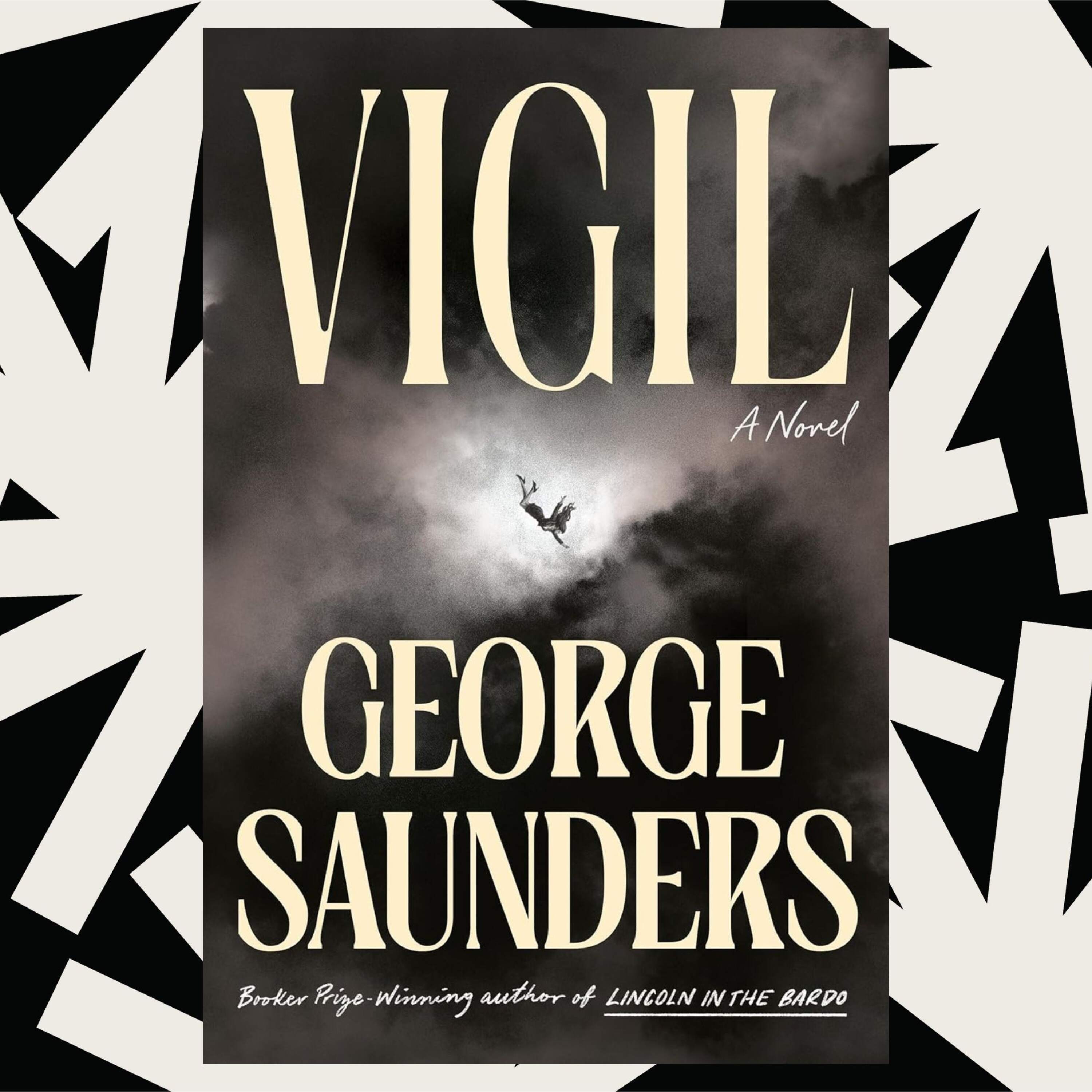
NPR's Book of the Day
George Saunders' 'Vigil' is a ghostly novel about an oil tycoon in his final hours
00:09:12
Loading summary
Transcript23 lines
- [00:02]
A
Hey, it's NPR's Book of the Day. I'm Andrew Limbaugh. A few years ago, my wife's grandfather died and we had to drive over to his place in New Jersey to help clean out the house. If you've ever done anything like that, you know, it's a bit of a referendum on someone's life. Some items trigger happy, pleasant memories, others not so much. And you have to wonder what it must be like to look back on your own life, to tally up the score, so to speak.
- [00:27]
B
Speak.
- [00:28]
A
That's exactly what happens in George Saunders novel Vigil. It's about an oil tycoon on his deathbed visited by a series of ghosts. And if that sounds a bit like a Christmas Carol to you, well, you're not totally wrong. But Saunders tells Emperor Scott Detrow that he's inspired by a lot of stories about death and dying because the questions we ask ourselves on our deathbed should be the ones we ask every day. That's ahead.
- [00:55]
B
Support for NPR and the following message come from HomeServe. Owning a home is full of surprises, and when something breaks, it can feel like the whole day unravels. HomeServe is ready to help, bringing peace of mind to four and a half million homeowners nationwide. Plans start at just $4.99 a month. Sign up today@homeserve.com not available everywhere. Most plans range between $4.99 to $11.99 a month. Your first year. 20 terms apply. Uncovered Repairs.
- [01:26]
C
Author George Saunders thinks a lot about death and the afterlife. It was the focus of his 2017 novel Lincoln in the Bardo. He vividly remembers the first time the topic entered his mind. He was about seven years old, visiting his grandparents in Amarillo, Texas.
- [01:42]
D
I just was awake and I could hear them breathing. And it just struck me that, you know, they seemed to me quite old and I knew old people died and that when that breath, breath stopped, then I would lose them, you know, And I, I had nobody to ask about that and I just lay there thinking about it.
- [01:57]
C
As a kid, he says he developed a love hate relationship with how finite life is. And he has continued to explore the world of ghosts and death in his new book, Vigil, which takes place in the final hours of K.J. boone's life. He's an oil tycoon who undercut the science of climate change. As Boone dies, he is visited by a series of ghosts. Everyone from the French inventor of the internal combustion engine who has arrived at Boone's deathbed seeking justice to an Earnest woman named Jill with one primary task.
- [02:25]
D
Her self appointed mission is to go around comforting all these different people who are at death's door. She feels like she's supposed to come into these rooms and somehow help these people with the transition.
- [02:37]
C
This is our first time talking, but it feels very natural for me to talk to you about your stories because I'm one of the many people who reads your story club substack where you break down short stories and talk about the writing process. And as I read this book, I kept thinking of the fact that about a year ago, A Christmas Carol is one of the stories that you were focusing on there. And there are a lot of similarities to me. And I'm wondering how top of mind A Christmas Carol was for you as you wrote Vigil.
- [03:05]
D
Yeah, that story is in my mind, probably with everything I've ever written. But also I had in mind another one. We did a story club called the Death of Ivan Ilyich. You know, these stories where a character basically is confronted with this question of like, how did you do? And it kind of interests me because in a sense we should be asking that all the time. But in that last instance, I'm sure the question looms even larger.
- [03:31]
C
So all of this story takes place in the final hours of Life of KJ Boon, who's this guy who rose from modest means to make a fortune in oil and gas and. And really establishes himself. You frame it as he's one of the foremost climate deniers in the world. He's given a series of speeches over the years that seem to move public opinion on injecting some skepticism into whether or not climate change was happening. Why to you, was climate change the big sin of the book? Why the focus there?
- [04:00]
D
It seems to me that that's something that if you put it on the table, it's gonna give the book a certain clothesline to hang all the fun on. So that was really my thought, is that that's an existential crisis. It's also, in his case, it's a sin that he could commit that sin while appearing fairly normal, you know, fairly benevolent to the outside world. Very successful, very rich. And I'd been in the oil business myself, so I thought that might be a nice way in to sort of write about something that I had some familiarity with and even some affection for, because I was in the oil fields in Asia back in my 20s, and it was a wild adventure and this feeling of being part of a kind of a special tribe and so on.
- [04:40]
C
You talk a lot about how the writing changes the story and how you'll surprise yourself as you write. And I will say you make a pretty compelling case for the fossil fuel industry in the pages of this book as he argues, you know, modern convenience, medicine, food supply, standard of living. Did you convince yourself at all, as you wrote that?
- [04:58]
D
Well, I mean, in a sense, you know, a book like this, I think is. It's kind of an orchestrated argument. So we have his, which certainly has some validity. I mean, you know, when we go to protest, we usually drive there. But also, this woman, Jill, has a very big hearted, almost unrealistically compassionate view of the world, so she's allowed a place at the table. So to me, it's not so much about what I feel, but about giving the characters a chance to have a kind of a good argument. And ideally, at the end of it, the reader comes out with kind of a, you know, maybe even a little bit of benevolent confusion. Like, wait a minute. In that moment, the argument can kind of come up a notch from the way we would normally have it.
- [05:39]
C
I wanted to talk through some of the big themes that come out of this book that the characters wrestle with, the plot wrestles with. One of them is this idea of inevitability. There's a lot of back and forth about this idea of are our actions clear choices or are we the sum of our background and experience? And curious what your starting point was, thinking about that idea and how it shifted over the course of the writing and thinking.
- [06:06]
D
Right. So for me, the starting point was an idea I had since I was a little kid. And it happened when I was in maybe first or second grade and we were just starting to read. And I just happened to be a good reader. And a friend of mine just was not as good a reader. He was really struggling. And I just looked over at the end of that school day and he was at his desk almost in tears, you know, with this thing. And even then I thought, oh, that's so weird. I didn't in the womb, you know, check off a box saying, make me a good reader. So I thought that then and I think now that to some extent this whole adventure in living we have could be softened and improved if we realize that a lot of things are predetermined. Even our ability to alter ourselves is somehow baked in. Then, on the other hand, you can't live that way. We have to take responsibility for our actions, even if they can sometimes feel somewhat predetermined, because you have a lot.
- [06:56]
C
Of other ghosts floating through telling Jill that she's basically giving him a free pass for every individual choice he's made in his life.
- [07:03]
D
Right. And I think they're right as well. It's sort of like, philosophically, it's the absolute versus the relative. So in an absolute sense, I think Jill, she's right. And if we all were a little more like Jill, there'd be less blame and less victory dancing. But on the other hand, given what K.J. boone has done, and given even Jill's stated intention to comfort him, she doesn't do it very well, actually. She just keeps telling him, you're fine, you're fine, you did nothing wrong. Meanwhile, the Frenchman says he did in fact, do something wrong. And as readers, we agree with him. But for his part, the Frenchman, I think, comes in a little too hot. So when I was finished with it, I thought the book is kind of a contemplation about how do we actually help somebody. How do we actually, if we see somebody who's done wrong, is it even possible to convert them?
- [07:52]
C
You know, I've been wondering, reading this book, thinking about this interview, given how much you write and think and talk about stories and storytelling and given how it is just a very dark and bleak period for a lot of people in the country right now, like what you think the value of fiction can be in moments like this.
- [08:15]
D
Yeah, I mean, I know sometimes, you know, as a fiction writer, you have the feeling you're kind of painting the baseboards as the ceiling crashes. But what I think is that on a very fundamental level, stories put us in a more solid relation to truth. So I think one of the crises we're in right now is that we're getting so many lies from on high that ask us to deny the evidence of our senses. So in that situation, to keep coming back and getting in relation to the truth is actually a pretty positive form of alertness and resistance. You know, it's kind of like if you were at a restaurant and a waiter brought in three turds on a tray. Well, what's basic sanity in that moment? It's to say, hold on a minute, this is not right. I know what truth is and you're lying to me. So I think fiction for me is just sort of a maybe a training wheels way of every day putting yourself in relation to truth and allowing your mind to say, does this strike me as truthful? In a time of crisis, it's a relatively small thing to do, but I think, like prayer or like being in connection with somebody you love, to return to a sort of basic sanity is almost like the foundational thing of living well in the world.
- [09:29]
C
That is George Saunders, author of the new book Vigil. Thank you so much for talking to us.
- [09:33]
D
Thank you so much. I really enjoyed. Foreign.
- [09:44]
B
This message comes from Rosetta Stone, the trusted leader in language learning. Choose from 25 languages. Receive 50% off a lifetime membership with unlimited access to 25 language courses for life. Visit rosettastone.com NPR this message comes from Midi Health introducing AgeWell Longevity Care, designed by women for women. Whether you're looking to prevent future health issues or just feel more like yourself, learn more@join MIDI.com that's join M I-I.com this message comes from Capella University. That spark you feel? That's your drive for more Capella University's flexpath Learning format lets you earn your degree at your pace without putting life on pause. Learn more@capella.edu.