← NPR's Book of the Day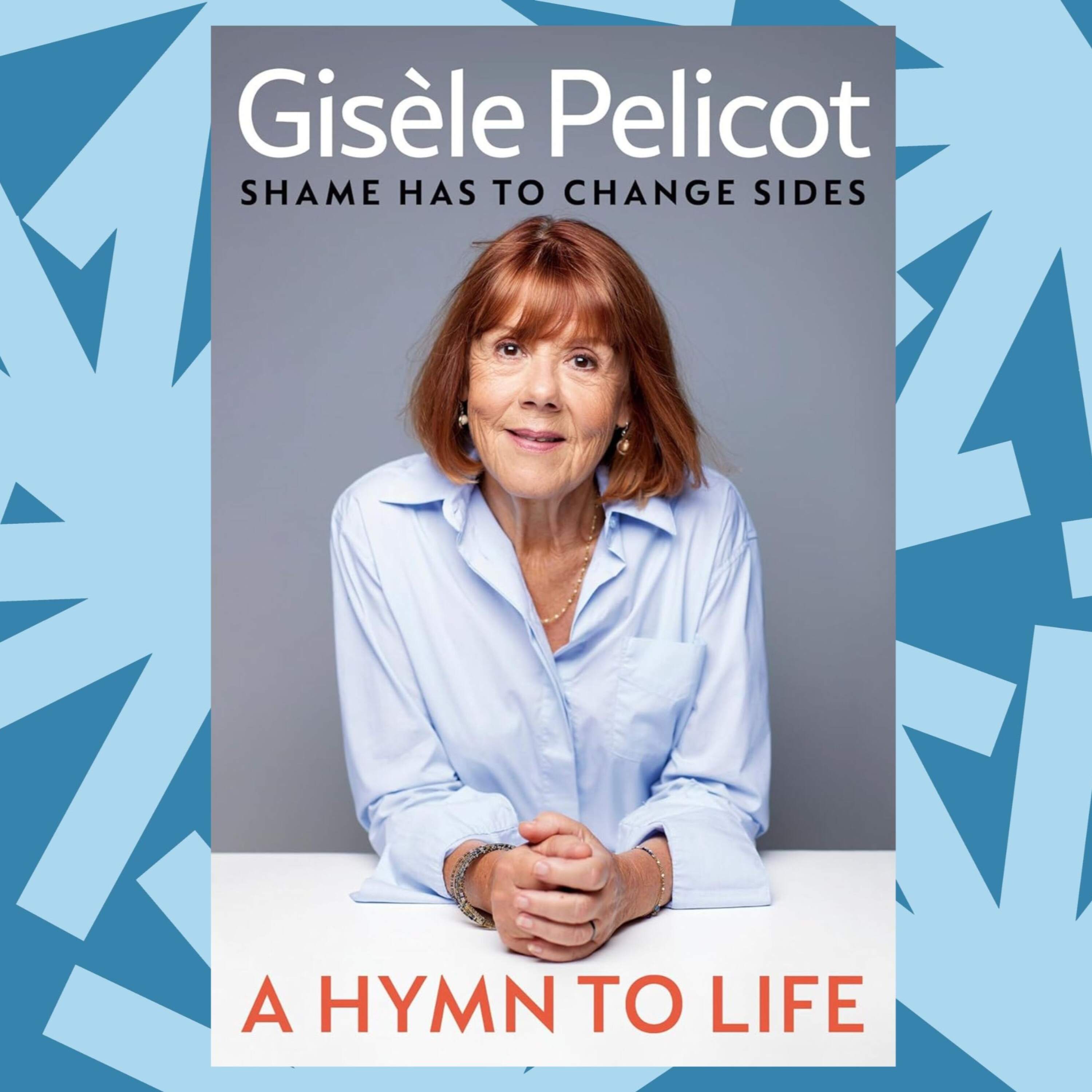
NPR's Book of the Day
Gisèle Pelicot’s 'A Hymn to Life' is both a memoir and an act of ultimate defiance
00:08:05
Loading summary
Transcript28 lines
- [00:02]
A
Hey, it's NPR's Book of the Day. I'm Andrew Limbong. The inherent value to most memoirs is that you hear from one voice, one person, one narrative stripped away from any other outside noise. It's especially valuable when the person writing it is someone at the center of a gigantic and difficult story. Today on the podcast, Giselle Pellico talks about her memoir, A Hymn to Life. If you're not familiar with her story, Peliko's husband spent years drugging and raping her and it inviting other men to their home in France to do the same. It's possible that after her husband's crimes were discovered, we would have never heard about it. But Pellico made a decision to make the trial public, air it out for all of us to see. She talks about why in this interview with NPR's Michelle Martin. And I just want to point out that after all she went through, it'd be completely understandable for Peliko to be bitter and angry. But this interview is not that. It's almost hopeful. That's a head.
- [01:03]
B
This message comes from Greenlight. Parents say financial literacy is the hardest life skill to teach. Greenlight's debit card and money app for families makes it easy for kids to learn to earn, save and spend wisely. Start today, risk free@greenlight.com NPR this message comes from Bombas. You need better socks and slippers and underwear because you should love what you wear every day. One purchased equals one donated. Go to bombus.com NPR and use code NPR for 20% off.
- [01:38]
C
In September of 2020, a man was caught filming up women's skirts at a supermarket in southeastern France. What happened next would change Giselle Pellicot's life forever and make headlines around the world. And here is where we need to let you know that this next story is about sexual assault.
- [01:56]
D
Tonight, a story so shocking it redefines the meaning. Dominique pelico, Principal AKUZE Dominique Pellicot recruited men on an Internet site to come rape his drugged, unconscious wife. He directed the participants and filmed it all.
- [02:13]
C
In December of 2024, Dominique Pellicot was found guilty of all charges and received the maximum sentence of 20 years. The 50 other defendants were also found guilty of rape or other sex crimes. Another 21 men on the tapes were never ident. But what also drew the attention of the world was not just the horrifying nature of the crime, but that Giselle Pellicot demanded that the trial be open to the public. Her refusal to be shamed or silenced has gone beyond her own trial and become a mission on behalf of other survivors. She writes about all of this in her new book, A Hymn to Life. She spoke with me from Paris through an interpreter, and I started by asking about the first conversation she had with the police.
- [02:56]
D
Lieutenant Perret shows me photos of what Mr. Pellicot had done to me. And I just don't recognize that woman. I don't recognize the place. And then it hit me like a high speed train. I just couldn't fathom that Mr. Pellicot could have done those things to me.
- [03:10]
C
Is it that you literally did not recognize yourself because you had been drugged? Or is it that your brain could just not accept that someone you loved and who you thought loved you could do that?
- [03:25]
D
I did not recognize that woman. It was like some rag doll disguised. And I didn't recognize the people. Like my brain just wouldn't. Couldn't understand it. My brain dissociated. It took me a long time to actually say the word rape. I couldn't even fathom it.
- [03:41]
C
Do you recall when you were finally able to fathom it?
- [03:49]
A
No.
- [03:49]
D
It was very, very difficult for me to realize that this was someone I'd spent 50 years with. I only really got to know side A of Mr. Pellicot, where he was kind, but I never really got to know the side B of him. That was not. It was very difficult.
- [04:06]
C
One of the things that I found so moving about the book, you refused to give up the side of Mr. Pellico that you knew before the part of your life that was happy. And I was so struck by that.
- [04:22]
D
We had happy times. We were married really young. We had three kids. We had seven grandkids. I can't erase that. What I do try in erase, though, is the darkness of Mr. Pellicaud. I try and forget that, but you can't really forget because the scars are indelible.
- [04:39]
C
You chose to have the trial be open. You could have had a closed trial. And in fact, through most of the trial preparation, that had been your plan and you changed your mind. Why did you decide to open the trial?
- [04:57]
D
In the beginning, I did want it to be a closed trial because I was ashamed. It sort of started coming to me little by little. I said to myself that shame needed to change sides. And by having the closed trial, I was giving them a gift. All these men, their names wouldn't have been known, and what they did wouldn't have been known. I realized that part of this trial was not just my trial, but this was a trial for all the women who suffered sexual violence.
- [05:25]
C
There's a long history of victims of sexual violence being blamed for it or being told that they are complicit in some way. There was the implication that you were part of some swing ear community. How did you cope with that?
- [05:43]
D
I experienced total humiliation. I was considered consenting complicit, a suspect, and all the victims said they weren't guilty. When I was able to speak, I said, I'm the only guilty party here, with 50 victims behind me. What saved me is that we had the evidence, we had the proof. Whereas in a lot of cases, it's the woman's word against the assailant. The accused parties always turn the situation around and say that they're being victimized because they're being accused. I wanted them to be put away for what they did. So that's why I was able to stand tall, be dignified, and keep going on. Because I knew that they were guilty and I was not guilty.
- [06:28]
C
And of course, the question that remains is why? Why would someone do this to someone? Especially someone that they claim to love? Do you think you'll ever have an answer?
- [06:42]
D
I don't know if I'll ever have the answer to that question. I choose to move towards the light. Mr. Pellico, he chose darkness. I was raped over 200 times over 10 years. I had illnesses and had to take antibiotics and even had a procedure at the end of this year. I'm fine now. But how could a human being do something like that to someone who's the love of their life? The question is still open.
- [07:09]
C
You end the book with an extraordinary statement. You write. I still need to believe in love. I even believed that I knew how to give it. I now know that it comes from a deep wound within me that makes me vulnerable. But I accept that fragility, that risk. Still, to fight the emptiness, I need to love. Where does that come from? This ability to still love? Can you explain it?
- [07:41]
D
I think love can save the world. And I've just had the great fortune of being in love again. And I just think that you have to believe, you have to trust. And I think if you don't love, you don't exist. If I don't love, I don't exist. I need to keep on loving. Yeah, I do indeed.
- [07:57]
C
It's been a great honor and a privilege to speak with you. I think you're extraordinary. And I am so grateful that you survived. And I'm so thankful that you were able to speak with us and to tell your story.
- [08:14]
D
I thank you and I had a great time spending this time with you.
- [08:22]
C
Tamara McGinnis provided the interpretation for this interview. You can hear my full conversation with Gisele Pellico on this week's Sunday Story. Find it in your upfirst podcast feed.
- [08:40]
B
This message comes from Vanta what's your 2am security worry? Is it do I have the right controls in place or are my vendors secure? Enter Vanta. Vanta automates manual work so you can stop sweating over spreadsheets, chasing audit evidence and filling out endless questionnaires. Their trust management platform continuously monitors your systems, centralizes your data, and simplifies your security at scale. Get started@vanta.com that's V A N T.
- [09:10]
C
A dot com Vanta this message comes.
- [09:13]
E
From BetterHelp during February, it can feel like everyone has it all together in their love lives, but the truth is, most people are still figuring it out. Take the pressure off and feel lighter in therapy. Visit betterhelp.com NPR for 10% off.
- [09:29]
B
This message comes from ADP. Whether it's a last minute policy change or adding a new company holiday, anything can change the world of work. From HR to payroll, ADP helps businesses take on the next anything. ADP always designing for people.