← NPR's Book of the Day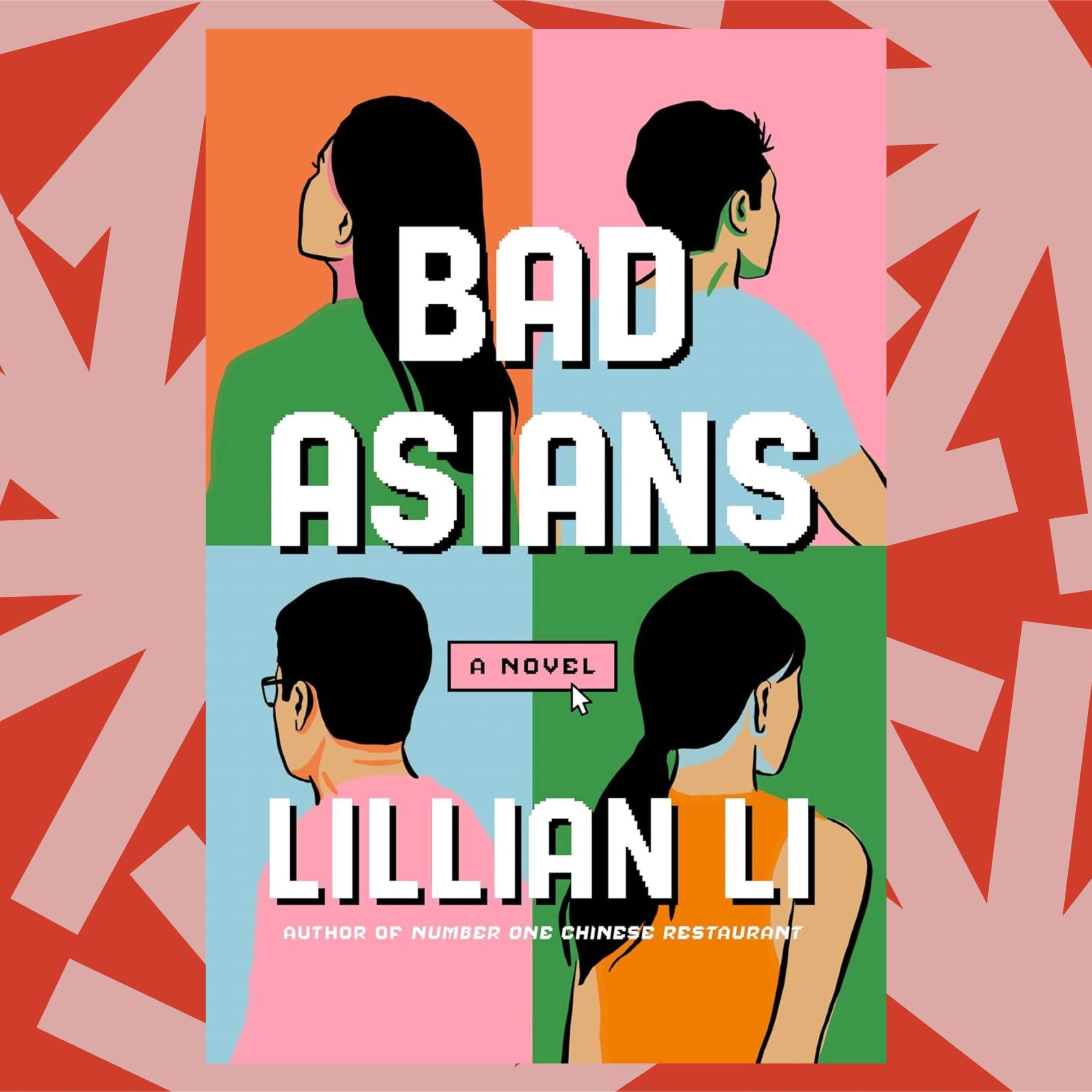
NPR's Book of the Day
In 'Bad Asians,' a friend group threatens its reputation with a viral video
00:10:38
Loading summary
Transcript33 lines
- [00:02]
A
Hey, it's NPR's Book of the Day. I'm Andrew Limbong. In all the questioning about why young people don't hang out with each other as much as they used to, why are they so lonely? There's one hypothesis going around that it's the omnipresence of cameras on our phones, this idea that one video of you doing something embarrassing or saying something you shouldn't be saying could ruin your life. The new novel Bad Asians is set during the beginning of that phenomenon, when you could get famous for being messy on YouTube, but we didn't really fully realize what was in Pandora's box. In this interview with Here and Now, Scott Tong, author Lillian Lee talks about how the early Internet ironically felt private in a way, and how naive we all were to think so. That's up ahead.
- [00:50]
B
This message comes from Liveright publishers of Churn the Tension that Divides Us and How to Overcome It. Author Claude Steele examines the stress people can experience in life's culturally diverse settings and how to build trust. Churn, available now.
- [01:06]
C
This message comes from Bombas. You need better socks and slippers and underwear because you should love what you wear every day. One purchased equals one donated. Go to bombus.com NPR and use code NPR for 20% off.
- [01:24]
D
There's a new book out with a provocative title, Bad Asians. It centers around four friends, all Chinese American, who growing up were pressured to be the good Asians, get top grades, go to brand name colleges, graduate in high powered jobs till it all went off the rails for all of them, largely because they graduated in 2008 when the economy went poof. And that's when the book gets interesting. Lillian Lee is author of Bad Asians and she's here to talk about it. Lillian, good to talk to you.
- [01:55]
B
Good to talk to you.
- [01:57]
D
So my confession, I'm reading this book, your book about four friends from the same wealthy suburb of Washington, D.C. where I live, Justin and Errol and Vivian and Diana. And I'm nodding because I've lived this movie, you know, great Expectations. Do you draw some of this from your own life?
- [02:14]
B
I did. I happen to grow up in also a hyper competitive Chinese American community in North Potomac, Maryland. There's actually a map at the very start of the book and it is illustrated from a screenshot I took from my childhood neighborhood.
- [02:30]
D
Wow. So I want to get to the action right. These four young 20somethings, the recession comes, they're stuck living with their parents for a while. One of their classmates from Potomac, Maryland, wants to make a video about These good Asians being bad Asians. Tell me what happens here.
- [02:47]
B
This former classmate, Grace Lee, who was in some ways the golden child of their community. She.
- [02:54]
D
She's the one who goes to Harvard, right?
- [02:56]
B
Exactly. You cut right to the chase. Exactly. But she drops out of Harvard Law. She does this because she wants to become a filmmaker, which is just unheard of in their community. And when she asks the friends to be a part of her documentary about the recession, they agree out of, in some sense, schadenfreude. They want front row seats to this car wreck. They think she's blowing up her life.
- [03:24]
D
Oh, yeah.
- [03:24]
B
But then, against all odds, this little film goes viral. And it's one of the first viral videos of the YouTube era. It skyrockets Grace to fame and the friend group into notoriety because they are portrayed as caricatures of themselves. And how I like to explain this video is, you know, imagine the venting sessions you have about your closest friends, or you're just trying to let out a little bit of steam. Now imagine that recorded and presented to millions of strangers.
- [03:56]
D
Yeah, well, it's kind of obvious now in 2026. Right. The Internet is forever. Watch what you put online. But are you trying to tell a story about the early days of YouTube? Maybe how perhaps all of us were kind of naive about this at one point?
- [04:13]
B
Absolutely. I was trying to capture that initial innocence that we all had. The sense that you almost in a private room with your friends, rather than having it be this public forum that everyone across the world could attend. And I wanted to capture that private feeling the early Internet had so that I could explain why my characters make these kind of insane decisions to put themselves out there and expose their true thoughts and feelings. But I think that's also why the video goes viral, is because of how authentically they behave when they think no one's really watching.
- [04:54]
C
Yeah.
- [04:55]
D
You know, as far as the Asian American stereotype, you take it and you kind of blow it up with these characters. They go off the rails on drugs, and their own relationships with one another blow up. At a certain point, their relationships with their parents, you know, so important, get compromised. It's very dramatic. And I gather you're doing this on purpose.
- [05:14]
B
I am, yes. I definitely, definitely wanted to also capture that period of your early mid-20s, before your prefrontal cortex really matures. Right. But you have access to freedom outside of parental or an authority looking over you and your choices. And so I wanted my characters to make these decisions when they feel like they're kind of immortal. And untouchable and to come up against real permanent consequences.
- [05:48]
D
If you're just joining us, we are talking to Lillian Lee. Her new novel is Bad Asians. And, Lillian, I wonder if you would read a small passage from the book. This is 229. And to kind of set it up, this is when this initial filmmaker, you know, Grace, has done these things and she's made her friends look bad. And then toward the end of your novel, she kind of repents a little bit. And she's giving an interview. And I wonder if you can read a little from the interview, maybe starting with. I wanted my Asian American viewers.
- [06:20]
B
Sure thing. I wanted my Asian American viewers to think critically about how they grew up and what influences their choices. Are they chasing success for the sake of it? Are they doing whatever their parents tell them? Asian Americans are the most educated demographic with the highest median income, and yet we're also the least politically active. It's sickening how complacent and materialistic we can be. We have an incredibly important presidential election coming up this year. This is in 2016, by the way.
- [06:49]
D
Okay.
- [06:51]
B
And civil rights protests all over the country. Meanwhile, the people I grew up with are posting about their new condo or designer bag.
- [07:00]
D
Yeah. And let me pause you there. Is that your voice?
- [07:03]
B
I think that that was my voice in 2016. And I wanted to put that outrage into Grace, but also put the naivete of that outrage because it's very finger pointy. And meanwhile, as you mentioned, Grace has done all kinds of harmful things to the people that trust her in order to chase her own status symbols, her own success. So I think it was me capturing a younger version of myself while also adding in the reflection of who I am now.
- [07:44]
D
An important recurring theme in your novel is how much Asian American children can be shaped by their parents, in many cases immigrant parents. Is there something, I guess, from your own experience, observing it, living it yourself, that you wanted to present to us?
- [08:01]
B
Yes. So I grew up with the narrative that my parents came to America to give me a better life. And so there was always a sense of. I know. And it makes sense because it's a very useful way of getting me to do what they want. There's a lot of responsibility towards being the reward for their hard work. And as I came to be the same age as my parents, when they came over, they were mid-20s, I realized my parents came over for themselves. Like they came over for, you know, incredible educational opportunity. They were some of the most ambitious, smartest people in China, and they came over because they wanted to rule the world. And that level of ambition, when they came up against the barriers of language and racism and xenophobia, they realized, oh, within this generation, we can't access the. The ambition that we have burning inside us. And so the best we can do is pass that down to our kids and their kids. And I realized that the greatest cultural inheritance that I got from my parents was their ambition. And it's been something that I've been trying to unravel for myself and through my characters of what truly is my sense of ambition and success and what is theirs.
- [09:26]
D
Yeah. And how easy is it to untangle one from the other? Just talking for me, Lillian, finally, you know what do you want your reader to take away? Your Asian American reader, Your reader in general.
- [09:41]
B
Before I ever knew that I wanted to write a book that was set in the 08 recession, I knew I wanted to write about friendship and specifically friendship breakups. They don't seem to be talked about in the same way that we talk about our family or our romantic relationships, but they're a huge part of our day to day. And I realized that there were monumental friendship breakups in my life that I thought about for much longer than any romantic ones. And I had all these questions of why do these friendship breakups stick with us? Is it because you can choose your friends? So the choice to unfriend is that much more devastating, or is there even a sense of shame? Because when someone doesn't want to be your friend anymore, it's more of a potential commentary on your character? And I wanted to write a book that asked those questions of what holds a friendship together? Why does a friendship end? And how might we even find our way back together again? And I think that Bad Asians, even if it doesn't fully answer those questions, hopefully readers feel less alone in asking those questions themselves.
- [10:53]
D
The book, the novel, is Bad Asians. And we've been talking to the author, Lillian Lee. Lillian, thanks so much for the time.
- [11:00]
B
This was fantastic. Thank you.
- [11:13]
C
This message comes from BetterHelp International Women's Day is this March time to celebrate all women, the leaders, the caregivers, the hype, friends, the how do you do it? All types. Women deserve to be reminded how much they matter and that therapy offers a space to care for themselves. BetterHelp makes it simple by matching you with a qualified therapist based on your needs and preferences. Visit betterhelp.com NPR for 10% off.
- [11:40]
B
This message comes from Warby Parker. Prescription eyewear that's expertly crafted and unexpectedly affordable. Glasses designed in house from premium materials starting at just $95, including prescription lenses. Stop by a Warby Parker store near you.
- [11:54]
C
Support for this podcast and the following message come from the NPR Wine Club, which has generated over $1.75 million to support NPR programming, whether buying a few bottles or joining the club. You can learn more@NPRWineClub.org podcast must be 21 or older to purchase.