← NPR's Book of the Day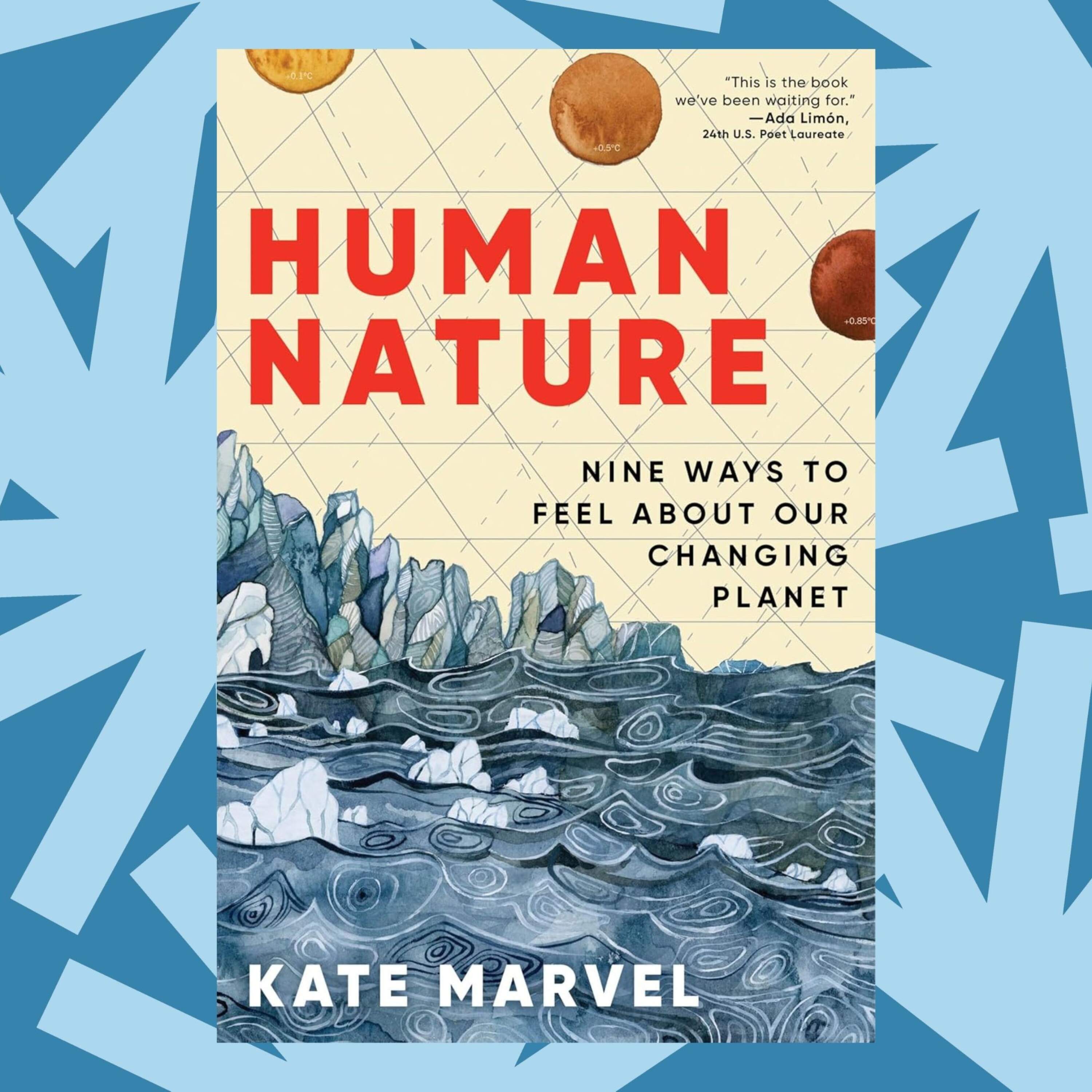
NPR's Book of the Day
In ‘Human Nature,’ Kate Marvel bridges the gap between climate science and emotions
00:08:46
Loading summary
Transcript33 lines
- [00:03]
Andrew Limbong
Hey, it's NPR's Book of the Day. I'm Andrew Limbong. In conversations about climate change, you hear a lot about numbers, how it's X degrees hotter this year than last, or the Y amount of greenhouse gases we are emitting into the atmosphere. But Kate Marvel is a climate scientist whose new book, Human Nature, talks about climate change in, well, more human terms, emotions. And in this interview with npr, Scott Simon, they touch on one emotion that you don't hear a lot about in climate conversations, pride. That's coming up. This message comes from Sony Pictures Classics and the new film east of Wall, a portrait of female cowgirls in the new west, directed by Kate Beecroft. A rancher must cope with her family losing her ranch and providing for a group of wayward teens. Only in theaters August 15th.
- [00:54]
Scott Simon
This message comes from Progressive Insurance and the name your price tool. It helps you find car insurance options in your budget. Try it today@progressive.com, progressive Casualty Insurance Company and affiliates. Price and coverage match limited by state law, not available in all states.
- [01:09]
This is WEEKEND EDITION from NPR News. I'm Scott Simon. Kate Marvel, the climate scientist who has testified before Congress and been lead author of the U.S. national Climate Assessment, begins her new book with a confession. I need to declare a conflict of interest regarding Earth. Everyone I love lives here. She then does what some might deem unscientific. She explores climate change through nine emotions. They include anger, fear and hope for the human future in a world beset by more heat, storms and uncertainty. Kate Marvel, author of the new book Human Nature, joins us in our studios. Thanks so much for being with us.
- [01:54]
Kate Marvel
Thanks so much for having me. I'm so excited to be here.
- [01:57]
Scott Simon
I feel the need to begin with the fact that you say in your work you have seen the world come to an end many, many times. What happens?
- [02:07]
Kate Marvel
It's an occupational hazard of being a climate scientist. We use these models, these computer climate models, which you can basically think of as digital toy planets on a computer. And you can do terrible things to these planets. You can set off volcano. You can make the world spin backwards. You can make the world end. And we do that hundreds of times a year in the safety of these digital climate models. And so after a while, you get really used to the apocalypse. You get really used to seeing the world end because it's just ending on your screen in a model.
- [02:42]
Scott Simon
But of course, the point of your book is it's not.
- [02:45]
Kate Marvel
Yeah, it's very disturbing to see the model predictions start to come true. It's one Thing to watch the world end. And another thing, to live in a world that's changing so profoundly.
- [02:58]
Scott Simon
Why did you feel it was important to bring emotion into the science?
- [03:04]
Kate Marvel
You nailed it. I struggled with this so much. I thought I felt guilty for having feelings. I felt guilty for thinking about the way that I approached my work through the lens of emotions. I had this notion that we should all be perfectly objective, neutral, scientific robots. And then it kind of dawned upon me that that's not the way to make yourself more credible because you're lying about your emotions. That's not the way to get people to trust you. And so I'm a scientist. I love data. Let's talk about how we feel about the Earth that we're studying. There's nothing that says you cannot be a scientist and also be a fully human person at the same time.
- [03:48]
Scott Simon
I want to take you through some of the emotions that you present us with, and let me inevitably begin with anger. You mentioned a name that was new to me. I confess, and I know it makes you angry. Eunice Foot.
- [04:00]
Kate Marvel
Yeah. Eunice Foote was essentially the discoverer of the greenhouse effect, and she discovered it way back in the 1800s.
- [04:09]
Scott Simon
She was dismissed at the time.
- [04:11]
Kate Marvel
Well, she was a woman, so she wasn't really paid attention to. And at the time, nobody really thought anything as crazy as, oh, human beings can change the climate of the entire Earth, because we still have a hard time accepting that. Right. It still seems completely wild that human activities can change everything about the entire planet.
- [04:33]
Scott Simon
In your chapter on fear, I made particular note of when you wrote that your biggest fear about climate change is what it might make us do to each other.
- [04:43]
Kate Marvel
Exactly, yeah. There are so many instances in history of human societies not reacting to adversity in optimal ways. My favorite thing that I learned when I was writing this book is if you look back to early modern Europe, there's something called the Little Ice Age. And as a result, the weather, especially in Europe, got kind of wild. And if you look at history, this is the time when accusations of witchcraft really starts to surface. And if you look at what witches were being accused of, nine times out of ten, they're being accused of manipulating the weather. What you can take away from that, I think, is that human societies are so complex, and we cannot be sure that we are going to react to whatever the future throws at us with the optimal response.
- [05:41]
Scott Simon
Why was it important for you to include a chapter on pride?
- [05:46]
Kate Marvel
Two reasons. I think I wanted to sort of play with the idea of pride as hubris. Pride is one of the sets seven deadly sins. There is a lot of hubris in climate conversations, especially surrounding geoengineering. There is a increasingly vocal contingent that says, well, what we need to do is deliberately change the planet. We need to intervene to counteract the warming by deliberately cooling the planet.
- [06:13]
Scott Simon
More clouds, less sunlight blocking the sun.
- [06:16]
Kate Marvel
Being artificial volcanoes, spraying gas and dust into the stratosphere. And I think those are the definition of hubris. They might be necessary hubris, but they very much are coming from a place of human arrogance, I think.
- [06:31]
Scott Simon
But let me point out, as people undoubtedly have to you, you know, on the other hand, people take steps to protect their health, to deter death and suffering that just a few decades ago would have been unthinkable. But we don't think of that as hubris. We think of it as an intelligent use of science to promote our welfare and longevity.
- [06:52]
Kate Marvel
Absolutely. I mean, the that I think about these interventions is it's kind of like having your stomach pumped. You know, you want that option to be available, but you should probably stop drinking poison in the first place.
- [07:06]
Scott Simon
You do include hope?
- [07:07]
Kate Marvel
I do, yeah.
- [07:09]
Scott Simon
What gives you hope?
- [07:10]
Kate Marvel
That's a very interesting question for a climate scientist. I'm going to dodge it, I think, by saying I don't think I need hope because I think it's the wrong question. I think the more important thing is that we have the tools that we need to get started. Know how to stop putting greenhouse gases in the atmosphere, we need to generate electricity in different ways, we need to switch out transportation, we need to build more walkable cities, we need to steward our land more wisely. And so if you look at the strategies, there are so many verbs there. Right. And none of those is hope. So, sure, if, if you want to have hope, go for it. I have hope. Sure, why not? But that to me is not really the relevant question. We know what to do. So let's get started.
- [07:57]
Scott Simon
Your book is appearing at a time at what I'll just refer to as a moment in history and our politics.
- [08:05]
Kate Marvel
That's true. It is, I think, an interesting time. It's an interesting time for a book to come out that seeks to re inject climate change into a very crowded national and international conversation. I am not a politician, I'm not a policymaker, I'm not a consultant. I can't say what the optimal way forward is. I can't say what the optimal messaging strategy is. But what I can say is that we may try to put climate change aside and it's not going to stay aside, it will keep resurfacing. And so even if we try to sideline climate change, it's not going to let us forget it. It's going to keep emerging in every aspect of our conversations, not just our politics, not just our economy, but everything that we do on this planet.
- [09:02]
Scott Simon
Kate Marvel, her new book, Human Nature 9 Ways to Feel About Our Changing Planet. Thank you so much for being with us.
- [09:09]
Kate Marvel
Thanks so much.
- [09:22]
Scott Simon
Support for NPR and the following message come from Indeed. You just realized your business needed to hire someone yesterday. Speed up your hiring right now with Indeed. Claim your $75 sponsored job credit to get your jobs more visibility@ Indeed.com NPR terms and conditions apply.
- [09:41]
Andrew Limbong
This message comes from Schwab. Everyone has moments when they could have done better, like cutting their own hair or for getting sunscreen. So now you look like a tomato. Same goes for where you invest. Level up and invest smarter with Schwab. Get market insights, education and human help when you need it. Learn more@schwab.com this message comes from Mint Mobile.
- [10:04]
Scott Simon
Mint Mobile took what's wrong with wireless and made it right. They offer premium wireless plans for less and all plans include high speed data, unlimited talk and text, and nationwide coverage. See for yourself@mintmobile.com Switch.