← NPR's Book of the Day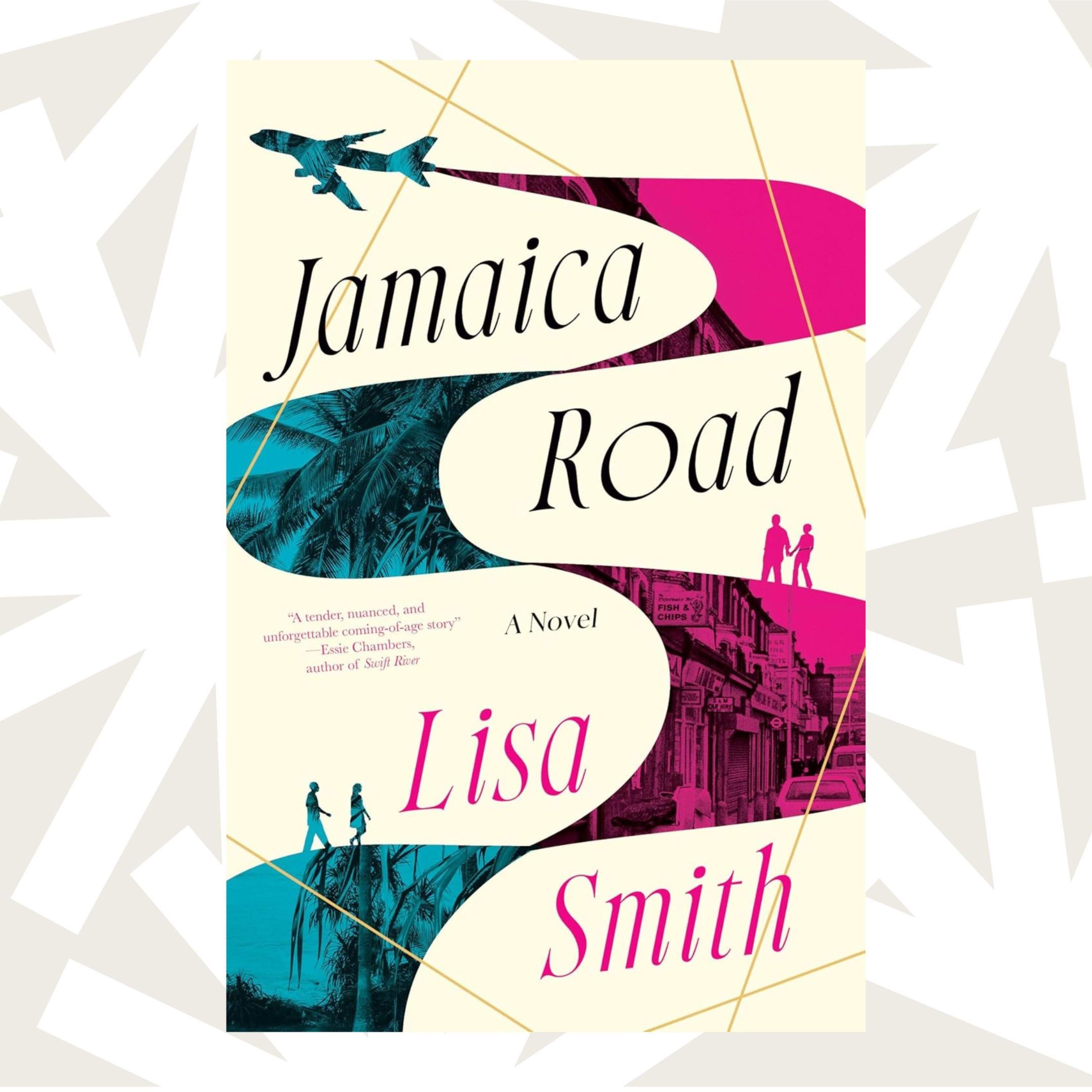
NPR's Book of the Day
In Lisa Smith’s ‘Jamaica Road,’ a young girl searches for belonging in 1980s London
00:10:21
Loading summary
Transcript25 lines
- [00:00]
Progressive Insurance
This message comes from Progressive Insurance and the name your price tool. It helps you find car insurance options in your budget. Try it today@progressive.com, progressive Casualty Insurance Company and affiliates. Price and coverage match limited by state law, not available in all states.
- [00:18]
Andrew Limbong
Hey, it's NPR's Book of the Day. I'm Andrew Limbong. In Lisa Smith's debut novel Jamaica Road, there's a character who was originally just supposed to pop in, be a jerk and then exit the narrative forever. But the thing about writing fiction is that the characters also have a say in what they do. And so this one in particular happened to stick around. Author Lisa Smith spoke to Here Now's Deborah Becker about this process of discovering things about the people she's writing about and learning to stop resisting what they're telling her. That's ahead.
- [00:51]
Amazon
This message comes from Amazon. Have you ever gotten sick on a very expensive, very non refundable family trip? Amazon One Medical has 247 virtual care so you can get help no matter where you are. And with Amazon pharmacy, your meds can get delivered right to your hotel fast. It's kind of like the room service of medical care. Thanks to Amazon Healthcare just got less painful.
- [01:17]
Progressive Insurance
This message is from Synchrony bank who can help you get your do nothing savings to work hard with their high yield savings account. Put your lazy savings to work@synchrony.com NPR.
- [01:28]
Deborah Becker
Member FDIC A coming of age novel and a love story set among the racial tensions in London in the 1980s. All of this and more is in Lisa Smith's debut novel, Jamaica Road. The book centers on Daphne, who is 12 years old when we meet her and her best friend Connie. And we follow them for a tumultuous 12 years as they wrestle with identity, love as well as hate, and some historical events in Britain that resonate today. Again, the book is Jamaica Road and Lisa Smith joins me now to talk about it. Welcome.
- [02:04]
Lisa Smith
Hello. Thank you for having me on.
- [02:06]
Deborah Becker
Well, let's talk about your debut novel, Daphne. Our center character here is born in London to a Jamaican family. And I wondered, is this place partly your story too?
- [02:18]
Lisa Smith
Well, like most writers, you kind of start from what you know during a creative writing workshop of all things. The course coordinator asked the class to think of an outsider and this image of a boy that had arrived at my primary school. So I was about 8, just fell into my head and you know, where I went to school was very similar to the place I write about in Jamaica Road. It was a very, very working class, predominantly white area and I was the only black girl in the class. I just remember this boy just turning up out of nowhere. And he was very tall and he wore the wrong kind of clothes now, kind of shabby. And he spoke of a really strong Jamaican accent, which was extraordinary to me at the time because, I mean, I'm British Jamaican, so I was born in the uk, but I'd only ever heard grown ups speak with a Jamaican acc. So. But the fact this boy fell into my head during his creative writing class, I just thought, well, I'm just gonna go with it. And almost immediately, the voice of Daphne was worming its way into my ear. So that's what I wrote. But quite soon, you know, of course, characters take on a life of their own. And so then it moves away from being autobiographical. Yeah.
- [03:34]
Deborah Becker
And Daphne was an outsider too, right? I mean, she.
- [03:38]
Lisa Smith
Well, that's the thing. Yes. You start off with the idea of thinking that it's Connie who's the outsider. Connie is the migrant, but as you know, a British Jamaican. Certainly in the 80s, you know, there was a sense that I remember of being British but never quite being British enough. So, yeah, I mean, I think for Daphne, what comes through, hopefully is the fact that she's looking for belonging just as much as Connie is. Yeah, yeah.
- [04:06]
Deborah Becker
So Daphne meets Connie when Connie moves to London and is staying with his mom. And she's actually assigned to help him assimilate because the teacher says, well, you're both from Jamaica, so maybe you can help each other. And at first, Daphne wants no part of this. Right. Because her survival mode really has been to keep her head down. Right. And not draw attention to her race. And like you, she was the only black student at her school. She's been subjected to racism and I mean, some of the taunts directed at her and then at Connie, I mean, they sound as if those could still be very prevalent today, unfortunately. And yet you set this story in the 1980s. Why was that the time to bring Daphne and Connie to life?
- [04:52]
Lisa Smith
The era chose me. As I say, the idea came from a memory from my past. But I was aware while I was writing about the fact that a lot of what is happening now was happening then. Politicians are kind of leaning into anti migrant sentiments.
- [05:13]
Deborah Becker
In the book too, Daphne learns that Connie is undocumented. Right. Which is another. Another thing. And all the fe surrounding being undocumented and what that means, which also resonates a lot today.
- [05:28]
Lisa Smith
Yeah. That has actually got, you know, it's the same. It's also got worse. You know, they are just Demonized now in a way that in the past it was a case of, well, they're here, they shouldn't be here, they're breaking the law. But now it's just the attitude is very much like they are leeching off of society and that they give nothing back. And it's a. It's. They're doubly demonized.
- [05:49]
Deborah Becker
I think the way you use language, that's a huge part of the storytelling here. You're splicing in some Jamaican accent, local South London accent, the Queen's English, as you call it. Right. Sometimes all from one character. Right. And all within this tight knit Jamaican community in London. So I would love it if you could articulate what are you trying to portray in the story about the immigrant experience through this type of dialogue?
- [06:19]
Lisa Smith
Lots of things. I mean, I think certainly when I was growing up in southeast London, when I went to school, I was kind of initially known as the posh kid because I was taught to speak the way my mum was taught to speak, in a very kind of precise sort of English. Standard English, they call it, rather than Jamaican English. My mum wasn't allowed to speak Jamaican patois anywhere near the school. No, that was for backyards and verandas. You don't speak like that in this school. You speak proper English and that's how you get ahead. So that's what my mum taught us. And then when I went to school, I realized actually that sounded a bit posh and I was standing out a bit more. So I quickly learned, you know, to drop my H's and to say indoors rather than at home and refer to lunch as dinner and dinner is tea. Kind of just completely kind of thing. I need to not be the posh black girl because I'm already the black girl. Interestingly enough, you know, when my mum got together with other Jamaicans, her accent was stronger. She just lapsed back into it. It just felt like they were being themselves. Their voices went stiff. And I really liked that. I wanted to convey that in the novel where that, yes, they're code switching, but actually when they're together, I mean. I mean, I just really, really enjoyed writing the dialogue, no, the patois, because that's how I heard it. And it's like those characters with any, you know, in any other way in standard English just would not work. They just wouldn't come alive to me. Right, right.
- [07:51]
Deborah Becker
And there's a lot of complexity there, not just in language, but, you know, of course, we're talking about a young girl becoming a young woman. And Dealing with all kinds of things, with identity and sexuality as well. And at one point, she really wrestles with being attracted to a white boy, a boy who's part of a group that racially harasses others. So why was this part of Daphne's story?
- [08:17]
Lisa Smith
Mark Barrett was supposed to just turn up, say a few racist things, then disappear from the novel. But for some reason, I kept writing more and more scenes with him. He just lingered. He just wouldn't go away. And, you know, one of my tutors said that if you sit with a character long enough, they do start doing things that you necessarily weren't expecting. And so the encounter in the first chapter with Daphne and Mark is very. Was very surprising to me. But I showed it to my friends, and they were also surprised, but they were also intrigued. They was like, just keep going with it. But the first thing they did say was, you don't do that unless you like somebody. And I was, like, horrified, thinking, my God, does Daphne like Mark? How could she like Mark? That's insane. But once I started writing and getting into it, I then started thinking about my own past. I mean, I keep saying it's not autobiographical, and it isn't autobiographical in. In that sense at all. I certainly haven't done anything quite like that in a swimming pool. But, you know, I did think about growing up in a South London town estate where there was a mix of people. There were black people, there were white people. No, we went to schools, big comprehensive schools where there was a mix of black people, white people, and the kids were mixing. We were mixing. And there was, to some extent, you know, young white people who came from fairly tough racist families who didn't quite believe what their parents were telling them because they were seeing something different at school and so therefore didn't really buy it.
- [09:59]
Deborah Becker
Yeah. In the book, Connie's mother, Althea, has a saying that you repeat several times in the book in different circumstances. Can you tell us about that? What it is, what it means?
- [10:11]
Lisa Smith
We run things. Tings. No, run. We. Basically, it just means that we control our fate. You know, we can change things, but we have to believe that we can.
- [10:25]
Deborah Becker
Right. Because you're talking about people who really are in a powerless position.
- [10:28]
Lisa Smith
Right, Exactly. Yeah. And so sometimes it kind of rings hollow, but what it does for Daphne is that it does galvanize her into action to seize life. I mean, that's the thing about Daphne at the start of the novel. She's there, she's hiding, she's keeping her head down. She's just gritting her teeth and plowing her way through. But the thing that Connie does is he disrupts all that and he actually makes her bolder.
- [10:57]
Deborah Becker
Well, Lisa Smith's debut novel is Jamaica Road. Lisa, thanks so much for being with us.
- [11:03]
Lisa Smith
Thank you so much.
- [11:16]
Progressive Insurance
This Message comes from Amazon One Medical Ever gotten sick on vacation? AmazonOne Medical has 24. 7 virtual care so you can get help no matter where you are. It's kind of like the room service of medical care. Thanks to Amazon Healthcare just got less painful. This message comes from Mint Mobile. If you're tired of spending hundreds on big wireless bills, bogus fees and free perks, Mint Mobile might be right for you with plans starting from 15 bucks a month. Shop plans today@mintmobile.com Switch upfront payment of $45 for 3 month 5 gigabyte plan required. New customer offer for first 3 months only, then full price plan options available, taxes and fees extra. See Mint Mobile for details. This message comes from Warby Parker. What makes a great pair of glasses at Warby Parker? It's all the invisible extras without the extra cost, like free adjustments for life. Find your pair@warbyparker.com or visit one of their hundreds of stores around the country.