← NPR's Book of the Day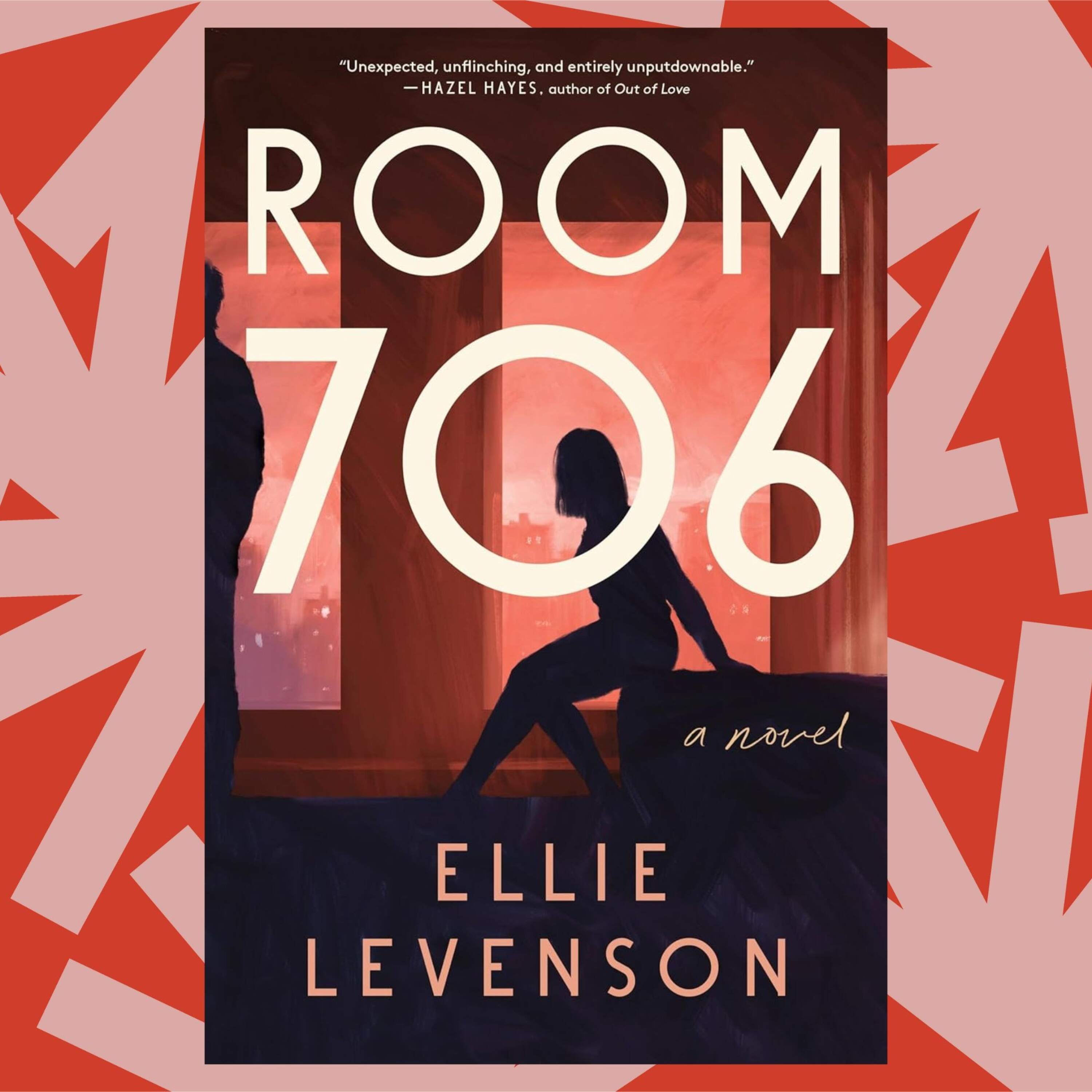
NPR's Book of the Day
In 'Room 706,' a woman confronts her extramarital affair during a hostage crisis
00:07:40
Loading summary
Transcript29 lines
- [00:02]
Andrew Limbong
Hey, it's NPR's Book of the Day. I'm Andrew Limbong. If you're in the mood to snuggle up this February with a book that is cozy and romantic and about an uncomplicated, loving relationship, well, I don't know what to tell you. You're not gonna find that here. Instead, the new novel we're bringing you today opens with an affair and then the guys with guns come busting in. The book's called Room 706 by author Ellie Levinson. She spoke to NPR's Scott Simon about why she wanted to write about modern life through such a pressure cooker premise and how Die Hard was a key influence on the book. That's after the break.
- [00:41]
Commercial Announcer 1
This message comes from Ollie offering their daily probiotic gummies. Probiotics are the good bacteria that support your digestive and immune system. Go to o l l y.com to do something for your gut. These statements have not been evaluated by the Food and Drug Administration. This product is not intended to diagnose, treat, cure or prevent any disease.
- [01:00]
Commercial Announcer 2
This message comes from Wise, the app for international people using money around the globe. You can send, spend and receive in up to 40 currencies with only a few simple taps. Be smart, Get Wise. Download the Wise app today or visit wise.com Ts and Cs apply.
- [01:18]
Scott Simon
Kate Bright loves her husband Vic and their two children. She's also enjoying the latest installment of a long standing assignation she has with her married lover James. When the news begins to buzz, the very hotel in which they are ensconced in room 706 has been taken over by gunman. And that's the Setup for Ellie Levinson's new novel, Room 706. She's a journalist who's written for the Guardian and Cosmopolitan UK and joins us from the studios for the BBC in London. Thanks so much for being with us.
- [01:52]
Ellie Levinson
Thank you so much for having me.
- [01:54]
Scott Simon
Help us understand what brings Kate to room 706.
- [01:57]
Ellie Levinson
Well, in the book it's termed a kind of me time. Kate justifies her affair by thinking it could be a secret drink after work by herself or a facial or maybe a kind of habit, buying shoes or something like that. It's purely an escape from her everyday life.
- [02:17]
Scott Simon
And does this crisis, this sudden crisis, cause her to review her life and who and what's truly important in it?
- [02:23]
Ellie Levinson
That's right. So she's stuck in the hotel room. She doesn't know how long she's going to have in there or indeed if she's going to live or die. So she starts to kind of think through her life, the kind of idea that maybe life flashes before your eyes when you're going to die, except it doesn't so much flash because she's got a lot of time. So it goes quite slowly.
- [02:43]
Commercial Announcer 2
Yeah.
- [02:44]
Scott Simon
Why tell a modern story of what it is to be a woman and a mother through the lens of this extraordinary incident?
- [02:56]
Ellie Levinson
Well, I think that Kate is a complicated woman, and I like that. I like reading about people who are neither all good or all bad. And I wanted to write something for modern women and men, but probably mostly women who can handle complicated characters whose own lives are complicated and who will kind of have something to think about and ponder and discuss with their friends.
- [03:21]
Scott Simon
I must say, without giving away too much, it's almost more terrifying that we never really meet the terrorists. And then it occurred to me, well, Alan Rickman's gone, so, I mean, what can you do?
- [03:32]
Ellie Levinson
Well, I'm so pleased you mentioned him because I feel Die Hard is a very big influence on this book. And I watched it again at Christmas time and realized just how much of an influence it has been on me, even though the book is very different. But it was deliberate that you don't meet the terrorists, but because perhaps everybody's idea of a terrorist is different and the causes and the reasons for terrorism change. So kind of the things that I was scared of encountering when I was a teenager are different to those that I now worry about for my own teenagers. And so it's really a vehicle to put Kate and James in the room and to show how little control people have over events.
- [04:12]
Scott Simon
I enjoyed reading the text messages that she sends, which are filled with love, but also very practical instructions, aren't they?
- [04:21]
Ellie Levinson
Yeah, it's a really funny mix, isn't it, of kind of thinking this might be my last chance to tell my husband that I love him. But also I need to make sure he has kind of the passwords for all the supermarket shop or the car insurance, that kind of thing.
- [04:36]
Scott Simon
Does James, the dashing lover, wilt a little in her eyes during this period in room 706?
- [04:43]
Ellie Levinson
Yeah, I think as Kate gets to know him not as a lover, but as a person. And they have kind of conversations for the first time since they met, she realizes that he's just like anyone else. You know, he can be annoying, irritating, maybe the grass isn't greener. But then she wasn't looking for an alternative husband. It was something different to that.
- [05:03]
Scott Simon
I say this as a father.
- [05:04]
Ellie Levinson
I really liked Vic, lots of people say that. I like him, too. I like all of them in their own way, but maybe he's a little bit too nice at times. I mean, you want to marry someone nice, of course you do, but. And this isn't me. This is my character. Of course it's fiction, but maybe Kate finds her husband sometimes maybe a little bit too accommodating.
- [05:30]
Scott Simon
Our editor saw you give a talk to student journalists on feature writing and says you gave a very confident talk about how those ideas and inspiration can abound. Does that translate into writing this, your debut novel?
- [05:44]
Ellie Levinson
What a lovely thing to hear. I'm so pleased it had an impact. Yes, I think it does, because although, of course, in journalism you're seeking to find the truth, and in fiction you're doing kind of the opposite of that. You're making things up as you go. It gives you a way of thinking to explore ideas to the fore. And I often felt, when I was thinking about the idea for this novel, that I wanted to take the kind of feature you might have in a magazine about, you know, how to make your lover leave their partner, or how do you know if your partner is having an affair? And turn it on its head. So it made me think about characters who don't want their lover to leave their partner or don't want their affair to become something more words invoked a.
- [06:27]
Scott Simon
Couple of times at the end of the novel. Sonder, can you help us with that?
- [06:31]
Ellie Levinson
Yeah. So Sonder I first saw as a meme from a kind of public art project, really, and it was called the Dictionary of Obscure Sorrows, and it was a website where John Koenig came up words that he thought should exist in English but that don't exist. And Sonder really struck me. It's the idea that everybody else's life is as complex as yours and so that you are just kind of an extra in their life as they are in yours. If you sit next to somebody on the bus or walk past somebody in a restaurant. And that, I guess it's the idea that your life isn't more important or more complicated than anyone else's. And I thought that was really, really interesting. It really stuck with me because in the in which Kate and James are. Every other room could have an equally complicated story. We just don't know it.
- [07:26]
Scott Simon
Your novel does remind us we have very limited influence as to how we'll be remembered by our loved ones.
- [07:33]
Ellie Levinson
That's true. But I was really influenced in many ways by the notes that people left on 911 when they particularly the people in the airplane that crashed in Pennsylvania and when people knew they were going to die and they wrote notes to their loved ones if they had. It all boiled down to I love you, and it didn't matter if they were young or if they were old. It was the same sentiment the whole time. And I just thought that was such a kind of Beautiful idea.
- [08:01]
Scott Simon
Ellie Levinson's new novel is Room 706. Thanks so much for being with us.
- [08:06]
Ellie Levinson
Thank you so much for having me.
- [08:19]
Commercial Announcer 1
This message comes from Mint mobile. Starting at $15 a month, make the switch@mintmobile.com Switch $45 upfront payment for 3 months 5 gigabyte plan equivalent to $15 a month Taxes and fees Extra first 3 months only. See terms this message comes from Capella University. That spark you feel? That's your drive. For more Capella University's flexpath Learning format lets you earn your degree at your pace without putting life on pause. Learn more@capella.edu. this message comes from Mint Mobile. Starting at $15 a month, make the switch@mintmobile.com Switch $45 upfront payment for 3 months 5 gigabyte plan equivalent to $15 a month taxes and fees extra first 3 months only.