← NPR's Book of the Day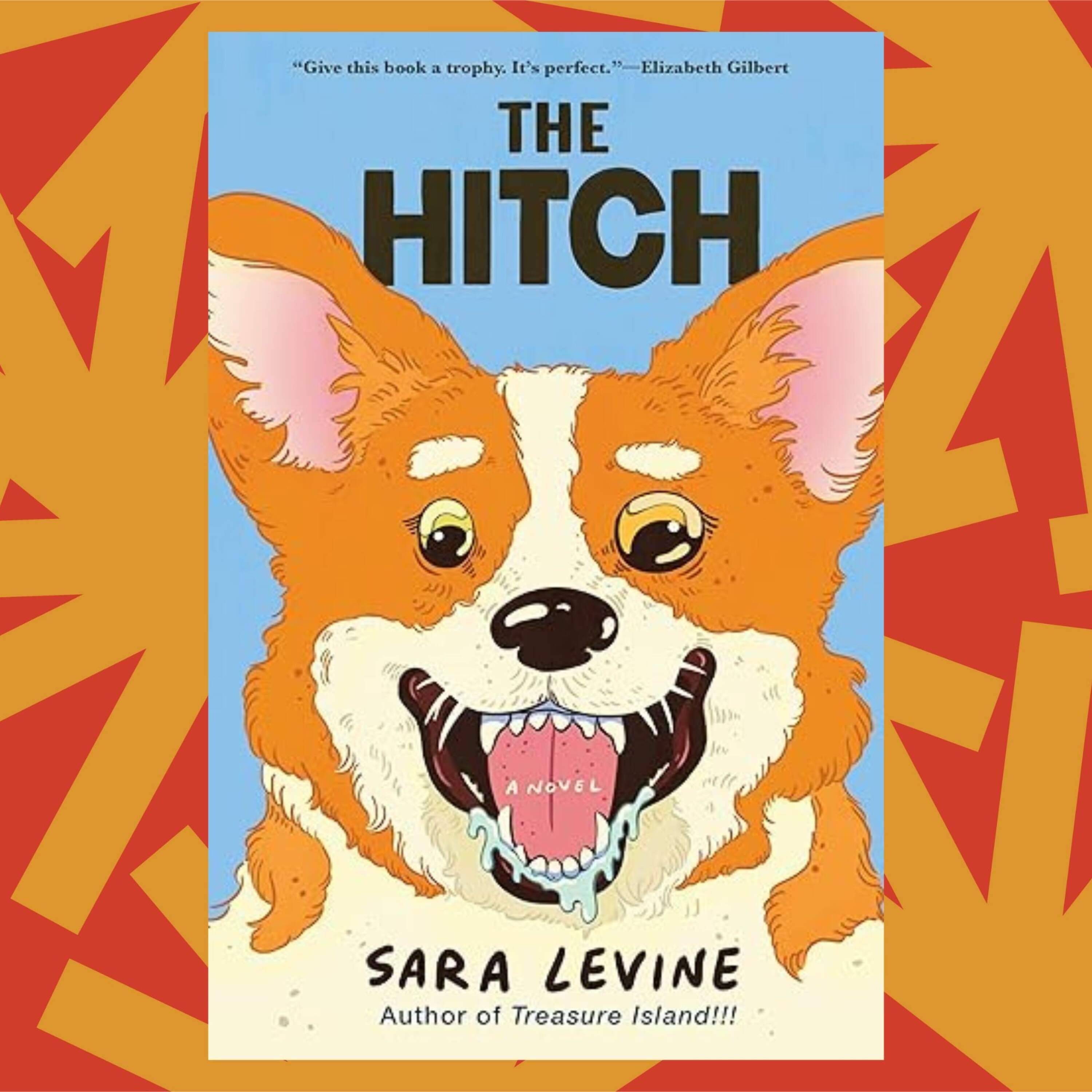
NPR's Book of the Day
In Sara Levine’s novel 'The Hitch,' a corgi’s soul enters a little boy’s body
00:10:29
Loading summary
Transcript23 lines
- [00:02]
A
Hey, it's NPR's Book of the Day. I'm Andrew Limbong. Today's book is a horror story, sort of. It's called the Hitch and it's about a young boy who gets possessed by a dog, a corgi, specifically. This part of the book is all fun and hijinks, but the really scary part is that the book is actually about how to truly love the ones around you without you trying to shape them or judge them. In this interview with Hearing As Indira Lakshmanan, author Sarah Levine talks about how the book was inspired by her own experience as a parent and by trying to balance guiding her kid without getting in the way. That's after the break.
- [00:41]
B
This message comes from Wayfair. The new year is here. Wayfair's huge selection of home decor items makes it easy to elevate your space and find exactly what's right for you. From bedding and mattresses to storage solutions for every room in the house, Wayfair is your one stop shop. Get organized, refreshed and back on track this new year. For way less, head to Wayfair.com to shop all things home. That's W A Y-F A I R.com Wayfair Every style, every home can a.
- [01:16]
C
Six year old boy be possessed by the spirit of a corgi he met in a dog park? That's the enigma at the center of Sarah Levine's hilarious new novel, the Hitch. It's narrated by Rose, an artisanal yogurt entrepreneur, vegan eco warrior and secular Jewish feminist who criticizes everyone in her life except for her beloved nephew Nathan. Rose relishes Nathan's weekly visits, but she disapproves of how her brother and his wife are rearing him. So she's ecstatic when Nathan's parents reluctantly agree to let him stay with her for a week while they're on vacation. Things start to go awry when Rose's Newfoundland kills a corgi named Hazel. Nathan insists that Hazel's soul has leapt into his body and hitched onto his soul, and he starts to act accordingly. The New York Times calls the hitch winningly zany. Kirkus says it's destined to become a cult classic. The book is out this week and author Sarah Levine joins us now. Welcome.
- [02:12]
D
Thank you so much.
- [02:13]
C
I want to know what gave you the idea of a boy possessed by a small herding dog made famous as the favorite breed of Queen Elizabeth?
- [02:23]
D
You know, it's hard for me as a writer to remember the exact moment an idea Arrives. I can tell you this, that when I was pregnant, people would always ask, do you want a boy or a girl? And I'd say, I don't care what the kid is, so long as it's a reader. It was a joke, but there was kind of a touch of truth in it. The baby wasn't even born and already I was trying to shape her in my own image. But the corgi, this is really to me a love story or a book about the impasses to love and, and the corgi, or I should say the hitch. The hitch refers to Hazel, the corgi who hitchhikes on Nathan's soul. But the book, I really wanted the book to talk about love, unconditional love, but never using that jargon. Rose wants to love her family, but she doesn't know how.
- [03:09]
C
Right? Well, there's. I mean, it's interesting because she's a lonely person, but she's so judgey of everyone and that makes it hard. And you talk about wanting to impose one's views on one's children and that's really interesting to me because when she finds out Nathan is going to come stay for a week, she throws herself into decorating his room without really understanding what's important to a six year old boy. She spends weeks researching color swatches from a fancy paint company and settles on a color named wevit, which apparently means spider web in England. White with a hint of gray. And when he comes into the room, he says it's gray, like the color of sweat socks, you know. Meanwhile, she's paid someone like Michelangelo to paint this place up and she doesn't understand what the boy really wants. So are you trying to say that Rose is sort of like you who wanted to impose yourself on your daughter before she was born?
- [04:12]
D
Yeah, I do. I mean, I think it was bonkers that I already, you know, pregnant baby, not even born. And I was having this sort of fantasy of what she would be. She would be a reader like me.
- [04:23]
B
And.
- [04:24]
D
And I think that part of what is so challenging about parenting is you want to help your child grow and be the best version of themselves, but sometimes you get in the way and it's really hard to figure out, you know, how much do I shape and how much do I stand back and how do I honor who the person is. I think Rose really does love Nathan in her way, but she has a kind of fantasy about who he is and a fantasy about what the week will be like. Then when the corgi gets in there or, you know, when he tells her there's a corgi in me, she's really hard pressed to love him because she thinks, I got to get this dog out. And that to me, I mean, the corgi was a really fun character to work with, a sort of shapeshifter character. But it was also a metaphor, in a way, for all the things, all the energies in our children that are kind of unruly or inconvenient that I would often observe myself and others trying to route out.
- [05:22]
C
Yeah. Well, when Nathan tells his aunt that Hazel's soul has entered his body, at first she thinks he's processing trauma over having witnessed a dog killing another dog. But then we discover that Hazel has really distinct personality traits, and she knows other people's thoughts and experiences that there's no way Nathan could know. So at that point, we start to wonder, is Hazel real? Is that something that you have an answer to, or did you want it to be a mystery for us as readers?
- [05:55]
D
I deliberately built the novel so that there were a few places where divergent interpretations are possible. I think, you know, it can be read as a ghost story. I think it can be read as a psychological study. And I'm really interested. I'm not trying to be coy, but I'm really interested to see how people read it.
- [06:14]
C
Let's talk a little bit more about Rose. She's sort of unable to let other people just be happy doing what they do. And in fact, she's made millions as an artisanal yogurt entrepreneur whose company is called the Cultured Cow. But now she regrets it all after reading a study about what cows farts are doing to the environment. And she's turned vegan. She's prickly and kind of an unlikable protagonist. And this is a woman who seems to be unhappy in her own skin. Talk more about that.
- [06:47]
D
Yeah, I'm glad you clocked that. I think Rose is unhappy in a way. She's having a midlife crisis. She's having a midlife crisis even before the corgi shows up. She had to grow up kind of early because her parents died young, and she had just been in college out east and moved back to the Midwest to take care of things, including her younger brother. She managed to graduate college, help her brother graduate college, and she put him through podiatry school when he got married, impulsively, she felt she helped him buy a house. You know, she does these things, but she also doesn't let anybody forget she did these things. But I think she grew up kind of fast and is the kind of woman you might see profiled in a business magazine as a successful CEO. But it's all external things and she has not explored her inner life. I feel like she's somebody who's been in survival mode and has been performing and just struggling to keep afloat and now she's at the point where she has to shift. The coping skills she had as a young woman are no longer going to serve her.
- [07:54]
C
She's also really funny though and you know, it comes across to the reader as satire. Could you read us from page 29 where her brother asks her to go with him to a sort of beer garden, an Austrian restaurant that his wife has recommended but is not at all the kind of shishi Brooklyn like place that Rose would want to go to herself.
- [08:19]
D
Victor ordered a winter beer, brachnodel and Wienerschnitzel while I scanned the menu, which read like an insult too subtle for Victor to catch. Did he know 99% of Austrians voted in support of the union with Germany? Reluctantly, I ordered the house salad with schnitzel and asked to hold the schnitzel. The waitress cast doubt on my choice. We're famous for our schnitzel and Vienna was famous for its Jews before Anschluss, Sigmund Freud, Karl Krause, Victor Adler, Arthur. I'll have her schnitzel, Victor said hurriedly. Just put it on the side please and thanks. He called out to the waitress's back.
- [09:00]
C
So it almost made me think of a Woody Allen movie. She raises up victimhood a lot and self righteousness, but in a very, very funny way. I do think that you had a sense of wanting us to sympathize and empathize with her as well, right? I mean she is the hero of this story and we get the sense that she deeply wants human connection.
- [09:23]
D
Yeah, yeah. I hope people find something to like in her. I think she's likable because she's funny even when she doesn't know she's being funny. I think she's like you said, truly lonely and wanting to connect to her family and all of us have that tendency at times to slip into judgment and these are such judgmental, polarizing times now. She's obviously an extreme version of it. I don't know, I've just spent so much time wondering when is Zeal good. I'm a person with strong opinions and I think how do you know when you're showing an appropriate amount of passion for a cause and when you're just being a jerk.
- [10:07]
C
Well, I don't want to give away the ending because it is poignant and to me it was a bit sad. You know, it isn't a comedy all the way through. What do you want readers to take away from your story?
- [10:20]
D
Yeah, it isn't a comedy. It's a blend of horror comedy and metaphysics, I think. And I guess I want the reader to laugh. But I'm also hoping that the reader will maybe think about the hitchiness in their own life, by which I mean the places where they get hung up on conditions or judgments, and it makes them hard to love and engage with other people as they are without needing to change them.
- [10:45]
C
Sarah Levine's new book is the Hitch. It's out this week. Sarah, thank you so much for joining us.
- [10:51]
D
Thank you for having me on.
- [11:03]
E
This message comes from Rosetta Stone. They have been the trusted leader in language learning for over 30 years. Their immersive, intuitive method helps you truly pick up your new language naturally. Access lessons from your desktop or mobile app. Whether you have five minutes or an hour. It fits your lifestyle with flexible on the go learning. Receive 50% off a lifetime membership with unlimited access to 25 language courses for life. Visit rosettastone.com NPR this message comes from Midi Health introducing AgeWell Longevity Care designed by women for women. Women can feel overlooked by the healthcare industry, especially when it comes to aging. Midihealth offers personalized services conveniently accessible through telehealth visits and covered by major insurance providers. Your health is worth it. Book your virtual visit today@joinmidi.com that's joinmidi.com this message comes from Charles Schwab. When it comes to managing your wealth, Schwab gives you more choices like full service, wealth management and advice when you need it. You can also invest on your own and trade on thinkorswim. Visit schwab.com to learn more.