← NPR's Book of the Day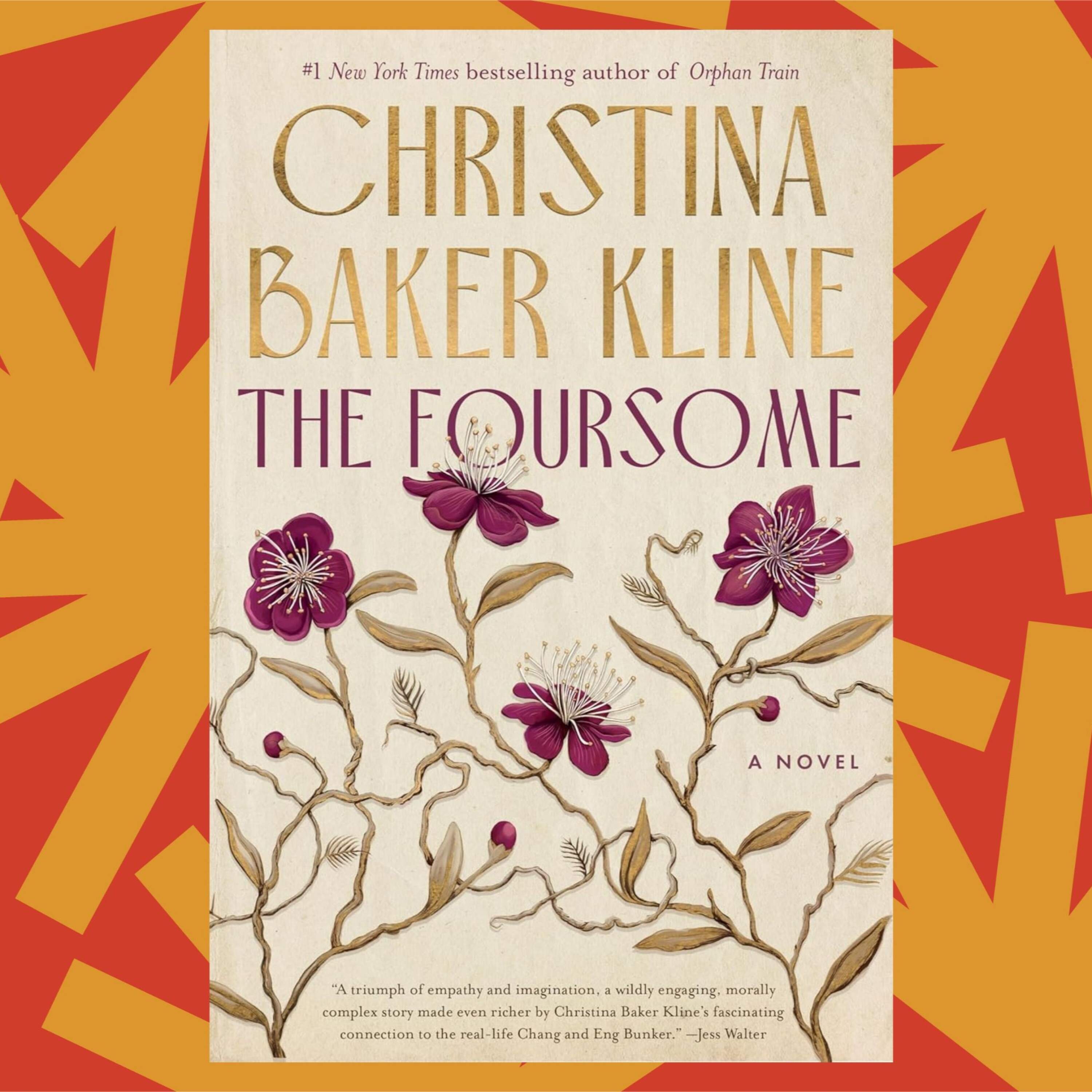
NPR's Book of the Day
In 'The Foursome,' conjoined twins marry two sisters — and that’s just the beginning
00:09:18
Loading summary
Transcript26 lines
- [00:02]
A
Hi, I'm Alyssa Nadworny, and this is NPR's book of the Day. This next book is wild. It's fiction, but it's based on a true story. It's about conjoined twins and their wives, who are sisters, hence the title, the Foursome. The sisters who are actually distant relatives of the author, Christina Baker Klein, married the famous twins from Siam, which is now Thailand, in the 1800s. The novel spans five decades and imagines what their story was. Baker Klein spoke with Weekend Edition's Aisha Roscoe.
- [00:38]
B
This message comes from Mint Mobile. If you're tired of spending hundreds on big wireless bills, bogus fees and free perks, Mint Mobile is for you. Shop plans@mintmobile.com Switch taxes and fees extra. See Mint Mobile for details.
- [00:55]
C
This message comes from NPR sponsor Harry Potter the Official Film Podcast From HBO Max 25 years after the first Harry Potter movie came out, it's the perfect time to rediscover these beloved films. The Harry Potter Official Film Podcast brings you behind the scenes, starting with the Philosopher's Stone. Uncover hidden details and hear interviews with the people who brought the wizarding world to life. Watch on HBO Max or listen wherever you get your podcasts.
- [01:25]
B
This message comes from Rosetta Stone. Their latest innovation, Rosetta Stone Sapphire, helps you go from knowing phrases to speaking confidently. They have helped millions learn languages for over 30 years. Take your language skills to the next level with Rosetta Stone Sapphire. Get unlimited access to all 25 Rosetta Stone languages plus all the new Sapphire learning tools. Visit rosettastone.com NPR and receive 20% off.
- [01:50]
D
Today in a cemetery in Mount Airy, N.C. there's a headstone for Chang and Ang Bunker, the famous conjoined twins, and their wives who were sisters. But only three people were laid to rest there.
- [02:06]
E
Sarah, the wife of Eng, chose to be buried in an unmarked grave on on her own property, along with the four daughters who died before her and the formerly enslaved people who, after the Civil War, came back to the farm. Nobody really knows why.
- [02:28]
D
This got author Christina Baker Klein thinking of the reason Sarah might have separated herself and death, and she began to write a novel about the lives of Chang and Eng and Adelaide and Sarah
- [02:40]
E
called the foursome sinful, perverted, mad. Those were some of the things people said about us when word spread that the four of us shared one bed, our good neighbors. Imaginations ran wild. Rumors flew about incest, unnatural relations, adultery, all kinds of depravities. No respectable woman would permit such an abomination. No God fearing family would allow it eventually, our neighbors got used to us. They stopped asking questions. Even so, we were never fully accepted. We existed in an uneasy in between, on the fringes of polite society, yet bound by its rules.
- [03:29]
D
Who were Chang and Eng Bunker? Because these were real people. What is actually known about them in their lives?
- [03:37]
E
Chang and Ang Bunker were born in 1811 in a small fishing village in what was then Siam, Thailand. Both had two arms, two legs, two heads, and were joined simply by a band of cartilage right below their ribs on one side. So Chang and Ang happened to be joined in a way that enabled them to go fishing and to build houses and to hunt and to earn a living in all kinds of ways. They were acrobats. They did backflips and somersaults and all kinds of stuff. So they were very savvy by, very smart, very charming. Everyone loved them. And this British merchant was sailing down the river, and he saw them from a distance, and I think he immediately saw dollar signs. And he spent the next few years convincing their mother and the king to let them go with him so that he could take them all over the world. He paid their mother more than she could have seen in a lifetime. And they quite quickly realized that they were being taken advantage of. And it really wasn't long before they rested their lives away from this manager who was, you know, traveling first class while they were in steerage. And they began taking control of their destiny. And they made a lot of money. They retired at the age of 29 to Northwestern North Carolina.
- [05:02]
D
And that's where they meet Adelaide and Sarah, who's known as Sally. The two sisters that they marry, they're actually your distant cousins, right? What motivated two white conventional women to marry outside their race in the south in the mid-1800s? Was it the money?
- [05:22]
E
Honestly, that was such a huge question for the book. And there are many factors. Sarah and Adelaide were in a funny position. They grew up on a plantation. The pickens around them were Slim and Adelaide in particular, who was a renowned beauty and very kind of charming and sophisticated like Chang, one of the brothers. The two of them immediately had a spark. The problem was that it was considered bigamy if Ang didn't marry Adelaide's sister or some other woman. But essentially, Sarah was coerced into marriage by her sister all the way along. She was reluctant about it, but eventually she came to see the benefits of being in this unconventional situation and made her way in it. I found her a really interesting narrator for the book because she, like the reader, comes into it with A lot of skepticism.
- [06:22]
D
Obviously, you have the story of the twins and the sisters, but then you also have this parallel story, which is the story of their slaves. Chang and Ang were slave owners. They didn't see the irony in that. But do you see that? And how should the readers feel about that?
- [06:45]
E
Yeah, the fact that the brothers became slaveholders and that they seemed not to recognize the irony of it after their mother was paid a sum for them to be taken away was shocking. But what I came to kind of understand about them is that they came to this country with nothing. In fact, they weren't supposed to be allowed to even become citizens or marry as Asian men. But in North Carolina, there was a loophole because that law was only applied to free black people. So free black men, I should say. There was also a lot of anti Asian sentiment that they dealt with on their tours. And I think they moved to North Carolina and saw that their route to respectability and power was adopting the habits
- [07:40]
D
of that place by subjugating others, because that's what everyone else was doing. That gave them a position.
- [07:48]
E
Right. And a foothold in that society. And in real life, there was a woman named Grace Gates who was raised with Sarah and Adelaide. And then their father gave Grace to Eng and Chang as a wedding gift. Grace ended up living with Aang and Sarah for the rest of Sarah's life. And I knew that they were very close, and I felt that that was another kind of clue to the story.
- [08:20]
D
The bunkers had 21 children, and you're in touch with some of their descendants. Have they read the book?
- [08:26]
E
So three of them have read the book so far. A lot more will soon be reading it.
- [08:30]
A
The three.
- [08:31]
E
Three who read it were super helpful. They read it early. They read a manuscript. They had comments. But they do understand that I'm gonna touch on some touchy subjects and also that it's a novel and this is my interpretation of events. And so I think they're pretty clear on that.
- [08:48]
D
You know, history often flattens characters. It could reduce Chang and Ang to just conjoined twins and showmen. What do you want people to come away understanding about them and their lives? And also Sarah and Adelaide, Chang and Ang were extraordinary.
- [09:08]
E
They were sort of the prototypical American success story in that they were immigrants who came over with nothing, absolutely nothing. And they made their own way through a combination of intelligence and savvy. They were complicated men. They were fallible. I hope, too, that what people come away with is that they see them as individuals. They were very different from each other Chang's personality and Ang's. I think by the time you get maybe a third of the way through the book, you're very clear on who each one of them is. And the same with Sarah and Adelaide. Those two sisters were extremely different from each other. What I want people to come away with about the sisters is by the end of the book, I hope you understand how this situation could possibly have happened and how these two women navigated it in a way that made it feel like normal life. There's a line in the book where Sally says, even the most extraordinary life feels ordinary when you're living it, and I wanted readers to feel so immersed in their story that they understood at every turn how it happened.
- [10:18]
D
That's Christina Baker Klein. Her new novel is the Foursome. Thank you so much.
- [10:23]
E
Thank you so much for having me.
- [10:33]
B
This message comes from Rosetta Stone and their newest language learning experience, Rosetta Stone Sapphire. Get unlimited access to all 25 Rosetta Stone languages and Sapphire learning tools. Visit rosettastone.com NPR and receive 20% off this message comes from Jerry Somewhere along the way, shopping for car insurance became synonymous with accepting whatever we're currently paying. Jerry disagrees. Respectfully but firmly. Jerry pulls up to 20 quotes from top insurers in minutes, lets you buy the best one in app without re entering your info, and keeps watching for better rates after you're done. No spam calls, no hidden fees. You don't have to call it shopping. Call it what it is winning. Download the Jerry app or visit Jerry AI, NPR
- [11:23]
F
every episode of It's Been a Minute. NPR's what's Happening in Culture podcast starts by asking three questions. Who? How? Why now? If the culture's asking it, we're talking about it at NPR. We stand for your right to be curious and indulge your cultural curiosity. Follow It's Been a Minute wherever you get your podcasts and we'll break down the zeitgeist y topics that are filling your feedback.