← NPR's Book of the Day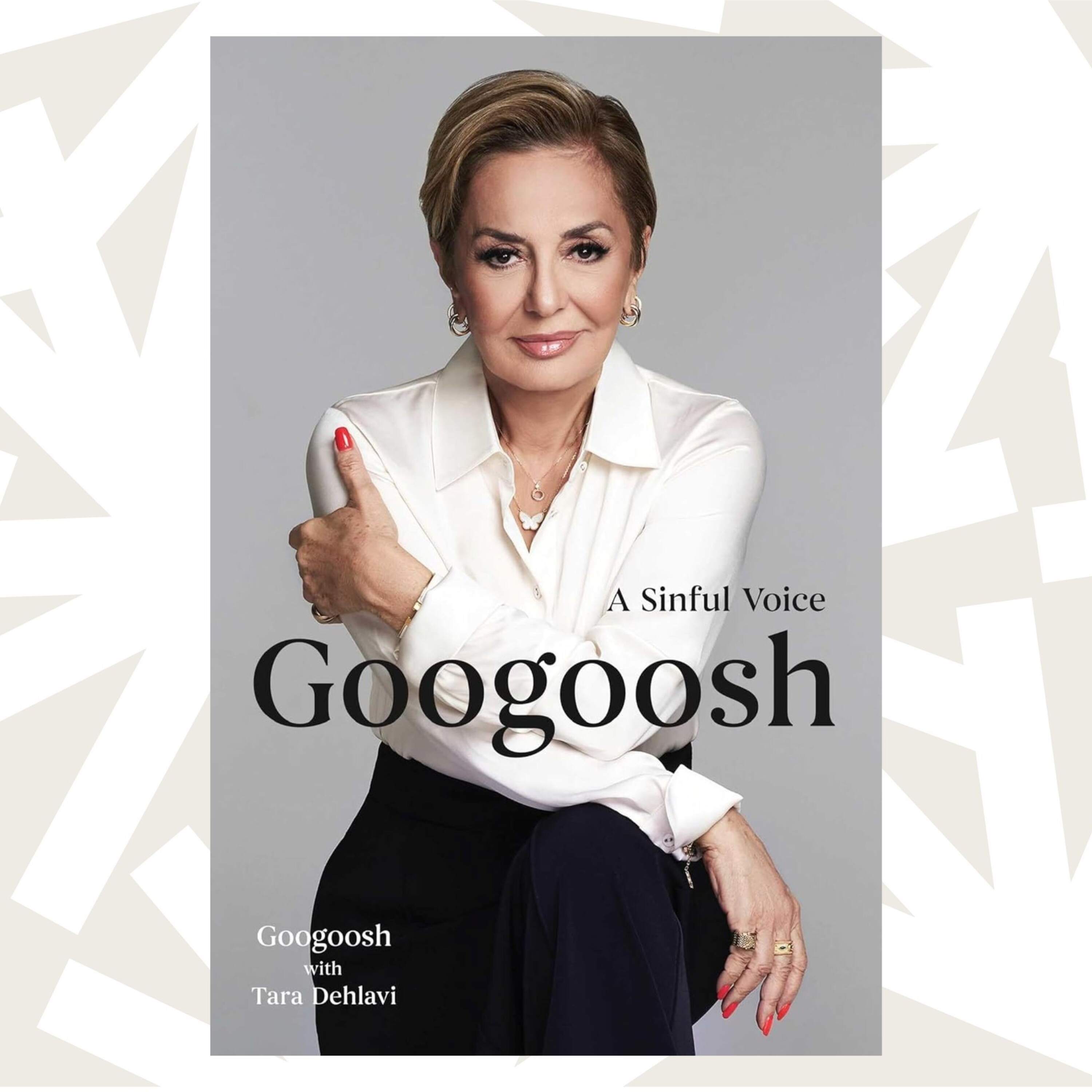
NPR's Book of the Day
Iranian pop star Googoosh on her new memoir and life in pre-revolution Iran
00:11:45
Loading summary
Transcript39 lines
- [00:02]
A
Hey, it's NPR's Book of the Day. I'm Andrew Limbong. Gugush was a famous Iranian pop star, the type of famous person people dressed up like got their hair cut like I say was because once the revolution happened, she had to stop being a pop star. She was imprisoned for weeks and had to sign a document saying she'd never sing or make music again. She's got a memoir out telling her story titled A Sinful Voice. And she talked to Here and Now's Peter o' Dowd about what Iran was like before the revolution and what it means to her that people are still singing her songs today. That's ahead.
- [00:39]
B
This message comes from Mint Mobile. This holiday season, stop overpaying for wireless and switch to Mint Shop. 50% off unlimited plans@mintmobile.com Switch limited time offer upfront payment of $45 for three months, $90 for six months or $180 for 12 months. Taxes and fees extra initial planned term only above 35 GB. Network may slow when busy availability, speed and coverage varies.
- [01:07]
C
See mintmobile.com Protesters in Iran furious over the state of the economy, continue to clash with police. The currency is collapsing under Western sanctions. Inflation is soaring. The theocratic government has flexed tight control over its citizens since the Islamic Republic seized power nearly 50 years ago. Our next guest knows just how dangerous opposing the regime can. That is music by Gagoosh, an Iranian pop star whose career was soaring in 1979 when the Islamic revolution overthrew Iran's monarchy. Culture police said her music was sinful. She was forbidden from singing. And after decades of living in silence and exile, Gugush is out with a new self titled memoir. It is a pleasure to have you here with us today. Welcome.
- [02:10]
D
Thank you.
- [02:11]
C
So there will be people listening who aren't familiar with your story and I want to make sure they understand. You were perhaps the most famous celebrity in Iran before the revolution. You were a pop star, you were a movie star. You were the kind of person who strangers would instantly recognize on the street. Do I have that about right?
- [02:30]
D
Yes.
- [02:31]
C
Tell me about that life you lived before the revolution.
- [02:34]
D
Well, from when I was three years old, I started performing. At the beginning I was doing acrobat with my father. Then when my father noticed that I can imitate big singers songs, my father put me on stage and I start singing when I was five or six years old.
- [03:06]
C
This was a time in Iran when people drank openly. They went to concerts, they sang and they enjoyed parties. You know, for people who only know Iran as a repressive regime over the past 50 years or so. What was it like to live in Iran before 1979?
- [03:23]
D
It was a very modern country. Everybody were free to live however they wanted. And women were free to wear whatever they wanted. We had clubs, cabaret, and many opportunities for people like everywhere in the world.
- [03:50]
C
Let's hear some of your music from that era. Do you remember that song?
- [04:13]
D
Of course. This is very famous song, which was Heat.
- [04:20]
C
It was a love song, upbeat. I mean, it was happy, if I. If I can catch the feeling. Right?
- [04:25]
D
Yes.
- [04:26]
C
So at what point do you realize that what you're doing with music like that would be in direct conflict with the Islamic Republic of Iran?
- [04:33]
D
The Islamic system didn't want and didn't like women to sing. We were banned at the beginning of the revolution. We had a war with Iraq. For eight years. Nothing was in public, pop songs or any other style of songs. But after that, little by little, the system gave permission to men singers to sing and perform, not women.
- [05:12]
C
You were sent to prison in 1980, forced into a basement with other women because the Islamic Republic of Iran would not allow, as you've explained, women to sing. What do you remember about those 28 days?
- [05:28]
D
They separate men and women. And every day I was hearing the pain shouting from both sides, men's and women part.
- [05:46]
C
The guards were torturing the other prisoners.
- [05:49]
D
Exactly. Exactly, yes.
- [05:52]
C
And did you expect they would do the same to you or even execute you?
- [05:56]
D
I was afraid of what happening to me and my other friend, which we were in the same room together. She was an actress and singer also. But for me it was worse because they asked me many times why I was singing for king and the palace, who I was meeting, especially when I was in palace.
- [06:31]
C
So you were a famous pop star in Iran. The new government wanted to know who you were singing to, why you were singing to them. They were very unhappy with your career up until that point. I'm speaking with the Iranian pop star Gagoosh, who has a new memoir about living under the oppression of the Islamic Republic of Iran. And Gagoosh, I was moved to read about your life after the government released you from prison because you signed a document promising that you would never sing or ever make music again, which essentially took your voice away. How difficult was that choice for you?
- [07:06]
D
They wanted me to shut up. This was my life after I released the jail. And for 20 years I was at home all the time, nowhere to go. Just sometimes I had gathering with my few friends because they were afraid of being in touch with me.
- [07:45]
C
I see. Because you were in exile, essentially in your own country. This is what I find so fascinating about your story. You go from a superstar in Iran to sitting at home on the couch for almost 20 years, completely silenced, no work to be done. You filled the days, occasionally smoking opium, doing drugs. How bleak were those years for you?
- [08:12]
D
Peter? Sorry, when I think of those days, it makes me a little bit cry. Sorry about that.
- [08:26]
C
It's understandable.
- [08:28]
D
I try to be strong. Sorry, what was your question?
- [08:36]
C
My question? You've already answered my question was, how bleak were those years for you? And I can hear they were incredibly bleak. And I guess my question to you was, did you ever have hope? Did you ever believe that you could perform again?
- [08:52]
D
No, I couldn't believe one day I can sing and be on the stage. I thought, I'm done, I'm finished. Because they killed my feelings of art. I thought, I'm not going to sing again. And I thought that, okay, I. I did my best.
- [09:20]
C
Well, Gugush, you lived your life as a normal person. But after two decades of this silence, it's amazing because people still knew who you were. There was and still is a huge diaspora of Iranians around the world who wanted to hear your music again. And I would encourage people to fill in the gaps of this story by reading your book. But eventually you find someone with the political clout to get you out of the country. And I want to play this sound from July 29, 2000. It's the first day of your comeback tour in Toronto, So I don't know what you're saying there, but I can see the emotion on your face in the video. What was that moment like for you?
- [10:18]
D
Oh, wow. I don't know how to explain the joy and unbelievable moments. So many people in the arena and people were shouting and crying. We were singing, all the people and me, together. I couldn't believe that after all these years, people still want me to sing for them.
- [11:09]
C
After that concert, it was impossible for you to go back to Iran, and you've since started a new life for yourself in Los Angeles. Now, decades after that, do you ever dream of going home, of going back to Iran?
- [11:23]
D
It's my wish, because I belong to that country. I have to thank United States, which I can live freely, but I belong to that country. I belong to that people. I would love to watch Islamic Republic destroy and my people start being free.
- [11:56]
C
The new book is called A Sinful Voice. And I want to say thank you, Gugush, for taking the time to tell your story with us. I really appreciate it.
- [12:06]
D
Thank you, Peter.
- [12:16]
B
This message comes from Amazon Pharmacy. Waiting in line at the pharmacy takes time away from anything else you would rather be doing. Amazon Pharmacy delivers meds to you fast. Health hack unlocked. Thanks to Amazon Pharmacy, Health care just got less painful.
- [12:33]
C
This message comes from Sony Pictures Classics with the Coral, directed by Nicholas Hittner, written by Alan Bennett, starring Ralph Fiennes as a choir master in 1916. Yorkshire making music as war rages on. Now playing only in theaters.
- [12:48]
B
This message comes from Amazon One Medical. Your body tells you all kinds of stuff. Headaches and hair loss are its way of saying something is up over here. Amazon One Medical has 247 virtual care, so there's always someone available to listen and help with whatever your body is trying to tell you. Thanks to Amazon One Medical. Healthcare just got less painful.