← NPR's Book of the Day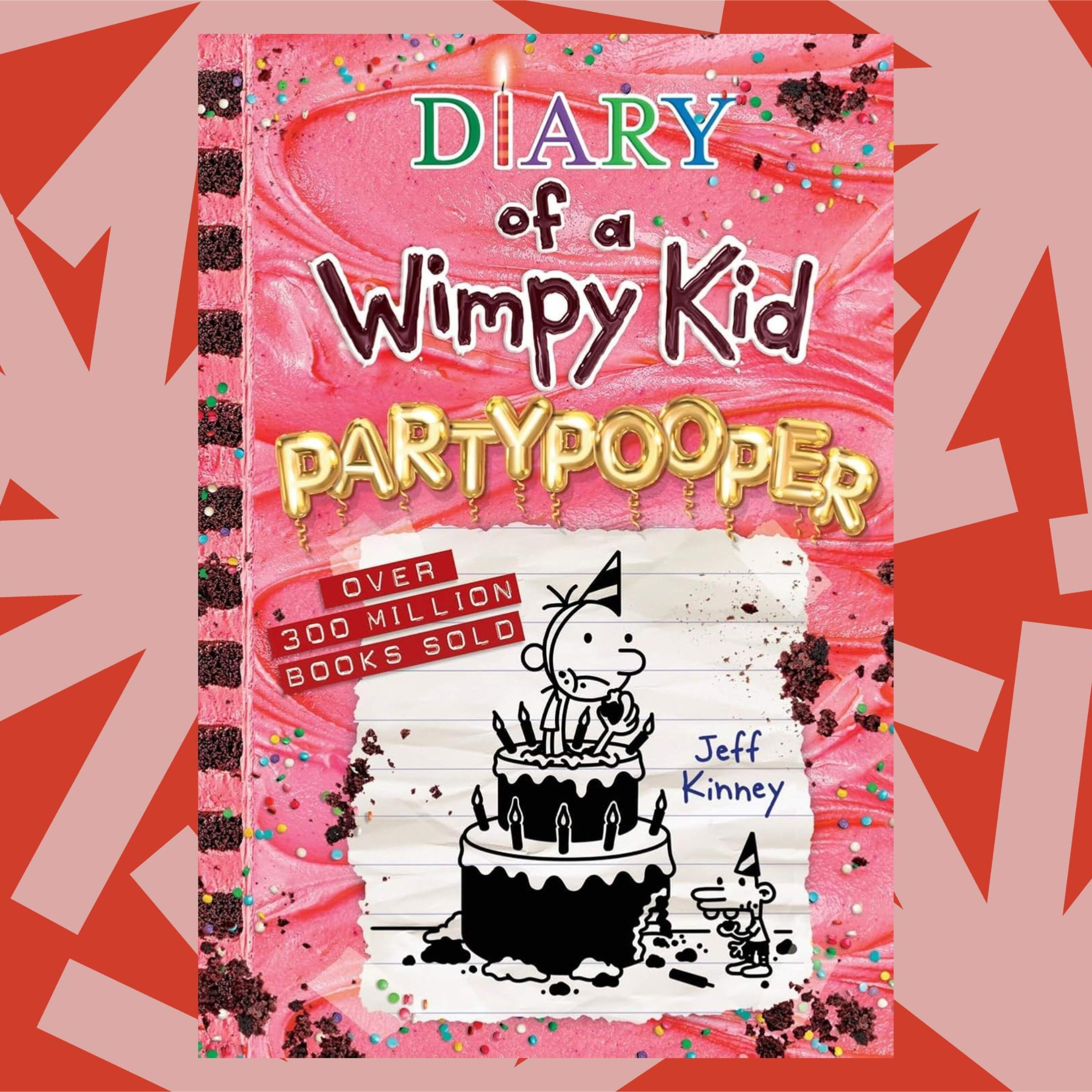
Loading summary
Transcript40 lines
- [00:02]
Andrew Limbong
Hey, it's NPR's Book of the Day. I'm Andrew Limbong. Jeff Kinney is a star. If that name doesn't ring any bells for you, go to the kids section of your local bookstore or library, and I'd bet 10 bucks that you'd find more than a few of his books. He's the author of the Diary of a Wimpy Kid series, and he's out with the 20th book in the series. It's titled Party Pooper. Kinney spoke with Here and Now's Robin Young about why he thinks his books have such a lasting power. That's ahead.
- [00:33]
NPR Sponsor Announcer
This message comes from BetterHelp. The holidays are a time of traditions, like making your grandmother's pudding recipe or watching that movie you've seen a thousand times. Incorporating therapy into your life can help you take time for yourself during what can be a joyful but sometimes tough time of year. And by caring for yourself, you can show up more for the important moments. This December, start a new tradition by taking care of you. Visit betterhelp.com NPR for 10% off. This message comes from NPR sponsor Shopify. Start selling with Shopify today. Whether you're a garage entrepreneur or IPO ready, Shopify is the only tool you need to start, run and grow your business without the struggle. Go to shopify.com NPR.
- [01:20]
Robin Young
In tiny Plainville, Massachusetts, construction is underway. Not a beer garden, performance space. Places to gather, the brainchild of mega bestselling author Jeff Kinney to give back to the town where they've raised their kids and run their bookstore an unlikely story. The store already brings in people from across the country. Soon we'll bring you more about the new plans which are destined to make this even more of a destination. But today we hear about the little line drawing who made it all possible, the sad sack middle schooler Greg Heffley, he of the concave chest and big dreams star, starting in 2007, of Jeff Kinney's Diary of a Wimpy Kid. The series has sold over 300 million books in 49 languages. Tomorrow, Jeff Kinney publishes the 20th Party Pooper. We found a quiet space at the store to learn more about Greg Heffley. First of all, where does he come from? You've said he's you.
- [02:20]
Jeff Kinney
Yeah, he is a funhouse mirror version of me. So his flaws are really amplified versions of my flaws. But I was an imperfect kid. I was no hero. And so often when we read kids books, we read about characters like Harry Potter, who's really sort of like a miniature Adult. And I wanted to create a character who is a little bit more like a stand up comedian. What works about a stand up comedian is that they get on stage and they talk about their own flaws. And it's funny to the audience because they can see themselves in the person on stage. And with Greg Heffley, that's what I was trying to create.
- [02:58]
Robin Young
And the difference is that Greg Heffley has no idea that he's a stand up comedian. He's serious. And also the physique.
- [03:04]
Jeff Kinney
Right, the physique is pretty much on point. You know, I looked an awful lot like that as a kid. I definitely was a wimpy kid. But I really wanted to create a character who, you know, he thinks he's going to go on to be rich and famous, and he's not. And you know that as a reader, that's what makes it funny.
- [03:25]
Robin Young
Well, and just to expand on the physique, for those who haven't seen your pencil, like drawings, I mean, there's a point in the new book where he jumps up on a bureau to kind of flex his muscles in front of a mirror. And never has that stance looked more pathetic. You know, his little line arms. Forget muscles. He doesn't even have joints.
- [03:48]
Jeff Kinney
Yeah. I made a joke early on that Greg is playing with these action figures, which are much like the he man action figures. And his mother, who's a pretty progressive person, doesn't want Greg playing with these action figures because they're unrealistic body types. And Greg has never had the thought before that his body type is not an unrealistic body type. So he's standing on the sink in the bathroom and trying to make muscles just like his action figures and realizing that he's not living up to that image.
- [04:19]
Robin Young
Pathetic. Okay, so that might have been one joke. We understand that what you do is your writing technique is you spend a lot of time amassing, like, hundreds of jokes until you feel you have the right number to start writing. Is that right?
- [04:33]
Jeff Kinney
That's right. And now I write thousands of jokes per book, and then I only use about 300 per book.
- [04:39]
Robin Young
So in the new book, I was trying to think, what would the jokes be? Here's what jumped out at me. You tell me one. This becomes centered around children's birthday parties. And his nightmare is that, or maybe it actually happened, someone's birthday party featured Hopeless the clown. And the kids had to kind of actually cheer him up. I thought that was so funny. Or there's a birthday cake that comes and by mistake it doesn't have his name on it, Greg. It has the allergy warning, hazelnut allergies on top of the cake.
- [05:13]
Jeff Kinney
A lot of the things, like the Hopeless, the Clown. My mother actually was a preschool teacher, and she hired a clown named Hopeless who came in and was just miserable, like. And it was these pictures of these traumatized kids around, this person who looked like they were just weeping. And so I had to do that. My real life and the fiction of it all gets blended together well.
- [05:36]
Robin Young
It becomes, I think, about birthday parties and the extraordinariness of birthday parties. Nowadays, you have to get a bounce house. You have to have an entertainer. A little social commentary there.
- [05:48]
Jeff Kinney
Yeah, sometimes I do have a little bit of social commentary. Of course, parents are always trying to outdo one another. Of course, we live in this social media age where your kid is a product in a way to amplify your own vision of yourself. And I think we all fall prey to it. You know, look at my kid's birthday party. Oh, we had a great time. And of course, people hire party motivators now to really amp up the parties.
- [06:11]
Robin Young
But you know what struck me? Yeah, there's social media, but we never see Greg on social media. I didn't realize until I was finished with the entire book. Wow. In a way, he has this huge life now. Maybe it's a complete failure, you know, all his dreams and all the things he wants to do, but he has this huge imagination, huge plans for his birthday party, and there's no external force there.
- [06:39]
Jeff Kinney
Greg, he's not really a modern kid. If he was a modern kid, age 11, 12, 13, he's going to have a phone, and a lot of his life is going to center around a phone. So if I was writing about a kid like that, it would be a pretty boring book. You know, as a kid myself, of course I didn't have a phone, but I was really active. I was always doing something like, you know, a lemonade stand type of thing. My friend and I were always exploring in the woods and doing all sorts of things, riding our bikes here and there. So I think that, in a way, Greg is sort of a timeless kid. But I think if I was writing about a realistic kid in these days, of course the phone would be close to the center of their lives.
- [07:22]
Robin Young
I was struck by that, how he doesn't watch tv. He's in his imagination, as flawed as his is. And it's funny, too, because I thought, you know, maybe one of my first questions to you would be, how has Greg Heffley Evolved. And then I realized that's ridiculous. Not at all.
- [07:41]
NPR Sponsor Announcer
No.
- [07:41]
Jeff Kinney
Something I really learned through Covid is that kids need something to rely on. The world changes so much, and you need something you can hang onto like a security blanket. And I realized that that's what cartoons do and what cartoon characters do. I've got a statue of Scrooge McDuck in my studio that was my favorite cartoon character growing up. And he didn't change over the years, over all the years that he was written about.
- [08:06]
Robin Young
Wait, so for the one, you know, the people who may not know, Scrooge McDuck, he wanted money, right?
- [08:11]
Jeff Kinney
Right. And these cartoon characters have these characteristics that never change. For example, Charles Schulz's Peanuts. Charlie Brown for 50 years, he was the same kid, and he could never kick. And I think there's something to that, that cartoon characters don't change. They have to stay the same to work.
- [08:31]
Robin Young
What might some of your other influences have been or things that you admire? Because often Greg Heffley feels to me like a character in MAD magazine who has these wild ideas and he marches off to do these things that he's going to do. And around the corner is the steamroller coming.
- [08:50]
Jeff Kinney
I think that Peanuts has to have influenced every cartoon creator. I love the Far side because Gary Larson really showed us that to be funny, sometimes it's better to not be a great artist. So many cartoonists were great artists, like Burke Breathed, who did Bloom county, or Bill Watterson, who did Calvin and Hobbes. And I realized that I had this limitation. I was not like those guys. And so I needed to find out a way to be funny within my own limitations. And Gary Larson, who did the Far side, really taught me how.
- [09:24]
Robin Young
We understand all your books have to be 217 pages, and this one is too. So they'll fit on a bookshelf.
- [09:30]
Jeff Kinney
That's right. I want them to all look the same on your bookshelf.
- [09:33]
Robin Young
I love that.
- [09:34]
Jeff Kinney
Yeah. When I read the Harry Potter books, I remember they got bigger and bigger and bigger. And then I remember at book five, it was the biggest. And then it went down a little. And you're like, wait a second, am I being cheated here? And it was funny. The non uniformality of those books. Bookshelf bothered me a little. So I was like, when I write my series, I'm gonna have all the books look exactly the same. And I think kids like that to have them all line up on their shelves.
- [09:58]
Robin Young
I think past authors must have done that, because I remember my books all look Beautiful on a shelf.
- [10:03]
Jeff Kinney
Yeah, definitely. You know, there are certain series like the choose youe Own Adventure books and books like that that all look about the same. So. Yeah, I think there's something to that.
- [10:12]
Robin Young
Well, we're sitting here in your bookstore, and I'm gonna get some Wimpy Kid T shirts, and there's a Wimpy Kid pillow here. And again, it's this kid with, like, no joints and these line arms. Do you ever find yourself thinking, how did. What. What happened?
- [10:27]
Jeff Kinney
It is a wild life. Like, I think I'm a cartoonist with limited talent, and this crazy thing has happened, you know, 300 million books. I can't believe what's happened here. And I often feel like I'm on the Truman show and that one day the veil is going to be lifted and everybody's gonna have a laugh. You thought that you drew stick figures and the whole world loved them. But no, it's all been an elaborate prank on you.
- [10:54]
Robin Young
Why do you think it is? I mean, why do you think he.
- [10:56]
Jeff Kinney
Caught on One is that when kids open one of my books, they see that it looks like fun. It doesn't look like work. And it came right at the time when kids were developing this visual expectancy where they needed to have something visual in their books to feed them through a story. I think the other reason is why it works in lots of places in the world is because the characters are outlines. So kids in China and Brazil and Turkey, they can project themselves onto the characters and they can say, that's me. And I think that universality of childhood works really well for the books and.
- [11:31]
Robin Young
The that's me part. You know, we hear a lot about how kids are. Young boys in particular are feeling disempowered. You know, his stuff doesn't work out, but he's got some power, his imagination.
- [11:43]
Jeff Kinney
Yeah. I think that it's fun that you're reading about a character who's having it a little worse than you are. I think about how different the books would be if Greg was smiling on the COVID of book one. So I'm 20 books in now, and Greg looks miserable on every cover. And I think that's part of the appeal. You could say, well, I'm having a bad time of things, but this kid's having it a little bit worse. I want to read about him.
- [12:06]
Robin Young
Thank you so much.
- [12:07]
Jeff Kinney
Thank you. It was really a pleasure.
- [12:09]
Robin Young
Wimpy Kid author Jeff Kinney. The latest book in the series, Party Pooper, is out tomorrow.
- [12:25]
NPR Sponsor Announcer
This message comes from Charles Schwab. When it comes to managing your wealth, Schwab gives you more choices like full service, wealth management and advice when you need it. You can also invest on your own and trade on thinkorswim. Visit schwab.com to learn more. This message comes from Saatva, the official mattress and restorative sleep provider for the U.S. olympic and Paralympic teams. U.S. olympic cross country skiing athlete and Saatva brand ambassador Jesse Diggins talks about the importance of sleep. The best piece of advice that I've been given from fellow athletes or coaches about sleep is that it is the singular most important way to rec and get faster. Saatva believes you deserve that kind of restorative sleep, too. Visit saatva.com NPR to save $200 on $1,000 or more.
- [13:14]
Jeff Kinney
This message comes from NPR sponsor Capella University. With Capella's flexpath Learning format, you can set your own deadlines and learn on your schedule. A different future is closer than you think with Capella University. Learn more@capella.edu.