Loading summary
Transcript51 lines
- [00:02]
A
Hey, it's NPR's Book of the Day. I'm Andrew Limbong. Margaret Atwood is on the pod today. She's got a memoir out titled Book of Lives. And she had this wide ranging conversation with NPR's Sacha Pfeiffer where they get into her rough experiences in school, growing up, global politics and how Canadian writers get treated differently from American ones. And what's interesting is that that they open the conversation talking about the difference between a memoir and an autobiography. And Atwood says a memoir is the stuff you remember. But listening to Atwood revisit various moments in her life, it's clear that it's not just what you remember, but how you remember those events that help shape the narrative that is your own life. More after the break.
- [00:49]
B
This message comes from BetterHelp. This month. BetterHelp's encouraging people to reach out, grab lunch with a friend, call your parents, or even find Support in therapy. BetterHelp makes it easy with its therapist match commitment and over 12 years of experience matching users with qualified professionals. Just like that, lunch with a friend. Once you reach out, you'll wonder why you didn't do it Sooner. Go to betterhelp.com NPR for 10% off your first month.
- [01:18]
C
This message comes from Instacart bringing magic this holiday season to the people who make it magic for others. Get delivery and deals on everything you need this season, whether it's a last minute holiday decor, emergency coverage for the holiday party, or just avoiding going out in the cold. Instacart is here. Plus, November 24th to December 23rd is deal month with savings from your favorite retailers and deals on grocery, electronics, beauty, toys and more. Download the Instacart app to get a little magic delivered today.
- [01:49]
D
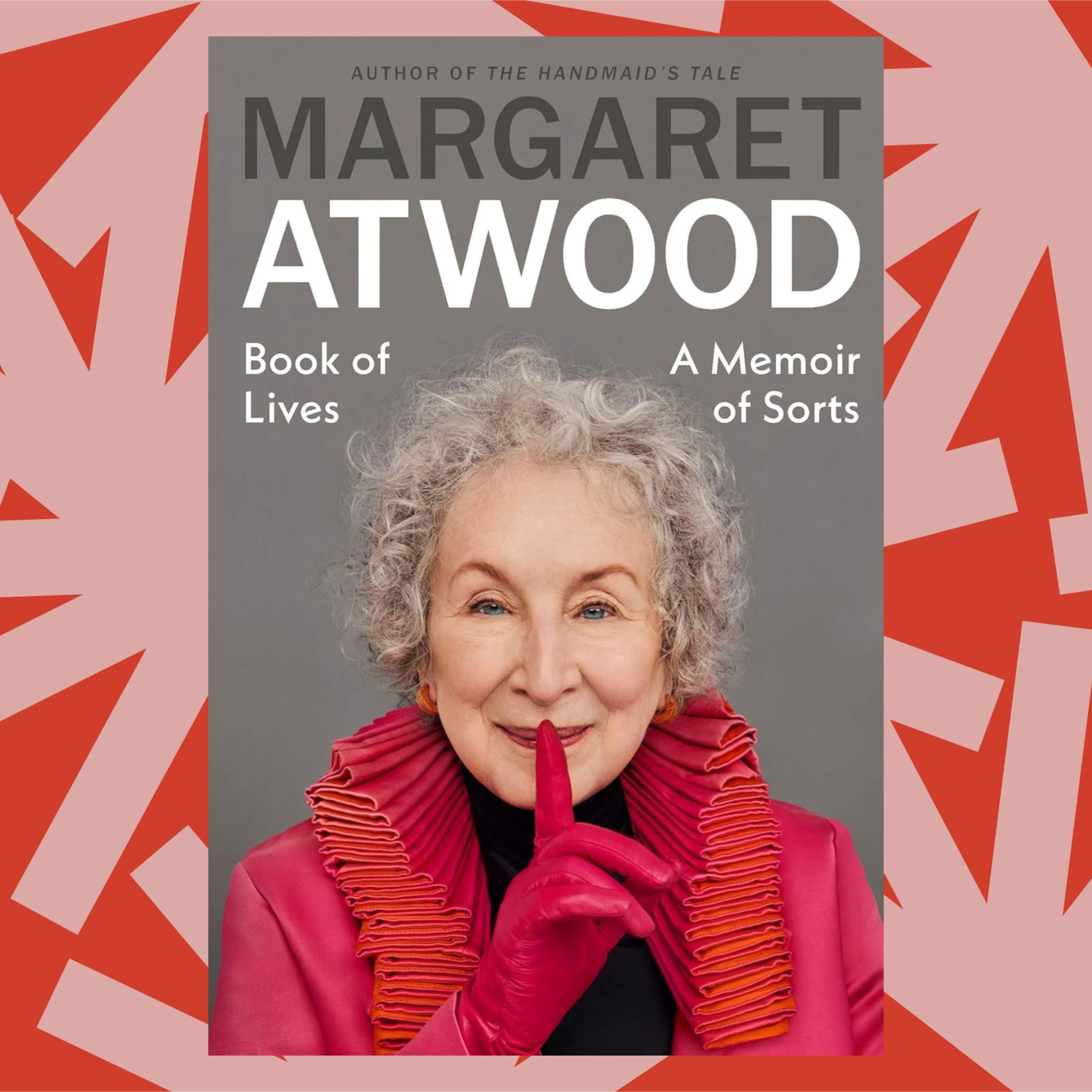
Margaret Atwood is one of the world's best selling authors. She's published dozens of works over the last seven decades. And her famous 1985 novel, The Handmaid's Tale got new relevance as a recent popular TV series. Now, at age 85, she's written a memoir, scheduled for release this week. It has a striking cover, a portrait shot of her in a bold red pink collared dress. One red gloved finger is held to her red lipsticked lips as if to say, speak no evil. But when Atwood was first asked to write a memoir, her initial response was no.
- [02:27]
E
I wrote a book. I wrote a second book. I wrote another book, dead Boring. Who wants to read about someone sitting at a desk messing up blank sheets of paper?
- [02:36]
D
When I spoke with Atwood recently, I asked her what finally made her say.
- [02:39]
E
Yes, they wore me down. I thought about the difference between a memoir and a biography and an autobiography. And a memoir is what you remember. So what you remember usually is stupid things you did, near death events, catastrophes, and surprising highlights and jokes. So that appealed to me. Not just I wrote a book.
- [03:13]
D
You know, ultimately the memoir you wrote is very detailed, very exhaustive. You went through unpublished writings you hadn't read in decades. You said you started having strange dreams. You were conversing with the dead. How did it feel to go backwards by decades and re examine your life?
- [03:31]
E
My sister and my daughter acted as sensitivity readers and said, you can't say that.
- [03:42]
D
Did you feel like you had to worry about that kind of thing?
- [03:44]
E
Yeah, you always have to worry about that kind of thing. Except to quote Robertson Davies when he was asked why he had suddenly burst into novel writing at the age of 60, having not done it for some time, he said two words, people died. In other words, once people have died, you can say things that you might not say when they were still alive for fear of hurting their feelings or for fear of libel suits.
- [04:14]
D
You are Canadian, Grew up in Canada. There's a lot of Canada throughout this book. It does feel like it's very defining of you in many ways. Why do you think it matters that you are Canadian?
- [04:26]
E
Well, I think these days it gives you a different view of the United States. So writing the Handmaid's Tale, I was probably aware of some things that somebody living there might not be aware of, such as how many times Canada has been the place you escaped to. And things went pear shaped south of the border. But also because I was Canadian, I had to take a course called American Literature and civilization of the 17th century because we didn't study that. We did the Romantics and the Transcendentalists, but we had not done puritans of the 17th century. Just to share with you that was not a democracy.
- [05:13]
D
So that really, it sounds like had a huge effect on what you decided to write about later.
- [05:19]
E
Well, when I decided to write about it later, I had that material to hand and drew upon it.
- [05:26]
D
The other thing I found really interesting about your memoir is that you said that in Canada they didn't really respect writing as how you put it at a certain stage. And the country had no infrastructure for writers describe what it did not have.
- [05:40]
E
So we're talking about the decade beginning in 1960 and ending in 1970, during which everything changed. But at the beginning in 1960, book publishers were few and far between, and they mostly did either textbooks or distribution of books from other countries. We were told two things at that time. Number one, there isn't a Canadian identity. And number two, your book is too Canadian. Try putting those two things together. They don't fit. So the big activity in Canada in the sixties was poetry, because it was short and you could put out your own slim volumes either on a memeo machine. Do you know what that is? I do.
- [06:28]
D
And I know you did it yourself for your early writing.
- [06:31]
E
Yeah, I didn't use a memo. I hand sat on a flatbed press. So imagine that. And offset printing had just been invented and some people were able to do that. So you had a readership composed of other poets, but you did not have a large public readership in 1960. By 1970, a number of things had been put in place that hadn't existed before. And it was possible to publish novels, which I did.
- [07:06]
D
But you ended up helping build Canadian literary culture, creating awards and book festivals.
- [07:12]
E
Yeah, sure. As I. As I said, a lot of things changed in the 60s, and one of the things that changed is that young writers stayed in the country rather than going to the United States or England, or in the case of French speakers, to Paris. So they stayed, they dug in, they created little publishing companies. Yeah.
- [07:36]
D
You were at the center of this, by the way.
- [07:38]
E
Well, it appears so now, but it certainly didn't feel like that at the time. You don't feel you're at the center of anything. When you're 27, you are known for.
- [07:49]
D
Writing about important social and political issues, you know, dystopian novels that many people thought, you know, how likely is that to ever happen? What has it been like for you to watch society change in a way that makes some people think that what used to be far fetched fictional ideas are, as I think you put it, less unthinkable over time?
- [08:09]
E
Yes, that's been pretty scary. So when you write a book like the Handmaid's Tale in 1985, what you're hoping as a citizen is that it will become obsolete. And in the 90s, right after the Berlin Wall came down and the Cold War ended, it appeared that it might become obsolete, but then things turned around and went in the other direction. So it's been quite frightening to watch those kinds of changes. And I think one of the things that has happened is that people of my age and older who remember the effects of the Great Depression and World War II have died out, and younger people don't remember what totalitarianisms were really like. So they get off on collecting you know, German buttons. But they don't remember what really happened. And when you do remember what really happened, you were quite appalled by what's going on in Ukraine, because it's happened before. And you were quite evolved by the polarization in American society, which also happened before in the 1930s. So, yes, the patterns that are alarming. And as I've often said, I didn't put anything into the Handmaid's Tale that has not happened sometime, somewhere before. Yeah.
- [09:44]
D
You have the benefit, in a way, of having watched multiple cycles of things occur. The pendulum swing back and forth multiple times.
- [09:52]
E
When the pendulum swings and it reaches an extreme on either side, you're going to get a totalitarianism, no matter what it starts out calling itself. Because once people with extreme ideologies actually get some power, although they may have come in on this will make everything wonderful, except we have to get rid of those people and there's always some. Those people that have to be gotten rid of, and then that doesn't happen, and they've got some power and they quite enjoy it and they wish to retain it. So the American experiment, one of the hallmarks of it, was peaceful transfer of power. That is what we consider, you know, one of the absolute key elements of an open liberal democracy. And when you see that starting to be shut down and going away, rule of law goes out the window. Another kind of law replaces it, which is joined at the hip with whoever's running the thing. And if you get on the bad side of that, you're kind of doomed because you're not going to get a fair trial and you're probably gonna get a bullet in the back of the neck. Yeah.
- [11:09]
D
Your book Cat's Eye talks about kind of the secret and cruelties of childhood, how mean kids can be to each other.
- [11:17]
E
Are little girls, sugar and spice and everything nice.
- [11:20]
D
No.
- [11:21]
E
Could you answer that for me?
- [11:22]
B
No.
- [11:23]
D
Boys duke it out and move on. Girls are cruel for extended periods of time.
- [11:27]
E
Well, they're Byzantine. So it's psychological torture rather than slugging it out.
- [11:34]
C
Yeah.
- [11:35]
D
Well, you reveal in your memoir that you had basically a terrible. Let's call it a mean girls. That might. That might understate it, a mean girl's experience. And when you were in primary school, and in a way it sounds like that made you stronger in the end, it helped you when you were an adult. Do you think that's fair to say?
- [11:52]
E
Well, I said it, yeah. So whether it's fair to say. I mean, just think how strong I might be if that hadn't happened, I'd be taking over the. No, I wouldn't be taking over the.
- [12:03]
D
But it seemed to give you some armor that helped later in life.
- [12:07]
E
Well, that's what I believe. But I think the thing is the world of children has changed. So I think nowadays you would talk about it, but you did not talk about things like that to adults in those days. That was horrible tattletailing. You did not get support from, for instance, the teacher, the other parent, any of those kinds of things. You were just on your own and you had to deal with it yourself. So I think the operative point is dealing with it oneself and finding out that one can. I think that's pretty strengthening. But I got lots of mail about that book from parents and ex children and some people did not deal with it. It just ruined them.
- [13:02]
D
Yeah, the cruelty lasts forever. The impact of it. Many readers, of course, will crave personal details about you want to know your inner thoughts. There's a point in your book where you start talking about some very personal things, like the decision whether to have more children. But you use this thing you call inner advice columnist. Why do it that way? R.A. in first person. When you got very personal, you changed the way you wrote about it.
- [13:30]
E
Well, I think it can sound sort of bony and whiny if you do it in the first person, don't you?
- [13:37]
D
I haven't thought about it. Maybe that's true.
- [13:39]
E
Yeah. We all have those two people, the moany, whiny one and the other one that says pull up your socks. At least if you don't have pull up your socks, you're going to be in trouble.
- [13:51]
D
Yeah. The columns dealt often with your longtime late partner, Graham Gibson. Was that the most meaningful relationship in your life, would you say?
- [14:03]
E
Very, very meaningful. I don't rank meaningful relationships, but let's just say that there's a lot of things that we did that I would never have done on my own, including all of the organizational work that we did. And we organized the writers union with the help of others and then the writers trust. We did all of that. We kicked off Pen Canada with some postage stampson and telephone and then we switched over and did a lot of bird conservation work.
- [14:43]
D
Another thing your memoir seems to do is give credit to all the many people in your life whose stories you borrowed or as you put, stole bits and pieces from that you and some people, you even said you went to them and said, could I use this? Did the memoir feel like a chance to say thank you or I'm sorry I took your story. Bits and pieces of your story.
- [15:02]
E
Well, my favorite was my friend Bev, who had this horrible aunt of whom I had heard many stories, who brought her up because her mother had burned herself up in bed through being an alcoholic. So I said to Bev, could I use your aunt in one of my novels? And she said, go ahead. She might as well be useful for something.
- [15:27]
D
That is Author Margaret Atwood her latest work is Book of A Memoir of Sorts. That's the title. Margaret Atwood, thank you for coming on the show.
- [15:35]
E
Thanks a pleasure. Foreign.
- [15:48]
B
This message comes from Jackson let's face it, retirement planning can be confusing. At Jackson, we're working to make retirement clear for everyone, starting with you. Our easy to understand resources and user friendly digital tools help simplify your entire experience. You can have confidence in your retirement with clarity from Jackson. Seek the clarity you deserve@jackson.com Jackson is short for Jackson Financial, Inc. Jackson National Life Insurance Co. Lansing, Michigan and Jackson National Life Insurance Co. Of New York, Purchase, New York.
- [16:24]
C
Support for NPR and the following message come from HomeServe. Owning a home is full of surprises and when something breaks, it can feel like the whole day unravels. HomeServe is ready to help, bringing peace of mind to four and a half million homeowners nationwide. Plans start at just $4.99 a month. Sign up today@homeserve.com not available everywhere. Most plans range between $4.99 to $11.99 a month. Your first year terms apply. Uncovered Repairs. This message is from Synchrony bank who can help you get your Do Nothing savings to work hard with their High Yield Savings account. Put your lazy savings to work@synchrony.com NPR member FDIC.