← NPR's Book of the Day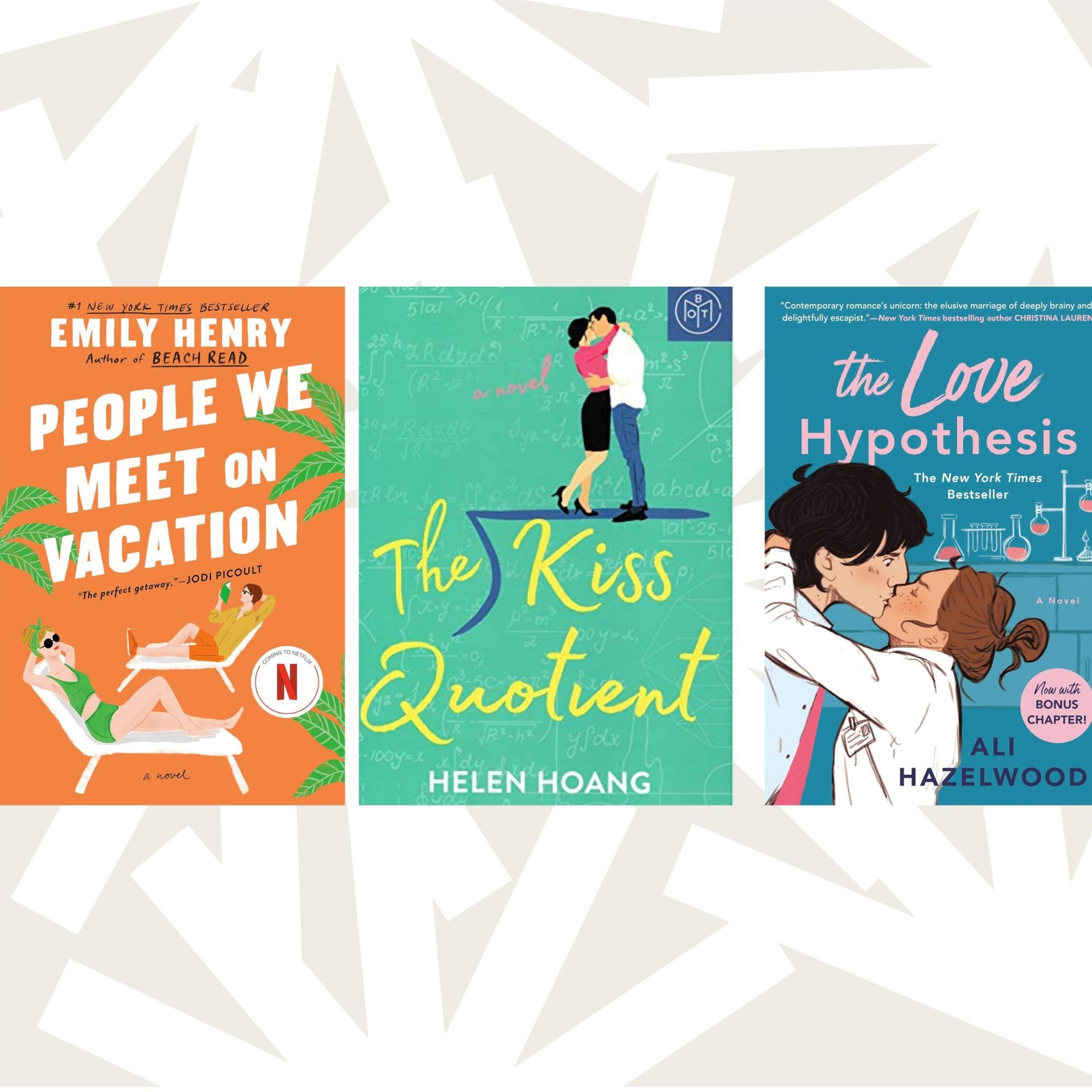
NPR's Book of the Day
Romance authors Emily Henry, Beverly Jenkins, and others on the state of their genre
00:22:21
Loading summary
Transcript100 lines
- [00:02]
Andrew Limbong
Hey, it's NPR's Book of the Day. I'm Andrew Limbong. Anyone who follows the business behind books and publishing knows that the industry would be a complete economic mess if not for romance. The genre is the main pillar on which the rest of the industry stands, and that's only gotten more true in the past five years or so. So we're going to wrap our pre Valentine's week with a couple of roundtable discussions with contemporary romance authors about what makes the genre work, how it's changed and tips writing good sex scenes. First up is an interview taped on Valentine's Day 2022, between here and now, Celeste Headley and two big names in the romance industry, Helen Huang and Emily Henry. In a lot of ways, the discussion is a defense of the genre, an argument for why you shouldn't dismiss it based on its popular appeal and how it can be the perfect vehicle to examine more serious themes. That's after the break.
- [00:59]
NPR Announcer
This message comes from Sony Pictures Classics. With a private life. Jodie Foster is Lillian Steiner, a renowned psychiatrist with more than a few skeletons in her closet whose carefully ordered life is shattered by the mysterious death of one of her patients. Burdened by guilt and grief, Lillian launches a personal investigation to prove the death was no random tragedy. In this film noir, a dangerous web of love and lies begins to unravel a private life. Now playing select cities coming soon to a theater near you.
- [01:33]
Celeste Headley
Today is Valentine's Day and we just wanted to take a little trip to the wonderful world of romantic fiction. Romance novels are often dismissed as cheesy, but the genre has provided a much needed escape to many bookworms, especially during the pandemic. And in between the stolen glances and the witty banter are actually thoughtful discussions of everything from dating with a disability to to sex and consent. Joining us now to help us fall a little more in love with love is New York Times best selling author Helen Huang. She's the author of the Kiss Quotient and its two spinoff novels, the Bride Test and the Heart Principle. Welcome to the show. Helen.
- [02:10]
Beverly Jenkins
Hi.
- [02:10]
Helen Huang
Thanks for having me.
- [02:11]
Celeste Headley
And we're also joined by Emily Henry, another New York Times bestseller. Her novels Beach Read and People we meet on vacation are adored by romance lovers everywhere. So welcome to the show, Emily.
- [02:22]
Helen Huang
Thanks, Celeste.
- [02:24]
Celeste Headley
Before I make the assumption that the two of you like Valentine's Day, is that true? Let me go to you first, Emily. Is it, is it, is it required that a romance writer like Valentine's Day?
- [02:37]
Emily Henry
I think I'm actually sort of Valentine's Day Agnostic. I think when you're a year round romantic, maybe Valentine's Day loses a little bit of its weight. Or maybe that's just me.
- [02:46]
Celeste Headley
What about you, Helen?
- [02:47]
Helen Huang
I like Valentine's. I have a flower farm. So Valentine's is our best selling season of the year. So for that reason, I like it.
- [03:00]
Celeste Headley
That's really such a fitting, appropriate other job for a romance writer. But for many people we like myself, we're well versed with the tropes of romance novels. You're traveling, there's only one bed. I'm an enemy, and I hate you. And then I kind of start to like you, and then I fall in love. Love with you. What do you think about these kind of tropes, either leaning into them or in some cases subverting them? Helen.
- [03:28]
Helen Huang
So for me, when it's time to write a book, I definitely don't think about romance novels in terms of I'm going to write this trope or I want to read this trope. I mostly want to write and read things that I, I feel are exciting in the moment. And so I do often really like to see things that are twisted and subverted.
- [03:55]
Celeste Headley
Also, I always wonder about some of the difficulties involved in writing romance novels. I don't think they're as easy to write as some people may assume. I think about some of the physical intimacy that you have to describe, and that can get awkward really fast. I mean, you have to be a good writer. And I wonder, Emily, if you can talk about the, the sort of challenge of describing an intimate moment.
- [04:20]
Helen Huang
Oh my gosh.
- [04:21]
Emily Henry
Yeah. I mean, I think the thing about writing romance is I don't think romance novels are embarrassing. I need to say that right off the bat. Obviously I love them, but I think that writing them, there is an innate vulnerability because falling in love is kind of an embarrassing experience. You don't really want people witnessing it like you're, you know, it's embarrassing. There's so much awkwardness, so much tension. And I think when I'm writing that I really, it's like the one time in the drafting process that I really have to convince myself no one will ever read this because otherwise I'm coming out of the moment too much and I'm thinking too much about how it will be received instead of really trusting the characters and trying to make them as vulnerable as possible. But yeah, it's like, I mean, it truly is an experience where I am like, looking at my screen through my fingers at certain points, just being like, no one's gonna Read it. No one's gonna read it.
- [05:18]
Celeste Headley
Although that is not true. You're lying.
- [05:21]
Emily Henry
It's not true. Ideally it's not true, but.
- [05:26]
Celeste Headley
Right. It hasn't been true for your career. But both of you. I mean, one of the reasons we wanted to talk to you about this is both of you weave in these deeper themes about family. Who is family, family bonds, grief, loss. Those are woven into the RO stories that you tell. And I wonder, Helen, how important is it to include sort of deeper themes as opposed to writing a straight up fluffy, maybe fluffy or lighter tale of a relationship?
- [05:59]
Helen Huang
So I started reading romance in eighth grade, and there are. For a long time, it was all that I wanted to read. And so I can genuinely say that I love romance. But as I've been writing it, it's become really important to me to kind of. To make it deeper. Just as. Because it's my work and it's my life's work, and I want it to have more depth than only being about people falling in love. I want it to be about people growing, about people experiencing different facets of life.
- [06:41]
Celeste Headley
Emily, did you also grow up reading romance?
- [06:44]
Emily Henry
I did not. I was a late bloomer when it comes to romance. And I have to say that it was kind of, you know, Helen and other contemporaries of ours or of hers, because she started a few years before me, but like Jasmine Guillory and Helen Huang were the two names that kind of paved the way to have those deeper conversations in your books and to have a romance that. That hinges on something more than just the romantic love.
- [07:11]
Celeste Headley
So, Helen, you know, this genre has long been dominated by white authors, and until quite recently, most of the stories themselves were about white, straight, neurotypical people falling in love, very often described as beautiful people. So it seemed kind of revolutionary when your debut novel, the Kiss Quotient, centered Stella, who's an Asian American woman who autism. That's something you share with her, and she is the heroine of your story. And I wonder what that was like for you. It's not always easy to be the first. I wonder what it was like for you to both write that story and then support that book.
- [07:55]
Helen Huang
So I didn't understand, I think initially that it was. That I was doing something new. I just had an idea that felt very organic to me and it was exciting. And so I wrote it that way. And it wasn't until I was done and I was putting the book out there that people were telling me things like, I don't know if you're crazy because you wrote an autistic heroine and a prostitute for a hero, or if you're a genius. And I just never had. I didn't realize that those were wild things to do until it was done. I've been very proud of what I've been able to do in terms of representing autistic people, representing Asian people and getting them out there, especially in this day and age when the political climate is just so difficult for people, especially Asians. I think during COVID has been hard.
- [08:59]
Celeste Headley
Yeah, absolutely. It's been a tough time, if there ever was an easy time to be an Asian American. But also, Emily, there is some prejudice against the genre itself. And it's seen as something which is sort of not real literature. And it's made fun of as, like, for, you know, women who don't want to read Tolstoy or something. Where do you see romance's place as women's literature or its place. Place in. In. In women's arts?
- [09:33]
Emily Henry
Well, I think, you know, looking back on the history of women making art, our world has historically been, you know, different from a man's world. And so women's art has often been seen as, like, domestic. And that's been used against us for all time and kind of used to denigrate what we make. But it's such a. Like, just a joy and a relief to realize that the things that we spend so much time thinking about really matter to us are valuable and that the pieces of a very small life are worth exploring and that that's the life that most of us live. Most of us, you know, we're not living Anna Karenina at this point. You know, we are having these small, intimate experiences. And I don't know, I just find it kind of revolutionary first to give that its due and to write, you know, stories that center women's experiences. But beyond that, it's also revolutionary to say that women's pleasure is not embarrassing. And as someone who was a late bloomer with romance readership, that was like, you know, a huge revelation to me to realize, like, there's a reason that we have been told to look down on these things and to treat them as silly and superfluous. And, I don't know, it's just kind of powerful to give that the value that I think it's due.
- [11:01]
Celeste Headley
So before we let you go understanding that, of course, both of you would recommend your own books, but maybe you could give us one romance novel besides your own that you would recommend for our readers who want to curl up with a really good tale of love on this Valentine's Day.
- [11:17]
Helen Huang
Helen, I'll go first.
- [11:19]
NPR Announcer
Sure.
- [11:20]
Helen Huang
I have recently been reading Chloe Lees books. Several of them feature characters who are on the autism spectrum. They're really fun and there's a lot of depth to them. So I would, I wholeheartedly recommend them.
- [11:38]
Andrew Limbong
Awesome.
- [11:39]
Emily Henry
And Emily, I would recommend Denise Williams the Fastest Way to Fall. It has a plus size heroine and it's very body positive and sweet and funny. And it's definitely the kind of book that will just obliterate all of your stress and make you warm and fuzzy. Which we could all use. Absolutely.
- [12:02]
Celeste Headley
That was Emily Henry, best selling author of Beach Read and People We Meet on Vacation. Her next novel, Book Lovers is out this May. And Helen Huang, best selling author of the Kiss Quotient series. Thanks so much to both of you and happy Valentine's Day.
- [12:18]
Emily Henry
Thanks for having us.
- [12:19]
Helen Huang
Thank you. Happy Valentine's to you too.
- [12:22]
NPR Announcer
This message comes from Mint Mobile. This holiday season, stop overpaying for wireless and switch to Mint Shop. 50% off unlimited plans@mintmobile.com Switch limited time upfront payment of $45 for three months, $90 for six months or $180 for 12 months. Taxes and fees extra initial plan term only above 35 GB. Network may slow when busy. Capable device required availability speed and coverage varies. See mintmobile.com unlike a lot of the.
- [12:54]
Andrew Limbong
Writers we've heard from this week, Beverly Jenkins is best known for her historical romances. On top of that, she's been writing romance for decades, since the 90s. So she brings a lot of long term perspective to this discussion. She's joined by Jasmine Guillory, who was on the pod earlier this week, and Ali Hazlewood, author of the book the Love Hypothesis. This was actually taped in 2024 in front of a crowd of romance fans at WBUR City Space, moderated by Here Now's Kalyani Saxena. Here's Kalyani.
- [13:23]
Kalyani Saxena
I'm glad that we're all here talking about romance and it seems like we've got a lot of romance fans here. Can you confirm? Yeah, yeah. But I feel like maybe, maybe a few years ago it didn't always feel like this was something people could be excited openly about. But things have started to shift in recent years and I'm curious what that has been like from your perspective and if you kind of have any stories where people have maybe not exactly sneered but been like, oh, you write romance. So Jasmine, why don't we start with you?
- [13:56]
Jasmine Guillory
I mean, I've definitely had people ask Me. Not quite in these words, but sort of like, when are you gonna write a real book? But, yes, there is definitely some sneering towards romance, but I just don't care. I mean, it's just right. Cause people who love romance are the most fun. So why should I spend my time, like, trying to convince someone, no, you should really eat chocolate instead of eating celery all day long. Like, chocolate tastes good. Have you tried it? Like, yeah, yeah. No, I don't want to try it. Oh, okay. Okay.
- [14:35]
Andrew Limbong
Sorry.
- [14:36]
Kalyani Saxena
You hate fun. But, Beverly, I know there's a story. I think you were at a Miami book fair, and someone said something to you, and you really had the ultimate takedown. So I feel like I have to hear.
- [14:49]
Beverly Jenkins
It was at the Miami Book Fair, and if anybody's ever been there, it's just a fabulous, fabulous event. Well, the host provided us a little. Like, a little van, and there's a woman there who says, what would you write? And I said, romance. Oh. I said, and what do you write? I read literature. Really? I said, so how many books you got in print?
- [15:31]
Kalyani Saxena
Bet she didn't want to answer that.
- [15:33]
Beverly Jenkins
She turned bright red. And we never heard from Ms. Literature again for the rest of the ride. Thank you very much.
- [15:50]
Kalyani Saxena
One of the things that we have to talk about is. Well, we don't have to, but I want to. We have to talk about, as the people say, spice in romance, or we could just say sex. And romance novels, I feel like, are some of the only places where you can read sex scenes from the perspective of a woman. And I'm curious about your perspective, you know, having written those scenes and maybe seen the reader's responses to that. Beverly, do you want to start?
- [16:23]
Beverly Jenkins
You know, it's basically the only genre where women get to decide their own sexuality, where we get to embrace our own sexuality, and that's a powerful thing. Yeah. Which is why a whole lot of people hate it. You know, they said, well, you make romance makes you. You know, it's unrealistic. What is unrealistic about wanting a partner who supports your dreams. Yeah. Who walks with you and not in front of you or behind you. I think we're doing pretty good, you know?
- [16:53]
Kalyani Saxena
Yeah.
- [16:54]
Beverly Jenkins
Yeah, I think we're doing okay.
- [16:55]
Kalyani Saxena
Yeah. What about you, Jasmine? What do you think about when you are crafting those kinds of scenes?
- [17:03]
Jasmine Guillory
For me, they really are about, like, where characters are in the moment in their relationship. You know, this is a story about two people falling in love with one another. And so how are the sex scenes a part of that. And I think it's also fun to show, like, yes, like, women having pleasure and embracing that and, like, not being ashamed of it.
- [17:27]
Kalyani Saxena
What about you, Ali?
- [17:28]
Celeste Headley
What do you think?
- [17:29]
Ali Hazlewood
Yeah, I mean, I agree with everything, but I also think that sometimes the sex scenes are just there for this month, and I'm totally okay with it.
- [17:42]
Beverly Jenkins
Give you filth.
- [17:46]
Kalyani Saxena
Well, I want to talk about diversity. I feel like we have to kind of tackle the elephant in the room. Or not tackle, but maybe gently romance into submission. The genre is, and has been for a long time a space for whiteness and was written by white authors and condumed by white readers. And we still don't have many black historical romance writers. No, no, we don't. And so we need you.
- [18:16]
Beverly Jenkins
Well, not really. We have Vanessa now.
- [18:18]
Kalyani Saxena
Are there ways that you really wish things would change?
- [18:21]
Beverly Jenkins
Still need more diversity in editorial?
- [18:25]
Jasmine Guillory
Yeah, I think, yes. I mean, I think, like, the writers are there. It's really on the publishing side having people for whom this is not a. Like, they're not saying, like, well, I don't know where we would sell this to or, you know, because it's right editorial. But also the sales team and the marketing team and the publicity team who both know how to sell the books, but also care about the books in the same way.
- [18:53]
Beverly Jenkins
And, you know, and on the editorial side, I had a copy editor. I had the phrase was putting something on the down low. We all know what that means, you know, keep it secret, whatever. And the copy editor wrote bad grammar. Oh, you should say, put it on the low shelf.
- [19:16]
Kalyani Saxena
Put it on the low shelf.
- [19:17]
Beverly Jenkins
How about I don't say that? And I wrote in the margin. Reason number 865. We need more people of color in editorial.
- [19:30]
Kalyani Saxena
We have a couple questions about craft, actually.
- [19:33]
Andrew Limbong
So. Okay.
- [19:34]
Kalyani Saxena
I know writing in general, there's people who really like to outline, and I really love to outline. And there are writers who are pantsers. And Beverly, I think you might be one of them.
- [19:43]
Beverly Jenkins
I may have a kernel of a story or a kernel of a character, or if I have to outline. And it's like all the energy for me is gone from the story. So for me, it's organic. I like knowing, not knowing what's gonna happen on the next page, just like the reader.
- [20:02]
Jasmine Guillory
Okay, I have a question about that, though. You do a ton of research for your books. So how do you like, sort of write and then go back and do the research or how does that.
- [20:11]
Beverly Jenkins
I research as I go when that. Cause you know, I'm following the characters Right. And they're going through my head into the swamps of Texas, and I'm like, are there swamps in Texas?
- [20:23]
Andrew Limbong
Well, are there?
- [20:24]
Jasmine Guillory
And there were.
- [20:25]
Celeste Headley
There were.
- [20:26]
Jasmine Guillory
Oh, there we go. All right.
- [20:28]
Beverly Jenkins
And it was a part of the story that I didn't even know we were going there. And one of the main. Main characters was in that swamp.
- [20:38]
Kalyani Saxena
Yeah. What about you, Ali? What's your writing style, your craft?
- [20:42]
Ali Hazlewood
I am, and this is not my term. I wish I could claim this term, but I can't. I am a panty liner, which means.
- [20:50]
Kalyani Saxena
Not the panty liner.
- [20:53]
Ali Hazlewood
So the idea of the panty liner is that you need. You have some kind of outline, but then you fill it in. It's the perfect term.
- [21:02]
Beverly Jenkins
I love it. See what happens when you hang around with romance writers?
- [21:08]
Kalyani Saxena
Well, one of the questions we've been getting, and this is one I've been saving for the end. I'm curious for each of you what your favorite trope to read is and what your favorite trope to write is, because those might be two different things. Ali, we'll start with you.
- [21:21]
Ali Hazlewood
I really like fated mates, which I know a lot of people hate insta love. But I just. I really, really like when there is some kind of, you know, things that is bigger than the couple that kind of pushes them together. And I've really enjoyed. I only wrote it once for traditional publishing, and I really enjoyed it, and I enjoy reading it.
- [21:41]
Helen Huang
So, yeah.
- [21:44]
Jasmine Guillory
I love fake dating. I mean, just love it, as I have written a few books that involve fake dating, including my first, and I think it's so fun. And I like. I love to read it and write it, but I also really love to read A Marriage of Convenience. Oh, the best.
- [22:04]
Kalyani Saxena
And it's the best, too, because you can fit in so many other tropes. Like they're married for convenience and they hate each other. Where they're married for convenience and they've been childhood friends, you know, like, it's. It's like the Russian doll of tropes. I love it. I love it.
- [22:17]
Beverly Jenkins
Yeah.
- [22:18]
Kalyani Saxena
What about you, Beverly?
- [22:19]
Beverly Jenkins
Marriage of convenience.
- [22:20]
Jasmine Guillory
Yes.
- [22:22]
Beverly Jenkins
I read them. I write them.
- [22:23]
Helen Huang
I love them.
- [22:23]
Beverly Jenkins
Yeah.
- [22:24]
Kalyani Saxena
Yes, exactly. And we have one more thing for tonight. It is actually Beverly Jenkins birthday today.
- [22:31]
Jasmine Guillory
Oh, my goodness.
- [22:33]
Beverly Jenkins
This is what, 73 looks.
- [22:41]
Kalyani Saxena
Thank you for spending your birthday with us. Thank you all for spending Beverly's birthday with us.
- [22:46]
Beverly Jenkins
Thank you so much. I really, really appreciate it.
- [22:49]
Kalyani Saxena
Thank you all so much for coming out tonight. We really have had a great time.
- [22:55]
Andrew Limbong
And that's it for this week on NPR's. Book of the Day. If you want more, you can sign up for our newsletter@npr.org Newsletter Books I'm Angel Limbong. The podcast is produced by Chloe Weiner and Ivy Buck and edited by Megan Sullivan and Sierra Crawford. Our founding editor is Petra Mair. Yolando Sanguini is our executive producer. Thanks for listening.
- [23:25]
NPR Announcer
This Message comes from Amazon One Medical. Your body talks to you. Symptoms are the body's way of asking for help. Amazon One Medical has 247 virtual care with providers fluent in body talk. Thanks to AmazonOne Medical Healthcare just got less painful.
- [23:44]
Celeste Headley
This message comes from Intuit TurboTax with TurboTax Expert full service match with a dedicated expert who will do your taxes for you from start to finish, getting you every dollar you deserve. It's that easy. Visit turbotax.com to match with an expert today.
- [24:02]
NPR Announcer
This message comes from Amazon Pharmacy. Imagine having anxiety and then on top of that, having anxiety about your anxiety meds. You might stress about whether the meds are going to get refilled on time, or if you need a renewal, or if you need an appointment for a renewal. And then there's the general waiting in line at the pharmacy anxiety. Amazon Pharmacy makes it easy to get your meds and they'll send them right to you fast. With Amazon Pharmacy, health care just got less painful.