← NPR's Book of the Day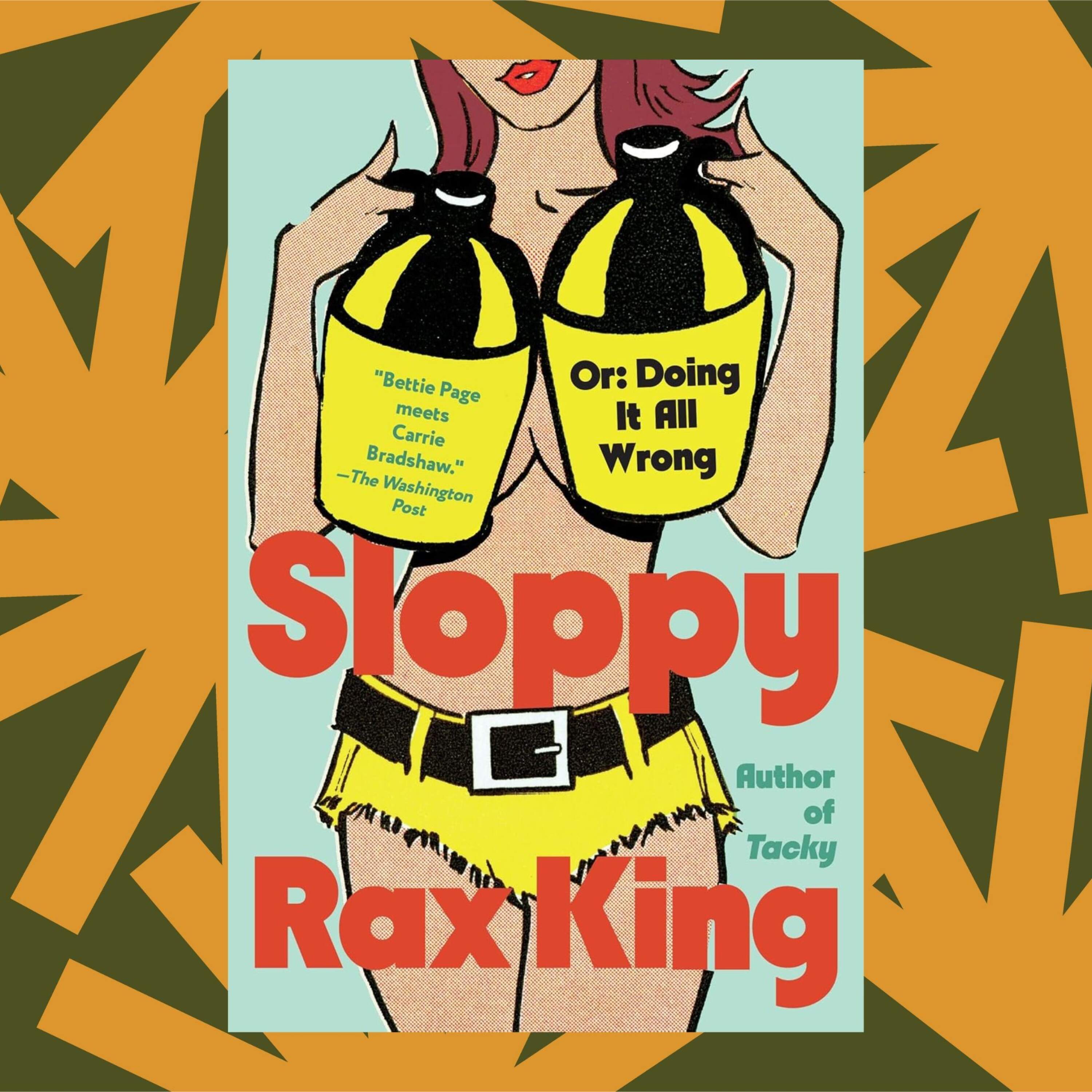
NPR's Book of the Day
‘Sloppy’ author Rax King says she’s inspired by writers who did their best work sober
00:08:38
Loading summary
Transcript20 lines
- [00:02]
Andrew Limbong
Hey, it's NPR's Book of the Day. I'm Andrew Limbong. I admit there was a stretch in my youth where I bought into the myth of the writer as drinker. I imagined all my favorite writers as being able to toss a few drinks back and then crank out the great American novel. So did the writer Rax King, who's on the pod today talking about her new essay collection, Sloppy. A lot of the book is about substances and sobriety, and she talked to NPR's Juana Summers about the writers that finally convinced her that booze and books don't necessarily have to go hand in hand. That's ahead.
- [00:38]
NPR Sponsor
Support for this podcast and the following message come from Indeed. You just realized your business needed to hire someone yesterday. Indeed's Sponsored Jobs helps you stand out. According to INDEED data, Sponsored jobs posted directly on Indeed have 45% more applications than non sponsored jobs. Speed up your hiring right now with Indeed and get a $75 sponsored job credit to get your jobs. More visibility@ Indeed.com book terms and conditions apply. Hiring Indeed is all you need.
- [01:12]
Juana Summers
In her first book, Rax King celebrated the things that we love that some people may think are not in good taste, like the Jersey Shore or the Cheesecake Factory. That collection of personal essays was called Tacky. Now she's out with a new book on a different theme. This one is called Sloppy.
- [01:31]
Rax King
I had been writing some of the essays in Sloppy without having a grand unifying principle. And then, similar to what happened with Tacky, I looked up one day and realized that they were all pretty much about addiction and bad habits and other such things. And so sloppiness seemed like a good, you know, organizing framework.
- [01:54]
Juana Summers
King is now three years sober from alcohol and cocaine. It's a topic that comes up a lot in this book, and I asked her what it's been like sharing so openly her journey through addiction and sobriety.
- [02:06]
Rax King
Well, I suppose I'll say. I mean, I, I recognize and sympathize with the fact that for a lot of people, addiction is this shameful secret. And I feel very fortunate that I just didn't really see it that way. I mean, that's one benefit of having grown up in a house where both my parents were sober and in recovery. And so it was just something that was fine to talk about. Like, you know, it was no more shameful than failing to clean my room, which is another thing that I was extremely guilty of. And so it struck me that I was really well positioned to talk publicly about the struggles of getting sober and how boring everything felt for about the first solid year.
- [02:51]
Juana Summers
I wonder, how did getting sober change the way that you approach your writing?
- [02:55]
Rax King
Well, I mean, in a very straightforward way. My writing process before getting sober was I would hole up somewhere as private as I could, sometimes like a cheap hotel room, so in the middle of nowhere. And I would knock back a few shots in a row. If I had coke, I would do some of that as well. And that would approximate what I thought of as the writer's mood. And of course, when I quit drinking and doing coke, that was no longer available to me. I had to find ways to inhabit that generative creative mindset without just hacking my way there with substances. And it needs to be quiet. I'd like to be alone, and I'd like just endless hours of free time to drift around my brain and see what is worth getting down on paper, as opposed to what I used to do, which was just puke it all up on the page and deal with it later, Hemingway style.
- [03:54]
Juana Summers
It's so funny to hear you say that, because I think for so many of us that write or in creative professions, there was this idea for so long that romanticized drinking or addiction as part of the creative process. And it sounds like for you, you found something. You found a way to create work that feels important and meaningful to you without that.
- [04:12]
Rax King
Yeah, I think you're absolutely right that there's this great romance of the doomed artist, the doomed writer who's a genius, despite what a slob they are. And actually, there's a book that was really helpful to me in reconfiguring how I thought about that scenario, which is Leslie Jamison's the Recovering. And it's a deeply researched work that covers a number of writers who actually did their best stuff after they got sober, after they were in recovery, like the great Raymond Carver. He wrote most of the stories we associate with Raymond Carver after he cleaned up his act. And that wound up being inspiring to me, and it wound up teaching me what I probably should have been assuming the whole time, which is, oh, wait, being in a blackout 23 hours out of the day is actually a real hurdle to producing meaningful work. It actually gets in the way much more than it inspires or helps.
- [05:15]
Juana Summers
Shifting gears a bit. I would love to ask you a little bit about your father. You write about both of your parents, but extensively about your father in this book, and it seems like the two of your relationship before he passed was pretty complex. At one point, you describe him as your hero, but you also seem to be really clear eyed about his shortcomings throughout your life. Tell us a little bit about your dad.
- [05:36]
Rax King
Oh man, I love my dad so much to this day. I mean, but yeah, I certainly have no illusions about what a mess he was. Even well into recovery, he still held on to a lot of addictive behaviors. Lying, rages. Rages are really common for people in active addiction. And even when he wasn't doing drugs anymore, he was really prone to rages. And so I think he's always going to be my hero and he's always going to have been my very favorite person. And I don't know that I'll ever be done untangling the legacy that he left me. All the habits that he bequeathed to me and never showed me how to manage responsibly. Like my personality is basically his, my habits are his.
- [06:24]
Juana Summers
What's the biggest lesson that you take away from your relationship with your father?
- [06:28]
Rax King
Oh, that's a good question. I mean, the biggest lesson is don't let things go as far as he did. Don't isolate within myself as much as he did. Don't put on a brave face as routinely as he did. And just let people help me and try and let people love me even when I'm difficult and unpleasant, as all people are sometimes.
- [06:54]
Juana Summers
I know that the essays that make up this book, they were written at different parts of your journey with sobriety. And I just wonder, over the three plus years that you have now been sober, how has your sobriety changed?
- [07:06]
Rax King
Oh, I like that question a lot actually, because you're right, the essays in this book, many of which cover addiction, are covering it at different points in my sobriety. And I believe the, the first essay in there that I wrote, I believe was proud alcoholic stock. And I wrote that within weeks, if not days of quitting drinking. And I think you can tell reading it that my tone is pretty frustrated and dissatisfied. And I no longer find sobriety to be frustrating and unsatisfying. I mean, occasionally I do, you know, I'll go to, I'll go walking around and I'll see people sitting outside at a sidewalk cafe drinking Aperol spritzes. And yeah, sure, I have that moment of wow, that does look like a good time or whatever. But my sobriety has now changed to show me other things that look like fun, that aren't just centered around drinking, that aren't just centered around partying. And the way the author Melissa Phoebos described it was being in active addiction is like spending all your time squinting through a keyhole at like stuff happening behind a locked door that you can't quite make out. And meanwhile, right behind you, if you would only turn around, there's the whole wide world to explore. And that is definitely how it feels now. I no longer feel like I'm just squinting through the narrowest possible aperture at something that I'm never gonna get. I have access to the world of everything and everything in it and all the beautiful stuff that's in the world that isn't in a dime bag or a bottle of liquor.
- [08:59]
Juana Summers
Author Rax King. Her new book is Sloppy Rax. Thank you so much.
- [09:03]
Rax King
Thank you so much. Great to foreign.
- [09:12]
NPR Sponsor
This message comes from Lisa. Lisa isn't just about sleep. It's about impact. They donate thousands of mattresses each year to those in need, while also partnering with organizations like Clean Hub to help remove harmful plastic waste from oceans. Visit leesa.com for 25% off mattresses, plus get an extra $50 off with promo code, NPR. That's leesa.com, promo code, NPR.
- [09:38]
Juana Summers
Congress has approved a White House request to eliminate federal funding for public media. NPR remains committed to our mission of informing the public, increasing your understanding of the world, and enriching everyday life. But without federal funding, we are relying on your support now more than ever. Please Give today@donate.NPR.ORG.