← NPR's Book of the Day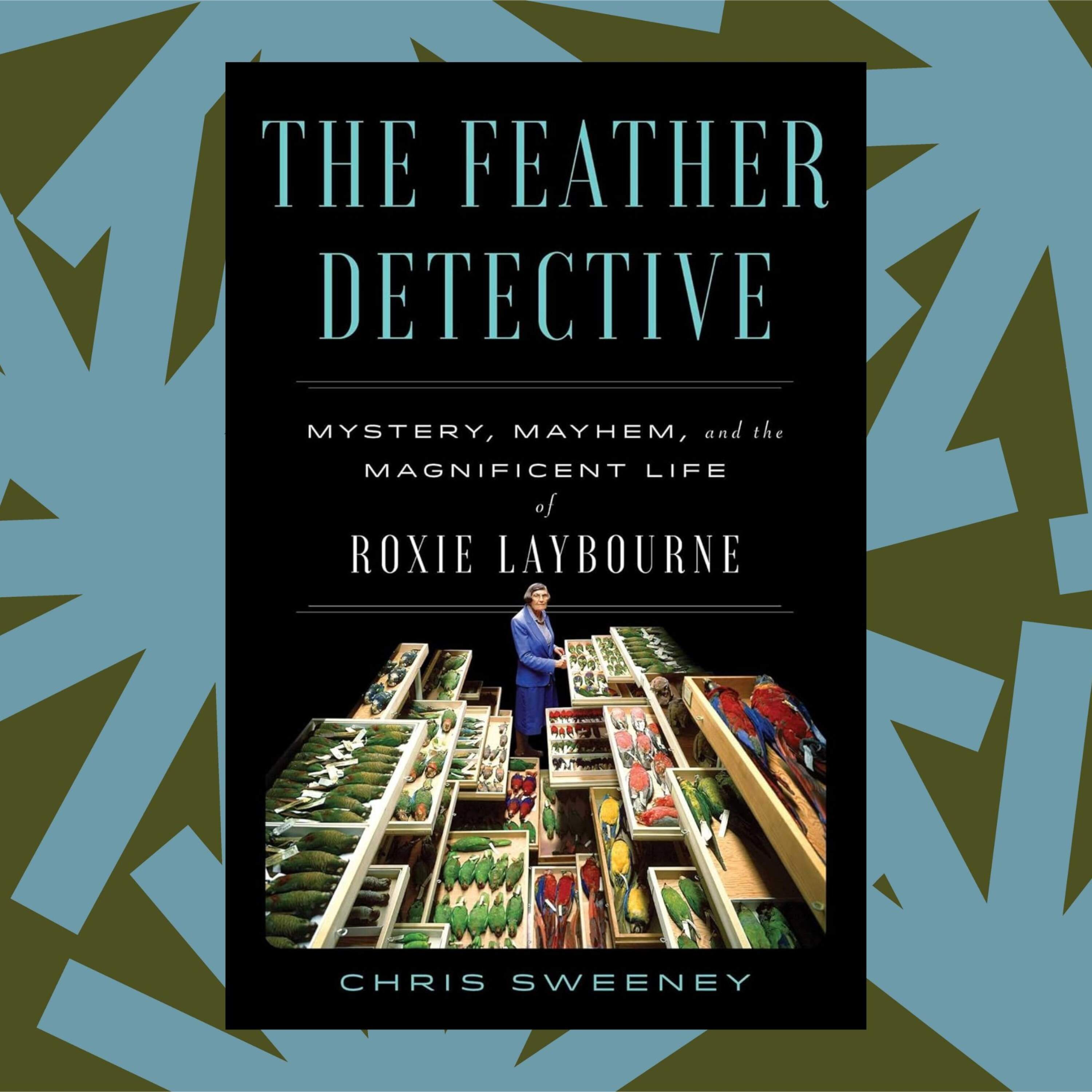
NPR's Book of the Day
‘The Feather Detective’ is a biography of Roxie Layboune, forensic ornithologist
00:08:30
Loading summary
Transcript27 lines
- [00:00]
Progressive Insurance Ad
This message comes from Progressive Insurance and the name your price tool. It helps you find car insurance options in your budget. Try it today@progressive.com, progressive Casualty Insurance Company and affiliates. Price and coverage match limited by state law, not available in all states.
- [00:18]
Andrew Limbong
Hey, it's NPR's Book of the Day. I'm Andrew Limbong. Roxy Laybourn has made my life safer. If you've ever flown on a plane before, she's made your life safer too. She was a forensic ornithologist, that is someone who studies birds and feathers at crime scenes, sometimes involving an aircraft. She practically invented the field and it wasn't easy. At the time she was working, ornithology was very much a male dominated field, but she overcame that through the sheer force of her skill. That's according to the writer Chris Sweeney, who's got a book out about Laborne titled the Feather Mystery, Mayhem and the Magnificent Life of Roxy Laborn. And he talked to NPR's Scott Simon about how a birder forever changed the airline industry. That's ahead.
- [01:06]
Progressive Insurance Ad
This message comes from Amazon. When you're on hold with a doctor's office or pharmacy and the operator says you call is very important to us. After the tenth time, well, suddenly your call doesn't seem very important to them at all. Amazon One Medical has 247 virtual care and Amazon Pharmacy delivers meds right to you fast without any horrible hold music. Thanks to Amazon, Healthcare just got less painful.
- [01:32]
Scott Simon
Imagine a police procedural. Cops called to a gruesome scene. Evidence techs secure the area. They dust for prints and blot up stains. Then a hard boiled homicide cop sees something and says, better call in the feather detective. Well, thank Roxy Laborn, the Smithsonian taxidermist and forensic ornithologist. I think in fact the term was invented for her. She practically wrote the textbook on examining bird feathers having to do with catastrophes and crime scenes from murders to plane crashes. Chris Sweeney has written her story in his book the Feather Detective Mystery, Mayhem and the Magnificent Life of Roxy Laborn. He joins us now from the studios of WBUR in Boston. Thanks so much for being with us.
- [02:22]
Chris Sweeney
Thanks so much for having me.
- [02:23]
Scott Simon
Let's begin by telling Roxy Laborn's story through, well, a famous and tragic event. 1960, Eastern Airlines Flight 375 crashed into Boston Harbor. 62 people died. Turns out struck by a flock of birds. How did Roxy Laborn get involved?
- [02:43]
Chris Sweeney
At that time it was known that airplanes and birds were not a good recipe and no one really understood though that a commercial airliner would be at risk. So when that airplane went down, there was speculation that it was birds. Some witnesses said they saw birds, but the cab, the Civil Aeronautics Board, and the faa, which was in its infancy at that stage, they didn't know what species was struck and how many. And so when they extracted the airplane out of the harbor, they found some bird remains gunked up in the engines, and they needed to figure out what kind of. And so they sent them to the Smithsonian down in Washington, D.C. which has an enormous bird division with a lot of specimens. And Roxy and her boss kind of dug in, and lo and behold, it was a large flock of European starlings that caused that crash. And Roxy had found a feather that helped her piece that together and, you know, identify starlings that were for sure the bird that caused that crash. And that kind of led her boss to say, you know, Roxy, I think this is gonna be your work from here out.
- [03:47]
Scott Simon
Mm. How did Roxy Leiburn develop what I'll just call this area of interest?
- [03:51]
Chris Sweeney
She had worked as a taxidermist very early in her career. In the 1930s, she worked at a museum in North Carolina, working in taxidermy. And she was good at handling birds and preparing bird specimens.
- [04:02]
Scott Simon
She'd been dissecting birds from a young age, hadn't she?
- [04:05]
Chris Sweeney
She had been, and she always had. She was a real outdoorsy type young woman, had an interest in birds biology, ornithology, and she was quite good with a fleshing knife and understood the basics of taxidermy. And as got better at it, she got a position at a museum. She was the first woman taxidermist in North Carolina to hold an actual job in that field in a museum. And then come World War II, the Smithsonian's bird collection was falling into a state of disrepair. A lot of the men who worked there had gone off to fight, and so they needed to bring in taxidermists. And Roxy came up from North Carolina and really impressed some of the staff with her abilities to repair these old specimens and to breathe new life into them. And these specimens are very important for research purposes.
- [04:50]
Scott Simon
One year alone, Roxy Leyburn was called into 45 criminal cases.
- [04:55]
Chris Sweeney
That is correct. And a lot of them were poaching cases.
- [04:58]
Scott Simon
Help us understand some of the poaching cases there. One against a very prominent family.
- [05:03]
Chris Sweeney
The one against the prominent family was the Kluge estate. And they had a British style hunting preserve on their estate in Virginia where you line up with a rifle and the birds are chased into the air, and mostly affluent people kind of shoot them, and they call that hunting, I.
- [05:20]
Scott Simon
Think John Clooney, he might have been the richest person in the United States at that point, too.
- [05:24]
Chris Sweeney
The richest or the second richest. He was very well off. And it was a bizarre case in which one of the people who worked at the shoot kind of started getting queasy about the work. And they were awful. They were murdering dozens of hawks, owls. They had an incentive program to whoever killed the most hawks and collected the bands off of them to prove that these were kills. They would clip the hawk feet off and they were killing, I believe, you know, into the hundreds of these. All of these were protected species. And so they raided the estate, and Roxy was part of that raid because they needed to identify the evidence at the site. They didn't want to risk bringing this into court. And so Roxy, the feather detective, was at the crime scene analyzing dozens and dozens of bird remains there.
- [06:15]
Scott Simon
Yeah. Did she. As her professional success grew and it's, you know, irresistible to put it this way, did she ruffle a lot of feathers?
- [06:24]
Chris Sweeney
I think she did. And she also got a lot of admirers. She ruffled feathers because she was a bit of a mess at work. She took up a lot of space. There were actually complaints I found in her files about how she would stack reams of her case reports just on shared workspaces. Her office was a mess. And she didn't suffer fools lightly. She was very demanding, and she expected her mentees and her proteges to work as hard as she did, which was often six or seven days a week, ten hour days. And she stood up for herself. She didn't take criticisms lying down. And she didn't get bullied by middle management, despite how much bullying they tried to enforce on her.
- [07:05]
Scott Simon
Did she ruffle a lot of feathers among men in particular?
- [07:08]
Chris Sweeney
She did. And if you look back at the history of the Smithsonian, this was a male dominated institute for its entire existence. And Roxy was a woman in this. And if you look at ornithology, that was a male dominated field of science, as so many were. So Roxy got under the skin of men because of how she operated, who she was, and I think her skill level, I think people were jealous of how good she was and how hard she worked. So she did confront a lot of sexism throughout her career. And she was approached by a lot of women seeking advice on how do you make it as a woman in science? And she always just said, work harder than everyone.
- [07:46]
Scott Simon
Roxy leyburn died in 2003 at the age of 92. What do you think? We have to thank her for today.
- [07:55]
Chris Sweeney
I think we have a lot to thank her for including safer practices at airports in terms of managing birds. This is not a problem that has gone away. It's not like you can snap your finger and make all the birds go away from an airport. Every year there are thousands, tens of thousands of bird strikes. Roxy's pioneering work in this field helped airports realize we need to set up practices to keep away birds, to manage them, to keep them out of flight paths. And knowing the species may tailor. You know, you don't want long grass. If you want certain bird species, you gotta get rid of standing water. So Roxy's identifications really helped inform modern day practices of how airports are managed and maintained in terms of wildlife.
- [08:38]
Scott Simon
Chris Sweeney's new book, the Feather Detective. Thank you so much for being with us.
- [08:42]
Chris Sweeney
Thank you so much for having me.
- [08:45]
Andrew Limbong
And just a reminder that signing up for book of the day plus is a great way to support NPR's book coverage and public media. And you'll get to listen to every episode sponsor free. So please go find out more@plus.NPR.org BookOfTheDay.
- [09:13]
Progressive Insurance Ad
This message comes from Amazon One Medical. Ever gotten sick on vacation? Amazon One Medical has 24. 7 virtual care so you can get help no matter where you are. It's kind of like the room service of medical care. Thanks to Amazon Healthcare just got less painful. This message comes from Warby Parker. Prescription eyewear that's expertly crafted and unexpectedly affordable. Glasses designed in house from premium materials starting at just $95, including prescription lenses. Stop by a Warby Parker store near you. This message comes from Lisa Leesa isn't just about sleep, it's about impact. They donate thousands of mattresses each year to those in need, while also partnering with organizations like CleanHub to help remove harmful plastic waste from oceans. Visit Leesa.com for 25% off mattresses. Plus get an extra $50 off with promo code NPR. That's L E E S A.com promo code N.