← NPR's Book of the Day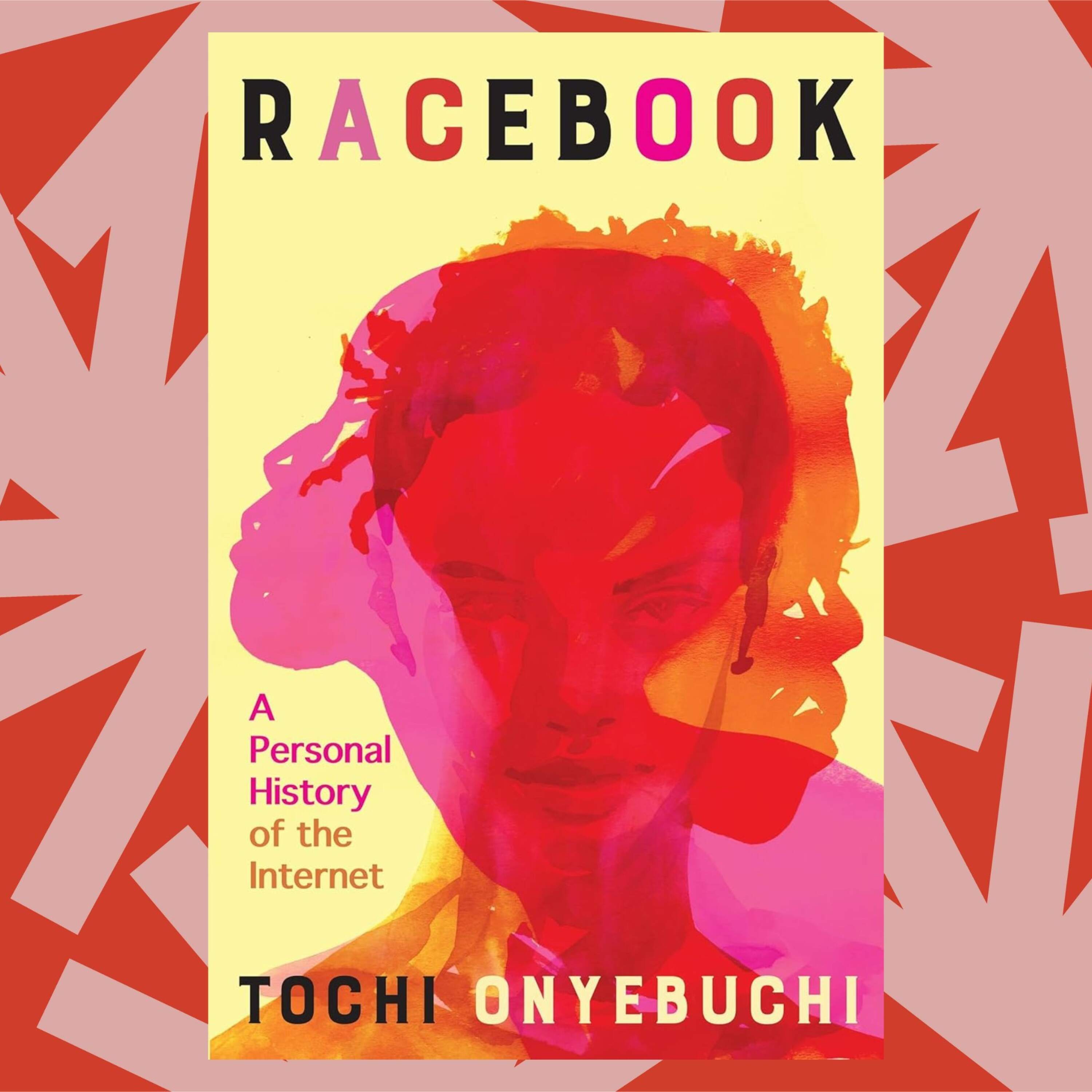
NPR's Book of the Day
Tochi Onyebuchi’s 'Racebook' is a 'personal history' of a less serious time online
00:08:59
Loading summary
Transcript17 lines
- [00:02]
Andrew Limbong
Hey, it's NPR's Book of the Day. I'm Andrew Limbong. I don't know how to impress upon you that if you were at the right place and right time, in this case the mid 2000s with a broadband connection, the Internet felt like a beautiful utopia. It felt like freedom. I think it's fair to say that the average person's experience of the Internet today doesn't feel like that. In the new book, Racebook writer Tochi Onyebuji tracks this change of the Internet from when it was a place where people would joyously share tips on getting through the water dungeon in Zelda to whatever it is now. He talks to NPR's Wanda Summers after the break.
- [00:41]
NPR Sponsor Announcer
This message comes from Schwab at Schwab. How you invest is your choice, not theirs. That's why when it comes to managing your wealth, Schwab gives you more choices. You can invest and trade on your own. Plus get advice and more comprehensive wealth solutions to help meet your unique needs. With award winning service, low costs and transparent advice, you can manage your wealth your way at Schwab. Visit schwab.com to learn more.
- [01:10]
NPR Host
Remember when the Internet was fun? A little less intense? Well, author Tochi Onyebuchi does his new book Race Book, harkens back to that odd time in history when people started to realize the power of the Internet. But before things got so serious for him, the Internet and the way he experienced it shifted in 2012.
- [01:30]
Tochi Onyebuchi
It seemed as though prior to that moment I existed on the Internet as a sort of skinless, raceless entity. It didn't seem as though I was a black man on the Internet until I started arguing with people about blackness on the Internet.
- [01:50]
NPR Host
The moment he's referencing is the shooting death of 17 year old Trayvon Martin in 2012 and the subsequent acquittal of the man who killed him. A. Onyebuchi uses this moment and others to take stock of the Internet, both past and present, through his eyes, those of a young black man finding community and navigating the changing and sometimes dangerous world around him.
- [02:12]
Tochi Onyebuchi
I think one of the things that happened was there was this. There was this veil that had come down and it became apparent to me that there, I guess to put it diplomatically, there was a much greater diversity of opinion on the Internet than it had occurred to me there was in the past. There were people, particularly people in my life, but people who I seem to be primarily interacting with online didn't seem to think there was anything wrong with the way things had turned out you know, in the, the death of Trayvon Martin and afterwards. And that was a big shock to me. I think another change in how I experience the Internet was that it became a place where I was witnessing people trying to figure out how to do something about this. It was very clear that there was something wrong, some big problem. And people were organizing or collaborating or coordinating online ways to deal with this sort of thing, whether that meant, you know, putting out locations for marches and protests, or whether that meant, you know, putting together online journals or places to collect, you know, writing, whether it meant publishing opinion pieces. All of a sudden the Internet was revealed to me as this place where activism could happen. And it just hadn't occurred to me that it could be that before taking.
- [03:43]
NPR Host
Stock of that shift. Now, more than a decade later, do you think it was a net positive, a net negative?
- [03:49]
Tochi Onyebuchi
Oh, my goodness. I mean, that is the trillion dollar question. Because I, you know, it goes both ways too, right? I think if you ask a lot of particularly young people on the right, you know, what was their. What's been their radicalizing moment, so to speak, they might also point to the acquittal of George Zimmerman in the shooting death of Trayvon Martin, albeit they might have been pushed in the opposite direction from me and a lot of my cohort. And as we saw with something like Gamergate, for instance, is Gamergate something that could have happened in a, you know, pre2013 Internet? Is that something that might have even occurred to people to do pre2013, pre2010s on the Internet? So, yeah, it's why I feel like in my heart of hearts, you know, the Internet sort of changing, or at least our conception of the utility of the Internet changing is a net positive. But there is so much, there is so much negativity that has come with it. So it may, it may be a very slight net positive, but I do feel ultimately a net positive nonetheless.
- [05:10]
NPR Host
Throughout the book, you express some nostalgia for the Internet that we used to know before it was such an integral, irreplaceable part of our society that we literally walk around and carry in our pockets and depend on every single day. What do you think it is about that early experience of the Internet that was so satisfying?
- [05:31]
Tochi Onyebuchi
It really does feel, and this might be, I readily admit this may be rose tinted glasses. It really does feel like everybody was kinder. Like generally it felt like the ph balance in the pool was very different. You, it was almost an expectation that, you know, if you, if you went on the Internet looking for gaming tips or Whatever. People were just, like, ready to help you. Just like. Absolutely. That was the default, you know, the Yahoo. Message boards or other online forums. It really did feel as though these spaces had been created for us to congregate around things that we loved, things that we enjoyed. It didn't feel like the place that you would go to to get angry about things. It also didn't feel like the place that you went to to get news. And I think that's a very important aspect of it. I feel like a very big shift in Twitter, for instance, was the moment when people started going there for serious stuff, when it was no longer just an app for jokes. It was an app for where you would go to get news. I think when I started seeing the first. No disrespect, when I started seeing the first journalists on there, I was like, oh, there goes the neighborhood. I feel like, you know, the early Internet had that vibe of, hey, we're just here for jokes.
- [06:57]
NPR Host
We've talked a lot about the Internet of the past, but I want to end by asking you about what the Internet of the future might look like. What do you think it will be and what do you hope it will be?
- [07:06]
Tochi Onyebuchi
Oh, my goodness. I mean, I think it's going to get worse before it gets better, but I do think it is going to get better. I do think there's. Because I think we are. And I think this is partly due to the sort of tech lash that we've been experiencing over the past, you know, several years, past half decade at least. I think people are getting much more intentional about how they use the Internet, about how they curate their online experience. And I feel like there's this element of, hey, we're taking our lives back, we're taking our experience back. And that doesn't necessarily mean logging off and touching grass. It can mean, oh, I'm. I'm curating my own spaces. I'm going to places that don't mandate I talk to strangers. I know I'm just going to argue with. So I think in that respect, it's going to get better. The reason I think it's going to get worse before it does is because the AI bubble hasn't burst yet. And I think it's going to be a bit of, you know, we're going to, you know, be in this realm of. Of, you know, deepfakes and. And misinformation and literally not being able to tell what's real anymore. When we're online, I think there's going to be a bit more of that hellscape coming. But I do think that when that bubble bursts and all that Wall street money goes to find some other, you know, shiny red ball, we have an opportunity to build something that really, really, really beautiful out of the rubble.
- [08:47]
NPR Host
Author Tochi Onyabuchi. His new book is Race A Personal History of the Internet. Tochi, thank you so much.
- [08:53]
Tochi Onyebuchi
Oh, thank you so much for having me.
- [09:00]
Andrew Limbong
Hey, Andrew here, The host of NPR's Book of the Day podcast. And yeah, I love new books, but there's just something about rereading an old favorite on our new limited series, Books We've Loved. We're revisiting some classics from Pride and Prejudice to Dune in between and talking about why they're worth reading today. Listen to NPR's Books We've Loved right on this podcast feed every Saturday on the NPR app or wherever you get your podcasts.
- [09:27]
NPR Sponsor Announcer
This message comes From NPR Sponsor 1Password Protect your digital life with 1Password if you're tired of family members constantly texting you for the passwords to streaming services, 1Password lets you securely share or remove access to logins access from any device anytime. 1Password lets you securely switch between iPhone, Android, Mac and PC with convenient features like autofill for quick sign ins. Right now, get a free two week trial for you and your family@1Password.com NPR.
- [10:02]
CookUnity Sponsor Announcer
This message comes from CookUnity. Choose from hundreds of meals prepared by award winning chefs. Flexible commitment, free subscriptions. Skip deliveries, Pause or cancel anytime. Crush your health goals with mouthwatering chef crafted meals delivered straight to your door. Go to cookunity. Com NPR or enter code NPR before checkout for 50% off your first week. That's 50% off your first week by using code NPR or going to cookunity. Com NPR.