Loading summary
Transcript94 lines
- [00:02]
Alyssa Nadworny
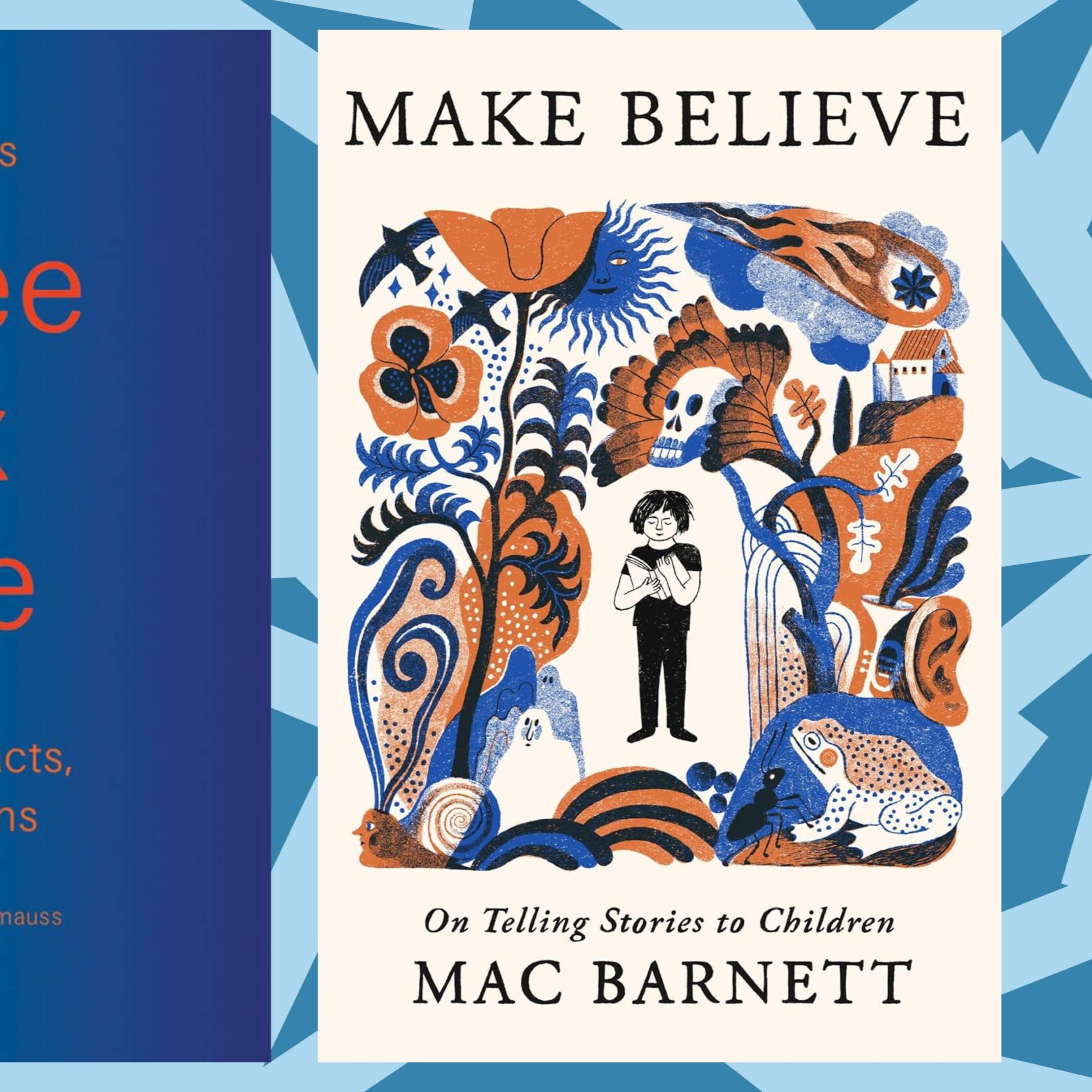
Hi, I'm Alyssa Nadworny, and this is NPR's book of the Day. Today, we've got two nonfiction books about writing. In a moment, you'll hear about a fun conversation I had with Mac Barnett, famous children's book author and our nation's ambassador for children's literature. But first, Lucy Ives, a writer, poet and teacher, gives us her latest book called 365 Prompts, Acts and Divinations. Sure, it has 365 exercises for writing to help you with your creative writing endeavors, but there's also meditations and ideas and inspiration to help you actually believe you are a writer. She spoke with WEEKEND edition's Scott Simon.
- [00:44]
NPR Sponsor Announcer
This message comes from the University of Miami, where they're building a faster way forward. It's why they invited AI into the nursing classroom, tested the worst storms imaginable so cities didn't have to, and redefined dementia research with a dolphin. The University of Miami is where disciplines collide, breakthroughs are built and ideas are put into action. Because when action leads, impact follows. See what's on the horizon at Miami.
- [01:10]
Edu support for NPR and the following message come from Spectrum Business with connectivity solutions to help your business stay online and on track. Reliable connections, responsive support and tailored solutions. Spectrum.com business restrictions apply, services not available in all areas.
- [01:30]
This message comes from NPR sponsor Carvana Making. Buying a car 100% online with real transparent pricing and customizable financing that fits your budget. Browse thousands of cars and get yours delivered. Visit Carvana.com today. Delivery fees and terms may apply.
- [01:49]
Scott Simon
Got a suggestion here, listeners? Put down your bagel, pick up a pen and paper, fire up the laptop, open the notes app on your phone. Whatever your chosen method, face the blank page. Now what? Well, here's an idea.
- [02:04]
Lucy Ives
Walk to a place where you can sit a while undisturbed. Now write a detailed account of how you got there. The shorter the trip, the longer the account should be.
- [02:15]
Scott Simon
Ooh. Lucy Ives, author of the books My Name Enters America and Life Is Everywhere, is Out, with a collection of daily exercises to inspire creative writing. It's called 3, 65 Prompts, Acts, Divinations. And Lucy Ives joins us now from Corinth, Vermont. Thanks so much for being with us.
- [02:36]
Lucy Ives
Thank you so much for having me.
- [02:38]
Scott Simon
You've written for the Paris Review. You've been newly named Guggenheim Fellow. What prompts this book?
- [02:45]
Lucy Ives
Well, this is a book that comes out of the process. I use myself to teach myself how to write when I was a younger person in my 20s, and then when I Became a writing teacher. I started doing little experiments in my classes and offering my students brief exercises for writing. And eventually I started to want to share these prompts with more people. And so this book is a year's worth of prompts for writing.
- [03:18]
Scott Simon
Writers make writing sound like hard work, and it is, right? If it were easy, I suppose more people would do it. But you invite people to be playful too. For example, tell the story of a journey you once took to a place where you never arrived. Now, is this like just getting lost trying to find the Dairy Queen?
- [03:41]
Lucy Ives
It could be. I mean, you might be going someplace even better than the Dairy Queen. And the nice thing about never getting there is that that place can be the most amazing place.
- [03:53]
Scott Simon
Well, what's the goal? For people to try it? To get published or to just write better diaries or amuse themselves?
- [04:03]
Lucy Ives
If people want to be published and use this book to work on a project, it certainly can be for that. But this book can also just be for reading in a certain way. The prompts are like poems or little pieces of philosophy. So you could use the book in the way that you might use a work of literature. Use it as something for thinking. It could also be a book that you use to discover something about yourself.
- [04:34]
Scott Simon
And how does that work in the writing process?
- [04:38]
Lucy Ives
Well, I think that, you know, we often think of writing as a technology that makes our thoughts or language permanent and portable. But writing is also something that originates somewhere between or among our brains, arms, hands, fingers. And if we are attentive to writing and what happens in these moments when we're writing, we can really uncover a lot. We can find a lot of energy and a lot of surprise.
- [05:12]
Scott Simon
All right. I found it irresistible. Who knows how many I'll try, but I tried number 60.
- [05:17]
Mac Barnett
Werewolf.
- [05:17]
Scott Simon
Could I get you to read the prompt for us?
- [05:20]
Lucy Ives
Yes, one moment. I'm just gonna turn to it. Right. From the point of view of a non human animal.
- [05:26]
Scott Simon
All right, here's what I came up with. Ready?
- [05:29]
Lucy Ives
Yes.
- [05:30]
Scott Simon
From the point of view of a non human animal. Sun seeped under my eyelids. The two legged male to one side of me snored, stinking of stale coffee. Two legged female on the other side breathed out vapors of Chanel and sauvignon blanc. My insides pressed for release. Yet I knew that just to let go would wet the soft surface below. So I slipped my tongue tip under an eyelid of the two legged female. She lifted her eyes open and repeated some incomprehensible babble in a sweet tone I learned would lead to two legs slipping out of slumber and walking. For my relief, I licked female two legs on her mouth. Her breed takes it as a sign of love. Two leggeds are so easily fooled. Wow.
- [06:16]
Lucy Ives
Bravo. And oh, it's a dog.
- [06:22]
Scott Simon
Yes, yes, it's a dog. It's a dog. Well, on the other hand the reader determines that, don't they?
- [06:28]
Lucy Ives
Yes, that's right. That's right. That's absolutely true.
- [06:30]
Scott Simon
If it reminds someone of a hedgehog, who am I to say? Well, you know, do you have music on? Do you sit in a quiet room? Do you sit in a crowded cafe?
- [06:41]
Lucy Ives
Are you asking about me? About how I write well and what
- [06:45]
Scott Simon
advice you'd give others?
- [06:48]
Lucy Ives
You know, I don't really think it matters. You know, sometimes the best time to write is when you think that you don't want to or that you don't have an enough time. Those can be the times when there's a part of your mind that you seldom use for writing that you could access and it might have something really amazing to tell you. I mean, I personally like silence, but in this book there are some exercises you can do to music if that suits you. Or you can go for a walk and write at the same time. I think there are all sorts of different ways to write. I'm not one of those person who goes in for the sort of like locked in their study with earplugs in sort of thing.
- [07:31]
Scott Simon
Lucy Ives her new collection of writing prompts with drawings by Nick Mouse is three six five. Thank you so much for being with us.
- [07:40]
Lucy Ives
It's a delight to be here.
- [07:44]
NPR Sponsor Announcer
Support for NPR and the following message come from Spectrum Business Providing connectivity solutions to help your business stay online and on track. Delivering fast, reliable Internet, phone, TV and mobile solutions. All backed by 100% US based support. They offer scalable plans and straightforward pricing. Spectrum Business reliable connections, responsive support and tailored solutions that power your success. Learn more@spectrum.com business restrictions apply. Services not available in all areas.
- [08:15]
This message comes from NPR sponsor Harry Potter the Official Film Podcast from HBO Max. 25 years after the first Harry Potter movie came out, it's the perfect time to rediscover these beloved films. The Harry Potter Official Film Podcast brings you behind the scenes. Starting with the Philosopher's stone. Uncover hidden details and hear interviews with the people who brought the wizarding world to life. Watch on HBO Max or listen wherever you get your podcasts.
- [08:45]
This message comes from Instacart. Let's talk groceries. Specifically your groceries. With Instacart. You want your groceries just the way you like them, right? Well, the Instacart app lets you do just that. They have a new preference picker that lets you pick how ripe or unripe you want your bananas. Shoppers can see your preferences upfront, helping guide their choices. Instacart get groceries just how you like.
- [09:10]
Alyssa Nadworny
Let's turn now to children's stories. I'm sure you can remember your favorite books as a kid. Goodnight Moon, where the Wild Things Are, Dear Zoo. My personal favorite was A World Full of Monsters by John McQueen, illustrated by Mark Brown. Here's little Alyssa reading that book back in 1991. But there was monsters.
- [09:33]
Mac Barnett
Monsters in the city, monsters in the farm.
- [09:37]
Alyssa Nadworny
Mac Burnett has written dozens of children's books, and he outlines what it takes and why it's not more respected in his latest book, make Believe on Telling Stories to Children. I talked with him about it for WEEKEND Edition. Mac Burnett is an author of children's books, otherwise known as books, including but not limited to the first Cat in Space graphic novel series, Sam and Dave Dig a Hole, the Great Zacchrino Extra Yarn. He's also the current US national ambassador for young people's literature, and he gets asked all the time, all when he plans on writing a book for adults.
- [10:12]
Mac Barnett
People say, when are you going to write a real book? By which they mean an adult book. There's a list of other indignities that children's book authors endure. People saying that they've always wanted to write a kid's book because it seems so easy, people telling you you're just a big kid, people telling you that your job is cute, people asking if you wrote the Cat in a Hat, which was written by Dr. Seuss, who has been dead since 1991.
- [10:39]
Alyssa Nadworny
Well, the good news is Mac Burnett's finally written a real book. It's called Make Believe, and it's a book for adults about books for children. Hello.
- [10:49]
Mac Barnett
Hi. Thanks for having me.
- [10:51]
Alyssa Nadworny
Yeah. Okay. So why did you want to write a book for adults about books for children?
- [10:57]
Mac Barnett
I think that the best way to get kids to love reading is is to give them books they love to read. I think we tend to think of children's literature as literature with training wheels. Simple, simple books for simple humans. And kids are not simple. They are so complex. They are so sophisticated. And they really need, like, a literature that is as rich and varied as their lives are.
- [11:27]
Alyssa Nadworny
Yeah. So you have what you call a grand unifying theory of children's literature.
- [11:33]
Mac Barnett
Yeah.
- [11:33]
Alyssa Nadworny
Could you share it with us?
- [11:35]
Mac Barnett
Here we go. A children's book Is a book written for children.
- [11:43]
Alyssa Nadworny
Profound.
- [11:44]
Mac Barnett
Thank you. Yeah.
- [11:46]
Alyssa Nadworny
Is kind of what you're saying, just that children's books have to have a good story.
- [11:51]
Mac Barnett
You know what? They don't even have to be stories. Adults desire to teach kids lessons, to make a lot of didactic fiction. The first thing that gets pushed out is storytelling. But it doesn't have to be a story. It doesn't have to be anything. Poems, they can be little observations. A picture book especially can hold, like, an idea, a moment, a feeling. Part of it is just like really opening the aperture, trying to make this as expansive as possible.
- [12:19]
Alyssa Nadworny
One of the phrases I was struck by in the book is good books for bad children.
- [12:24]
Mac Barnett
Yeah.
- [12:25]
Alyssa Nadworny
Where does this phrase come from and why do you like it?
- [12:28]
Mac Barnett
This comes from an editor, Ursula Nordstrom. She published where the Wild Things Are, Harriet the Spy, Goodnight Moon. She worked for Harper, and the suits at Harper invited her to lunch because she was making them so much money. And they said, congratulations, we'd like to give you a promotion. You could be an adult editor. And she said, she told them, no, thank you. Why would I want to make a book for dead, dull, finished adults? I'm going to go back to work making good books for bad children. It's funny, I think that phrase is so rich. We also don't know exactly what she meant. I spend a lot of time just thinking it over, and I've had different definitions. At least where I've settled now on it is she's taking kids as they are. She's not trying to improve them. She's not thinking about turning them into future adults, productive citizens. She's taking their real lives, their moral complexity, and just making stories for them.
- [13:34]
Alyssa Nadworny
I want to talk a little bit about Goodnight Moon.
- [13:37]
Lucy Ives
Mm.
- [13:37]
Alyssa Nadworny
I felt like your book really reintroduced me to it.
- [13:40]
Mac Barnett
Cool.
- [13:41]
Alyssa Nadworny
It's written by Margaret Wise Brown.
- [13:44]
Mac Barnett
Yeah.
- [13:44]
Alyssa Nadworny
And illustrated by Clement Hurd. Can you tell me about what stands out to you about this book, Margaret Wise Brown?
- [13:51]
Mac Barnett
First of all, I consider her like one of the great modernist poets, Goodnight Moon. It's an experimental poem with pictures. Like, it's a radical work of literature. You know, if you look at the pictures, they're very strange. The balloon is in, like, the most annoying place for a balloon to possibly go be in. Things are disappearing on and off a drying rack. An old lady, who's actually a bunny but is described as an old lady, is, like, in the room and out of the room. It's very off kilter. And the text does similar things too. It's a very Unstable poem. You get so used to the rhythm of a picture and then words that describe the picture. And then midway through, you turn the page and it just says, good night, nobody. And there's not a picture at all.
- [14:40]
Alyssa Nadworny
Nothing.
- [14:41]
Mac Barnett
Nothing. It's the void, it's the sublime. It's.
- [14:45]
Alyssa Nadworny
It's the thing you're scared of.
- [14:47]
Mac Barnett
That's what I think too. For me, as a kid, going to sleep was so intense. And then the next page after that, goodnight, mush.
- [14:56]
Alyssa Nadworny
Silly.
- [14:57]
Mac Barnett
Yeah, silly. And it's a bowl of mush. And it's so fun. It's like. I compare it to like when you almost get into a car accident and then you're like that joy that comes after a very scary moment. And then mush also initiates the sh, sh, sh sound that lulls us to sleep. And I think that that book encapsulates a very complex truth that kids know. Well, going to bed is eerie, uncomfortable, strange, but it's going to be okay. It does both those things and it does paradox so well. I spent a lot of time with that picture book. One, to show that a children's book can benefit from a really rigorous reading, but two, to make the argument that actually the reason that kids love it is because of these experimental moves.
- [15:53]
Alyssa Nadworny
Well, and it also talks to this idea that kids books don't need plot, role models, happy endings, lessons to be good.
- [16:03]
Mac Barnett
Totally. I mean, you go to there even your question earlier, like, is it a story? Is Goodnight Moon a story? To the extent that it is, to the extent that you could describe. If I said, like, what is Goodnight Moon about? Like, what would you say?
- [16:14]
Alyssa Nadworny
Going to sleep?
- [16:15]
Mac Barnett
Yeah, A rabbit goes to sleep.
- [16:18]
Alyssa Nadworny
You write that a high percentage. I think it's like 94.7%. Is that the number you land on of kids books are crud?
- [16:26]
Mac Barnett
Yeah.
- [16:27]
Alyssa Nadworny
What do you mean by that?
- [16:28]
Mac Barnett
I wish I hadn't written it that way.
- [16:30]
Alyssa Nadworny
Why?
- [16:32]
Mac Barnett
It was hurtful to people who make kids books. And it comes in a section that is talking about how kids books are unfairly dismissed. I talk about this thing called Sturgeon's Law, which is how a science fiction writer replied to somebody standing up and saying, why do you write sci fi? 90% of sci fi is crud. And he said 90% of everything is crud. I think that, you know, in my effort to make a point about kids books being dismissed, I got.
- [17:04]
Alyssa Nadworny
You kind of dismissed them a little bit.
- [17:06]
Mac Barnett
I did. I was overzealous, I was careless and I was hyperbolic and I feel really
- [17:11]
Alyssa Nadworny
sorry about comes in this environment where the majority of books that are being challenged in libraries and schools are children's books.
- [17:21]
Scott Simon
Yeah.
- [17:22]
Alyssa Nadworny
And so I wonder that context, how that fits in with the criticism of the genre.
- [17:27]
Mac Barnett
As I said, we need to open the aperture. It's not about making less books, not for me. It's about making more books. More books, more kinds of books, more voices in the room. That is when literature is humming to me. That is what is exciting. It is why I spend so much time in school libraries. And I tell kids, like, look at these books. Like, these are books by so many different people who led different lives in different times, different places. They all care about different things. And if they write a story and we pick that up, we might just find ourselves interested in the things that they're interested in.
- [18:08]
Alyssa Nadworny
Mac Burnett is the ninth U.S. national Ambassador for Young People's Literature appointed by the Library of Congress and every child reader. His first book for adults is Make Believe. Thanks, Mack.
- [18:19]
Mac Barnett
Thank you so much for having me.
- [18:21]
Alyssa Nadworny
I'm Alyssa Nadworny. The podcast is produced by Chloe Weiner and Ivy Buck and edited by Megan Sullivan. Our founding editor is Petra Maher. The show elements for this week were produced and edited by Samantha Balabin. The Melissa Gray, Adriana Gallardo, Milton Guevara, Emiko Tamagawa, Mark Navin, Martin Patience, Jacob Fenston, Shannon Rhodes and Diana Douglas. Yolanda Sanguini is our executive producer. Thank you so much for listening.
- [19:00]
NPR Sponsor Announcer
This message comes from Integrative Therapeutics, makers of Cortisol Manager. Daily stressors come and go, and heightened stress can affect sleep and focus. Cortisol Manager helps support a healthy response to everyday stress. Available at Amazon.com, use code STRESS2026 for 20% off. These statements have not been evaluated by the Food and Drug Administration. This product is not intended to diagnose, treat, cure or prevent any disease.
- [19:28]
Lucy Ives
Each story you hear on Planet Money starts with a what happens if we refund tariffs? Why are groceries so expensive? At npr, we stand for your right to be curious because the forces shaping
- [19:42]
NPR Sponsor Announcer
our world can be hard to see.
- [19:45]
Lucy Ives
Follow NPR's Planet Money wherever you get
- [19:47]
NPR Sponsor Announcer
your podcasts and start seeing how the economy really works.
- [19:51]
This Message comes from Capital One. With the Spark Cash plus card, you earn unlimited 2% cash back on every purchase for your business. Find out more@capitalone.com SparkCashPlus terms apply.