Loading summary
Transcript48 lines
- [00:02]
Alyssa Nadworny
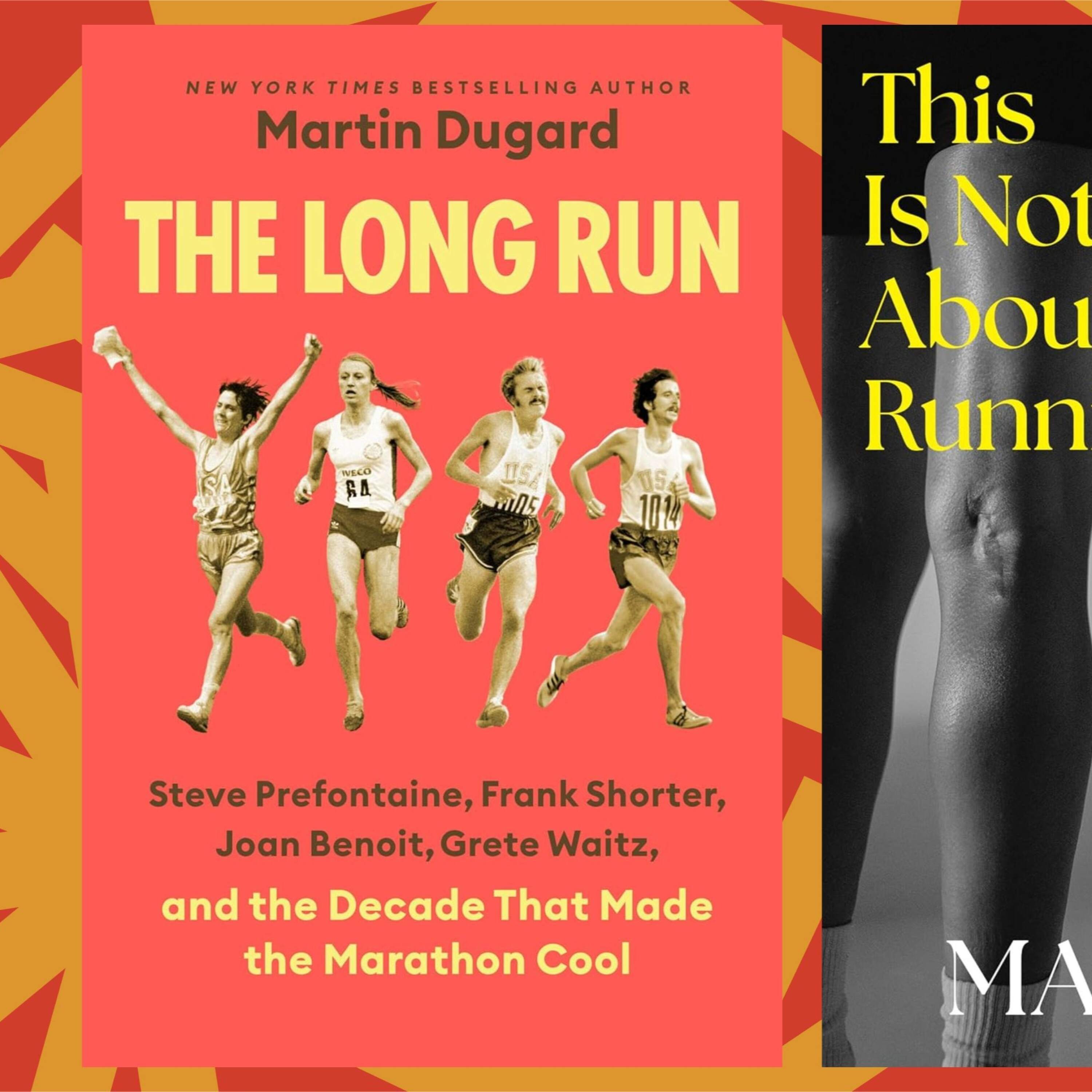
Hi, I'm Alyssa Nadworny and this is Book of the Day. Today we have two books about running, even though one of them is called this Is Not a Book About Running. We'll get to that. First, the book the Long Run by marathoner Martin Dugard. Perhaps you see people running a marathon and think, why would anyone subject themselves to those 26.2 miles of pain? Or maybe you're like me, training for your fourth whoops. Dugard believes the marathon is a reason to rise to the occasion, and he spoke with Morning Edition host A. Martinez about that poll.
- [00:37]
NPR Sponsor Announcer
This message comes from Mint Mobile if you're tired of spending hundreds on big wireless bills, bogus fees and free perks, Mint Mobile is for you. Shop plans@mintmobile.com Switch taxes and fees extra. See Mint Mobile for details. This message comes from ixl. IXL provides personalized learning and powerful insights that help teachers boost achievement and understand student progress in real time. Learn more@ixl.com NPR this message comes from Schwab.
- [01:10]
With the new Schwab Teen Investor account, teens can gain hands on investing experience and build positive money habits. It's an account co owned by you and your teen so you can monitor and engage with the account while your teen learns how to invest and manage money learning. Learn more@schwab.com I am a runner.
- [01:30]
A. Martinez
I started running back in the late part of the 20th century, also known as the 1990s. And these days because of my ever shifting work schedule, I either run at 11pm or 3am but one way or another, I gots to get my miles in. Martin Dugard is an author and running coach. His new book is the Long Run and I started by asking him why people would voluntarily subject themselves to the pain of running. 26 I think we're wired to do
- [01:59]
Martin Dugard
hard things and that's kind of seriously, it's kind of perverse. But you know, the marathon has become one of the great bucket list items. I think people get something real out of pushing limits they didn't know that they had. You know, most of modern life is kind of mediocre, kind of average. And I think that, I think we like to rise above that mediocrity.
- [02:18]
A. Martinez
Tell us about the origins of the marathon, the long term mythological history of it.
- [02:25]
Martin Dugard
The common story that we're told is that there was the battle of Marathon between the Persians and the Greeks and that a messenger, a warrior messenger, a guy who actually fought in the battle, was dispatched afterwards to tell the people of Athens that they had won and the Legend is that he ran 40 kilometers, about 25 miles up the hill to Athens. And as he gets to the Acropolis, he shouts, nike, Nike. Which is victory. Victory. And then he drops dead. His name was Pheidippides. The truth is there was a guy named Pheidippides, but the legend shows that he actually did run all the way to Sparta to try to enlist help, and he came all the way back. But historians, from Herodotus all the way up until almost the third century, nobody mentions this guy by name. Nobody mentioned that he ran all the way to Athens. Nobody mentioned that he dropped dead. The British poet Robert Browning kind of introduced that myth in the late 19th century, and that's the one we cling to today. But it's such a lively take on, you know, that it inspired the first Modern Olympics. In 1896, it inspired the organizers to hold the first ever marathon, and they named it after the battle. And they followed the same course that Philippides would have followed, and it ignited a running boom. It was just one of the first booms in running back in the late 19th century.
- [03:42]
Mary Cain
Yeah.
- [03:42]
A. Martinez
So, okay, you mentioned how the distance from Athens to marathon is around 25 miles. How is the marathon length, though? 26.2 miles. That's the contemporary distance.
- [03:53]
Martin Dugard
That's another one of these myths, too, because if you go on AI and you say, why is the marathon 26.2 miles? It'll say that the British family wanted the marathon in the 1908 London Olympics to end right before the royal box.
- [04:07]
Mary Cain
Yeah.
- [04:07]
Martin Dugard
And in fact, the marathon always ends before the royal box, or used to, at least. It's not the end. That's the reason. It's the start. They moved the start back 1.2 miles, hoping that King Edward would come and be the official starter for the marathon.
- [04:21]
A. Martinez
Now, the marathon was part of the Olympics for a few Olympics in the early part of the 20th century. But when exactly did the marathon become less of just an Olympic sport and a sport that everyone could take part of?
- [04:35]
Martin Dugard
If I had to put a number on it, I would say late 1950s, early 1960s. That's when the Roadrunners Club of America was found, and you really had people going out there to contest. But when you look at the modern runner, where it's kind of cool and hip to be a runner, back then, they were just a bunch of nerds. And so, you know, the Boston Marathon was founded in 1897, and there were a few others that came along, but things really exploded in the 1970s, and I think with the New York City Marathon being founded in 1970, you know, 55 people finished out of 127 starters. You had people running in actual running shoes. So a lot of things began happening to make running just explode.
- [05:13]
NPR Sponsor Announcer
Yeah.
- [05:13]
A. Martinez
And then you add to that the 1972 Olympics in Munich, when Frank Shorter wins the Olympic marathon. What? First gold in that event for a US runner since 1908. So you're right. All of these things came together at the perfect time, it sounds like, to kind of make running into something that a lot of people could take part of. Tell us about that Olympics and Frank Shorter's victory. That was also part of that linchpin to get things going.
- [05:36]
Martin Dugard
Yeah. I'll tell you what, that victory. Look, I was in 1972. I was 11 years old. I literally was so inspired by Frank Shorter winning that Munich Marathon that I stepped out the door in my jeans and my Pro Keds and ran, spontaneously ran four miles. And I used to think that was just me, but now, from talking to people, it was a big deal. A lot of people kind of got that same motivation, but it was the first time the marathon was ever broadcast live in its entirety. And Shorter doesn't just win. He wins in amazing fashion. It's just this big, dramatic moment. What Shorter did that day didn't just change the fact that people became runners. It changed how we ate, you know, the clothes. We. We. When developers built a subdivision, they used to build, like, clubhouses so you could go play pool or watch tv. Now they put trails in so people can hike and run. So just that one marathon changed. Like I said, a revolution that changed how we live our lives.
- [06:33]
A. Martinez
What was it about the marathon in the Olympics or just in general, that didn't include women, at least at first?
- [06:40]
Martin Dugard
You know, there was a woman who tried to run that first marathon in 1896, and she even showed up at the starting line, and they wouldn't let her do it. So she ended up running it on her own the next day because, you know, the female sex is clearly weaker than the men, so they were afraid she was going to hurt herself horribly. And when she did it, she even had the document notarized with her time on it that she ran faster than a lot of the men. You know, so flash forward, Greta Weitz, you know, showed up in 1978, and she beat almost all the men at the New York City Marathon. And that got people's attention. Then she came back the next year and ran even faster. And even the New York Times had an op ed piece that said, hey, it's time to put the women's marathon into the Olympic Games, because Greta Weitz clearly shows that women can do anything that men can do.
- [07:28]
A. Martinez
How do you figure out a way that is best for you to start a running program to eventually run a marathon?
- [07:33]
Martin Dugard
I think you make it very elemental. People who try to start by buying the most expensive shoes and buying the most expensive clothing and most expensive watch, they lose some of the fundamental joy of being a runner, which is really just getting out there and finding a rhythm with your body and finding a moment where you kind of commune with nature in the world and everything else just kind of shuts out. And all of a sudden you realize you've run 10 miles instead of maybe 2 miles just because you kind of built up to it. And you find that and then you can start thinking about the fancy stuff.
- [08:05]
A. Martinez
Martin Dugaard is the author of the Long Run. Martin, thanks a lot.
- [08:08]
Martin Dugard
Thanks Zay. Great to be on.
- [08:17]
NPR Sponsor Announcer
This message comes from Mint Mobile. If you're tired of spending hundreds on big wireless bills, bogus fees and free perks, Mint Mobile is for you. Shop plans@mintmobile.com Switch taxes and fees extra. See Mint Mobile for details. This message comes from IXL. IXL's level up diagnostic gives immediate benchmark results along with personalized action plans that link directly to IXL's skill practice. More@ixl.com NPR this message comes from Schwab.
- [08:51]
With the new Schwab Teen Investor account, teens can gain hands on investing experience and build positive money habits. It's an account co owned by you and your teen so you can monitor and engage with the account while your teen learns how to invest and manage money. Learn more@schwab.com and now the book this
- [09:10]
Alyssa Nadworny
Is Not About Running, a memoir by runner Mary Kane, who was a child running prodigy. One of the fastest in the world, she broke the two minute mark in the 800 meter race. But she says systematic emotional and physical abuse from her coaches at the Nike Oregon Project almost broke her. She talks with All Things Considered host Juana Summers about exposing that abuse and and the damage it did from the
- [09:34]
Juana Summers
time she was a little girl. Mary Kane has always loved running.
- [09:37]
Mary Cain
I think I just loved the freedom of it. I mean I was the kid who I remember in kindergarten we would do those like laps around the track during gym class and you had to run as fast as you could. And I liked beating the boys. Like I had this competitive spirit. But I also just kind of liked this idea that if I pushed Myself, I could get better.
- [09:57]
Juana Summers
She went on to become the first American high school girl to run 800 meters in under two minutes. And at just 17, she joined the Nike Oregon Project, an elite running training program run by coach Alberto Salazar. But Mary Kane never fully realized her pro running dreams. In her new memoir, this Is Not About Running, she recounts the humiliation and abuse she suffered from coaches and teammates alike and the health battles brought about by severe restrictions on her diet. Experiences that she says drove her to the brink of suicide. The Nike Oregon Project shut down in 2019 after Salazar was sanctioned for doping violations. He was later banned from the sport for life amid allegations of sexual assault. Before all that, though, when Kane was still in high school, she said the program and Salazar had an undeniable draw.
- [10:48]
Mary Cain
From my perspective, he was the greatest coach in the world because just that summer, I was watching Mo Farah and galen Rupp come in 1, 2 at the Olympics in the 10K and watching Matthew Centroit finish fourth in the 1500. And Matthew and Galen were really the biggest names in American distance running. And so for this famed coach to want to work with me, I mean, I guess anyone who's ever dreamed big about anything or had any sort of role model, just imagine that person calling you and how it would make you feel. There was almost power behind him. There was a trust and a faith from this massive corporation that just honestly made me feel that much more proud for him to have reached out, but also that much safer, that, like, he knew what he was doing.
- [11:36]
Juana Summers
Alberto Salazar put a lot of pressure on you in so many ways. To perform, to get faster, to lose weight. You're 5 foot 7 and he wanted you to weigh 114 pounds. The lower your weight got, the more health problems you developed. Can you describe what your body was going through at that time?
- [11:54]
Mary Cain
Yeah, I mean, my body was definitely fighting itself. And I. I think what I really noticed first, in retrospect was just how almost emotional I was becoming. And in retrospect, a lot of that was because I was being actively abused. So, of course you're going to cry when you're being yelled at, but I think once I started starving myself, that ability to kind of hold it together just started to deteriorate, as did the rest of my body. I mean, I was getting all these aches and pains. I started to develop low back pain, I started to lose hair. I was always cold, and I had this absolutely, like, intense stomach pain that I would get so often, like, probably every other day. And it's fascinating that it's taken me years to realize that's what hunger feels like. And I don't think I actually realized that until I started writing this memoir.
- [12:53]
Juana Summers
There's this moment you recall in the book from 2015, where you are. You're just really struggling, and you go to the hotel room that Salazar and the team's sports psychologist are sharing, and you disclose to them that, as you say, I think I'm losing my mind. I want to kill myself. Most days I am cutting myself. Talk about the way that they responded to that to you.
- [13:17]
Mary Cain
Yeah. I mean, they responded by saying they're tired and wanted to go to bed is really the long and the short of it.
- [13:25]
Alyssa Nadworny
And.
- [13:25]
Mary Cain
And I think what's so sad for me is how in that moment, I didn't think, wow, their reaction is wrong, or their reaction is bad. I thought, I feel so bad. I'm such a burden to them. And I want people who've ever kind of been in that position to know, like, that was not okay that that person did that. But you also shouldn't feel shame for having that reaction, because that's really what abuse does to you.
- [13:58]
Juana Summers
You left Nike's Oregon project in 2016, and your dream had been working with Salazar, becoming pro. What did it feel like to choose to walk away?
- [14:10]
Mary Cain
It was incredibly difficult, and it was deeply upsetting. And in many ways, it wasn't fully my choice. It wasn't something that I wanted to do at the time. It was more a mix of me understanding that I was really not okay and I needed to get okay. And also, at that point, my parents essentially had an intervention and were like, you need to prioritize your health and your wellness and your mental health more. So then you're running. And I think that was really difficult for me to hear. But in many ways, I think it's the thing that saved me. Or, like, having people who were like, we don't care about how fast you run, but we care about you.
- [15:01]
Juana Summers
If there's a parent out there listening to this, who wants to support their child, who is ambitious and competitive and wants to participate in their sport at a high level in the way that you did, what piece of advice would you give them? What should that mom or dad or parent be looking out for?
- [15:20]
Mary Cain
I think my parents did an incredible job.
- [15:23]
Juana Summers
Yeah.
- [15:23]
Mary Cain
But to me, they were fighting against a broken system. But you just always need to be there, and you always need to be doing your best to show your child that they mean more to you than any of their accomplishments, that you love them, not because of how fast they run, not because of the grades they get, but because they're them. Loving your child and showing them that love is not tied to accomplishments is in so many ways what saved my life.
- [15:52]
Juana Summers
Mary, I do want to end by asking you about running and what your relationship with running is like today. What role does it play in your life now?
- [16:02]
Mary Cain
I went for a run this morning. It's a rainy day here in Palo Alto, and it was really nice to just be like alone with my thoughts, away from my devices, unable to study for a little bit and just kind of be with my body. And I feel really grateful that I've been able to get to this point. I think with some patience and kindness towards myself, I have kind of found myself at this place where I do run again. And I think that's really, really nice for me.
- [16:37]
Juana Summers
We have been speaking with Mary Cain. Her memoir, this Is Not About Running is out now. Mary, thank you.
- [16:44]
Mary Cain
Thank you so much for having me.
- [16:46]
Alyssa Nadworny
That's it for this week on NPR's Book of the Day. Let us know what you think. You can write to us@bookofthedaypr.org I'm Alyssa Nadworny. This podcast is produced by Chloe Weiner and edited by Megan Sullivan. Our founding editor is Petra Mayer. The show elements for this week were produced and edited by Hadil El Salchi, Gabe o', Connor, Shannon Rhodes, Martin Patience, Todd Mundt, Emiko Tamagawa, Adriana Gallardo, Lindsey Toddy, Christopher Intagliata and Jason Fuller. Yolanda Sanguine is our executive producer. Thank you for listening.
- [17:34]
NPR Sponsor Announcer
This message comes from Mint Mobile. If you're tired of spending hundreds on big wireless bills, bogus fees and free perks, Mint Mobile is for you. Shop plans@mintmobile.com Switch taxes and fees extra. See Mint Mobile for details. This message comes from Cherry Many people are overpaying on car insurance. Why Switching providers can be a pain. Jerry helps make the process painless. Jerry is the only app that compares rates from over 50 insurers in minutes and helps you switch fast. With no spam calls or hidden fees. Drivers who save with Jerry could save over $1,300 a year. Before you renew your car insurance policy, download the Jerry app or head to Jerry AI NPR this message comes from Integrative Therapeutics, makers of Cortisol Manager named best overall Ashwagandha supplement by Vogue. Use code STRESS2026 for 20% off of Cortisol Manager on Amazon dot com.