← NPR's Book of the Day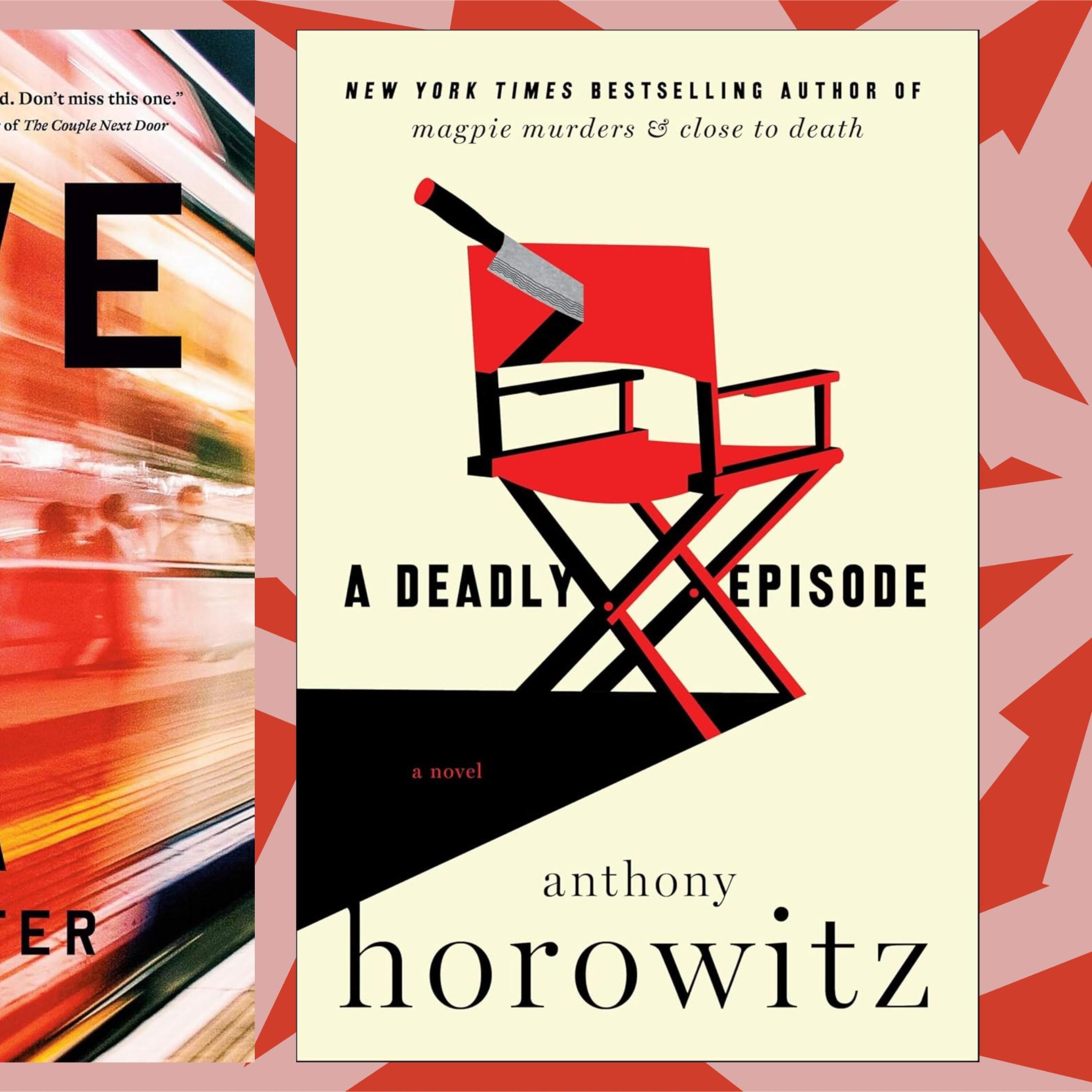
NPR's Book of the Day
Two new murder mysteries cleverly explore the meta — in two very different ways
00:17:13
Loading summary
Transcript45 lines
- [00:02]
Alyssa Nadworny
Hi, I'm Alyssa Nadworny, and you're listening to NPR's Book of the Day. Today we have two mysteries for you. In a minute, we'll have the latest murder mystery from Anthony Horowitz, the author behind the Magpie Murders and Moonflower Murders series. But first, a murder mystery that has an intense premise. Five strangers are waiting on a train platform. When the train arrives in five minutes, one of them will die. The novel is called Five and and the author, Ilana Bannister, talks to NPR's Ayesha Rascoe about how her own commute brought her the idea.
- [00:33]
NPR Sponsor Announcer
This message comes from Rosetta Stone. Rosetta Stone Sapphire combines immersion with the latest technology. Get unlimited access to all 25 Rosetta Stone languages and Sapphire learning tools. Visit RosettaStone.com NPR and receive 20% off. This message comes from BetterHelp. May is mental health Awareness Month, a reminder that you don't have to do this life alone. From loneliness to anxiety to financial stress, right now people everywhere are struggling. But having a licensed therapist with you by video phone or chat can make a difference. And BetterHelp makes it easy. Sign up now and get 10% off@betterhelp.com NPR that's betterhelp.com NPR this message comes from Jerry. Many people are overpaying on car insurance. Why? Switching providers can be a pain. Jerry helps make the process painless. Jerry is the only app that compares rates from over 50 insurers in minutes and helps you switch fast with no spam calls or hidden fees. Drivers who save with Jerry could save over $1,300 a year before you renew your car insurance policy. Download the Jerry app or head to Jerry AI, NPR Train platforms, by their
- [01:52]
Ayesha Rascoe
very nature, are transient places, usually just a stop between your starting point and your final destination. But in Ilana Bannister's new novel 5, one specific train platform is the final destination.
- [02:10]
Ilana Bannister
Someone will die here this morning at this suburban train station. It will happen in the next five minutes when the 706 to London Victoria arrives. Four others have died here previously.
- [02:21]
Ayesha Rascoe
The novel tells the story of those five minutes and delves into the lives of the five characters waiting on the platform. One of them will be death number five. All of them will be forever changed by that morning. Ilana Bannister, thank you so much for being here to talk with us about this mystery, this post pounding mystery.
- [02:44]
Ilana Bannister
Thank you so much for having me. I'm so delighted to be here.
- [02:48]
Ayesha Rascoe
This is heart pounding. It's five minutes. Somebody's gonna die. How did you come up with this premise in the first place?
- [02:56]
Ilana Bannister
Well, I had one of those lightning bolt moments that sort of only happens very, very rarely. I think I had brought a different story to my agent and she didn't like it. So I was on my way home on a London bus. I was sitting on the top deck and I was thinking about stories and I thought, well, if I spoke to every person on this bus and, and ask them about their life story, I bet it would be so much better than any fiction that I could write. Because you wouldn't believe what people have survived and triumphed and seen and done and the grief and the loss and the joy. And then in the background of my mind, I sort of. There had been a very tragic cycling accident near my home that week and the cyclist died on impact. It was in the morning rush hour. Suddenly those two ideas came together. You know, the last five minutes. It's just before before becomes after. It's when you see after is coming. So what if we had five people and we knew their life stories and they're standing on a train platform and in five minutes one of them dies.
- [03:59]
Ayesha Rascoe
This format, like this real time format, we've seen it in like TV shows like 24, which took place within a single 24 hours or something like the Pit, which happens in a single 12 hour ER shift. But you are taking 200 pages to tell a story that takes place within 5 minutes or maybe like 7 or 8 if the train is delayed. And I was reading this, I'm like, wait a minute now, if it's only five minutes, how we got so many pages? But how do you do that?
- [04:32]
Ilana Bannister
Well, I will say when I started writing it and I realized the challenge I had given myself, I thought, okay, well, maybe I've taken on a bit too much here because it's, it is quite something to try to pack all this action into just five minutes. So what I started to do is what I always do. I'm a very research heavy writer. So I thought, okay, well, five minutes. What can happen in a minute? So I would time the lines of dialogue, I would time how long it takes to think a particular word. I went to my local train station, I would walk up and down it, I would pace, I would count steps, I would look at the paint, I would read a sign. I tried to get every detail that I could right to make sure that what I was presenting to the reader, that I could convince you that this was plausible.
- [05:21]
Ayesha Rascoe
You open the book with Emma. She's a mother who, you know, and this is gonna sound horrible, but she seriously considers allowing her child, Gideon, to fall in front of a train. And you tell us in the book that we shouldn't be harsh on her, but this is a mother who's going through a lot.
- [05:38]
Ilana Bannister
Yep, she is going through a lot. And it was very important to me when I started. One of the things I did know starting out was that there would be a mother and child on the platform. Because I think it is a universal experience, both for parents who have children, who have misbehaved in public, who have inevitably felt that public judgment, public attention. And it is also universal that we have all seen it. We have all seen a child kicking off and a parent struggling to cope in public in doing that, because, of course, I'm introducing moral dilemmas about all of these characters. It needed to be a motherhood story that had its own twists and turns and darknesses in it to make it difficult for us to decide how do we really feel about this particular mother child relationship.
- [06:23]
Ayesha Rascoe
Yeah. Yeah. To be clear, like, two of your characters are neurodivergent. There's one who has adhd, and that's Sunny. And then the other who's very deeply troubled. I think that's Gideon. So just. Okay. But you. There's a scene with Sonny when you're telling his backstory. When he was a kid, his mom takes him to Pizza Express, and he ends up spilling water everywhere and throwing a glass. And what do you hope readers kind of take away from that?
- [06:58]
Ilana Bannister
Yeah, that particular story is quite close to me because my own sons both have ADHD and dyslexia. When they were tiny, they were also very energetic, all over the place. Delightful. But, you know, we had things to manage. Their story was also important for me to tell because so often parents of neurodivergent children find themselves in defense mode, in adversarial positions with school systems, with medical systems, constantly trying to explain their children's behavior and feeling like they come up against a wall because the judgment is. Well, it's because you're too permissive. If you would just raise the child this way, then he wouldn't be having these issues. If you could just make him conform. But, of course, these are very special people who do not naturally conform. Yeah.
- [07:45]
Ayesha Rascoe
And let's talk about the narrator's voice in this book, because it is an omniscient voice, but you're also, at times, directly speaking to the reader. Like, sometimes you're chastising us, sometimes almost taunting us. What made you want to do that? And I don't know in reading if it's breaking the fourth wall. Cause I don't know if it's a wall in reading, but, like, why talk to the reader so directly?
- [08:11]
Ilana Bannister
Yeah, Again, that wasn't sort of a conscious choice from the beginning. I started doing it because when I wrote the first platform and I was trying to be fast paced and urgent and just alluding to what was going to happen, I got very, very wordy and it got very boring and slow and it was lots of pages and very sluggish. And I thought, okay, well, this isn't the feeling I want. What if I just tell the reader what's going to happen? And then when I wrote that first sentence that starts, I thought, oh, that's a voice. That's like a really snarky, sarcastic voice. And that's gonna be a lot of fun.
- [08:45]
Ayesha Rascoe
Is this a. This book kind of to remind us that we all will die? Like, and maybe some of us will do it, you know, doing something as mundane as commuting to work?
- [08:58]
Ilana Bannister
Yeah. I wanted to just explore the idea that we don't have any control over what's going to happen. We. We don't know when it will be or how it will be. And that particularly when a crisis like this happens, I wanted to look at the ripple effect of what a stranger's death can have on many people, on the people around them, but also the domino effect that it has, you know, across the whole city. And if we are confronted with the last five minutes, it's just a. It's an interesting thing to think about. Who do we want to be in those last five minutes?
- [09:35]
Ayesha Rascoe
That's Ilana Bannister. Her new book, five is out now. Thank you so much for talking with me.
- [09:41]
Ilana Bannister
Thank you so much. I really had fun. Thank you for having me.
- [09:44]
NPR Sponsor Announcer
This Message comes from LinkedIn ads. Ever invest in something that seemed incredible at first but didn't live up to the hype? For marketers, that's impressions. When ads don't create revenue, that's a tough conversation with the CFO. Instead, invest in results your CFO will love. LinkedIn Ads generates the highest roas of all major ad networks. So advertise on LinkedIn, spend $250 and get a $250 credit. Just go to LinkedIn.com NPRpod Terms and Conditions apply.
- [10:17]
This message comes from Rosetta Stone and their newest language learning experience, Rosetta Stone Sapphire. Get unlimited access to all 25 Rosetta Stone languages and Sapphire learning tools. Visit rosettastone.com NPR and receive 20% off. This message comes from Jerry. Are you tired of your car insurance rate going up even with a clean driving record? That's why there's Jerry, your proactive insurance assistant. Jerry compares rates side by side from over 50 top insurers and helps you switch with ease. Jerry even tracks market rates and alerts you when it's best to shop. No spam calls, no hidden fees. Drivers who save with Jerry could save over $1,300 a year. Switch with confidence. Download the Jerry app or visit Jerry AI, NPR today.
- [11:08]
Alyssa Nadworny
Let's turn now to Anthony Horowitz latest murder mystery, A Deadly Episode where a British movie star playing an ex detective inspector is found stabbed to death. Was the murderer after the actor or after the famous investigator? Horowitz talks with NPR's Scott Simon about how he comes up with so many different ways of killing people.
- [11:27]
Scott Simon
There's a murder near the opening of Anthony Horowitz's new novel. There almost always is. Anthony Horowitz has written over 50 books of the television series Magpie Murders, Moonflower Murders and Midsummer Murders. In his latest novel, A Deadly Episode, ex detective inspector Daniel Hawthorne is found stabbed to death. Except he is not. Rather, it's a British movie star named David Cain who is playing Daniel Hawthorne in a film production. Was the rising star or the famed sleuth the true target of the murder? Anthony Horowitz, who's also written the best selling teen spy series Alex Ryder, two Sherlock Holmes novels and three James Bond novels, has somehow found the time to join us to talk about A Deadly Episode. Thanks so much for being with us.
- [12:14]
Anthony Horowitz
It's a pleasure, Scott. Thank you for having me.
- [12:15]
Scott Simon
When it comes to motive, there are a number of people on the movie set and in David Cain's life who, let me put it this way, are murderously put out with them, aren't there?
- [12:25]
Anthony Horowitz
That is certainly true. David Cain, the star of this film, is not the most popular person on the planet. He is quite arrogant and he's quite a difficult human being and he is surrounded by people with large egos of a co star and he are at each other's throats. The director is pretentious, the screenwriter hates detective stories and wants to turn the whole film into a sort of a, an eco message. They're running out of money, they're over budget, everything is disastrous, tempers are high and a murder, I suppose, is not that surprising.
- [12:53]
Scott Simon
Daniel Hawthorne, EX detective He can be irritating, can't he? Walks into a room and immediately reaches conclusions.
- [13:00]
Anthony Horowitz
There are lots of things about Daniel Hawthorne that are irritating our relationship in the books because I should of course mention. But I am inside the books myself as a character. I am the narrator. I am the Watson to his homes and we have a very uneasy relationship between us. And he is quite sort of mean to me. He has political and sort of sociological views with which I disagree. The worst thing he does is to call me Tony. I have a certain aversion to being called Tony. I prefer Anthony. And he seems to ride roughshod over this with a certain degree of pleasure. But he also has a way of getting everybody's backs up. Every police officer who meets him seems to dislike him and he has been fired from the police police for reasons that are still, even after six books, not entirely clear. He is definitely not an easy man. And part of the joy of writing these books is that the character Anthony inside the books is constantly searching for what happened to him in his life, certainly when he was a child. That turned him into this really very difficult person. And I have to say that in this book, which is the sixth in the series, we find out much more about that background than we have done up until now.
- [14:00]
Scott Simon
I wrote down because I love the line, a character tells him you're not very nice and he replies, at least I'm real.
- [14:08]
Anthony Horowitz
That's. Yes, that's a conversation with the writer after one of the early chapters. But you know, the thing about him is that in his own way he is likable. I think it's very difficult to read a detective story in which the detective is not a likable character. And as the books have continued in this series, I have come to like him more and more and to feel more protective towards him. And in that respect there is a similarity with Holmes and Watson because Sherlock Holmes was himself a very difficult detective. I mean, not the easiest person to get on with. A drug addict, something of a recluse, a very cold hearted. But Watson's friendship with him is the reason why we like Sherlock Holmes. And I think I am mirroring that a little bit in these books that no matter how bad Hawthorne is and he is occasionally a little bit mean, I have a sort of a respect for him and that's grown into a strong liking.
- [14:56]
Scott Simon
I have to ask, after dozens of books and television series, how do you keep so many murders and ways to murder people in your mind?
- [15:05]
Anthony Horowitz
You know, it's actually harder over on this side of the pond in the United Kingdom because of course we don't have guns like you do. And of course that is, you know, I'm very happy that we don't have guns because that is, you know, such an easy way to kill people. And it's so frightening that there are so many guns out on the street. That's not a political comment incident. It's just sort of the way I feel. But in England, one does have to think up different ways of killing people. I always find poison, which has been a method used in a few books, a little bit sort of disappointing. It says somehow it's an invisible poisoner. It doesn't have the violence of a knife or a bullet or a rope or pushing somebody off something. And I think one looks for something that is dramatic. So I do have to think up different ways. But at the end of the day, my books aren't really murder stories. I think murder is a horrible thing. Murder is in real life. If somebody is murdered, one feels a certain sense of revulsion and horror. It's only in books that they become entertaining. For reasons that I'm not, I've never really completely understood. And for me, the murder is only really an excuse to explore character, motivation to enter different people's worlds and lives and to look in depth at what people are thinking.
- [16:16]
Scott Simon
Much of the book satirizes movie making and series making. True crime, or what's called true crime as a genre. It seems as if every murder these days is optioned.
- [16:28]
Anthony Horowitz
That's a very good observation. Certainly I am, to an extent, satirizing a world I know very well. I've been working in television and film for most of my life, certainly 30 years. And I don't deliberately target anybody. In this book, I'm not scoring points. It's not for sort of person I am or for sort of writer I am, but I am drawing on tropes and sort of insecurity and egotism that I have encountered in my career. I have to say that I love film and television. My wife, Jill Green, is the producer of my TV shows, and we've worked together on shows, including some of them you mentioned. Magpie Murders, Moonflower Murders, Foil's War, and I've had a wonderful time on her sets. But yes, I think it is an. An industry which is ripe for satire. I mean, I've been watching the Studio on tv, the wonderful Seth Rogen show, and he absolutely nails it. And I am not going quite as far as that in my book, but certainly it's written with a smile.
- [17:22]
Scott Simon
This is not the most original question, but where do you get your ideas?
- [17:28]
Anthony Horowitz
It's a question that haunts me. I'M not what I would call a particularly clever person. If you read the books, the Anthony in the books is really nothing more than an idiot. But even in life, I wouldn't call myself a genius. And yet somehow these ideas just come and keep coming and never stop coming. And I sometimes think to myself that writers, all, all writers are like radio receivers. I'm not a very religious person. I'm not observant in any way. But I do sometimes think there is a bigger power and that writers have some kind of ability to sort of tap into something that is bigger than ourselves. Ideas that are in the ethos arrive in my head without any effort, really, from me. I can be lying in bed and I'll just suddenly open my eyes and I will have had an idea, a big idea, but it's come from who knows where. Every single object you see, whatever you look at that's in front of you, has a story attached to it. I'm sitting in a hotel room and I'm looking at bottle and I'm looking at a box with coffee pods in it. And you may think, well, there's no story there. But then you think, who brought those things into this hotel room? What was his or her story? What is it like to work in this hotel? Were there perhaps an immigrant to this country? And if so, where did they begin? So even these two objects sitting in front of me might have a story attached to them. And if it's a murder story, then maybe one of these coffee pods could have something in it that is not coffee. Although I have said I'm not crazy about poison. That is the beginning of a story, I suppose.
- [18:47]
Scott Simon
Mr. Horowitz, it's none of my business, but please take our advice and stay away from the coffee pots.
- [18:54]
Anthony Horowitz
I never drink coffee zappers. I prefer green tea.
- [18:58]
Scott Simon
Anthony Horowitz, green tea drinker and accomplished novelist, is new in A Deadly Episode is out next week. Thank you so much for being with us.
- [19:07]
Anthony Horowitz
I hope that was all right. I very much enjoy talking. Eugene, thank you again.
- [19:13]
Alyssa Nadworny
That's it for this week on NPR's Book of the Day. If you want more, you can sign up for our newsletter@npr.org newsletter books. Let us know what you think. You can write to us@bookofthedaypr.org I'm Alyssa Nadborny. This podcast is produced by Chloe Weiner and Ivy Buck and edited by Megan Sullivan. Our founding editor is Petra Mayer. The show elements for this week were produced and edited by Adriana Gallardo, Lindsey Toddy, Taylor Haney Justine Kennan, Kai McNamee, Simone Popperel, Margo Bauerlein, Jacob Fenston, Martin Patience and Ryan Bank. Yolanda Saguini is our executive producer. Thank you for listening.
- [19:54]
NPR Sponsor Announcer
This message comes from Bombas. Your feet hit the ground an average of 2,000 times in a mile. Bombas Sports socks are designed to support you every step. Sprint to bombas.com NPR and use code NPR for 20% off your first purchase.
- [20:10]
This message comes from Lisa from night one. You'll feel the difference. Premium materials that deliver serious comfort and full body support. Go to leesa.com for 30% off mattresses. Plus get an extra $50 off with promo code NPR.
- [20:27]
This message comes from Clorox Professional. Are you looking for an effective eco conscious cleaner? Clorox Ecoclean Disinfecting wipes are made with a plant based active ingredient. Learn more @cloroxpro.com Cloroxeclean.