← Old Gods of Appalachia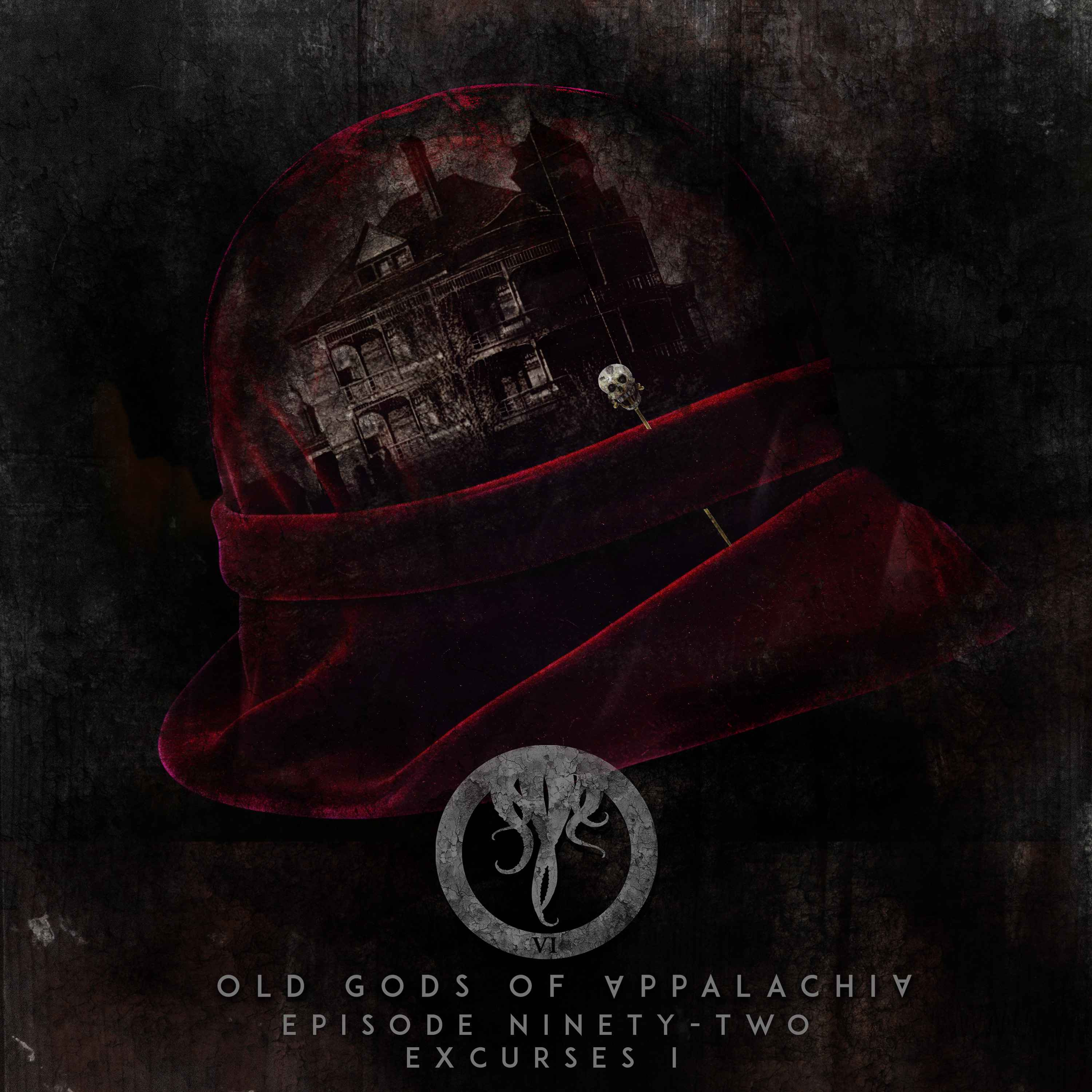
Old Gods of Appalachia
Episode 92: Excursus I
00:39:22
An amuse bouche before our first course of the season.
Loading summary
Transcript11 lines
- [00:02]
Narrator/Host
Well hey there family. If you love Old Gods of Appalachia, I want to help us keep the home fires burning, but maybe aren't comfortable with the monthly commitment. Well, you can still support us via the ACAST supporter feature. No gift too large, no gift too small. Just click on the link in the show description and you too can toss your tithe in the collection plate. Feel free to go ahead and do that right about now.
- [00:31]
Advertiser/Commercial Voice
This episode is brought to you by Peloton. The new Cross Training Series balances your workouts with more than 15 workout types for endless movements on and off your equipment. Stay motivated with weekly personalized plans that guide you from beginner to expert and push you past your goals with routines tailored to you. Get the new Cross Training Series terms apply everywhere you turn. It's New Year, new Me. But growth isn't a glow up trend, it's a practice. Grow Therapy helps you do the real work with licensed therapists who meet you where you are, not where anyone else says you should be. Whether it's your first time in therapy or your 50th, grow makes it easier to find a therapist who fits you, not the other way around. They connect you with thousands of independent licensed therapists across the US offering both virtual and in person sessions, nights and weekends. You can search by what matters like insurance, specialty, identity or availability and get started in as little as two days. And if something comes up, you can Cancel up to 24 hours in advance at no cost. There are no subscriptions, no long term commitments, you just pay per session. Grow helps you find therapy on your time. Whatever challenges you're facing. Grow Therapy is here to help. Sessions average about $21 with insurance and some pay as little as $0 depending on their plan. Grow accepts over 100 insurance plans, including Medicaid in some states. Visit growtherapy.com acast today to get started. That's growththerapy.com acast growtherapy.com acast availability and coverage by State and Insurance plan hi, I'm Darina, co founder of Quo. You might know us as OpenPhone. My dad is a business owner and growing up he always kept his ringtone super loud so he'd never miss a customer call. That stuck with me. When we started quo, our mission was to help businesses not just stay in touch, but make every customer feel valued no matter when they might call. Quo gives your team business phone numbers to call and text on your phone or computer. Your calls, messages and contacts live in one workspace so your team can stay fully aligned and reply faster and with our AI agent answering 24. Seven, you'll really never miss a customer. Over 90,000 businesses use quo. Get 20% off@quo.com business. That's quo.com business and we can port your existing numbers over for free. No missed calls, no missed customers. Lunch was great, but this traffic is awful. Um, can we stop at a bathroom? Are you alright? I keep having stomach issues after eating like diarrhea, gas and bloating, abdominal pain and sometimes oily stools. Sound familiar? Those stomach issues may actually be a pancreas issue called exocrine pancreatic insufficiency, or epi. Creon pancrelipase may help manage epi. Creon is a prescription medicine used to treat people who can't digest food normally because their pancreas doesn't make enough enzyme.
- [03:41]
Medical Advertiser/Pharmaceutical Voice
Creon may increase your chance of fibrosing colonopathy, a rare bowel disorder. Tell your doctor if you have a history of intestinal blockage or scarring or thickening of your bowel wall. If you are allergic to port, or if you have gout, kidney problems or worsening of painful swollen joints. Call your doctor if you have any unusual or severe gastrointestinal symptoms or allergic reactions. Take Creon as directed by your doctor and always with food. Do not chew capsules, as this may cause mouth irritation. Other side effects may include blood sugar changes, gas, dizziness, sore throat and cough. These are not all the side effects of Creon. Call 8639110 or visit CreonInfo.com to learn more. That's C-E O-N-Info.com I'm asking my doctor.
- [04:10]
Advertiser/Commercial Voice
About EPI and if Creon could help.
- [04:13]
Narrator/Host
Influencer marketing isn't what it used to be. We're shifting from reach to resonance, from impressions to impact. It's no longer about how many people see your content, it's how deeply you connect with them. And nothing creates that connection quite like podcasts. Acast's podcast pulse 2025 report reveals how podcast creators are redefining influence through resonance, multi platform fandoms and their ability to shape culture. So if you're a marketer who's tired of vanity metrics and looking for meaningful results, podcasts are where you need to be. Download the full research free at podcast pulse2025.com well hey there family in the Eldritch horror that is my organizational life. Household finances had me feeling like a babe in the woods. I probably had more unused subscriptions out there chewing up my income like termites in my great uncle's attic. But all that came to a screeching halt now that me and mine have Rocket Money on our side. Rocket Money is a personal finance app that helps you find and cancel your unwanted subscriptions, monitors your spending, and helps you lower your bills so you can grow your savings in just a few simple clicks. Rocket Money has helped us sort out all kinds of things we didn't know we were still on the hook for. On top of that, it helps us categorize and organize our transactions across multiple accounts. But don't take my word for it, family. Let Rocket Money help you reach your financial goals faster. Join@RocketMoney.com OldGods that's RocketMoney.com O L D G D O D S RocketMoney.com OldGods. Old Gods of Appalachia is a horror anthology podcast and therefore may contain material not suitable for all audiences, so listener discretion is advised. When the fire dies down and the woods go quiet and you think you told every tale you know and the old flame blooms to reshape the darkness so you lock your eyes on the trembling glow. The faces you find are so familiar they could almost speak. Their stories fall where the light won't reach but you can feed the fire to curse the darkness when the voices call but in the end, long shadows fall. Somewhere on the Tennessee, North Carolina border, January 1989 the sun was just beginning to peek over the treetops, streaks of pink and gold painting the sky behind low blue clouds, when Tony Crawford pulled his dad's old pickup to a stop before the sprawling old house in the mountains on the edge of the Tennessee border with North Carolina. Tony was not typically an early riser, let alone on a Saturday, but the task at hand might take some time, and he hoped to salvage what he could of the weekend. If he could locate the antique curio his boss had sent him to search for today, he'd have a tidy little bonus on his next paycheck. And all of Sunday to relax, maybe grab a burger and a beer or two with his girl. Reaching for the Styrofoam cup of strong gas station coffee he'd purchased from a truck stop on his way over, he surveyed the rambling structure perched on the ridge which had once been home to Woodhaven Sanatorium. It was a mishmash, a Greek Revival in Queen Anne styles with Doric columns framing a double gallery with ornate trim that wrapped around the south facing corner of the house to his right and a port cochere to the left where the rutted drive stretched under a carport no doubt constructed to protect incoming patients from the elements before circling back on itself. Moss crawled over its brown bricks and many of the tall windows on its first floor had been boarded up, though whether from the depredations of vandals or to prevent the same, Tony couldn't tell. He couldn't see any graffiti or other signs that the place had ever been disturbed. It appeared to have been shuttered and simply forgotten for decades, which he supposed was entirely possible given its remote location. It had taken him more than an hour and a few wrong turns to even find the place on the twisty back roads that led up the mountain. Taking the last swig of his coffee, tossed the empty cup over his shoulder onto the backseat floorboard and pushed the driver's side door open, stretching his long lanky frame as he stepped out into the chilly morning. Reaching behind his seat, he snagged a beat up old army surplus backpack into which he chucked an assortment of items he thought he might need. A flashlight and some extra batteries, a hammer, two screwdrivers, one Phillips, one flathead, a 12 inch pry bar, a strap on headlamp he typically used for caving, pair of heavy canvas work gloves and a small first aid kit, a couple bottles of water and a handful of granola bars. He slung the bag over his shoulder and headed toward the side door off the carport, hoping he could get in that way rather than wade through the thick brush that had grown up between the drive and the front door. Weak winter sunlight filtered through a small hole in the port cochere, illuminating a glass storm door that was cracked left to right across its upper pane but otherwise appeared intact. Tony pulled it open, the rusted latch stiff but functional, and fished around in the breast pocket of his oversized flannel shirt for the loop of keys Mr. Fields had given him the previous afternoon. There were three a long stemmed antique iron skeleton key and a worn but clearly more modern pair that must have been installed sometime in the past few decades. Mr. Fields, Tony couldn't quite come around to calling him Jack, no matter how many times the boss man asked, had acquired the acreage on which the old facility sat only recently, after what apparently had become a heated bidding war between him and a hot shot property developer from up north looking to establish a high end ski resort on the side. Mr. Fields. His interest, he had explained, was entirely personal. You see, the land once belonged to a dear old family friend and I just couldn't see their property sold off. Some Yankee want to turn it into a tourist attraction for rich assholes. No. Old miss Sargent would have hated that. So she would. What are you going to do with it? Tony had inquired curiously at this uncharacteristic display of sentimentality. In the two years he had worked for Mr. J.T. fields, he had yet to see the man pass up a chance to make a quick buck. And he wouldn't have been remotely surprised to see Jack himself take up the idea of opening a ski lodge and run with it. Well, in the long run, I don't know. But right now. Right now there's an. An item I'd like to have you retrieve for me, which I have reason to believe is located somewhere in the old Woodhaven facility. The Woodhaven facility? I forget. You youngins probably never even heard of it. The old Woodhaven Sanatorium up in the mountains on the North Carolina border, outside of Baker's Gap. It shut down back in, oh, the late 20s, I think. You mean like a loony bin. No, you're thinking of a sanitarium. No, this place was like a convalescent home for folks with chronic illnesses, primarily tb. Back in those days. The idea was that the mountain air was good for the lungs, not cure what ailed them. It was more like a summer camp for the rich and the dying poor bastards. But it was a pretty place to spend your last days, I suppose. Okay. And just what exactly is this item I'm supposed to get for you? Mr. Fields had begun shuffling through a stack of papers on his desk, answering distractedly. Oh, it's a hat pin. A hat pin? You know, like the ladies used to wear back in the old days to help keep those tiny little hats on. Where is it? I know I got it here somewhere. It's a distinctive design. You shouldn't have any trouble. Aha. There we go. Fields waved a half sheet of paper torn from a yellow notebook in the air. He offered it to Tony, who accepted it with some reluctance. The paper featured a sketch of what must have been the hat pin in question. Tony thought that distinctive was rather understating the case. The thing was frankly creepy. It featured a tiny but unusually realistic skull at one end, with a jawbone that hung loose in a madman's grin. There were gaps in both the upper and lower rows of teeth, and the eyes had been sketched in such a manner that they appeared almost alive. A notation to the left of the sketch indicated they were set with jet beads. The skull itself was made of carved ivory and secured to a gold crosspiece shaped like a bone with A long, sharp golden pin jutting down below the lower jaw. It's unusual, all right. Like I said, you should have no trouble identifying it. That drowin's a very good likeness. How big is this thing? About 8 inches long, give or take. Uh huh. And how big is this Woodhaven place? According to property records, it's around 4,000 square foot. Not counting the attic and the basement, of course. In its heyday it boasted 12 beds. Uh huh. And how soon do you need this, boss? As soon as possible. I mean, I hate to rush you, son, but, well, it belonged to an old friend and it's been lost for years and, well, they're eager to see it returned. Tony eyed his boss shrewdly. There was something the man wasn't telling him, that much was obvious. Something about his explanation didn't quite add up. Whether that something was germane to the task at hand or merely some ancient local scandal that was none of his business, he couldn't be sure. And you're sure it's OK for me to go up there? Why of course. I got the bill of sale right here. Should have the deed in hand in a week or so. You know how the county is. But it's mine, free and clear. And this building is unoccupied, right? I'm not going to get shot at by some squatters or nothing like that? No, of course not. Woodhaven has had empty for decades. Well, not empty. I mean, it's full of stuff. When the facility closed its doors, the staff left everything pretty much as he just locked up and walked away. As I understand it, there was a caretaker looking after the place for a long time. And it's pretty remote, so looters and such have never been much of a problem. Tony sighed. The task Mr. Fields had laid for him sounded more and more like searching for a needle in a haystack. Sensing his reluctance, Jack had hastened to add. Now, I know it sounds like a lot to ask and don't think I'm not grateful. There's a $200 finder's fee in it for you on top of your usual salary. And another 50 as a bonus if you can find it for me this weekend. It seemed like an awful lot of money for an old hat pin. Antique or not. Though Tony supposed the materials contributed to its value. Hell, the vintage hatpin market could be booming for all he knew. Still, something about the whole scenario had his spidey senses tingling and he was reminded of his mamaw's warning. I wouldn't trust that man as far as I could spit, Anthony Crawford. And you best not either. Tony had begun working for Mr. Fields the summer after his senior year of high school. It started out simple enough, just mowing the yard outside an apartment building Jack owned down the street from the house Tony shared with his mama on the Tennessee side of Paradise. Now that had been fine with Glenda Crawford, though she'd admonished him with a shrewd look to get his pay up front. When Jack had offered Tony part time employment in a role he described as his odd job man, however, she made her feelings quite clear. For reasons she had declined to explain, Tony's mama neither liked nor trusted JT Fields and did not approve of her grandson keeping company with the man at all. Tony valued and respected his grandmother's opinion, and it had cut against the very grain of his being to disregard her advice. Mamaw Glenda had taken him in and raised him after his mama and daddy died in a house fire when he was 8. She was pretty much his only family, save a few distant cousins down in Georgia they didn't associate with, but he needed money for college and the job. Both paid better and left him more time to focus on his studies than slinging burgers or foreign coffee. Most of the time anyway. The work was simple enough. In the afternoons, after he finished his classes for the day, Tony manned the desk at a small second floor office Mr. Fields maintained off a side street in downtown Paradise. He checked the mail and received packages, answered the phone and accepted payments from tenants or anybody else who owed Jack money. He dutifully logged these in a ledger and secured the funds, all cash transactions in a small safe squirreled away in the back of the supply closet. When tenants requested repairs and other maintenance, Tony would evaluate the situation and either perform these duties himself or phone one of the handful of numbers in his boss's Rolodex. Plumbers, electricians, and other professionals armed with qualifications Tony Crawford did not possess. On occasion he had been asked to act as a courier, delivering documents or packages to various associates with whom Mr. Fields did business, a chore which additionally paid mileage and gas, and on one occasion had required an overnight trip to the other side of Virginia, which in addition to room and board, had afforded him the opportunity to spend a pleasant Sunday morning at the beach. This new task Jack had set for him, locating a vintage doodad in an old property the boss man had purchased, wasn't far outside the usual scope of Tony's responsibilities, and the compensation he would receive if he succeeded was more than fair. He couldn't quite put his finger on what, precisely, was eating at him about it, and thus he'd set aside the nagging feeling and loaded up his backpack in the air before dawn. He could use the money. The spring semester had just started and he hadn't yet acquired all the books he'd need for his classes. One 300 level course he was taking, titled the American Novel, required the purchase of a staggering number of individual books rather than the single thick tome he had become accustomed to purchasing. Juggling the heavy old key ring in his hand, he chose one of the newer keys and slid it into the lock. The tumblers didn't budge. He tried the second of the more modern pair and the mechanism began to twist, albeit stiffly. With a bit of jiggling and patience, the key finally turned all the way to the right and the door swung open on a small, dim antechamber tiled in neat black and white checkerboard. To his left a high counter separated a narrow walkway and four skinny chairs from filing cabinets, two desks, and a pair of ancient typewriters. His assumption that this must be the reception area was borne out by the contents of a binder rested on the countertop. It was open roughly to the middle of the book, each page bearing the words VISITORS LOG in block letters. There was only one entry on the current pages, dated May 7, 1928, though the visitor's name had been rendered illegible by a combination of time and indifferent penmanship. A door directly across from the one he'd entered opened onto a large communal space that was considerably brighter than the previous room. A wide west facing bay window that had not been shuttered, providing ample light. Tony supposed it would have been considered a parlor or sitting room. There were small clusters of chairs and sofas draped in moth eaten sheets. A card table and four chairs sat in one corner near the window. This, he decided, would serve as his base of operations. He dug an old bandana out of his backpack and, using a splash of water from one of the bottles he bought, cleaned the dust off the card table and set down his pack. Tony spent the first hour exploring the old sanatorium and sketching out a rough floor plan. Apparently half of the first floor was dedicated to medical facilities. There was a sizable infirmary, an exam room connected to what appeared to be a small office for the doctor on staff, a nurse's station, and a narrow room containing staff lockers. Across a long, narrow hall from there was a door labeled Hydrotherapy, which featured both showers and a long row of tubs attached to which were both handholds and leather straps. A connecting door led from the baths into what appeared to be a sauna. The remainder of the first floor was dedicated to communal areas. There was the parlor where he'd set up camp, of course. Around the corner from there were two rooms for patient enrichment, one featuring a row of easels stacked against one wall with a cabinet full of desiccated paint pots adjacent. The other held stacked chairs, a clutter of music stands, and a sagging old upright pianner now hopelessly out of tune. Across from these was a long, narrow dining room connected at one end to a commercial grade kitchen and pantry. The second floor featured a dozen patient rooms arranged six to either side of a large common sitting area, another nurses station, staff quarters outfitted with bunks to allow overnight staff to rest in shifts, another lavatory and smaller showers and laundry facilities. Although Mr. Fields had not specified who the previous owner of the creepy skull pen had been, and whether they had been a patient or a member of the staff, or merely even a visitor, Tony was betting the second floor was the most likely place to find it. Or perhaps inside the staff lockers or somewhere behind the nurse's station on the first floor. He hoped to hell he didn't have to search the attic, which was filled with dusty old boxes full of God knew what. And the basement, thankfully, held only a boiler room and some old tools, and he'd been able to rule it out already. Tony figured it made the most sense to go through the place methodically, room by room. He started with the kitchen and pantry, a space filled with ancient cans of vegetables, sacks of potatoes and onions long since rotted away, cans of stale coffee and dusty boxes of tea, ancient appliances and rusted pans, but nothing of any real personal nature. Someone had left a coat hanging on a hook behind the door that led into the backyard, but there were no pins on it, nothing more than an old nickel in one pocket. The dining room held nothing more than a long table. Matching chairs rested atop it, legs up, and a long buffet stocked with china that might hold some value. Tony made a note of that for his boss's reference. The music room held no personal items, no instrument, save the rotting old piano. There was a handful of folders holding old sheet music into whose margin some long dead wit had inked a number of witty observations about the tastes of whoever had chosen the pieces. Next door in the art room, he found a stack of old canvases in a closet. Most were amateurish at best, but someone with real talent had painted a landscape that was immediately recognizable as the view of the mountains from the ridge on which Woodhaven had been constructed. Tony couldn't help but wonder who these people had been and what had happened to them. They were long dead, he supposed, even if they recovered from whatever illness had brought them to the sanatorium in the first place, seemed to him they'd simply been forgotten. No one had thought to preserve them, to deliver these last mementos of their lives to their families, or to even make note of their names. On the other hand, there were plenty of names in the files he found in the doctor's office. Old fashioned names like Maud and Evelyn, Willard and Montague. And almost all of them had died here at Woodhaven. As Mr. Fields had told him. Most of them had suffered from tuberculosis, with a few bad cases of influenza or pneumonia here and there in the records. Reading between the lines, Tony suspected one old gent had actually been suffering from syphilis. But by and large it was tb, a disease all but eradicated by modern medicine these days. Some patients, the records noted, had even been buried on the ground in a small private cemetery located somewhere on the far north end of the property, out of sight of both the patients and guests. What few of the latter there were some families, it seemed, had so feared disease they never even visited, refused even to claim their loved ones bodies to bury them amongst their kin, preferring instead to simply pay the staff at Woodhaven to handle everything. So here they had spent their final days alone and forgotten, save for the nurses and other staff who cared for them. As he worked his way through the medical facilities, Tony felt his mood grown ever more grim. It was clear that the people who had run this place had done everything they could to provide a warm and welcoming environment for the patients, to make Woodhaven feel like a home, or at least a very cozy hotel, to provide them with entertainment and comfort. It was just as clear that most of the patients who stepped through its doors never left. The oppressive aura of this forsaken place, with its dusty rooms cluttered with the detritus of so many unremembered lives, was beginning to weigh on him. A glance at his watch told him it was past time for lunch anyway. So once he'd finished his inventory of the first floor, Tony went out to retrieve the bag lunch he'd packed and get some fresh, fresh air. The temperature hovered in the low 50s, not bad for January, and the winter sun filled the grounds with watery yellow light that was not warm but welcome all the same. He rolled his window down to enjoy the fresh piney winter air, cranking the engine so he could run the heater to fend off the chill, turned on the radio and the patter of DJs and familiar rhythms of the local college indie rock station doing as much as the ham sandwich and Dr. Paul Pepper he'd packed to lift a sense of unease and despondency that had settled over him like a heavy cloak. When he finished his lunch, he decided he needed to stretch his legs, so we set out for a walk around the outer perimeter of the facility, as much to delay returning inside as to ease any stiffness from his muscles. From the exterior, the rambling old structure appeared fairly sound despite the ravages of time and neglect. The veranda wrapping around the front of the building and its right side appeared sound, though the upper gallery that mirrored it on the second floor was visibly warped, and in one spot an old deck chair had crashed through a weak spot, its remains lying smashed on the porch below. The second story door that had allowed access to the gallery had been boarded over and secured with a chain and padlock some years before. There were windows all around the second floor, at least one in every room, Tony estimated. Even the lavatory and showers featured the sort of thick, frosty blocks of glass that would allow the sun in while preserving privacy. They were all currently shuttered, save the blocks whose thickness would protect them from storms and other hazards. If the glass beneath was unbroken, maybe he could manage to get the shutters open and let in a little natural light upstairs. It would certainly make his search easier and save battery life for later, if he was still searching after sundown. Realizing at the thought that he was wasting daylight, Tony headed back inside, grabbed his flashlight and a few tools from his backpack that might help with opening those shutters and climbed the stairs to the second floor. He decided to search the patient rooms first. After all, a hat pin made of ivory and gold and set with gems seemed more likely to belong to one of the sanatorium's wealthy clientele than to its staff. Most of the windows, he discovered, were in fact intact. Behind the shutters, only a couple were so thoroughly stuck that he couldn't get them open using the small pry bar he'd brought with him, and he was able to open the shutters and let in the light. Unfortunately, there wasn't much to find there. As he'd previously noted from the files downstairs, most of the patients had either passed away or been moved to other facilities before Woodhaven shut down in the late 20s. The beds had been stripped and the closets emptied, and what items remained were of little note an old Bible in a nightstand, a sweater hanging moth eaten in a closet, a pair of costume jewelry clip on earrings forgotten in the back corner of a dresser drawer. The staff quarters yielded similar results. It was a narrow, dark room that ran along the south facing end of the building, bookended by the laundry room on one end and the lavatory on the other. There were two bunks, a total of four beds, and a couple of chest of drawers where they could store their possessions, none of which they appeared to have left behind. The nurses who had worked Woodhaven's evening shift had taken their leave of the place as completely as patients, whatever comfort items they brought to see them through the long night, following them home, or to whatever jobs awaited them after the sanatorium closed its doors. Feeling defeated and ever more certain that the long slog through the boxes of old junk in the attic lay in his future, Tony sat down behind the nurse's station and began shuffling through drawers containing paperwork, office supplies, coffee cups, decks of cards and books of puzzles and the occasional paperback novel and other clutter of the sort that tended to accumulate in spaces where folks worked long, boring shifts with little to do most of the time. On the desk before him rested a wide minder similar to the visitor's log he'd noticed downstairs in the reception area. Flipping idly through its pages, Tony saw that it too was a log, but one that was far more detailed. The notes within had been kept by a nurse working the night shift in the final days of Woodhaven Sanatorium in the late spring of 1928. Tuesday, May 3rd new patient admitted to room 16 on the private wing for rest and recovery after an extended illness. Charge Nurse has ordered round the clock checks and discreet monitoring. Wednesday, May 4 the patient in room 16 has been sleeping since her arrival. She roused briefly to take water, then lapsed back into sleep. Her rest is clearly troubled, as if a fever ravages her, but her body is ice cold to the touch. Patient's pulse is steady but low around the clock. Observation will continue as staffing allows. Charge Nurse has been informed. Saturday, May 7 the patient had some sort of episode during the night. The furnishings in room 16 were cast about as if a great wind had passed through the ward. The hat rack was broken to splinters, the wardrobe dislodged from its corner, clothing and other items strewn about the room. The patient is unharmed and appears unmoved. Unfortunately, continued observation will not be possible tonight as staffing levels have dropped to an unprecedented low due to the opening of the new state hospital down the mountain. Sunday, May 8 the patient has awakened and the shadows. Tony felt the hairs rise on the back of his neck. The final entry in the nurse's log was so hastily scribbled that it was mostly illegible, but there was something deeply disquieting about it. And what was this mention of a private wing? The old sanatorium had been situated in what amounted to a big rectangular house. There were no wings and only 12 individual rooms for patients upstairs. With a sudden jolt of adrenaline, Tony remembered the walk he'd taken earlier that afternoon. He had counted the windows in every outward facing wall on the second floor. There had been three on the south wall, plus the little blocks that let natural light into the upstairs showers. Which meant there should have been three windows in the room set aside for staff bumps. Had he overlooked them in the gloom? Grabbing his flashlight, he left the nurse's station and crossed the wide, empty sitting room to the staff quarters opposite. He clicked on the light and played it over the wall where the bunks had been lined up. No, he hadn't simply missed them. There were no windows here. Nothing but smooth, featureless plaster. Frowning, he backed out of the room and turned right, heading to the lavatory door where there were four stalls to his left and a row of sinks above which was a window composed of the frosted glass blocks. Directly ahead of him was the door that led into the showers, through which he could see another such window running along the south wind wall. He crossed the room and stepped into the showers, sweeping his flashlight around as if the additional windows might magically appear. As he stood examining the glass blocks, he felt goose flesh ripple over his scalp. He turned and looked back the way he'd come, then, with careful deliberation, walked back across the showers and into the common room. 20 paces. He returned to the door of the staff quarters and crossed slowly and deliberately to the far wall. Eight paces. Just to make sure he wasn't going crazy, Tony ran back down to the showers and repeated the process again. 20 paces from the door between the common room and the upstairs bathroom to the south facing wall. Only eight paces from the door between the common room and the staff bunks to its far wall. There was something behind it. There had to be. There was no door in the Shires aside from the one that led to the bathroom stalls. The only other possibility was the laundry room, situated at the other end of the staff quarters, running along the east wall. It hadn't seemed important earlier, containing only musty old linens half chewed away by moths and other pets, and the sort of heavy ancient washing machines that resembled pot stills. Now, however, it occurred to Tony that compared to the rest of the facility, which had been left in surprisingly good condition, everything tucked away neat as a pin, the laundry was a bit of a mess. There were four of the clunky old washing machines, and all of them had been shoved into the far right corner of the room, clustered against one section of the wall adjacent to the staff quarters to make way for the clutter of other furniture from who knew what other spaces. Chairs and small tables, some of the easels and music stands from the first floor, even a heavy oak dresser that must have once occupied one of the patient rooms. Beginning at the door, Tony began walking toward the knot of appliances and furnishings. Eight paces, almost exactly. Grabbing a pair of simple wooden chairs like the one he'd seen in the music room downstairs, one on each arm, Tony began hauling furniture out into the sitting room. It took some time, but eventually he managed to clear enough of a path to begin rolling the heavy old washers, which, thankfully were mounted on casters that, while rusty, still functioned away from the wall behind them, he found exactly what he suspected. A door. A door someone tried very hard to hide. A little voice in his head popped up helpfully. Tony felt his hands grow clammy and that creepy feeling of goosebumps on the back of his neck again. But he wiped his hands on the thighs of his dusty jeans and shoved that little voice aside. He reached for the doorknob and found it locked. The mechanism was antique, the kind of thing that wouldn't keep any really determined person out for long. His first thought was to try to wrench it open with the pry bar, but then he remembered the last of the three keys on the ring Jack had given him, the skeleton key, which would likely open any of the old interior doors in this place. Tony fished around in his pocket, pulled out the keys and and fit the old iron key into the lock. It turned easily and the door opened into darkness. He flicked his flashlight on and shone it into the murk, illuminating a hallway barely more than shoulder width with three numbered doors facing the south end of the building. 14, 15, and 16. They'd skipped over number 13, resuming enumerating the rooms at 14, a common practice in a more superstitious era. With renewed hope, Tony jogged back out to the nurse's station where he'd left his tools, then returned to the secret hallway, which must be the private wing referred to in the nurse's log to explore the last three rooms. He had imagined that rooms described as private in any health care facility facility would be reserved for those very wealthy clients who could afford the most luxurious accommodations. But apparently such was not the case at Woodhaven. Room 14 held only a narrow bed, barely more than a cot, a skinny little nightstand, and a wash basin. It was dusty and damp and cold, and its corners held only cobwebs. He had to use the skeleton key to open the next door, which had been left locked. Within he found the same spartan furnishings, though they had been bedecked in the trappings of vintage luxury. The bed was laid with what must have once been a beautiful quilt, a patchwork of jewel toned velvets. An ornate gilt mirror hung behind the nightstand, its face cracked straight across. Long strands of beads hung from its intricately carved frame, frame made of black pearls and gemstones. Lacy's satin undergarments, yellowed and frayed with age, hung over the back of a spindly wooden chair, and resting on its seat was a red velvet cloche hat, its black veil pierced through with an intricate hat pin in the shape of a skull. Tony felt a rush of elation mingled with relief washed through through him as he snatched the object up. As Mr. Field had estimated, the pin itself was about eight inches long, the skull measuring maybe 2. Even in the dim light of the cramped room, the ivory almost seemed to glow. The long gold spike glinted under his flashlight, the jet eyes twinkled and then a hanging jaw grinned up at him. Tony shivered and quickly tucked it into the breast pocket of his flannel. He didn't want to lose it after. He glanced down at his watch. It was a few minutes past five o'.
- [40:22]
Medical Advertiser/Pharmaceutical Voice
Clock.
- [40:23]
Narrator/Host
The sun would be setting soon and it was a long, windy drive down mountain roads with no street lamps to help light the way if he didn't get out of here soon. As he stepped back into the hall, though, he felt his eyes stray to the last door. Room 16. The nurse's account of her last patient had been so strange Tony couldn't help but feel a little curious. And anyway, he still had a bit of time before sunset. He turned toward the door. As with the previous room, the knob didn't turn, so he fit the skeleton key into the lock. The key turned smoothly and the door swung open upon room 16 with a creak streak of rusty hinges. The room was dark, not even a hint of light visible around the edges where its shuttered windows would be, and the air felt heavy. It was quieter than it should have been. The sounds of the wind and birds outside and the settling old house around him, muffled as if he'd put in earplugs. There was a presence here, a sudden sense that he was not alone. Tony felt his breath catch, his heart suddenly racing, and he froze. He stood there, unable to move, barely daring to breathe, listening. There was only that strange, muffled silence and the pounding of his own heart in his ears, like a rabbit sensing a fox was near. Somehow he knew with every fiber of his being that something waited for him in those inky shadows, something alien and malevolent, something that meant him harm. Wrenching himself free of the instinctual terror that had stiffened his limbs, Tony stumbled back into the hallway and slammed the door behind him. And then he turned and ran. Last night I dreamed of darkness. Last night I dreamed of hope. I tried to call my father. My father's dead and gone sick. Well hey there family. Welcome to the first full episode of season six of Old Gods of Appalachia. Long Shadows. Now what in the world happened in the haunted halls of Woodhaven sanatorium back in 1928 that left a stain such that not even a loyal employee of Mr. J.T. fields of paradise could bear to stand before him? What foul shadow fell upon that place and left it like a corpse hidden in the hills betwixt North Carolina and Tennessee? Well, guess y' all will have to come back next time to find out, now won't you? Would y' all come back for that? I bet you will. Family, it's been a while since we asked you to make sure you've completed your social media ritual and followed us on all the platforms you currently doom scroll on. You can find links to all those over@oldgodsofappalachia.com you can find a link to our Discord server there, as well as well as information on joining our paid subscription service the Holler, home to all of our exclusive content such as Build Mama Coffin Door under the Floor, Familiar and Beloved and so much, much more. Feel free to cast your lot into the collection plate over at old gods of appalachia.com theholler this is sure hope y' all are ready to go back in time and witness some messed up stuff reminder that Old Gods of Appalachia is a production of Deep Nerd Media distributed by Rusty Quill. Today's story was written by Cam Collins and performed by Steve Shell. Our brand new theme song is of course by brother Landon Blood and our outro music is by those poor bastards. We'll talk to you soon, family. Talk to you real soon. Time singing. Foreign.
- [45:16]
Advertiser/Commercial Voice
This episode is brought to you by Peloton. The new Cross Training Series balances your workouts with more than 15 workout types for endless movements on and off your equipment. Stay motivated with weekly personalized plans that guide you from beginner to expert and push you past your goals with routines tailored to you. Get the New Cross Training Series terms apply. Lunch was great, but this traffic is awful. Um, can we stop at a bathroom? Are you alright? And keep having stomach issues after eating, like diarrhea, gas and bloating, abdominal pain and sometimes oily stools. Sound familiar? Those stomach issues may actually be a pancreas issue called exocrine pancreatic insufficiency, or epi. Creon pancrelipase may help manage epi. Creon is a prescription medicine used to treat people who can't digest food normally because their pancreas doesn't make enough enzymes.
- [46:06]
Medical Advertiser/Pharmaceutical Voice
Creon may increase your chance of fibrosing colonopathy, a rare bowel disorder. Tell your doctor if you have a history of intestinal blockage or scarring or thickening of your bowel wall, if you are allergic to pork, or if you have gout, kidney problems or worsening of painful, swollen joints. Call your doctor if you have any unusual or severe gastrointestinal symptoms or allergic reactions. Take Creon as directed by your doctor and always with food. Do not chew capsules, as this may cause mouth irritation. Other side effects may include blood sugar changes, gas, dizziness, sore throat and cough. These are not all the side effects of Creon. Call 800-639110 or visit creoninfo.com to learn more. That's C R-E O-N-Info.com I'm asking my.
- [46:35]
Advertiser/Commercial Voice
Doctor about EPI and if Creon could help.
- [46:38]
Narrator/Host
With endless scroll algorithms and AI flooding feeds, Podcasting stands out. They're sought, not served. Audiences actively choose to hear trusted voices on topics they care about. In fact, 72% of listeners say podcasts shape cultural conversations for marketers. That means podcasts shift brand perception like no other channel. Acast Podcast Pulse 2025 report has the proof. Get all the insights at podcastpulse2025.com.