Podcast
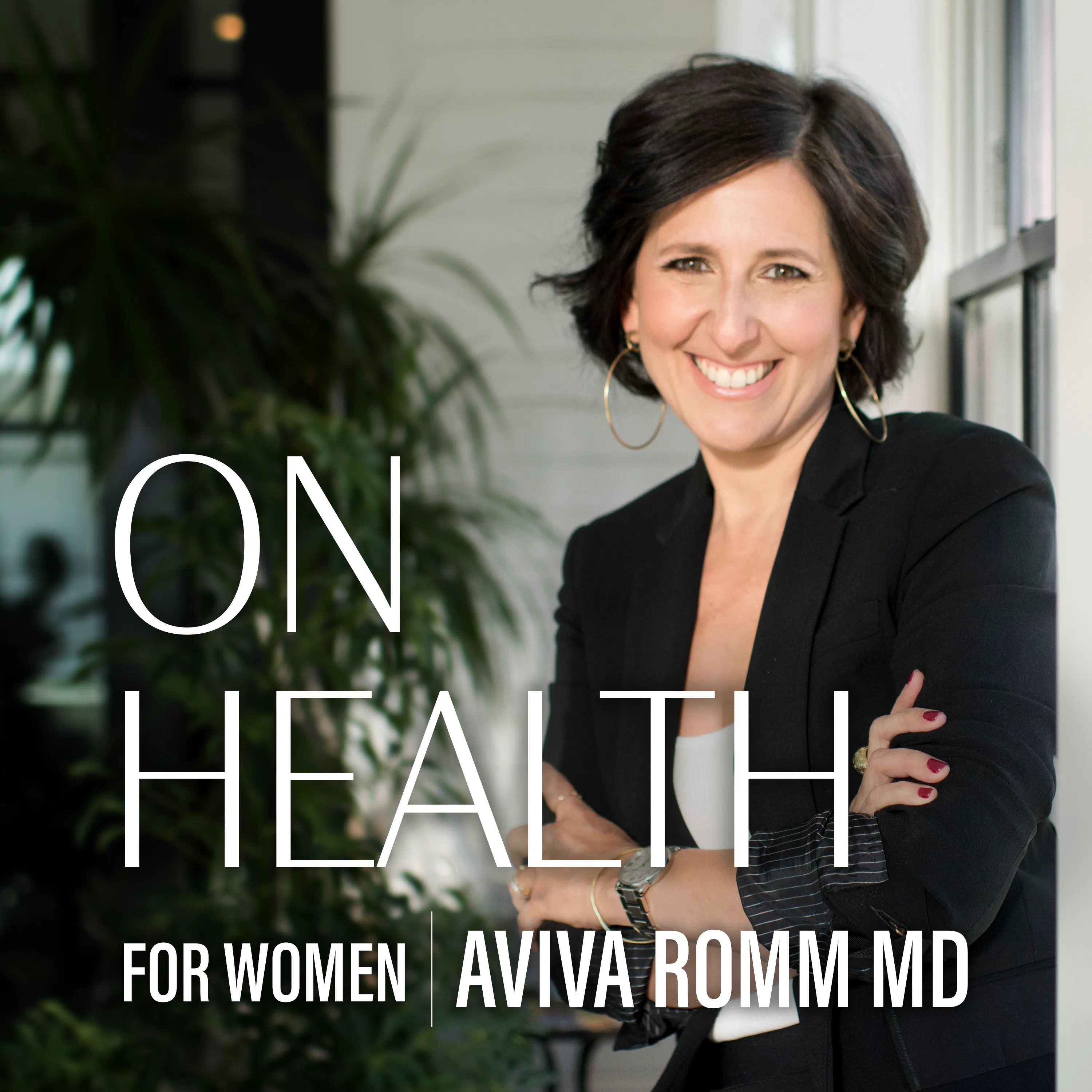
On Health
Hosted by Aviva Romm MD · EN
From the stuff your mother never told you, to the stuff your doctor never learned, On Health features taboo-busting conversations that demystify and de-stigmatize our bodies, all while bridging the gap between conventional medicine and wellness. Join Yale-trained MD & midwife Aviva Romm and her line-up of expert guests as they discuss everything from periods to menopause, sex to reproductive health politics, and motherhood to mental health. Each week, Dr. Romm will be exploring the science and wisdom of how our bodies work, what makes us well, what gets in the way, and how we can live our best lives on our terms, authentically and bravely. You can expect to learn more about topics such as women's brain health, cesareans, microbiome seeding, women’s sexual health, and much more. Plus, you'll get Aviva’s musings, tips, and guidance from 35+ years of helping women take back their health—and their lives. The new medicine for women is here!
10episodes
Episodes
Newest firstAll episodes
Beyond Gaslighting and Narcissism: Finding Yourself to Find Love with Jillian Turecki
Feb 14, 202401:03:36Tap to summarizeJillian Turecki, my guest for this On Health episode, is a beacon of light and a font of love and wisdom. A certified relationship coach, teacher, and writer with over 20 years of experience, she's fueled by an insatiable curiosity about what makes a relationship thrive, and she's helped thousands through her teaching and writing revolutionize their relationship with themselves so they can transform their relationships with others.In this episode Jillian and I get real about what it takes to have a thriving relationship, how this starts with loving ourselves, and also how important is that we normalize being single.- because that's a path many women are on, at least at some point in their live and love journey.We dive deep into so many areas of our love lives including: Trusting yourself and listen to your inner voice in relationships. Normalizing being single and focus on other areas of your life. Self-acceptance and self-worth as foundations of healthy relationships. How to be discerning and recognize relationship red flags. Mindfulness, tolerance, and appreciation in relationships. Avoiding overanalyzing our partners. How to get intentional in relationships - including having regular relationship meetings to improve the partnership. Creating breathing room to allow for individual growth How breakups and divorces can be transformative experiences that lead to personal growth and new opportunities. Following your own dreams and prioritizing your own growth as essential in relationships. Wherever you are on your self-love and love relationship journey, I know you'll find gems of wisdom and practical information to connect more profoundly with yourself and your partner. And you'll find more tools for practicing self-worth.Make sure to follow me on Instagram @dr.avivaromm to join the conversation. You can follow Jillian on Instagram and visit her at jillianturecki.comLooking for supplements for yourself and your family, including some of those I talk about in episodes? You can find those - and your 15% discount on every order here: avivaromm.com/supplements
Transcribe →Why Women Have More Autoimmune Diseases Than Men
Jan 31, 202400:35:22Tap to summarizeFatigue, achy muscles, painful joints, brain fog, strange skin rashes… Could it be the flu? It’s possible. In fact, that’s what women are sometimes told! But these can be symptoms of an autoimmune condition. Autoimmune conditions like rheumatoid arthritis, Crohn’s disease, and Hashimoto’s, to name just a few, have a definite gender bias. Women account for an astonishing 80% of all those who suffer from an autoimmune disease. Yet these are some of the most commonly dismissed, overlooked, and misdiagnosed symptoms and conditions, leaving far too many women to struggle to find answers, for sometimes years.So what is autoimmune disease and why do women experience them so much more often than men? That’s exactly what we’ll explore together in today’s episode. Join me as I tell you all about: What autoimmune disease really is Why women’s symptoms of autoimmune disease are missed - and dismissed The root causes of autoimmune disease that disproportionately impact women The role of estrogen and other hormones in autoimmune diseases How our immune system is impacted by hormonal shifts premenstrually, in pregnancy, postpartum, and menopause The wildly interesting role that microchimerism plays in autoimmune disease Listen and learn so you know how to protect your health from these conditions and so that you know how to get the tests, answers, and respect you need from your healthcare provider.Please share the love by sending this to someone in your life who could benefit from the kinds of things we talk about in this space. Make sure to follow me on Instagram @dr.avivaromm to join the conversation.Looking for supplements for yourself and your family, including some of those I talk about in episodes? You can find those - and your 15% discount on every order here: avivaromm.com/supplementsPractitioners - you can also learn how to create your own accounts at https://us.fullscript.com/practitioner-signup/AVIVA
Transcribe →The Power of Growing Older and the Problem with Ageism
Jan 17, 202401:08:02Tap to summarizeI’m not going to lie. I was much more prepared for puberty, pregnancy, motherhood, and even menopause than I was for aging. And you all know that’s a big deal to say because we’re largely unprepared for all the other phases of our lives, too. But the reality is, we’re aging from the day we’re born, and much of what we’ve internalized about aging - the fears, judgments, stereotypes - and even ‘symptoms’ if you will - have much more to do with the culture of ageism we’re steeped in from the time we’re little - whether that’s the ‘old hag witch’ in the woods who eats children in fairy tales and movies, to the anti-aging creams that women are already now using in their 20s (and younger) thanks to an industry that instills in us that aging is ugly. My guest, Karen Walrond, is the author of Radiant Rebellion: Reclaim Aging, Practice Joy & Raise a Little Hell, an investigation in how we can resist ageism and live a light-filled life along the way. And - I don’t say this often or lightly - this book has blown my mind. It was exactly the dose of vitality and fire I needed right now - a mind-shift on my own journey - of aging proudly and powerfully while I also navigate all that means in our culture, and in work that puts me front and center on video, in media. I truly believe every women over 20 in our culture should read this book, gift it, share it, talk about it, and then read it again. In this episode Karen and I discuss: The cultural beliefs, stereotypes, and fears that contribute to ageism How internalized ageism can affect women's self-perception and confidence as they age How to challenge ageist language and attitudes Embracing aging and reclaiming vitality can lead to a more joyful and fulfilling life. The role of the global anti-aging market in perpetuating ageism and sexism Variation in cultures on the perception of elderhood The importance of community and intergenerational relationships for well-being and a sense of purpose in the later years Listening to your body's cravings and embracing guilt-free eating The impact of alcohol on health and weight management How important it is to appreciate the wisdom and beauty of body changes Let’s listen to the interview. And then, as my guest says, raise a little hell. Or as I’m saying, raise a lot of it! You’ll see what I mean.Please share the love by sending this to someone in your life who could benefit from the kinds of things we talk about in this space. Make sure to follow me on Instagram @dr.avivaromm to join the conversation. You can follow Karen on Instagram and visit her at cho...
Transcribe →Why Creating & Setting Boundaries is Essential for Our Health
Jan 3, 202401:10:37Tap to summarizeAt some point, too many of us internalized the belief that being a woman means complete self-sacrifice, not setting healthy boundaries for our well-being, and not taking care of our fundamental needs – even for sleep, quality food, and relaxation. Further, as moms, we often take on the lioness's share of the household. As partners, we plan the dates and stay in touch with old friends. At work, we pick up the slack of others without so much as a peep of protest. But here's the thing- often, others don't even notice that we are doing all of this extra work because we haven't set healthy boundaries - with ourselves or with them. We've been taught to be the "good girl" (definitely listen to last week's podcast episode ALL about this topic if you haven't yet) and with this, we also believe that boundaries are rude or selfish. So we give and give and give - at the expense of our well-being and sometimes at the expense of our own passions and fulfillment. Time for a reframe! Not only is having boundaries not selfish - but we are better givers when we practice conscious boundaries.And that's exactly what I'm talking about in this latest On Health episode. Tune in as I dish out my top tips to get you on your way to a boundary-setting queen! And learn all about why it's truly so important, just in time for the new year ahead and beyond. In this episode I share: What boundaries are, including the types we may overlook Why we have trouble setting boundaries How to know whether you need better boundaries in your life Exercises to support you in discovering your highest priorities and how to stick to them The boundary-setting practices to get you started and that really work And more - including my weird style tip that relates to boundaries I KNOW that many of you will have at least a few "aha" moments and maybe even have some tears of understanding. Listen and become your own boundaries badass! Thank you so much for taking the time to tune in to your body, yourself, and this podcast! Please share the love by sending this to someone in your life who could benefit from the kinds of things we talk about in this space. Make sure to follow your host on Instagram @dr.avivaromm and go to avivaromm.com to join the conversation. Looking for supplements for yourself and your family, including some of those I talk about in episodes? You can find those - and your 15% discount on every order here: avivaromm.com/supplementsPractitioners - you can also learn how to create your own accounts at https://us.fullscript.com/practitioner-signup/AVIVA
Transcribe →Becoming a Cycle Breaker: Healing Intergenerational Trauma with Compassion and Resilience
Dec 20, 202300:58:17Tap to summarizeIntergenerational trauma refers to the transmission of unresolved trauma and its psychological, emotional, or even physical effects from one generation to another. This phenomenon can manifest in various ways, impacting individuals' mental health, coping mechanisms, and relational patterns. The cycle of intergenerational trauma underscores the importance of acknowledging, understanding, and actively addressing inherited wounds to break free from its influence on future generations.On today’s On Health episode I’m joined by the incredible Mariel Buque, PhD, author of Break the Cycle: who wants us all to learn to unravel the threads of family trauma, and becoming cycle breakers so we can heal the burdens of suffering carried forward by so many families across generations. In this powerful episode we explore: What intergenerational trauma is and how it can affect our physiology, mental health, relationships, economics, and more. The profound connections between our individual experiences and the echoes of our ancestors' pain. Resilience and stress tolerance as essential tools for breaking the intergenerational trauma cycle. How to expand your window of resilience and respond to life's challenges with greater awareness and purpose." How compassion becomes a powerful ally, fostering understanding and acceptance of our shared human struggles." How mothers can be preemptive cycle breakers, initiating the healing journey even before conceiving. The landscape of family estrangement and tools for reconciliation before resorting to estrangement. Mariel's approach centers around the concept of an upward spiral, emphasizing small, consistent mindful actions for reshaping the nervous system. Resources for those seeking guidance, including Mariel's book, "Break the Cycle: A Guide to Healing Intergenerational Trauma." Join us in this episode's transformative conversation on health, healing, and well-being, as we become architects of a future unburdened by the weight of generational pain.Please share the love by sending this to someone in your life who could benefit from the kinds of things we talk about in this space. Make sure to follow me on Instagram @dr.avivaromm to join the conversation.Looking for supplements for yourself and your family, including some of those I talk about in episodes? You can find those - and your 15% discount on every order here: avivaromm.com/supplementsPractitioners - you can also learn how to create your own accounts at https://us.fullscript.com/practitioner-signup/AVIVA
Transcribe →Beyond Crystals and Bubble Baths: Talking About Real Self-Care
Dec 6, 202301:04:24Tap to summarizeSelf-care - it’s both a profoundly important concept for our physical and mental well-being - a radical step in a culture that demands ever more of us, and it’s a phenomenon that has been trivialized by the wellness world - and any number of influencers and companies that suggest a bubble bath and a candle is enough for what stresses us. But real self care is so much more - it’s an inside job, as my guest Pooja Lakshmin, MD, shares with us. A-psychiatrist, author, and the founder of Gemma Pooja shares her journey from disillusionment in mainstream medicine to a unique commune experience, leading to her mission of redefining self-care in her new book, "Real Self-Care.”In today’s episode we discuss: The turning point that led Pooja to drop out her medical residency training program and nd explore alternative paths. Pooja’s surprising decision to join an orgasmic meditation commune in San Francisco, the eventual decision to leave, and the lessons she learned. Her personal mental health struggles, including depression and thoughts of suicide. The pivotal moment that motivated her to return to residency and pursue her calling. The nuances between genuine self-care and the commodified wellness industry, clarifying that the book does not dismiss common self-care practices but challenges their commodification. The three common reasons people turn to self-care and how these dynamics manifest in her life and the lives of her patients. The principles of real self-care and the importance of internal processes, emphasizing the role of boundaries and their significance in fostering genuine well-being. The intersection of privilege and self-care, especially for mothers juggling multiple responsibilities. The systemic issues causing stress, reframing the conversation from burnout to betrayal and the societal pressures for perfection The importance of embracing "good enough., balancing excellence with realistic expectations. How positive psychology methods contribute to individual change and reshape the wellness narrative The challenges of balancing motherhood, professional responsibilities, and real self care. Please share the love by sending this to someone in your life who could benefit from the kinds of things we talk about in this space. Make sure to follow me on Instagram @dr.avivaromm to join the conversation.Looking for supplements for yourself and your family, including some of those I talk about in episodes? You can find those - and your 15% discount on every order here: avivaromm.com/supplementsPractitioners - you can also learn how to create your own accounts at https://us.fullscript.com/practitioner-signup/A...
Transcribe →Parent Wounds: Healing Our Hearts Even in Crisis
Nov 22, 202300:31:55Tap to summarizeIn the midst of the chaos that seems to be almost a constant in the world, it's easy to forget that individual lives and losses are still happening every day and can be deeply affecting us or those around us, as can family mental health issues.Sometimes those bigger global issues give us perspective, take us out of our own worries, and that can feel actually broadening and helpful and can put our lives into a perspective that brings some ease or inner peace even. Not that we're taking comfort in someone else's misery or suffering, but that there's a reminder that suffering is bigger than us and we're not alone, and that there are also major trials happening that sometimes may be even scarier in the moment than our own. But often it's a compounding weight, and then we might also feel embarrassed for having our own feelings when there are these very big things happening. So much so that we turn inward, ashamed to share our more personal troubles for fear of seeming small or selfish, and that can create cognitive dissonance or a retreat into self that can be part of depression or create social anxiety.In this episode I explore, through my own recent loss, a specific kind of despair and trauma that affects the lives of so many: the loss of a parent through one or another form of abandonment due to our parents going through a difficult and permanently dividing divorce, though illness, including mental health challenges, or for other reasons. I explore: What my own experience of recent loss was and what it brought up for me The impact of an abandonment on a young person, including potentially leading to complex attachment issues at various stages in our lives How paternal abandonment can put pressures on the remaining parent, usually the mother, possibly leading to mother-daughter wounds The impact of an abandoning parent on one’s self-concept, economic beliefs, and sense of belonging in the world How we are really always still children at whatever age a parent abandons one How I’ve been processing my loss through somatic work, meditation, and journaling And more Please join me for a very personal journey today, that may have specific meaning for you as we enter the holiday season. I do talk about loss, grief, and trauma, so I invite you to listen when you have the space to feel anything that might come up for you. And thank you for honoring my vulnerability in what I share. It’s a gift to have you on this journey with me. Please share the love by sending this to someone in your life who could benefit from the kinds of things we talk about in this space. Make sure to follow me on Instagram @dr.avivaromm to join the conversation.Looking for supplements for yourself and your family, including some of those I talk about ...
Transcribe →Unpacking the Invisible Load of Motherhood with Erica Djossa
Nov 8, 202301:00:07Tap to summarizeLike so many moms, Erica Djossa, a registered psychotherapist specializing in maternal mental health, entered motherhood assuming her “maternal instinct” would guide her through any challenges she faced. Yet, like so many mothers she'd counseled, she too, found herself struggling with identity loss, the mental load of motherhood, and the pressure to be perfect. Eventually, she had a breakdown that turned out to be a breakthrough – a moment where she realized that she was suffering from postpartum depression.When she sought help, she was dismissed by doctors who assured her that she just needed more rest. Frustrated, Erica pushed to be taken seriously, and finally got the care she needed. Through that experience, Erica realized that moms deserved more.Realizing how difficult it is to find mental health services, the now mother of 3 founded Happy as a Mother, which has evolved into Momwell, to provide mom-centered virtual therapy services and mental health literacy for moms at every stage of their motherhood journey. She has also taken to social media to make a difference. Her graphics have been shared by celebrities like Snoop Dogg, Ashley Graham, Nia Long, Hilaria Baldwin, Christy Turlington and Adrienne Bosh. Erica is passionate about maternal mental healthcare and putting moms back on the priority list.In this episode we dive deep into: Erica's own experience of postpartum and how this was a catalyst for the work she does to support mother's mental health How traditional gender roles can keep mothers - and couples - from thriving as we parent Understanding mom rage and resentment The importance of learning that as mothers, we can release Perfectionism and share the mother load Healing and preventing trauma and the power of honoring our children's resilience The potential risks of intensive parenting and Perfect Mother Syndrome on our mental health and couple's relationship How to identify your personal parenting and self-care values rather than internalizing those from our culture, community, friends, or family. Please share the love by sending this to someone in your life who could benefit from the kinds of things we talk about in this space. Make sure to follow me on Instagram @dr.avivaromm to join the conversation.You can follow Erica and Momwell on Instagram @momwell and visit momwell.com.Looking for supplements for yourself and your family, including some of those I talk about in episodes? You can find those - and your 15% discount on every order here: avivaromm.com/supplementsPractitioners - you can ...
Transcribe →A Silent Fire: Understanding Hidden Inflammation with Shilpa Ravella, MD
Oct 25, 202300:58:02Tap to summarizeHere's a little secret: hidden inflammation, not genetics, is the most common underlying cause of chronic illness.Hidden inflammation is a root cause of: Premenstrual syndrome Period pain Chronic aches and pains Digestive problems Allergies and eczema Trouble losing weight Trouble sleeping Depression Alzheimer’s Autoimmune diseases Heart disease, Cancer, Diabetes The problem is most doctors are not aware of hidden inflammation let alone how to identify or address it. Western medicine leads us to believe that we have no control over our health destiny. It’s just assumed that chronic disease is an inevitable fact of life.But it’s not.So how can we get ahead of chronic inflammation?In this week's episode of the On Health podcast, I sat down with Shilpa Ravella, MD, the author of A Silent Fire: The Story of Inflammation, Diet and Disease. gastroenterologist and Assistant Professor at Columbia University Medical Center.Tune in as we discuss: What hidden inflammation is and how to test for it How inflammation is both a cause and a risk indicator for diseases such as heart disease, cancer, obesity, diabetes, neurodegenerative disorders, and depression The most common myths about anti-inflammatory diets and why food restriction is not the answer The two most important factors in an anti-inflammatory diet The truth about the healthiest protein sources The connection between gut health, food intolerances, and inflammation Thank you so much for taking the time to tune in to your body, yourself, and this podcast! Please share the love by sending this to someone in your life who could benefit from the kinds of things we talk about in this space. Make sure to follow me on Instagram @dr.avivaromm to join the conversation. Follow Shilpa on Instagram @shilpa.ravella and visit her website at www.shilparavella.com.Please share this important topic by sending the link to the show to someone you love.Plus get your copy of my book Hormone Intelligence which offers up a full plan on reducing inflammation!
Transcribe →Medical Gaslighting: What It Is, Why It’s So Dangerous, and What You Can Do to Advocate for Yourself
Oct 11, 202300:54:22Tap to summarizeIn recent years, the term "medical gaslighting" has come to represent the phenomenon and disproportionate impact of medical dismissal of women and other marginalized groups. All too often, women leave the doctor’s office questioning themselves and their symptoms and are too often pressed into silently endure their suffering, sometimes until it's tragically too late.How can we identify when medical gaslighting is happening and protect ourselves or those we love?Join me on today's episode of On Health as I explore the roots of medical gaslighting, how to recognize it, the power of self-advocacy, and the critical need for systemic reform. Tune in as I get into: Where the term gaslighting actually comes from How gaslighting shows up in women's healthcare, and who is at greatest risk The dangerous and potentially life-threatening consequences of medical gaslighting The problem with the word "hysterical"—and how it was a medical diagnosis until the 1980s! How to reduce your risk of having your medical symptoms dismissed as psychological My personal experience with medical dismissal—and why nobody is immune from it 7 signs that could indicate that you’re experiencing medical gaslighting How to be an advocate for yourself and avoid being medically gaslit The urgent need for systemic change and what we need to do as a society to ensure that this happens My hope is that you walk away from this episode with greater awareness of the very real issues with gaslighting in medical care and greater confidence in speaking up for yourself and your ability to demand the respect you deserve when it comes to your healthcare. Thank you so much for taking the time to tune in to your body, yourself, and this podcast! Please share the love by sending this to someone in your life who could benefit from the kinds of things we talk about in this space. Make sure to follow your host on Instagram @dr.avivaromm and go to avivaromm.com to join the conversation. Looking for supplements for yourself and your family, including some of those I talk about in episodes? You can find those - and your 15% discount on every order here: avivaromm.com/supplements Practitioners - you can also learn how to create your own accounts at fullscript.com/practitioner-signup/AVIVA
Transcribe →