← On Purpose with Jay Shetty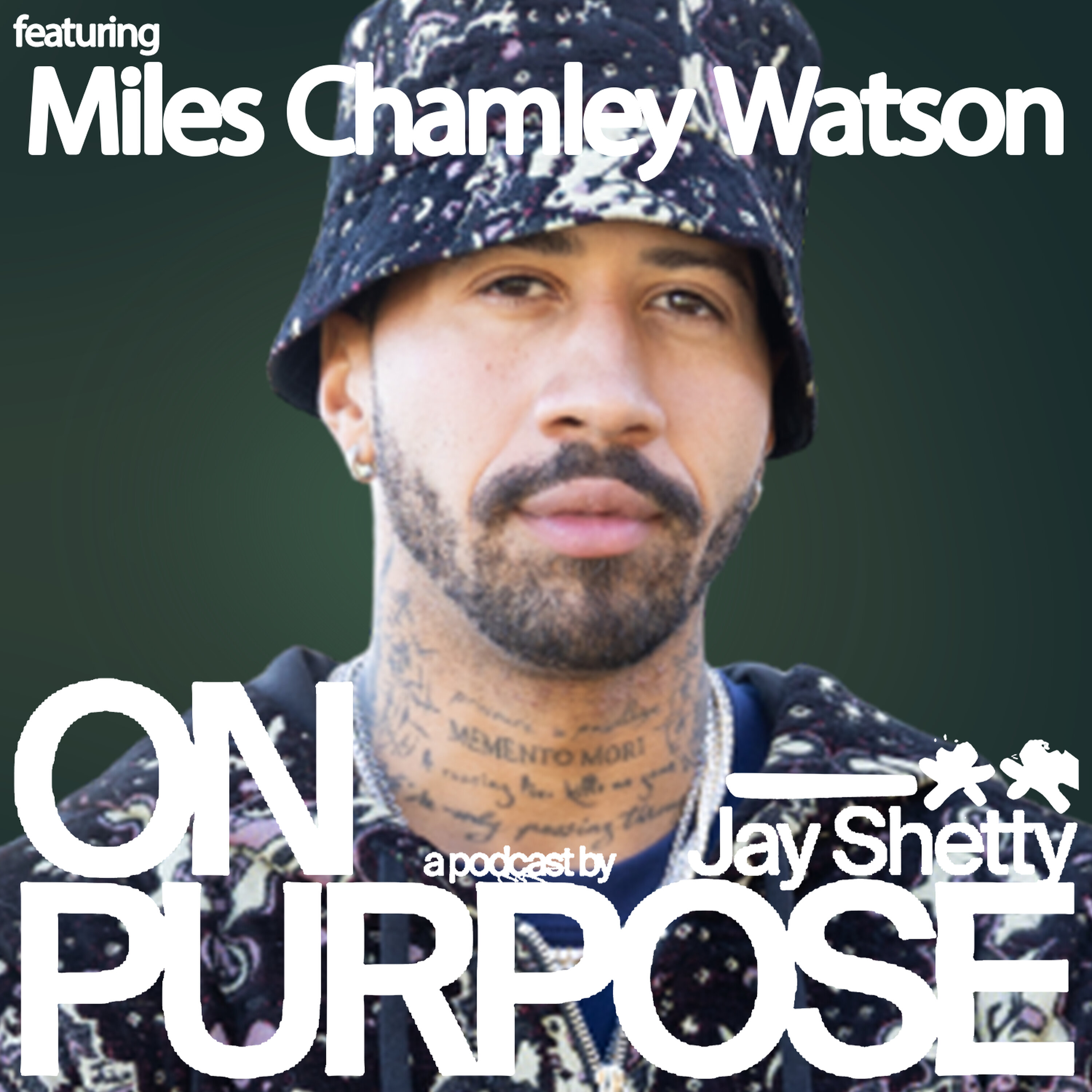
On Purpose with Jay Shetty
Miles Chamley-Watson: #1 Mindset Shift That Changes Everything (Try THIS to Stay Sharp, Focused, and In Control)
01:02:26
Loading summary
Transcript364 lines
- [00:00]
Jay Shetty
This is the iHeart podcast. Guaranteed Human Checking off the boxes on your to do list is a great way to keep your mind clear. That's why a State Farm agent is there to help you choose a coverage option that's right for you. As you go through life getting that new house, car, boat, motorcycle or even rv. Helping protect it is always a good idea. Whether you prefer talking in person, on the phone or on the award winning app. State Farm is there to help protect what's important to you. And with so many coverage options, it's nice having help to find what fits for you. Like a good neighbor, State Farm is there Life has a way of becoming overwhelming when you least expect it. One moment everything feels in place and the next you you're navigating the unexpected. Especially for parents. Like when the whole family gets sick in the middle of the night and you can't leave the house, but you still need medicine and supplies to help everyone feel better. That's where doordash comes in. It helps take something off your plate so you can focus on what truly matters. Showing up for the people you love. Sometimes the most powerful thing you can do is to accept that you don't have to do everything on your own. When life gets crazy, DoorDash helps bring some order to it. Order now. Indeed Sponsored Jobs gets you quality candidates when you need them most. Spend less time searching and more time actually interviewing candidates who check all your boxes. Less stress, less time, more results when you need the right person to cut through the chaos. This is a job for Indeed Sponsored Jobs and listeners of this show will get a $75 sponsored job credit to help get your job the premium status it deserves@ Indeed.com podcast terms and conditions apply. Need to hire this is a job for Indeed Sponsored Jobs.
- [01:50]
Miles Chamley-Watson
Fencing literally saved my life.
- [01:53]
Jay Shetty
Fencing is known for being a notoriously white sport. Talk to me about what it felt like getting to the Olympics. Winning bronze.
- [02:00]
Miles Chamley-Watson
My mom always just said just win. And then what can they say? I'm the best now. I'm still a 12 year old kid, just 6 5, covered in tattoos. Winning is great, but changing a sport is bigger than any Olympic gold medal I could ever win.
- [02:16]
Jay Shetty
Hey everyone. Welcome back to On Purpose, the place you come to become happier, healthier and more healed. Today's guest is not only a friend, but someone who I'm so fascinated to dive into his mindset. I love top performers, people who are operating at peak places and making incredible impact happen across the world in their field. And this is one of those people Miles Chamley Watson is an Olympic medalist, redefining the sport with his style, confidence, and a vision that's pushing it far beyond what it's ever been before. Myles Chamley Watson, welcome to On Purpose.
- [02:51]
Miles Chamley-Watson
Well, thank you. That was an absolute incredible intro. It's an honor to be here, honestly, before I kind of got to meet you. It's really nice to be a fan of your work, and I think you instill some incredible ideas on people, made them feel better, which the world needs more than ever. So thank you for that and it's an honor.
- [03:08]
Jay Shetty
Dude. We met in the best way possible. I felt like we were on a boys trip, which is what I felt like. And it just turned out to be like the easiest conversation. You guys, like, invited me into the wolf pack, which made me feel really, really comfortable. We played poker from 11pm to 7am Three nights in a row. We were out on the water. We're hanging. It was. It was amazing. And I just, you know, I know that I was kind of coming in fresh and new, and it was just. You were one of those people, you and spins, especially. Big shout out spins. You were one of those people that just made me feel like at home. So not only are you amazing at what you do, which we'll get into, you're a great guy. Off, off as well. So I appreciate you, man.
- [03:47]
Miles Chamley-Watson
Thank you.
- [03:47]
Jay Shetty
I want to dive in by asking you, like, what I heard from you. And I've been watching your interviews, and obviously I came to your event, which we'll talk about in a second, but I feel like you always felt like you didn't quite fit in. Talk to me about your earliest memory that reminds you of that feeling.
- [04:02]
Miles Chamley-Watson
I think being born in London, my mom was kind of the mom and dad that was kind of in my life. I was about 8 years old. So I think naturally you kind of rebel. So I think when I was playing football, running track and field, I always felt like I was just different. Kind of my approach, my mindset. And then we moved to America. I was about 9 or 10, kind of in between those years. And those years are very important, right? All your friends are there, your family's there. So naturally moving from London to New York, I was like, I don't want to be here. So getting into trouble, getting kicked out of my first school, public school. Then I got kicked out of my second school. And then my mother met someone that was on the admissions program for private school, which to give tuition grants because we didn't have money at the time. But as a punishment, I had to pick up tennis, fencing or badminton as a punishment because they're considered mental sports. And I was like, oh, whatever, sports are fun. And then I was like, wait, I can pick up a sword and like stab you, right? I was like, this is like the kid's dream. And then immediately that was my purpose because you put the mask on and you feel like a superhero. And I think that was the first time I realized, like, okay, this is going to be my way out of whatever I'm kind of in. And then I was very ADD adhd. And then fencing kind of came my outer role. And as I started to get better in fencing, I started to get better in school. So that kind of ended up being a double sided sword, which ended up being my job. I kind of got very, very lucky in finding fencing because I don't know where I'd be now if I wasn't, you know, a professional fencer. Which is a crazy thing to say.
- [05:34]
Jay Shetty
You know, I feel like sports when you're young are so important. What was the difference? Because everyone plays sports. I played a lot of sports growing older. You're obviously phenomenal at what you do. How quickly did you realize that this could be something you were actually really good at?
- [05:48]
Miles Chamley-Watson
I think it was immediately.
- [05:50]
Jay Shetty
Really?
- [05:50]
Miles Chamley-Watson
Yeah. Picked it up right away. And Ellen Grayson, who. I love her to the death. Hello. She was like, miles, you could be an Olympian. I was like, that's offensive. Really? And I think immediately I felt this connection that was like nothing else in my life. And it was like my therapy. And I think nowadays it's like, kids, ADD adhd. First things like, hey, we should give him a pill or give him a drug. And I'm like, find them something that they love. I think that's the key is. And sports are amazing because no matter if you're rich or poor, at the end of the day, it's who's going to win. Right. Same sword in my hand, same mask on my head. And I think that's why sports are so incredible, because they saved my life. I never knew at that time that it would be my be all, end all. But fencing literally saved my life.
- [06:36]
Jay Shetty
Wow.
- [06:36]
Miles Chamley-Watson
Which is crazy to say.
- [06:38]
Jay Shetty
Yeah. But I believe you. I can feel it, like even just sitting with you and you say that. I'm like, wow. That's like. Because I feel like so many parents today are wondering, how do I get my kid to be confident? How do I get my kid to like, just get out then? And I couldn't agree with you more that you only feel confident when you have some competence. Like when you feel like you have a skill or you have an ability and you have something to do beyond scrolling on your phone or, you know, watching a show or playing video games or whatever it may be for you. Talk to me about. What do you think life would have looked like if you didn't find fencing that early?
- [07:08]
Miles Chamley-Watson
I honestly don't know because we were hanging on the corner shops, you know, getting into trouble, stealing sweets, just kind of. Because we didn't really know what there was for us. And I think that's also very important, having a father figure in your life. And think of. My mom found my stepdad, Colin, who I say my dad to you because he is my dad who raised me. I think that's also very, very important, is because you need someone that's going to tell you no when they can. And I honestly don't think I would be definitely not talking to you. And I definitely don't know if I'd be behind the bars, to be honest with you, because I was just such a crazy little kid. My friends I grew up with, you know, they're plumbers. Happy. But I was kind of the only one out of us to kind of make it out and create a name for myself.
- [07:46]
Jay Shetty
What area did you grow up in?
- [07:47]
Miles Chamley-Watson
First it was southwest London, and then it was Ealing, and then it was Putney and then Kilburn a little bit.
- [07:54]
Jay Shetty
Yeah. Yeah.
- [07:55]
Miles Chamley-Watson
And then we moved to New York. Yeah. And a really, really funny story. 2012 Olympics. My three friends, Aaron, Adam and Blake, they're all brothers. They were plumbers and they actually built the Olympic village.
- [08:06]
Jay Shetty
No.
- [08:07]
Miles Chamley-Watson
So, yeah. First time I ever seen that. Yeah. They literally built the village.
- [08:10]
Jay Shetty
That's so cool.
- [08:10]
Miles Chamley-Watson
And they were calling, like, hey, man, I'm building your village. I was like, what do you mean? And they're like plumbing it and making it. And then they kind of got to see me compete in 2012, and it all came. So that was a full circle moment for me.
- [08:20]
Jay Shetty
That's amazing. That's so good, man.
- [08:22]
Miles Chamley-Watson
Yeah, it was crazy.
- [08:23]
Jay Shetty
And that just happened by chance. There was no connectivity or anything by chance.
- [08:26]
Miles Chamley-Watson
And I think life is obviously about timing's everything in life, and I really believe that. And I think some things might be not the right time. Relationships, partners, sports. But sports, I think are the number one thing. If I have children, I would put them in right away. I'm not going to tell you to be a fencer, but I think just sports teach you how to lose what it feels like. Integrity, listening. And I think that's what fencing taught me.
- [08:48]
Jay Shetty
I told you this before. I don't think we had a proper conversation about it. So I did fencing at school, and I won some super amateur championships at, like, 14, 15, 16. I don't. I don't. You know, maybe I'm joking. I could never have been good enough to compete with what you do. But I loved it as a sport, actually. I thought it was pretty. It was really strategic. It was tactical. The fitness level was. You know, it was challenging. I still remember, actually, really well, we do it in the gym at school. Talk to me about the importance of a mentor, though, because it sounds like you gave a shout out to someone there. And I was like, I think that's the difference. Like, when I played a lot of sports at school, you've got to have someone who kind of takes you under their wing and, like, invests in you and makes you feel like you could go far. And I found them in life. I found them in business. I found them in spirituality and meditation and other areas of my life. But sports is somewhere where I think a coach or a mentor is just the most important person. Talk to me about how you found yours.
- [09:42]
Miles Chamley-Watson
100%. I think Ellen Grayson and Eric Rosenberg, they work at the school at the time, and they saw my potential, and they actually were the first person to say, get your citizenship. But I didn't realize I was going to be who I am to this day. Without them. I would never probably seen my potential and seen how far I could take fencing. And then my coach, Simon Gershon, became like my dad. I can tell him everything. He's kind of teaching me that, you know, that you must learn how to lose before you learn how to win, which is a tattoo I have, which I think is so important, because understanding the feeling of losing as an athlete is the hardest thing, you know, to kind of understand and swallow. But then you have to understand what that feels like. So when you do win, you appreciate that more than ever. I talk to him every day. If I'm not feeling good, he can sense it. So to me, having a coach and a mentor and a role model is so important. I think now that's why I love being that for the kids now, which is one reason why I started this league. But I love seeing kids look up to me, parents ask me questions, and I think if I can be a little bit of a catalyst or kind of a helper for them, then that's probably bigger than winning. Any medal I could ever win.
- [10:45]
Jay Shetty
That's such great advice. Where's your toe? Is it.
- [10:47]
Miles Chamley-Watson
Yeah, it's someone here.
- [10:50]
Jay Shetty
How many toes do you have?
- [10:52]
Miles Chamley-Watson
150.
- [10:53]
Jay Shetty
Really?
- [10:54]
Miles Chamley-Watson
Yeah.
- [10:54]
Jay Shetty
That's mad.
- [10:55]
Miles Chamley-Watson
Yeah. Because I tattooed my hands. Because in fencing, we're all white.
- [10:58]
Jay Shetty
Yeah.
- [10:58]
Miles Chamley-Watson
So, you know, I want to stick out. And my mom hated it because she's, you know, a British lady now.
- [11:02]
Jay Shetty
I remember when we were traveling as well. You've got these crazy ones on your shin as well. When did you start?
- [11:07]
Miles Chamley-Watson
2012. I got my first one in London. Oh, that's late at the Olympics. Yeah. And it says, from London to London. And then I won more championships, and I got the dates, and then I was like, I really like it. And then I just kind of went crazy with it. But they're all very, very purposeful. They're not just random ones I've gotten for. Just for the sake of it.
- [11:25]
Jay Shetty
What's the. Lose and win one again. Say that again.
- [11:27]
Miles Chamley-Watson
So you must learn how to lose before you can learn how to win.
- [11:29]
Jay Shetty
I really like that. That's dope.
- [11:31]
Miles Chamley-Watson
And I really understood that when I lost at the Olympics. We got fourth, and I was like, oh, wait four years. And then I kind of changed my whole mentality. And then 2013 was when I made history, and I was the first ever black American world champion in the history of fencing. And I think if I didn't lose, I don't know if I'd ever win, which is a weird thing to kind of say, but I think it's pretty poignant. And I think it is very important for just your character and just trying to be as humble and even killed as you can. Because I never understand some athletes who reach a certain peak and they just change who they are. And I think if you can keep, you know, that little kid in you, then I think you'll. You'll be able to go through life with a lot more wins than. Than losses.
- [12:11]
Jay Shetty
It's such powerful advice. I remember I had. Obviously, I never competed at any. Any level, but I remember having a football coach who'd always say to us, he was like, if you win, celebrate for a night and then get back to training. And if you lose, cry for a night and then get back to training. And he was like, all you have to do is get back to training. Said, everything else is irrelevant. You can celebrate for one night. You can cry for one night, but get on with it. Because his whole point was like, when we lose, we cry for a month. And when you win, you celebrate For a night. And that's why you remember the bad times more than the good times, because when you lose, you get so deep into it. You talk to me about that loss that you had the details of, like, what it felt like to lose in that way.
- [12:49]
Miles Chamley-Watson
Well, it felt like your life was over at that time. My nan was there. You know, she's an African. My aunts, my uncles, everybody supported me, and I'm like, I feel like I let everybody down, and they don't care. They'll be for who I am. But at that time, that was my biggest moment in sports, is making the Olympics in 2012 in London. And I just felt like, oh, yeah, hometown as well. Hometown. Ashamed of myself. And a really, really beautiful moment for me was I'm in the village, and the basketball team walks in, and Kobe walks in, and he's like, hi, how are you? And I'm like, hi, how you doing? I'm Kobe. I'm like, I know who you are. I'm like, I'm Miles. I'm a fencer. And he told me this quote, I'll never forget it. I got tattooed on my leg. He says, the best athletes have the shortest memory. You win, you forget about it. You lose, you forget about it. When you're done, your career, you can celebrate all you want. And I sat there, and I was like, wow. And immediately that grin turned into a smile, and. And then I changed my whole mentality, and then I won. The next year, I was able to tell him, which was really, really beautiful. But I think when you meet someone like that, who you look up to, and they're just even more incredible in person. And he's just very humble and told me that from his coach, and I never, ever forget that. And I have a tattooed on the back of my leg with his face. So I think those moments are priceless to me. And I think if I would have won, would I have had that time with him or what have I been able to do more of my sport? So I think everything has a reason to come into your life, whether it's positive or negative. And I'm grateful for these moments in life that, you know, are incredible.
- [14:18]
Jay Shetty
That's such a great story. Kobe came on the podcast, the first year of the podcast. It was brand new. We just started out, and he did exactly what you said. He walked into the room, and he introduced himself as Kobe to my whole team. And everyone's like, yeah, we know exactly who you are. And my favorite memory from that day was that when we walked in he was in his office, and you could just see the silhouette of his head. And his team was saying that he was meditating in there before he came to do the interview. And they said he did that every morning. When we finished the interview, this was a little clip. I still have this clip. I've never put it out there because I feel it would be disrespectful. But at the end of it, he goes, I can see why you're number one. And I was just like, that will, like, stay with me forever. He gave me the biggest hug. And, yeah. I was so grateful to. And that was, like, three months before his tragic passing. So it was, like, right then. But, yeah. What an incredible role model. Amazing energy, like, so present, really humble. Everything you just said, like, just meeting someone at that level, that caliber, who was just so down to earth.
- [15:20]
Miles Chamley-Watson
I don't talk too much about it because obviously, respect to him, but I was on set with Nike talking about him the day it happened. Oh, the day it happened.
- [15:29]
Jay Shetty
Wow.
- [15:30]
Miles Chamley-Watson
And then Lewis actually texted me, I love you, brother. I love you, too. But my phone was in the green room, and I was talking about him, his impact on me. And everybody just stood in silence, and it was just like. It was, you know, and I think larger than life, these people, and life's a brutal reminder, and I think it's just enjoy every moment you can, negatives or positives. And I think that's all we can do in life and just leave with love, and everyone else will take care of itself. But that man was so special.
- [15:59]
Jay Shetty
Yeah. One of a kind. He was. He was one of the few athletes I knew that was peaceful in retirement.
- [16:05]
Miles Chamley-Watson
Yeah. Yeah.
- [16:06]
Jay Shetty
He was really happy because he was getting. He won the Oscar for the short film that was teaching lessons. Basketball. Yeah, exactly. But I was thinking about it. You mentioned something there. You said that you're the first black person in the sport to win. I mean, that just. First of all, that is a huge accomplishment. Congratulations. I just want to acknowledge and honor just what a big deal that is. But fencing is known for being a notoriously white sport.
- [16:30]
Miles Chamley-Watson
Yeah.
- [16:31]
Jay Shetty
Like, that's what it's always been. I assume you can fill me in the history a little bit. Talk to me about even breaking into something like that, because I don't. That's not normal. That doesn't sound easy. I'm sure there's a lot of things to navigate, like, walk me through that experience.
- [16:45]
Miles Chamley-Watson
I was in this group class, and, you know, they pick who you want on a team. We did, like, Our first team event was like, so three people on one team versus other three. And every time I was picked last, knowing I was not the worst one. And at the time, you're kind of like, all right, this is. This is weird. I'm the only one that kind of looks like me in it. And then I started to realize that no one in the sport really made a mark on them. That was my color, besides Peter Westbrook, who I have to give some homage to. And then my first ever Junior Olympics. I never forget it. I got five red cards for no reason. And I knew it was because of the color of my skin, because the next day, I won the under 17. I knew it. And now I've seen the referee still to this day, and I still have this. I was like a little kid, and it's just. You don't know why things are happening to you. But then as I got older, I started to realize it was just because the color of my skin, because knowing that sport had broken that mold. And there's been countless times of referees and coaches that are just racial gestures that I've never really talked about because my mom always just said, just. Just win. And then what can they say? I've had many, many occasions, from probably 14 till 17, 18. Then I was like, I'm the best now. And it's unfortunate because now there's still racism in the sport. Right. It happened with this kid in Amsterdam, and I messaged him right away like, you know, I have your back. And I'll talk about it in a post about it, because it's, you need someone's gonna have your back. Because it's a very lonely feeling when you're the only one that has felt this way. Once I started to realize that, I made it like a positive chip on my shoulder, and I was like, okay. And I never look at life as anything negative, whether it's, you know, being racially profiled or losing. I always have a positive outlook on everything because it's never lost. It's always a lesson. And I think that was something that I was like, okay, this is going to be change in the sport. And I will leave fencing in good hands because I know I've changed the sport for the best.
- [18:35]
Jay Shetty
How did you handle it at the time when you didn't have someone reaching out to you?
- [18:39]
Miles Chamley-Watson
The good thing about fencing is I can take my aggression out on my opponent, so it's a positive thing for the sport to channel it. Yeah. You know, you're crying in the locker room. I never Cried in front of my mom. You know, luckily you have a mask on you, you know, shit your opponent and put the mask back on. But I think at that age, it's, it's, it's okay to cry and it's okay to let things out because there are coaches and parents who I've seen who have actually shunned their kids for showing emotions. I've seen parents leave their kids at competitions because their kid lost to me. And actually, the kid is actually my friend now. And it's just a shame that parents don't realize, like, how much pressure there is on us to just win. So I think now seeing kids that look more like us, brown, white, whatever, girls, I just want to make them feel comfortable and happy and safe. And I think if I can be this beacon for them, then that's what I want to do in the sport.
- [19:30]
Jay Shetty
Well, that was so incredible when you launched the World Fencing League. I just got to attend in la. I felt like you had people from different countries, different cultures, different backgrounds. I mean, that was pretty epic, man. That was amazing.
- [19:41]
Miles Chamley-Watson
It was honestly a dream come true. We sold out, we broke records. I think over a million people live watching, which is more than the Olympics. And I think just seeing kids so happy that their sport is on the map was the best feeling I've ever felt in my life. So seeing all the little kids on the red carpet to all the fences inside telling me, mate, I think you've done it, that, was, to me, the greatest day of my life. Because it was just we really changed the sport on one day because now there's an audience of people that have never seen it, like yourself, like people in tech, people in sports, people that I've looked up to, to the fencing fans, to get the love that they deserved was incredible. Even as I'm smiling because I'm generally so happy that it happened and now the response has been so positive, so we can keep growing and growing. I just want to get fencing on a mainstream, you know, channel and platform, which is going to happen. But it takes someone like myself to know that it's going to be tough, but I can handle it. This is Matt Rogers from Las Culturistas with Matt Rogers and Bowen Yang. This is Bowen Yang from Las Culturistas with Matt Rogers and Bowen Yang. Hey, Bowen, is it just me or does it feel like nothing is actually what it says it is anymore?
- [20:57]
Jay Shetty
Yeah, like when you order chicken fingers,
- [20:59]
Miles Chamley-Watson
you don't get fingers, you get mystery nuggets. Exactly. Well, except hotels.com.
- [21:04]
Jay Shetty
i was going to say hotels.com because they do hotels refreshing and when booked
- [21:09]
Miles Chamley-Watson
as a member, rewards are earned every
- [21:10]
Jay Shetty
stay, not points that disappear.
- [21:12]
Miles Chamley-Watson
Rewards that work like cash and can actually be used so the name checks out and the perks do too.
- [21:17]
Jay Shetty
Yep, members can get up to 20% off tons of hotels with no blackout dates.
- [21:22]
Miles Chamley-Watson
Just works with real travel. Okay, that tracks hotels.com, it's all in the name Eczema is unpredictable, but you can flare less with Epglis, a once monthly treatment for moderate to severe eczema. After an initial four month or longer dosing phase, about 4 in 10 people taking ECGLIS achieved itch relief and clear or almost clear skin at 16 weeks. And most of those people maintain skin that's still more clear at one year with monthly dosing. Hemplis Lebricizumab LBKZ a 250mg per 2mg second per the milliliter injection is a prescription medicine used to treat adults and children 12 years of age and older who weigh at least 88 pounds or 40 kilograms with moderate to severe eczema, also called atopic dermatitis that is not well controlled with prescription therapies used on the skin or topicals or who cannot use topical therapies. EBGLIS can be used with or without topical corticosteroids. Don't use if you are allergic to Epglis. Allergic reactions can occur that can be severe. Eye problems can occur. Tell your doctor if you have new or worsening eye problems. You should not receive a live vaccine when treated with Eglis before starting Epglis. Tell your doctor if you have a parasitic infection. Ask your doctor about ebglis and visit epglis.lily.com or call 1-800-lilyrx or 1-800-545-5979. Hey everyone, it's Kal Penn. I'm the host of Earsay, the Audible and iHeart Audiobook Club. This week on the podcast, I am sitting down with Ray Porter, the narrator of Andy Weir's audiobook project Hail Mary, Massive sci fi adventure about survival and science and what happens when you wake up alone, very far from Earth. I really had to make a decision because I caught myself getting that frog in my throat and starting to get teary as I'm narrating some of these sections and it's like, okay, yo yo, yo, is this indulgent? And I really thought about it. I was like, no. At this point it would kind of be betraying the Trust the author and the listener have in telling this story. If I don't go through it. But there's places in this book that. That deeply, emotionally affected me, and I left it on the mic. That's great because it served the story. People will say, like, oh, my God, I cried at the end. It's like, yeah, dude, me too. Listen to Irsay, the Audible and iHeart audiobook club on the iHeartradio app or wherever you get your podcasts.
- [23:41]
Jay Shetty
For anyone who doesn't really know that much about fencing or is new to it, walk us through, like, what the regime is, what the fitness training is, what the skill is, what the art is, like, how you train. It's almost like when people watch Drive to Survive. That was when people realized what F1 drivers did.
- [23:59]
Miles Chamley-Watson
Yeah.
- [23:59]
Jay Shetty
I'm sure you're working on a version of that for fencing. I see it.
- [24:03]
Miles Chamley-Watson
Yes.
- [24:03]
Jay Shetty
And. And I feel like getting inside your mind is interesting to me because I'm like, I love knowing how people are performing at the highest levels. Figure that out. Because that's what I'm obsessed with, is knowing how you perform at that level and that peak. So what's the training? What's the focus? What's the patterns? What are the things that you have to do that might surprise us?
- [24:23]
Miles Chamley-Watson
I would say fencing is like physical chess. Right. Where it's mentally just as taxing as physically, because I have to think what you're going to do ahead and then react to what you're going to do as well. So I say the three main things would be being explosive, your reaction and your timing. So if I have to react to you and then my timing of hitting you before you can hit me, I would say is very, very important. But then it becomes a beautiful dance as well, where I'm more of a feeling type of fencer, where I like to see what you're going to do. I like to look at your feet. I have to look at your mannerisms. But then there's guys that are very good, too, that are very mental, and they'll just sit kind of more defensive and kind of pick you apart. I would say fencing's like if boxing, taekwondo, and 100 meters had a baby.
- [25:09]
Jay Shetty
Wow.
- [25:10]
Miles Chamley-Watson
Because you have to be very explosive right after gate. You have to be very, very reactive. But then you have to have a feeling of kind of, if things go bad, how do I change right away? So it's kind of like there's no real sport like fencing, because it's so unique. And then once you see in person, you're like, oh, my God, they're real athletes. I'm like, it's not like the Parent Trap, you know, great movie, but I'm like, you know, people like, oh, yeah. I'm like, no, no, no. People died 50, 60 years ago. Because it's an actual sword, right. I do the foil discipline, but so I'd say it's. It's like physical chess. What I tell people where it's just as taxing mentally as it is physically. It's such a unique sport because it is grip strength as well as core and your legs, because you're in a squat the entire time. And I think, you know, as you saw, it's so explosive, and it can be over in five minutes or 40 minutes. So you have to have a great VO2 as well. Get your heart rate from, you know, 160, 170, back to the low 70s, 80s. So, yeah, it's a. It's a crazy sport.
- [26:08]
Jay Shetty
When you're training for a big tournament, what does your regime look like? For how long?
- [26:11]
Miles Chamley-Watson
So I would say, oh, preseason, we're doing a lot of cardio, and it's, like, similar to boxing, right. So we'll do 10 rounds on the assault bike. It's, you know, 20 seconds on, 40 seconds off 10 times. And we'll do the ski hug and do sprinting. We don't necessarily need too much distance work, but it's more like high intensity. Get the heart rate down, get that right, right back up again. And then I like to train four to five times a week. So Monday, Wednesday, Friday, Saturday is big fencing, which is sparring. Kind of get the fencing stamina. And then Tuesday, Thursday, if you want to do Friday as well, it's more of a lesson, which is one on one with your coach, which is, how do I want to get better in this tactical movement? And I say that's kind of the building block for most fences.
- [26:57]
Jay Shetty
Got it?
- [26:58]
Miles Chamley-Watson
Yeah. Whether you're 12, whether you're my age, it's. It's pretty intense at a young age.
- [27:02]
Jay Shetty
And then how much are you fencing? Like, how much are you training different moves and.
- [27:08]
Miles Chamley-Watson
Yeah.
- [27:08]
Jay Shetty
If that's even the right word.
- [27:09]
Miles Chamley-Watson
Yeah, no, no, it's good. Well, I'm very crib, so I, like, make up my own moves by myself. I like to spend an hour on my own in the gym when no one's there.
- [27:16]
Jay Shetty
Well, that's what I find so hard about fencing, is that when I saw it at the World Fencing League, to me, I was like, how do they Predict anything, because you could do anything. Like, obviously, the target mark is only the upper part of the body, Right? Yeah, exactly. You can't get someone's face, you can't get someone's legs, you can't get someone's feet. But even with that, I was like, the way the fences were moving their foil, I was like, how would you know what they're about to do? Because it's so unpredictable. It's not like it's not obvious. It's not like, oh, there's this move and this move and this move.
- [27:47]
Miles Chamley-Watson
Some opponents have, like, specific mannerisms where, like, say, Italians are very good at putting pressure on you. You know, Russians are more tactical. French kind of have both.
- [27:58]
Jay Shetty
Oh, it's by country, kind of.
- [28:00]
Miles Chamley-Watson
Yeah. I would say.
- [28:01]
Jay Shetty
Yeah, there's a style in each country.
- [28:02]
Miles Chamley-Watson
And then the Asians have incredible footwork. Like, it's. It's insane. So you can kind of know that with fencing. A Korean, you have to move your legs like crazy. Italians, you have to think a lot and react. French, they kind of have everything in one. And then Americans are kind of unpredictable as well. We have our own styles. But I would say, for the most part, actually, yeah, it is actually by my country. And I'm like, yeah, yeah, it is.
- [28:25]
Jay Shetty
When you said people died in the sport how long ago?
- [28:28]
Miles Chamley-Watson
I would say 67, 65, 70 years ago.
- [28:32]
Jay Shetty
Because they didn't have the.
- [28:33]
Miles Chamley-Watson
Yeah. So back in the day, it was dry. So Smirnoff and Barry were fencing, and unfortunately, the foil broke off and went through his eye and it killed him immediately. So nowadays, if it breaks, there's a light that comes out right away. But back in the day, it was dry, so you just have to hope it doesn't break. So it was real, real, like some warrior stuff back in the day. And then now it's obviously progressed, and now we've added new tech, which we did in the whole league. But it is a. It is. We're literally sword fighting. But I think people don't understand how hard it is until you see it. Like, it's really, really tough.
- [29:05]
Jay Shetty
Yeah.
- [29:06]
Miles Chamley-Watson
And I'll play, you know, football. I ran track, I played tennis. But I think you do realize it is an intense sport. So if I can give that, you know, kind of knowledge to the people that don't know to understand it more, I think that's a massive key.
- [29:20]
Jay Shetty
Yeah. I also feel like you bring your swag to fencing. You just mentioned.
- [29:23]
Miles Chamley-Watson
Yeah.
- [29:24]
Jay Shetty
The Met Gala, Like, I'm like, you can go from, like, fencing outfit to MET Gala Streetwear. I'm like, I'm sure you don't see that a lot in fencing either.
- [29:32]
Miles Chamley-Watson
Yeah.
- [29:33]
Jay Shetty
You've got your own Nike.
- [29:34]
Miles Chamley-Watson
Yes. Second one.
- [29:36]
Jay Shetty
You know. Yeah.
- [29:37]
Miles Chamley-Watson
Honestly, those are dreams, I think. Like, I always knew that I wanted to do something different and, like, never be in a box, but, like, to be yourself. And the best thing anybody could ever say is, miles, you never changed. That's the best compliment. I can't even tell some of my teammates what I'm doing because it just sounds so ridiculous. I don't ever come off as, like. As cocky or, you know, I'm pretty humble if you meet me. So I think from, like, going from a competition in istanbul to Miami F1 to the Met to going right into training, people think I don't. I don't miss training, but, oh, my. I go from the airplane to training. So I think, like, it is a lot of pressure, but also is a blessing. But what if I'm tired? I'm like, mate, look at your life. Like, you're doing some pretty cool things. They're all a blessing. But it is. It is a lot. But I try my best to take some time to, you know, meditate. I'm trying to do that. I'm learning because I'm add next time
- [30:34]
Jay Shetty
instead of poker, we'll do that with everyone.
- [30:36]
Miles Chamley-Watson
Yeah, we should know after. Yeah. Well, before even.
- [30:39]
Jay Shetty
Oh, before. Yeah.
- [30:39]
Miles Chamley-Watson
Because I think people don't want to spend time with themselves. And for me, I love handling myself. It sounds crazy, but I love just being at home. I'm reading. I'm finishing the Untethered Soul right now. I'm reading, which is crazy to me.
- [30:52]
Jay Shetty
Great book.
- [30:53]
Miles Chamley-Watson
Great book. Obviously, I love tv. I love shows and sports, but I'm trying my best now to, like, take a deep breath and try and shut my phone off at, like, 10:30 at home and just, you know, take some time with myself. And. How are you doing? Are you good? And then I'm. Yeah, I'm good. I'm generally a happy person, like, actually happy. So, like, I'm good on that. But it was also just like, all right, like, take a deep breath and just relax for once. And I think that's my hardest part is the balance, and I think that's an ongoing battle. Yeah.
- [31:21]
Jay Shetty
I feel like we all think our worth comes from being busy and productive and always being on. And it's a good distraction away from your actual thoughts.
- [31:30]
Miles Chamley-Watson
Exactly.
- [31:30]
Jay Shetty
And what's actually going on inside. And then when you slow down, the thought arises and you go, oh, gosh, I don't know if I can sit with this.
- [31:36]
Miles Chamley-Watson
Yeah.
- [31:37]
Jay Shetty
And that's why I always say that people. That's probably the hardest sport in the world is sitting with your thoughts. Like, fighting with your thoughts is the hardest sport in the world.
- [31:43]
Miles Chamley-Watson
Honestly, 100%. Because especially, like, as athletes. Right. It's like, during the hotel room before. And you can't help yourself but to think about tomorrow. So I read this book about samurais, and it said you can't. Don't worry about what you don't know. And that's why now I never talk about fencing. I never watch fencing until the morning of. I don't even know who I fence until the morning.
- [32:03]
Jay Shetty
So you don't analyze the opponent until.
- [32:04]
Miles Chamley-Watson
Sometimes I don't know how I'm gonna fence until I'm on this trip, which is kind of crazy.
- [32:07]
Jay Shetty
Why?
- [32:08]
Miles Chamley-Watson
Because one time I knew and I couldn't sleep. And then I'm envisioning in my head and I wake up and I'm tired. At the end of the day, if I don't know what I'm gonna do. Fencing, how the hell could you plan for me?
- [32:18]
Jay Shetty
Yeah.
- [32:19]
Miles Chamley-Watson
Right. So I realized that. So now I don't ever, ever talk about fencing, think about fencing. I don't wanna know. I don't go to the venue night before. I just. Whatever city I'm in, I kind of walk around.
- [32:30]
Jay Shetty
That is definitely unique for an athlete.
- [32:31]
Miles Chamley-Watson
Oh, it's crazy.
- [32:32]
Jay Shetty
Yeah.
- [32:33]
Miles Chamley-Watson
People are like, why are you doing that? But, like, that helps me.
- [32:35]
Jay Shetty
Yeah.
- [32:35]
Miles Chamley-Watson
And then that's like how I deal with. With pressure. Because at the end of the day, pressure is a privilege. But it also comes with a lot of pressure, but also understanding now that, like, if you can have this, understanding that, like, you're supposed to win competition, that's a gift. So if you can lean into that, like most people don't. Aren't supposed to win, so they've got no real pressure.
- [32:56]
Jay Shetty
Yeah.
- [32:56]
Miles Chamley-Watson
So I think now understanding that's actually a gift has helped me be like, all right. Like, just, you know, lean into this. So I think just learning more about myself has given me more understanding of the sport of fencing.
- [33:09]
Jay Shetty
Yeah. Talk to me about the road to your favorite tournaments, whether it's the Olympics, winning bronze, world champion. Like, talk to me. Let's talk about the Olympics first. Because, I mean. And you brought us the Olympic medal, which was incredible. Which we're gonna. That. I mean, I've never seen one in real life. Like, you said, everyone's wearing the Fake ones when they're out or whatever in the pictures.
- [33:28]
Miles Chamley-Watson
Yeah.
- [33:29]
Jay Shetty
Talk to me about what it felt like getting to the Olympics.
- [33:31]
Miles Chamley-Watson
Winning bronze, I would say getting there. You know,.001% of the population gets to go to the Olympics. I think it's like.001 get a medal. Right. So unless you're Phelps, who's got 2,000 of them. But I think when you get there, at least my first one, I changed everything. I was serious. I didn't see my friends, which ended up being the wrong decision. And then. And then the next year, I was like, you know, I'm gonna enjoy this. I'm gonna get dinner. My friend the night before. And I won. That was me realizing that not everybody is the same athlete. And, yes, there's rules and techniques and routines, but, like, I'm not, like, the next person, so why should I prepare like them? So then once I started to understand that I'm different, then that kind of led me up to Rio, and I actually lived in Korea for a little bit, and I trained with Young Ho Kim, and I won the first Grand Prix of the season. People are like, why is he going to Korea? I'm like, why not? And I won the first Grand Prix of the season. And I was like, that's why. Because I wanted to learn something new. And I think as athletes, change is okay, but sometimes it's hard to take that leap, right? And then I made the Olympics, and I had the best team fencing of my life. And I was able to enjoy the moment, the process be in Rio, you know, meet the other athletes. And I think that was when I realized you need to enjoy the journey, because when you're done, besides, the medal memories to me are more important. And if you lose those memories, then you've lost, I think, the coolest part of the journey. So I think leaning into, like, the understanding and having fun was ultimately why I was able to, you know, go to three Olympics and have success. And, you know, now I'm like, this kid's like, I'm so stressed. I'm like, what are you stressed about? Because you want to win, that means you care next thing. So I've been able to go through each of these ebbs and flows and have answers to most of them, which I think is the key to success. Right? Everybody can be really, really good. If you can unlock the mind, that's when you become a legend. And that's what I'm learning from people who are legends of taking those risks and being crazy, because it takes one person to change the world. It takes one person to change a sport. And I think if I can be that person, then I've created a whole new roadmap for the next kids to, oh, wow. This is a different approach for me, which has been a blessing.
- [35:46]
Jay Shetty
I love that. I love the idea of you going to Korea, learning a new school of thought. I love the idea of being this multifaceted individual. Because you're so right that whether it's sports or whether it's business, whatever it is, everyone thinks that there's only one way to do it. Right? And then you speak to all these founders and you're like, no, they all did something different. They discovered their idea differently, they built teams differently, and they took their human experience and put it into what they were doing, and that's what made it as good as it was. I've really been on this hype of wanting anyone, whatever industry you're in, whether it's sports, media, business, whatever is finance, tech, to find what it is that makes you different and lean into that and not lean into thinking, how do I look like the other guy who's doing it as well. Because I think that time is gone. I think that time existed back in the day. You had to wear the suit like that guy wore, and you had to wear the shoes that he wore, and you had to play golf like him or whatever it was. And I was like, that's changed now. It just doesn't work that way.
- [36:43]
Miles Chamley-Watson
Exactly. He said it perfectly. Because there's always this stigma, like, I have to do, I can't have a tattoo because I'm not going to get a job. I told my mom I'll be the first ever. Not that money matters, but I'll be the first ever millionaire fencer. It's like saying, I'm going to see a unicorn because it's never existed. But I knew if I was just myself, it would figure itself out, right? Then I have tattoos, and then now kids are getting tattoos because it's such a still elitist, uppity sport. And you can't do these things. I'm like, no. Why not? You know, oh, I won't be in a meeting with CEOs. I'm actually sitting with a guy that made your phone and I'm myself, right? So like you said, I think it's that time is gone, but I think people are still so scared to take a risk. And I think that's the difference. There's so many people that are the same nowadays, which is, I think the issue. And I think if you can just honestly be yourself, you'll figure out what life is for you. And I think I never wanted to be like anybody else in sports or life in general. And there were those times when I was like, what's this right decision? But I knew, keep your head down, keep being you, and things will happen for you. And they did. I used to think that fencing was, like, my kind of anchor. Oh, he's a fencer. But that's actually my gift. I used to lie to people. Oh, yeah. I play basketball, you know, just because
- [37:54]
Jay Shetty
I. I'd believe it.
- [37:55]
Miles Chamley-Watson
Yeah. Because people would try and make fun of me or try and fight me or bully me in school. Yeah. Because I was a fencer.
- [38:00]
Jay Shetty
Wow.
- [38:00]
Miles Chamley-Watson
Because to them, it was not a cool sport. And then now my Instagram is fencer. And I'm like, that's what I'm doing. That's my purpose. Right. And Michael Strahan, one of my great friends, a mentor, always told me, never mess up your main and keep that your main. I was like, fencing is my main. Everything else will come, but just don't lose sight of what you were here on this planet to do.
- [38:19]
Jay Shetty
Did it affect you between when your father left when you were eight and then before you had your now dad that you mentioned? Like, did that affect you in any way?
- [38:27]
Miles Chamley-Watson
I think it did, for sure. And I think there are times of, like, now that I'm old and I can understand it, like, why you get into trouble. Why are you doing these things? Right. I think it probably does stem from trauma or stemming from something, because why else would I be acting up? My mom's amazing mom. She's giving me all the right lessons. Like, why isn't happening. Obviously, one of my best friends, Lewis, was, bro, you need to attack that. You need to understand that. Right. Like, why is this happening? And, you know, we're on a spiritual. I went on a spiritual journey and understood. Oh, wow. And I hadn't talked to him for 10. For over 10 years.
- [39:03]
Jay Shetty
Oh, wow, your biological father.
- [39:05]
Miles Chamley-Watson
Yeah. And then, you know, I had this awakening, picked up the phone and called him. I said, hey, dad, this is Miles. How are you? I don't know about the past. How's everything going? Because I also realized that kids don't realize that their parents are growing up as well. And that was like, oh, wow. Not saying right or wrong, but once I did that, it was like a. And then I think I started to just understand way more about myself. So I think definitely I had trauma without even Knowing it was trauma at the time. And then now it's like I've got such a clear understanding of that. Probably made me who I am, so I almost wouldn't want any other way. And then my stepdad, who is my dad, is the. Is the most amazing person. He taught me how to be a man. And I think that's the coolest part is having this kind of roller coaster journey created, you know, this person in front of you. But I think not having that growing up somehow helped me not take no for an answer and. And. And really knock some doors down. So I think it definitely was a time when I had to be like, okay, why are you getting in trouble? Why are you getting arrested? You know, why are you doing these things?
- [40:14]
Jay Shetty
Did you get arrested?
- [40:16]
Miles Chamley-Watson
Yeah, one time I was a stupid competition and I was like, throwing these, like, shampoo bottles down, just. And then it was just stupid. I got handcuffed. And then my mom walked in. Oh, this is the worst story. And then my mom walked in as it happened, and I was like, oh,
- [40:31]
Jay Shetty
my God, you're more scared of your mom 100. Yeah.
- [40:35]
Miles Chamley-Watson
Oh, my God.
- [40:36]
Jay Shetty
At that age, for sure.
- [40:37]
Miles Chamley-Watson
And then it was just like these moments of like, why are you getting in trouble? Why are you getting a fight? It's just, you know. But I think it all stemmed from trauma that I was like, small things. Like, I never had that. What's it, the birds and the bees talk, whatever that is your parent, or the small little things that I think are important, especially at that age. So I think that was definitely a reason for all of my negative antics. Was definitely probably because it was just my mom and she was trying her best. Oh, she was crushing it. But she never complained. I never saw her cry. I never saw her anything. And now she's hopefully living the life, but she is the strongest man and woman I know by far.
- [41:16]
Jay Shetty
What did your biological dad say when you called him after those 10 years?
- [41:19]
Miles Chamley-Watson
I remember yesterday, it was like a. Hello? I was, yes, Miles. He was like, hi, son. And then I was like, listen, I don't care about the past. Do you need anything? How are you talk for about. I want to say it was like 45 seconds, I think I remember seeing on the phone. And then it was just like a. Whoa. But it was like a really nice closing a chapter and then opening a chapter. I remember I posted about it because I was very scared and especially like black men. It's very common. You have a dad. Oh, you know, and I talked about it and I got so Many lovely messages, like, I'm gonna call my dad. I was like, oh, wow. I didn't realize it was such a big thing to talk about. I've gone through a lot in my life, but they're all blessings in a way. But I think it's so important to address issues no matter how hard they are for you at the time. Yeah. And now, you know, he's never seen me fence before, which is crazy. And now I'm like, maybe that's. Maybe that's the time. You know, who knows? I'm open to it for the first time. Because back in the day, I was like, I'll never talk to you again. But now it's like, what opened you up to it? I think just understanding that everybody has their own issues, whether they're good or bad. I have to understand that as well. You know, there's some things that he's going on in his life that he hasn't told me or certain things. Right. And I think just understanding that the parents are still growing up in front of your eyes, they don't have all the answers was like, oh, okay, Miles. Now I know the dad I will be when I have kids, you know, So I think that was really, really eye opening for me to understand that. You're gonna cry. Cry, mate. You know, that's all right. I remember I didn't cry for, like, 16 years because I was like, I'm, you know, just stone cold this and that. And I was like, that's all right. And there's nothing wrong with that. I think it's such a stigma. And then now I was like, no, like, we all have emotions. That. Those are okay. So I think that was just a massive learning process for me, which helped me in. In my sports, because now I was like, I can do anything. Like, literally.
- [43:19]
Jay Shetty
That was harder.
- [43:20]
Miles Chamley-Watson
That was way harder.
- [43:21]
Jay Shetty
Yeah.
- [43:22]
Miles Chamley-Watson
Calling him was way harder than any training session I've ever done in my life. I could have done my Everest. I probably would have picked my Everest over. Over a phone call. I'm not kidding.
- [43:30]
Jay Shetty
I think people underestimate how much a lot of our physical and mental blocks are actually emotional. If we were able to get past and do the emotional thing, then we'd be able to do physical and mental things that we don't even think is possible. But we're all blocking ourselves and limiting ourselves because there's some sort of emotional unlock that we haven't allowed, whether it's forgiveness, resilience, courage, fear, whatever it may be. And that's really powerful. To hear, man. Thank you for sharing that.
- [43:59]
Miles Chamley-Watson
It feels good to talk about, you know, because it's like, I almost forgot we're on a podcast. I feel like we're just, you know, we're just having a chat.
- [44:05]
Jay Shetty
Yeah.
- [44:05]
Miles Chamley-Watson
And I think that's the cool thing is like, emotions are your best friend. Right. If you're feeling a certain way, you can lean into it. Just don't let that dictate your entire day. So I think that's something that I learned as well. If I'm feeling this way, let it out and then move on. And then it all ties into just understanding who you are at the core. Because I finally know now who Miles is. Because I have to take those, you know, hard looks in the mirror, figure out, take the losses with all the wins, and now understand that. Okay, now I've got a clear path of what I want to do.
- [44:38]
Jay Shetty
Foreign.
- [44:43]
Miles Chamley-Watson
This is Matt Rogers from Las Culturistas with Matt Rogers and Bowen Yang. This is Bowen Yang from Las Culturistas with Matt Rogers and Bowen Yang.
- [44:50]
Jay Shetty
Hey, Bowen. Point of order. It feels like nothing is what it
- [44:52]
Miles Chamley-Watson
says it is anymore.
- [44:54]
Jay Shetty
Point of answer. It's because everything has a catch. Hey.
- [44:56]
Miles Chamley-Watson
Or turns out to be something else entirely. Like a total catfish situation.
- [45:00]
Jay Shetty
Exactly, Bo.
- [45:01]
Miles Chamley-Watson
Except for Hotels.com. yeah, that one's pretty literal because it's Hotels.com.
- [45:05]
Jay Shetty
it's in the domain. You go there, you book hotels, hundreds of thousands of them, and hold up.
- [45:11]
Miles Chamley-Watson
That's it.
- [45:12]
Jay Shetty
That's it. And when stays are booked as a member, rewards are earned every time. Every stay, Every stay. No tracking or managing. Just rewards that can be used like
- [45:20]
Miles Chamley-Watson
cash on future bookings.
- [45:21]
Jay Shetty
Which, by the way, already feels nicer
- [45:23]
Miles Chamley-Watson
than most rewards programs. Okay.
- [45:25]
Jay Shetty
Yeah. Members can also get up to 20% off bookings, so savings start right away.
- [45:29]
Miles Chamley-Watson
Does that mean no weird restrictions and no blackout dates?
- [45:32]
Jay Shetty
But book what works, when it works.
- [45:33]
Miles Chamley-Watson
It's actually really fitting of real travel.
- [45:37]
Jay Shetty
So the name is honest, you're saying
- [45:39]
Miles Chamley-Watson
and the rewards are too.
- [45:40]
Jay Shetty
Exactly.
- [45:41]
Miles Chamley-Watson
Hotels.com it's all in the name. Eczema is unpredictable, but you can flare less with ecglis, a once monthly treatment for moderate to severe eczema. After an initial four month or longer dosing phase, about 4 in 10 people taking ECGLIS achieved itch. Relief and glare are all almost clear skin at 16 weeks. And most of those people maintain skin that's still more clear at one year. With monthly dosing. MGLIS Lebricizumab, LBKZ, a 250mg injection is a prescription medicine used to treat adults and children 12 years of age and older who weigh at least 88 pounds or 40 kilograms with moderate to severe eczema, also called atopic dermatitis, that is not well controlled with prescription therapies used on the skin or topicals, or who cannot use topical therapies. EBGLIS can be used with or without topical corticosteroids. Don't use if you're allergic to Epglis. Allergic reactions can occur that can be severe. Eye problems can occur. Tell your doctor if you have new or worsening eye problems. You should not receive a live vaccine when treated with Eglis. Before starting Ebglis, tell your doctor if you have a parasitic infection. Ask your doctor about Ebglis and Visit or call 1-800-LILYRX or 1-800-545-5979. Hey everyone, it's Kal Penn. I'm the host of Earsay, the Audible and iHeart Audiobook Club. This week on the podcast, I am sitting down with Ray Paul Porter, the narrator of Andy Weir's Audiobook project, Hail Mary massive sci fi adventure about survival and science and what happens when you wake up alone, very far from Earth. I really had to make a decision because I caught myself getting that frog in my throat and starting to get teary as I'm narrating some of these sections. And it's like, okay, yo, yo, yo, is this indulgent? And I really thought about it. I was like, no. At this point, it would kind of be betraying the trust the author and the listener have in telling this story if I don't go through it. But there's places in this book that that deeply, emotionally affected me and I left it on the mic. That's great because it served the story. People will say like, oh my God, I cried at the end. It's like, yeah, dude, me too. Listen to Irsay, the Audible and I Heart Audiobook Club on the I Heart Radio app or wherever you get your podcasts.
- [47:57]
Jay Shetty
How did you develop all these mindsets and principles? Where did you learn them from? Because you're like, I'm not talking to a philosopher over here. No, but I mean it. And I'm saying in a positive sense that you've got. It almost feels like you've got these codes that you follow and you programmed your mind to think in a certain way. Where did you pick them up from along the way?
- [48:16]
Miles Chamley-Watson
My mom said the same thing recently, and I don't really know where they've come from. But I just feel like if you're gonna have to do something right, why not try and do it with a smile on your face, right? If I gotta go to training, if I'm angry or not, I have to do it anyway. And I think one of the biggest moments, which I'll talk about right now, which I don't like to talk about, no one really knows. But the first Olympic qualifier, I was on the way to, I believe, Vegas to support Lewis for the race. My sister suffered a stroke. 37 years old. That was probably the hardest moment I've ever had to kind of understand and forget about the Olympics. I flew to Miami, opened the door. I see my sister with a feeding tube and a breathing tube. Unfortunately, you know, it's the times when you have to just lean into it. That was the first time I became a man. And it's the first time I ever saw my mom cry. Sorry, Mom. But I just was like, okay, this is happening. How do we find some type of silver lining in this moment? And, you know, sat in the hospital writing things down, journaling. All those past situations prepared me for this. I was able to just be an umbrella for the. For the family. And I think that was the moment where I was like, okay, wow, I got this. You know, he's got two beautiful kids. You know, obviously, this is, you know, domestic violence, which is. Which is one thing, which is awful. And I think this is my sister, who, as a brother, she understands. What I want to do, you know, is take care of my sister. And, you know, there's certain things that, you know, she won't tell you all these things because she knows what her brother would want to do. And I was like, okay, Miles, we're going to figure this out. And I was able to make the Olympic team, which probably the first time anybody's going to know. While dealing with this, I would fly from Japan to Miami, spend some time in the hospital. How about with the kids? Changing nappies for the first time, you know, just being there for my family. And my mom and dad did the most incredible job I've ever seen of just becoming parents again. And I think that's where whoever you believe in is testing you, because he knows you can handle it. And I realized that I can handle anything. And it was kind of compartmentalizing. This is, you know, going from the hospital ICU to a competition and somehow doing well is the biggest accomplishment I could. I don't even know how I did it, to be honest with you. I've Got no idea. So making the Olympics was, like, that was nothing. So I think that's when you feel helpless. Right? And you feel like, I can't do anything because I literally can't do anything but just give positive love and energy. And I figured out a way to if I can make my family feel at ease or smile, and, you know, that's gonna help through this process. That, to me, was the first time I became a man, 100%. So now talking about it and, you know, showing people what I had to go through, I think you realize why I go so hard, because there's nothing that will stop me or can stop me because I've seen my, you know, my sister on those ICUs, which is the scariest place to be. And as her brother, you know, making her smile and doing these things is why you're putting this on this planet Earth. I think you got people around you to talk about it. You know, Lewis would fly in and see my sister. You know, that's the most emotional thing I've ever been to. Just time and support, knowing how busy he is and, you know, spins. Just being there for me is, like, beautiful. So I think if I can take that and as, like, my Dragon Ball Z and, you know, build that up and give it to the world, we can do anything.
- [52:26]
Jay Shetty
Thank you for sharing. How is she now?
- [52:27]
Miles Chamley-Watson
She's getting much better. Yeah? Thank you. She's, you know, she's actually in London.
- [52:32]
Jay Shetty
Oh, no.
- [52:33]
Miles Chamley-Watson
With that Nan, she can fly again. And.
- [52:34]
Jay Shetty
Okay.
- [52:35]
Miles Chamley-Watson
You know, she's obviously recovery. You know, stroke is very extreme, so she still has to learn speech stuff back.
- [52:40]
Jay Shetty
Yeah, yeah.
- [52:40]
Miles Chamley-Watson
But she can function on her own, and she's stronger than me, so. And as you know, I'm still her little brother, but I became a big, big brother at that time.
- [52:49]
Jay Shetty
I've seen people I know go through strokes, and it's. I mean. Yeah, it's one of the most scary things to watch someone you love go through at 37. At 37, that's. Yeah, that's healthy.
- [52:58]
Miles Chamley-Watson
Run marathons. I can't run a marathon.
- [53:00]
Jay Shetty
Yeah, yeah.
- [53:01]
Miles Chamley-Watson
You gotta, you know, choose your partner. Right. And stress is. Is a real thing.
- [53:06]
Jay Shetty
Yeah. It puts everything into perspective, those moments.
- [53:08]
Miles Chamley-Watson
It's funny because at that time, the Olympics is everything for me. When you get there, perspective is mad because it's like, that's actually the smallest thing you could accomplish in my life because it's obviously different things I want to do in my life. But it's funny how, like, at that time, it's I don't make it. My life is over, you know, and they make it. You're like, I'm so grateful, but there's so much more to life than just that.
- [53:33]
Jay Shetty
Mars, what are you most proud of in your life? Because you talked about the hardest times, most difficult times. What are you most proud of?
- [53:39]
Miles Chamley-Watson
So far, never losing miles along this journey. I'm still a 12 year old kid, just 6 5, covered in tattoos. And changing my sport forever is probably the two things I'm most proud of. Winning's great, but changing a sport is bigger than any Olympic gold medal I could ever win. I got a message recently that this kid used to get bullied in school, a black kid as well, from North Carolina. Mom sent me a message. He showed them pictures, pictures of me at school. And that changed, which is crazy to me, right? So, like, that to me is so cool. If I can just be a beacon of light to these kids, I've done my job. I think that's what I'm most proud of.
- [54:23]
Jay Shetty
You see you like getting emotional about it.
- [54:25]
Miles Chamley-Watson
Yeah. I never thought, man, I never in my life thought I would ever have impact on these kids. Never. Because then, Francine, I never had anyone that I wanted to look up to or be like, so if I can see these kids, you know, at the league, they come up to me and they're like, I love you. I'm like, you know, it's. I love you too, but it's so beautiful to have this love from them. And the parents are like, oh, you're so nice and kind and normal. I'm like, yeah, my parents raised me to be this way. I think at the end of the day, we're all human beings. And as long as you've got a good heart and a good core, I think that's the most important thing.
- [54:59]
Jay Shetty
Definitely, definitely. And you're surrounded by that too. I mean, like, you know, you mentioned Lewis there as well. Like, he's so humble, he's so down to earth. Like, you never know. You would never know. You would never know. Like, you know, he's the most unassuming guy. And I feel like, who are the other athletes that you admire that you talk to, that you pick their brain, that you try and understand their process as well and how they live life?
- [55:19]
Miles Chamley-Watson
Well, one was definitely Kobe, you know, like asking him questions like, do you really watch, like lions eating prey before? You know, he's like, yeah. And I'm like, oh my God. And just like, that mentality is so rare. You realize why he's you know, the Mamba mentality, that's one of them for sure. Michael Strahan as well, has been an amazing person of transitional from athlete to post athlete. But yeah, there's not that two men that I've spent too much time with, we're able to like, sit down and really kind of dissect.
- [55:52]
Jay Shetty
You're all busy. Everyone's got a crazy schedule. Yeah, athletes have the craziest schedules.
- [55:57]
Miles Chamley-Watson
You know, I understand your time is here, so there's not. Might be the wrong time or whatever, but I would say definitely, obviously, Lewis, Michael, Kobe, those are the kind of people that are able to, you know, you as well.
- [56:11]
Jay Shetty
I'm not an athlete.
- [56:12]
Miles Chamley-Watson
I mean, like you said, you know, if you. I think understanding your thoughts is the hardest sport. Yeah. But, yeah, there's not many I've really had the opportunity to spend time with beyond just, hi, I respect what you do and best of luck.
- [56:24]
Jay Shetty
Miles, why have I not asked you that? You wish I did. What have you not shared? What have you not talked to me last?
- [56:28]
Miles Chamley-Watson
Great, great questions.
- [56:30]
Jay Shetty
I was just curious, man. I was like, you know, we just had fun last summer and that's all thanks to Louis to. Big shout out to Louis connecting us. But I'm like, we just had a good time. And I was like, I want to get to know this guy, you know, because you're obviously operating at a high level, but I didn't realize, and this is what I love about doing this, this is why I love this podcast so much, is because I thought the most interesting thing was what you did. And now I'm sitting with you, I'm like, no. What you've been through and what you've lived through and what you've learned is so much more interesting. And I think that's the reason why the podcast is called On Purpose, because it's people's purpose and their mission and their values and their belief is so much more fascinating than what we do for work. What we do for work is great. It's cool. But beyond that, there's a whole human that you know that lives and exists.
- [57:15]
Miles Chamley-Watson
Exactly, exactly. And the human is like, what keeps us going. It's the heart rate, it's everything. But at the end of the day, we have these gifts in life and it's like, how are you going to use these? In the best way possible. Right? So from a little kid from London to having two Nike shoes, never in my life, to creating a fencing league, is this all you need in life is self belief. And I have that tattooed right here, that's all you need in life. If you have those, you know, pinnacles and those beliefs, you can do anything. And I think, you know, meeting you as someone who I've been a fan of before, getting to know you. Oh, he's even more incredible in person because you. You're the same on camera and off camera, but which very few people are like that, especially in the field you're in. I think that's the key, is that when people see me, they're like, oh, you're nice and funny. I'm like, yeah, what do you think I was?
- [58:08]
Jay Shetty
So, yeah, you guys were a bad influence on me. I played poker for the first time in 20 years because of these guys. I hadn't played for 20 years, and the fact that I won that now is pretty impressed.
- [58:18]
Miles Chamley-Watson
You smoked us. What do you mean? You destroyed us.
- [58:21]
Jay Shetty
Watching Lewis go down was the best bit there.
- [58:23]
Miles Chamley-Watson
Yeah. And he was like, I'm biting again. I was like, okay, well, send me some money, bro.
- [58:27]
Jay Shetty
I hadn't played for 20 years, but I was like, you know, I want to bond with the guys.
- [58:30]
Miles Chamley-Watson
Yeah.
- [58:31]
Jay Shetty
Want to stay up, you know, want to hang out. And so you guys are a bad influence on me for sure.
- [58:35]
Miles Chamley-Watson
No, but you're one of us now. You know, all the wolf pack. But it's. That's what I'm so grateful for is, like, connections beyond just, you know, these kind of surface level is like, I know that if I was to ever, like, talk to you about someone, you give me an honest answer. I think that's the key, is I never want any friends or people around me. That it's like, oh, you're doing good. It's like, let me be real with you. I think that's the key, is whoever is around you is a reflection of yourself. So, like, you know, all the boys, spins, they're all just amazing humans that push me to be a better person. I think that's the key to why we're so special in our crew is because we keep each other accountable. We support each other, and we generally want each other to win. So I think is a very rare thing for people, especially men in general.
- [59:15]
Jay Shetty
I was about to say that's what's so impressive by it is that it's a group of men who are killing it on their sports, like, doing incredible things, but at the same time have this, like, brotherhood that you guys have all built with each other that feels like a massive, massive thing to be proud of. Especially when right now, men are. There's so much loneliness for men across the world.
- [59:34]
Miles Chamley-Watson
Yeah.
- [59:35]
Jay Shetty
Especially in the States, the loneliness statistics are so high, and men don't know how to connect with each other. They can't pick up the phone to each other. What would you say to a man who's lonely, doesn't know how to pick up the phone to his friend and tell him how he feels?
- [59:47]
Miles Chamley-Watson
What would you say this quote was? We're just passing through. And a tattoo to hear where it's. Whatever moment you're feeling know that's not forever, Right? And I think that's something to understand is, like, this is not going to be forever. But also, people want to know what is really going on with you. And I think it's not. You're not a burden. It's actually a gift to be able to, like, have your friends, you know, be honest and true to themselves about you. Like, that's actually. I love to hear that. Like, it actually lightens my day. Whether it's a sad thing, it's like, oh, no, he really cares about me because he's coming to me as one of his last, you know, kind of resorts. So I would just say you're lean into however you're feeling, but please, just call your friends. Like, you're never alone. I'm grateful that I've never been in that situation, but if I ever was, I know I could call any of my boys up and they'll get me through it. If you lose a race, lose competition, I'm gonna call you, like, bro, that's how I feel. And then you feel better. Just know that this emotion is not forever. And it's actually beautiful to talk to your friends about it, because it actually makes me feel good knowing that you're coming to me. So it's almost like it's therapy for the both of us. So I think.
- [60:58]
Jay Shetty
Well said.
- [60:59]
Miles Chamley-Watson
Yeah, just. Just talk and being lonely, like, is. I don't want anyone to feel lonely. If I see a little kid at the club or at a competition, I'll just go up to them. Hey, man, how are you? You're right. It takes two seconds, and that might be, like, oh, he said hi to me. That might change everything. Also, I think knowing your. Your purpose and your celebrity, you know, mind of the fencing world, those moments change lives. And I think seeing that is. Is really, really cool. You know, I'll be driving sometimes. I'll just. I'll just scream, hey, I love you. Why not? You know, just, like, those small little gestures are just nice.
- [61:38]
Jay Shetty
Yeah.
- [61:38]
Miles Chamley-Watson
And I think you Know, I'm just generally a happy person, but if I can actually, really, really. I'll leave you with. This is Spin's message to me, and it was a quote, was like, I make people feel better when they've left me. And it was the best thing I could, you know, I could ever. And he sent it to me.
- [61:52]
Jay Shetty
That is the best thing.
- [61:53]
Miles Chamley-Watson
That feels, you know, that's my favorite type of person, you know, like, that feels so nice. Oh, I feel good now.
- [61:58]
Jay Shetty
Yeah.
- [61:58]
Miles Chamley-Watson
So if I can. If I can be that, please.
- [62:01]
Jay Shetty
So, Miles, walk us through the gear, because this is going to bring back some memories for me. Of course.
- [62:05]
Miles Chamley-Watson
Yeah, yeah, yeah. I got you. So this is. These are my babies here. So we have two masks.
- [62:11]
Jay Shetty
What's the difference in the masks?
- [62:13]
Miles Chamley-Watson
Just like.
- [62:13]
Jay Shetty
Just the swag.
- [62:14]
Miles Chamley-Watson
Yeah, yeah, just a swag.
- [62:17]
Jay Shetty
And you can see through these.
- [62:18]
Miles Chamley-Watson
Yeah, perfectly.
- [62:19]
Jay Shetty
Okay.
- [62:19]
Miles Chamley-Watson
Yeah, yeah. This is actually a gift from you. Gift to you.
- [62:23]
Jay Shetty
Oh, no way.
- [62:23]
Miles Chamley-Watson
I'm assigned to you. Yeah. No way. Yeah, yeah. On my Olympic ones, I use.
- [62:27]
Jay Shetty
No. Yeah, dude, that's very kind. Yeah, I'm gonna put that up in the studio. That's it.
- [62:32]
Miles Chamley-Watson
Sign. That's literally one I use.
- [62:34]
Jay Shetty
You're gonna sign this for me? Yeah, Yeah.
- [62:35]
Miles Chamley-Watson
I use 4 and I. And so that's. That's one on one.
- [62:38]
Jay Shetty
Dude. That means a lot, man. Thank you so much. That's amazing. What an honor. That's so cool. This is sick.
- [62:43]
Miles Chamley-Watson
So this is the A foil that I use, and all of them are, like, customly made for your hands. Right. So, like, this is molded specifically for my hand, and this is the one that I train with. And then this is the tip now.
- [62:55]
Jay Shetty
Yeah, Which.
- [62:55]
Miles Chamley-Watson
Which, you know.
- [62:56]
Jay Shetty
But we used to have the rubber thing.
- [62:57]
Miles Chamley-Watson
Yeah, yeah, yeah. So that's, like, what you would train with them. But this is, like, what I practice.
- [63:01]
Jay Shetty
Yeah.
- [63:01]
Miles Chamley-Watson
Competition wise, legit.
- [63:02]
Jay Shetty
Can I hold it?
- [63:03]
Miles Chamley-Watson
Yeah, of course.
- [63:04]
Jay Shetty
This is like. So this has been made specifically for your hand.
- [63:07]
Miles Chamley-Watson
Yeah. So you're gonna put your thumb towards the end of it here. So right. Right towards the guard.
- [63:11]
Jay Shetty
Like this.
- [63:12]
Miles Chamley-Watson
Yep. Underneath it.
- [63:12]
Jay Shetty
Yeah.
- [63:13]
Miles Chamley-Watson
And then grip it like that. Yeah.
- [63:15]
Jay Shetty
Wow. Yeah. That's the grip strength.
- [63:17]
Miles Chamley-Watson
That's why the forearm has this massive muscle here because it's, like, all grip strength.
- [63:21]
Jay Shetty
Wow.
- [63:21]
Miles Chamley-Watson
Yeah. And I have, like, you know, a bunch of them.
- [63:24]
Jay Shetty
Is there a difference in any of them or. No, they just. You just have multiple for.
- [63:28]
Miles Chamley-Watson
I'll, like, name them.
- [63:29]
Jay Shetty
Yeah.
- [63:29]
Miles Chamley-Watson
And be like, this is my baby number one. Whatever.
- [63:31]
Jay Shetty
But they're all the same weight. Yeah.
- [63:33]
Miles Chamley-Watson
All the way. Same way. And try and be the same balance, if you can. Like, you can, you know, but the balance.
- [63:38]
Jay Shetty
What does the balance tell you?
- [63:39]
Miles Chamley-Watson
Like, so, like, if it's more here, then it means it's more tip heavy. And then if it goes back more, then it's more God heavy.
- [63:44]
Jay Shetty
So this is God heavy.
- [63:45]
Miles Chamley-Watson
Yeah, exactly.
- [63:46]
Jay Shetty
Because it just keeps tipping that way. Yeah.
- [63:47]
Miles Chamley-Watson
So because my.
- [63:49]
Jay Shetty
And what difference does that make when you're fighting?
- [63:51]
Miles Chamley-Watson
For me, it doesn't really matter, but, like, sometimes if you want to attack them more, then it's easier if it's more tip heavy.
- [63:56]
Jay Shetty
Got it. Yeah.
- [63:57]
Miles Chamley-Watson
But for the most part, you can kind of just.
- [63:59]
Jay Shetty
Yeah.
- [63:59]
Miles Chamley-Watson
It's kind of crazy. This is my job.
- [64:00]
Jay Shetty
Yeah, I know. I know.
- [64:01]
Miles Chamley-Watson
This one is one that I won. I forget which World cup with, but this is one that you're going to have as well.
- [64:08]
Jay Shetty
Oh, what? What? Dude, you guys keep giving me gifts.
- [64:11]
Miles Chamley-Watson
Those two. I want to give you something. That's. That.
- [64:14]
Jay Shetty
Give me this. That's.
- [64:14]
Miles Chamley-Watson
But those two are legitimate gifts for you.
- [64:16]
Jay Shetty
Dude, you're kidding. You have to do that.
- [64:18]
Miles Chamley-Watson
No, but I won it. And then the tip broke off on someone. Oh. So there's a story behind it.
- [64:25]
Jay Shetty
You left a mark on them as well. Yeah.
- [64:26]
Miles Chamley-Watson
So you can literally say like. Like, yeah, I almost. It was the older days. It might have went through them, but those.
- [64:31]
Jay Shetty
That's crazy.
- [64:33]
Miles Chamley-Watson
I'm gonna give you.
- [64:34]
Jay Shetty
Oh, that's very kind. This is gonna go up in the studio.
- [64:36]
Miles Chamley-Watson
Yeah. Yeah.
- [64:37]
Jay Shetty
This is such a cool gift.
- [64:38]
Miles Chamley-Watson
So I bring, like, three or four with me. And then I was like, I'm gonna give Jay a gift.
- [64:42]
Jay Shetty
Oh, thank you, man.
- [64:43]
Miles Chamley-Watson
That's.
- [64:43]
Jay Shetty
I am touched. I'm really touched.
- [64:46]
Miles Chamley-Watson
It's honestly a pleasure.
- [64:47]
Jay Shetty
Thank you, man. That means a lot.
- [64:48]
Miles Chamley-Watson
And now when I'm competing. Oh, look, he's got one here.
- [64:50]
Jay Shetty
You have to sign this for me, then.
- [64:51]
Miles Chamley-Watson
For sure.
- [64:51]
Jay Shetty
Yeah. You got to sign 100. Amazing.
- [64:54]
Miles Chamley-Watson
But, yeah, this is. This is.
- [64:55]
Jay Shetty
Yeah.
- [64:55]
Miles Chamley-Watson
Yeah.
- [64:55]
Jay Shetty
It's crazy.
- [64:56]
Miles Chamley-Watson
This is my world.
- [64:57]
Jay Shetty
And was it hard to decide whether you fought for America or England? Yeah.
- [65:01]
Miles Chamley-Watson
I mean, Lewis tells me every other day, but I'm like, if you can get me knighted, bro, we'll see.
- [65:06]
Jay Shetty
Yeah.
- [65:07]
Miles Chamley-Watson
Yeah. Well, I didn't realize I was going to be a professional fencer. I did it because we needed. Instead of an O2 visa, we needed to just stay in the country. And then my little sister was born in New York, and that's how we got our citizenship. And then I was like, oh, wow. And then it Was too late. Did they try to have me do media training? I was like. To switch my accent.
- [65:23]
Jay Shetty
Yeah.
- [65:24]
Miles Chamley-Watson
You know, because. Oh, I'm from London and I was like. I'm like, I'm not going to change it.
- [65:28]
Jay Shetty
Yeah, of course.
- [65:29]
Miles Chamley-Watson
But, you know, obviously, you know, America's done amazing things for me, so I'm grateful for this country, but obviously I was born in, you know, St. Mary's Hospital, so, yeah, I'm still on the road.
- [65:39]
Jay Shetty
I love that.
- [65:39]
Miles Chamley-Watson
But, yeah, so cool, man.
- [65:40]
Jay Shetty
Thank you for these gifts.
- [65:41]
Miles Chamley-Watson
My pleasure, mate.
- [65:42]
Jay Shetty
It's amazing.
- [65:42]
Miles Chamley-Watson
I always like to come. Someone give someone something. No.
- [65:45]
Jay Shetty
That's very, very thoughtful. That's very thoughtful.
- [65:47]
Miles Chamley-Watson
Yeah.
- [65:48]
Jay Shetty
Miles, this has been amazing. Honestly, I feel like I got to know you on such a deep level. This is the good thing about podcasts, too. Even when you think you know someone.
- [65:54]
Miles Chamley-Watson
Yeah.
- [65:55]
Jay Shetty
You sit down and talk to them for like an hour and a half and you're like, oh, wait a minute. I didn't realize. We end every episode of On Purpose with a final five. These questions have to be answered in one sentence maximum.
- [66:04]
Miles Chamley-Watson
Okay.
- [66:05]
Jay Shetty
Miles Chamley Watson, these are your final five. Question number one. What is the best advice you've ever heard or received?
- [66:11]
Miles Chamley-Watson
It's never lost. It's always a lesson.
- [66:14]
Jay Shetty
Good advice. Question number two, what's the worst advice you've ever heard or received?
- [66:19]
Miles Chamley-Watson
That you should never show emotion?
- [66:20]
Jay Shetty
Oh, that's a great answer. I don't think we've ever had that on the show. I like that. Question number three. What makes a good friend?
- [66:28]
Miles Chamley-Watson
Someone who you can call no matter what, who's always there for you and who calls you not wanting anything.
- [66:36]
Jay Shetty
That's the best phone call. When neither of you need nothing. Yeah.
- [66:39]
Miles Chamley-Watson
Two hours of talking about nothing.
- [66:41]
Jay Shetty
Yeah. I talked to my best man, who's my best man at my wedding. My best friend for the last 20 years. To him three times a week on the phone because we never catching up. I already know what's going on in his life. There's not. Yeah. And there's never asking each other for anything. It's amazing. Question number four. What's something that you used to value that you don't value anymore?
- [66:59]
Miles Chamley-Watson
Something that I used to value is other people's attention. Something that I value now is people's time. You know, one thing I could think of is obviously that my league debut is and obviously having someone come there to support me, knowing how busy they are showing up for me, knowing how important your time is means so much to me because I know that that time was. Was occupied. So knowing that your time is so important and you chose to spend it with me is bigger than doing anything for me.
- [67:33]
Jay Shetty
Fifth and final question. We ask this to every guest who's ever been on the show. If you could create one law that everyone in the world had to follow, what would it be?
- [67:41]
Miles Chamley-Watson
No matter the color of the person's skin, you give them a hug.
- [67:45]
Jay Shetty
It's a good one. I like it.
- [67:47]
Miles Chamley-Watson
A hug can cure everything. Can I ask you a question?
- [67:50]
Jay Shetty
Yeah, go on.
- [67:51]
Miles Chamley-Watson
What's the most thing that you're proud of?
- [67:52]
Jay Shetty
There's. I'd say two things. One is when I get messages that say, you know, your work stopped me from committing suicide or helped me through my divorce or made me chase my dream or quit my job or whatever it was you. And getting to message that person back and say, I didn't do it, you did. Like, I love that because I like reminding people that I don't have the answers. They already know what they want to do. I'm just glad that something, someone I interviewed, someone I sat down with, had that impact on them. And the second thing I'd say is that I feel like I'm really grateful that I get to be the Postman for this 5000 year old tradition. So just as you're the face of fencing, for me, I got to study this eastern tradition of the Gita, the Bhagavad Gita, which is a book which is 5,000 years old and I'm just today's messenger of it and I'll be forgotten. And that's all good. But the message continues on and I feel so grateful that I get to be the messenger for an empire that is much bigger than I am and much longer lasting than I am and how lucky I am that I get to be that person. So, yeah, those would be my two.
- [68:57]
Miles Chamley-Watson
Wow.
- [68:57]
Jay Shetty
Don't flip. Any more questions, Mars?
- [68:59]
Miles Chamley-Watson
No, no, no. That was an amazing answer. My mom sends me a bunch of clips and half of them are from you. Yeah, it's amazing. But keep doing what you're doing, man. And grateful to call your friend, but what you do is. Is remarkable.
- [69:11]
Jay Shetty
Appreciate you, Mars. Everyone who's been listening and watching, make sure you clip this up. Share it on social media. Let me know what resonated. Miles dropped so many gems. I feel like there was so many nuggets of wisdom. He's been dropping more quotes than I did today. So make sure you clip them up. I want to see what resonated with you, what connected with you. And of course if you're an aspiring fencer, aspiring athlete, aspiring anything. I think there's so many great mindset pieces in this episode that will help you get to where you want to be. Big thank you to Miles again for coming through. Excited to keep supporting you, keep building our friendship and let this be the first of many. So thank you man.
- [69:46]
Miles Chamley-Watson
It's an honor. I'll see you soon.
- [69:47]
Jay Shetty
Thank you. Absolutely man. If you love this episode, you'll love my conversation with four time Grand Slam champion Irina Sabalenka where she reflects on her latest victory in and the mental battles that almost broke her along the way. For me, success is the discipline that you put in. Be there every morning, every practice. Doesn't matter how you feel, doesn't matter if you want it. Checking off the boxes on your to do list is a great way to keep your mind clear. That's why a State Farm agent is there to help you choose a coverage option that's right for you as you go through life getting that new house, car, boat, motorcycle or even rv. Helping Protect it is always a good idea. Whether you prefer talking in person, on the phone, or on the award winning app. State Farm is there to help protect what's important to you. And with so many coverage options, it's nice having help to find what fits for you. Like a good neighbor. State Farm is there. There's nothing like escaping to a happy place, and Celebrity Cruises helps you do just that. From the Caribbean to Europe and Alaska, you'll eat in restaurants known for good taste, enjoy all day date nights and dive into the best pool days around. Celebrity Cruises doesn't just build ships, they build vacations you'll Never forget. Visit celebrity.com, call 1-800-celebrity or contact your travel advisor. Ships Registry Malta and Ecuador Making space for ourselves is one of the most important things we can do, giving ourselves the time and the room to try new things. Well, it turns out our feet benefit from more space too. That's why I just picked up a pair of Ultra running shoes. The Ultra Fit design has more room for my toes, so they're comfortable, they keep me balanced and seriously, my feet actually feel stronger. I've even started running more because of it, and honestly, I didn't expect to notice it this quickly, but from my first walk it just felt different, lighter, more natural. I've been wearing them on my morning walks and it genuinely makes getting out there feel easier. Treat yourself to a pair of ultras@ultrarunning.com and use code PURPOSE10 for 10% off. That's a L, T R A running dot com. Stay out there.
- [72:03]
Miles Chamley-Watson
This is an I heart podcast. Guaranteed human.