← On Purpose with Jay Shetty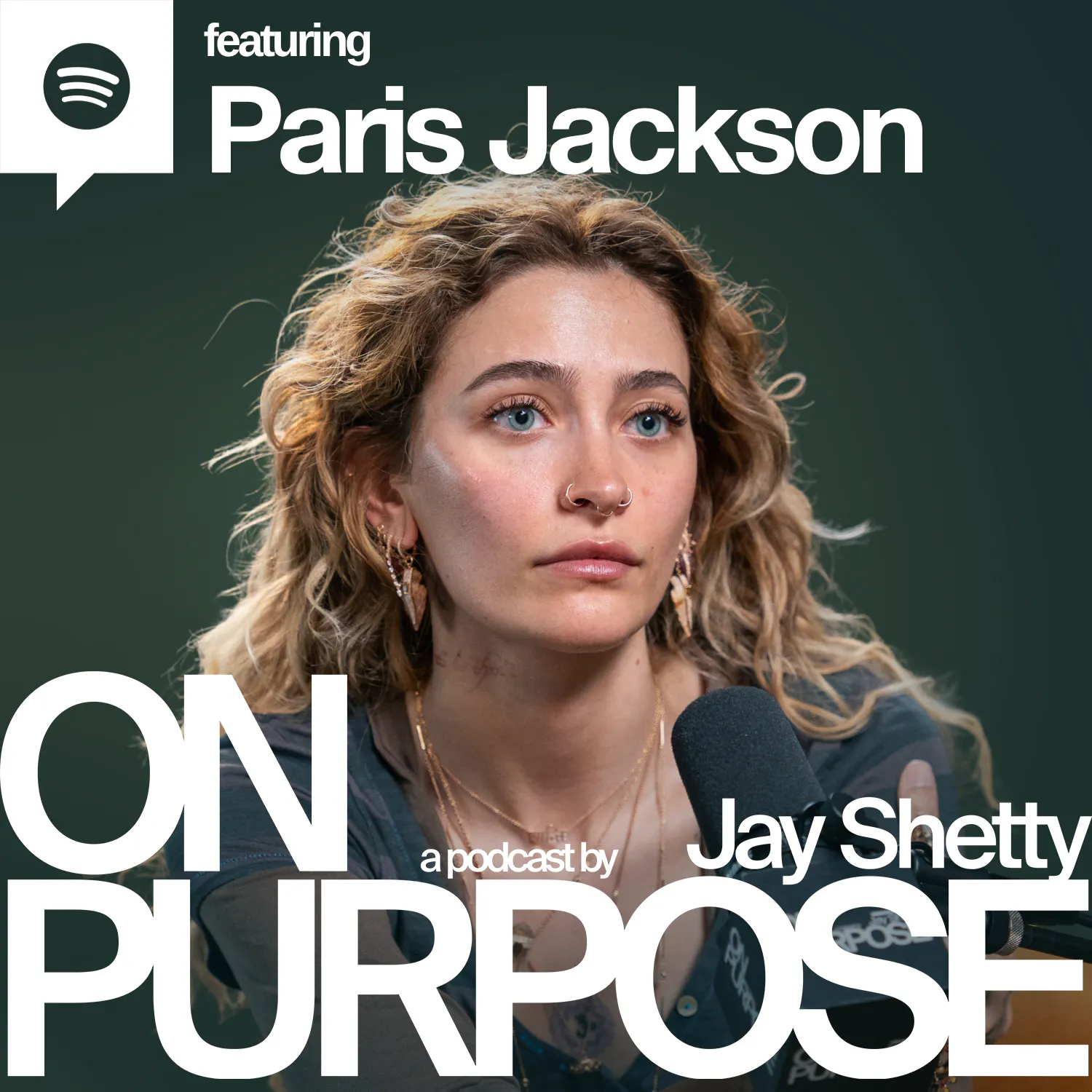
Loading summary
Transcript297 lines
- [00:00]
Host (Sponsor Announcer)
This episode is brought to you by orangetheory Fitness. One of the best investments you can make is in your own strength. The choices you make today can help shape how you feel for years to come. Orangetheory Fitness provides a one hour workout to build strength, burn fat and build muscle with an expert coach guiding you every step of the way. Head to orangetheory.com onpurpose to learn more and get your first class free Orens Theory Fitness Helping people live longer, more vibrant lives. Terms and conditions apply.
- [00:30]
Jay Shetty
See webpage and studio for details.
- [00:33]
Host (Sponsor Announcer)
This episode is brought to you by State Farm. We talk a lot about intentional decision making and that extends to the practical stuff too, like making sure your coverage
- [00:42]
Jay Shetty
actually works for your life.
- [00:43]
Host (Sponsor Announcer)
State Farm is there to meet you where you are and they know how sweet it is to feel good about your decisions. Talk to a State Farm agent today to learn how you can choose to bundle and save with a personal price plan. Like a good neighbor, State Farm is there. Prices are based on rating plans that vary by state. Coverage options are selected by the customer. Availability, amount of discounts, and savings and eligibility vary by state. This episode is sponsored by BetterHelp. There's nothing like actually hearing from real people who can explain how beneficial BetterHelp can be. And that's exactly the kind of feedback you'll see when you go to betterhelp.com reviews. Hundreds of reviews are there and those reviews get updated every day with many saying how much they love BetterHelp. The feedback speaks for itself. Once you read about the growth and positive changes in so many people's lives, you'll see why they're choosing BetterHelp. It's easy to get started too. Just answer a few questions and get matched with a therapist based on your needs. So see the reviews, see what stands out and see if BetterHelp is right for you. Visit betterhelp.com jaystop3 that's better. H E L p.com jaystop3 and we
- [01:56]
Jay Shetty
didn't get to introduce Kai.
- [01:57]
Paris Jackson
Oh yeah, he's. He's napping right now.
- [01:59]
Jay Shetty
And you have more animals, you said?
- [02:00]
Paris Jackson
I have five right now.
- [02:01]
Jay Shetty
Who are the others?
- [02:02]
Paris Jackson
Yeah, I have three cats and I have another dog.
- [02:04]
Jay Shetty
What are their names?
- [02:05]
Paris Jackson
Kavi is the Maine Coon and then the other two cats are Kanan and Cairo. And then I have. This is Kai and then my other dog is Koa.
- [02:14]
Jay Shetty
What's the addiction to K?
- [02:16]
Paris Jackson
Well, I go by pk. Yeah, and the K has been one of my favorite parts of my name. I'm named after My grandmother Katherine.
- [02:22]
Jay Shetty
So where did the name Kavi come from?
- [02:24]
Paris Jackson
It means sage. His full name is Kaviraja and it means Sage King.
- [02:28]
Jay Shetty
Yeah, I love that. Hey, it's Jay. I don't know what your day's been like, but I was just thinking about you for a minute and I hope you're being a little patient with yourself because you deserve it and. Yeah, I'll talk to you soon. Paris. Welcome to On Purpose.
- [02:54]
Paris Jackson
Thank you for having me.
- [02:55]
Jay Shetty
I'm so grateful that I got to listen to some of the album in preparation for the interview. And I found it captivating. I found it moving. I found parts of it painful and difficult and challenging in a. In a really cathartic way. And I found parts of it quite nostalgic, which was really, really beautiful actually, when something makes you feel like familiarity and, and positivity at the same time. And so thank you for putting it together. I wanted to ask you, obviously the album's called Happiest Day of My Life and you've said that you feel like you're in the happiest place in your life at the moment.
- [03:34]
Paris Jackson
I feel I do the song title as well as the COVID and kind of everything is a bit tongue in cheek. And also it is cool to say that I am really happy right now.
- [03:44]
Jay Shetty
Talk to me about the tongue in cheek part and the part that feels like it's true.
- [03:47]
Paris Jackson
So the lyrics are, this could be the happiest day of my life, but nothing lasts forever. And so it's kind of like a. I've always really enjoyed self deprecating humor. Something with like a pessimistic view. Even though, you know, in the last year I've really redirected my perspective and I tend to tend to look for the silver lining and I tend to look for the deeper meaning in things and that hasn't made me happier. I still do enjoy pessimism in a humorous way and I. I enjoy kind of self deprecating humor and things like that. And so the nothing lasts forever second half of that line is. Is very much just like almost making fun of my negativity.
- [04:26]
Jay Shetty
That's interesting. I. I feel like as a Brit, I can totally understand the self deprecating humor part.
- [04:31]
Paris Jackson
Obviously the. The COVID art is kind of the opposite of like happiest day. It's kind of just. Yeah, a little tongue in cheek.
- [04:39]
Jay Shetty
What would the happiest day of your life look like if you had to paint an ideal day? What does it look like?
- [04:44]
Paris Jackson
Ideally, having gotten enough sleep, like, it's good Start solid amount of sleep. Waking up, feeling rested. I probably need 10 hours. I rarely get it. Usually I get between six and eight. But as, as a female, I do need more. So if I could get 10, that'd be killer. My body usually doesn't let me do that same.
- [05:03]
Jay Shetty
I would love to.
- [05:03]
Paris Jackson
That'd be super sick. If I could do that, then, yeah, wake up, have my, have my coffee, hang out with my animals for a little bit, maybe do something that is, you know, good for my body. Any kind of like somatic or aerobic thing, like maybe rock climb or something. And spend time with friends, something related to music, whether it's writing or playing or just practicing guitar or something like that. And then, you know, early bedtime, some good food.
- [05:30]
Jay Shetty
Sounds like a perfect day.
- [05:31]
Paris Jackson
Yeah.
- [05:32]
Jay Shetty
You told us about your happiest day today. What did you day in your life look like when you were growing up, when you were a young girl?
- [05:38]
Paris Jackson
It's funny because it's almost similar to how I live now, which is every day is very different. I know a lot of kids don't maybe wake up, have breakfast, go to school, do some kind of after school activity, go home, have dinner, go to bed. And that is like every day. My days were constantly changing. There was a lot of travel, there was a lot of just moving about, seeing new places. I was homeschooled for the first six grades. And anytime we'd be in a new country, our we would learn about that country that we were in. We learned the folklore of the country, we learned the legends. It really just depended on what city we were in, what country we were in. It's kind of hard to be like, oh, what was the average day? There was no average, really.
- [06:22]
Host (Sponsor Announcer)
This episode of On Purpose is presented by Ultra Running. We all benefit from having a little more space. So do our feet. That's why Ultra Running shoes feature ultra fit design, giving toes more room for
- [06:35]
Jay Shetty
comfort, balance and strength.
- [06:37]
Host (Sponsor Announcer)
They're perfect for running, walking, walking or hiking. Any pace, any level they feel right from the first step. Go to ultrarunning.com onpurpose and use code purpose10 for 10% off. That's a L T r-running.com forward slash on purpose. Stay out there.
- [06:56]
Jay Shetty
What does homeschooling look like? What's your take on it?
- [06:59]
Host (Sponsor Announcer)
Do you look back at that experience
- [07:00]
Jay Shetty
and go, that was really positive? I liked being homeschooled. I saw value in it. Or do you look back at it and go, hmm, I'm not sure I'd do that if I ever had Kids or.
- [07:09]
Paris Jackson
I think there's. There's things to take from it and things to maybe not take from it, like most things.
- [07:15]
Jay Shetty
Yeah.
- [07:16]
Paris Jackson
I really valued the sort of tones and specifics of a lot of what I learned through homeschooling, because there's. There's a lot that I don't really agree with as far as the standard curriculum goes throughout the United States. I think there's something to be said about. Depending on which state you live in, your history book is going to tell you something completely different. Seattle's very different from, you know, West Virginia. Virginia. Like, you're just gonna get different lessons. And also there's definitely maybe like, a lack of social exposure as far as peers go. So I definitely had a bit of a speed bump and kind of, you know, had to adapt very quickly when I started interacting with people my age.
- [07:56]
Jay Shetty
Yeah. I found that, like, I was born and raised in London and growing up learning about British history, and even though I'm Indian, only learning about what happened in India, like, years later and being like, oh, wow, that was not in my history books whatsoever, and. And being just quite shocked by it about how I could have just completely missed that part of my heritage and history. And so you're so right when you talk about how much is lost in national curriculums or state curriculums, as you said.
- [08:23]
Paris Jackson
Yeah.
- [08:23]
Jay Shetty
That you just don't come across.
- [08:25]
Paris Jackson
Yeah.
- [08:25]
Jay Shetty
One of my favorite questions to ask people, and I ask it often on the show, is what's a childhood memory that you have that you feel defines who you are today, or a moment or experience that you had that you look back on and think, yeah, that really showcases who I still am today.
- [08:40]
Paris Jackson
My first instinct is to be like all of them, because all of the people that we meet are, you know, help create pieces of me and blah, blah, blah. But for some reason, I am getting this. This one memory. This was during a very short period where we were in LA, and I was probably 10, and there was a hummingbird that we thought was dead. And I was really affected by that. You know, I held it in my hands, and, you know, my dad was like, no, there might be germs, but I was very like, no, I want to hold it, and I want to mourn it, and I want to be gentle with it, and I want to love it. And it must not have been dead, because after I, like, cried over it and held it, I went outside and I was going to bury it, and I opened my hands to look at it and it flew away. And that was Like a really beautiful, even looking back on its spiritual experience, but just that kind of. When I feel things, I feel so big and I feel so deeply. And I think I've always been like that and I hopefully always will be because that's, you know, one of the most beautiful aspects of life is to feel the highest highs and the lowest lows.
- [09:50]
Jay Shetty
That sounds like such a healing experience.
- [09:52]
Paris Jackson
Yeah, it was beautiful. Yeah, I forgot about that until now.
- [09:55]
Jay Shetty
That's so beautiful. I love that. That's such a special memory. I love the idea. The reason why I love it even more is because there's the famous teaching of the Buddha about. Have you ever heard this story of how a monk in the monastery finds a bird that seems hurt and the monk wants to help it and the monk goes to pick it up and the Buddha goes, be really careful because if you hold it too tight you might actually break its wings or hurt it. But then the monk says, but if I don't hold it tight enough, then it will fly away or it will hurt itself again. And the Buddha says, don't hold it too tight or too loose. Yeah, and that's that idea of like that balance in life of you can't hold yourself too tight or too loose. And if you want to help someone, you can't hold them too tight or too loose. And this idea of just finding that comfort. It sounds like you held that bird perfectly.
- [10:42]
Paris Jackson
Just the right.
- [10:43]
Jay Shetty
Just the right.
- [10:44]
Paris Jackson
I love those stories. There's been a few parables that I've, that I've gotten from the Buddhist philosophy that I really, really love that have really just kind of guided me. And are there any that come to
- [10:54]
Jay Shetty
mind that you know, the.
- [10:55]
Paris Jackson
Who's to say one. The farmer's parable.
- [10:56]
Host (Sponsor Announcer)
Yes. Go on, Taylor.
- [10:57]
Jay Shetty
I love it.
- [10:58]
Host (Sponsor Announcer)
Go on, Taylor.
- [10:58]
Paris Jackson
No, I'm going to butcher it. I'm going to butcher it. But it's just this idea of who's to say what's good or bad. And I really been. In the last year I've really been trying to practice the belief that nothing is good or bad. It's either, you know, light or heavy energy and heavier energies are harder to mulch. But it's still, it's still divine, you know, and it's still for a reason. And it's still, you know, whether someone believes in God or the universe or multiple deities or whatever the belief is, is that it's for a reason kind of thing.
- [11:30]
Jay Shetty
Yeah, I can't imagine how happy the 10 year old version of you was when the bird Flew away.
- [11:34]
Paris Jackson
It was magic.
- [11:34]
Host (Sponsor Announcer)
Did you?
- [11:35]
Jay Shetty
Felt like you saved it and healed.
- [11:36]
Paris Jackson
It's like I have magical powers.
- [11:40]
Jay Shetty
You do. I do think there's a healing energy to how a 10 year old must have held that bird.
- [11:45]
Paris Jackson
I have a lot of apprehension with vocalizing some of my more woo woo beliefs just because I've been, you know, I've. I've been on the receiving end of a lot of skeptics. I have an inner skeptic that lives in me that's like, let's preface every story with I could be wrong.
- [12:01]
Jay Shetty
But that's beautiful. Well, I wanted to ask you about how, you know, when you think about memories like that that come to mind at the same time, you know, when you're listening to your music, there's so much about, as you said, the heaviness of life. And I love what you just said right now about how life's not really good or bad. It's either light or heavy, an emotional experience. And I think that's such a healthy way of looking at it. I think we're so quick as humans to label something as good, bad, right, wrong. And I've been trying to use words like honest more as in I want moments to be honest. I want them to be experienced. I want them to feel real.
- [12:40]
Paris Jackson
Yeah.
- [12:41]
Jay Shetty
Rather than good or bad or right or wrong, which feel so conclusive and certain. When did things start to feel heavier for you in life? And when did you start to kind of feel the weight of that, that we feel in your music as you're expressing it?
- [12:56]
Paris Jackson
Like eight. I'd say probably about eight. Like, I remember, you know, being so surrounded by love and, you know, playing Hot Wheels with my brother and then going into my room and being alone for a second and having that, like, sinking, like, empty, just feeling, you know, it's hard to explain if, if you don't know what I'm talking about, but it's. That has kind of been this sort of, I don't want to say companion because it's not the most pleasant thing, but it's. It's been a through line throughout my life, this kind of almost chronic loneliness that I think definitely plays a part in alcoholism, drug addiction, depression, anxiety, things like that.
- [13:39]
Jay Shetty
When you start to experience that, that young. I also imagine there wasn't really a vocabulary for that 20 years ago in the easiest sense. Like, did you even know what you were experiencing? Like, how did you.
- [13:49]
Paris Jackson
I didn't. I didn't know what it was. I just know that it sucked. It sucked bad. And just Having like unmanageable thoughts and feelings. And as I got older, learning how to search outside of myself for things, people, places, things that could, you know, kind of ease that or help me manage it. And for the longest, survival skills versus coping skills.
- [14:15]
Jay Shetty
When you started to notice them at the time, what did you think it was? Where did you think it came from and what did you do with those feelings?
- [14:21]
Paris Jackson
I don't know. I mean, I was, I was eight or nine or seven. I don't know exactly when, but it was just like a. Yeah. I didn't know what to do about it. And then, you know, obviously as I got a little bit older, I started trying things that would kind of band aid it for a time or if anything, distract me from it. And that's what substances did for a long time.
- [14:45]
Jay Shetty
When did you first get exposed to drugs?
- [14:48]
Paris Jackson
I mean, that's kind of a perspective thing because alcohol can be a drug. So that was in my early teen years, 14ish, I think. Weed I don't really consider a drug, but I treat it like one. It is a plant medicine and it is so helpful to so many people. But because there's no way for me to be in right relationship with it, I stay away from it. And that was something that I treated as a gateway. I don't like that people call it a gateway drug because I know for so many people it's not. It was for me and then, I mean, yeah, by the time I was 19, I was on like narcotics.
- [15:21]
Jay Shetty
And did you just feel that? Like you said, it was a. Almost like something that numbed you. Was it an escape? What did it do for you that you couldn't find anywhere else at the time?
- [15:30]
Paris Jackson
Not numb? Because I, again, I feel very deeply. So I think it just brought me to a more moderated. I could still cry, I could still kind of laugh. I could still, you know, I think it just made me feel normal. It made me feel more like managed. Um, and it wasn't that it was like an escape. It was just. I don't like that word either because a lot of, A lot of people when talking about addiction, they, they use the term escape. And I don't think that it felt that way for me. I think part of it was I just simply loved the effect produced by these things. And it just made me feel different than how I was used to feeling, which sucked.
- [16:10]
Jay Shetty
How did it then affect your day to day life? Because it sounds like it was helpful in the beginning at least.
- [16:17]
Paris Jackson
Oh yeah. It's always, you know, fun at first and fun with problems, and problems with fun and then just problems. It's typically the best.
- [16:24]
Jay Shetty
The progress that come from.
- [16:25]
Host (Sponsor Announcer)
Is that lyric.
- [16:26]
Paris Jackson
No, it's just. It's something that, you know, my. My friends and I've picked it up around. Say that again.
- [16:30]
Jay Shetty
That was so good. I've never had someone say it that way.
- [16:33]
Paris Jackson
It's fun, then fun with problems, and problems with fun, and then it's just problems.
- [16:37]
Jay Shetty
Talk to me about that journey, that
- [16:38]
Paris Jackson
arc hindsight's 20 20. When I look back on that journey, there were plenty of experiences that should have qualified as bottoms that would have gotten me sober, but just wasn't enough. And it's kind of that it takes what it takes. And it had to get to a certain point for me. There were certain things I experienced that would have scared other people into getting sober, but it didn't do that for me yet. It was a lot of this.
- [17:04]
Jay Shetty
What was the experience, if you can share with us, that felt closest that you felt in your words, should have or could have got you to one of these?
- [17:12]
Paris Jackson
So many. I mean, one of them that really should have maybe done it. Should have. As if I should be the one in control. Okay, well, I blew a hole through my nose, which is, you know, public knowledge. I have a perforated. It's not deviated. It's perforated. So it. It whistles. You know, I can show you after the cameras aren't rolling, like, I'll shine a light, and you can see straight through, you know, my nose. And I freaked out. There's blood everywhere. I looked in my, you know, in the mirror and I saw it. And when I went to the doctor, he obviously knew what it was from because that only happens from, you know, cocain, cocaine, ketamine, just snorting drugs. And it was like, we can fix this, but if you keep going, it's just gonna happen again. There's only so many reconstructive surgeries we can do. So if you're not done, I wouldn't bother yet. And I remember having the thought of, well, I'm not done. That was one. I mean, I've had, you know, someone OD on my drugs that I had to breathe for until the paramedics showed up. And they were like, if you didn't get there in time, he'd either be dead or brain dead. I mean, I've had plenty of experiences that were scary enough to have gotten me sober, but I just wasn't ready. You know, no intervention or traumatizing event could have Gotten me there until I
- [18:26]
Jay Shetty
was actually ready in the way you described it. I'm wondering, when did experimenting turn into addiction for you?
- [18:31]
Paris Jackson
I mean, I've always been the type of person to reach outside of myself to and just become consuming relationships with things. I mean, even now with, you know, over half a decade sober, like, I. I will turn Pilates into an addiction. I will turn rock climbing into an addiction. I can turn meditation into an addiction. So the. The main focus in this last year has been, okay, how do I get into right relationship with it? One of the scariest and probably darkest moments of my addiction, which was still a year before I got sober, was I had been free freebasing heroin and fentanyl. And you can't really smoke it out of a pipe because the effect produces you not out. And so if you have a glass pipe, it's just gonna break every time you, you know, get too high. And I had lost my voice for three months because I was using foil. And I didn't think I was ever gonna be able to sing again. For the first month, I couldn't talk at all. Like, it was just this strained, like, whispery. And I didn't even pick up my guitar during that time. Cause it was like, well, if I can't sing and write, then what's the point? Cause I don't consider a guitar player. I know enough just to write. And that was several months of. Yeah, not. Not thinking I was ever going to be able to do literally what I feel is my life, passion and purpose ever again.
- [19:49]
Jay Shetty
What did that feel like?
- [19:50]
Paris Jackson
What's a good word for it? I don't know that it's hopelessness, because hopelessness grants the gift of desperation, which typically leads to sobriety in the right circumstance. But pointlessness, maybe.
- [20:05]
Jay Shetty
When I hear you describe these moments, I wonder what you now, looking back, if you wanted people to know and understand something about your life during that time or that you think would help them, what would. What would you say, reflecting back now on that time?
- [20:18]
Paris Jackson
I don't think I need to, because I do believe that it's through hearing other people's stories of recovery that I was able to open my ears and find recovery myself. And so it's kind of like a. Almost like a word of mouth and giving of experience, strength and hope to each other that helps us stay sober. This beautiful, like, community that can exist. And I think for people outside of that, it's not really for them. And it is interesting. I've definitely spent several years where the sobriety has been Celebrated. And it's been, you know, this amazing piece of connection for me in these people, people that I love so deeply. And then I'll see maybe someone's reaction that doesn't understand, and maybe someone's reaction that's on the outside of it. And there is a lot of judgment and there is a lot of, like, drug addicts, like. And that was definitely a bit startling for me. One of the first times I really experienced that kind of reaction, because this whole time, once I actually went from seeking recovery to being in recovery, I've started seeing it as my. This is my superpower. Like, I now see that my experience can benefit other people. My deepest moments of suffering, once I transform them and alchemize them, they can become very potent pieces of medicine for other people. What a gift. And so that's been my perspective. And then when I hear the exact opposite from someone else, it's like, whoa. You know, it's very startling.
- [21:51]
Jay Shetty
I remember a few years back, we had Tom Holland on the show, and he was talking about his sobriety journey and the reason I just saw him this morning. And so I was thinking about it again and just how many messages we still get years later on with people saying hearing his story has helped them on their journey.
- [22:07]
Host (Sponsor Announcer)
Yeah.
- [22:08]
Jay Shetty
And I can imagine with the same as you're sharing right now, I, you know, look forward to the messages you'll get and I'll get and that we'll get for the show, that people hearing your story will help them, because I think when you're in those moments, I imagine, as you said, you feel extremely lonely, you feel depressed. I've heard people say things to me like, you just feel like you shouldn't be there. Things could be better without you. There's. There's so many thoughts that kind of spiral in your mind. What would you say were the most common thoughts that came into your mind at the time?
- [22:38]
Paris Jackson
A lot of terminal uniqueness, no one understands kind of thing. Which is almost humorous at this point, because a lot of sober people that I talk to have had that at some point. And that is what. What separates us. We look for the differences as opposed to the similarities. And. And it is through hearing other people's stories. I've been in situations where I'm talking to someone that has never had a drink or a drug, and they've never even smoked a cigarette, and they're trying to tell me about my heroin addiction. I'm not going to listen to them. Like, respectfully, you don't know what you're talking about. So I'm just not going to take. But then I hear someone whose story is so much worse than mine or, you know, they've. They've just seen more and been through more and done more. If they can get it, I can get it kind of a thing. It's a tricky line to kind of tread as far as talking about these things on podcasts or interviews and things like that. Because I by no means want to be like a spokesperson for sobriety, but sharing my story is something that has helped me. Hearing other people's stories has helped me. So if I can pay that forward, absolutely. But I also, like, I don't want to be a spokesperson. I don't give advice. I'm not going to tell someone to not do a drug because I needed to, to get to a certain point and thank God I did. So I'm not going to try and rob someone of their experience. It's very much like you go and do your own thing. If you need to go do research, that's, you know, that's your life.
- [24:07]
Jay Shetty
When drugs started to first become a part of your life, do the adults in your life notice and try and intervene or help and support.
- [24:14]
Paris Jackson
I hid it really well. Even my self harm. I hid for a couple years before my family found out. And that was like one of my first addictive kind of things. That was one of the first, like compulsive addictions that I fell into is cutting and occasionally burning. I'm pretty good at hiding it in the beginning. And then it starts to get kind of unmanageable. There were some people that, you know, tried to step in. You know, I would deny it. I'd find a way out of it. As we do, we're slippery folk, addictive people. Yeah. I mean, eventually I got to. There was an intervention. I was sent away. It didn't do anything. You know, I wasn't ready. I was still convinced that I'm like, okay, well yeah, I'll go because I need help getting off of heroin so the doctor can give me subs. But, you know, I'm still going to drink and smoke weed. Didn't think that, you know, that was going to be a problem, which it was.
- [25:02]
Jay Shetty
And at that time, as far as I know, you were sent to one of the centers in Utah.
- [25:08]
Paris Jackson
That was after a suicide attempt. So that was when I was 15. The rehab my family sent me, other rehab my family sent me to. I was not. I was 20 years old, I think. But yeah, Utah, I was 15. That was after a suicide attempt. And CPS was like, you guys got to send her away because she's, you know, she's already been to the psych ward a couple times.
- [25:27]
Jay Shetty
What was the experience like at those centers in Utah? I think we've all heard horrific stories about them, and I've not personally interacted with them in any way. And so I wonder, for those of us who don't know, how would you describe them, what was that experience like?
- [25:41]
Paris Jackson
I mean, each one was different. You know, I know some other. Some other people that, that have been to ones that were not as bad or worse. I definitely left with more PTSD than I went in there with and had nightmares for two or three years about going back after I finally left, because I was there for a couple months. I have two years. I was one of the lucky ones where we didn't experience physical or sexual abuse, but there was definitely a lot of psychological, emotional, spiritual abuse that happened there. Yeah, like pitting the clients against each other kind of a thing. Learning how to like, oh, I can't trust my roommate. I can't trust my therapist. I can't trust anybody here because anything you say could put you on the lowest level and could, you know, and you can't really call your family and tell them because they're listening and they will, you know, call your family. Be like, don't listen to her. She's lying to you. And then you get a consequence for, you know, and you're on meds and you're zombied out, and it's just, you know, it's, it's. It was rough. You have to learn how to kind of play the game if you want to get out.
- [26:42]
Jay Shetty
How's that meant to help anyone?
- [26:44]
Paris Jackson
Rehabilitation, I think, is a case by case. Whether it's like a young kids treatment center or a drug addiction rehab or a, you know, jail or prison or institution. Like rehabilitation is kind of a case by case. And I don't know that you can just blanket something and just cover everybody with. With one method.
- [27:05]
Jay Shetty
Did that affect how you trusted people later on in life after that experience?
- [27:09]
Paris Jackson
Oh, yeah. Yeah, for sure, for sure. And. And it's a shame because I found a lot of beauty in finally learning how to trust.
- [27:19]
Jay Shetty
Talk to me about that journey with trust. Specifically, when you're in that position where you don't know if you can trust your therapist, you have roommate, the people who are meant to be helping you and supporting you.
- [27:28]
Paris Jackson
Yeah.
- [27:29]
Jay Shetty
How does one even go back to beginning to trust someone else outside of that space?
- [27:33]
Paris Jackson
It Was definitely a lot to layer on top of an already existing issue with trust as far as, you know, people having ulterior motives and trying to take advantage and take. But I think it was just something that happened slowly over time. Yeah. Time and consistency. And I've been lucky enough to have some people that have just shown up over and over and over. Like my best friend of 10 years just showing up, showing up, showing up in every situation. Yeah, I think it's, it's for, with the people that I do trust. It's, it's something that, you know, takes time to build. I've heard this saying that it's lost in gallons and gained back in drops and.
- [28:17]
Jay Shetty
Yeah.
- [28:18]
Paris Jackson
Drop by drop.
- [28:19]
Jay Shetty
How do you define a good friend?
- [28:21]
Paris Jackson
Integrity. The integrity has to match a certain level. The humor is very important and just the sense of home. I think I've really whittled my friend group down over the last few years and the group that. The people in my life right now are the most incredible human beings I've ever met. Just really high integrity, really loyal, really funny, just salt of the earth human beings that I can call and they'll, they'll show up, you know, and they can call me and I'll show up. I'm multiple people's emergency contact and I have a few on mine. And it's, it's, it's one of the most priceless things. You know, money can't really buy that.
- [29:05]
Jay Shetty
Yeah. You want the friend who gets a call at 2am and they're there for you.
- [29:08]
Paris Jackson
Oh, I'm packing a bag. I'll be there.
- [29:09]
Jay Shetty
You know, I'm so happy that you found that. I feel like everyone deserves that.
- [29:12]
Paris Jackson
Yeah.
- [29:13]
Jay Shetty
As you said, that feeling of home.
- [29:15]
Paris Jackson
Yeah.
- [29:15]
Jay Shetty
Everyone's born in a home and then spends their whole life trying to find belonging. And it's a strange thing to say. It's like, it's weird. We. You're born with families, you make friends at school or at some place, and you're still searching for belonging the whole time. And so when you kind of find it as an adult, it's, it's pretty rare and spectacular. What is it that then led to you wanting to even become sober? I mean, you're saying at 15 you've had a suicide attempt.
- [29:42]
Paris Jackson
Yeah, I've had quite a few of those.
- [29:44]
Jay Shetty
What led you to that? What, what led you to want to get to that place?
- [29:47]
Paris Jackson
Depends on which part of me you're asking. Because if you're asking the part of me that likes to take the zoomed out approach that's tapped into Source and is seeing the bigger picture. What led me to that would be, you know, a divine soul contract that I signed up for and something that I chose to go through as a part of my journey. If you're asking me, that's like down here on earth, really experiencing it. Just untreated alcoholism, untreated drug addiction, untreated mental illness. It goes on for long.
- [30:19]
Host (Sponsor Announcer)
This episode is brought to you by Walden University Balancing work, life and big goals isn't easy. That's why Walden University helps working professionals get the W with Tempo Learning so you can earn your degree at your own pace while gaining practical skills through real life scenarios. You'll also learn from faculty with real world experience and have support start to finish. Walden University set a course for change Ready to start?
- [30:48]
Jay Shetty
Visit waldenu.
- [30:50]
Host (Sponsor Announcer)
Edu today. Certified to operate by Chev Tempo Learning Available in select programs. This episode is brought to you by Wayfair. Home should be a place that feels like a sanctuary, a space that truly reflects who you are. But it can be challenging to balance style, budget and endless options. I was looking to create a dedicated, calm space for my morning meditation and reading, but I was struggling to find pieces that felt grounding but could also stand up to daily use. I went on Wayfair and found a beautiful solid wood accent chair and a bookshelf. Now that corner is my favorite place to anchor my day. The quality is incredible. It's built to last and it completely shifted the energy of the room. Plus, you can shop with Wayfair Verified, where product specialists carefully vet items for quality and functionality so you can shop with more confidence. And if putting it all together sounds like a headache, Wayfair can handle delivery, installation and assembly. Join Wayfair Rewards today to get 5% back on every purchase and start saving on your next home Upgrade. Head to Wayfair.com to shop all things home. That's way F A I R.com Wayfair every style, every Home this episode is brought to you by indeed. I know how important every hire is for a business. If you need to make the right hire, this is a job for Sponsored Jobs. Indeed. Sponsored Jobs helps find quality candidates when you need them most. You can reach who you need based on whatever criteria you're looking for, like skills, certifications or location. In fact, people are finding quality hires on Indeed right now in the minute I've been talking to you. Companies like yours made 27 hires on Indeed according to Indeed Data Worldwide. Spend less time searching and more time actually interviewing Candidates who check all your boxes. Listeners of this show will get a $75 sponsored job credit@ Indeed.com podcast. That's Indeed.com podcast. Terms and conditions apply. Need to hire. This is a job for indeed.
- [32:53]
Jay Shetty
Sponsored jobs.
- [32:56]
Host (Sponsor Announcer)
This episode is brought to you by Amazon Health AI. Before this podcast continues, I need you to fill out 37 forms about your listening history. I'll wait. Forget it. That would be ridiculous. Yeah, we all do it every time we need healthcare. But the new Amazon Health AI is different. It can connect your symptoms with your medical history to offer personalized care. 24. 7Amazon Health AI is here. Health care just got less painful.
- [33:20]
Paris Jackson
It becomes unbearable.
- [33:22]
Jay Shetty
I appreciate the parts because I think we all have multiple viewpoints and stories of why we end up where we have. And you're so right that there's, there's the version of you, like you said, zoomed out, that can see the bigger picture, that can see the journey you've been on, that can see that that was a choice for growth and transformation, that is not wanting to take anyone's experience away. And then of course there's the reality of it. What was the point that you were like, I can't keep living like this. Like, I can't keep doing this to myself.
- [33:48]
Paris Jackson
There were many that led to the attempts, but when I got sober, it was, I had like a month off, a month and a half off of heroin. I'd like detoxed at home. I knew someone that had, you know, Suboxone and so we were going to take the strips and we were going to detox on our own. But I didn't realize I was on fentanyl. So I took it too early. Precipitate withdrawals like, you know, Feddy's got legs. So it was very much, I was like, okay, well let me just see if I can get through this without subs because then I'm gonna have to taper off the subs. Let's just cold turkey this. But it wasn't cold turkey because I was still drinking a lot. I was doing, you know, coke and I was smoking a lot of weed. And after about a month of not sleeping, cuz that's what happens. I was maybe getting an hour or two at night, maybe three if I'm lucky, and I had a, you know, suicide attempt that didn't work, which I don't know the science of it, you know, I, I, I could be wrong, but I don't think as someone that had a tolerance whatsoever for benzos at the time, having taken an entire bottle mixed with an entire bottle of vodka. I feel like that should have worked. And so when I just woke up hours later and I was like, fuck. That was one of the first attempts where I'm like, fucking. It didn't work. Because a lot of people are, like, relieved when it doesn't. Didn't work, or they feel regret the second they attempt it. I was so upset when it didn't work. And then a few weeks later, I had, like, a proper bottom with alcohol, where it was just, like, my behavior scared me into getting sober. And it was for a long time, went back and forth between this place of I can't be here anymore and, well, it's not my time, so I'm stuck here. And I can try all these methods, but they're still not gonna work. And if that didn't work, then, you know, I would run through all these other ideas and I would see how it would go south, where it's like, oh, well, you know, I could try and hang myself. But then it's, you know, it's not gonna work, and I'm gonna end up, like, you know, kind of paralyzed. Or, like, I would just think of all of these ideas and then how it would go wrong. And I'm like, I'm stuck here. Like, it's not my time. I'm not gonna be allowed to leave unless it's my time. And so I have to wait it out. And I didn't know that there was this secret, very special third place of this is great, and we love being here. And, you know, the good or the bad, the light and the heavy, these are all things that are part of the experience. And I'm here to experience the entire spectrum. Like, I'm here for the whole enchilada. I want all the feelings because that's what I'm taking with me when I leave. You know, it's all the feelings, all the experiences.
- [36:24]
Jay Shetty
I feel like that requires a lot of bravery and courage to accept that.
- [36:28]
Paris Jackson
I don't know if I can take credit for that. I think it's, you know, it's something that happened through, you know, spiritual experiences. Really?
- [36:35]
Jay Shetty
Were there any experiences that made that clear to you? Because I feel like sobriety, the journey to sobriety, has so many ups and downs.
- [36:44]
Paris Jackson
There were so many. I had what's kind of called, like, an educational variety kind of spiritual awakening that is not like a boom, white light experience. Like, I didn't have this crazy fall out of bed, hear a booming voice kind of an experience. It was Something that happened slowly over a period of time. And I learned how to pray, and I didn't know what I was talking to, but I think it was the. Just the. The willingness to develop something over time. I started with prayer and meditation and just getting into these practices blind and just being like, well, you know, I'm out of. I'm out of ideas. Let's try this. Started noticing more and more little coincidences that I couldn't explain. More and more synchronicities, more and more God shots that eventually piled up into a mountain of evidence of like, there's gotta be something, you know? And one of them was a really cool experience that I had. I think I had about three years sober at the time, or I was about to get three years sober, and I had heard someone say. I think it was like a friend of a friend say, like, oh, you're. You're higher power or God or whatever you believe in. The. The answer, the universe. The answer to your prayers is never no. It's always yes, not yet, or I have a better idea. At this point, I had almost three years sober, and, you know, I did a prayer and I had like this. It wasn't like my life flashed before my eyes, but it was all the times since getting sober that my higher power was like, I have a better idea for you. And it was very much like a. Okay, keep trusting the process because life is becoming more and more expansive.
- [38:26]
Jay Shetty
Yeah. Your song Evermore is, I believe, inspired by that relationship with.
- [38:32]
Paris Jackson
Yeah, yeah. And it's. You know, it sounds like a love song, and I like being vague enough so that things can apply to everyone, but that is. That is very much a. A love letter to Source, you know, great Spirit, God, whatever you want to call it. The thing that has a thousand names, the thing that is the unnameable thing, you know?
- [38:52]
Jay Shetty
Yeah. But you said you wrote it like a love song. Pretty much, yeah. It's like a. I felt like I could hear it in like a 90s Rom com as much as corny.
- [39:00]
Paris Jackson
And it's so. Sky is blue and like, it's very. But that's sometimes how it feels like, you know, when I. When I really developed, like a conscious contact with. With something that made me feel safe, it was the first time I'd ever truly felt safe. So it was like, oh, the sky is bluer.
- [39:17]
Jay Shetty
What did your prayer look like? What did it sound like?
- [39:20]
Paris Jackson
It's often changing, and it depends on. On what it is, but typically it's kind of just giving. Giving it over, being like, well, my best thinking landed me in some pretty dark places and landed me in the gutter. So why don't you take the reins, whatever you are, and, you know, I'll tap in right before a show, right before I. You know, and it's more like, please help me set aside all these things. Help me set aside, like, my need to feel pretty or funny or talented or all these, like, insecure. Help me set aside my insecurities. Help me set aside my, you know, these things that I see as needs and, you know, just use me as your instrument as I use my instruments. You know, if I'm here for a reason, and if you gave me these songs for a reason, help me just play them.
- [40:05]
Jay Shetty
How do you make sense of this idea of handing it over but then still taking action and responsibility? Talk to me about that balance between surrender and sincere action, or I think
- [40:18]
Paris Jackson
a lot of it has to do with putting in the work and staying out of the results. I think that's a big thing. And not trying to control outcomes, because I think control can be a tricky, slippery slope. You know, I. I've been recently trying out different things, trying out, you know, more tools of, like, exploring similarities between, like, Christ consciousness and Nirvana. Also looking into the dao a little bit. And I really like the. Have the patience to wait until the mud settles and the water is clear to make decisions. And so it's kind of like, okay, let me take a step back. Give it 24 hours, or give it however much time, really tap in, check in with myself. Does this feel icky? Does this feel clean? Does this feel good? You know, and then I also have people that I can counsel with. I have, you know, guides. I have friends. I have people that I can kind of lean on and be like. I feel like this is where my intuition's telling me to go. And if someone's like, that's a bad idea, then. Then for sure we're gonna take that into consideration and add that to the pot of things that we know. But a lot of it has had to do with learning how to be in right relationship with myself and just waiting for the right indicated action to arise, I guess.
- [41:27]
Jay Shetty
Yeah, I feel like it's a constant dance. Yeah, it's a constant dance to do that. And I'm guessing that, you know, talking about relationships, I was thinking about. In your song Stitched, there's a lyric that I liked. You said how your soul was stitched into mine with your heart eating into mine. Talk to me about this lyric because fascinated by we're talking about godly relationships. Sure, spiritual relationships, but then we have relationships on the planet. Talk to me about that specific lyric.
- [41:54]
Paris Jackson
I believe in multiple soul mates. I believe that, you know, a soulmate is not necessarily someone that you are in a romantic, intimate relationship with. I think, you know, parents can be soulmates. I think siblings can be soulmates. I think, you know, your arch nemesis in this lifetime is a soulmate. Because that is a great lesson of yours, that maybe that arch nemesis was your mother in another life, maybe it was your father in another life, maybe it was your husband in another life. Like, that's just my belief. And I know it's wacky, but that's just, you know, what feels right and makes sense to me. And this song was. Was written about someone that. I felt like we had experienced every type of human relationship you could have in all of our other lifetimes prior to this one. And so it was a very deeply rooted one. And it was not that I loved this person more than their loves, but it was different. It was very one of a kind. And it did feel kind of like a just stitching, which, you know, when not cared for the right way, can become very codependent. Can be, you know, especially ours was a drug fueled relationship. And yeah, it definitely felt like his heart ate mine.
- [43:00]
Jay Shetty
I was going to ask you that. What's the difference between a relationship when you're sober versus when you're drug related?
- [43:07]
Paris Jackson
Oh, I mean, well, that depends if we're talking about emotionally sober or simply physically sober. Because I definitely got into relationships when I was physically sober and didn't really have emotional sobriety. And that can become a consuming relationship in itself where the person becomes the drug. That's not healthy either. Experiencing a emotionally sober relationship, again, has to do with being in right relationship with myself and has to do with being intentional with everything I do and being incredibly honest with myself and incredibly honest and transparent with people around me.
- [43:39]
Jay Shetty
I love how you just define the difference between physically sober and emotionally.
- [43:44]
Paris Jackson
So big difference. You know, I. I know, you know, there's some people that will claim to be sober and then they're getting in fistfights with their roommate. And it's like, it's awesome that you're not on drugs, man.
- [43:53]
Jay Shetty
Yeah, that's good.
- [43:54]
Paris Jackson
Good for you.
- [43:55]
Jay Shetty
Yeah. What surprised you most about sobriety?
- [43:58]
Paris Jackson
All of it. And I said this when I. When I got five years sober that I. Which was like a year and a half ago, like, I can't believe I almost missed it all because my Life has become so much more opened up, you know, I have more trust and more intimacy and more closeness with the people in my life. And people rely on me. People can rely on me, and that's really special.
- [44:22]
Jay Shetty
Was there a time when you felt like you really let people down?
- [44:24]
Paris Jackson
Oh, yeah. I mean, yeah. I feel like that might be the universal experience for people in active addiction.
- [44:32]
Jay Shetty
Was there anyone that you felt like you've really let down?
- [44:34]
Paris Jackson
My younger self more than anyone. Oh, fuck. That's a good question. I've done a lot of so much therapy. I went into a really deep depression around three years sober and tried all the things like the conveyor belt of medication, probably over a dozen, I think, the SSRIs, the NRIs, like all of them. And, you know, within a span of 18 months, went to five different institutions, you know, Hoffman on site, Glass House twice, you know, ended up checking back into my rehab that I got sober at. I was like, do you guys have a bed? They were like, we have your old room. And I was like, great, I'm going right now. I'll be there 20 minutes. And I've done a lot of. Of inner child work. I've done a lot of entertain work because those two girls are very different. They want different things. They have very different approaches to life. It wasn't until kind of this last year, I've really learned how to listen, differentiate between which part of me is speaking, hear what the need is, and then learn how to meet it myself, which in the past would be, you know, if it was little. Little p. Grasping for someone to fix this, ease this, you know, fill this hole. Right Void. And then, you know, teen Pea was very much like, everybody, get away from me. Don't touch me. You know, so it's learning how to listen and be like, okay, what's. What's the need? Okay. She wants space and doesn't want to be touched. Okay, why don't we go take 10 minutes, let's communicate. We're going to take 10 minutes. We're going to take a breath, we're going to tap into whatever, maybe smoke, maybe give her a cigarette and meet the need ourselves. You know, you ask about healthy relationships and sobriety and that. That's been one of the biggest things that's allowed me to start having that. And also learning how to have uncomfortable conversations, learning how to step out of the discomfort, say the hard thing, say the honest thing, state the need, and it's done nothing but foster more intimacy and trust in all my relationships.
- [47:04]
Jay Shetty
What was it like to Heal that relationship for your younger self and with your younger self.
- [47:10]
Paris Jackson
I think it's an ongoing process. I don't know that it's healed. It's more healed than it ever has been. And it's. It's an ongoing process. There's something really profound in being able to say, like, I got you. We got out of that mess. We got out. I got you, and I'm sorry.
- [47:33]
Jay Shetty
Does it feel good to give yourself that forgiveness as well, though? Because it's almost like you're saying sorry, but you also are doing the forgiving.
- [47:41]
Paris Jackson
It's more grace than anything, and I don't think it comes from me. It's more grace than forgiveness.
- [47:47]
Jay Shetty
I feel like when I spent my three years as a monk, I did a lot of healing work. I did that from age 22 to 25.
- [47:52]
Paris Jackson
Amazing.
- [47:53]
Jay Shetty
38 now. And two years ago, I went through something and I started to do therapy more in order to kind of look under the hood proactively to be like, what have I missed? Like, what work have I not done? Talking about this idea of that you're never healed and you're always doing the work. And then something happened in the last 12 months, and I was like, I was looking for this, and I couldn't find it.
- [48:15]
Paris Jackson
Yeah.
- [48:15]
Jay Shetty
And I had to go through something in order for it to be uncovered.
- [48:19]
Paris Jackson
Absolutely.
- [48:19]
Jay Shetty
And so it was just this fascinating thing of, like, I thought I'd work through this pattern, and I thought I'd look through every nook and cranny and every crevice and every little thing. And I thought I'd been to every corner and figured it out. And then something happened. I was like, oh, gosh, I missed it. And it was like this really fascinating experience of proactively looking under the hood, thinking I would be able to avoid something in the future, only to realize that it doesn't work that way.
- [48:46]
Paris Jackson
You know the idea of the wheel.
- [48:47]
Host (Sponsor Announcer)
Yeah, of course.
- [48:48]
Paris Jackson
The spiral? Really?
- [48:49]
Jay Shetty
Please explain. For those at home.
- [48:50]
Paris Jackson
Well, it's. It's.
- [48:50]
Host (Sponsor Announcer)
Yeah.
- [48:51]
Paris Jackson
For. For those at home watching. It's this idea where sometimes we think we're going around in circles. It's like, oh, it's this again. And it is, but it's different each time. And the idea is, the more we go through it, the more we learn. And it's. Instead of a circle, it's more like a spiral. I know about looking under the hood, and I know about lifting every little tchotchke instead, leaving no stone unturned. And something that happen last year was. I Kind of just kind of hit this wall with therapy where I'm just like, I'm just gonna take a break from therapy because I've been doing so much for so long. Recently I started seeing a behavioral specialist for my OCD because that's been like the main thing that I feel really needs to be looked at. I have, you know, thank God, remission with depression, you know, one day at a time and, and my sobriety. So I do things daily to, to keep my, to maintain my sobriety. But yeah, I'd reached this point in, in my therapy where I'd kind of just plateaued because I, I looked under every stone and you know, I kind of envisioned it as like a, like a trailer of like music gear. Like we've got all this and I've just looked on. There's not a single piece of dust on anything in there because I've looked at all of it. Now I want to learn how to just unhitch the trailer. How do I, you know, that's what I want to learn. And, and I've also found that there's a lot of stuff that, you know, was born through experience. So it needs to be healed through experience. And that's a really beautiful gift that relationships for us because if I have like attachment stuff, I have issues with attachment that's talking about it's not going to really do anything. And actually similar with, with, with addiction stuff, just talking about it with a therapist isn't going to do anything. I need to take action. There needs to be some kind of experiential process for healing to occur.
- [50:32]
Host (Sponsor Announcer)
This episode is brought to you by Walden University. Balancing work, life and big goals isn't easy. That's why Walden University helps working professionals get the W with Tempo Learning. So you can earn your degree at your own pace while gaining practical skills through real life scenarios. You'll also learn from faculty with real world experience and have support. Start to finish. Walden University set a course for change. Ready to start?
- [51:00]
Jay Shetty
Visit waldenu.
- [51:02]
Host (Sponsor Announcer)
Edu today. Certified to operate by Chev Tempo Learning. Available in select programs.
- [51:10]
Jay Shetty
What were those actions and experiences that you feel started to unravel? Some of that healing or the ones that you practice now?
- [51:16]
Paris Jackson
I'm constantly picking up and putting back down or swapping out my spiritual toolkit. That's the biggest thing. Therapy has been an incredible tool. I feel like I've taken bits and pieces from all of these institutions that I've been to because like I said, I went to five different institutions with five years sober. Like I Had five years over. I checked back into places because I'm like this. I'm not okay. You know, And. And it's actually that time was what inspired the album cover, because I actually did do ect.
- [51:46]
Jay Shetty
Yeah, I was about to.
- [51:48]
Paris Jackson
And I feel like there is something that I got from each experience, because, again, my belief is that everything happens for a reason. And it's not that those things didn't work. It's that I'm taking what I can and. And taking what works and kind of leaving the rest. From each experience and from each modality and from each. You know, there's certain things that. Just a very simple tool, hand on heart. Like, which chakra are my hands on? And how are we gonna breathe? Like, oh, let's practice being gentle with myself. You know, that kind of. That's just a very simple tool that has carried me through a lot.
- [52:30]
Jay Shetty
The ECT therapy was because of a particular suicide attempt. Is that right? Or.
- [52:36]
Paris Jackson
It wasn't an attempt. It was. I got very close. I got very, very close, like. Like centimeters away. And it was after I had felt like I had tried everything. And it was. I mean, like I said, the conveyor belt of medication. Five different institutions. Cbt, dbt, emdr. I had done somatic, I had done experiential. I talked to the empty chair. I'd held the pillow. I had beaten the things with bats. I'd. While screaming. Like, I have done so many things. TMS did help a little bit with. With the ocd, but they had no effect on my depression. The stella ganglion blocked was a. Was a very. Do you know what that is? The. It's like a shot of lidocaine into a collection of nerves in your neck. And it's supposed to help with PTSD and kind of reset your nervous system. I got, like, relief for a week, and then I went back into the other side and got another week. And, you know, Hoffman gave me probably the longest stint of relief, was I had, like, a couple months after Hoffman where I was really happy. And that was amazing. And something that I've learned with. With all things is integration is the number one thing. If I'm not integrating the things that I learned from these places and these experiences, I'm gonna resort back to how I was feeling before. So without integration? Yeah, I kept, you know, just getting worse and worse and worse. And. And once TMS didn't work, my psychiatrist was like. He was like, it's not as barbaric as it used to be. They use general anesthetic you're knocked out when they. When they shock you.
- [54:04]
Jay Shetty
You know, for anyone who doesn'. Can you explain what the experience is and how it's meant to heal?
- [54:09]
Paris Jackson
Yeah, you go in and I have a lot of metal, so I had to replace all of the metal in my face and, you know, with plastic earrings and. Yeah, you go in, you got your hospital gown, they knock you out, strap you down, put a bike guard in your mouth, electrocute you. It helps with the neuroplasticity in your brain. If I'm not mistaken, it still is the leading, most effective form of depression treatment. I did nine sessions in three weeks.
- [54:43]
Jay Shetty
Is it painful? Were you not feeling anything the first couple times?
- [54:46]
Paris Jackson
It is, because they're still figuring out how much Tylenol or Toradol to give you afterwards. I'm very anal about if I'm going to be going under. What are you giving me? What are you not? I've had experiences where they gave me something that felt too good. And it's like, okay, let's, you know, daily maintenance, keep the sobriety going. You know, So I definitely ask multiple, multiple, multiple times. And I have. I have ocd, so it tells me to. But, yeah, I mean, the. The first time I woke up, and it was. It was the most sharp pain I'd ever experienced in the side of my head. Like, it was.
- [55:20]
Jay Shetty
And what is that pain? What do they tell you that is?
- [55:23]
Paris Jackson
Well, I mean, it's soreness from getting electrocuted.
- [55:26]
Jay Shetty
I mean, that sounds so scary.
- [55:28]
Paris Jackson
Yeah, it was. And the side effects are gnarly. I mean, I definitely had days completely not in my head at all. I'd have, you know, friends visit me, and I don't remember even seeing them. I don't remember them coming by. I have evidence that a friend came by because she brought me a bag of vapes. This is before I quit vaping. But I don't remember her being here at all. I don't remember the conversations we had. You know, amnesia is one of the primary side effects of that.
- [55:55]
Jay Shetty
Was there no part of you that was scared or you just felt that was the last resort?
- [55:58]
Paris Jackson
I'm very much a lead with the chin kind of person. And so, yes, there's some fear. The biggest fear is, what if this doesn't work? There was definitely a point where I had to. I just had to stop because, you know, I was responding to the treatments and it was working. But then there was a discussion of, like, well, you're either going to be on these two medications for the rest of your life or you're going to have to come back once a month and continue getting shocked for the rest of your life. And I'm like, that's not going to fucking work for me. And I think, yeah, little bits and pieces of everything that I'd gotten along the way over those courses those last two and a half years, taking everything I possibly could and just completely flipping my life on its ass and being like, how do I do this in a way that is sustainable? And a lot of it had to do with holistic health. You know, I do believe that a lot of Western medicine is educated in disease and not health. The disease is the focus. And so I'm like, how do I go, you know, the other way? And so it's a lot of. To get my sleep in order was a lot of saffron and two kiwis before bed at night. Like that completely changed my sleep. Somatic exercising, Pilates, like finding the hardest gym in LA and being like, I'm gonna do two sessions in a row three times a week. Which I am a bit of an over. I overdo it sometimes. Rock climbing as much as possible because that is incredible for my body. Incredible for my core, really being right with my body. It's meditative. It's a puzzle that I can figure out. It's highly rewarding, it's highly confidence boosting, it's highly humbling.
- [57:26]
Jay Shetty
Eating the outdoors or indoors?
- [57:28]
Paris Jackson
Both. That's what I mean about humbling. So going from a top rope climber. Yeah, I'm a 511B climber. That's pretty good to like, lead and then having to like losing a grade and having to build myself back up, switching the lead and then going outdoors and being like, oh, I'm not a 511B climber at all. I'm like a 5, 7. That is very humbling and also so rewarding. That's been a huge part of my life. Picking up new spiritual tools. My animals are a huge part of my nervous system. Getting regulated, figuring out, you know, which CPTSD symptoms are the most prominent. How do I work with those things? I'm very big fan of energy work, acupuncture, traditional Chinese medicine, like just all the things that are health oriented as opposed to, oh, well, this is a disease, let's treat the symptoms. I quit vaping over a year ago. I did start rolling cigarettes again a few months ago. Quit caffeine for like six months, which really helped the sleep. Processed sugar was a big thing. And like, I still love sweets.
- [58:34]
Jay Shetty
I love Sweets.
- [58:35]
Paris Jackson
Yeah, no, I, I mean I will, I will go to Arowana and I'll get a chocolate cake, but I, I get it from there because, you know, they're not going to be using. They're using all organic products, so every now and then. Yeah, okay, I'll do something. I have a sweet tooth. It's really bad, but where am I getting it from? And what's in it is a huge, huge thing.
- [58:51]
Jay Shetty
I've used sugar as a drug for far too long.
- [58:53]
Paris Jackson
Yeah, well, I mean, it's eight times more addictive than cocaine.
- [58:56]
Jay Shetty
Yeah.
- [58:56]
Paris Jackson
And I think they did scans on like what happens when you take like a narcotic and how it lights up one piece of your brain and then sugar lighting up the entire brain is. Yeah, it's pretty, pretty shocking. I was really surprised when, when I saw that. And then also part of me was not surprised at all. And it's in everything.
- [59:16]
Jay Shetty
Yeah. I've definitely, over the years, until I developed a healthier relationship with sugar. Now I don't do any refined sugars like six days a week, but I was using it as a drug easily.
- [59:27]
Paris Jackson
Oh, yeah.
- [59:27]
Jay Shetty
It sounds crazy to say that because people are like, what do you mean by that? I'm like, well, no, I'm using it to sedate, numb, get through something difficult, relax your emotions, whatever else it may be.
- [59:37]
Paris Jackson
Yeah.
- [59:37]
Jay Shetty
And just because it's legal doesn't mean it's.
- [59:41]
Paris Jackson
You know, there's a lot of things right now that are legal that maybe shouldn't be.
- [59:44]
Jay Shetty
How long have you been writing this album for now?
- [59:46]
Paris Jackson
I wrote a good portion of it during the, during the depressive spell. Some of it was being recorded right before I went into ect. So I had the idea for the COVID like a year and a half ago. It was a long process. And then some of the stuff like got re recorded this year and Stitch was written within a span of, you know, 60 minutes, 59 minutes, while the new vocals on Maker were being comped. And it was very much like a. Oh, let's try and squeeze this on the album last minute. And we did and we got it mixed in time. So yeah, there's. Some of the songs are two years old, some of them are a few months old.
- [60:25]
Jay Shetty
What was the most recent suicide attempt you had?
- [60:28]
Paris Jackson
The most recent attempt was right before I got sober.
- [60:30]
Jay Shetty
Right.
- [60:31]
Paris Jackson
But I did get very close to actually going for it right before ect,
- [60:38]
Jay Shetty
which was about a year and a half ago.
- [60:40]
Paris Jackson
Yeah. Somewhere around then.
- [60:41]
Jay Shetty
Was that scary to be back there? Once you're Sober.
- [60:44]
Paris Jackson
It was scarier for the people around me. It's a familiar place for me, but it's, I mean, it's scary for the people around me. And I have spoken to the people that were closest to me and, you know, saw me the day that I almost did it. And I definitely feel like I. There's trauma there. And it's been a long but very rewarding journey getting to where I'm at now and also with an understanding that that may happen. There's no predicting, you know, everything's temporary. Nothing lasts forever. I think happiness is temporary. I think pain is temporary. I think all like sadness is temporary. And so knowing that I may get sad again and I may go through a dark time again, hopefully we'll be bringing the information with me this time of there is a way out. You've done it before, you will do it again. Which I didn't have with me the last time, really. Like, I had experienced depression for a lot of my life, but it hadn't gotten that bad before. So I do have this kind of new found understanding of kind of how to get through it. And again, there's this piece of me where it's just like, bring it on. If I gotta go through it again, I'll go through it again because it's, it's, it's gonna help someone.
- [62:00]
Jay Shetty
So the familiarity is actually helpful now, almost. Yeah, I've been here before. Yeah, I know. I can.
- [62:06]
Paris Jackson
I know what to do.
- [62:07]
Jay Shetty
Yeah, I know what to do. I know what my resources are, my spiritual toolkit, my friends, my support system. It's almost like when we do hard things in life and everyone's done hard things. Everyone who's alive and living today has done hard things. Yeah, we just don't see them as hard. We just see them as our life. And so we just think we've lived. And it's really helpful when you can actually look at your life and realize, I can do hard things and I've done hard things. And remember those when new hard moments come around, because you actually feel a sense of empowerment to think, I've lived through this before. And I think a lot of us don't give ourselves enough grace, as you said, and give ourselves enough credit, because we just think, oh, that's my life. It wasn't that hard. It was okay.
- [62:48]
Paris Jackson
Yeah.
- [62:48]
Jay Shetty
But recognizing those moments gives us so much more fuel to push forward in tough times.
- [62:54]
Paris Jackson
Yeah.
- [62:54]
Jay Shetty
What's giving you fuel and empowerment today? What's like, what's propelling you forward, especially now that you're on tour. The album's coming out.
- [63:05]
Paris Jackson
Like, a lot of it is. Is all these things that I've been doing almost daily to maintain my happiness and maintain, you know, being very intentional with everything is so rewarding that those rewards are just like, oh, this is. I mean, just keep going. But then, obviously, like, the music is. Is so rewarding. I'm on tour right now. Part. Part of it is a, you know, very small headlining tour. And then the other part is I'm, you know, playing support for the Pretty Reckless, which is a band I listened to in high school. And I. I'm also, you know, playing songs from this album that I made for the version of me that was in high school that would have liked this stuff. You know, like, she was very. She loves the Smashing Pumpkins, she loved Nirvana, and she loves, you know, this very 90s kind of thing. And I'm like, here's. You know, I got to make this album for her and anyone else that felt that way when they were that age or even now. And there's something very nostalgic about it all. And, I mean, you use that word. That's one of my favorite things. Even, like, my.
- [64:05]
Jay Shetty
I didn't even know that photography is
- [64:07]
Paris Jackson
a hobby of mine. And, you know, every photographer kind of has their own thing. My best friend is a phenomenal photographer. She shot the album cover art. She shot all my promo. She shot the inside slip for the vinyl. And her primary thing is more like liminal space, kind of like backrooms. My thing is more like nostalgia. And that's just what feels good sonically, what looks good visually, what just kind of resonates the most with me.
- [64:31]
Jay Shetty
Why was it so important to have ECT on the front cover of the album?
- [64:35]
Paris Jackson
Shock value. Literally.
- [64:38]
Jay Shetty
Yeah. I don't know why I said no. I mean, it felt nostalgic when I listened to it. And it was just. I was like, I'm glad I shared that with you because.
- [64:44]
Host (Sponsor Announcer)
Yeah, just.
- [64:45]
Jay Shetty
It was my initial. It was my immediate experience of it. Paris has been such a. It's been really refreshing talking to you. I feel like I can tell that you're in the work.
- [64:56]
Paris Jackson
Oh, yeah.
- [64:57]
Jay Shetty
And that's, like, really beautiful. It's such an endearing thing when someone's able to talk about the work when they're in the work, as opposed to a before and after, which is what we kind of try and present as a Western standpoint of the work. I always feel, as you said, that the work is cyclical and ascending and not.
- [65:16]
Paris Jackson
It never stops it never stops.
- [65:18]
Jay Shetty
And so when I'm hearing you talk today, it. I feel like you've, like, taken us into a moment when the work is still churning and you're still processing. And I find that to be a true act of courage and vulnerability because it's easier to be on the other side, so to speak, even though it doesn't really exist, and be like, this is what I went through and this is what I've learned. And it can sound kind of romantic and poetic, but it doesn't necessarily always feel true.
- [65:46]
Paris Jackson
Yeah. And also, I mean, it's like, did I get out on the other side of what that was?
- [65:52]
Jay Shetty
Yes.
- [65:53]
Paris Jackson
Yes. And in order to stay there, I have to daily implement things. I mean, it's the same thing with.
- [66:00]
Jay Shetty
With.
- [66:00]
Paris Jackson
With addiction. It's kind of like this idea of daily reprieve. And not reprieve in the sense of relief, but reprieve in the sense of, like, the postponing of one's execution date. Of, like, daily, one day at a time, I am doing the things that I know keep me good. Whether that is my mental health, whether that is my drug addiction, whether that is, you know, being a good friend, being a good family member, being a good sister. What are the things that I can do daily that are going to keep me good?
- [66:29]
Jay Shetty
Yeah.
- [66:30]
Paris Jackson
And I could say, yeah, I made it on the other end. I can, like, chill out now. And then I might go backwards. You know, cruising is. In physics. It doesn't work. It means you're going downhill.
- [66:41]
Jay Shetty
Yeah, absolutely. Yeah. You're either growing or dying. Yeah.
- [66:43]
Paris Jackson
Yeah.
- [66:43]
Jay Shetty
What's the one thing you'd like people to know about addiction on a human level?
- [66:49]
Paris Jackson
If you don't share my beliefs as far as, like, oh, yeah, we come down, we incarnate. We. We've chosen these things. I chose my name. I chose my parents. I chose my traumas. I chose my zodiac sign. Whatever. If that belief doesn't align with you, then I would say, you know, that's not something people choose on a human level. Like, my soul chose this thing, but I didn't wake up one day and be like, I'm gonna be a drug addict. And a lot of the things that, you know, may not be the drug addict's fault. At some point, it is that drug addict's responsibility to clean up their mess, clean up their side of the street, and, you know, make amends.
- [67:26]
Jay Shetty
Yeah, but it's not my fault.
- [67:27]
Paris Jackson
It's kind of like a tornado kind of tearing through a town. When the tornado finally stops, it's like, you're going outside and be like, oh, well, I don't see. I don't see. You're looking at all the calamity and you're like, well, I don't see any problems here. You know, it's kind of like, clean it up. At some point, there has to be, you know, responsibility taken, but fault. I don't know. I don't know about that part.
- [67:52]
Jay Shetty
And what's the one thing you'd like people to know about sobriety that they might miss?
- [67:57]
Paris Jackson
Both sobriety and healing are not linear, and it's a day at a time.
- [68:01]
Jay Shetty
Paris, is there anything I haven't asked you that you wish I did?
- [68:04]
Paris Jackson
No, but I want to say thank you for being so respectful and safe. And this has been a really special container, so thank you for facilitating that.
- [68:16]
Jay Shetty
Of course. Thank you. We end every episode of On Purpose with a final five.
- [68:22]
Paris Jackson
Okay.
- [68:22]
Jay Shetty
These questions have to be answered in one sentence maximum.
- [68:26]
Paris Jackson
Okay.
- [68:26]
Jay Shetty
I'll probably get you to break it, but I try.
- [68:29]
Host (Sponsor Announcer)
I try.
- [68:29]
Jay Shetty
I start there and then I get too curious.
- [68:31]
Paris Jackson
Full send.
- [68:32]
Jay Shetty
So, Paris Jackson, these are your final five. The first question is, what is the best advice you've ever heard or received?
- [68:39]
Paris Jackson
If there's going to be criticism and misunderstanding regardless of what you do and what you say and how you are, then you might as well do what makes you happy as long as you're not causing harm.
- [68:51]
Jay Shetty
Great answer. Question number two. What's the worst advice you've ever heard or received?
- [68:55]
Paris Jackson
Don't trust anyone.
- [68:57]
Jay Shetty
Don't trust anyone.
- [68:58]
Paris Jackson
That's the worst advice I've ever gotten. Because some of the most beautiful life experiences have come from trust. Because trust fosters safety and intimacy and intimacy and safety fosters healing.
- [69:12]
Jay Shetty
I love that. Can agree with you more. Such a need. Question number three. How do you decide to trust someone?
- [69:19]
Paris Jackson
Time and consistency.
- [69:20]
Jay Shetty
It's the only way.
- [69:22]
Paris Jackson
Yeah, listen to your intuition, too.
- [69:25]
Jay Shetty
Question number four. Tell me your most spiritual belief and your most skeptical belief, or take one belief and debate them on both sides.
- [69:32]
Paris Jackson
My most spiritual belief. Everything can be spiritual. The deepest, most painful. I said this earlier. The most painful moments of suffering in my life have been alchemized. And once alchemized, become medicine. That's spiritual. That is a spiritual experience. It hurts and it's that heavy, hard to mulch energy, but it. It becomes magic, you know?
- [70:00]
Jay Shetty
And my least you're most skeptical thought.
- [70:04]
Paris Jackson
Who's to say?
- [70:06]
Jay Shetty
Fifth and final question. Paris, we asked this to every guest who's ever been on the show. If you could create one law that everyone in the world had to follow. What would it be?
- [70:14]
Paris Jackson
Okay, I have three of these. Oh, wow.
- [70:16]
Host (Sponsor Announcer)
Okay.
- [70:16]
Paris Jackson
Can I share all three?
- [70:17]
Jay Shetty
People usually struggle with it. Yeah.
- [70:18]
Paris Jackson
Can I share all three?
- [70:19]
Host (Sponsor Announcer)
I'd love all three.
- [70:19]
Paris Jackson
The first one is, if you want to be a parent, a parent, you have to apply for a license.
- [70:23]
Host (Sponsor Announcer)
That is a brilliant law. I love that one.
- [70:25]
Paris Jackson
Hot take. Yeah. Second one is I want there to be more regulation on the poison they're spraying on organic produce. And the third one is I want to match the laws that there are in other countries. There's other countries that some of the chemicals we put in our food are banned in other countries. I'm trying to match that. And I have a bunch of opinions on the school system, on the justice system, on, you know, rehabilitation. I have so many views on that.
- [70:53]
Jay Shetty
That's a different.
- [70:54]
Paris Jackson
That's. I will go for another hour, but.
- [70:56]
Host (Sponsor Announcer)
But, yeah, those are three of the
- [70:57]
Jay Shetty
best laws we've ever had. Now, anytime ever, anyone ever asks, like, what did anyone else say? I'll just name all three of you. Yeah, those are brilliant. Brash. Jackson, I'm so excited for you. I'm excited for everyone to listen to the happiest day of my life. Hope it gives them that nostalgic, cathartic, healing feeling. Thank you for the trust. Thank you for joining me on my platform today and giving my audience an opportunity to hear about your story in your own words. And I hope this is the first of many interactions we get to have. So thank you so much.
- [71:24]
Paris Jackson
Thank you, Jay.
- [71:24]
Jay Shetty
Yeah. Thank you.