← On the Media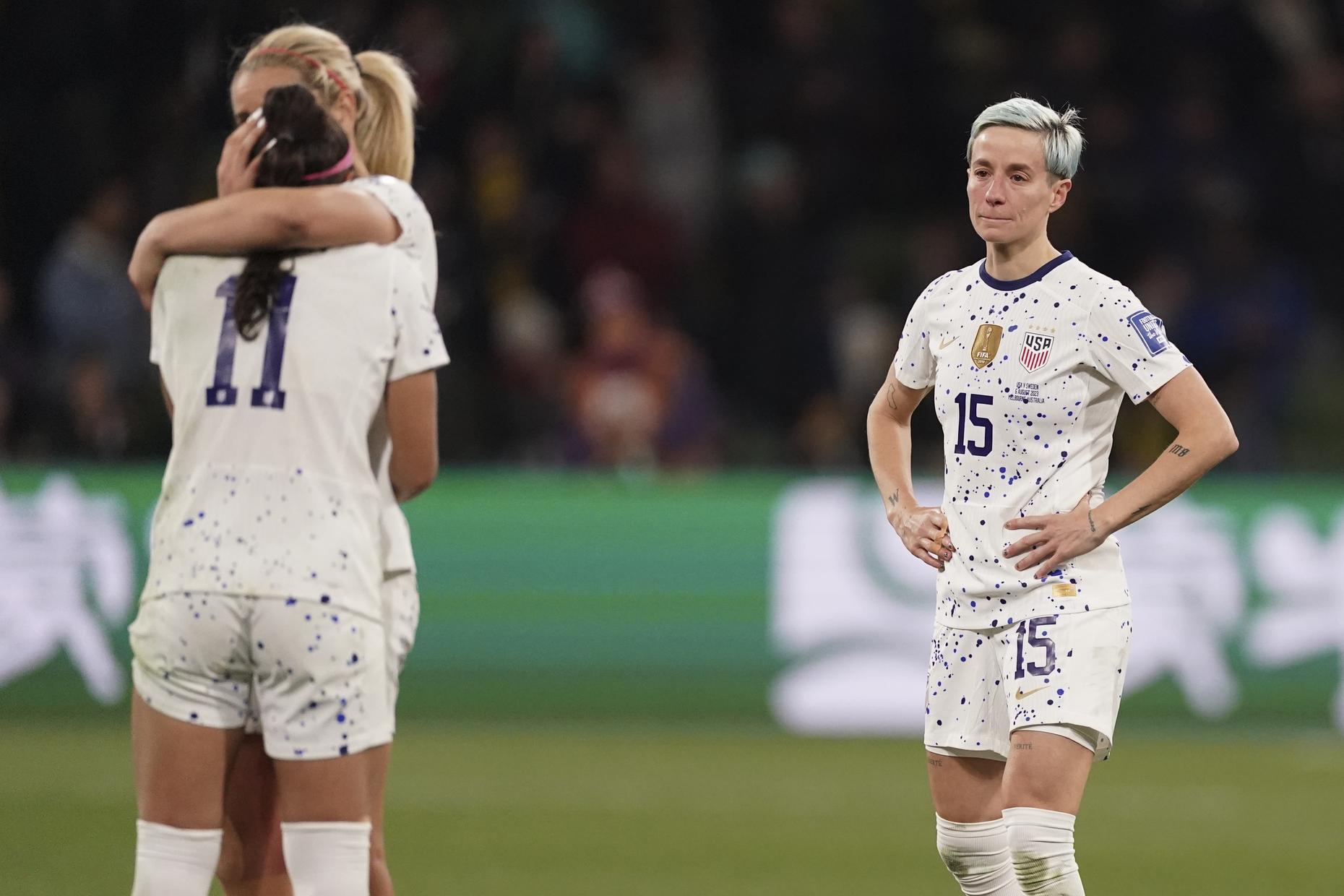
On the Media
Go Woke, Go Broke
00:50:45
A right-wing media campaign against women's soccer; the quality of trans coverage today.
Loading summary
Transcript185 lines
- [00:00]
Micah Lowinger
When the U.S. women's soccer team was eliminated from the World cup, fans were crushed, but some of the usual suspects were crowing.
- [00:08]
Alex Abad Santos
The team has shown more interest in.
- [00:09]
Micah Lowinger
Being activists and fashion icons and celebrities than winning. On this week's on the Media from wnyc, we examined the emptiness of the go woke, go broke sloganeering. Also on the show. Five months after the two opened letters to the Times criticizing the paper's coverage of trans issues, has Anything changed?
- [00:31]
Jules Gill Peterson
Over 200 New York Times contributors have.
- [00:33]
Micah Lowinger
Published an open letter criticizing the Times.
- [00:36]
Jules Gill Peterson
Recent coverage of stories involving transgender, non.
- [00:39]
Micah Lowinger
Binary, gender, non conforming people.
- [00:42]
Unnamed Contributor
What has all this coverage so far amounted to? We've endangered an entire vulnerable minority and played into the hands of a pretty aggressive political movement once we had published.
- [00:52]
Jules Gill Peterson
We don't control how readers of any kind are going to use our stories, and I don't know that we should.
- [00:57]
Micah Lowinger
It's all coming up after this how many discounts does USAA Auto Insurance offer?
- [01:03]
Unnamed Contributor
Too many to say here. Multi vehicle discount?
- [01:05]
Micah Lowinger
Safe driver discount, New vehicle discount, Storage discount?
- [01:09]
Alex Abad Santos
Legacy?
- [01:09]
Unnamed Contributor
How many discounts will you stack up?
- [01:11]
Willa Paskin
Tap the banner or visit usaa.com autodiscounts restrictions apply.
- [01:16]
Unnamed Advertiser
Hi, I'm Willa Paskin, the host of Decoder Ring, Slate's podcast about cracking cultural mysteries. On Decoder Ring, we dive down rabbit holes and obsessively explore questions hiding in plain sight like why has slow dancing gone out of style? And when did we all become obsessed with hydration? And where did the word mullet, you know, to describe a hairstyle come from? That's Decoder Ring, named one of the best podcasts of 2023 by the New York Times. Listen to new episodes every two weeks and make sure to follow us so you never miss one.
- [01:50]
Micah Lowinger
From WNYC in New York, this is on the Media. Brooke Gladstone is out this week. I'm Micah Lowinger. In the wee hours of Sunday morning when most Americans were still asleep, wow Sweetened wins.
- [02:06]
Unnamed Advertiser
A devastating loss knocking the U.S. women's National Soccer team out of the World Cup.
- [02:11]
Micah Lowinger
It was heartbreaking for US Fans considering the US Women's team had won the last two World Cups back to back. But not everyone was mourning the loss.
- [02:21]
Willa Paskin
Some posts called them entitled ungrateful woke pieces of trash.
- [02:27]
Unnamed Advertiser
I am thrilled they lost.
- [02:29]
Unnamed Contributor
Good. I'm glad you went down.
- [02:32]
Unnamed Advertiser
You don't support America, I don't support you.
- [02:35]
Alex Abad Santos
This game is at 5 in the morning Eastern time. The only people are up at this time are die hard soccer fans. Right?
- [02:43]
Micah Lowinger
Alex Abad Santos is a senior Correspondent at Vox. In a piece he wrote this week, he tracked the early morning schadenfreude former.
- [02:52]
Alex Abad Santos
President Donald Trump posted on Truth Social. He said many of our players were openly hostile to America. No other country behaved in such manner or even close woke equals failure. Nice shot, Meghan. The USA is going to hell. Meghan is in reference to Megan Rapinoe, who is one of the stars. She missed a penalty kick.
- [03:11]
Micah Lowinger
The right wing influencer Benny Johnson had a pretty funny post that you kind.
- [03:15]
Alex Abad Santos
Of pulled apart in your Vox piece in giant caps. It was breaking woke US Women's soccer humiliation. After winning back to back World Cups, the heavily favored Team USA has been eliminated by Sweden in the 16th round. Team USA's downfall was delivered by anti America, anti woman activist Megan Rapinoe's embarrassing free kick. There is no 16th round at the Women's World Cup. There is no 16th round at any World Cup.
- [03:43]
Micah Lowinger
He's referring to the round of 16, right? The number of teams left in the tournament.
- [03:47]
Alex Abad Santos
Completely off base. The free kick that he's referring to is actually a penalty kick. It's just like littered with errors. But I think that wasn't really the point of it. It was mostly to get a reaction from someone reading it like, Megan Rapido sent us all to hell with her progressive values.
- [04:04]
Micah Lowinger
And we heard a sort of similar kind of schadenfreude from Fox and Friends over the weekend as well.
- [04:11]
Alex Abad Santos
The team has shown more interest in.
- [04:12]
Unnamed Contributor
Being activists and fashion icons and celebrities than winning.
- [04:17]
Alex Abad Santos
That's a fact.
- [04:18]
Unnamed Contributor
And now they've reaped it.
- [04:19]
Alex Abad Santos
Someone who got like dragged over the coals a little bit was Alexi Lawless. Alexi Lawless is a Fox commentator. He used to be on the national team. He is a soccer expert. He had posted on X, which is formerly known as Twitter. The U.S. women's National Team is polarizing. Politics, causes, stances and behavior have made this team unlikable to a portion of America. The team has built its brand and derived its power from being the best and winning. If that goes away, they risk becoming irrelevant. And then his critics quickly pointed out, like, this man has never ever been in any danger of winning a World cup under his own terms. You could argue that like, well, the men's national team is irrelevant since it's never won. The general message is these unlikable women hate America. It's good that they lost even though they represent America.
- [05:09]
Micah Lowinger
Let's just talk a little bit about the actual game for a moment, which so easily gets lost in this.
- [05:14]
Alex Abad Santos
Right, right.
- [05:15]
Micah Lowinger
Because of the time difference, as you mentioned, it was on at like 5am my time. I didn't watch it, but I saw the highlights and they looked pretty solid in their game against Sweden. I mean, Alex Morgan had a few really close chances. There were a lot of great shots on net, but Sweden's goalie was just kind of a brick wall after extra time. It went to a penalty shootout after 120 minutes of play. It was gut churning and heartbreaking depending on who you're rooting for. For those who haven't seen it, can you describe what happened?
- [05:46]
Alex Abad Santos
Megan Rapinoe, Kelli o' Hara and Sophia Smith missed their penalty kicks, right?
- [05:51]
Willa Paskin
Puts it over the bar.
- [05:55]
Micah Lowinger
Missed the net. O' Hara off the post.
- [06:00]
Alex Abad Santos
If any of those players had actually like clinched it, we probably would have won. But if you ask soccer experts, like, what was happening, the US has had a lot of troubles in recent years because they're basically in a transition phase of having old players and having new players and veterans and mixing. There was nothing going right for the US at the beginning of this World Cup.
- [06:22]
Micah Lowinger
Not to mention all of the injuries.
- [06:25]
Alex Abad Santos
Yeah, so many injuries. A roster that was depleted, a coach that people now are saying was in over his head and wasn't making the best decisions. All of these are valid criticisms of the U.S. team. Right? You could talk about that all day. Donald Trump was not interested in that. Benny Johnson was not interested in that. Alexi Lawless, whose job it is to be interested in explaining to us, like, why our offense looks so bad, was not interested in that.
- [06:53]
Micah Lowinger
This loss is just one flashpoint of many that the US Women's team has faced over the last few years, maybe most notably starting with the team's first fight for equal pay that kicked off in 2016. Can you give us the kind of the short history of how this team found itself at the center of the culture Wars?
- [07:12]
Alex Abad Santos
Back in 2016, they were saying we aren't being treated equally from pay to the hotels that they're staying at. They said we are the best team in the world, but we're not getting like half the stuff that the guys are getting. They filed a complaint and they said, we want to be treated what we're worth. This battle goes on for six years. In 2022, they settle and then US Soccer Federation says, we will make the pledge to bring equality and close the pay gap at the same time. The U.S. women's soccer team has always been an ally when it comes to LGBTQ rights. Megan Rapinoe, again, she's out she is not afraid to say, yes, I'm gay, I play sports. I'm good at it. We should be treated equally. We should treat everyone equally.
- [08:01]
Micah Lowinger
Megan Rapinoe has attracted an outsized portion of disdain from the right wing media. Why is everyone going after her all the time?
- [08:10]
Alex Abad Santos
Back in, like, 2019, the US would win the World cup again. And basically when you win a giant sports event like that, you get an invite to the White House. And before they even won it, Megan Ruffino says, no, we're not going.
- [08:25]
Unnamed Advertiser
It's my absolute honor to lead this.
- [08:27]
Willa Paskin
Team out on the field.
- [08:29]
Unnamed Advertiser
There's no other place that I would rather be.
- [08:32]
Willa Paskin
Even in the presidential race that starts.
- [08:36]
Alex Abad Santos
A whole, like, back and forth, they win in amazing fashion. They reject the White House visit, and it just is very contentious from that point on. Earlier this year, the team puts on light blue and light pink wristbands, which is support for trans kids. And when they were playing in Florida, they put on those wristbands and they said, defend trans lives in Florida. Ron DeSantis has unrolled a lot of anti trans, anti LGBTQ legislation.
- [09:05]
Micah Lowinger
You wrote, quote, the political criticism the U.S. women's National Team is facing isn't unlike the rhetoric used in conservative boycotts, the kind that have exploded this year. What parallels do you see?
- [09:18]
Alex Abad Santos
Well, being a woman is hard is essentially the core message of Barbie. And when conservatives found this out, they were just like, oh, this isn't going to make any money. Don't go see this movie. Barbie has gone woke, so she has to go broke.
- [09:31]
Micah Lowinger
The go woke, go broke thing is really quite dumb. I mean, especially when you scrutinize it for even a second. Barbie earned $1 billion at the box office.
- [09:40]
Alex Abad Santos
And then if you go back even further, remember when Dylan Mulvaney, who is a trans influencer, promoted Bud Light on her Instagram page and conservatives freaked out about that. It's also like the M&Ms. They took the sexy boots off the Eminem, and then the right wing was like, why did you make the Eminem not sexy? The Eminem should be sexy.
- [09:59]
Micah Lowinger
And you're just like, in America, Eminem's are hot.
- [10:03]
Alex Abad Santos
Is it really about the sexy Eminem or is it about fanning the flames of something to be mad at and keeping a base energized. It seems to fit a pattern that we've seen from Starbucks to Target to Colin Kaepernick to LeBron James. I bet you in two weeks we'll have something else being called woke and broke.
- [10:22]
Micah Lowinger
Alex, thank you very much.
- [10:23]
Alex Abad Santos
Thank you so much for having me.
- [10:25]
Micah Lowinger
Alex Abad Santos is a senior correspondent for vox. Coming up five months after two open letters criticized the New York Times coverage of trans issues, has anything changed? This is on the Media. How many discounts does USAA auto insurance offer? Too many to say here. Multi vehicle discount, Safe driver discount, New vehicle discount, Storage discount.
- [10:56]
Unnamed Contributor
How many discounts will you stack up?
- [10:57]
Willa Paskin
Tap the banner or visit usaa.com autodiscounts restrictions apply.
- [11:02]
Unnamed Advertiser
Hi, I'm Willa Paskin, the host of Decoder Ring, Slate's podcast about cracking cultural mysteries. On Decoder Ring, we dive down rabbit holes and obsessively explore questions hiding in plain sight, like why has slow dancing got out of style? And when did we all become obsessed with hydration? And where did the word mullet, you know, to describe a hairstyle, come from? That's Decoder Ring, named one of the best podcasts of 2023 by the New York Times. Listen to new episodes every two weeks and make sure to follow us so you never miss one.
- [11:36]
Micah Lowinger
This is on the media. I'm Michael Loewinger. Right wing politicians and pundits have made it clear that publicly supporting trans rights will put a target on your whether you're a company or a national sports team. It's amazing how strongly people feel about that. You see, I'm talking about cutting taxes. People go like that talk about transgender, Everyone goes crazy.
- [11:59]
Unnamed Contributor
Who would have thought five years ago.
- [12:01]
Unnamed Advertiser
You didn't know what the hell it.
- [12:02]
Micah Lowinger
Was straight from the horse's mouth? Trans people are a bona fide scapegoat. The GOP and its leading candidate aren't hiding it, but Trump's wrong about one thing. Five years ago, anti trans sentiment was alive and well. It just had trouble finding traction.
- [12:19]
Unnamed Contributor
In 2016, North Carolina was in the.
- [12:22]
Micah Lowinger
Spotlight when it became the first state to pass a bill barring transgender people from using bathrooms consistent with their gender identity. The law sparked national outrage and was repealed a year later. Just two years ago, there were no laws banning gender affirming care for minors at the state level. Now, over half of all states have either passed legislation or are currently considering it. Anti trans activists are getting louder and their message more extreme.
- [12:51]
Jules Gill Peterson
There can be no middle way in dealing with transgenderism.
- [12:55]
Micah Lowinger
Daily Wire host Michael Knowles speaking at CPAC in March. Transgenderism must be eradicated from public life entirely.
- [13:05]
Alex Abad Santos
The whole preposterous ideology.
- [13:08]
Micah Lowinger
At every level, the animus is crystal clear. But how to cover the transgender discourse has been less clear for some in the press. In February, a pair of letters addressed to the New York Times masthead accused the paper of missing the mark.
- [13:25]
Jules Gill Peterson
Over 200 New York Times contributors have.
- [13:27]
Micah Lowinger
Published an open letter criticizing the Times recent coverage of stories involving transgender, non binary, gender, non conforming people, in particular.
- [13:37]
Unnamed Contributor
Concerning medical issues, Writing, quote, we are.
- [13:40]
Micah Lowinger
Disappointed to see the New York Times.
- [13:42]
Unnamed Contributor
Follow the lead of far right hate.
- [13:43]
Micah Lowinger
Groups in presenting gender diversity.
- [13:45]
Unnamed Contributor
The Times covers our lives as if there's some sort of vast conspiracy in which there's too many of us.
- [13:54]
Micah Lowinger
We've been working on a piece about this since March, and granted it's only been about five months, but we wanted to see if the fallout from the letters had had any noticeable effect on the coverage of trans issues at the Times. I spoke to Jules Gill Peterson, a historian at Johns Hopkins University and the author of Histories of the Transgender Child. She signed the contributor's letter, which points to how Times articles have been cited in recent anti trans legislation. The letters prominently criticized a piece. Jules was interviewed for a long form story in the New York Times magazine titled the battle over gender Therapy, written by Emily Bazelon, a well respected reporter who we've had as a guest on our show many times.
- [14:40]
Unnamed Contributor
That article was looking at the revisions to the World Professional association for Transgender Health, or wpath, looking at a revision to its standards of care. These are sort of aspirational documents that lay out the kind of best practices around providing gender affirming care to trans people. And this set of revisions, you know, had become embroiled in a question of how children and adolescents, because it was going to introduce a new chapter on adolescence, would engage with and reflect the cultural visibility of trans youth, you know, since the prior addition of these standards, but also the perception that there has been some kind of massive increase in the number of trans children seeking such care. That is a really complicated question. And there are a lot of political groups organized both inside and outside of the medical establishment that have been sort of pushing their own agendas. There are trans folks, you know, pushing, establishing their own political agendas. There kind of caught in the middle of that are the youth themselves.
- [15:42]
Micah Lowinger
One of the common criticisms that I saw of Emily Bazelon's piece was some of the language she chose to use, including the term patient zero to refer to a trans child seeking gender firming care. That's a phrase with a really fraught history that some perceived was vilifying transness as a disease to be feared.
- [16:01]
Unnamed Contributor
One of the key concepts that has sort of trickled into a more respectable, ostensibly academic arena is a notion of social Contagion, the idea that there are more, particularly more trans young people, because it's somehow like a contagious identity. And one of the origins of this Notion is a 2018 paper by a social scientist named Lisa Lippman, who coined this very pseudoscientific term that has since sort of been loudly critiqued and sort of debunked over and over again of rapid onset gender dysphoria. The notion that when children or youth come out to their parents, they suddenly want to transition, you know, and maybe the obvious reason why is, like, because they've been thinking about it for a long time and now have just told their parents. So the notion of a patient zero creates this sort of disease model where being transgender is a negative thing that is spreading too fast through the population, and therefore it's appropriate to restrict it. But also, patient zero just hearkens back to. That was a term brought about, you know, early on in the AIDS epidemic that was really used to vilify gay men, as if they were particular, particularly responsible for and had some sort of moral responsibility for this virus and its spread, which was a complete distraction from the failure of government and public health to actually do anything to mitigate the spread or research HIV early on, in part because people didn't care or even welcomed the death of gay men.
- [17:32]
Alex Abad Santos
Right.
- [17:32]
Unnamed Contributor
And so it's just. It's really alarming to use language like that. And for what purpose?
- [17:38]
Micah Lowinger
I wanted to find out why this phrase, patient zero, had made its way into Emily Bazelon's New York Times Magazine piece. When I reached out to the magazine in March, they gave me this guy.
- [17:49]
Jules Gill Peterson
So I'm the editor in chief of the New York Times Magazine, Jake Silverstein. Ultimately, I'm responsible for assigning everything in the magazine. And this was a story that we conceived of and assigned to Emily. In the fall of 2021, we understood that an interesting moment in the field of transgender care was coming up, and that was the release of this new standards of care, which had last been published, I believe it was 2012, so almost a decade ago. That was one of the original motivations for the story, was to try to understand what process was going into that and get ahead of the publication of those new standards of care. As Emily began looking into it, we had access to this working group that was working on the chapter about adolescence, and. And we began to understand that there were some. Not only debates and discussions happening within that group, but that also there was a really intense complexity to them doing their work in the context of A, you know, proliferation of really draconian legislation restricting trans rights in various states around the country.
- [18:50]
Micah Lowinger
Scott Leibowitz, who was the leader of this working group for The Standards of Care 8 said that they were acutely aware that any unknowns that the working group acknowledged any uncertainties in the research could be read as undermining the field's credibility and feed the right wing effort to outlaw gender related care.
- [19:08]
Jules Gill Peterson
That's right. I think you're quoting from Emily's story there. The politicization in certain state legislatures around the country of this issue has created a political debate around something that has ended up distorting a lot of the reception of articles like Emily's.
- [19:22]
Micah Lowinger
Her piece was named and Criticized in the February 15th contributor's open letter to the Times, and we don't have time to address every flashpoint, but I do want to discuss some of the big ones. The contributor's open letter references the use of the phrase patient zero in your story. Can you talk about why you decided to include that term?
- [19:43]
Jules Gill Peterson
Originally, this term was introduced to Emily during her interview with the patient in question, a Dutch trans man who we refer to in the story as fg. Emily tracked him down and interviewed him at length, and he said to her, quote, I was patient zero. The term also appears in a book that is cited in Emily's story. It's a history of the Amsterdam clinic that uses the term patient zero to describe the same person. And in both cases the meaning was clear to Emily. In these interviews and in reading this book, it described the first effort recipient of a treatment. That's what it meant. And I think it was pretty clear that that's what it meant from context. Like I say, it's not used in quotation marks.
- [20:20]
Micah Lowinger
Yeah, it's not in quotations.
- [20:22]
Jules Gill Peterson
He is quoted saying other things and he's quoted saying that this treatment saved his life and Emily didn't realize that it was going to have another connotation for other people.
- [20:31]
Micah Lowinger
In between the time we requested comment from you and Emily last week and today when we're talking, that phrase was removed from the article and it was replaced with the words the first patient.
- [20:43]
Jules Gill Peterson
Correct.
- [20:44]
Micah Lowinger
Why did you decide to just now remove it?
- [20:46]
Jules Gill Peterson
We've been talking about making that particular change. Changing something to a story that we've published for reasons other than a factual correction is never something that we take lightly. It's not something that we do very often, as you can imagine. It's something that requires a lot of conversations and deliberations internally. So it took a little Bit of time for that to work its way through the process. But, you know, we felt like it was the right thing to do. I wish that we had immediately understood how some readers might take that term.
- [21:12]
Micah Lowinger
Jules Gill Peterson welcomed this change to the article, which is accompanied by an editor's note on the Times website. Still, the social contagion myth continues to color much of the discourse around trans healthcare.
- [21:26]
Unnamed Contributor
It does seem like, at least from survey data, that there are more young people willing to at least identify in surveys as LGBT in general, like also lesbian, gay and bisexual, but certainly trans and non binary.
- [21:39]
Micah Lowinger
As for the rapid rise in kids identifying as trans, John Oliver addressed this on his show last week. Tonight, as the writer Julia Serrano has pointed out, when you look at a chart of left handedness among Americans over the 20th century, you see a massive spike when we stopped forcing kids to write with their right hand and then a plateau. That doesn't mean everyone became left handed or that there was a rapid onset southpaw dysphoria. It means people were free to be who they were.
- [22:08]
Unnamed Contributor
This is a point that, you know, trans folks have made for a long time. That graph has been shared for years. And part of what's so helpful about it is it just de dramatizes everything. Being left handed is no longer considered much of a big deal. It's just like part of the variation of human life. But I think there are some real limitations to that notion because part of what it does, oddly enough, is sort of reinforce that the idea here is just we have to tolerate or accept that people exist, period. And this is actually a very popular form of trans inclusion. I think it's a sort of inclusion model that was developed around gay marriage, you know, in the 2000 and tens. This sort of like, we accept that there are gay people and we're trying to get out of their way. But trans people in particular, because transition has been gatekept by medicine, need access to health care. There are some material needs that go way beyond symbolic inclusion. And so I think part of the challenge has been the way that this is construed as a culture war implies that the job of progressives is to make room in their hearts or in their minds for the trans people in the country or in their community. And once they do that and remove any discriminatory laws, we're all good.
- [23:23]
Micah Lowinger
And 2023 has been the year for discriminatory laws. The American Civil Liberties Union has counted 492 anti LGBTQ bills in state legislatures, including laws that have passed or if they were passed would restrict the discussion of gender and sexuality in the classroom and, of course, restrict gender affirming care for minors and adults.
- [23:48]
Unnamed Contributor
There are other types of these bills, none of which have passed yet, but which I think Texas sort of led the way with at the end of last year in tabling, which essentially define drag as being transgender in public. And what I mean by that is these are bills that will say drag is wearing clothing or makeup or moving the body or expressing the body in a way that, you know, produces a gendered effect different from the gender assessment signed at the time of birth. And saying that performing drag, which is to say being trans in public, is illegal, now, that's more of a status offense. That's a much more sweeping invasion of individual liberty. And I would say it is astonishingly unconstitutional. Except. Except there were laws like this on the books from the 1860s all the way to the 1970s.
- [24:40]
Micah Lowinger
The implication being that if a young person witnessed a drag performer in the same way as if they witnessed a teacher in their school speaking openly about gender and sexuality, that this would lead to them wanting to become trans.
- [24:55]
Unnamed Contributor
Mm.
- [24:56]
Micah Lowinger
And in some ways, it's reminiscent, too, of the panic around Critical Race Theory.
- [25:02]
Unnamed Contributor
Yeah. I mean, because both of the storylines have no actual basis in reality and don't even make sense by their own terms, one of the ways they survive as political rhetoric is they mutually reinforce one another. So one is the explanation of the other. And I would use maybe Florida as an example of this. When the DeSantis administration moved to essentially gut AP African American Studies Governor DeSantis explanation, because he couldn't really defend the deletion and censorship of actual history from this curriculum. So instead he said, well, we have to revise the its curriculum because it contains queer theory, this course on black history.
- [25:45]
Micah Lowinger
What's one of the lessons about queer theory? Now, who would say that an important part of black history is queer theory? That is somebody pushing an agenda on our kids. Returning to Last Week Tonight with John Oliver, he actually made the case that at least one of the operatives behind Critical race theory is playing an important role in shaping the Right's conversation around trans issues. One key architect of the CRT panic, Christopher Ruffo, recently pivoted to attacking trans rights, and he has openly discussed the strategy behind doing that.
- [26:20]
Alex Abad Santos
What I'm looking at is to take that same style of reporting as I did with Critical Race Theory, but now taking a look at gender ideology. What's happening right now is parents are feeling the oof. This is kind of weird. I'm kind of uncomfortable with this, but.
- [26:32]
Micah Lowinger
I'm scared to speak out. And so what we have to do.
- [26:35]
Alex Abad Santos
Is we have to give them the kind of justification or validation or substantiation of their concerns to say, hey, this is the kind of thing they're teaching in schools. And then we have to give them the language where they can speak about it with confidence, they can speak about.
- [26:47]
Micah Lowinger
It directly, and they can speak about it with the requisite level of aggressiveness.
- [26:52]
Alex Abad Santos
That it's going to take to say, hey, wait a minute, we have to stop this.
- [26:55]
Unnamed Contributor
Yeah, I mean, the architects of this moral panic and the people producing the marching orders and the narrative frameworks that are completely disconnected from reality are quite content to speak openly and plainly about their intentions.
- [27:08]
Micah Lowinger
Jules Gill Peterson believes the Times has ceded too much ground to right wing attempts to distort the conversation. She and other Times contributors who signed the open letter point to an amicus brief filed by Arkansas's attorney general, who quoted from three New York Times pieces, including Emily Bazelon's, in support of an Alabama bill that passed in April called the Vulnerable Child Compassion and Protection Act. Last week, Alabama became the third state in the nation to pass a measure restricting gender affirming care for transgender and non binary youth. But it's the first state to actually impose criminal penalties without an injunction. Any Alabama doctor trying to prescribe puberty.
- [27:50]
Alex Abad Santos
Blockers or hormone therapy to a child.
- [27:53]
Micah Lowinger
Under the age of 19 in Alabama.
- [27:55]
Alex Abad Santos
Would be guilty of a felony.
- [27:57]
Jules Gill Peterson
I don't believe that there's anything in this story or in the other news coverage that supports banning gender therapy. Jake Silverstein I believe, and I can't say for sure because I obviously had nothing to do with this amicus brief, that these pieces were cited to show that there is a debate among providers about how to best perform gender care for minors. And that is what these stories document through reporting. Once we hit publish, we don't control how readers of any kind are going to use our stories, and I don't know that we should.
- [28:35]
Micah Lowinger
The frustration with the piece, as I understand it, is less with the facts that came out of the reporting, but with the framing, the choices. Whose voices were featured prominently? What positions were featured prominently? Like, for instance, the article quotes extensively from parents involved in a group called Genspect, an organization that opposes gender affirming care for young people. Kit o' Connell, a journalist and editor at the Texas observer, felt that the article presents them only as like a concerned group of parents rather than activists trying to skew the conversation.
- [29:10]
Jules Gill Peterson
We've heard this criticism about not identifying genspect. Some of the people who've criticized Emily's story have wanted us to refer to genspect as a hate group. You know, we can't say that without evidence, right? We can characterize groups up to a point. Unless we're going to, like, dedicate reporting time to investigating, you know, a particular group, we can't characterize it a certain way without evidence.
- [29:34]
Micah Lowinger
I want to ask another question about the sourcing. The trans writer Masha Gessen, who writes about Russia and LGBTQ issues for the New Yorker, said they really liked the piece. But they told David Remnick in an episode of the New Yorker Radio Hour that they were frustrated by Emily Bazelon's decision to quote conservative writer Andrew Sullivan.
- [29:53]
G
In Emily Bazelon's excellent piece in the New York Times Magazine last summer about the battle over transgender treatment, there's a quote from Andrew Sullivan, the conservative gay journalist, who says, well, maybe, you know, these people would have been gay if they hadn't, implying they're really gay. Right. And they're not really transgender. And that really clearly veers into the territory of saying, you know, these people don't exist. They're not who they say they are.
- [30:23]
Jules Gill Peterson
It's certainly not the position of the journalist in question here of Emily. Part of what Emily is doing in the story is she's trying to gather in a sense of what that conversation and what that commentary is with the context in which these folks are doing their work. You know, that process of doing that, of gathering in this commentary, doesn't mean that Emily endorses every single thing that she's citing. She's trying to give readers a sense of the atmosphere in which these gender affirming clinicians are doing their work.
- [30:51]
Micah Lowinger
I want to ask you about another criticism that was articulated in the open letter to the Times. In a portion of your article discussing why people might pause or stop gender affirming care, there's a paragraph featuring the experience of a person named Grace Ledinsky Smith, who is described in the piece as someone who, quote, has written about her regret overtaking testosterone and having her breasts removed in her early 20s. And she's been cited in a lot of partisan right wing coverage.
- [31:22]
Unnamed Contributor
Well, I learned my lesson, but my breasts are never coming back. It's a worst mistake that I've ever made in my life.
- [31:30]
Micah Lowinger
She's also interviewed in a fairly controversial 60 Minutes piece that came out before your magazine story. The writers of the open letter wrote, quote, grace Ledinsky Smith was identified as an individual person speaking about a personal choice to detransition, rather than the president of gcan, an activist organization that pushes junk science and partners with explicitly anti trans hate groups.
- [31:55]
Jules Gill Peterson
Sure. I mean, the question of how to identify people quoted in stories comes up a lot. And sometimes the decision is based on the footprint that they occupy in a story, how much the story is about them, how significant their part of the story is. And in this case, in a very long story in which this subject was a very small part, it seemed to us that we were giving the reader the information that was most relevant.
- [32:19]
Micah Lowinger
We don't hear from that many people in the story who were under 18 when they transitioned. And here was a person who was over 18 when they transitioned, seemingly, you know, tangential to the purview of the piece. And we didn't get a lot of context about where she was coming from. Mm. Yeah, I understand that Emily Bazelon's piece states clearly that the regret rate for gender affirming care is very low. I asked Jules Gill Peterson what she thinks about anecdotes from people who detransition, which tend to be quite dramatic and have been used in conservative media as cautionary tales.
- [32:57]
Unnamed Contributor
This is a really interesting place where actually trans healthcare fares much better than other healthcare out there. We measure regret rates for things like surgeries and medications pretty regularly. The regret rate, say, for knee surgery, 5 to 10%, are not unusual. For some procedures, it goes higher.
- [33:15]
Micah Lowinger
I think for knee surgery, there was a study in 2018 that found the regret rate could be as high as 20%.
- [33:21]
Unnamed Contributor
Yeah.
- [33:21]
Micah Lowinger
And there was another small study for hip replacement, the number was like, 5%.
- [33:25]
Unnamed Contributor
Yeah. And so for gender affirming care, the numbers tend to come in that the regret rate is, like, generally under 5%, often under 2, sometimes under 1%. But, you know, the medicalization of trans people, you know, reinforces the idea, one, that we only exist because of medicine, which is not true, and two, that there's something bizarre and exceptional and medical about being transgender. The narrative that we hear in the media is that detransitioners are somehow ridiculed or stigmatized by trans people. And nothing could be further from the truth. Like, trans people all know, detransitioners generally like and have loved and cared for them. And, you know, it's just like, we understand how hard it is sometimes to maintain access to health care or to just, like, feel like you're safe enough to live that way. So, you know, as for actual people who regret healthcare, it's such a Small amount of people. And we don't ban health care for entire minority groups because we think that, you know, regret rates are too high.
- [34:29]
Micah Lowinger
I do want to ask you about something I heard the trans writer Masha Gessen talk about on the New Yorker radio hour.
- [34:36]
G
Puberty blockers are exactly what they sound like. They delay puberty. There are some studies that point to potential risks of long term. Right. More than a year. So use of puberty blockers, that is absolutely illegitimate topic of discussion. But of course, it's become very, very difficult to cover because there are bills in Texas, Mississippi, Florida, Arkansas and other states that lump all of these treatments in the same bucket.
- [35:05]
Unnamed Contributor
You know, puberty blockers is such a great example. It's become such an important flashpoint. But here's the thing. Almost no trans kids take them. I don't know why no one ever talks about this. Well, I do know why, because it kind of collapses the way this issue has been framed to take puberty blockers. You can't really be very far along in puberty. So it's actually a very narrow window of age at which a child would even take puberty blockers. Right. And the thing is, puberty in Western countries like the United States, for whatever reason, we don't exactly know why, has been starting earlier and earlier. So actually now it's not uncommon for a 9 year old or a 10 year old to have already actually entered a certain stage of puberty. That essentially closes that window for when you could pause puberty quite early. Just because most trans kids aren't showing up at gender clinics at age 9, almost no kids even qualify for puberty blockers.
- [36:00]
Micah Lowinger
I don't think we have exact numbers, but it's. If we're talking about the drugs, it's, I mean, millions. This is Matt Walsh of the Daily Wire, who's known for his transphobic documentary what is a woman Discussing puberty blockers on the Joe Rogan Experience last November. Millions of kids have been on hormone blockers. Really?
- [36:18]
Willa Paskin
I'm sure someone's gonna fact check me on me.
- [36:19]
Micah Lowinger
But my, my, my guess is that.
- [36:21]
Willa Paskin
We'Re in, we're into the millions now at this point.
- [36:23]
Unnamed Contributor
Yeah.
- [36:23]
Micah Lowinger
It says over the last five years there were at least 4780 adolescents who started puberty blockers.
- [36:29]
Unnamed Contributor
The amount of kids being put on blockers, like we're talking about, you know, three or four thousand a year in a country of 330 million people.
- [36:38]
Micah Lowinger
Million.
- [36:38]
Alex Abad Santos
Sounds great.
- [36:39]
Willa Paskin
Yeah. The Media Matters will have fun with that clip.
- [36:42]
Micah Lowinger
Given the way the story has been interpreted the way it's been used in right wing legislation. Is there anything you wish you all would have done differently in your coverage or in the editing process?
- [36:55]
Jules Gill Peterson
I mean, as you can see from the fact that we changed the term patient zero, I certainly wish we had changed that before we hit publish on the story. But other than that, I would say no. I'm really proud of this piece. Emily's piece is a finalist for a National Magazine Award in the category of public interest this year. Jury of her peers has said it's one of the six most important pieces of public interest journalism published in any magazine last year, and I think that's correct. This kind of reporting is very difficult to do. It takes a kind of focus. It takes a kind of fortitude, and it also takes the commitment to the principal of journalism that not everybody has and Emily does.
- [37:35]
Micah Lowinger
Coming up, New York Times Front Page Coverage by the numbers this is ON the Media. How many discounts does USAA Auto Insurance offer?
- [37:47]
Unnamed Contributor
Too many to say here.
- [37:48]
Micah Lowinger
Multi vehicle discount, Safe driver discount, new vehicle discount, storage discount.
- [37:53]
Unnamed Contributor
How many discounts will you stack up?
- [37:55]
Willa Paskin
Tap the banner or visit usaa.com autodiscounts restrictions apply.
- [38:00]
Unnamed Advertiser
Hi, I'm Willa Paskin, the host of Decoder Ring, Slate's podcast about cracking cultural mysteries. On Decoder Ring, we dive down rabbit holes and obsessively explore questions hiding in plain sight, like why has slow dancing gone out of style and when did we all become obsessed with hydration and where did the word mullet, you know, to describe a hairstyle come from? That's Decoder Ring, named one of best the best podcasts of 2023 by the New York Times. Listen to new episodes every two weeks and make sure to follow us so you never miss one.
- [38:33]
Micah Lowinger
This is ON the media. I'm Michael Oenger. So far we focused our critique on the New York Times Magazine, but the open letters and the coverage they prompted across the media alleged a larger pattern on the newspaper side. In a statement that we received from the Times. You can read it in full@onthemedia.org A company spokesperson told us, quote, we reject the claims of anti trans bias in our reporting either on the basis of our coverage or the importance and weight we apply in placement on the newyorktimes.com homepage. Since January 2020, we have published over 300 articles specifically on discrimination against transgender people and or anti transgender legislation.
- [39:20]
Willa Paskin
We decided to go in and prove that this was not cherry picking by looking at the entirety of the Times front page coverage for the previous 12 months and compare it to its closest competitor, the Washington Post.
- [39:32]
Micah Lowinger
Julie Haller is a senior analyst and managing editor at fair, a left leaning media watchdog. Their study is titled New York Times Anti Trans Bias by the numbers.
- [39:44]
Willa Paskin
I've been working at FAIR for a long time and the Times in the Post are really fairly similar in terms of their news coverage. We just don't see dramatic differences between the two papers very often. But in this study, it was as if the two papers were reporting from two different countries. The Post put trans centered articles on its front page a lot more than the Times did. During the study period, they had 22 articles to the Times nine. And the reason we looked at front page articles is because that's the most valuable real estate in a newspaper. So the Post put political or physical attacks on trans people on their front page 14 times during those 12 months. And that included several profiles of trans people that described what they were going through, humanizing them, helping readers who might not know any trans people, what it feels like to be trans in America right now. You didn't get any of that in the Times. At the Times, there were two headlines that hinted at attacks on trans people's rights or restrictions on trans people's rights. One of them was about swimming internationally and the other one about the right wing coordinated movement to restrict trans people's rights.
- [40:58]
Micah Lowinger
For the study, you examined front page stories at the New York Times and Washington Post from April 2022 through March 2023. Can you tell me more about the differences you saw between the Times and the Post?
- [41:10]
Willa Paskin
At the Times, the narrative that was being focused on in these front page stories was primarily about trans people as threats to others, like trans people's rights, threatening cisgender, women's rights, parents, trans people as a threat to parents rights. And then also the other narrative that was focused on at the Times was transitioning being risky or likely to be regretted or being pushed onto people. Are trans people getting too many rights too quickly? Are they threatening other people's rights? Maybe we need to put the brakes on this. Well, that's exactly the right wing framing. That's coming from Fox News, that's coming from Breitbart, that's coming from that right wing media ecosystem that is being projected by all of these right wing politicians who are pushing this legislation.
- [42:03]
Micah Lowinger
This is a criticism I know that publisher A.G. sulzberger is familiar with. And I want you to respond to something he told David Remnick, the editor of the New Yorker. On the New Yorker radio Hour in June. You know, it is our journalistic responsibility as an independent news organization to reflect, for example, the very real debates happening in the medical community and even among trans people and parents of trans people about what type of medical intervention should happen for minors and when and when the risk of not acting outweighs the risk of acting. And, you know, these are questions that the medical community is actively working through. There's an active debate there. And, you know, our critics have effectively asked us to pretend that debate is not happening for fear that the information could be misused.
- [42:56]
Willa Paskin
He's misrepresenting, I think, the medical consensus. All of the major medical respected major medical organizations in this country have reached a consensus, and that is that gender affirming care is important. It is life saving. There are debates around the margins. Those are not the important story right now. The important story is that all of this kind of care is being taken away from people. No access whatsoever. The right is trying to legislate gender affirming care out of existence, not just for youth either. And the New York Times has decided that the more important question is, are they going to have issues with bone density that they'll have to work to correct? I'm getting angry.
- [43:42]
Micah Lowinger
Do you mind if I zoom in on that for a second?
- [43:44]
Willa Paskin
Yeah, yeah.
- [43:45]
Micah Lowinger
Your anger and the anger of many critics of the New York Times have sort of fueled this position of like an old journalistic guard, which is that the emotions are too high right now, and we can't ask the hard, real questions because of a political climate that is there. But it's still our job as journalists to poke at the uncomfortable truths that might be there. That's how this has been framed.
- [44:14]
Willa Paskin
Sulzberger also published a piece in cjr, and one of the things he talked about was objectivity. And this is this ongoing debate. Can journalists be objective at fair? We come down very hard on the answer of no. You don't want to pretend that there is objectivity. There are decisions that have to be made at every moment about what stories you're publishing, what stories are you putting on the front page. That's a subjective decision that editors make every day. What sources are helping you to tell that story? And you see a real difference in how the Times and the Post are reporting those. And so you can see there is not an objective reality here that the Times is reflecting. And I think if I can rewind us. I've been covering transgender coverage for almost two decades, and 20 years ago, serious news outlets didn't talk about trans people. And trans issues. Trans issues were relegated to the tabloids. This was the stuff of Jerry Springer.
- [45:14]
Unnamed Contributor
I've been dating this guy named Cesar Amazing. And I'm here to tell him a big secret of mine, which is I'm here to tell you that I was born a man.
- [45:27]
Willa Paskin
Totally sensationalized, objectified. And there was a slow movement into the mainstream due to lots of hard work and activism and trans people coming out publicly and speaking out. And news outlets, updated style guides, started respecting pronouns and names. But what you still saw 10, 15 years ago was what I would call an anthropological approach to covering trans people. There was this real focus on questions of anatomy. There were so many questions asked of trans people on news programs, respectable news programs, where they would be asked, have you had a sex change? Are you going to have a sex change? If I were to look at you naked, would I see a man or a woman? And will you have the sex change operation or is this it?
- [46:18]
Micah Lowinger
That's pretty personal information.
- [46:19]
Unnamed Contributor
I have not made that decision yet.
- [46:23]
Willa Paskin
Technically speaking, questions like this that right now I think most people can see can recognize as being completely inappropriate and invasive. With, again, a lot of hard activism work by trans people and allies. More people in news outlets have become familiar with trans people, and they are listening to what trans people have to say about what is important that's going on for trans people's lives right now. And I feel like the New York Times has reverted back to this anthropological approach of what's interesting and important to me about this story. Maybe the most illustrative example of this is the story on their front page about the parents rights movement in schools. It's really looking at the issue of whether schools should be required to disclose students gender identity to parents. Like if a student comes out at school, does the school have to tell the parents that this is forced outing? You know, these are questions of privacy. And the impact on trans kids can be really dramatic. School might be the only safe space for them if they're not telling their parents. The center of this story ought to be trans kids and what the impact is on them of these policies. And instead, at the New York Times, the story begins and ends with this woman who I think of as the quintessential Times reader. She's this white woman in California. She identifies as a liberal. She claims to be wanting to be supportive of her trans child, but she found out that her child had come out at school, not through the school. The school did not tell her, and she felt villainized. So there were 16 sources in the story five of them were parents. Four of the parents had misgivings about these school privacy policies, and there were only two trans or non binary kids who were quoted in the story. The framing of the story shows that the Times is clearly more concerned about these self identified liberal parents feelings being protected than they are about these very vulnerable kids.
- [48:35]
Micah Lowinger
Now that it's been some months since this public discussion, this reckoning around how the Times and other major outlets write about issues affecting trans people, have you seen any kind of change, any sign that the discussion has had an impact publicly?
- [48:54]
Willa Paskin
The Times continues to vociferously defend its approach to covering trans issues in this way. At the same time, very shortly after the study period, after the letters were made public and this whole blow up, the Times published three front page stories on trans rights and politics that were really more of the framing of There is an attack on trans rights right now. So they wear more of the forest rather than the trees. They've had very little coverage since then.
- [49:30]
Micah Lowinger
One of the kind of maxims, you know, of kind of an older school of journalism is you do what you think is best for the story and you don't let the principles in the story dictate how it's shaped or how it's framed. There are certainly some people who would be put off by the idea that, that activists lobbying the paper of record could successfully change the type of journalism that's done.
- [49:55]
Willa Paskin
The Times keeps claiming that people are asking them to skew their reporting. And what we're saying is not please skew your reporting, it's please stop skewing your reporting. The biases that they're not recognizing activism can help shed light on this is.
- [50:14]
Unnamed Contributor
Where when people say, like, well, trans people just think we're not supposed to write journalism at all. Oh, on the contrary, there are so many compelling stories to be told.
- [50:23]
Micah Lowinger
Historian Jules Gill Peterson and of course.
- [50:26]
Unnamed Contributor
There are a lot of different crises going on in the United States right now, and trans folks aren't the only one. But you know, in some ways, trans people's plight fits into a lot of bigger questions that confront the country at this moment. What is the role of healthcare, you know, this many years into a pandemic, Right. What do trans people know about the experience of government intrusion into bodily autonomy that connects back to a story about reproductive justice right now? What do trans people know about policing and mass incarceration that connects back to a larger story about racial bias in policing or the mass incarceration system in the United States? There is a lot of powerful investigative, critical and neutral reporting that could shine a light on particularly the impact that seen in real time and its ramifications. Because the logics being tried out on trans people will not be restricted to them. They are already expanding to target gay and lesbian people. They are already expanding to target things like contraception. You know, we can see a sort of larger arc of right wing and authoritarian political movements that are really using trans people in that traditional sense as a scapegoat. Almost like happened 100 years ago with the rise of fascism in Europe. So the kind of question is, what has all this coverage so far amounted to? Not a lot. I mean, I don't think it's been especially clarifying to people. It's certainly not helped prevent anyone from regretting a transition. So what have we actually done? We've endangered an entire vulnerable minority and played into the hands of a pretty aggressive political movement. And if that gives people any pause, I think pivoting to, you know, really doing journalism that asks actual basic, thoughtful questions would be a really welcome kind of shift.
- [52:21]
Micah Lowinger
Jules Gill Peterson is a professor at Johns Hopkins University and the author of Histories of the Transgender Child. That's it for this week's show on the Media is produced by Eloise Blondio, Molly Schwartz, Rebecca Clark Callender, Candace Wong and Suzanne Gabber, with help from Shawn Merchant, our wonderful intern, who we say goodbye to this week. Our technical director is Jennifer Munson. Our engineer was Andrew Nirvian. Katya Rogers is our executive producer. On the Media is a production of WNYC Studios. I'm Micah Lowinger.
- [53:11]
Jules Gill Peterson
This is Ira Flato, host of Science Friday. For over 30 years, the science Friday team has been reporting high quality science and technology news, making science fun for curious people by covering everything from the outer reaches of space to the rapidly changing world of AI to the tiniest microbes in our bodies. Audiences trust our show because they know we're driven by a mission to inform and serve listeners first and foremost with important news they won't get anywhere else. And our sponsors benefit from that halo effect. For more information on becoming a sponsor, visit sponsorship.wnyc.org.