← On the Media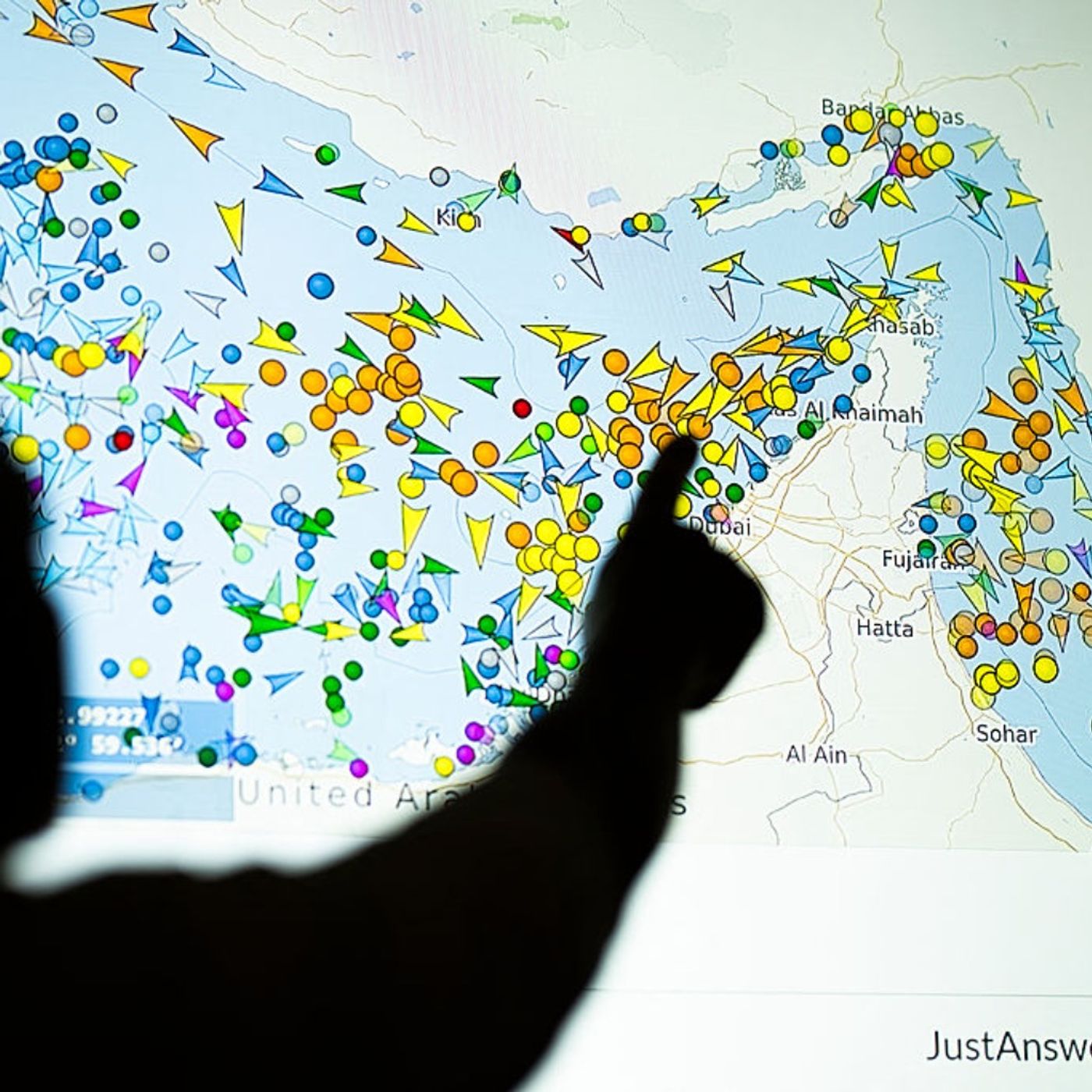
On the Media
How "Economic Blindness" Is Obscuring Our Financial Reality
00:23:57
Plus, how human psychology might play a role.
Loading summary
Transcript59 lines
- [00:03]
A
This is on the media's midweek podcast. I'm Brooke Gladstone. On our show last weekend, Vox's Future Perfect Brian Walsh explained how and why the economic disruption caused by our war with Iran has not been reflected in the financial markets. I mean, we were puzzled. We're in the middle of a war, we've got oil prices spiking and yet stocks are soaring.
- [00:27]
B
And more new highs for the stock market today. The NASDAQ composite with a huge gain on top of a market that's already been super hot and continuing to see just honestly jaw dropping strength at this point.
- [00:46]
C
The thing that bothers the heck out of me right now is oil's sitting in the mid-90s, so it's near its highs. Or it got to a high point about a month ago and then you got the stock market at an all time record high. One of those things is wrong.
- [01:02]
A
Brian said that this staggering mismatch between economic reality and financial markets is an actual phenomenon known as economic blindness. It was a great conversation, but after we edited it down to 10 minutes to fit the show, we realized that too much good stuff had landed on the cutting room floor. So here's a longer version. He starts by recalling his own bout of a similar blindness while reporting on the emergence of the COVID pandemic in February of 2020.
- [01:35]
D
I had been writing about pandemics literally for more than 15 years. I had written about the first SARS in Hong Kong. I'd written about bird flu. I'd written about H1N1, the one we all forgot in 2009. And I'd even written this cover story for Time magazine just a few years before the pandemic started that literally warns how we are not ready for the next pandemic in big, very scary letters on the COVID And yet, as I was going back to those weeks, my overwhelming feeling was, well, this doesn't look great. And yet even going into February, well after Wuhan had already been locked down, well after, it was pretty clear, I think in retrospect, that this was not just an outbreak, that this could be something much more dangerous, much more global. I remember telling people even, well, it'll probably go away.
- [02:19]
A
Why did you say that?
- [02:21]
D
I had seen and covered so many other situations that looked like this at the start and yet petered out, because that is ultimately what generally happens in the world. An event like that is by definition incredibly rare. And so what's much more likely is something more like H5N1 bird flu, where there are a lot of warning signs. There are occasional cases, there are even small outbreaks. And yet something about the virus or our response to it ensures that it just doesn't have the ability to go global.
- [02:48]
A
I remember there was some similar over caution with regard to Ebola coming to America's shores.
- [02:56]
D
Yes. I remember at that time actually having to kind of go the other direction, which was what's happening in West Africa is a catastrophe that has to be dealt with. And yet there was so much fear about Ebola specifically that as a reporter, I often found myself actually trying to modulate that to tell people that the nature of Ebola means this is not something that's likely to spread like a flu, that we should not be terrified of Ebola coming to our shores, that we could control it, which is exactly what happened. And so there was almost a fear I had of not wanting to seem alarmist, which is strange because I would often spend much of my time as a reporter outside this crisis trying to actually raise the alarm, trying to get people to understand this would be a real threat. We were not doing enough, we would not be ready. And yet when the moment came, what I found myself doing was trying to not come off alarmist. I'm not sure whether I was trying not to scare people or whether I myself just when presented with what ultimately was exactly what I'd been warning people about, I couldn't recognize it because I couldn't make myself believe it. I suppose it didn't feel real to me.
- [03:56]
A
But right now we're talking about economic blindness and you say it's afflicting us again. First of all, talk about how the markets behaved during COVID Yeah, I mean,
- [04:09]
D
leading up through January into February, the markets really weren't recognizing Covid as a serious threat. On February 19, 2020, the S& P hits an all time high. And you have to remember at that point, we've already gone more than a month and a half since the first cases have been occurring in China, since China was doing things that were unprecedented with Wuhan and the shutdown there. And yet it hadn't really reached American shores. And so the economy kept on going, even as in the background there was this drum beat of concern. It took another several weeks for that to really kick in. And then you had what was the sharpest market correction in history. I think the market dropped 34% in just a few weeks. And that was after Italy had shut down. Cases really were occurring in America. There was that famous day in March when Top Hanks revealed that he had been infected with COVID The MBA shuts down.
- [04:59]
A
Schools closed.
- [05:00]
D
Schools closed. Exactly. At that point. The reality is impossible to avoid and it gets priced into the market. But well after the information that should have been integrated was there, it wasn't like there was new information really. Rather, the information was finally integrated into the reality of the market.
- [05:16]
A
And.
- [05:16]
D
And the market then responded, but well after the fact.
- [05:18]
A
Right. And you say this economic blindness is afflicting us again with the Iran war. The reality of the oil crisis, which stems from Iran's closure of the Strait of Hormuz, is not matching up with the markets. They kept climbing through April. This week The S&P 500 and NASDAQ Composite set all time highs. Now, last week a Reddit user posted on Reddit Money, can someone explain how the stock market keeps hitting all time highs while everything feels so bad? Maybe you can.
- [05:55]
D
There's something called the ostrich paradox, and this is from Robert Meyer and Howard Kruenruder at Wharton. And they kind of identify six biases that tend to afflict people in these times. One is myopia. That's simply the inability to see what's in front of you. That's an inability of the market to fully recognize what's happening on the ground. With oil as an actual commodity, there's amnesia, simply forgetting the fact that we've had past crises, including Covid, that can take something that was the top of the market and suddenly lead to a sudden correction. You have optimism, which is everything's going to work out ultimately. In that case, you're looking to what markets have seen with Trump and tariffs, where when there's a market looks like it'll react, he always backs down. That'll happen this time. There's inertia, which is today will be blood like yesterday and tomorrow will be like today. The world just more or less keeps on going. There's simplification, which is just refusing to see the complexity of something like oil supply, which is very hard to understand. And then there's hurting, which is when you see other traders continuing to price the market up and up. It is not a comfortable thing to be the person saying, maybe not, because you can get burnt financially. That's what's happening here. Even though people who deal with the physical reality of oil itself are screaming that we're having huge amounts taken off the markets, we are going to be running out of the supply we have. We're seeing jet fuel prices go up. We're seeing airline companies cancel flights en masse. We're seeing energy rationing happening throughout Parts of Asia, all these things, and yet the market continues to go up. Even the oil price doesn't really change hugely. It goes up and down, but not to the degree that it should if it was reflecting the physical reality on the ground. And I think that's the blindness I'm seeing here.
- [07:34]
A
All of this research that you've cited is grounded in the study of our reaction to natural disasters. In the case of the ostrich paradox and more broadly, climate change. There is a comparison to be made here. This gap that we're talking about has to do with our collective inability to process the slow drip of information, like about climate change.
- [08:02]
D
Exactly. I think climate change is where a lot of this research comes out of, because it's such a perfect example of something which is that you have long term change happening. We know that climate change is long since underway. We know it will continue. That's a scientific and physical reality. And yet it's happening slow enough that we're not really catching up to them. Obviously, the markets are not pricing the future of climate change. I think our brain has evolved really for. And this is something that Daniel Gilbert of Harvard talks a lot about. I think specifically within the vein of climate change, we are evolved for threats that are immediate, that are instinctive things that we can really feel right in front of us that are a threat we have to respond to. Climate change is not like that. And straight up, our moves really is not either, right?
- [08:45]
A
Not yet, perhaps. And yet we're already feeling it, right?
- [08:49]
D
Yes, we absolutely are already feeling it. I mean, 170 million barrels of oil are apparently stuck on over 150 tankers in the Gulf. It's gonna take months to clear that out. If the strait opens up, that will take a long time to normalize the oil market. And then elsewhere, you're getting fertilizer supplies running out of in the US and certainly in places like Africa. I know in much of Asia, which is particularly dependent on imported energy, you're seeing major energy rationing. I saw Philippines ordering government officials to work from home, elevators being closed down. I think in Thailand as well, you're seeing these aspects of what happens when energy becomes scarcer and scarcer. And that is the reality of what's happening. You know, it's not just what we're seeing in futures markets. It's not just gas price going up, like in parts of the world that are more affected. It's being felt right now. So that's not a future problem, that's a right now problem.
- [09:42]
A
We could describe the Ways in which flights are being canceled. Farmers can't buy diesel fuel and they can't fertilize their crops, and on and on and on. And then, of course, with climate change, devastating fires, devastating floods, devastating heat waves all over the world and here in the United States, what's it gonn take?
- [10:07]
D
Let's look to past examples. What did it take with COVID It took it happening really, here in the United States. We can't have NBA games anymore. Oh, celebrities have it. Oh, wait, our schools have to close now. At that point, it becomes unavoidable with Hormuz, if you really start to see, say, a major US Airline, say we are canceling tens of thousands of flights the way that European airlines already have, that might do it.
- [10:31]
A
We're not talking about spirit here, obviously.
- [10:33]
D
No, we're not talking about spirit. We're talking about a situation where suddenly mass numbers of people's summer vacations are canceled, something like that, where it's not someone else's problem, it becomes your problem, then it becomes an immediate threat, then you react to it all at once. I think with climate change, it's always going to be difficult because it's not like we haven't had storms or heat waves before. So we're having a hard time picking up that signal that this is a fundamentally different future that we've entered into. I don't know what the thing is for that. We've had things like Superstorm Sandy, and yet you don't see that massive change there may never be for something like this. It's simply too massive and too global, too slow moving to ever have the COVID moment, or maybe the moment we'll have with Iran, which is why I worry so much about the future when it comes to that particular issue.
- [11:18]
A
You wrote that the deeper problem is that human cognition is built for sudden threats with a specific source. The punch that you can see coming and badly miscalibrated for diffused, distributed ones. And you mentioned Harvard psychologist Daniel Gilbert, who argues that gradual threats fail to trip the brain's alarm, leaving us soundly asleep in a burning bed, that this is evolutionary.
- [11:48]
D
If you think of it from an evolutionary perspective, if you weren't able to respond very quickly to the immediate threat in front of you, you probably weren't gonna last very long. At the same time, if you were overreacting to every potential threat, that would also be bad for you as well. What we settled on was the punch right in front of me, the saber toothed tiger. That's what I have to Respond to. I have great alarm system for that. What I don't have is for something where it's a drip, drip, drip. And I think climate change is that for sure, even with what's happening around Iran, is that as well? Because what we hear, the media, we hear headlines that are kind of disconnected, right? You hear about Lufthansa canceling all these flights, right? You hear about these rationing activities that have been taken in Asia. You hear about countries in Africa that are running out of fuel altogether, and yet they're all presented as somewhat discreet events. You don't hear that one story that says all this is connected. It's easy to kind of miss it.
- [12:47]
A
One thing that you said to my producer, Candace, is that now we have fewer clear and present threats in our lives. This is screwing with our psychology even more.
- [13:00]
D
Yeah, exactly. I mean, we are not likely to be hunted down and killed by a predator animal on the savannah as opposed to hundreds of thousands of years ago. And many threats we now face do tend to take the form of these longer term, slower moving threats. Think in terms of health, right? So much what we deal with in health is not necessarily that immediate threat, that immediate disease, but the longer term. Diabetes, for instance, or any kind of disease of longevity that you see symptoms creeping up over time. It's harder to respond to that. Even looking forward to something that's in the future, technological, like AI, we really struggle with that one because that's not just potentially massive. It also could be one that doesn't ultimately materialize. We hear about the threats of AI, we hear about how transformative it could be. We might be preparing for something that doesn't exist at all. And that is a real struggle for us, especially when the response to it would be something that would require some kind of global coordinated action. There is nothing about our brains that is wired to deal with that.
- [14:00]
A
Right? And you mentioned the slow drip and how inured we are to it. The canceled flights in Frankfurt, Fertilizer is up 60% in Mississippi. Propane cues and DACA people fail to perceive the shift while it's happening. You cite a paper by UCLA's Ratchet Dube. He calls it the boiling frog effect. You suggest that a straightforward headline, the strait is closed would register more powerfully. So I wonder, is that the key? Did we tell the story of COVID 19 wrong? Are we telling the story of this oil crisis wrong? And how do we tell it right?
- [14:45]
D
I do think we told the story of COVID wrong. We failed to put the pieces together. And I think really make audiences understand that something was happening in China in January. Looking back, I can't believe I didn't appreciate it more. Definitely failed to put it in the kind of binary terms that maybe would have broken through.
- [15:03]
A
But you also suggested the herd effect. The herding had an effect on you.
- [15:08]
D
Oh, yeah, absolutely. The fear of getting outside the herd. I mean, talk about evolution. Right. That's not a safe place to be. Doing a binary headline demands putting something on the line, saying something declaratively. And again, with the Strait of Hormuz, you can't trust what the President's saying. It often seems as if information is being released in a deliberate attempt to
- [15:29]
A
time the markets and to push the markets.
- [15:31]
D
Absolutely. To push it in certain directions. And then you look at the strait itself. I mean, is it open? Is it closed? Every day it seems uncertain. I mean, when we actually look at the facts are ships going through the strait, the number is much, much, much lower. That's closed. And yet there's just enough uncertainty that we don't feel comfortable as the media simply saying that. I think you can see it as well with climate change. I mean, it's hard to say, like, a definitive headline about. All right, this is the moment. There is, like, what is the binary moment in climate change? I don't know if there is one, actually. And that's really why that one becomes. That's. That's the ultimate example of something that's really hard to deal with in this precise way.
- [16:06]
A
Yeah. And the question of when reality tends to hit the markets, you suggest that it might take armed conflict for the market to react definitively.
- [16:17]
D
If you see the US Once again launching attacks on Iran, that would really drive home the fact that this thing is not opening up anytime soon. That would lead to significant market reaction. I think that's one reason, frankly, that the President seems to have been very reluctant to renew attacks. That's clearly one example of what would do it. If we see real impacts on airlines here in the US Again, not just Spirit. Nothing wrong with spirit, but, you know, what are the major ones that would probably do it as well?
- [16:44]
A
That was your first factual error that I could detect.
- [16:48]
D
Fair. I have flown on Spirit, so I can agree with you there.
- [16:52]
A
I cut you in the middle to make a stupid joke, so go ahead and start that again.
- [16:56]
D
Oh, I think if we saw significant cuts on the part of a major US Airline that really impacted Americans summer vacations, that would do it. I mean, gas prices are clearly having the biggest impact right now, and they are up a Startlingly high level and yet even that is comparatively slow moving. Right. Because we see gas prices moving up, up, up. There's not like day one there's gas, day two there's no gas.
- [17:22]
A
I was in California and at some gas stations it was costing $6 a gallon.
- [17:29]
D
Yeah, yeah. I mean you'd think that would do it. But then at the same time, America is a big country. It's not $6 a gallon everywhere. I mean, this is clearly having an impact that's being felt. There's no doubt. I mean, that is the thing driving, I think the politics of the situation more than anything else. And yet it hasn't really impacted the market yet. And part of that is the market has become so tech heavy that really what matters to the market in the moment is much less what's happening in and around Iran or whether people in the Philippines can get energy. It's. It matters like what can the AI companies do? Is usage still going up, all those things. I mean, that's so top heavy and so much driving it that weirdly these other factors don't impact it, but they will eventually if they, they don't change. Like even an AI driven bull market that's hitting record highs all the time cannot ignore simply not having energy, which is the path you eventually go down. If this doesn't get settled, at least you wouldn't have energy the way we have now.
- [18:21]
A
Right. And you mentioned AI. Let's look at that as a looming crisis. How do you deal with AI as a futurist?
- [18:31]
D
I'm thinking again about COVID because AI is another subject that future perfect wire work we've written about a lot in the past. And one thing I found strange is that we used to write a lot about existential AI risk and that was almost easier for me to really imagine. Before you started to see things like ChatGPT, before you started to see AI become a part of everyday life. When we started.
- [18:52]
A
You mean when we were afraid that they would become conscious and destroy the world a la Terminator?
- [18:58]
D
Exactly. Like the really out there sort of science fiction worries. I could actually take those more seriously before I saw AI in front of me all the time. And I don't know whether that's in part because I have a better familiarity with what it can and cannot do because I use it more than I did five years ago.
- [19:13]
A
Ah, but you mentioned Covid. Is it because it's closer now and here?
- [19:18]
D
Yes, I do wonder that very thing, like it's as the moment is here potentially. I mean, a Big thing we've been focusing on AI over the last month or so has been this new anthropic model, Mythos. What can it do to cyber defense? What can it do to cyber offense? Suddenly, even the Trump administration is talking about regulating models for their release. That's meaningfully different. And yet I find myself a little bit like I'm feeling this February 2020 to really pull the trigger on, oh, the thing that we were worried about is upon us. I weirdly find myself reluctant, I think for the same reasons that hurting, that fear of being seen as alarmist, that fear of being proven wrong.
- [19:55]
A
So how do we rectify our tendency to ignore looming threats, not just to oil scarcity, but to climate catastrophe, AI domination, the deterioration of our democracy?
- [20:12]
D
One thing I've been trying to do is pay more attention to the tail risks and pay more attention to the people who take those tail risks seriously.
- [20:23]
A
Define tail risk.
- [20:24]
D
Sure. The tail risk is something that's not very likely but has a huge impact. And that would be something where, like climate change, you don't just get the 2 degree warming or the 2.5 degree warming. You get, I don't know, 4 or 5, because there's something in the climate system that creates a reinforcing effect that really turbocharges climate change. That is a very, very bad future. It's not the most likely one, but I find myself paying more attention to that with something like AI, it would be, I guess, the terminator kind of effect. And what I'm thinking is I'm paying more attention to people who have long been concerned and long been warning about these various kind of tail risks. They're easy to ignore because they're usually not true. Most tail risks do not turn out to happen. They wouldn't be tail risks if they did. So being a little more open to those people who say five, six, seven years ago were warning that ARIS are real, that you know, even well before ChatGPT or Claude or any of those things, this is something we should really be worried about. I might have been more inclined to dismiss them in the past or think, well, they're probably being a little alarmist now. I try to take them a little more seriously. And that goes as well for an economic situation like the Strait of Hormuz. And I think it goes for climate change as well. You know, again, most of the time this will not happen. Most of the time tomorrow really is light today, but I want to be a little more open to the possibility that it isn't, and then see how that can kind of be reflected in my reporting. And I think writing this piece and thinking again about how I dealt with COVID in the very early days, what I missed trying not to have that happen again is part of that practice, at least for me. And maybe lastly, I think with this, we should look more to the past. We should look more to what we got wrong and not just skip past it, but actually try to learn from it as much as we can, which I don't think in the media we're always that great at. You know, we're always focused on what happens next. We don't spend a lot of time in retrospect, but perhaps you should a little bit more, because I think it would help sharpen our thinking, perhaps, when it comes to these situations.
- [22:17]
A
So what is at stake when we are the slow boiling frog when it comes to the oil crisis?
- [22:25]
D
What's at stake, I think, is we risk the economic damage being a lot greater than it would be otherwise. Imagine if the market has reacted to this, you know, much more strongly. It's had, you know, much sharper correction based off what's happening in and around the Strait of Hormuz that probably would lead to political action that would bring this crisis to an end sooner than it would otherwise. What we risk is conditions getting worse and worse, and that is with the system. When it comes to the oil itself, it can't just be turned on again. And the longer this crisis goes on, the greater the damage is across the board to people most of all who are very poor, who are not getting fertilizer, who are not getting energy. Eventually it makes its way to us as well. And that's going to be felt in how much we're paying for energy. It's going to be felt in the chance of a recession being that much more likely. None of this is anywhere near to the degree the damage or the loss of life certainly that we experienced during COVID but it's a big deal. And what we really risk is simply waiting longer and longer to finally put into place the responses we should have put in place, you know, days, weeks, even months ago.
- [23:29]
A
Brian, thank you so much. I loved this interview.
- [23:32]
D
Thank you very much.
- [23:33]
A
Brian Walsh is a senior editorial director at Vox and editor of Vox's Future Perfect section. Thanks for listening to the midweek podcast and don't forget to follow us on Instagram and TikTok where we post videos that are quite good. See you on Friday for the big show. I'm Brooke Gladstone,
- [23:57]
E
WNYC's journalism and storytelling is heard by millions of passionate listeners. Sponsors of our programming gain our listeners attention and their respect. Learn about how your organization can support WNYC and wnyc studios@sporship.wnyc.org.