← On the Media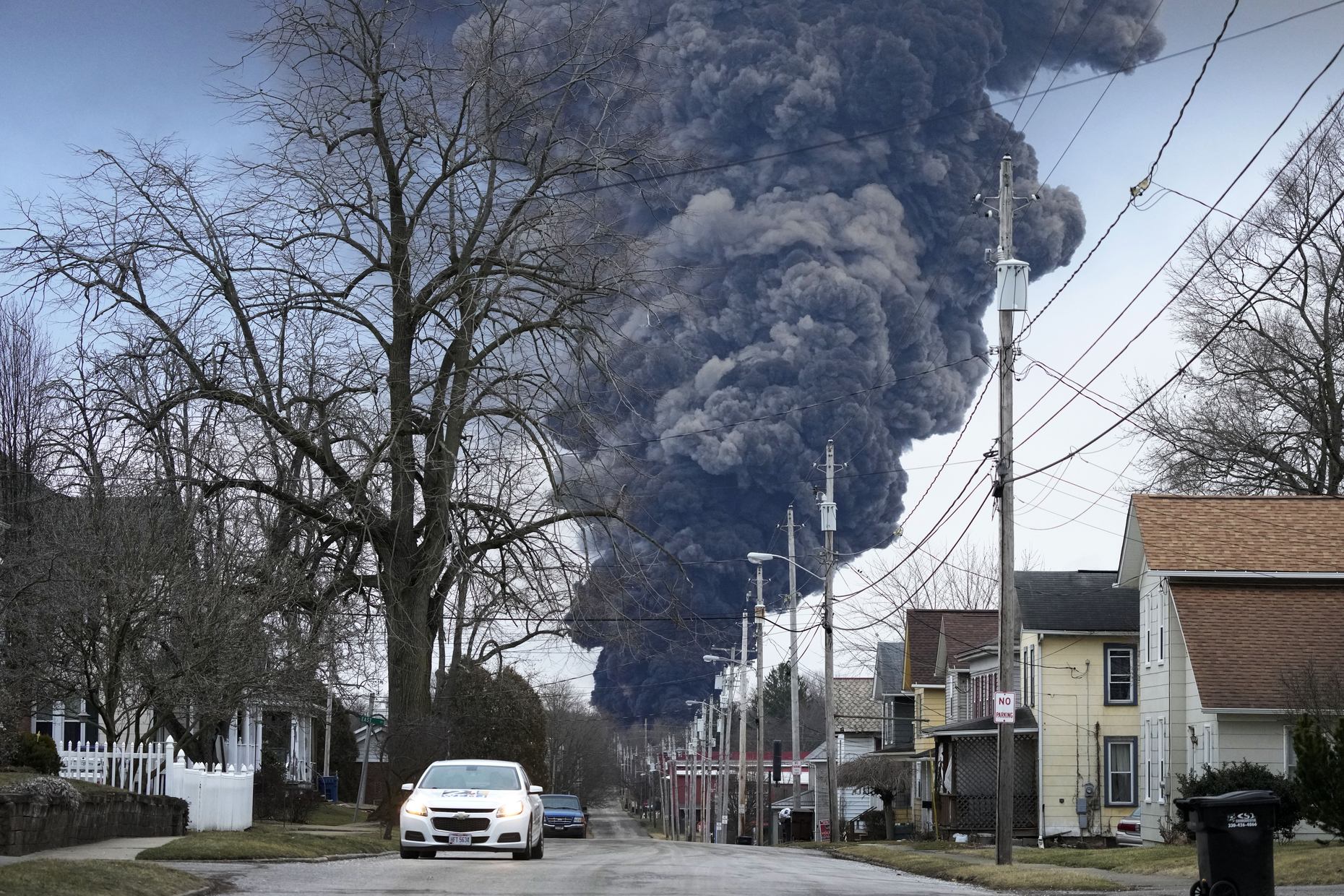
On the Media
Off the Rails
00:50:27
A derailment in Ohio; earthquake aftermath in Turkey and Syria; and preventing the next pandemic
Loading summary
Transcript192 lines
- [00:01]
Brooke Gladstone
Early coverage of the train derailment in Ohio left many with unanswered questions like why'd it happen?
- [00:08]
Allison Fisher
It was mystifying to me that TV news networks still approach these tragedies almost as acts of God or mere accidents. Because eventually the information does start to come out.
- [00:18]
Brooke Gladstone
From WNYC in New York, this is ON THE media. I'm Brooke Gladstone. On this week's show, disasters happen. From train derailing to earthquakes. Why aren't we better prepared?
- [00:30]
Gonool Tol
There are things that you have to do before the earthquake hits and the number one priority should be to construct stronger buildings.
- [00:39]
Brooke Gladstone
Plus, the spread of the avian flu among mink has pandemic watchers pleading, please, no, not another one.
- [00:47]
Scott Knowles
If you think that coronavirus is good at spitting out a new variant every few months, you ain't seen nothing. Influenza is the OG shape shifter.
- [00:56]
Brooke Gladstone
It's all coming up after this.
- [01:00]
Karen Landman
How many discounts does USAA Auto insurance offer? Too many to say here.
- [01:04]
Brooke Gladstone
Multi vehicle discount, Safe driver discount, New.
- [01:07]
Karen Landman
Vehicle discount, Storage discount.
- [01:09]
Scott Knowles
How many discounts will you stack up? Tap the banner or visit usaa.com autodiscounts restrictions apply.
- [01:15]
Unnamed Podcast Host
This Supreme Court term isn't business as usual. It's a full blown battle over democracy. Justices are shattering precedent, grabbing power and even turning on their own. It's, it's messy, it's high stakes and it's already reshaping how this country works. And our podcast, Strict Scrutiny breaks it all down legally, clearly, and with just the right amount of side eye. New episodes drop every Monday. Subscribe and listen wherever you get your.
- [01:38]
Brooke Gladstone
Podcasts and on YouTube from WNYC in New York. This is on the Media. I'm Brooke Gladstone. Did you hear about the train derailment that wrought havoc on the environment and rained horror on the local community?
- [01:52]
Scott Knowles
The cloud continues to travel west as.
- [01:55]
Karen Landman
Residents are now being asked to relocate. Relocate to Iron City. Evacuate all places of residence. Cloud of Deadly Chemicals Cloud of Deadly.
- [02:05]
Brooke Gladstone
Chemicals that's actually a clip from the new movie White Noise, based on the Don DeLillo novel filmed in June and July of 2021 in Ohio, the same place a real train hauling hazardous materials derailed earlier this month.
- [02:21]
Scott Knowles
A state of emergency has been declared for the village as they continue to evaluate this derailment.
- [02:27]
Karen Landman
An emergency cruise unleash controlled release and burn of toxic chemicals to prevent a potentially deadly explosion.
- [02:33]
Scott Knowles
Rail operator Norfolk Southern says a variety of chemicals were being carried in the train cars, but the highly flammable vinyl chloride remains the biggest concern.
- [02:43]
Brooke Gladstone
That explosion was expected to release hydrogen chloride and phosgene, a gas used as a weapon in World War I. Residents of East Palestine, Ohio, where the real derailment took place were actually extras in White Noise, which depicted locals complaining about the spotty media coverage of the film's toxic airborne MacGuffin.
- [03:05]
Karen Landman
Are they telling us it was insignificant? Do they think this is just television? Don't they know it's real? Shouldn't the streets be crawling with cameras and reporters? Shouldn't we be yelling out the window at them, leave us alone. We've been through enough already. Haven't we earned the right to despise their idiot questions? Even if there hasn't been great loss of life, don't we deserve attention for our suffering? Our terror isn't fear news.
- [03:37]
Brooke Gladstone
Sean Hannity asked much the same question on his show this week. The media mob has largely ignored what is a growing disaster in Ohio. Tiktokers are mad, too, even though the.
- [03:47]
Karen Landman
Media is refusing to cover it. There's a massive environmental disaster currently unfolding in Ohio, and the coverage that it has been getting hasn't been very good. There was this hazardous material specialist. His quote was, we basically nuked a town with chemicals so we can get a railroad open. This should be the number one story in the country right now. You have dead fish in the water, you have dead dogs on front lawns, people getting nauseous and sick. Despite all this, the media is refusing to cover it.
- [04:12]
Brooke Gladstone
And in some ways they have a point. The derailment happened on February 3, but coverage on outlets like Fox and MSNBC really only picked up steam this week. So why?
- [04:24]
Allison Fisher
It's possible that some new details about the environmental and health impacts maybe drove that uptick. Or it could just have been that it started to trend on Twitter, but either way, it still told us that they were very late to the significance of the tragedy.
- [04:43]
Brooke Gladstone
Allison Fisher, director of the climate and energy program for the progressive media watchdog Media Matters for America, points to the narratives taking over the story, these ideas.
- [04:54]
Allison Fisher
That because this is happening to a white community, the media is not paying attention to it, suggesting that if it happened in a community of color, that it would have been treated differently. And we know that that's not true because we've documented time and time again that those stories aren't covered either. We'd love those same voices to come out and say that when it happens in Flint or when it happens in Jackson, Mississippi, you know, when it happens in some these other places that are also inflicted by corporate greed and the lack of government oversight. So do I think that there's a media blackout and there's some sort of conspiracy behind that? No, this just fits in with a long line of environmental degradation, industrial accidents that go uncovered, and as a result, those that are perpetuating them go unaccountable.
- [05:48]
Brooke Gladstone
And Fisher says that even now, with all eyes on the aftermath of the crisis in Palestine, mainstream coverage is still.
- [05:57]
Allison Fisher
Meh, it's who, what, when, where, without much context, without much detail or new information from hour to hour as they're reporting on the story. It was mystifying to me that TV news networks still approach these tragedies almost as acts of God or mere accidents, because eventually the information does start to come out.
- [06:18]
Brooke Gladstone
Because the causes of the derailment are not a mystery. Late last year, rail workers were warning that something like this was bound to happen. Here's a clip from an interview a local reporter did in December.
- [06:31]
Karen Landman
We have one derailment here in Northeast Ohio where wheel flange was very thin. It picked a switch and derailed the entire train. Luckily, it was full of candle wax and not something highly volatile.
- [06:43]
Julia Rock
Train accidents are becoming more common for a number of reasons.
- [06:47]
Brooke Gladstone
Julia Rock is a reporter at the Lever, an online investigative outlet. She says that workers were striking over a practice called precision scheduled railroading, which hinders the thoroughness and frequency of safety inspections.
- [07:01]
Julia Rock
Inspection times are getting shorter or they're not happening. Trains are getting longer, which is sort of an unusual fact. But it allows train companies to run leaner workforces because the number of people per train doesn't increase linearly as the trains get longer. So that can cause more safety problems. And crude oil and other hazardous materials being carried on trains has increased.
- [07:28]
Brooke Gladstone
Still, derailments are old news.
- [07:31]
Scott Knowles
It's believed a procedural problem caused this derailment in Paulsboro, New Jersey, last Friday. The crash released vinyl chloride into the air and forced hundreds of people from their homes.
- [07:41]
Brooke Gladstone
That was in 2012. And that new Jersey train was carrying the same chemical that was just unleashed in Ohio then. This happened just a few days ago.
- [07:52]
Karen Landman
A train carrying at least one car's.
- [07:55]
Brooke Gladstone
Worth of hazardous materials has derailed outside of Detroit, Michigan. In 2015, the Obama administration issued a rule requiring stronger safety measures on trains.
- [08:06]
Julia Rock
One of the sort of key features of that rule, the one that the railroad industry was most fixated on repealing, was one requiring electronically controlled pneumatic brakes on trains. Essentially a much safer braking system that allows trains to stop all of the cars at once, rather than one car at a time as they currently are stopped.
- [08:28]
Brooke Gladstone
Julia Rock says those special brakes were required only on trains hauling hazardous materials. But when Trump came into office, the lobbyists prevailed. The brake requirement, limited as it was to substances like crime crude oil, was rolled back, increasing the likelihood of toxic crashes even worse than the one in Palestine. Roc says she's heard from former regulators, rail workers and union members who all say the same thing, which was like.
- [08:57]
Julia Rock
This is a bad derailment. But what we're worried about is something far worse happening. And you know what is surprising is not that this train derailed and released this plume of chemicals and started on fire. What's surprising is that this doesn't happen.
- [09:10]
Brooke Gladstone
More often because the derailment was a preventable, foreseeable disaster, the inevitable consequence of short sighted policy and business decisions.
- [09:21]
Karen Landman
That's often, I think, surprising to people because they think of a disaster as an apolitical event, something we should rally around each other, rally around our community and not talk about politics.
- [09:33]
Brooke Gladstone
Scott Knowles is a historian of disaster. We spoke to him in 2017 after Hurricane Harvey slammed Texas Gulf Coast.
- [09:42]
Karen Landman
But disasters reveal to us whether or not we've invested enough in our civil society. Do we have the kind of health care that we need? Do we have the kind of environmental protection that we need? And because disasters are so complex, it's all sort of revealed at once.
- [09:57]
Brooke Gladstone
Allison Fisher of Media Matters says that's where good reporting comes in.
- [10:02]
Allison Fisher
It does put pressure on public officials. It does help ensure that these companies are held accountable. And more importantly, it gives voice to those that have been impacted by the disaster.
- [10:15]
Brooke Gladstone
Another reason to report early and often the absence of details early on nourishes conspiracies that bloom like algae in the void of unanswered questions.
- [10:27]
Unnamed Commentator
I just feel like this is way.
- [10:28]
Scott Knowles
Worse than they are letting people know about because they don't want to cause alarm.
- [10:31]
Unnamed Commentator
So let me get this right.
- [10:32]
Gonool Tol
Netflix released a movie last year about a train exploding in Ohio, and then.
- [10:38]
Unnamed Commentator
This year a train explodes in Ohio.
- [10:41]
Brooke Gladstone
Y' all think this was planned or.
- [10:43]
Unnamed Commentator
Y' all think this was a coincidence?
- [10:44]
Brooke Gladstone
This is America's Chernobyl. And right now there are many politicians that are gonna try and blow this off and say it's not as bad.
- [10:51]
Unnamed Podcast Host
You could still stay in your homes.
- [10:52]
Brooke Gladstone
Just don't breathe for too long. They're okay with sacrificing Americans. Such algae blooms go on to fuel factually challenged bloviators like Charlie Kirk, who says members of the Biden administration won't go to East PA Palestine because the.
- [11:10]
Karen Landman
War on white people continues. Why would you care for the white working class voters in eastern Ohio. If this train derailment happened in downtown Atlanta, in the densely populated black neighborhoods, this would be the number one news story. It would be Flint Water Crisis 2.0. There would be clamoring and activism and talks for reparation.
- [11:34]
Brooke Gladstone
The story in East Palestine is still unfolding. The causes may be clear, but the consequences aren't. And the epa, which has been monitoring East Palestine's air and water to see if it's safe for humans to live there, has been steadily stripped of regulatory authority and funding. So what does that tell us?
- [11:54]
Karen Landman
I believe that disasters reveal society.
- [11:58]
Brooke Gladstone
Disaster historian Scott Knowles.
- [12:01]
Karen Landman
They are an opportunity for us to actually pull back the curtain and see what some of the deeper commitments and values of a society actually are.
- [12:10]
Brooke Gladstone
Disasters happen. They're caused by spasms of nature or late stage capitalism, or frequently both. But the depth of the mayhem can be managed with attention and resources, research and regulation, institutions and infrastructure. Why they aren't is the theme of this hour. Coming up, what to expect when you're not expecting an earthquake in an earthquake zone, the answer will not surprise you. This is on the media.
- [12:56]
Unnamed Podcast Host
This Supreme Court term isn't business as usual. It's a full blown battle over democracy. Justices are shattering precedent, grabbing power and even turning on their own. It's messy, it's high stakes and it's already reshaping how this country works. And our podcast, Strict Scrutiny breaks it all down legally, clearly, and with just the right amount of side eye. New episodes drop every Monday. Subscribe and listen wherever you get your podcasts and on YouTube.
- [13:23]
Brooke Gladstone
This is on the Media. I'm Brooke Gladstone. Now on to a disaster across the globe and the attendant mixed messages.
- [13:31]
Scott Knowles
It's been 10 days since the quakes toppled tens of thousands of buildings across Turkey and Syria.
- [13:41]
Brooke Gladstone
The skies over Turkey are continuously pierced.
- [13:44]
Karen Landman
With the sound of helicopter blades still performing crucial strikes.
- [13:48]
Scott Knowles
Search and rescue.
- [13:49]
Karen Landman
The window for finding people alive is closing fast.
- [13:52]
Scott Knowles
Of what Turkey has described as the biggest catastrophe of the century, the magnitude.
- [13:58]
Brooke Gladstone
7.8 quake was the strongest that Turkey perched atop fault lines had endured in over 80 years. But still the horrific ever rising death toll demanded accountability, or at least the appearance thereof.
- [14:13]
Karen Landman
Earlier today, the justice minister in Turkey, he said that detainment warrants had been issued for 134 people that the government suspects of potentially being responsible for shoddy construction that could have led to the loss of life.
- [14:29]
Scott Knowles
The government has vowed to punish anyone responsible, but critics say Turkey's construction codes are rarely enforced.
- [14:35]
Karen Landman
Political pressure is building on President Tayyip Erdogan over his handling of the crisis. The head of Defense Minister Policy AKA admitted that after two days, only seven and a half thousand soldiers have been deployed in an area that encompassed 10 large cities.
- [14:51]
Brooke Gladstone
Some critics say the worst offense, however, was the initial delay in rescue efforts. The first few days after can be the most crucial for survival.
- [15:00]
Gonool Tol
My sister and her family live in Antakya, and Antakya is one of the worst hit cities in the country. It's on the southern border with Syria.
- [15:10]
Brooke Gladstone
Kanul Tall, founding director of the Middle East Institute's Turkey Program, was on the ground in Turkey last week.
- [15:17]
Gonool Tol
A few hours after the earthquake hit. The entire city had leveled to the ground, and my sisters in laws remained trapped under the rubble. So my sister and her family and her husband tried to dig them out with their bare hands. When they finally did pull out, their father, there was a concrete block on his leg. So they needed equipment to be able to lift that concrete block. My family waited for 48 hours for the rescue workers. And when they finally did arrive, they told us that they could not help us because they had received instructions to focus there rescue work elsewhere.
- [16:04]
Brooke Gladstone
He died.
- [16:05]
Gonool Tol
He died.
- [16:07]
Brooke Gladstone
I'm so sorry.
- [16:08]
Gonool Tol
Thank you.
- [16:09]
Brooke Gladstone
When your family was told, we can't do this right now, we have other orders. What were their orders?
- [16:17]
Gonool Tol
Well, one of them told us that they were looking for an address that belonged to the family members of a Member of Parliament from Istanbul. This is just a symptom of a larger problem, which is a centralization of power.
- [16:35]
Brooke Gladstone
Cast your mind back to 1999. Turkey had another shattering earthquake. It killed over 18,000 people. Erdogan campaigned on a platform of solving all the problems that had caused the government to respond so sluggishly. He would wipe away corruption and collusion between business and government. He'd rebuild the economy. But what did he actually accomplish in the 20 plus years?
- [17:03]
Gonool Tol
Not much. You're right. He blamed all the ills of the 1990s on widespread corruption, dysfunctional governments and unresponsive state institutions. And he promised things would change radically. And many people believed him. He comes from an Islamist background, and yet Social Democrats voted for him, Liberals voted for him, not just the conservatives. But Erdogan hollowed out state institutions, wiped out most vibrant civil society organizations, and basically enriched his cronies to create a small circle of loyalists around him. In the 1990s, my country had many problems, and yet we did have institutions. And now none of those institutions are there.
- [17:51]
Brooke Gladstone
Throughout the 2000 and tens, Erdogan was on a construction spree counting on all of this building to inflate the economy, which it did, at least temporarily. More jobs, more manufacturing. Much of this to replace the buildings that fell in 1999. You say that the people who benefited most from from this building over the long haul were a small circle of friends from the construction sector.
- [18:22]
Gonool Tol
That's right. By awarding them all infrastructure projects without competitive tenders or proper regulatory oversight. And these companies embarked on a massive building spree, constructing in earthquake hotspots without following proper building codes. In Hatay, for instance, that's where my sister and her family live. So, one of the areas hardest hit by Monday's earthquake. Residential buildings, hospitals, and even the local branch of the Turkish Disaster and Emergency Management Presidency, all built by Erdogan's cronies. They were either leveled to the ground or suffered massive damage. The town's only airport, built on top of a fault line by a company close to tied to Erdogan. It was split in two by the earthquake.
- [19:11]
Brooke Gladstone
Are you saying that a lot of the buildings that fell were the newer buildings and older buildings were left standing?
- [19:19]
Gonool Tol
That's partly true. According to experts and some state agencies, 51% of the buildings that collapsed in Monday's earthquake, they were built after Erdoan came to power. But old buildings collapsed, too, because Erdogan oversaw a sweeping amnesty program that forgave faults in millions of buildings.
- [19:41]
Brooke Gladstone
What is an amnesty for a building?
- [19:44]
Gonool Tol
It means it should be demolished.
- [19:47]
Brooke Gladstone
Ah.
- [19:47]
Gonool Tol
And yet Erdogan granted them an amnesty and they were allowed to stand.
- [19:52]
Brooke Gladstone
I see. What about inspection companies? Weren't they sent around to check these places out?
- [19:58]
Gonool Tol
Well, in Hatay, many of these inspection companies belong to these construction companies to inspect their buildings.
- [20:09]
Brooke Gladstone
You've written about the Turkish Disaster and Emergency Management Presidency, otherwise known as afad. It should have been instrumental in coordinating the relief effort. You say that it entirely was not.
- [20:24]
Gonool Tol
Can you imagine? You are the main disaster and emergency management agency in a country like Turkey, which is prone to earthquakes and natural disasters, and yet you do not have a tent. Your budget is much smaller than the budget of the Directorate for Religious Affairs. And the person who is in charge is graduated from Department of Theology, and he has no previous experience in disaster management.
- [20:57]
Brooke Gladstone
Why him?
- [20:58]
Gonool Tol
Well, that's the story of Erdogan's Turkey. That's what he does. He put loyalists in key positions, and this is the result.
- [21:08]
Brooke Gladstone
One thing I'm curious about is the earthquake tax that was introduced in the aftermath of the 1999 quake. Homeowners pay it every year, along with their property taxes. 1999 was a long time ago. By now, that fund should have been valued in billions.
- [21:27]
Gonool Tol
That's right.
- [21:27]
Brooke Gladstone
Where did the money go?
- [21:28]
Gonool Tol
$38 billion in earthquake tax, and yet we don't know what happened to that money.
- [21:35]
Brooke Gladstone
Did anybody ask Erdogan?
- [21:37]
Gonool Tol
Of course. Opposition parties, journalists, experts, they're all asking the same question, what happened to our earthquake tax money? And we haven't received an answer.
- [21:49]
Brooke Gladstone
With thousands still buried under the rubble, he seems to be very busy spinning a narrative that this was an inevitability, a huge, unprecedented earthquake bound to kill on a mass scale, that it was impossible to prepare for a disaster like this. How is he getting that message out.
- [22:11]
Gonool Tol
From the early hours? That's what his government was doing, trying to push the narrative that this was the disaster of the century, that no government in the world could have responded to this earthquake. Yes, powerful earthquakes kill people, but they're more deadly in countries like Turkey, where the interest of a corrupt few are prioritized above all else. So this is not a natural disaster. This is a man made disaster.
- [22:43]
Brooke Gladstone
After the earthquake hit, you say he neglected to dispatch troops or rescue agencies, but he did work on a video.
- [22:53]
Gonool Tol
Yes. It was the presidency's Communications Directorate that prepared it. It was a very clumsily made video. Some of the experts that he included in that video came out later and said that their words had been manipulated. They all accept that this is a huge tragedy, that this is a huge disaster, but no one is saying that the government could not have helped.
- [23:23]
Brooke Gladstone
So what does a well constructed response to the earthquake look like?
- [23:28]
Gonool Tol
There are things that you have to do before the earthquake hits. And the number one priority should be to construct stronger buildings, to direct the builders to follow the regulations, safety codes and building codes. And also you have to empower the very institutions that are in charge of responding, put people with the necessary background in charge of those institutions. So those are the things that you should be doing before the earthquake hits. And then there are things that you must do after the earthquake hits. And that is Turkey has the second largest army in NATO, so the president should have dispatched the military. If there were Turkish troops on the ground helping the victims, taking part in search and rescue efforts, the death toll would not have been this high.
- [24:24]
Brooke Gladstone
When he was first elected, did you have any hope in his governance?
- [24:30]
Gonool Tol
I did, because the 1990s, it was a lost decade. I was young at the time, but I remember how unstable the country was at the time, and all political parties were corrupt. So here came a politician who promised that he would do away with corruption, rebuild stronger, more responsive institutions. He would push hard for Turkey to become a more democratic, more prosperous country, an EU member country. So he said all the right things and I believed him.
- [25:11]
Brooke Gladstone
Gonool, thank you very much.
- [25:13]
Gonool Tol
Thanks for having me.
- [25:15]
Brooke Gladstone
Gonool Tol is the founding director of the Middle East Institute's Turkey Program and author of the book Erdogan's War A Strongman's Struggle at Home and in Syria over the last few weeks we've seen the news focus on the devastation and response to the earthquake in Turkey. But in Syria, coverage has been more complicated because when the quake hit, the country was and is engaged in a long, drawn out civil war.
- [25:44]
Karen Landman
12 years of war have already wrought destruction, killed more than half a million and and now this. Frankly, the earthquake has brought attention back, but those millions of people in Syria have been struggling now for years and it's become a forgotten crisis.
- [26:04]
Brooke Gladstone
And in the disaster's wake, Syrians still felt unseen. More than a week after the earthquake, some areas are still struggling for international support.
- [26:14]
Karen Landman
From the very beginning we said we need help, we need your support. No one helped us, no one cared about those civilians. Unfortunately, the time passes and we're running out of time and no one responded to our calls.
- [26:30]
Brooke Gladstone
International organizations like the UN have said that this is in part because in Syria, the hardest hit areas are located both in regions controlled by Syrian President Bashar Al Assad and in the northwest where rebel groups hold power. Even in the aftermath, the rebel held areas have struggled most for support. For the first few crucial days, it was only small groups of local volunteers performing rescues or trying to from the rubble.
- [27:01]
Karen Landman
Salvations for some. These sisters were pulled from the rubble of their house in Jindares by local rescuers. As the hours pass, exhausted search teams are digging, more with hope than expectation.
- [27:14]
Brooke Gladstone
Natasha hall is a senior fellow at the Middle East Program at the center for Strategic and International Studies and has worked as an aid worker on the ground in Syria. She says that access to the northwest was definitely an issue, but politics colluded with Mother Nature to make it so.
- [27:32]
Unnamed Commentator
The UN agencies that deliver and implement humanitarian aid are only allowed to do so through one border crossing from Turkey into northwest Syria. And this is because it relies on a mandate at the UN Security Council and unfortunately, one of the Assad government's stalwart allies, Russia, is a permanent member on the Security Council. So every few months or so there's a vote to renew this mandate or allowance for UN agencies to use this border crossing. So it has become extremely contentious as.
- [28:07]
Brooke Gladstone
You mentioned, it took a while for UNAID to reach northwest Syria. Some Syrians are even flying the UN flag upside down.
- [28:17]
Unnamed Commentator
Yes, we saw dozens of search and rescue teams from all around the world flying into government controlled parts of Syria, flying into Turkey, and we saw two small teams within the first five days of the earthquake going into northwest Syria with no equipment. And just to give you a sense of the lack of urgency, I was speaking with a UN official the other day and they said, well, the needs.
- [28:44]
Brooke Gladstone
Haven'T really changed, that the earthquake didn't.
- [28:47]
Unnamed Commentator
Change things, which is ridiculous, of course. Finally, I think it was something like 28 trucks have come through. But that was five days after the initial earthquake. And that was the typical aid received, food kits and hygiene kits for this population. It was not earthquake related assistance or support. It's mostly been NGOs picking themselves up by their bootstraps and bringing in medical personnel.
- [29:13]
Brooke Gladstone
Which brings to mind the Syrian volunteer civil defense group, the White Helmets.
- [29:19]
Unnamed Commentator
The White Helmets emerged sort of out of necessity because again, you had these areas heavily bombarded by Syrian regime aircraft and later Russian regime aircraft as well. And so people were buried under the rubble. There was a need for some kind of emergency force. They were initially trained by the Turkish Civil Defense because the Turkish Civil Defense had a lot of experience with earthquakes. The experience was translatable to wartime Syria.
- [29:50]
Brooke Gladstone
The Syrian and Russian governments have long perpetuated misinformation against groups operating within the rebel controlled areas, such as the White Helmets. They've been responsible for most of the rescue efforts in the northwest after the earthquake. And you have yourself worked with them on the ground. Can you tell me about the misinformation?
- [30:13]
Unnamed Commentator
What the Syrian regime and Russia aimed to do was to flip the script on the entire conflict itself, that this was a Western plot to overthrow the government, that the White Helmets are Mossad agents, terrorists, throwing anything at them to see if anything will stick. We've seen a lot of footage from the White Helmets and others of children being rescued from under the rubble. Immediately the bots came out and started posting pictures of children who were buried under rubble in opposition controlled areas. The text essentially claiming that this was Syrian and Russian civil defense rescuing children. And we even saw on BBC just a few days ago Amar Selmo, who's a long serving White Helmet speak for about two minutes, only to be followed by Buthayna Shaban, who's a Syrian regime spokesperson for about 10 or 15 minutes, calling the White Helmets terrorists. Multiple times we've seen that narrative move to mainstream networks.
- [31:20]
Brooke Gladstone
You Say that Assad and his regime have been absolutely amazing in pr, that this has been another moment for Assad to normalize himself back into world politics with photo shoots, with world leaders and so on.
- [31:35]
Unnamed Commentator
Absolutely. I mean, I think that this is an inflection point in a four year, five year trend. But most certainly the government was ready for this. They had set the table for it, creating websites devoted to spreading misinformation on Syria. And so this is their moment to say how cruel the world is for not allowing humanitarian aid during this moment of crisis, which is misinformation in and of itself. Because actually, even the sanctioning countries like the United States and European countries have sent billions of dollars of aid into government controlled parts of Syria for the entirety of the conflict. But I would argue that the governments that are taking the bait are not just taking the bait because they don't understand. I think that there is this feeling amongst regional countries, but even beyond the region that the best way to move on from the gaping wound that is Syria is to normalize with the Assad regime.
- [32:39]
Brooke Gladstone
You did a year long report before the earthquake focused on aid efforts to Syria in the 12 years since the start of the war. In that case, and in the case of the earthquake, you found that a lot of that aid is not making it to civilians.
- [32:57]
Unnamed Commentator
What we've seen since the beginning of this conflict, which the international community essentially decided to deal with through humanitarian aid, is a lot of compromises made by humanitarian workers on the ground, by UN officials, such as allowing government affiliated organizations to take UN aid out of sight to beneficiaries, like allowing state military escorts to accompany those aid convoys. And what we saw is aid being delayed, impeded, ransacked, looted throughout the conflict as a result of that. And at least according to career UN officials that I talked to for that report, these are unprecedented compromises. And the problem is that it is very, very difficult to turn back once you have made those compromises. And so fast forward to this earthquake, I foresee a lot of compromises being made that will be difficult to turn back.
- [33:55]
Brooke Gladstone
In Syria, the buildings themselves have been deteriorating for at least 12 years. Was there anything the international community could have done to make the earthquake's impact less catastrophic there?
- [34:10]
Unnamed Commentator
That's a good question. This is a big issue for northwest Syria, as you mentioned. You know, this is an area with governance, but not really structured or standardized governance, certainly not internationally recognized governments. And so you saw entire towns just leveled because you just don't have building codes, you don't have regulations. So the destruction and the casualties were far higher. Now the larger question for all of Syria is how will you reconstruct in the aftermath of the earthquake? Because the European Union's stance, the UK stance and the United States stance has long been there will be no reconstruction unless there is movement towards UN Security Council Resolution 2254, which essentially asks for a just political transition in the aftermath of this earthquake. There are questions of whether you build back better, but there's also a question of whether you build back at all.
- [35:13]
Brooke Gladstone
They are sending billions to Syria, so doesn't that suggest they have decided in favor of rebuilding even though Assad's still there?
- [35:23]
Unnamed Commentator
The question is whether or not that will happen for northwest Syria at this point, this will be a long standing impact. I lived in Armenia for two years and there are people that are still devastated and traumatized by an earthquake that happened 30 years ago. There are still people that are living in the containers that aid came in. What I'm seeing right now for the northwest is not only is there an acute response, but it is completely unclear what the long term recovery will look like. There was one story that a friend of mine just told me. His colleague was killed in the earthquake but he had a 14 year old daughter who was trapped under the rubble. Rescue workers could not pull her out because her leg was trapped and they didn't have the equipment to lift it up and so they had to amputate her leg. This is a 14 year old girl who has seen nothing but the swar. In spite of that, just moments after that earthquake, after she got pulled out from under the rubble and lost her leg and her father, there was another tremor and she immediately turned to her cousin who was sitting next to her and said run. Save yourself. I mean this is a population that has endured so much and I just don't know how much you can push people. But I think this is the brink. Unless the international community comes together and really thinks about what recovery will look like.
- [37:01]
Brooke Gladstone
Natasha, thank you very much.
- [37:02]
Unnamed Commentator
Thank you for having me, Brooke.
- [37:04]
Brooke Gladstone
Natasha hall is a senior fellow at the Middle East Program at Time the same center for Strategic and International Studies. Coming up, the perilous combo of chicken and mink. This is on the media.
- [37:25]
Karen Landman
USAA knows dynamic duos can save the day like superheroes and sidekicks or auto and home insurance. With usaa you can bundle your auto and home and save up to 10%. Tap the banner to learn more and get a'@usaa.com bundle restrictions apply.
- [37:41]
Unnamed Podcast Host
This Supreme Court term isn't business as usual. It's a full blown battle over democracy. Justices are shattering precedent, grabbing power, and even turning on their own. It's messy, it's high stakes, and it's already reshaping how this country works. And our podcast strict scrutiny breaks it all down legally, clearly, and with just the right amount of side eye. New episodes drop every Monday. Subscribe and listen wherever you get your podcasts and on YouTube.
- [38:05]
Brooke Gladstone
This is on the Media. I'm Brooke Gladstone. We end on a disaster yet to come, and how salvation is likely to slip through our hands. It's no secret that after the past year, prices for the basics have gone up. But one staple stood out.
- [38:23]
Karen Landman
According to the latest stats that are out there, egg prices in January were up by 70% from a year before.
- [38:31]
Brooke Gladstone
Sure, record inflation played a role, but that subsided. No, something else is a foul WRA.
- [38:39]
Gonool Tol
Says in the last year, the poultry.
- [38:41]
Allison Fisher
Industry had to euthanize millions of turkeys.
- [38:44]
Scott Knowles
And chickens nationwide because of the bird flu.
- [38:47]
Brooke Gladstone
A strain of bird flu known as H5N1 has led to what some call the largest avian influenza outbreak in US History. Of course, birds catching a deadly bird flu seems kind of unsurprising, but in Spain, there was also an outbreak of H5N1 at a mink farm. That's scary. And not just for minks. Their respiratory tracts are far more similar to ours, leading to a perplexing question for public health officials. Is H5N1 evolving the airborne ability to infect mammals en masse?
- [39:25]
Scott Knowles
Now, that is still hypothetical.
- [39:27]
Brooke Gladstone
Karen Landman covers public health, infectious diseases, and the health workforce at vox.
- [39:33]
Scott Knowles
It's not clear from the publication that detailed this particular outbreak that the minks did transmit the virus to each other. It's possible that all of them became infected by eating the same infected bird, or even by transmitting flu to each other through their feces. It's not totally clear that this virus in that population has acquired the ability to be transmitted through the air, which would be a much more concerning development.
- [39:59]
Brooke Gladstone
It's also gotten in other animals. Grizzly bears in Montana, skunks. Can humans catch bird flu now?
- [40:07]
Scott Knowles
Yes, but I want to clarify that humans can catch bird flu through very close contact with with highly infected birds, not casually walking by a backyard chicken. We are talking about usually poultry workers or people who work in markets where these animals are present in really high quantities and when there's not a lot of ventilation.
- [40:30]
Brooke Gladstone
So we're very unlikely to catch it, but it's pretty deadly if we do. According to data from the World Health Organization last month. Between January 2003 to November 2022, there have been 868 cases of human infection reported from 21 countries, of which 457 were fatal, more than half. Comparing that to COVID 19, according to Johns Hopkins, the highest recorded mortality rate in the world was just under 5%. In Peru, it was just a little over 1%. Here, more than half.
- [41:14]
Scott Knowles
I don't mean to downplay the disease's case, fatality rate, but a lot of these infections are taking place in countries that have a different standard of medical care than in the United States. That can certainly impact the fatality rate of these infections. That's not to say that we shouldn't be concerned about this. If, God forbid, an H5N1 were to acquire the ability to spread through the air among humans, it would spread in countries with different standards of medical care than in the United States.
- [41:42]
Brooke Gladstone
You write if there's anything concerning about the current bird flu, it's that it could mutate and evolve, right? I mean, thanks to COVID 19, most of us are familiar with the havoc that variants can bring if the bird flu evolves. How prepared are we?
- [41:59]
Scott Knowles
Oh, boy. Do you want to talk first about how bird flu evolves, or do you want to talk about preparedness?
- [42:04]
Brooke Gladstone
Start with column A.
- [42:06]
Scott Knowles
Well, bird flu and flu viruses in general are great at evolving. I mean, if you think that coronavirus is good at spitting out a new variant every few months, you ain't seen nothing. Influenza is the OG shape shifter, different from the way viruses in other families.
- [42:22]
Brooke Gladstone
Mutate, such as coronavirus.
- [42:24]
Scott Knowles
So they're in a totally different family of viruses. And scientists have a way of talking about the way influenza viruses mutate that's simplified. There are two different ways that it changes. One is called drift and one is called shift. All viruses replicate themselves billions of times over, and as they're doing this, they make lots of little errors. And sometimes those errors really add up to translate into a way of behaving that can change the way the virus causes disease, the severity of disease, the way it spreads. However, they take a long time to take place, and they usually don't result in an immunologically novel virus. Right.
- [43:05]
Brooke Gladstone
So what's the difference between the way bird flu mutates and coronavirus?
- [43:10]
Scott Knowles
So coronavirus can also do drift type mutation. It can also make lots of errors as it replicates itself and make lots of changes that make it look like a new variant, for example. That does change. But influenza virus has this added ability of being able to basically swap an entire chunk of its genome with another strain of flu virus that it meets in a cell. That kind of change is called shift. It's almost like if you had a set of eight cards, because influenza viruses have eight segments of their genome and you wholesale traded one of those cards with another person. I think your producer earlier called it virologic. Go fish. And it's a major change. It can give it not only new abilities very, very quickly, but it can also make it look very novel very quickly to our immune systems. So not a whole lot of other viruses do this kind of shift. And that is why influenza virus has proven itself to be so good at causing pandemics, because as it sort of moves through populations, it can start acquiring new characteristics very quickly. It especially does this well when it is in an animal with another virus that's very different. And both viruses have lots of opportunities to replicate. But not all animals are hospitable to that kind of replication. Birds are great at being infected by H5N1. We're great at being infected by non avian flu type viruses.
- [44:44]
Brooke Gladstone
Got it.
- [44:44]
Scott Knowles
But there are mixing vessel animals that are great at being infected by both. Minks are among them. And so when those kinds of animals get infected by multiple types of flu strains at the same time, that's an opportunity for those flu strains to engage in shift type mutations that very quickly allow them to acquire new genetic characteristics that can really change the way they behave and transmit. And that's what makes transmission in this kind of a mammal, especially concerning.
- [45:14]
Brooke Gladstone
Now let's move on to preparation, specifically vaccines. Zeynep Tufekci wrote in the New York Times that, quote, all but one of the approved vaccines for this are produced by incubating each dose in an egg.
- [45:30]
Scott Knowles
And she also mentions a couple paragraphs down from there that MRNA based platforms which do not depend on eggs and which we used to create most of the coronavirus vaccines that we've used in this country. There seems to be a fair bit of confidence among the folks I've talked to that we would be able to use an MRNA platform to develop a vaccine to target a novel flu virus pretty rapidly and we'd be able to scale that up. The question is whether people would take it. And as we've seen, that is much, much more complicated.
- [46:04]
Brooke Gladstone
But is the public health infrastructure really there? I guess the bigger question is, did we learn any lessons in the last several years?
- [46:14]
Scott Knowles
Well, not only is this an issue of funding, although public health at the federal, state and local level is really not funded to the degree that we need it to be, to be prepared. But also there are big issues of morale and public health personnel leaving the profession for the private sector. We also have, unfortunately in this country, restricted the kind of research that would really help us know what kind of mutations are worrisome and what are not. And this is gain of function research. The kind of research that allows experts to tinker with a flu virus in the lab, give it the characteristics that worry us, and then see if it actually causes disease in an animal model.
- [46:56]
Brooke Gladstone
Because people don't like unnatural man made things being created in the world.
- [47:01]
Scott Knowles
Yeah, there's a lot of worry that doing this kind of work is itself a big risk to humanity's health. And yeah, that's prevented a lot of really important research from happening.
- [47:11]
Brooke Gladstone
Here's a funny question. Shouldn't we be vaccinating the chickens.
- [47:18]
Scott Knowles
So there actually are good vaccines for chickens? However, it is hard for people to tell whether a chicken that has antibodies to the flu has those antibodies because it got infected or because it got vaccinated. When countries determine whether they want to accept our exports, if our egg populations or our chicken populations have these antibodies that could actually prevent them from taking those exports because of concerns that they may be receiving infected eggs or infected chickens into their countries.
- [47:50]
Brooke Gladstone
Your Vox colleague Kenny Torella says we should blame the diva problem.
- [47:56]
Scott Knowles
DIVA is short for differentiating infected from vaccinated animals. And that's exactly the challenge here. Although we want to protect our own flocks in the United States and our own eggs, doing so could actually signal to other countries not that we're protecting them, but that they are infected. And that is a really unfortunate problem.
- [48:14]
Brooke Gladstone
Terrella said that that means the big poultry exporters like the US which sends 18% of its poultry abroad, don't vaccinate because they don't want to miss out on international trade.
- [48:26]
Scott Knowles
Isn't that crazy? Instead, we'd rather just kill tens of millions of animals in awful ways.
- [48:32]
Brooke Gladstone
Everybody who studies this probably has a different level of worry. What's yours?
- [48:39]
Scott Knowles
This incursion into this population of minks is itself not a 3 alarm fire to me. There's a lot that needs to happen for those viruses to become agents of a human pandemic. The way to avoid this is by really prioritizing the things that we need to do to find and respond to these changes, when they happen, and also to know when these changes really matter. So that means reconsidering the importance of gain of function research also funding surveillance activities. So these are monitoring Activities that let public health people know what kinds of flu viruses are circulating in farmed animal populations, wild animal populations, and in humans, quickly figure out what is going on and where so they can respond appropriately and then funding those response activities. You know, we've just really underfunded and under supported our public health infrastructure, not only in the United States, but worldwide. And even though the pandemic showed us just how much that is to our detriment, it doesn't really seem like we've gotten the message. I mean, funding public health didn't come up at all in the State of the Union speech this year. I was sort of shocked because, you know, this really feels like a moment where if we don't respond to the threats that we know are out there, we are going to be in some big trouble in the future. And flu could very easily be the agent of the next pandemic.
- [50:03]
Brooke Gladstone
It sounds like the scariest thing isn't H5N1 or any other flu. It's us grabbing the attention of our elected officials and our population. It may be a very slow moving train. We still have to deal with it.
- [50:26]
Scott Knowles
That's right. This time it looks like the influenza virus that affected these minks didn't take all the steps it needed. But if we as a humanity don't develop a sense of respect for these pathogens and respect for each other, that would provoke us to do what we need to do. I mean, do you have faith that everybody, you know is going to put masks back on and go back to social distancing? If we need to do this out of concern for a new respiratory pathogen, do we have faith that everyone in our neighborhoods is going to run and get the new vaccine that's produced? Should we see a new pandemic potential flu virus emerge? Those are questions I wouldn't have imagined doubting the answer to a few short years ago. But having seen the way the coronavirus pandemic unfolded, I'm not sure that we really have it together to respond collectively if a flu virus does take the steps it would need to take to really cause another pandemic.
- [51:30]
Brooke Gladstone
Karen, thank you very much.
- [51:32]
Scott Knowles
Thanks so much for having me.
- [51:33]
Brooke Gladstone
Karen Landman covers public health at Vox. And that's the show on the Media is produced by Micah Loewinger, Eloise Blondio, Molly Schwartz. Schwartz. Rebecca Clark Callender, Candice Wong and Suzanne Gaber, with help from Tammy George. Our technical directors, Jennifer Munson. Our engineers this week were Andrew Nerviano and Shyam Sundra. Katya Rogers is our executive Producer on the Media is a production of WNYC Studios. I'm brooke Gladstone.
- [52:10]
Gonool Tol
Since WNYC's first broadcast in 1924, we've been dedicated to creating the kind of content we know the world needs. Since then, New York Public Radio's rigorous journalism has gone on to win a Peabody award and a DuPont Columbia Award, among others. In addition to this award winning reporting, your sponsorship also supports inspiring storytelling and extraordinary music that is free and accessible to all. To get in touch and find out more, visit sponsorship.wnyc.org.