← On the Media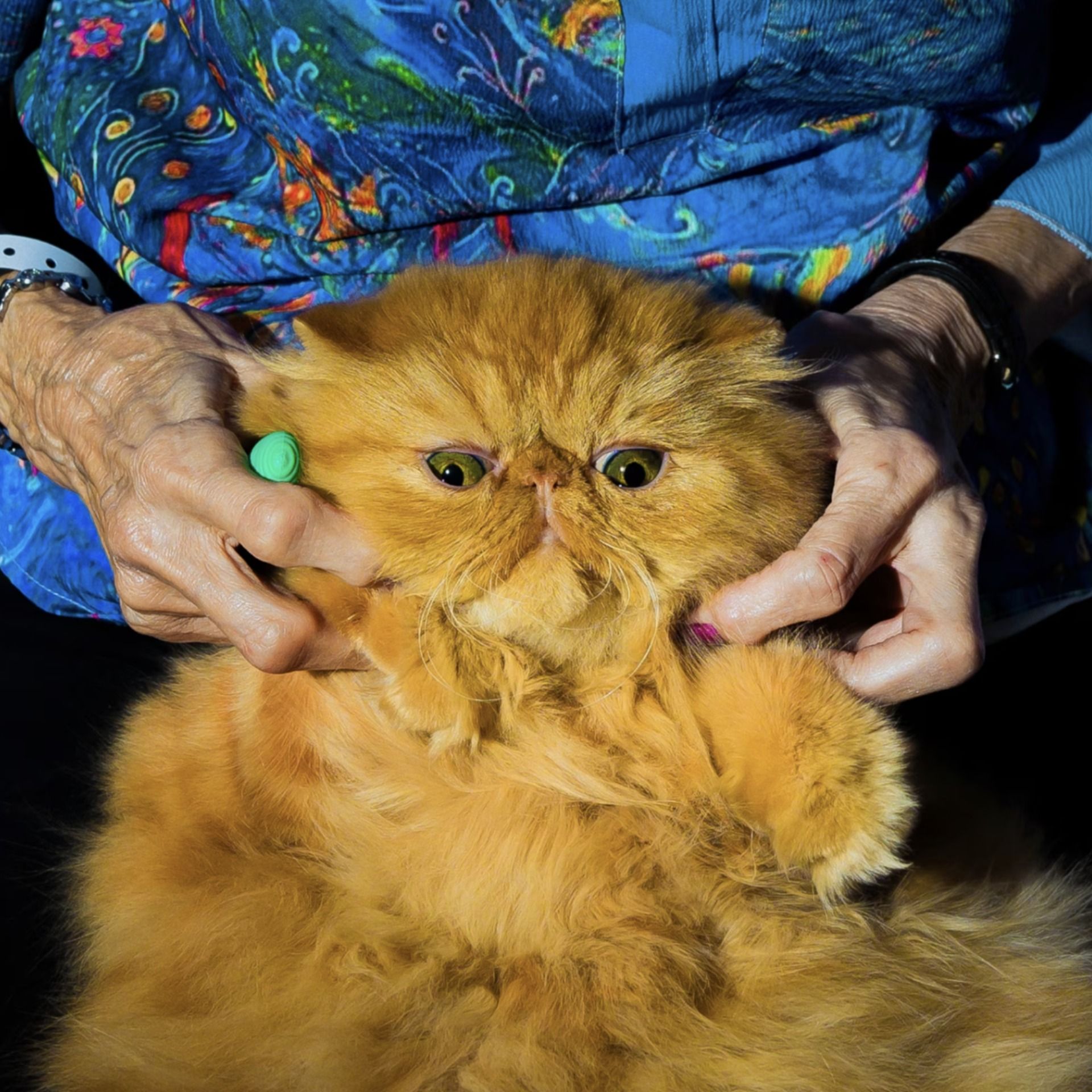
On the Media
The Cat Ladies Haven't Forgotten
00:17:48
In his new book, JD Vance tries to walk back his old "childless cat lady" comments.
Loading summary
Transcript46 lines
- [00:00]
Wise Wise Announcer
WNYC Studios is supported by Wise Wise. The smart way to manage the currencies you need around the world. With a Wise account, you can send, spend and receive in up to 40 currencies with only a few simple taps. Be smart. Get WISE Download the WISE app today. Terms and conditions apply.
- [00:17]
USA for UNHCR Announcer
OnTheMedia is supported by USA for UNHCR, the UN Refugee Agency in Ukraine, Sudan and around the world. War is tearing millions of families from their homes. Despite funding cuts, UNHCR continues to provide protection, shelter and emergency relief to displaced families in more than 120 countries worldwide. For more information, visit unrefugees.org media
- [00:50]
Brooke Gladstone
this is on the Media's Midweek podcast. I'm Brooke Gladstone. This week, J.D. vance has been doing a lot of press, partly to sell the maybe peace deal with Iran that he had a hand in brokering. But he's also on a book tour, Communion. Out this week is the follow up to his 2016 bestseller Hillbilly Elegy, and some excerpts from it are making headlines of their own. Like this one quote one of the dumbest things I've ever said came when I argued that, quote, childless cat ladies across the Democratic Party were running our country into the ground. He first made his cat lady quip when he was running for office in Ohio, but it re emerged on the campaign trail with Donald Trump in 2024. Here's Vance on Meet the Press doubling down.
- [01:40]
Wise Wise Announcer
Given that people have told you directly, have spoken out, have said that they were offended, they were hurt by those comments, do you wish you never made those childless cat lady comments?
- [01:49]
USA for UNHCR Announcer
I think that it's much more important for me to just be a normal human being who sometimes says things that people disagree with. I have a lot of regrets, Kristin, but making a joke three years ago is not on the top 10 of the list.
- [02:00]
Brooke Gladstone
His no regrets attitude really ticked off those women in question.
- [02:04]
Kathryn Hughes
You do not want to piss off cat ladies. We will come for you and we'll have a lot of fun doing it.
- [02:15]
Brooke Gladstone
So now, as Vance attempts to claw his way back into the good graces of a certain constituency, we'll take this opportunity to rerun a super fun 2024 interview with Kathryn Hughes, author of the book Lewis Wayne and the Great Cat Mania. In it, she traces the many pernicious things ascribed to cats and their guardians that have undergirded a long history of cruelty to cats, including the notorious case in 1730 of the great Cat Massacre in Paris, as Hughes describes.
- [02:53]
Kathryn Hughes
Yeah, it's an extraordinary event. Two apprentices became really really outraged because they discovered that their master's wife was feeding her pet cat much nicer food than she was giving them. And this just seemed absolutely outrageous. So they rounded up all the cats in the area and staged a sort of mock trial in the courtyard. The charge against these cats was that they were living at a rate of extravagance that was far, far too good for them. Very unsurprisingly, these poor cats were found guilty, and the apprentices slaughtered all the cats. And la grise, the mistress's cat, was smashed with an iron bar so that her spine broke.
- [03:37]
Brooke Gladstone
So in the late 1800s, suddenly, cats become very popular. Could you describe the reasons for, and the scale of that cultural shift?
- [03:48]
Kathryn Hughes
For millennia, cats had been tolerated. Useful in kitchens for catching mice, useful in the barnyard for catching rats. They have a freelance association with mankind, but they're not in the service of anybody. And then what happens? As Britain becomes more and more urbanized and people are still pouring into the cities, there's also space for the cat, as it were, to start moving up from the kitchen into the sitting room.
- [04:19]
Brooke Gladstone
You do describe the period from 1870 to the eve of the Second World War, a period of 70 years as Catland, when cats were transformed from anonymous background furniture into individual actors with names, personalities, even biographies. You build your story around one of the progenitors of Catland, a peculiar character named Louis Wayne.
- [04:48]
Kathryn Hughes
Louis Wayne, the lowly freelance commercial illustrator, starts to draw cats as if they are people. They start to walk upright, they start to wear clothes. And onto those creatures, he maps a kind of topography of middle class Life in the 1890s and beyond. Playing tennis, going to the opera, sitting down to breakfast, taking tea. His first really important picture is called the Cat's Christmas Dance, and it's a huge panoply of cats in evening dress under the Christmas tree, having a dance. Some of the younger ones are getting a little bit amorous with each other under the mistletoe.
- [05:27]
Brooke Gladstone
His heyday is the 90s, what you call a fin de siecle world of artifice, disguise and impersonation. What was it about the 1890s?
- [05:38]
Kathryn Hughes
Well, the world is speeding up. The pretty modest middle classes have a little bit more money to spend. We now have a weekend, annual holidays. So people are kind of carving out a life for themselves, which is not just about putting enough food on the table, but creating a. A sense of yourself as a person with tastes and pleasures and hobbies. And that is, I think, particularly right for Wayne, as it were, to map onto his cats. Cats Enjoying a dip in the sea, taking to the road on bicycles.
- [06:09]
Brooke Gladstone
Weirdly, cats were changing to look more like the ones Wayne drew. Or did it just seem that way?
- [06:17]
Kathryn Hughes
That's exactly what happens. The London cat was well known for being stringy and looking more like a weasel than a cat. And what women particularly start to do is kind of carve out of this genetic sameness, distinct breeds. So you start to get Persians are imported from France, Siamese from the Far East. You might put two beautifully marked tabbers together and hope that out of their offspring you would get a particularly charming kind of effect.
- [06:46]
Brooke Gladstone
And the British cats were manly and hard working, whereas the foreign ones were effeminate and deceptive.
- [06:54]
Kathryn Hughes
Yeah, no, that's absolutely right. So it's very interesting to watch. The long haired cats that come in from France are effeminate. They spend too much time grooming themselves. They're pretty, but they're shallow. All those kind of nationalistic stereotypes. British cats are short haired, stocky, sensible, because they know that they need to get on with life. This has no bearing. In truth.
- [07:20]
Brooke Gladstone
Despite this embrace of cats, their improved public image, there obviously remain negative associations with the animals and their owners that they never managed to shake off. Like the cat lady trope we've been hearing so much about lately, brandished mostly as a term of ridicule.
- [07:38]
Kathryn Hughes
And it's always about the fact that the cat lady is lavishing on the cat the kinds of attention and material resources that should have gone into a husband and children. So, for instance, leaving your cat a lot of money so that it can live in the manner to which it's been accustomed. Everything is about subverting normal family patriarchal rules. And that is what is so offensive and why so much print is expended on these strange women.
- [08:08]
Brooke Gladstone
You say that cats are markers of dissident sexuality. They're not quite tameable.
- [08:14]
Kathryn Hughes
Now, it's a trope that draws very obviously on old anxieties around witches and their cats from the Middle Ages, as well as the fact that the cat lady may not have children herself. There's a sense in which the cat, as a creature of the streets, makes its own way in life, will never be told what to do, and is also very, very fertile, very promiscuous, and is up on the roof calling two or three times a year to be mated again. We get the slippage between the actual female cat and the female cat owner.
- [08:52]
Brooke Gladstone
You write at length about the Lloyd sisters. At one end of the spectrum of cat ladies. How did they end up in the press?
- [09:00]
Kathryn Hughes
The Lloyd sisters are three sisters who live in Birmingham in the 1860s. They take in cats and try and nurse them back to health, but the problem is they don't have the money or the means to do this in any kind of healthy or salubrious ways.
- [09:19]
Brooke Gladstone
Little gray gardens, as you'd say here.
- [09:22]
Kathryn Hughes
Yeah, very grey gardens. Yeah. So Charles Austin, a very unpleasant man who lives next door, makes a series of formal complaints. Then, in the end, these women are taken to court. The magistrates put the elder sister, Anne Lloyd, on trial for really running an unruly household.
- [09:39]
Brooke Gladstone
Yes. She was described by journalists as somewhat eccentric in appearance and manner. You know, a mad cat lady, suspected of sharing immoderate intimacy with cats by having them sleep in her and her sister's beds.
- [09:56]
Kathryn Hughes
I think the Lloyd sisters are sort of lightning rod. They attract all kinds of anxieties and tensions, fears, and it comes to court and what was so shocking is the misogyny on display. The magistrates laugh at Miss Lloyd every time she opens her mouth to say something about the cats, about the way they're being tortured by the local boys. Worst of all is when the policeman is called as a witness and he's asked about, well, how much did the house really smell? And the policeman says, well, there's a strong smell of fish. I didn't know whether it was the ladies bodies or it was the fish that they were feeding to the cats. And the court absolutely erupts and of course, we know, of course. I'm sure it was intended then, a very unpleasant kind of reference to aging female bodies and sort of curdled female juices. And it's just extreme, you know, this is Victorian England, you know, I had no idea that this kind of thing went on.
- [10:52]
Brooke Gladstone
Becoming a cat lady in the 19th century was, for some, quite a lucrative business. Ms. Frances Simpson, the stylish daughter of a vicar, pioneered the modern breeding of cats. You wrote her greatest achievement was to take a subject that society treated as a bit of a joke, single women and their cats, and turn it into the means to an independent and dignified life.
- [11:17]
Kathryn Hughes
First of all, she's a journalist, so she has a lot of columns in newspapers on cat care and cat history. Ms. Simpson, vicar's daughter, can write with a completely straight face a column called Practical Posseology, in which she advises people on everything from what to feed your cat, how to dress it in the winter if it's going on a railway journey. But she also gets very interested in cat breeding. She invents the Blue Persian, out of which she Makes a very tidy sum of money selling her cats for up to £100 a go. She is also the main channel between America and Britain. So she works, as it were, as an agent in Britain, sending out pedigree cats, kittens to American cat ladies.
- [12:02]
Brooke Gladstone
She was an entrepreneur, Yeah.
- [12:04]
Kathryn Hughes
I mean, she even sets up in Selfridges, which is our biggest department store, a sort of cats lounge where you could come and buy kittens. So where before you'd have just scooped up a from the gutter and hoped for the best, now you picked out a charming cat and then you were briefed on how to look after it by Ms. Simpson. So it's becoming very, very tony as a kind of occupation. I think she's an extraordinary woman.
- [12:27]
Brooke Gladstone
One of the most powerful women during the cat mania was the Duchess of Bedford, known as Lady Russell. She was president of the National Cat Club. She was known for training her cats to hold poses and play croquet. And it seems to me that the richer the cat lady, the more acceptable she was.
- [12:47]
Kathryn Hughes
Money solves everything. The Duchess of Bedford was herself an extremely ambivalent mother. She had one child 10 months into her marriage and then stopped sleeping with her husband, the Duke. Never had any more babies. Couldn't stand her son, in fact, and was much more interested in animals and in becoming one of the first female aviators in Britain. But nobody thought to be scornful about it because she is the Duchess of Bedford and she's immensely wealthy. I think it's always about the finite amount of resources. I mean, I understand that J.D. vance, the whole point about his anxiety about cat ladies is simply that they don't have sufficient stake in future generations. It's always about where the resources go, where one's interest goes, and I think that is perfectly born out here.
- [13:37]
Brooke Gladstone
You had a fascinating chapter about the use of cat imagery in the suffragist movement, and you said that one particular picture actually won some men over to the suffragist side.
- [13:51]
Kathryn Hughes
So a lot of women who were active in the movements to get votes for women were also very, very preoccupied with societies against cruelty to animals and cats in particular. So you would expect to find suffragist artists using the cat as a kind of idea of a kind of independent female denoting agency. That doesn't happen. In fact, the image of the cat gets taken up by the anti suffragists pictures of cats dressed up in silly hats, holding notices, saying, we demand the vote. A sense again, in which all that kind of misogyny comes tumbling out because there's something ridiculous about a cat demanding the vote. I mean, what next will mice demand the vote? But then comes one particular image. Towards the end of. When suffragists were imprisoned in Holloway, they often went on hunger strike and were then forced on to go what's called force feeding, where a tube is stuck down their throat, a nasty thin gruel
- [14:53]
Brooke Gladstone
tips down, which is in itself dangerous.
- [14:56]
Kathryn Hughes
Yeah, it's waterboarding. I mean, it's a kind of torture. It was so unpopular that a state of affairs was reached whereby the women, when they got so thin, they would be allowed to go home until they were well enough to be brought back to prison. And then they would be tortured again. It was called the Cat and Mouse act. And it was such a disgusting idea. It was called Cat and Mouse act because the cat plays with the mouse. It doesn't finish it off, it enjoys torturing the mouse. A particular potent poster was produced showing the Home Secretary as a bloodthirsty cat with a suffragist clamped between his teeth. That piece of rhetorical propaganda was so powerful that it actually got the liberals out of power.
- [15:43]
Brooke Gladstone
Now, you thank your own cats, Maude and Ted, in your book for accompanying you as you wrote it. What led you to write this?
- [15:53]
Kathryn Hughes
Well, Ted and Maud are here actually recording the interview as we speak. Cause they like to have their own copy of everything. So they're sitting here on my lap. My grandmother, who was born in 1907, was a breeder of Blue Persians. A hopeless breeder because she could never bear to. So my mother, who was an only child, grew up with 17 cat siblings. My grandmother was a kind of cat lady. And I think much preferred the cats to my mother. As I was growing up. I remember my grandmother had the Louis Wayne books. She had a lot of Louis Wayne books. And at that point, so I'm Talking about the 70s and 80s, they weren't really very well known at all. I was fascinated by these books, particularly fascinated by Louis Wayne's schoolroom scenes because they cats behaving really, really badly. And the naughty cats were pulling each other's whiskers and chucking mice at each other. And I was completely fascinated by this and actually really, really frightened because I was a very, very good child. And I hated that kind of disorder which, you know, I experienced at my own school as one does. As I grew up. I was very aware that there was always a kind of anxiety in these drawings that other people seemed to find so charming. Often the male lascivious. They often had two girlfriends on the go at once. There was just something that was very uncomfortable about them. So I always thought that at some point I would write a book about Louis Wayne.
- [17:26]
Brooke Gladstone
No amount of love for cats will ever do away with the cat lady trope.
- [17:31]
Kathryn Hughes
Absolutely. Just look at the way in which cat ladies have come out fighting as a result of the Vance comment. There's just an army of outraged cat ladies, many of whom actually have children, many of whom also have. But it's just so interesting the way that that remark has kind of produced this brouhaha around the world. I mean, we're just agog about it here in Britain.
- [17:55]
Brooke Gladstone
Catherine, thank you very much.
- [17:57]
Kathryn Hughes
Thank you so much. I've really enjoyed talking to you.
- [18:00]
Brooke Gladstone
Catherine Hughes is an emerita professor of life writing at the University of East Anglia and a literary critic for the Guardian. She's the author of the book Catland, Louis Wayne and the Great Cat Mania. Thanks for listening to the midweek podcast. Follow us on Instagram and TikTok, where we post regularly, and join us for the big show this Friday. I'm Brooke Gladstone.