← On the Media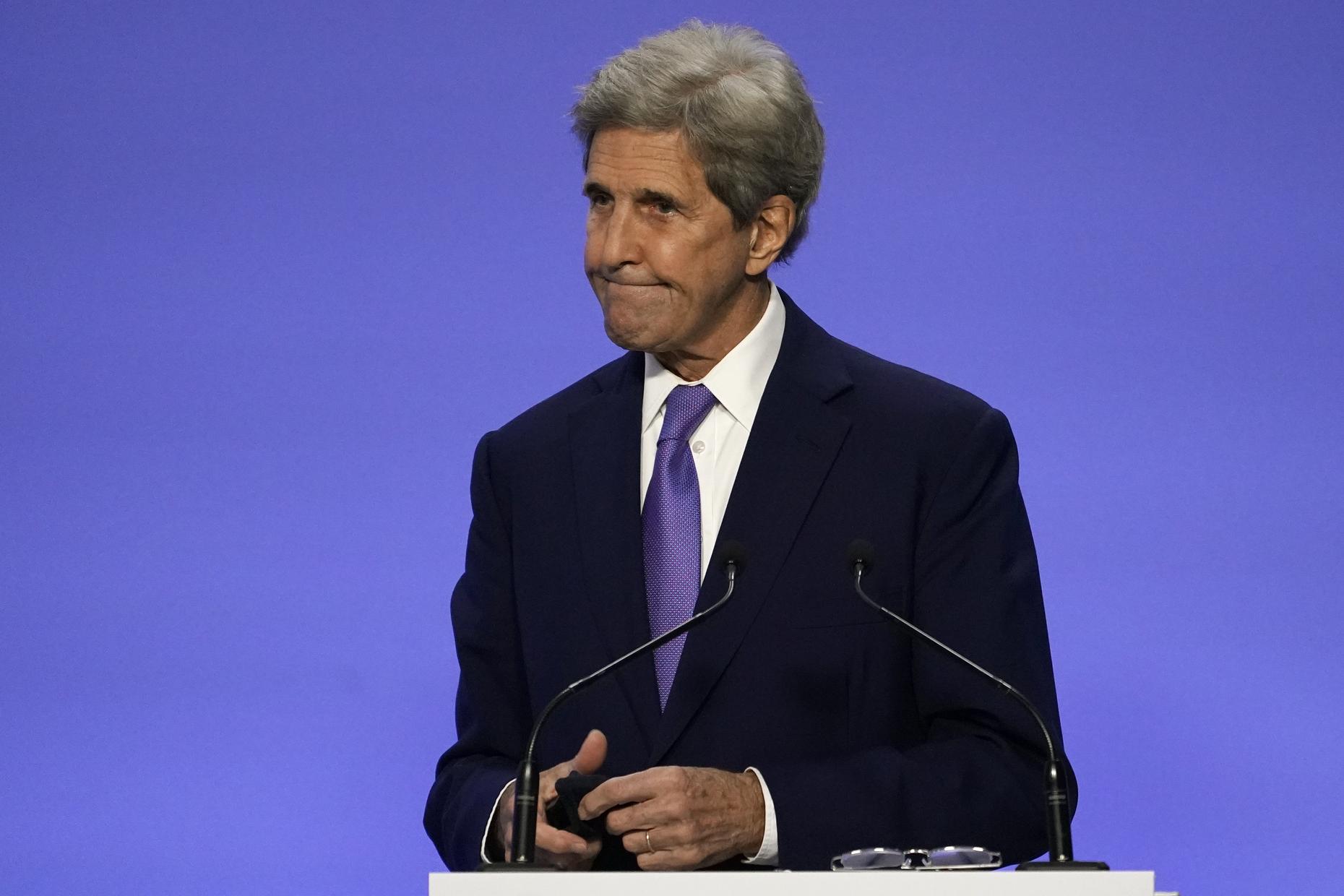
Loading summary
Transcript33 lines
- [00:00]
Podcast Host
On the media is brought to you by Progressive Insurance. You chose to hit play on this podcast today. Smart Choice make another smart choice with Auto Quote Explorer to compare rates for multiple car insurance companies all at once. Try it@progressive.com Progressive Casualty Insurance Company and affiliates not available in all states or situations. Prices vary based on how you buy the new Huggies Snug and Dry are luxuriously soft and ultra dry. How soft are we talking? Unbelievably soft? Irresistibly soft? Doesn't your baby deserve a diaper that's oh so gentle on their tushy? Huggies Snug n Dry helps keep them comfy, cozy and protected. Experience the unexpected softness and up to 100% leak protection. More parents choose the new Huggies Snug n Dry softness versus the leading premium diaper Huggies. We got you baby.
- [00:55]
Interviewer
The UN climate summit in Glasgow, Scotland, concluded the 26th Conference of Parties. We know that this COP COP26 is our last, best hope to keep 1.5 in reach. That's 1.5 degrees Celsius, the amount of temperature change policymakers at the conference hope their collective action can achieve, staving off the 2 degree change that spells out a certain planetary destruction. To get there, this year's conference featured speeches, negotiations, lots of pledges not too dissimilar from last year's or the year before that. We have come to Paris to show our resolve. Nearly 200 nations have assembled here this week. In a few days, Copenhagen begins, and I am more confident than ever before that it will be the turning point in the fight to prevent climate disaster.
- [01:52]
Nathaniel Rich
The most important task in this conference is is to establish a more concrete international framework for the protection of global climate.
- [02:02]
Interviewer
After more than two decades of these promises, it's worth wondering how much of this is all just hot air. According to the nonprofit Climate Action Tracker, not a single country is on target to meet the 2015 Conference of Parties 21 pledge on, also known as the Paris Climate Accords. And many aren't even on target for their COP3 pledge, the Kyoto Protocol from 1992. And yet these summits are often still covered with breathless play by play analysis, juicy details about diplomatic attaches, late night negotiations and backroom deals. Which isn't without value. But it's worth asking, what are the stories being missed when all eyes are on the summit? To answer that, we called Nathaniel Rich, writer at large for the New York Times Magazine, who takes a markedly different approach.
- [02:59]
Nathaniel Rich
I think you could say that the last serious diplomatic meeting convened by the IPCC was the first meeting held in 1989 in the Netherlands. What was still on the table then was a pledge to have a global treaty that would reduce greenhouse gas emissions, that would have sanctions and repercussions for countries that failed to reduce their emissions based on the schedule being discussed. Of course, it fell apart at the last minute. The US was mainly responsible for that. But ever since then, the conversation has been about voluntary pledges diluted over and over to the point where you have countries setting their own goals, using language that could not be more wishy washy. And so the value of the meetings is geopolitical symbol, largely, and they are helpful in establishing a kind of global consciousness around the extraordinary dangers.
- [03:58]
Interviewer
Do you pay much attention to these climate summits yourself?
- [04:02]
Nathaniel Rich
Yeah, I mean, I think the level of media discourse on climate politics generally is humiliatingly low. The daily news reporting is solid. We get a fairly good sense of what's happening. I think there's less attention drawn to the fact that these meetings, just like every other climate conference that's preceded it over the last 30 some years, are more or less symbolic. I mean, they're covered often in the press as if it's the negotiation of an armistice or an arms agreement, when in fact they're much closer to diplomatic meetings between heads of state to express shared principles, to say that we believe in, you know, human rights, say.
- [04:43]
Interviewer
So are you suggesting that these climate conferences emerge with nothing practical?
- [04:51]
Nathaniel Rich
I think there is some value to those statements and there's a reason why these diplomatic talks are held on any number of subjects. But to imagine that these conversations and these pledges are in any sense solving the problem technically, which is to say reducing emissions or leading to emissions cuts, or leading to huge investments in renewable energy. For the most part, they're only doing so indirectly. And so I think the great danger here, both politically, globally, but also journalistically, is to think that this is where the action is happening. For instance, one of the big news bulletins to come out of this meeting is this business about the explicit invocation of the term fossil fuels in a provision of the draft climate deal, the first collective acknowledgement that nations must phase out burning of coal. Yes, it's an important thing to say that explicitly, but of course that's been universally understood, that we have to phase out coal since the late 1970s. The language is about 40 years behind the science.
- [06:00]
Interviewer
So your book Losing Earth, which followed an article that took up a whole issue of the New York Times Magazine, focuses on a few specific individuals at a specific time. 1979-89, when you write we actually had a chance of doing something about climate change, which I guess you don't much believe anymore.
- [06:24]
Nathaniel Rich
We had a much better chance in 1979, say, to limit global warming to a fairly low number. Now we have a pretty good chance of limiting global warming to under 4 degrees Celsius, which of course would be catastrophic. What's unique about the period between 1979 and 1989 is not only were we 40 years earlier on our CO2 pathways, but there was already scientific consensus. And even more importantly, there was a serious bipartisan effort to develop a solution. And so the story is, well, why did we fail then when conditions both politically as well as atmospherically, I suppose you could say, were so much more promising than they are today?
- [07:11]
Interviewer
It seems like the real sticking point has always been persuasion.
- [07:17]
Nathaniel Rich
Well, there has been a major shift in the last few years and one I did not foresee, at least not so quickly when I began writing Losing Earth, which is the emergence of this new wave of youth led activism. It's remarkable not just because it's led by young people and that it's a global movement, but the messaging has shifted dramatically between essentially 1979 and 2018. The activist message was an appeal to reason. You see this in early statements in the late 1970s about the problem. The appeal to reason goes something like this. We know what's happening. We know the world's getting warmer. We know why it's getting warmer. We know what we have to do. Phase out fossil fuels as quickly as possible. Essentially, the sooner we act, the better off we'll be. And as the years go on, that appeal becomes a bit more forceful. Pitch increases to where you have Al Gore An Inconvenient Truth saying, look, here are some very dramatic photographs and videos and graphs showing how bad it's getting. You'd have to be crazy not to act. And of course they're right. But what we saw over the years is the political limitations of that argument, at least in the US and what's happened now with people like Greta Thunberg, the Sunrise Movement, Extinction, Rebellion, and other groups is they've moved past that. I mean, of course they agree it's crazy not to act, but their appeal is a moral appeal.
- [08:52]
Interviewer
You have stolen my dreams and my childhood with your empty words. People are dying. Entire ecosystems are collapsing. We are in the beginning of a mass extinction, and all you can talk about is money and fairy tales of eternal economic growth. How dare you. We will not let you get away with this. Right Here, right now is where we draw the line. Thank you.
- [09:22]
Nathaniel Rich
Their message is, you know, your betrayal of us, and it's usually directed at older generations, politicians, industry is harming us now. We're terrified for our lives. We're terrified to have children. And even more than that, your neglect of this problem, your failure to act, is a betrayal of the fundamental values that you claim as the basis for our democracies and really for civilization. It's a moral approach and it's a much more personal approach, and I think it's a more honest approach. And I think you've already seen a major response both in the US and abroad. Consider the saliency of the climate issue under Obama versus under Biden.
- [10:07]
Interviewer
That is partly because things have gotten much worse. There is an increasing severity of storms and obviously a broken record every year in terms of temperature. So is it the stories that are told or simply life on the ground?
- [10:22]
Nathaniel Rich
That's true, of course, it's worse every year. But it, you know, you can find those same headlines every year going back to 1988.
- [10:29]
Interviewer
Yeah, but not necessarily in the heart of places where the US Media lived.
- [10:35]
Nathaniel Rich
Yeah, I agree. That's a factor. There's also been the biggest shift in the science or one of the major advances has been in the science of attribution. So now you can have scientists saying, well, yes, we can say with much greater likelihood that this hurricane is more so that that's a factor, I think. But I would argue that a bigger factor is the language that's being used. The way that activists today talk about it is very different than they were talking about it during the Obama administration. I don't think that's because of the journalism around it. I think it has to do with a younger generation coming into their own and sort of not having the same hangups as previous generations. Not feeling they have to convince Republicans to that just because there's a bad snowstorm, that climate change is real, they don't really bother to get into those bad faith debates and they move straight past that into I am being harmed. You have failed. It's a different register. It's angry, it's personal, it's emotional to hear out there.
- [11:37]
Interviewer
Exactly. I think that's partly because of the acceleration of the impact. But is that what you think is missing from climate change stories, this intergenerational tension?
- [11:50]
Nathaniel Rich
Well, I think the intergenerational tension is an underreported part of it right now. It takes this form of frustration and anger that previous generations have failed to solve this problem. When they had a chance. But what happens when you play this out another 10 years or 20 years, 30 years, and these teenagers and children, people in their 20s, are now running the government? What happens to Social Security? What happens to, you know, you can imagine any number of intergenerational arguments that this could spill into. I'm not saying any of these things will happen that, that younger people will, you know, abandon the older generations or anything, but I do think we're at the beginning of a much sharper form of intergenerational strife. But. But I think that's just one of many manifestations of. Of the anger.
- [12:40]
Interviewer
Your latest book, Second Nature, is filled with strange stories. Immortal jellyfish, phosphorescent rabbits. It describes a world in which, quote, no rock leaf or cubic foot of air on Earth has escaped humanity's clumsy signature.
- [12:58]
Nathaniel Rich
It's a book about this environmental transformation. And it begins with the acknowledgement that there's not any square inch of the planet that hasn't been altered by our presence. And usually recklessly and unintentionally. And so there are stories about people who are coming to terms with that. I wanted to write about the ways in which people are navigating this new world who, you know, have come to terms with the fact that there's nothing natural anymore, trying to figure out ways in which to live responsibly in a world that we are continuing to remake. And so there's a story, for instance, about a young chef who devotes himself to making meat grown in a lab. He's the son of a Midwestern butcher, comes out of this old tradition of cooking meat in Illinois, and he devotes his life to this new technology of essentially creating meat in a lab using cells cultured from living animals, not slaughtering a single animal, ultimately mass producing meat. This is an industry that's starting to get regulated around the world and introduced to markets. And so there's something very weird about the idea of eating lab grown meat, for instance. There's something very strange about a lot of these new technological interventions that we're making. And yet we also have to understand that there's nothing natural about mass agricultural practices, about raising cattle on enormous plots of land and committing them to these merciless conditions and eating them. And there's nothing even natural about cattle as we know it in the first place. These are species that have been bred into existence by human beings. And so the stories are often, I think you use the word weird. I mean, there is something extremely weird and eerie about where we're Going. And so I wanted to understand that and want to better understand how people will increasingly navigate a world that is entirely built and administered and governed by human beings.
- [15:07]
Interviewer
You're writing about climate change this way because this is the kind of writer that you are. Do you consider whether or not this is an impactful way to inspire action, or do you just leave that to others?
- [15:25]
Nathaniel Rich
Yeah, that's irrelevant to what I do. I would say, in some ways, most analogous example is Cold War fear of the nuclear bomb. What did the literature look like? You had certainly very strong activist literature, but you also had a robust literature about nuclear dread. You had novels, you had white noise, where even if it wasn't Dr. Strangelove, you know, it was still about living at a time when some bureaucrat somewhere could press a button and destroy humanity. That transformed the human psyche. But was. Was very. A profound effect on the way people thought about their lives and lived their lives. And so you have a huge literature about that when it comes to climate. You have a strong activist literature, but you don't have this literature of how is this changing our inner lives, who we are. I think you could also talk about this in terms of the civil rights era, where, of course, there's a huge body of political writing, but you also have novels about what it means, you know, to be black in America in this time, also to be white in America in this time, you know, and what are the ways in which the racial crisis in America disfigures inner lives of people who live in this context?
- [16:39]
Interviewer
I gotta think that something else that has had a huge impact on you. You grew up on the east coast in a family of writers, but you've spent the last dozen or so years in New Orleans. You have no intention of leaving.
- [16:55]
Nathaniel Rich
Absolutely.
- [16:55]
Interviewer
What is it about that city?
- [16:57]
Nathaniel Rich
Yeah, I moved to New Orleans in 2010, and, you know, there were still those Katrina marks on buildings everywhere where FEMA would come in and write, you know, how many bodies had been found. And that absolutely affected me. And it gave me, I think, a heightened understanding of the ways in which trauma of these disasters and fear about the next disaster filters into just your daily life in unexpected and surprising ways. I was having a conversation with this scientist at Tulane when I was writing a story for Second Nature about this plan to try to save the. The coast south of New Orleans, which has been disintegrating for a century. Louisiana has the world's most ambitious climate mitigation plan, essentially to try to rebuild the coast by redirecting the flow of the Mississippi river. And pumping sediment into these depleted marshes. It's a fascinating story, but in the context of writing it, I interviewed this coastal scientist at Tulane who told me, essentially, it's too late. He said, we're screwed. That line was on the front of the times, picky. And that we've already crossed the tipping point to rebuild the marsh, that as fast as we can rebuild the marsh, rising seas will undo any progress we make. And so I said, well, so what's the point of all? What's the point of this, then? It's a $50 billion plan that renews every five years. He said, well, it will buy us time. It won't be completely ineffective. It will probably by a few decades. And those decades will be the difference between a lot of suffering and death and harm because it will allow people to make provisions. And he said, if New Orleans is going to exist in a century, it will probably be as an island city in the middle of the Gulf of Mexico. I was, of course, horrified by these proclamations, and as a property owner in New Orleans, terrified. But he said, you know, cities are like people. They are born and they die. And that's been true all of civilization. And if we think about cities as having a lifespan like a human being, it might have some of the other effects of when we think about mortality, which is to give us a greater appreciation for what we have to help us make decisions guided by sense of morality, a sense of our values, and in fact, you know, a lot of. I think the culture of New Orleans does derive from this sense that we're not going to be here forever, that we're constantly under great threats. And so we have to live as well as we can and live as responsibly as we can while we're here. And I think climate change forces. I think, psychologically, I think you're right, it forces similar kinds of reckoning. We have to think, which is not to say that we're doomed by climate change, but it does force you at least to consider the idea of. Of a kind of civilization, mortality. And if you're able to look at that squarely, which is very hard to do, I think it does have the power to change the way we live today.
- [20:05]
Interviewer
Thank you very much.
- [20:07]
Nathaniel Rich
Well, thank you. Thank you for having me.
- [20:09]
Interviewer
Nathaniel Rich is both a journalist and a novelist. He's a writer at large at the New York Times Magazine. His most recent book is Second Nature, Scenes from a World Remade. Hey, thanks for tuning in to the midweek podcast. And thanks in advance for something else. Here's what we got going. On December 7th, we'll be hosting an OTM Trivia Night. I'll be there with the producers and hopefully a whole bunch of you answering questions, having some laughs. And there'll be prizes. Ever wanted to a hat crocheted by me? Now's your chance. All you need to do to get invited to this event, which will be on Zoom, is to become a sustaining member. If you've never donated before, it just takes a minute. Go to onthemedia.org and hit the support button or text the letters OTM to 70101. These sustaining donations monthly support of 10, 12, 20 bucks. That helps us to ensure that we have enough funds to plan and to keep the show going. So if you're already an OTM sustainer, thank you. We'll be emailing you an invitation to join us for trivia and if you're not, become one. And thank you too. There may be trouble ahead, but while the moonlight and music and love and romance, let's face the Music and Dance.
- [21:46]
Podcast Host
NYC now delivers breaking news, top headlines and in depth coverage from WNYC and Gothamist every morning, midday and evening. By sponsoring our programming, you'll reach a community of passionate listeners in an uncluttered audio experience. Visit sponsorship.wnyc.org to learn more.