← On the Media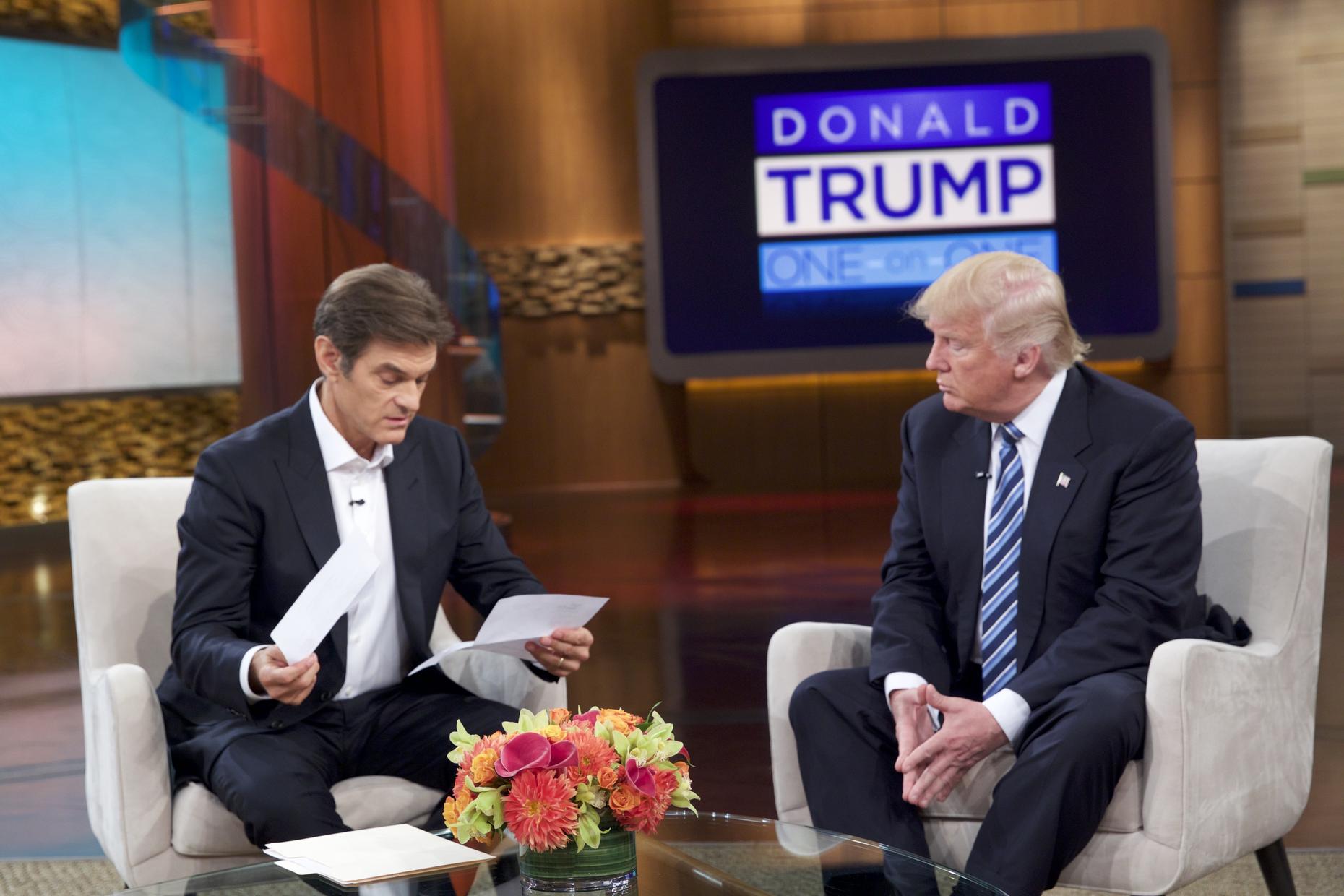
On the Media
The Messy Politics of Oprah and Dr. Oz
00:23:00
The hosts of "Oprahdemics" discuss Oprah's role in giving Dr. Oz a platform and if she has any responsibility to speak out.
Loading summary
Transcript42 lines
- [00:03]
Brooke Gladstone
Back in the before times when we used to go to the radio station every day, the great WNYC host Brian Lehrer was a few feet away in the next office. He hosts a two hour live call in show every day from 10 to noon in New York City. I was making my coffee the other morning and I heard a segment on Brian's show I thought you guys might like. The conversation examines the relationship between Dr. Oz, now the GOP Senate candidate in Pennsylvania after winning his primary there, and the woman who promoted his career, Oprah Winfrey. Here's Brian.
- [00:50]
Brian Lehrer
It's the Brian Lehrer show on WNYC. Good morning again everyone. Dr. Mehmet Oz. Yes, we're going to talk about Dr. Oz, who we haven't in this whole election cycle or maybe ever come to think of it, on the Brian Lehrer show, the Turkish American heart surgeon who hosted a popular daytime TV show for many years. Right. In case you missed it over the weekend, he is now officially the GOP Senate candidate in Pennsylvania. After the recount, his opponent conceded he has Trump's endorsement, as many of you know. And, and one reason the doctor is so popular, despite the many critics who say he promotes unscientific therapies and alleged cures, is his many appearances on Oprah Winfrey's long running daytime talk show. So joining me now are historians Kelly Jackson, who's a professor of Africana studies at Wellesley, and Leah Wright Rigueur, who's a professor of history at Johns Hopkins. They are co hosts of a new podcast called Oprademics like Oprah and academics get it. They have a special episode now called the Oprah Oz Conundrum in which they explore Oprah's role in giving Dr. Oz a platform, what he became, and they ask whether or not she has any responsibility to speak out against his candidacy for Senate if she opposes it or thinks he's been a quack or whatever she thinks about him now. So Dr. Jackson, Dr. Wegueur, welcome to WNYC.
- [02:21]
Kelly Jackson
Thank you. Thanks for having us.
- [02:23]
Leah Wright Rigueur
Yes, thank you.
- [02:25]
Brian Lehrer
Listeners wondering if anybody in Pennsylvania or with ties to Pennsylvania is listening and has an opinion about Dr. Oz's candidacy, do you know of anyone who voted for him and why? If you didn't yourself or if we have any oprah fans or Dr. Oz TV medicine level fans, politics aside, what do you want to say about either of these daytime TV stars? And did Oprah give you a kind of Oprah seal of approval for Dr. Oz once upon a time that shaped your opinion of him? 21-2433, WNYC 212-433-9692 or tweet Ryan Lehrer. Now, since you host this podcast together, I'm going to let you two sort out who's better positioned to answer which question. But give us the deep background on Dr. O, because maybe some of our listeners don't even know that. Before he was a staple on Oprah Winfrey's daytime show, he was a surgeon at Columbia University with a very good reputation as a heart surgeon. So how did Oprah meet Dr. Oz, and what sort of impression did he make on her?
- [03:41]
Leah Wright Rigueur
So Oprah's history with Dr. Oz goes back pretty far. In 2002, Dr. Oz has his own show before the Dr. Oz show, he has his own show called Second Opinion with Dr. Oz where he brings on celebrities and, you know, talks to them about health or their bodies. And his very first guest is Oprah Winfrey. And so when Oprah meets him, she's so impressed by his sort of knowledge and affable personality that she says, why don't you come onto my show and talk to my audience about some of these same ideas and topics? And Dr. Oz doesn't just come on one time. He comes on dozens of times. He becomes a real fixture in the latter sort of years of the show. He brings on organs like lungs or hearts or omentums and talks about the body in so many different ways. And it really puts him on a map. I mean, it explodes his platform, as all things happen when Oprah puts you on her show.
- [04:44]
Brian Lehrer
Right. And that's, by the way, listeners, Dr. Jackson, who was speaking there, just so you can tell our guests apart. So for people who are totally unfamiliar, we're going to play a clip that you pulled for your podcast episode, an example of Oprah with Dr. Oz. We will hear Oprah first and then Dr. Oz introducing an organ called an omentum.
- [05:12]
Oprah Winfrey
Dr. Oz says there's something inside of us that we all have that plays a key role in making us fat. So what is and do some of us have it more than others?
- [05:20]
Dr. Mehmet Oz
Some of us have more than others.
- [05:21]
Oprah Winfrey
I must have more than other people. Okay, so what is that thing?
- [05:24]
Dr. Mehmet Oz
Well, there's an organ that you have inside of you. We're teaching a little bit of vocabulary today. This is a critical part of it called the omentum. This organ literally pumps chemicals into your body and it holds the secrets Dr.
- [05:35]
Leah Wright Rigueur
Oz is sort of doing characteristic Dr. Oz when she is, you know, up on stage with Oprah and he has a table, you know, with sort of like blue napkins over it. And then he turns over the napkin to reveal, like, the organ, whether it's a heart or whether it's a. A part of someone's stomach.
- [05:53]
Oprah Winfrey
Where is it. Where is it in your body?
- [05:55]
Dr. Mehmet Oz
It's actually hooked up to your stomach. But I did better. I brought you some.
- [05:58]
Brian Lehrer
You brought.
- [06:00]
Oprah Winfrey
Now, come on. A little omentum never hurt anybody. Come on.
- [06:09]
Brian Lehrer
All right. With a little insertion from one of you there in your podcast. In that stretch, you bring up how Dr. Oz presents himself on the show. And so. So what do you want to say, Professor Gregory? Maybe we'll turn to you for this one about the showmanship and the theatrics of his appearances and how that might translate to politics.
- [06:33]
Kelly Jackson
So I think the showmanship and the real. The very real charisma that Dr. Oz demonstrates is part of what sells him to America. It's what makes him America's doctor. So certainly there's the anointing by Oprah Winfrey, but there's also. There has to be something there. There has to be something that people are. And he's also relying on the fact that he's not just a medical doctor, but he's a medical doctor with multiple degrees who has been celebrated in his field and is a respected surgeon and teacher at Columbia University. So he has all the accolades, he has the showmanship, he has the charisma, and he has the expertise, at least in his field. What we don't differentiate between, though, and where we. I think we struggle, and Kelly and I talk a lot about this on the show, is this idea that simply because you're an expert in one area, does that mean that you're an expert in another area? Part of what we see is that Dr. Oz relies on that. That expertise in areas of heart in order to make very big and oftentimes faulty claims in other areas. What we're seeing now is that his performative, this performative politics, this very deeply charismatic, this TV doctor, but also with a level of expertise, is being extended. Is being extended in order for him to make pronouncements. Again, oftentimes faulty pronouncements about the world of politics. And what we're also seeing here, though, is that it's working, or at least it's working in the Republican primary.
- [08:10]
Brian Lehrer
You want to take a step back and talk about the concept of your podcast series, Oprademics, Why are you applying your academic credentials and understanding of social science to this TV host?
- [08:25]
Leah Wright Rigueur
I think, you know, I think Oprah is so suited for this format, because when you think about the Oprah Winfrey show, it spans 25 years. There's over 4,500 episodes, and there's so much you can talk about in terms of Oprah's impact on the culture, and not just when it comes to, like, weight or weight loss. We all know about the wagon of fat, but when we think about, like, controversial interviews or these, you know, personal, sentimental stories, when we think about giveaways, when we think about the making of Obama through Oprah's endorsement, when we think about how her endorsements, how her stage has boosted so many different ideas, whether it's veganism or whether it is, you know, the secret or all of these things that some have aged well and some not so well. But, you know, Lee and I really wanted to do a deep dive on this because we grew up on Oprah, and so we as academics are bringing sort of our scholarly brains to the conversation. So it's smart, but it's also really fun. Academics have fun. And we talk about, like, what Oprah means to the culture, how she shaped the culture, and how certain episodes have stayed with us and really continue to resonate.
- [09:41]
Kelly Jackson
And I think the other thing that we really wanted to emphasize is that Oprah Winfrey is an institution. So she has this cultural impact. But we also know now that Oprah Winfrey has an economic impact, she has a political impact, she has social impacts. And it's actually kind of criminal that there hasn't been this kind of academic focus on her before, because she has very real power as an institution. She has been influential in areas just across industries across the United States, really. She's a global phenomenon. She is also incredibly rare. She is a black woman billionaire who has very true power and charisma. And so I think, you know, Kelly and I were thinking both as people who classify ourselves as super fans, but also as people, you know, who have PhDs and are really interested in the very real power and influence of popular culture to affect all these different segments that we owed it, you know, to the culture to actually do a deep dive into Oprah Winfrey.
- [10:46]
Brian Lehrer
Yeah. And you're both historians, so you have a big, big, long view on this. And in your podcast episode On Oprah and Dr. Oz, you talk about how Oprah has received pushback for her role in giving Dr. Oz a platform in the context of his now Trump endorsed run for the U.S. senate. Has Oprah said anything publicly to support or denounce his candidacy?
- [11:09]
Leah Wright Rigueur
Not really. So her response has been kind of benign, which is to say, I'm aware that he's run and you should choose whoever you think is best for this office. That's a paraphrase. But she has not come out and denounced him. She certainly has also not come out and endorsed him as well. It'll be interesting to see what happens as the, you know, the campaign really kicks into high gear. And what happens if he wins or if he loses? I suspect if he loses, she'll say nothing. If he wins, you know, I think that might beg more of a response.
- [11:44]
Kelly Jackson
I also, you know, one of the things Kelly and I have discussed too, and we really have wrestled over is perhaps Oprah's silence is a statement in and of itself. We know that she is effusive in her praise of people that she adores and that, you know, that she respects and that she loves. One only has to look at Barack Obama. But she has been, you know, very, very quiet about Dr. Oz, beyond saying, you know, well, this is a free country, freedom of speech, and people have the right to run for office if they want to run for office. And I would, you know, given the way that Oprah operates and the way that she engages, you know, if she supported Dr. Oz, I would have expected a much larger statement, a very, you know, a very direct endorsement of his candidacy. And we have not seen that, and I don't think we will see that.
- [12:40]
Brian Lehrer
You want to talk a little more about what you touched on a second ago about the many people who Oprah has elevated over time. And you called yourself super fans, which helped inspire the creation of this podcast series, I guess. But in addition to so many worthy people, black female authors who weren't getting attention previously and then got a lot of other very worthy people, here's a little pushback that we're getting from listeners on Twitter. One listener writes, oprah has a long history of promoting junk science and terrible medical advice. She promoted snake oil salesman Dr. Oz. She created Dr. Phil and gave anti vax ignoramus Jenny McCarthy airtime the words of one listener on Twitter. Another one, Carmela, writes, shame on Oprah. O is now Rand Paul, not even a Pennsylvania resident, meaning Dr. Oz, Oprah needs to own this. So how do you see the big picture there?
- [13:45]
Leah Wright Rigueur
You know, it is complicated. I think that we're very honest about this, that as superfans, we not just adore Oprah, but we also feel like we're closest to be able to critique some of the things that she's done that's been problematic, as we see on the show, not all of her episodes or her endorsem age very well, you know, and all those things that the listener just listed off as fair, you know, Jenny McCarthy is really problematic. She's caused a lot of harm in the vaccine world. Same with Dr. Phil and Dr. Oz. And, you know, the secret, I think, is highly problematic. I think there are a lot of things that we grapple with now and we say, no, this would not work. This does not go. But I also push back on that as well and say, how much of a culture are we also culpable for supporting, promoting, purchasing from watching, you know, these shows, what's fascinating to me is that for all of the disdain that Dr. Phil or Dr. Oz has, you know, they were the number two and number three highest rated shows behind the Oprah Winfrey Show. So they had wild popularity and support. So it's not as though everyone was on this bandwagon of calling them out. They were people who loved them, still love them. And, you know, that's what makes all of this very deserving of nuance. People can make bad decisions and other people can also promote those bad decisions through continued ratings.
- [15:12]
Brian Lehrer
Since you two have been examining his appeal and appearances on Oprah's show, let me get your take on one of his recent ads. Political ad in the context of the Senate campaign. This is a minute of a recent thank you message that he posted in which he declared himself the presumptive Republican nominee on May 27.
- [15:33]
Dr. Mehmet Oz
I want to take a moment to express my deep thanks to the great people of Pennsylvania who have joined me so far on this journey and supported my campaign. I am blessed to have earned the presumptive Republican nomination for the United States Senate. This is a tough campaign. I traveled everywhere. You guys were pretty honest, sharing with me thoughts, worries you had. You don't feel like you're being heard. You want to make sure that the person you like will stand up for what you believe is important. I'm here to tell you I'm going to do that. But more importantly, I'm going to reach to every corner of this commonwealth. I know we've got to heal. We've got to pull people together again. I want to make sure that happens. I will work with anybody who's got good ideas and make the best solutions out of them. We don't want to have high energy prices driving inflation. We don't want to have city streets that are unsafe. We don't want to have influence infant formula shortages caused by bad leadership. Here's the deal. If we bond together, we can solve all of our problems. I want to meet you. I want to hear your ideas. I want to make your ideas work, to make this country as bright as it's ever been.
- [16:31]
Brian Lehrer
All right? And that little note was posted Oz calling himself the presumptive Republican nominee before his opponent conceded as the recount made Oz's victory obvious. So that was sort of maybe ethically questionable. But what do you take from that ad in terms of the translation of his communication style on Oprah and on his own show to the political world?
- [17:01]
Kelly Jackson
Well, I mean, I think one thing is obvious. Dr. Oz Sounds like a politician. He's always sounded like a politician. And, you know, I don't know any candidate that going to say, yes, I endorse baby, you know, baby formula shortages. It's a very kind of straightforward, in some ways, generic political advertisement that could have been made by any candidate in this race, in really any race. It's actually kind of moderate in its approach. But one thing that is clear is that this is very much the same Dr. Oz who has been working in the world of media and television for a very long time. This is a Dr. Oz who is leaning pretty heavily on his, I think, audience recognition, but also his connection to this larger brand or this larger world of celebrity in order to push a very specific agenda while also marketing himself as approachable as a down to earth guy. And I think the last thing that I'll say here is that part of the reason Dr. Oz had to do this is because even though he received Donald Trump's endorsement, right. They've been friends for a very long time. Trump has appointed him to several things in Trump administration. But even as he did that, Trump's audience wasn't initially accepting Dr. Oz. He was booed at the last Trump rally, but he's seen as an outsider for a number of different reasons. So really leaning in on that Trump connection, but also the idea of celebrity and charisma and being America's doctor, that's, I mean, this is who he is and that's how he runs. That's how he's gonna run the campaign.
- [18:51]
Brian Lehrer
Do you know why he was booed at that Trump rally?
- [18:54]
Leah Wright Rigueur
Oh, good.
- [18:55]
Kelly Jackson
Why was he booed?
- [18:59]
Leah Wright Rigueur
Cause he's a snake oil salesman. I mean, like, I think people have gotten tired of Dr. Oz selling them a bill of goods, you know, selling them magical raspberry tablets that will allegedly make you lose £20 in 20 days. You know, like, I think people, Trump.
- [19:16]
Brian Lehrer
Supporters certainly know a snake oil salesman when they see one.
- [19:21]
Leah Wright Rigueur
I mean, here's the thing. He won by 916 votes. 916 votes. That's not a huge margin at all, which is why there was a recount. But it's also not. It's not a mandate saying that Pennsylvania really want this guy. This was close. And so I think he's got a lot of work to do if he thinks that this election will be a foregone conclusion.
- [19:43]
Brian Lehrer
Well, what was Dr. Oz's appeal to Donald Trump, and what's Donald Trump's appeal to Dr. Oz? Because no matter what people may have thought of Dr. Oz in the TV medical context, they probably wouldn't have thought of him as someone who would support Trump's kind of white nationalism or stolen election lies necessarily. But here they are, right?
- [20:09]
Kelly Jackson
And I think. But if you look at the relationship between Donald Trump and a lot of kind of celebrity figures who fall into that kind of celebrity world, it makes sense. We see one of the first endorsements to come out from the celebrity world of Donald Trump is. I can't think of his name. He's the promoter for Mike Tyson. Don King. Right, Don King. Don King comes out and he's like, he's been my friend since forever. And when we think about, like, who Don King is and the kind of work that he's doing, this is not surprising, but it's also the kind of relationship, this transactional relationship that they have that exists outside of all of these other things that Donald Trump brings to his campaign, including nationalism, including bigotry, including xenophobia. So when we see this relationship between develop between Donald Trump and Dr. Oz, please know that it predates the actual Trump as a politician. And Dr. Oz is willing to look the other way, particularly because Donald Trump ultimately wins. And when you win, what do you do? You have access to power. The other thing that we see is that. But Dr. Oz is willing to come out and say things about Trump like, Trump is physically fit. Remember all those questions about Trump's health and his, you know, his doctor writing up that, this is the most physically fit man I've ever seen, or this is the healthiest man I've ever seen. Dr. Oz endorses that. There are these moments, and we see too, that Trump appoints Dr. Oz to these various, like science and technology or science and health councils, and he seeks out his advice. So they're engaging in this kind of celebrity relationship that also has roots in politics and transactional exchanges in politics. And I think part of why we look at it and we look at it askew is that we say, well, what do they have in common? Well, they actually have a lot in common. And it starts with. And it's rooted in that idea of celebrity.
- [22:09]
Leah Wright Rigueur
Yeah.
- [22:11]
Brian Lehrer
And with the word celebrity, we leave it there with my guest historians Kelly Jackson, associate professor of African Studies at Wellesley College, and Leah Wright Rigor, Associate professor of History at Johns Hopkins University. Their podcast series is called Oprahdemics. Details on their website, which is oprademics.com.
- [22:33]
Brooke Gladstone
For all you non New Yorkers, the Brian Lehrer show is available every day as a podcast and it's consistently great. So check it out. On the big show this week, we're taking a long, painful look at the images of death by gun violence, the good as well as the bad and the ugly. I'm brooke Gladstone.
- [23:00]
Unknown
Since WNYC's first broadcast in 1924, we've been dedicated to creating the kind of content we know the world needs. In addition to this award winning reporting, your sponsorship also supports inspiring storytelling and extraordinary music that is free and accessible to all. To get in touch and find out more, visit sponsorship.wnyc.org.