← On the Media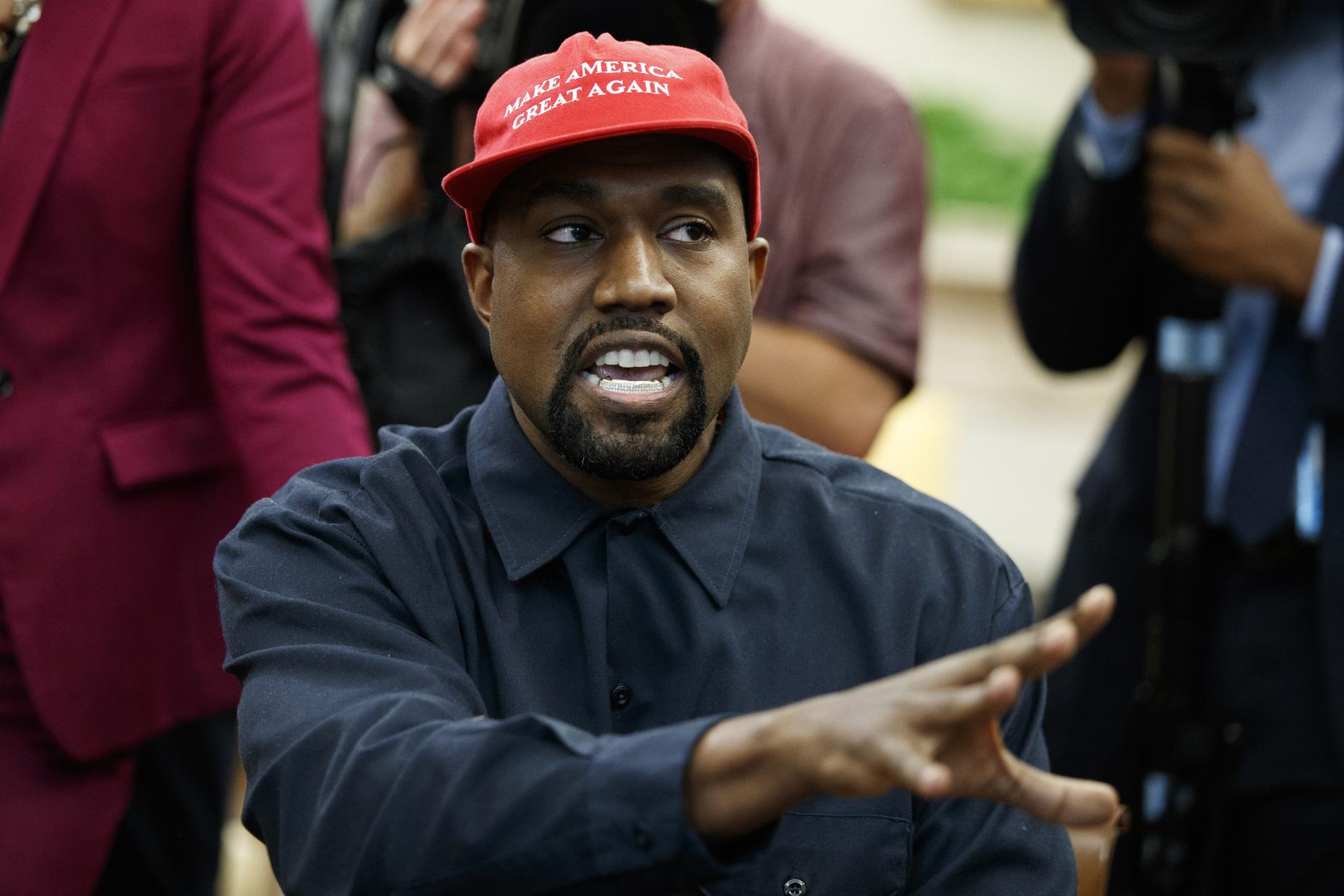
On the Media
The Oldest Trick
00:50:35
Modern anti-Semitism flares up; investigative reporters take on a mysterious tragedy.
Loading summary
Transcript140 lines
- [00:01]
Brooke Gladstone
A strange cast of characters is bringing a very old form of prejudice back to the media main stage.
- [00:08]
Leo Ferguson
Dick Fuentes. Yay. And Trump is like a perfect encapsulation of the messy, confusing landscape of antisemitism that we've been experiencing for the past few years.
- [00:19]
Brooke Gladstone
From WNYC in New York, this is on the media. I'm Brooke Gladstone. This week, a peek into how a spirit, a special class of investigative journalists solved some of their trickiest cases from finding those behind a plane crash that killed 300 people in 2014.
- [00:37]
Eric Toler
MH17 is unique in the sense that there is a very, very long digital.
- [00:42]
Brooke Gladstone
Footprint to the identity of a Russian agent who charmed away onto NATO's social scene.
- [00:48]
Roman Dobrokhotov
Whenever Maria walked into a room, men stood up and no woman would let Maria with their husband or partner alone.
- [00:56]
Brooke Gladstone
It's all coming up after this on.
- [01:00]
Mary Harris
The Media is supported by Progressive Insurance. Do you ever think about switching insurance companies to see if you could save some cash? Progressive makes it easy to see if you could save when you bundle your home and auto policies. Try it@progressive.com Progressive Casualty Insurance Company and affiliates. Potential savings will vary. Not available in all states.
- [01:22]
Christo Grozev
The election has come and gone. Now we're in a new era. It can be easy to get discouraged, frustrated, but you can't afford not to pay attention. You need trustworthy, independent journalism to cut through the noise and hold power to account. I'm Mary Harris, host of What Next from Slate.com we are a daily news podcast with a kind of transparent, smart, yet tongue in cheek analysis you can only find at Slate. Follow and listen to what Next wherever you get your podcasts.
- [01:52]
Brooke Gladstone
From WNYC in New York, this is ON the media. I'm Brooke Gladstone. There's a variety of maladies that everlastingly eat away at the American Project. Racism, sexism, xenophobia, homophobia, to name a few. They flare up on and off the front page, given the politics of the day. And this week's ism, or phobia is another hearty perennial.
- [02:19]
Leo Ferguson
Former President Donald Trump is defending himself against a Republican backlash over his recent dinner with two known anti Semites. Trump hosted white nationalist and Holocaust denier Nick Fuentes at Mar a Lago last week, along with the rapper Ye, formerly known as Kanye West.
- [02:36]
Brooke Gladstone
Trump claimed not to know who Fuentes was, blaming Ye for the inclusion, but that actually was the work of Milo Yiannopoulos, or so he claims. Formerly of Breitbart, Yiannopoulos resigned under pressure after a video of him seeming to endorse pedophilia emerged and now he serves apparently as ye's unofficial campaign manager. He told NBC that the dinnertime retinue he had assembled chided Trump for betraying his true loyalists, the January Sixers, by putting no money toward their defense that Trump was good enough to run for vice but was passed it as president. The top job apparently belongs to Ye. Milo says YE is finally giving voice to what everybody already knows.
- [03:24]
Leo Ferguson
Ever. No one had the balls or the.
- [03:25]
Roman Dobrokhotov
Power or the platform to say before.
- [03:26]
Leo Ferguson
Someone who's prepared to lose everything.
- [03:30]
Roman Dobrokhotov
Yeah, that's huge. Yeah, like it's never happened before.
- [03:33]
Brooke Gladstone
Someone with the courage to blame everything he hates on the Jews. On Thursday, Ye sat down with Alex Jones in an hours long conversation where he said things that even made the man who denied the reality of the Sandy Hook massacre uncomfortable.
- [03:50]
Eric Toler
That's right, you're not Hitler, you're not a Nazi. You don't deserve to be called that and demonized.
- [03:55]
Leo Ferguson
Well, I see good things about Hitler also.
- [04:01]
Brooke Gladstone
Then he said something kind of incoherent about loving everybody. Maybe Jews, I couldn't tell. And then concluded every human being has.
- [04:09]
Leo Ferguson
Something of value that they brought to.
- [04:11]
Ira Flatow
The table, especially Hitler.
- [04:14]
Brooke Gladstone
There's been a documented rise in antisemitism, violent and otherwise. But the recent slew of celebrities seemingly involved its propagation, the normalization of it. The tepid responses of some politicians, not to mention the enthusiastic responses of other ones, seem just more logs on the fire of American fear and loathing.
- [04:37]
Leo Ferguson
Nick Fuentes. Yay. And Trump is almost like a perfect encapsulation of the messy, confusing landscape of antisemitism that we've been experiencing for the past.
- [04:49]
Brooke Gladstone
Leo Ferguson is the director of Strategic Projects of the Jews for Racial and Economic justice, and he says that to fully understand these stories, there's quite a bit of context we need to catch up on.
- [05:01]
Leo Ferguson
So on the one hand, you have Kyrie, who is clearly fueling anti Semitism by sharing a video that has some really hateful ideas and myths and untruths about Jews. On the other hand, I don't think that this is someone who is animated by hatred of Jews or anti Semitic ideology in a deep way. I mean, Kyrie Irving is a fantasist, a conspiracy theorist. He believes in the flat earth, he believes in all kinds of ridiculous things, and amongst these things are anti Semitic conspiracy theories. Then you have someone like Ye who clearly feels this. This is someone who has some really deep animosity in his heart. That's a real bummer because he's a great Musician, but there's something really dark and ugly there. And then you have someone like Nick Fuentes, who has a premeditated political project wishing violence upon Jews and trying to create an America that is explicitly a white Christian ethnostate.
- [05:59]
Brooke Gladstone
So why do you think Kyrie and ye are getting so much airtime?
- [06:03]
Leo Ferguson
It's a story. These are both public figures with massive followings doing something controversial. It's the kind of coverage, it's the quality of the coverage, and it's the environment into which these stories flow. So as someone who is black and Jewish, who cares deeply about anti black racism, who cares deeply about anti Semitism, it's very clear that within the Jewish community there is a powerful preoccupation with anti Semitic acts committed by people of color, especially black people. And that's just about racism. That's just about white Jews in the United States having assimilated into the white supremacist culture that has existed in this country for hundreds of years. But there is no such thing as black antisemitism. There is just antisemitism. And if this feels like a moment that's new or shocking, it shouldn't. It's a sad moment. It's disturbing on a visceral level. But we have to understand that antisemitism has been a defining feature of Western culture for at least 2000 years.
- [07:10]
Brooke Gladstone
When I think of important political leaders and leaders of movements in America, you have to go way back to find people like, you know, Henry Ford or Father Coughlin, blatant antisemites who holding the mic, so to speak. You don't have to go as far to find Malcolm X and Farrakhan. So would that contribute? And then there's the problematic conflation of Jews with Israel and Israeli policy. Even though there's a big split in America, certainly between those two things, doesn't that particularize a little bit, this tension between two groups?
- [07:59]
Leo Ferguson
Yeah, great question. So crib notes for the particularity would be James Baldwin's writing about antisemitism and about the conflict between non Jewish black people and white Jews. I think that's probably a great place to start on the specifics of the American experience and the relationship between white Jews and African Americans. The piece I'm referring to is Negroes are anti Semitic because they're anti white.
- [08:25]
Brooke Gladstone
I have it.
- [08:25]
Leo Ferguson
Yeah.
- [08:26]
Brooke Gladstone
He wrote in the New York Times in 1967.
- [08:30]
Leo Ferguson
Yeah.
- [08:31]
Brooke Gladstone
Under the headline, Negroes are anti Semitic because they're anti white. The grocer was a Jew. And being in debt to him was very much like being in debt to the company's store. The butcher was a Jew. And yeah, we certainly paid more for bad cuts of meat than other New York citizens. And we often carried insults home along with our meat. We bought our clothes from a Jew, sometimes secondhand shoes. Pawnbroker was a Jew. Perhaps we hated him most of all. The merchants along 125th street were Jewish. At least many of them were. I don't know if Grants or Woolworths are Jewish names. And I remember that it was only after the Harlem riot of 1935 that Negroes were allowed to earn a little money in some of the stores where they spent so much. You know, he goes on to say the army may or may not have been controlled by Jews. I don't know and I don't care. I know that when I worked for the army, I hated all of my bosses because of the way they treated me. I don't know if Nabisco is Jewish, but I didn't like clearing their basement. I don't know if Rikers is Jewish. I didn't like scrubbing their floors. The root of anti Semitism among Negroes is, ironically, the relationship of colored people all over the globe to the Christian world. This is a fact that may be difficult not only for the ghetto's most blasted and embittered inhabitants, but also for many Jews, to say nothing of many Christians. But it is a fact and it will not be ameliorated. In fact, it can only be aggravated by the adoption on the part of colored people now of the most devastating of the Christian vices. And since I'm just reading this for the first time, is he talking about antisemitism?
- [10:12]
Leo Ferguson
I think he's talking about white supremacy. I think what's so powerful about that piece, you know, he. I think every line in that is deeply considered. And he's doing a really interesting trick, which is that he is, I think maybe to get under the skin of Jews, certainly to be thought provoking. He is essentially describing Jewish assimilation into Christendom rather than Jewish assimilation into whiteness, which is a really interesting choice. I don't know if it's because he was aware of Jewish people of color or the global Jewish diaspora, or if it's because he was thinking very specifically of, as he calls it, the vices of white Christianity in the United States, the enabling of anti black racism, of enslavement, of Jim Crow, of lynching, of every terrible thing that's been done to black people on this land. So much of that has been enabled by Christianity and excused by Christianity. And when Jews emigrated to this country in large numbers for the first time at the turn of the 20th century, they began a process that I think we often think about in racial terms, in terms of assimilating into whiteness. What Baldwin is naming here is that it also looks like in many ways assimilation into a pre existing religious and cultural hierarchy which Jews have benefited from enormously. Right. The white parts of my family are part of that story of upward mobility, coming from a deeply and unsettled, unsafe homeland in the old country and coming here and eventually finding a kind of stability in the United States. But in part that was by virtue of whiteness and of at a certain point, because of McCarthyism, you know, letting go of their political radicalism and not challenging the status quo.
- [11:58]
Brooke Gladstone
It's long been obvious that wealth has been extracted from the black community by white people of all kinds and all stripes. I'm just wondering, since Jews are considered both a religious group or an ethnic one, or both. When we talk about antisemitism right now, is that steeped in the religion or. Or in race?
- [12:21]
Leo Ferguson
I think that what we're seeing is much more about culture and a general sense of the other. The Jew is the other, the outsider, the interloper. This has a long history and anti Semitic ideology going back to both fears around immigration and cultural change. Exactly the same kind of things that you hear Donald Trump saying about Mexican and other immigrant groups. The kinds of things that people have said about Jews for hundreds of years, certainly in the 20th century. The idea of Jews as communists, as people who were going to come in and undermine society. But also the flip side of that. The idea of Jews as the masterminds controlling everything. Right. Like all of these ideas play on the idea of Jews as being not real Americans, not one of us, but actually beholden to their own self interest and their own selfishness.
- [13:10]
Brooke Gladstone
You said that the difference in this moment is that the thoughts and arguments of right wing chat rooms have made it to the mainstream. There's always an argument centered around normalization. Whether or not seeing this ugly side reflected everywhere publicly is ultimately a good thing or a terrible thing. Will we grow from this or stumble?
- [13:36]
Leo Ferguson
Well, it's always better to be out in the sunlight than in the darkness.
- [13:41]
Brooke Gladstone
You sure about that?
- [13:44]
Leo Ferguson
I think so. At least it's a question, right? I think that there's been a long standing question about whether Trumpism is meeting a pre existing need for red meat and hatred within the electorate, or whether the appearance of Trumpism has in fact created something, stoked something that wasn't there before.
- [14:08]
Brooke Gladstone
Could be both, you know, meeting a need and fanning the flames.
- [14:12]
Leo Ferguson
What? Complexity, nuance. You're absolutely right. It certainly could be both. But I think in either case, it's better to be real with who we are as a country so that we can find real solutions. Yeah, I don't think that we've been well served by ignoring the parts of our culture that we don't like, pretending that they're not there.
- [14:33]
Brooke Gladstone
So what do you think about the coverage of all of this?
- [14:36]
Leo Ferguson
Well, first let me address one thing that you said earlier that I just didn't want to forget about, which is you mentioned Henry Ford and Father Coughlin and then sort of analogized them to Malcolm X and Louis Farrakhan.
- [14:50]
Brooke Gladstone
The analogies were only that people who had microphones. But I did use the word leader.
- [14:56]
Leo Ferguson
They are all leaders. The question is, how big is their following? And I think it's important to say that, you know, Father Coughlin Wright had radio listenership in the millions. Right. It was a massive figure of American mass media. Henry Ford, similarly right, was one of the wealthiest people in the country and had his own newspaper. When we were talking about Louis Farrakhan, we're talking about the black Hebrew Israelites who've been in the news recently. These are tiny, tiny movements with absolutely no real political power. They don't elect people to office. They don't have a following. They can't get the governor on the phone. They're just ease into comparison. That's one piece. The way that that plays into the question of coverage is we have seen far too much focus on celebrities, especially black celebrities, saying or doing things that are anti Semitic and on random, shocking acts of violence and focused far too little on the environment in which these things are happening. And the way that this comes up in political coverage is false equivalency.
- [15:58]
Brooke Gladstone
Right?
- [15:58]
Leo Ferguson
Is what about it. And something that I know you guys talk about all the time. So people talk about left antisemitism and right antisemitism. First of all, it's important to say that none of the people we've been talking about in the black community are on the left. There's often a conflation of blackness and leftness, blackness and radical politics. Louis Farrakhan is a homophobic, patriarchal nationalist figure who would never be welcome in any of the progressive movements that I am a part of. The same thing is true of black Hebrew Israelites. These are not figures of the left. And yet often people will use these folks as examples of left antisemitism. Is there antisemitism on the left? Of course there is. Just like there is sexism on the left and homophobia on the left. We live in a society in which they're in the water, they're in the air that we breathe. The question is, where is this a political project? The left is not organized around trying to hurt Jews. In fact, on the contrary, when we see anti Semitism on the left, it's usually the place in which it's handled most deftly. And immediately we call people out, we call people in, we have conversations. If someone is problematic, they're usually not welcome in our spaces. And if someone has just made a mistake and gotten things wrong and needs some education, then we are more than thrilled to bring them into conversation. The right in the United States has built its coalition intentionally on the back of white Christian nationalist ideology. It is not an accident that the meteoric rise in anti Semitism, in anti Asian hate violence, in anti immigrant sentiment in the United States followed the election of Donald Trump. So you have on the one hand, a group who has made this their political project and has done it not just in language, not just in dog whistles and winks and nods and tweets, but in policy. Right. We had Stephen Miller crafting immigration policy explicitly designed to keep the brown people out and make it easier for white Europeans to immigrate. He talked about it openly. Right. That is a political project of the white Christian nationalist movement. There's no equivalent of that on the left.
- [18:14]
Brooke Gladstone
How do you think the press could help clarify this? In a way it is currently not.
- [18:21]
Leo Ferguson
The first thing is look for false equivalency. Are people talking about anti Semitism on the left and the right in the same way? They are? Something's wrong. Number two, is this actually a story about anti Semitism or is it a story about ignorance? Is it a story about mental illness? Is it a story about power? You know, I work on hate violence prevention in New York City. I look at the statistics very closely and I hear all the stories. And one of the things that you find when you dig a little deeper is that only a small portion of what is commonly reported on as anti Semitism is actually anti Semitism. When a 13 year old draws a swastika on a playground, that's a kid who understands that some symbol has power because the grownups seem to get upset and they're testing boundaries. Right. But it will be written up as an anti Semitic hate violence. When a mentally ill person who's shouting about anti Jewish conspiracy theories attacks someone. That's tragic and it is caused by antisemitism. It's happening in part because those ideas are out there. But this is not someone who has a deep seated ideology that they've carefully considered. This is a stew of confused ideas that have leaked out of right wing chat rooms and into the public consciousness. Right. So one of the things we have to do is get careful about that.
- [19:31]
Brooke Gladstone
What you're saying though, echoes a lot of the excuses that are made for the largely white male shooters. You know, they hit on hard times, they have histories of mental illness, but the context in which they themselves believe they're doing this is one of hatred. So who's the person we write off as mentally ill and who's the person we write off as a lethal, bread in the bone antisemite?
- [20:02]
Leo Ferguson
Well, as the wise person said to me very recently, can it be both?
- [20:07]
Brooke Gladstone
But how is the press to address it then?
- [20:10]
Leo Ferguson
We just need more nuance and we need more stories about the systemic nature of all of this. Right. I'm not bothered at all by coverage of someone who is legitimately mentally ill and also commits an act of racial or anti Semitic violence. We are much better served by honest conversations that get at the fullness of this terrible disease in our culture. As Bryan Stevenson says, no win is the worst thing that they've ever done. And that kind of nuance has to get applied to these acts as well. It's not about excusing or even forgiving people who commit hateful acts. It's about understanding that as long as those ideologies are out there in the foundations of our society, people are going to do things like this. It's never going to go away. We only get at this by building the society in which racial violence, anti Semitic violence, gender based violence don't have fertile soil to grow in.
- [21:11]
Brooke Gladstone
Thank you very much, Leo.
- [21:13]
Leo Ferguson
It's been an absolute pleasure to talk with you.
- [21:16]
Brooke Gladstone
Leo Ferguson is the director of Strategic Projects at Jews for Racial and Economic Justice. Coming up, the first verdict from a years long investigation into the downing of flight MH17. This is on the media.
- [21:46]
Mary Harris
On the media supported by Progressive Insurance. You chose to hit play on this podcast today. Smart choice. Make another smart choice with Auto Quote Explorer to compare rates from multiple car insurance companies all at once. Try it@progressive.com Progressive Casualty Insurance Company and affiliates not available in all states or situations. Prices vary based on how you buy.
- [22:11]
Christo Grozev
The election has come and gone. Now we're in a new era. It can be easy to get discouraged, frustrated, but you can't afford not to pay attention. You need trustworthy, independent journalism to cut through the noise and hold power to account. I'm Mary Harris, host of What Next from Slate.com we are a daily news podcast with a kind of transparent, smart, yet tongue in cheek analysis you can only find at Slate. Follow and listen to what Next. Wherever you get your podcasts.
- [22:43]
Brooke Gladstone
This is ON the Media. I'm brooke Gladstone. On July 17, 2014, Malaysia Airline Flight 17 departing from Amsterdam for Kuala Lumpur was shot out of the sky over Ukraine. The footage was horrifying.
- [22:58]
Leo Ferguson
The debris field in eastern Ukraine is being guarded by pro Russian rebels, some of them allegedly drunk, who are restricting the activities of international investigators. The bodies of some of the 298 victims, 80 of them kids, seen here, simply lined up on the side of the road.
- [23:15]
Roman Dobrokhotov
How could this happen?
- [23:16]
H
Who was responsible and why did they.
- [23:18]
Brooke Gladstone
Do it eight years later? Earlier this month, the district court of the HA handed down answers.
- [23:24]
Christo Grozev
A court in the Netherlands has delivered its verdict and we can tell you now that two Russians and one Ukrainian have been found guilty of shooting a passenger plane.
- [23:34]
Brooke Gladstone
Most of the victims were Dutch. The attack came just months after Russia had invaded Crimea. The missile was fired from Russian held territory.
- [23:43]
Eric Toler
MH17 is unique in the sense that there's a very, very long digital footprint.
- [23:49]
Brooke Gladstone
Eric Tolar is the director of research and training at Bellingcat, an investigative news outlet that was founded just three days before MH17 was shot down.
- [24:00]
Eric Toler
And this huge digital footprint led to this ungodly amount of information linking exactly the chain of command.
- [24:07]
Brooke Gladstone
Bellingcat specializes in that kind of investigation, the one where there is an ungodly amount of information online. They partnered with journalists and researchers around the world to find the route that the BUK surface to air missile traveled from Kursk, Russia, to the crash site in eastern Ukraine and the people behind it. The MH17 case launched Bellingcat. Since then, they've published one bombshell investigation after another, uncovering the people behind the poisoning of Sergei Skripol and his daughter in Salisbury, England, the Russian intelligence officers who poisoned opposition leader Alexei Navalny, and details about the 2018 chemical attack in Doma, Syria. Soon after MH17 went down in 2014, Ukrainian intelligence posted intercepted calls between Russian military commanders on YouTube. These calls offered evidence for who was behind the attack, but the voices were hard to make out. The Dutch criminal proceedings put out a call for help identifying two of the speakers. They went by code names, Dolphin and Orion. Bellingcat found them.
- [25:19]
Eric Toler
The dolphin was a guy named Nkchov, and he honestly turns out to not be that important. The one who actually was important was Orion. He was called Andrey Ivanovich, but that.
- [25:30]
Brooke Gladstone
Was a fake name. Using a phone number provided by Ukrainian intelligence, the bellingcat team found a second number associated with him by using caller ID apps.
- [25:41]
Eric Toler
And the idea behind them is very simple. If someone calls you and you don't know who it is, it'll show you the name of the person calling you, even if you don't have them in your contact book.
- [25:48]
Brooke Gladstone
That's Eric Toller, bellingcat's head of training and research.
- [25:51]
Eric Toler
The way they get this information is not through, you know, blackmagic or, like, talking to the phone companies. They get them from other users who install this app. Most of these apps are searchable, so if I type in a phone number, I can see the name of the person according to other people in other contact books. And when we did this, we searched it and we found that this phone number which Orion was using was listed as Ivanikov on one of these apps, which is the real last name of Orion. But there's one place where he actually had his photo and his real first name, which is Oleg, because turns out his kid, I think he goes to school in Switzerland. So he talks to his kid on Skype and he uses this phone number. And so when we look up his phone number on Skype, we see Alieg with his real face right in front of us, like, oh my God, here he is. Here's the big spy, here's Orion. And so from all these, we can figure out the exact chain of command, who was talking to whom, who was in charge of whom, both on the Russia side of the border and on.
- [26:46]
Brooke Gladstone
The Ukraine side, one of the group's close collaborators. The person who phoned Orion to identify his voice is Roman Dobrokhotov. He's the founder and editor in chief of the Insider, a Russian investigative online news outlet. And one of the people who figured out who was behind the downing of MH17. I asked him for his hot take on the decision from the District Court of the Hague.
- [27:10]
H
So many people underestimated this decision because they thought that this is low level people. Yes, they were on the ground, yes, they are guilty, among others. But this is only the first stage. So I'm pretty sure that many of people who we were investigating, General Tkachov, General Ivanyakov from GRU or General Burlaka from fsb, Ovlislav Surkov, Putin's helper. All of them will be in this trial later. So we just need to wait a.
- [27:40]
Brooke Gladstone
Bit, just to deal a little bit with the Alphabet soup. The GRU is Russia's military intelligence agency, while the FSB is Russia's main intelligence agency. That's the successor to the kgb. And the SBU is Ukrainian intelligence.
- [27:56]
H
Absolutely.
- [27:57]
Brooke Gladstone
Take us back to the days after the plane was shot down. What compelled you and the insider to join up with Bellingcat to figure out who was responsible for shooting down the plane?
- [28:09]
H
We already had some experience working on Russian intelligence and Russian military involved in Europe. So when this trial started on MH17 and they required evidence on who gave direct orders to so called separatists and who brought the book in Ukraine, we were optimistic because we knew some new instruments, digital instruments that can help to find anyone in this world.
- [28:40]
Brooke Gladstone
Can you tell me a little bit about the leaked data sets in your investigations? The cell phone metadata? You found that a lot of this metadata is sold on the black market by the police and the fsb, and that they have a lot of clients. They could be real estate agents or criminals or policemen who don't want to bother to get a court order and would rather spend 10 bucks to do this. You said that if you have 100 bucks, Russia is the most transparent country in the world.
- [29:12]
H
Yes, at the first time I said this, it was, I think, three years ago. And we were expecting that at some point Putin will do something to close this black market, especially after our investigation on Navalny poisoning. But you can't fight against corruption if you are a corrupted leader yourself. If Putin wants to get rid of corruption in Russia, he had to go out of power. That would be the simplest solution. So for Russian investigative journalists, as long as Putin is in power, our investigation will prosper.
- [29:46]
Brooke Gladstone
How has the reporting on Russian intelligence informed your reporting on the war in Ukraine? We know there's a relationship between the GRU and the Wagner group that's been called a de facto private army for Vladimir Putin. It operates outside of the law.
- [30:06]
H
Well, it's ironic that when we published our first investigations about GRU involvement, about FSB involvement, about Wagner's group and Prigozhin involvement. And it was important that we prove this. And Prigozhin, who even went to court against the insider and the Bellingcat, Yevgeny.
- [30:23]
Brooke Gladstone
Prigozhin is an oligarch and a close friend of Putin's who controls the Wagner group. So he went out to get you and to disprove the charge that he was Connected with Wagner.
- [30:34]
H
Yes. And what happened in the end of summer? He openly said that he is actually founder of Wagner's group. And even he built a business center that's called Wagner Group. And he made a big PR out of this. And I think that actually this criminal investigation against me is still underway and that I'm pretty sure that I will be found guilty in Russian court, because it is Russian court. But this is funny that at the same time Prigozhin has already no motivation to hide all of this, because it became common knowledge after our investigation this year, after the war started. They are not hiding anything like this anymore. They're not hiding that Russian troops are in Ukraine, that Russia hacked American emails and interfered in elections.
- [31:18]
Brooke Gladstone
All the bridges have been burned. And you said it looks like nothing can shock the Russian national public anymore. The norms have shifted so much. And I know that we've had a similar experience with what used to be the norms of public behavior over here.
- [31:37]
H
Yeah, but I don't think that this is the end of journalism, because first of all, this result that everybody knows it is known because of us. Because I remember times when even my colleagues from independent Russian journalists didn't believe me when I said it were GRU who hacked Hillary Clinton and Emmanuel Macron and Bundestag. They said like that cannot be so. We can't believe that people are sitting in the center of Moscow just openly making these hacking attacks. All these revelations were sometimes very counterintuitive and very important for people. And okay, they are now common knowledge, but we have lots of other important investigations.
- [32:15]
Brooke Gladstone
Do you ever despair of bringing people to justice because people are no longer shockable? Or does the verdict in the case in the Hague about the downing of the Malaysia airplane tell you that justice is possible? You say they got the low hanging perpetrators first, but you don't believe they'll stop there, that they'll continue up the chain.
- [32:41]
H
Yeah, I think both things are important. First, we of course need some court decisions. For example, in case of Berlin murder, when FSB agent killed Hunger Schwili, a Chechen immigrant to Germany. When we found the real name of the murderer, I witnessed in court officially and helped to imprison him for life there. So it was like instant karma. But sometimes we need to understand that we have to wait for the results. If we want to change something in Russia for good. We need to explain what's going on in the country. Even if there is no immediate revolution, still it is very important for them to understand that the country is run by criminals. That they shouldn't trust governmental propaganda. So this result is also very important for me.
- [33:31]
Brooke Gladstone
Thank you so much.
- [33:32]
H
Thank you.
- [33:33]
Brooke Gladstone
Roman Dobrokhotov is founder and editor in chief of the Insider. Coming up, how Step by step, Bellingcat unearthed a sleeper spy. This is on the media.
- [33:59]
Mary Harris
OnTheMedia is supported by Progressive Insurance. Do you ever think about switching insurance companies to see if you could save some cash? Progressive makes it easy to see if you could save when you bundle your home and auto policies. Try it@progressive.com, progressive Casualty Insurance Company and affiliates. Potential savings will vary. Not available in all states.
- [34:21]
Christo Grozev
The election has come and gone. Now we're in a new era. It can be easy to get discouraged, frustrated, but you can't afford not to pay attention. You need trustworthy, independent journalism to cut through the noise and hold power to account. I'm Mary Harris, host of What Next from Slate.com, we are a daily news podcast with a kind of transparent, smart, yet tongue in cheek analysis you can only find at Slate. Follow and listen to what Next. Wherever you get your podcasts.
- [34:54]
Brooke Gladstone
This is on the media. I'm Brooke Gladstone. Christo Grozev is lead Russian investigator with Bellingcat. His probe into the identities of suspects of the 2018 poisoning in the the UK of several people, most notably a Russian double agent for British intelligence, Sergei Skripal, won the European Press Prize for investigative reporting. Last November. He exposed a sleeper spy who for years had cozied up to unwitting officials in NATO. Earlier this year, on bellingcat's website, bellingcat disclosed exactly how they did it. Welcome to the show, Christo.
- [35:34]
Roman Dobrokhotov
Thanks for having me.
- [35:36]
Brooke Gladstone
So last November you were combing a list of passport numbers suspected to have been used by Russian spies. Well, first of all, why were you doing that?
- [35:48]
Roman Dobrokhotov
That's what I do on my spare time. And I'm not kidding. When I'm on an airplane, when I have a little time between assignments, I like to go over old data sets that we haven't parsed through completely and look for new things. So I had access to this Belarusian border crossing database. We had kind of gone through that a few times. But one thing I decided to do is look for new passports from the known range that we had discovered earlier to belong to Russian military intelligence.
- [36:18]
Brooke Gladstone
A known range of passport numbers.
- [36:21]
Roman Dobrokhotov
That is correct. We had found out in 2018 that what the Russian GRU, the military intelligence did is for laziness or for whatever reason they issue passports and the fake identities in sequential numbers. So you would have one spy traveling with a passport number like 643-5793, and the other one accompanying him would have only the last digit differ. So this obviously gave us a way to discover new spies, because all we needed to do is just look for neighboring numbers in all kinds of different data sets.
- [36:55]
Brooke Gladstone
And in a list of male Russian names, you stumbled across one Maria Adela.
- [37:03]
Roman Dobrokhotov
Kufelt Rivera that stood out completely from everything else. So I started googling her name, and I found a 2006 entry in a congressional report in Peru of all places where this name had been mentioned, along with two other names as applicants for Peruvian citizenship based on fake identities. Obviously, that night I didn't sleep because I had to find everything I could until the morning.
- [37:33]
Brooke Gladstone
And what else did you learn right away?
- [37:35]
Roman Dobrokhotov
She already had a Russian passport. This was particularly important because it provided a possible explanation as to the identity of an illegal. An illegal spy is somebody who is sent by a government to live under a cover identity for 10, 20 years. The term illegal comes from the fact that there's no diplomatic protection for such a person. If they're caught, they get jailed. Like the Americans from the TV show sleeper agents.
- [38:03]
Brooke Gladstone
How often do these people come up?
- [38:07]
Roman Dobrokhotov
Extremely rare. You can equate this to a scientist discovering a new species or something, or an astronomer finding a new star because it's so rare. Definitely. In the last 25 years, there have been only 10 such illegal spies outed by the United states. And since 2010, there have been only one case of discovery. It was a young male with a Brazilian passport and cover identity who had almost gotten a job at the International Criminal Court in the Hague, where he was going to work as an analyst analyzing Russian war crimes in the war in Ukraine. And this turned out to be a Russian illegal.
- [38:46]
Brooke Gladstone
Wow. And so, with regard to Maria Adela, you looked at her travel records, and she had 13 really long train trips. And that struck you as odd.
- [38:58]
Roman Dobrokhotov
It was grueling, long trips. So we had to come up with some hypothesis. Was it because she was carrying something more easily transported by train? Was it because she had a fear of flying? Anyway, there are more strange things that we discovered. For example, that this woman had registered a trademark, which was a jewelry brand called Serene in France in 2012. And then she had moved this trademark registration to Italy. And then we were able to find, through the name of the brand, a Facebook account. And we could see where she had been and the circle of people that she was interacting with. And those were mostly Americans, mostly from the NATO base in Naples in Italy called the Joint Command center for the Allied Forces. It's kind of the naval center of all NATO forces. This woman, who by this point, we believed pretty strongly was a Russian spy, had managed to befriend hundreds of Americans and Germans and Italians who were working at NATO.
- [40:02]
Brooke Gladstone
And how did she do this?
- [40:04]
Roman Dobrokhotov
Well, we were looking for patient zero who connected her to NATO, and we found that she had relaunched a dormant chapter of a charity organization called Lions Club. This particular local branch of the Lions Club had been launched by a NATO general from Germany in 2003. But when he retired, it was dormant. Our Maria Adela, in 2013, shows up in Naples and relaunches it, as we can see from a little story that praises her on the website of this club.
- [40:37]
Brooke Gladstone
You found that the chairman of the club was a data protection officer for NATO.
- [40:42]
Roman Dobrokhotov
Exactly. The photographer of the club was the photographer of the NATO base and the photographer for her jewelry brochures.
- [40:53]
Brooke Gladstone
But you never had any suspicions about him?
- [40:56]
Roman Dobrokhotov
Definitely not suspicions that any of these people knowingly were collaborating, But, I mean, that's even worse. They were passively being apparently exploited. And that was clear. One of her acquaintances, he even had a romantic fling with her. And he was a NATO officer. She had either raven black long hair or short blonde hair. And she would change every year, a couple of years. She had a very cute black cat, which, by the description of many people who thought were her friend, was the only stable thing in her life. And actually, that was quite important for our investigation because you want to find something stable because that would travel with the person into their real identity.
- [41:43]
Brooke Gladstone
She spent over a decade undetected in Europe, primarily in Italy. She had a Russian accent, which one of her cover stories explained. I'm just wondering whether you were able to piece together how she wound up, where she wound up.
- [41:59]
Roman Dobrokhotov
It was a big mystery. If she had not been outed by the Peruvian government and she had acquired that passport, she would have traveled around the world, never admitting any connection to Russia. She would have pretended she came from Peru. She would have learned a backstory very well about where she grew up and what her mother was like and so on and so forth. She didn't get that passport, but by that time, apparently she had traveled under that Peruvian identity. So it was too late for them to change the name, so they had to come up with the second best. And that was a Russian passport issued in this same name. But then they had to come up with a really crazy backstory. This crazy backstory was that she was the daughter of A Peruvian mother and a German father, born in Lima, Peru, but was brought by her mother to Soviet Russia to see the Olympics when she was age 2 and her mother had to leave urgently back to Peru, and she left her with a local Soviet family, and that Soviet family became her adoptive parents. She didn't have a great relationship with them, which explained why she wanted out of Russia. And considering how stereotypical this is, that young Russian attractive women want to get out of Russia and marry a foreigner, preferably a wealthy one, this didn't really raise a lot of concerns.
- [43:21]
Brooke Gladstone
And who do you think was making up the backstory? The gru?
- [43:26]
Roman Dobrokhotov
Absolutely. What was wrong there, however, in that backstory, and this is the reason why she was called by the Peruvian Migration Office, was that apparently the birth certificate that was issued to her in 1978 was issued by a church, which actually was built only nine years later. And the new cover story, which is this complicated one with the Moscow Olympics, it would have been created on the fly to retrofit the facts, and it would have been done by the jury in Moscow.
- [43:56]
Brooke Gladstone
You mentioned why she seemed to be an unlikely spy. A lot of people who thought they were her friends viewed her as very chaotic and emotional. She had love affairs and even seemed to take some of them seriously.
- [44:12]
Roman Dobrokhotov
Yeah, we thought a lot about what the reason for this might have been. Some colleagues thought, well, maybe it looks attractive to people for somebody to appear weak. Maybe that was all staged. Or it could be that she was not a great spy and she was just the daughter of somebody important that arranged for her that sweet job. Who she really was was the biggest mystery. I mean, we had figured out what she did, the access she got to NATO. But for me, really, the longest time of this investigation was the search for the real Maria Della. And you found her at the last minute. It took almost 11 months of hunting for the real Adela. She was back in Moscow at the time. We were looking for her because she was recalled at some point in late 2018. So we knew that we would have to look for somebody who's in Russia relatively recently, from the end of 2018. And most likely that somebody would have a cat, because everybody told us how much Maria Della loved Luisa. Now, we had a lot of photographs of Luisa the cat, ranging from the time she was a kitten of a couple of days old all the way until she was two and a half, three years old.
- [45:26]
Brooke Gladstone
You had a dossier on Maria Adela's cat, Literally.
- [45:30]
Roman Dobrokhotov
I have a file called the Cat Dossier. We did face recognition of A cat. Trying to match this cat to another cat. Doing face comparison of cats. We even got the microchip number of the Italian cats. And we were trying to find that chip number in hundreds of leaked pet databases in Russia, but she wasn't there. So then we did face search for the woman known as Adela in the Russian passport database. We got, like, almost 100 near matches, but we didn't come up with anything very, very strikingly similar. One of them, however, appeared a possible match from the time that she was 15. So we thought, why would this person not have a fresh photograph in her passport file? So that was the first clue. But we had a name. So we looked in all kinds of leaked Russian databases to find that this person with the name Olga Kolobova had had a pretty lively presence in Russia until the year 2007. And then suddenly, there's an abrupt stop of any digital presence, and she reappears again. Guess when. In November 2018. Again with a very, very lively digital presence. The first thing she does is she buys via an Aldi. Now, Maria Della the spy, drove an Aldi. The second thing she does is she signs up at the vet clinic as a regular client. We know she has a cat. Then she registers an account on the Russian equivalent of Facebook. So she befriends her old school friends from a small village, by the way. And she never posts a selfie or a photograph of herself, which was interesting in itself. Other similarities began piling up. For example, both Adela and this person were posting many, many photographs of bouquets of roses. And in one of these photographs, you could see the hand of Olga Koloboa. Believe it or not, we have access to a hand recognition expert.
- [47:31]
Brooke Gladstone
What?
- [47:32]
Roman Dobrokhotov
Yes, it exists. Hands are completely unique, and you can use them almost as fingerprints to identify a person.
- [47:38]
Brooke Gladstone
Amazing.
- [47:39]
Roman Dobrokhotov
The vein distribution on a hand is completely unique from one person to another because it is randomly created at the time of gestation in the body. So we compared this hand to many of the hand pictures of Maria Della, and we found a match. And then we were able to get from a whistleblower with access to driver's licenses in Russia, a photo of the driving license of Olga. And it was the same woman.
- [48:07]
Brooke Gladstone
Just amazing. In the course of your reporting, you weren't able to uncover exactly the kind of intelligence she gathered in her decade chatting up NATO personnel. What did you learn about the impact of her work?
- [48:24]
Roman Dobrokhotov
Even if we take the most conservative estimate, which is that she did not acquire files and data from these quite informed friends, she became close to including the data officer and the, the health officer and the chief legal counsel. Even in that very innocent hypothesis, she would have been able to describe and create profiles, psychological, financial, medical, even of tens, if not hundreds of NATO personnel and NATO officers. This is extremely valuable information because this could allow them to target their offers of blackmail or financial incentives for recruitment. Some of Fidela's circle of acquaintances went on to go back to the States and get other jobs at a higher level. One of her perceived friends went on to become a candidate for Congress. And all of those people would have been very, very attractive targets for the gru. That's why it was important to alert them of our findings as soon as we could. And none of the other sleeper agents that we have looked at that are known would have have ever achieved anything so valuable in terms of proximity to just the right people. But we have to ask ourselves, was that all? I don't think that was all. Because again, sharing a photographer with NATO would incidentally, accidentally or otherwise allow you access to some photographs. Having the ability to visit homes of senior NATO officers for dinner, it definitely exposes their system to being bugged. I mean, think about it. She was gifting jewelry to her NATO friends and officers wives. Imagine the possibilities, for example, to bug this jewelry. It's not unheard of. It did happen before. So we're not aware what the impact is. We know that the risk of the impact is huge.
- [50:16]
Brooke Gladstone
I'm wondering about the tools you used widely available for facial recognition software. Some of it. Open source investigation.
- [50:25]
Roman Dobrokhotov
Well, first of all, the knowledge that you can use open source tools to discover dark government, crime and espionage, that alone has changed the game, changed the game for the better because we have disabled whole bunches of clandestine operations. We have made it impossible for 30 or 40 Russian spies who previously went around the world blowing things up and assassinating people and poisoning people. With novichok they can no longer travel. And recruiting and training new people who are not going to be certain that they will not be found out is much harder. It's going to take time and money. But we being transparent about how we do it has also upped the game. It's made the Russians in this particular case more careful. They don't anymore use sequential passports. So this is almost like a multi level computer game. We win one level and then the system in this case the Kremlin fixes something and then the next level is much harder to win. But it's a bigger challenge and at.
- [51:29]
Brooke Gladstone
The end works belong Cat is the coolest thing in the world today.
- [51:37]
Roman Dobrokhotov
Cool. Okay, I'll take this quote and we'll use it to in the commercial.
- [51:43]
Brooke Gladstone
Christo Grozev is lead Russia investigator with the investigative journalism group called Bellingcat. He spoke to us from Vienna. Thank you so much.
- [51:55]
Roman Dobrokhotov
Thank you.
- [52:02]
Brooke Gladstone
And that's the show on the Media is produced by Micah Low and she Eloise Blondio, Molly Schwartz, Rebecca Clark Callender, Candice Huang and Suzanne Gaver with help from Tami George. Our technical directors, Jennifer Munson. Our engineers this week were Andrew Nerviano and Mike Kutchman. Katya Rogers is our executive producer. On the Media is a production of WNYC Studios. But wait, there's more. If you if you want to hear an extended version of my conversation with Christo Grozev, check out our Midweek podcast of September 14th called How a Russian Sleeper Agent Charmed her way onto NATO's social scene. And while you're there, you can now find the second and third episodes in our own five part investigation called the Divided Dial into how a lesser known entity in talk radio stealthily and massively amplifies the message of the extreme right. It's a paradox. I'm Brooke Gladstone.
- [53:14]
Ira Flatow
I'm Ira Flato, host of Science Friday. For over 30 years, our team has been reporting high quality news about science, technology and medicine, news you won't get anywhere else. And now that political news is 24 7, our audience is turning to us to know about the really important stuff in their livescancer climate change, genetic engineering, childhood diseases. Our sponsors know the value of science and health news. For more sponsorship information, visit sponsorship.wnyc.org.