← On the Media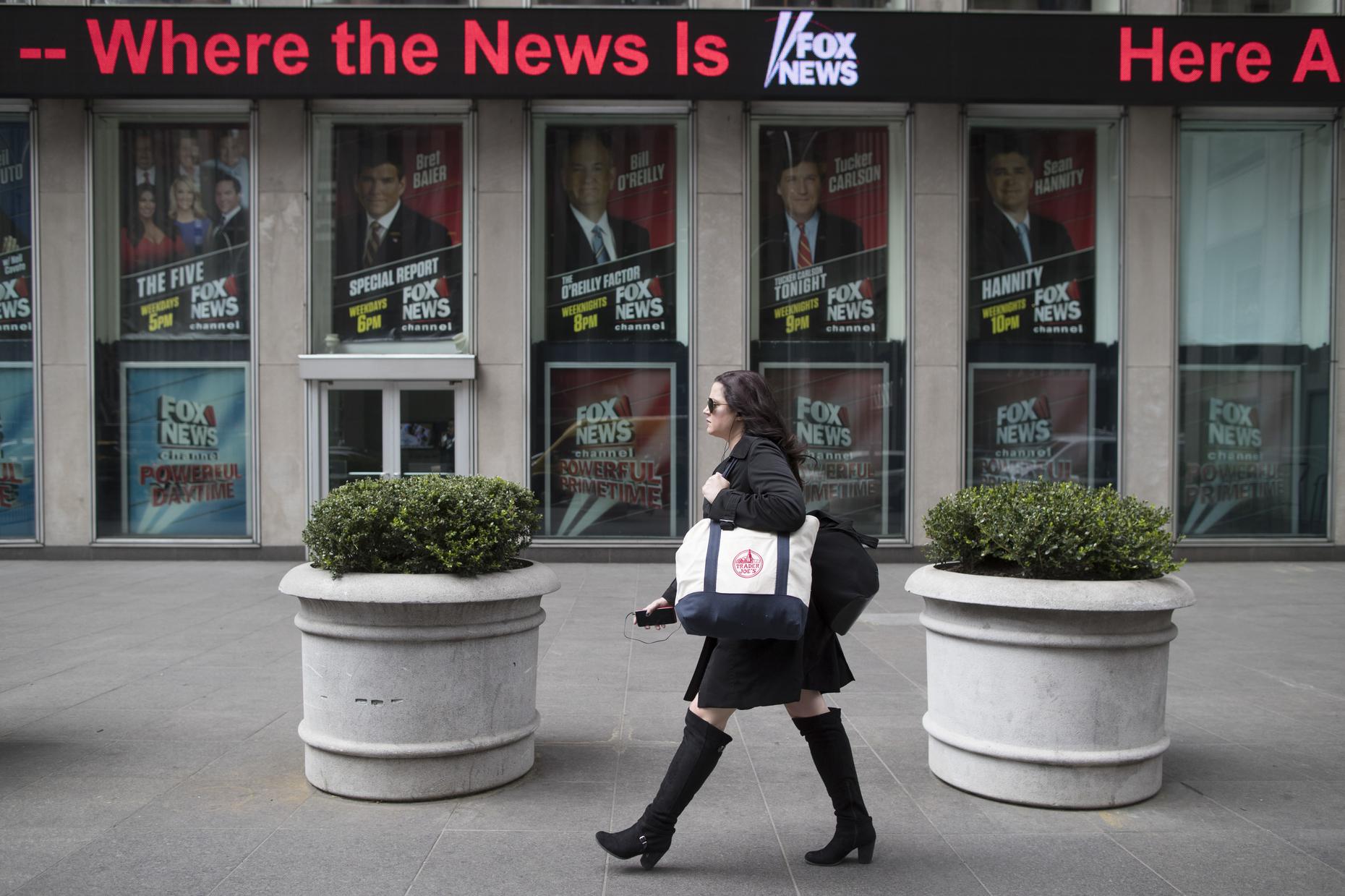
On the Media
The OTHER Lawsuit Involving the Murdochs
00:08:57
What two lawsuits can tell us about the future of the Fox empire.
Loading summary
Transcript31 lines
- [00:01]
David Folkenflik
On this week's show, which we're working on right now, available Friday, we'll be digging into the current status of Dominion Voting's lawsuit against Fox News.
- [00:10]
Lachlan Cartwright
Dominion Voting is suing Fox for defamation over the cable channels, what they describe as bogus allegations of voter fraud in the 2020 election.
- [00:19]
David Folkenflik
The newest revelations allege that Fox News stars knew full well that the conspiracy theories about Dominion Voting machines were groundless, but they went on the air with them anyway. There's a lot more history, though, and the future, which we'll be probing this weekend. So check it out. For now, however, by way of a primer of sorts, we'll replay an interview that NPR media correspondent David Falkenflik did when he was filling in for me last fall. It's related to the ongoing lawsuit in that Dominion's legal team draw a direct line from the heated rhetoric of Fox hosts to the January 6, 2021, violent break in at the U.S. capitol. And that forms the basis of an entirely different defamation suit filed roughly 10,000 miles away from the scene of the crime, brought not against the Murdochs, but by a Murdoch media boss.
- [01:18]
Lachlan Murdoch
Lachlan Murdoch has launched defamation proceedings against the publishers of news website Crikey. Let's go. Murdoch's lawyers claim Crikey wrongly suggested the Fox News boss was involved in the plot with Donald to overturn the 2020 election result.
- [01:32]
Lachlan Cartwright
Lachlan Cartwright is the editor at large of the Daily Beast, where he covers power, crime, celebrity and justice. And he says that with these two suits, we're getting a peek into the future of the Fox empire.
- [01:42]
Bernard Keane
Crikey, which is sort of a scrappy Australian independent news and politics and opinion website, published an article on June 29. In that piece, the writer Bernard Keane labeled the Murdochs as the unindicted co conspirators of the deadly US Capitol riots. And that really triggered Lachlan Murdoch. He sent a number of legal letters via his solicitor in Australia. The article was actually pulled down from the website and they were discussing an apology and Crikey then decided to put the article back up and basically challenge Lachlan to sue them. They took out a advertisement in the New York Times and in the Canberra Times newspaper in Australia. And the next day, Laughlin filed quite an extraordinary suit. You know, he's incredibly thin skinned. His father would never bring a matter like this.
- [02:37]
Lachlan Cartwright
For many Americans, this will be the first time they're hearing the word crikey. You're an Aussie. What does the word crikey mean?
- [02:43]
Bernard Keane
I mean, you Know you think of Steve Irwin and you think of sort of the surprise of saying the word Crikey.
- [02:49]
Lachlan Cartwright
Oh crikey.
- [02:51]
Bernard Keane
You know, it's a very Aussie lingo and the site itself was born out of a bloke by the name of Stephen Main who you know, always had the Murdochs in his crosshairs.
- [03:01]
Lachlan Cartwright
Well but he was a Murdoch guy, right? Like he had been an editor and then became a burr under the saddle.
- [03:07]
Bernard Keane
He turns and he really did pioneer this kind of, you know, scrappy independent journalism in Australia. Bearing in mind that most of the Aussie media market is controlled by the Murdochs.
- [03:18]
Lachlan Cartwright
Like something like 70% of major newspapers, right?
- [03:21]
Bernard Keane
Correct. Around this 70%. You know there's only really two newspaper cities which are Sydney and Melbourne. Every other city only has one newspaper and it's controlled by the Murdochs.
- [03:30]
Lachlan Cartwright
Aside from the insight this provides into the Murdoch, the differences between generations, this case also is one of the first major tests of some new laws involving libel in Australia. Libel laws there, unlike in the US tend to favor the plaintiff and that is the people who are suing media outlets. Back in August, Krikey's editor in chief Peter Frey told me that he wants to use this as a test case. What does he mean by that?
- [03:54]
Bernard Keane
The laws changed last July and it introduced a public interest offence. So publications can now make the case that or articles that are being called into the question were in the public interest. And this is a major part of Crikey's defence that it was in the public interest to have this discussion about Fox and the Murdochs involvement in the events of January 6th. Now you've got to remember this public interest defence really was brought in to help protect investigative journalism. This article was an opinion piece so Murdoch will have a bit more of a leg to stand on but he also needs to prove that there was serious harm. I think the other thing to bear in mind is that not many people had seen this article until the lawsuit. So there's an element of the Streisand effect here as well.
- [04:41]
Lachlan Cartwright
Well, I mean Krikey put the story back up, right, and started drawing a lot more attention to it and then surrounded it with a series of sort of public minded commentary to draw more attention to it. Very much wanting the public to read.
- [04:53]
Bernard Keane
Also to drum up subscriptions to their publication. I've heard that They've added about 5,000 subs to their publication since this lawsuit.
- [05:00]
Lachlan Cartwright
Folks working for Lachlan in both Australia and the US have said to me enough is enough. You know, like These guys go after him and, you know, just beat up on him like a punching bag. There's no reason for him to sit by. He's certainly not looking to profit from it. I believe in previous cases where there was some money paid by crikey for harm under the even more restrictive libel and defamation laws at the time that, you know, he gave it to charity. He's not looking to get wealthy from it. They took down some stories and he's happy with that as an outcome. But. But in this case, if they're gonna be showing such bravado around it, you know, forget it. Like, is he supposed to just take it? What do you say to that?
- [05:37]
Bernard Keane
This isn't an oil magnate or a pharmaceutical billionaire. This is someone who owns and operates a media organization. Actually a vast international media organization is about to inherit it. You know, when his father passes to the big newsroom in the sky, it appears. But I think one of the triggering things for him is the fact that this is all playing out as he is in the country. He moved the family back because of his children and some blowback that they were getting about what had been broadcast on Fox. And so I think that's an important factor here that he doesn't want to keep hearing this stuff and it being.
- [06:17]
Lachlan Cartwright
Written about here in the US There are cases going on. One is starting to really proceed in Delaware of defamation against Fox involving Dominion voting systems. I mean, one of the most mind bending elements is that lawyers and spokespeople for Fox are even now invoking freedom of speech principles.
- [06:36]
Bernard Keane
Well, I think it's quite ironic, isn't it, that you have these matters playing out pretty much the same time. You know, Lachlan will potentially take the stand. And if he does, some of those matters may be raised. This is why in this instance he may win the battle but lose the war. Because matters that are going to affect the Dominion trial may come out in the Aussie trial.
- [06:59]
Lachlan Cartwright
What have you learned from people familiar with Lachlan's thinking about what he sees as Crikey's preoccupation with him and his family?
- [07:07]
Bernard Keane
He's always had issues with Crikey. I think there's been a number of apologies over the years and a correction. He feels that Crikey is a bad actor. I think in much the way that Peter Till felt that Gawker was a bad actor. And he feels that Crikey is a bully and that the publication unfairly targets him and his family. And I think this has been building for some time.
- [07:31]
Lachlan Cartwright
Peter Thiel of course, you know, major Silicon Valley investor, ensured that, as it turned out, that Gawker was sued out of existence. Do you think that he'd be happy to see Crikey meet a similar fate?
- [07:43]
Bernard Keane
I think that an outcome here where Crikey never wrote about Lachlan Murdoch ever again would be a good outcome for him. I know that he's in touch with other prominent Australians who have had issues with Crikey in the past, similar to how Peter Thiel was in touch with other prominent people in Silicon Valley who had issues with Gorka. So I think that, you know, if he was to take Crikey out, that would be a good outcome for him. But I think the Australian ecosystem, the Australian media landscape would be all the poorer for that. And then adding another layer of irony here, mate, is the fact that this could actually raise the bar for defendants and improve the prospects for plaintiffs. And who is the major media organisation in Australia that could be sued? Well, it's News Corp. It's the Murdoch newspapers.
- [08:30]
Lachlan Cartwright
Lachlan, thanks so much.
- [08:32]
Bernard Keane
Cheers, mate.
- [08:33]
Lachlan Cartwright
Lachlan Cartwright is the editor at large of the Daily Beast and a regular contributor to the publication's media newsletter, Confider.
- [08:41]
David Folkenflik
David Folkenflick is NPR's media correspondent. Tune in this Friday when he'll be joining us again to help us parse the latest jaw dropping revelations in the case against fox. See you then.
- [08:57]
Ira Flatow
I'm Ira Flato, host of Science Friday. For over 30 years, our team has been reporting high quality news about science, technology and medicine. News you won't get anywhere else. And now that political news is 24 7, our audience is turning to us to know about the really important stuff in their lives. Cancer, climate change, genetic engineering, childhood diseases. Our sponsors know the value of science and health news. For more sponsorship information, visit sponsorship. Wnyc. Org.