← On the Media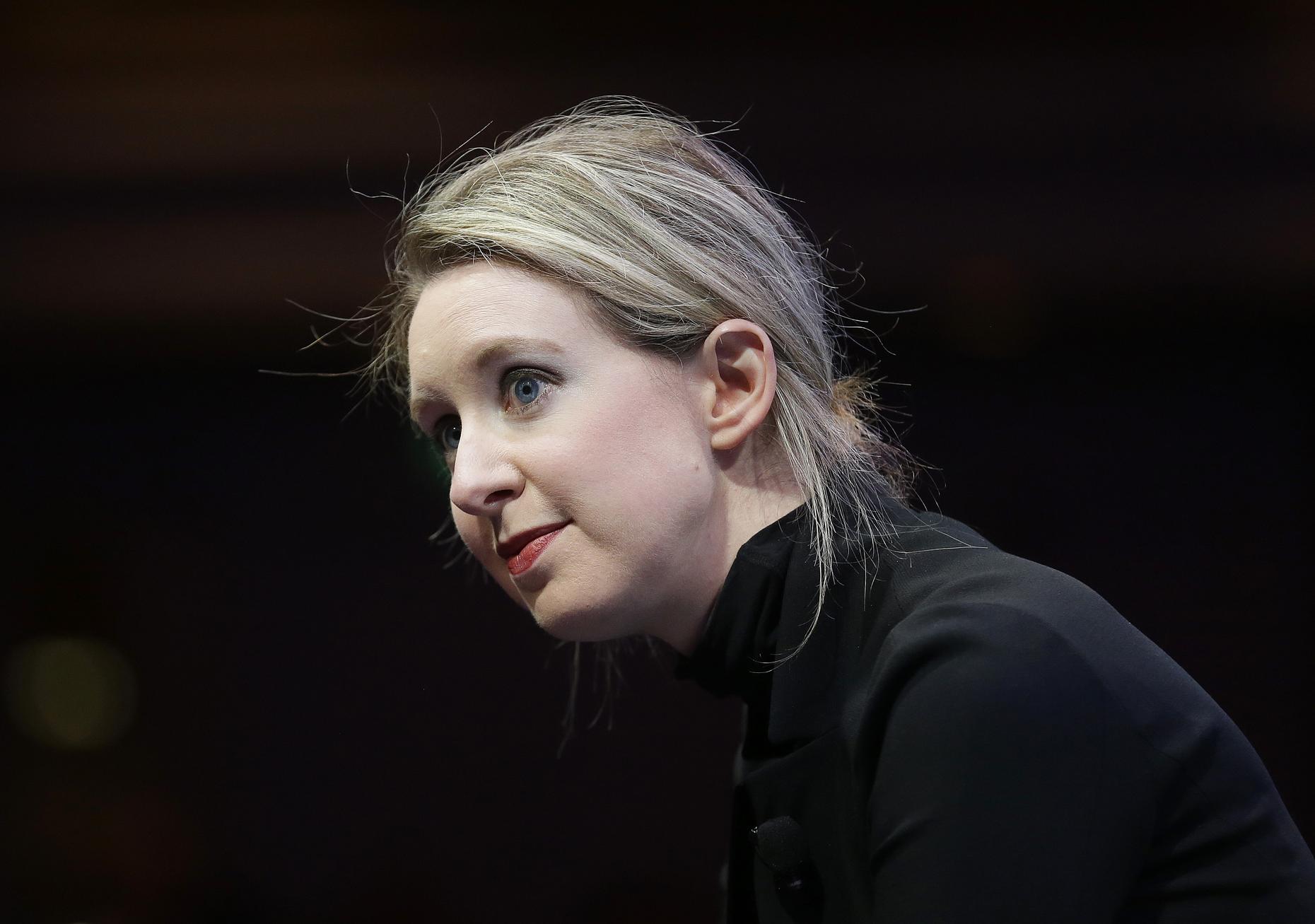
On the Media
The Trial of Elizabeth Holmes
00:18:36
Elizabeth Holmes said she'd revolutionized blood analysis. Investigative reporter John Carreyrou exposed the truth.
Loading summary
Transcript59 lines
- [00:00]
Leah Feder
On the Media is brought to you by Progressive Insurance. Do you ever think about switching insurance companies to see if you could save some cash? Progressive makes it easy to see if you could save when you bundle your home and auto policies. Try it@progressive.com Progressive Casualty Insurance Company and affiliates. Potential savings will vary. Not available in all states. This is an on the Media Podcast Extra. I'm Senior Producer Leah Feder bringing you an update to a story Brooke and I worked on together a few years back when then Wall Street Journal reporter John Carreyrou published Bad Blood, his eye popping expose of Elizabeth Holmes and her promise to revolutionize the blood testing industry.
- [00:42]
Brooke Gladstone
There's an opportunity to create a new paradigm being able to make actionable health information accessible to people everywhere at the time it matters most.
- [00:53]
Leah Feder
A decade earlier, at the age of 19, Holmes had founded Theranos, a company built on the claim that its microfluidic technology could facilitate a move from deep vein blood to tests based on a single drop of blood. It promised easier, cheaper, more accessible lab tests and it quickly became a Silicon Valley darling.
- [01:15]
John Carreyrou
Theranos is valued greater than, say, Quest Diagnostics or LabCorp.
- [01:20]
Leah Feder
In 2014, Fortune magazine ran a now iconic cover story featuring Holmes blonde hair, a black turtleneck, a deadpan stare into the camera, and the headline this CEO is out for blood. But only 16 months later, Carrey would start publishing damning articles and home star would come tumbling to the ground.
- [01:41]
John Carreyrou
Two articles published in the Wall Street Journal investigated the efficacy and accuracy of the single finger prick blood test that put Theranos on the map. Theranos saying it is scaling back its tests after the expose in the Wall Street Journal claims the company uses its key technology in just one of its tests.
- [01:59]
Leah Feder
Theranos had been falsifying results and lying about the efficacy of its technology for years.
- [02:04]
John Carreyrou
$700 million of going poof. Vaporized.
- [02:10]
Leah Feder
And now, years later, Holmes is being called to account.
- [02:14]
Emily Saul
The criminal trial of former Theranos CEO Elizabeth Holmes gets underway today in San Jose, California. Holmes faces up to 20 years in prison if convicted.
- [02:24]
Leah Feder
It's a trial that Carrerou is chronicling in a set of bonus episodes for the podcast Bad the Final Chapter. With co host Emily Saul. In it, Carew notes the challenges of finding jurors unfamiliar with the now infamous Holmes story.
- [02:39]
John Carreyrou
Easily half of the prospective jurors had read stories about the case, or seen TV segments about it, or heard radio segments, or watched one of the documentaries. And some had read my book.
- [02:51]
Leah Feder
None of them was picked. In the end, the selection process resulted in a jury that has a disproportionate number of older white men, which, as Carrerou pointed out to Brooke when they spoke back in 2018, is a demographic that Holmes has a track record of winning over to her cause.
- [03:08]
John Carreyrou
The first one was Channing Robertson, her engineering school professor when she dropped out of Stanford. And he helped give her credibility when she was just a teenager. A year or two later she met Donald L. Lucas, a pretty well known venture capitalist who had groomed Larry Ellison.
- [03:23]
Emily Saul
Who went on to create Oracle.
- [03:26]
John Carreyrou
And then she met George Shultz, the former Secretary of State who crafted the Reagan administration's foreign policy. And she wowed him. He joined her board and pretty soon introduced her to all his buddies at the HOO Institution, which is the conservative think tank housed on the Stanford campus.
- [03:44]
Emily Saul
So what was the goal of the company? What was the problem it was trying to solve?
- [03:49]
John Carreyrou
Well, in Elizabeth Holmes view, the blood testing industry was broken, controlled by these two big companies, LabCorp and Quest, and they still use decade old methods, namely the big hypodermic needle. Drawing five tubes of blood. She likened it to a medieval torture mechanism. The fact of the matter is that if a Elizabeth had invented, as she claimed, a new way to test blood from just a drop or two pricked from a finger from which you could do the full range of tests, that would actually have been a big advance in medicine. Something that thousands of researchers in academia and industry have been working on for 20 years. Where you would prick the finger, get a small sample of blood, put it in this cartridge, which would slot into a reader, send a signal from the reader to a doctor's computer and give the doctor the patient blood test result.
- [04:44]
Emily Saul
Okay, now we have that for testing blood sugar.
- [04:49]
John Carreyrou
It was inspired from the blood sugar glucose monitors, except she wanted them to do all the tests. That's much more difficult to pull off than it might sound because there are different classes of tests and those different classes of tests require completely different lab methods and completely different lab instruments.
- [05:08]
Emily Saul
So most 19 year olds can't secure millions of dollars in funding. So what was so different about Elizabeth?
- [05:18]
John Carreyrou
She at first leveraged her family connections. Her family's neighbors happened to be the Drapers, and Tim Draper is a very well known and very successful venture capitalist in Silicon Valley. When Elizabeth dropped out of Stanford a decade later, she knocked on Tim Draper's door and he actually wrote her her first check for a million dollars. She also approached a friend of her father's, a guy named Victor Palmieri, who is a retired businessman and he Also invested in Theranos. And she hit up some students in her class at Stanford, the Chang family. And they were heirs to a multibillion dollar Taiwanese tech distributor.
- [06:00]
Emily Saul
Yeah, she had connections, but that doesn't mean you can leverage them. Describe this young woman, full of energy.
- [06:11]
John Carreyrou
Believed 100% in her vision. Her calling to be an entrepreneur got turned down by quite a few venture capitalists. I have an anecdote in my book about a medical technology VC firm investing in medtech companies for decades. And when she sat down with the partners there, she spoke in grand terms of her ability to sort of change mankind. But when they tried to ask her very technical questions, she was stumped and got defensive and after about an hour, stood up and left in a huff.
- [06:44]
Emily Saul
The Theranos story wasn't coming primarily from reporters with health care backgrounds. The story came from people who covered technology or who were covering her. Beginning with the Wall Street Journal.
- [07:00]
John Carreyrou
Right. The first mainstream publication that put her on the map was my own newspaper. An op ed writer named Joe Rago went out to California to interview her in a friendly piece. Pretty much took her claims of having invented this groundbreaking new science at face value. And that's the first piece that put her on the map. But then there was a piece in Wired magazine a few months later in early 2014. And then the story that really, really rocketed her to fame was the magazine cover story in Fortune magazine in June of 2014.
- [07:35]
Emily Saul
And so how would you characterize that coverage? This was not about the technology as much as it was about the techiness and the technologist.
- [07:49]
John Carreyrou
Right. Her product wasn't a traditional Silicon Valley product. It wasn't software or computer hardware or smartphone app. It was actually a medical product. But she managed to get the press to approach her from that traditional Silicon Valley perspective. And she modeled herself after Steve Jobs. She wore the black turtleneck. She started doing that as early as 2006, 2007. He hired the same advertising agency that had created iconic Apple advertising campaigns. Shy at day in Los Angeles. There were also ads in which Elizabeth herself was featured. I'm thinking of one in particular that was directed by Errol Morris, the Oscar winning documentary filmmaker. It's a close up shot of her and she's speaking into the camera with her big blue eyes that blink much. And she's speaking very slowly and deliberately. And it's almost hypnotic when you watch her. It calls to mind almost a cult leader when you watch that video.
- [08:52]
Brooke Gladstone
To me, nothing matters more than what people go through when someone they love is found out. To be really, really sick. And most of the time, when that happens, it happens so late in the disease progression process that there's nothing you can do. And that feeling of helplessness is heartbreaking. And if I could build something that would change it, that was what I want to do with my life.
- [09:21]
John Carreyrou
I found out that that voice is actually not her natural voice. I have an anecdote in the book where an employee in 2011 who has just recently joined the company is meeting with Elizabeth at the end of the day, and she forgets to put on the baritone and her voice sounding much more like a young woman's voice, several tones higher. And when he thinks about it, it makes sense, because Silicon Valley is a world that's really completely dominated by men. And he figures that at some point, Elizabeth Holmes has decided that she needs to put on basically a male voice to be taken seriously in this man's world.
- [10:01]
Emily Saul
How did Holmes misdirection potential business partners, funders, and the press?
- [10:10]
John Carreyrou
The key to the fraud and misdirection is that Theranos was able to mislead Walgreens at an early stage. The two companies signed a preliminary partnership agreement by August of 2010, and Walgreens actually hired a laboratory expert as a consultant to help it vet the Theranos technology. After a couple months, Elizabeth and Sunny told Walgreens that they didn't like this consult named Kevin Hunter was asking too many questions, that he was interfering with getting work done.
- [10:42]
Emily Saul
They didn't allow him to have test results. They didn't provide him with any data. They didn't enable him to do any oversight at all. And ultimately you said it's because Walgreens was so engaged in magical thinking and so terrified that CVS would get there ahead of them that but they permitted their own watchdog to be muzzled and chained.
- [11:12]
John Carreyrou
She used the fact that she rolled out the finger stick tests in Walgreens stores as the validation that Theranos product was real. How could it not be? It was available to consumers in Walgreens stores in Palo Alto and in the Phoenix area. The fact that Walgreens had completely failed to vet the technology or do its due diligence and let Theranos roll out the blood led a bunch of investors to invest money thinking that surely this company that's been around for 100 years has done its homework, when in fact it had not done its homework.
- [11:47]
Emily Saul
There's more than just Walgreens, though. There was a whole pattern of lying. Elizabeth Holmes made things up when she was talking to investors she would offer income projections 10 times as big as those she presented internally, and they falsified even their test results when they were forced to provide them. She also claimed that the military was using the technology and it just wasn't right.
- [12:20]
John Carreyrou
She did try to get a field test of the Theranos device in Afghanistan after she met Jim Mattis, who at the time was the head of centcom. The field test never took place, but she continued to tell prospective investors and board members, people like George Shult, the Theranos device was being used in the field in Afghanistan and was in medevac helicopters and was helping save the lives of soldiers in the field. I think it illustrates Elizabeth Holmes chutzpah and her ability to lie in a way so blatantly that, you know, no one thinks to question the assertions because, you know, how could she be lying about things that are so untrue they must be true?
- [13:03]
Emily Saul
Fundamentally, she was a terrific liar, really persuasive. But there were other things that enabled her success for so long. I mean, the story was seductive. Nobody wanted to penetrate the myth, right?
- [13:21]
John Carreyrou
There was a yearning in Silicon Valley and even beyond Silicon Valley, to see the first tech billionaire female founder.
- [13:29]
Emily Saul
And though she was operating in the medical field, she was covered like a tech entrepreneur. There is a narrative of the Silicon Valley wunderkind success.
- [13:41]
John Carreyrou
Silicon Valley has a history of faking it until you make it. There was a term that was coined in the early 80s called vaporware, that referred to computer software or hardware that was announced by a company with great fanfare and then either never deployed or created or deployed years later without many of the features that had been promised. If they have bugs, you can fix the bugs and as people say in Silicon Valley, iterate and put out new versions of the software. And that works okay in the traditional Silicon Valley world of software. You absolutely could not do this in medicine, because in medicine, doctors and patients are relying on your products to make very important health decisions.
- [14:28]
Emily Saul
You first learned of this story after a blogger named Adam Clapper had noticed some inconsistencies in the story, encouraged you to follow the trail. And over the course of nine months, you did.
- [14:42]
John Carreyrou
You know, some of the very basic questions I was asking were things like, of the 250 blood tests theranos has on its menu, how many are done with proprietary Theranos technology and how many are done with commercial machines made by third parties? And I had learned from my ex employee sources that they were using commercial machines for most of their tests, and they wouldn't answer that Question on the grounds that that touched on trade secrets.
- [15:10]
Emily Saul
And they were using Siemens machines and other machines because theirs didn't work right.
- [15:16]
John Carreyrou
And Theranos, in fact, the last version of its technology was called the Minilab. Elizabeth had christened it the Minilab, and it was a prototype that didn't even work. And so when they had gone live with their finger stick tests in Walgreens stores, they had dusted off an old device that she had christened the Edison, after Thomas Edison, which was a much more limited machine that could only do one class of tests known as immunoassays. And so they went live with that older machine, and they only had about 12 tests that they were performing on that device. And then the rest of the some 240 tests on the menu, they were using commercial analyzers made by the likes of Siemens. And to uphold the myth that they had invented technology that could test tiny blood samples pricked from a finger, what they did is they modified the Siemens machines to make them compatible with tiny blood samples.
- [16:09]
Emily Saul
They bought them, they broke into them, they changed them a little bit.
- [16:13]
John Carreyrou
They made the cups that went into the machines smaller, and they also, more importantly, diluted the blood so that there would be more volume, because these commercial machines made by Siemens were made to handle normal sized blood samples.
- [16:28]
Emily Saul
So they broke into them and made them less accurate.
- [16:31]
John Carreyrou
Exactly.
- [16:33]
Emily Saul
So what happened to Theranos and to Elizabeth Holmes?
- [16:38]
John Carreyrou
Theranos and Elizabeth Holmes were banned by one of the health regulators, the Centers for Medicare and Medicaid Services, from running laboratories and had to shut down their laboratories. They subsequently voided nearly a million blood test results in Arizona and California. The securities and Exchange Commission announced fraud charges against Elizabeth Holmes and Theranos. Elizabeth Holmes chose to settle them without admitting or denying wrongdoing. She paid a half million dollar fine and relinquished most of her stock. She also agreed to a ban from being a director in a public company for 10 years.
- [17:15]
Emily Saul
So what about all of those grand old men who were duped by this George Shultz, who kept throwing birthday parties for Elizabeth Holmes and all the other people, Jim Mattis, Henry Kissinger, Sam Nunn, Rupert Murdoch? Did any of them admit to being wrong and learning from this magical thinking in which they had all indulged?
- [17:40]
John Carreyrou
You know, very few of them, if any, have, at least publicly. I'm told, however, by a very, very, very good source, that George Shultz recently admitted to his family that he had been wrong all along. He did so after reading the SEC charges, and he told members of his family that he had no idea that there had been that amount of lying, and he was clueless about it.
- [18:04]
Emily Saul
Schultz always claimed he never knew about Iran Contra when he was Reagan's secretary of State either, right?
- [18:12]
John Carreyrou
And he survived Watergate and his reputation was pretty much unblemished. And unfortunately, he now has to account for his role in the Theranos scandal.
- [18:22]
Emily Saul
Just an innocent dupe. Once again, John, thank you very much.
- [18:28]
John Carreyrou
Thanks a lot for having me.
- [18:30]
Emily Saul
John Carreyrou is an investigative journalist at the Wall Street Journal and author of Bad Secrets and Lies in a Silicon Valley Startup.
- [18:44]
Leah Feder
That's it for this week's Podcast Extra. For more otm, follow us on Twitter, like us on Facebook, and above all, sign up for our newsletter.
- [18:55]
Ira Flatow
This is Ira Flato, host of Science Friday. For over 30 years, the science Friday team has been reporting high quality science and technology news, making science fun for curious people by covering everything from the outer reaches of space to the rapidly changing world of AI to the tiniest microbes in our bodies. Audiences trust our show because they know we're driven by a mission to inform and serve listeners first and foremost with important news they won't get anywhere else. And our sponsors benefit from that halo effect. For more information on becoming a sponsor, visit sponsorship wnyc. Org.