← On with Kara Swisher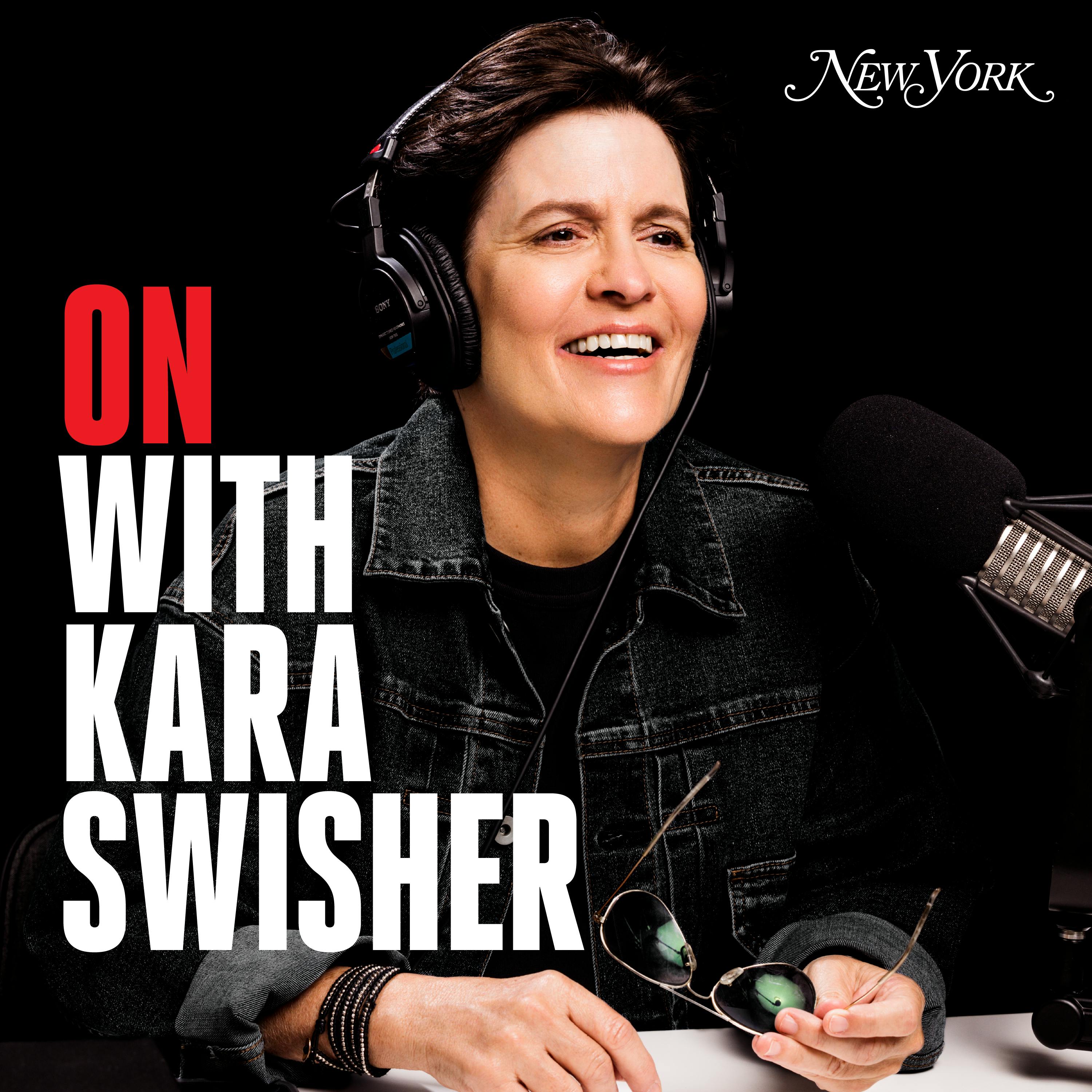
Loading summary
Transcript273 lines
- [00:01]
Kara Swisher
Support for this show comes from ServiceNow, the AI platform for business transformation. You've heard the big hype around AI. The truth is, AI is only as powerful as the platform it's built into. ServiceNow is the platform that puts AI to work for people across your business, removing friction and frustration for your employees, supercharging productivity for your developers, providing intelligent tools for your service agents to make customers happier. All built into a single platform you can use right now. That's why the world works with ServiceNow. Visit ServiceNow.com AI for people to learn more. Support for this show comes from smartsheet. Is your business looking to maximize project and portfolio value? From department initiatives to organization wide goals, smartsheet can streamline processes and unite teams to deliver more impactful work. You can track projects, prioritize tasks, and visualize data, all in a flexible, scalable platform. Learn how Smartsheet can help your business manage and scale@smartsheet.com Cara that's smartsheet.com Cara Support for On with Kara Swisher comes from Elf Beauty. If you ever wondered what happens when a boardroom is a majority women, look no further than Elf Beauty. Out of about 4,100 US publicly traded companies, Elf is the only one to have a corporate board of directors that is 78% women and 44% diverse. They're making the best of beauty, accessible to every eye, lip and face, and changing the board game while they do it. Visit elf.com changetheboardgame to learn more.
- [01:45]
Nilay Patel
Eli oh my God, dude. Wow. Look at the stash.
- [01:48]
Mike Isaac
What's going on?
- [01:51]
Kara Swisher
I know. Louis has a stash like that.
- [01:53]
Mike Isaac
Really? Every time I get on, like a video thing, there's a minute of someone, like, laughing and saying, what is on your face?
- [01:59]
Nilay Patel
No, I. You should have done this years ago.
- [02:01]
Kara Swisher
There's no.
- [02:01]
Nilay Patel
There's no laughing here.
- [02:02]
Kara Swisher
This is.
- [02:03]
Nilay Patel
You have found yourself.
- [02:05]
Kara Swisher
It's on. Hi everyone from New York Magazine and the Vox Media Podcast network. This is on with Kara Swisher. And I'm Kara Swisher and you can find me on Instagram, Threads, Bluesky, even on LinkedIn. But don't go looking for me on X. I'm out. I got on X in 2007, if you can believe it. I was one of the earliest people there. I wrote some of the earliest stories about the company as it shifted from a company called Odeo into what was Twitter. And I've known the company for a very long time through all its ups and downs, and it's had a lot of them. I love the platform when I started using it because it was exciting, it was interesting, it was real time, it was news in real time. I thought it was best at breaking breaking stories, finding people you didn't agree with necessarily and meeting people. Really, it was a really fun platform. I didn't like Facebook as much and I really liked the quickness soon became very addictive. It started to sour for me some, pretty much after Elon bought it. I have called it a Nazi porn bar. My final straw was all the anger and really nasty stuff that was being uploaded to me by blue checks. I had an early blue check. I was one of the early recommendations on Twitter and it just was people who felt they could say anything and they can't do it in real life and so they shouldn't be able to do it. To me on Twitter, it wasn't a question of disagreeing with me. It was really vile stuff and it was bad for my health. And not just that. I just didn't want to listen to these idiots and so I got off of it. I'm not alone, by the way. People have been calling it the Exodus. More than 280,000 people worldwide left X the day after the election. Many of them have switched to mainly posting on established platforms like Instagram, which is growing. Some have joined more nascent sites like Threads and also Bluesky. This new little contender who is a very different point of view about moderation and friendliness and making it sort of a nicer place to be. Sort of like Twitter used to be before it all went south. And there's a lot of people who aren't sure where to go. There's other choices like LinkedIn and Mastodon and so many others. So today we're going to go deep on what's happening at X, what kind of communities and cultures are emerging on these different social media sites, and how some are fundamentally different and what it could mean for the role that social media plays going forward. We're also going to talk about the end of being monolithic. There are many a lot of different fractionalization of social media, something I've talked about for the past two years. And so I found really great guests to discuss this. They are Nilay Patel, editor in chief of the Verge and host of the Decoder podcast. New York Times tech correspondent Mike Isaac, wonderful reporter, used to work for me and the Wall Street Journal tech reporter Alexa Korse, who's done some really terrific reporting on what's happening in this very interesting space. It's getting very innovative and Interesting. Now, our question this week comes from former CNN anchor, now YouTube anchor Don Lem. He has left X for good. Don is also suing Elon Musk for refusing to pay him over a million dollars after a content deal between the two imploded after Lemon's contentious interview with Musk earlier this year. So obviously that's going to be interesting. So let's get to it.
- [05:24]
Mike Isaac
It is on.
- [05:26]
Kara Swisher
Alexa. Nile, Mike, welcome. Thanks for being on on.
- [05:29]
Mike Isaac
Thank you.
- [05:30]
Alexa Korse
Thanks.
- [05:31]
Kara Swisher
Yeah, Alexa just was subjected to our reminiscences because both Nilay and Mike and I worked together for many, many years. So I apologize in advance, I'm a.
- [05:41]
Alexa Korse
New kid, but glad to be here.
- [05:43]
Kara Swisher
Glad you're here. So today we're going to be talking about the exodus from X to social media platforms like Blue sky and Threads. I stopped posting back in February. I feel great. It actually makes me feel better. I started to get really attacked, which had never happened. Elon took over and it just wasn't useful. It was like constantly blocking people and sorting through Drek and I do that on other sites, but it got really bad. But let's start with taking a very non representative poll of this group. Are you still on X, Y or Y? Not. What other social media platforms are you on and which is your go to now and why and maybe use them for different things. Let's start with you, Alexa.
- [06:24]
Alexa Korse
I am still on X and honestly the main reason is it's the company I write about the most so I need to pay attention to it. People who care about it are still there who I want to talk to. I am more of a lurker on others. But like many people, I recently redownloaded bluesky. Threads I find has been useful for following other tech journalists. Although maybe bluesky is taking that place now.
- [06:53]
Kara Swisher
But you don't use those yourself?
- [06:54]
Alexa Korse
Personally, I don't post that much on them.
- [06:57]
Kara Swisher
Is there one that's your go to like LinkedIn?
- [06:59]
Alexa Korse
I don't know, honestly. I mean, you guys laugh, but I feel like LinkedIn. LinkedIn is like delivering the best value in a lot of ways for work. And I feel like they're encouraging reporters to post.
- [07:11]
Kara Swisher
Yeah, absolutely. No, I joke about it. LinkedIn is quite a normal service. Neale.
- [07:17]
Nilay Patel
LinkedIn is funny because they're running an old Playbook. They're paying people to post videos on it.
- [07:22]
Mike Isaac
Oh wow.
- [07:23]
Nilay Patel
Which is a very Facebook video 2014, 2016 playbook.
- [07:27]
Kara Swisher
Cheryl asked us to do that.
- [07:28]
Nilay Patel
Maybe it'll destroy some media companies along the way. I mean we all have to grow up. I quit X ages ago. I actually took a break from what I called algorithmic media. It was just. I could feel that it had changed me and Elon buying X and taking it to what it became. It was just a good time for me to stop it. So I took a big break from in it. I joined threads and I use threads pretty heavily. But the threads algorithm is just punishing. What I want to use it for is news and real time conversation and it just doesn't want you to do that.
- [07:58]
Kara Swisher
Yeah, we'll get to that in a sec.
- [07:59]
Nilay Patel
Yeah. So like many people, I've moved all of that to Blue sky in the past couple weeks. That has been where I've spent most of my time. There's some absolutely post to both. I'm going to start exploring those but I think Blue sky is the one that at least for the news gathering function of what I do is going to be more useful.
- [08:16]
Kara Swisher
Mike?
- [08:17]
Mike Isaac
Yeah, I'm still on Twitter or sorry, I can't even call it X now. It's just Twitter in my brain basically. And like I am, I do but like it is drastically worse for me as an experience. I think the blue. The verification program that he did really ruined it because a lot of the fun for me was in the replies and just like seeing being funny people are interesting, people are insights and now you can pay to game that and you see just like either bots or the dumbest people alive, like replying to things and not really getting the same sort of fun things. So I'm definitely on it less. There's probably a justification in my brain that I do it for my job. And look, all of VC and hardcore tech people are still kind of on there a lot. You know, like the CEOs, the VCs kind of just talk to each other there. So that's how I justify it. But like as far as like the fun I once had, that's definitely not there. Yeah, Threads is not really click for me I think similar to Nilay's. Like the algorithmic stuff is not super great but Blue sky has been its own kind of interesting insular culture that I've had to navigate. And it is fun though. I do think it's like proto Twitter 2010 days of like people kind of messing around and I missed that whimsy. I say I think so like I'm playing over there and then like Instagram also is basically something that I use but I do think it's like more personal stuff over there and I don't Know how worky I want to get it. So not on LinkedIn though. I mean, I'm not using it. Maybe I should. I don't know.
- [09:55]
Kara Swisher
You're on it though, correct?
- [09:56]
Mike Isaac
I mean, I have it, but it's like, I'll talk to like, Dan Roth every so often. He's like, you need to, like, use this stuff. And I'm like, I will.
- [10:03]
Alexa Korse
Like, I just.
- [10:03]
Mike Isaac
It's not in my. Yeah, it's not in my addiction cycle yet.
- [10:07]
Kara Swisher
Yeah, I'm busy deleting all my tweets right now on X for people to know. It's very hard to do. We can tackle about it in a little, but. And then I will go off of it completely.
- [10:16]
Nilay Patel
Are you going to leave your account?
- [10:17]
Kara Swisher
I am. I'm going to let them take it over. Let them know.
- [10:19]
Mike Isaac
Good for you.
- [10:20]
Kara Swisher
I get it. But that. That last Terms of Service thing just got me. And we'll talk about that in a second. I am. And I'll be excited to see who Kara so sure is probably Will Elon.
- [10:30]
Nilay Patel
This is. This is my big worry. So I've got Reckless, which is they want it and I don't want them to have it.
- [10:35]
Mike Isaac
Oh, really?
- [10:36]
Nilay Patel
Yeah, yeah. I mean, there have been lots of attempts to buy that from me over the years and then I have the Verge accounts to manage and I think it's actually pretty dangerous for someone to get to impersonate our publication. So we're going to keep posting.
- [10:49]
Kara Swisher
I don't care.
- [10:50]
Nilay Patel
But this is like, I'm in it, right? Either answer, I think is appropriate.
- [10:54]
Kara Swisher
I use. I like threads. Threads, I have to say, is good for referrals as a marketing device. Compared to Blue sky, the only thing over at X now I get sort of cursed at by right wing trolls. And over on both Threads and Blue sky also, I get chastised by left wing people, like, a lot, like, why did you post this? What is this? Or they don't have any context of what I'm saying or the history of anything I've done. And so it's a lot of lectures, which is irritating. Anyway, I want to talk about the new sites in a minute, but let's first talk about X and the experience. Donald Trump's win clearly was a trigger for many users to leave the platform. But Alexei, your team at the Journal did an experiment to show how X users are being fed political content, whether they liked it or not. And this is not a surprise, because everything, at this point, every accusation he makes is a confession. As far as I'm Concerned. You also reported on how he was manipulating the algorithm so people could see his tweets. This is something that's also early reported. Talk about how much of a role that's played because he had talked about Twitter being used in the Twitter files as being manipulated, but it wasn't compared to what they're doing now.
- [12:05]
Alexa Korse
Yeah, I mean, I think anyone using the platform kind of like had this impression, like, whoa, like, what I'm seeing on my for you feed feels really different than two years ago. But we, like, wanted to do our best to, like, measure it. And yeah, what we. We set up these test accounts that did not, like, show any interest in politics and they just got blanketed with political posts. And a lot of that content was right leaning. You know how much of a difference it makes in terms of, like, the election, I don't know. But clearly people are not happy or a lot of people are not happy with, like, what they're seeing on the site. And that's why they're looking for, like threads in blue sky. I mean, conservative users are happy.
- [12:48]
Kara Swisher
So the thumb is on the scale. Obviously, Elon did it himself long before that. He wanted people to look at him. Look at me, Mommy. And he should. He paid a lot of money for it. And so if he wants people to look at him, it's fine by me. It's just grotesque and strange and insecure, but it's a lot of looking at him. But then he shifted it over to the right. Correct.
- [13:08]
Alexa Korse
So we couldn't tell exactly why this was happening. Obviously, I would love to know, but you're totally right. There has been previous reporting I've reported on that, about how Elon put the thumb on the scale for his own tweets. So that obviously raises questions about what's happening behind the scenes.
- [13:28]
Kara Swisher
Right. Which we know about a little bit now. There are other reasons this was starting to happen before the election. For example, Musk changing terms of service. Neil, I talk about what's going on there. I mean, terms of service is something we all sign away our lives, but in this case, it's particularly pernicious.
- [13:43]
Nilay Patel
Yeah, I mean, he wants to use all the data on X for training Grok.
- [13:47]
Kara Swisher
So I think, which is his AI service.
- [13:49]
Nilay Patel
Every company is going through this moment where they're kind of leading their users to make sure that they have the rights to do the appropriate training. And then Musk in particular took that opportunity to move disputes to Texas, where he's going to get a favorable judge, a favorable court. There's a Lot of consternation in the legal world about the judges in Texas right now. If you were paying attention to that side of the house, which no one should, there was just a kerfuffle at the Federalist Society conference where a judge, a Texas judge, yelled at a legal professor about criticizing forum shopping in Texas. It's a whole thing. It's very tiresome. But I think what you're getting is here's a service, it's going to be completely insulated from any pressure that users might place on it, which is already very low. The amount of pressure you as a user or a citizen of the Internet can put on a platform owner is already basically zero. But he's going to insulate it further. He's going to have a very favorable sort of legal environment. Right. Brendan Carr at the FCC wants to rein in big tech, but he's definitely not going to rein in Elon, who he wants to distribute Starlink. So he has this favorable legal environment, and then he's making it more favorable with his terms of service changes, which will then also feed into Grok. And that is just a big mix of things that most people are going to hit, I agree on, and not pay any attention to. But it is actually all. It all just ladders into a pretty pernicious set of results.
- [15:12]
Kara Swisher
Right, Right. They usually do things for their advantage, but not quite this personal advantage. Now, I decided to download my entire archive of posts, and it was, I don't know, 170,000 tweets and replies, and it's still going on. It's still taking forever because of the services. Now, one specific change to the terms of services, Neil says, is as of November 15th last week, all lawsuits against X must be filed in the district. If you're using the service, must be filed in the district court in the Northern District of Texas before someone jumps up and says, but Elon moved the headquarters to Texas, and that's why. Please sit down. X is headquartered in Bastrop, 30 miles east of Austin, which is the Western District. Mike, you're from Fort Worth, which is the Northern District.
- [15:53]
Mike Isaac
That's right.
- [15:54]
Kara Swisher
Explain what he's done here and what does that precisely mean for users?
- [15:59]
Mike Isaac
I mean, I think. Well, it's funny and Alexa, you may know more about this than I, but I just. I think a lot of his trickery around where the company's headquartered, where he wants to move, has been a mix of personal as well as, like, professional sort of jiu jitsu. You know, there's the. His sort of reactions to California politics and sort of transgender issues here have really set him off and like immediately sort of, he decided to like pick up and move to Texas. But also I think that's mixed with, you know, tax. Oh yeah, the tax burdens that he has. The. To what Nilay was saying just sort of like the idea that where am I going to get the best judges? Where am I going to get to bring people to maybe arbitration if that's where he can sort of move law lawsuits and text. Just like, as far as I can tell at this point, really loves Musk in a way that California doesn't seem to as much. Or at least he has like a mix sort of bag in California courts. And look, I will say to be fair, like if you go to look at Facebook or OpenAI or Google, like on Docs, they are asking people to let them use your data to train their stuff too, right? So that's the sort of macro environment that we're in. But I think you guys are right in that X is going a bit further with. You have very little recourse. And if you want to bring any sort of challenge to us, we're going to do that in a way that stacks the deck for us, right?
- [17:30]
Nilay Patel
If you're Sarah Silverman or the New York Times or whoever, and you want to sue X for copyright infringement over training data, you're going to end up in Texas, right? And that's just a big deal, right? Because those suits are ongoing, they're all over the country. And what you're going to engineer is like a circuit split, right? You're going to get a court in Texas saying Elon Musk can do whatever he wants, and a court in California saying Hollywood has a point here. And that's going to land in the Supreme Court very quickly.
- [17:53]
Kara Swisher
Alexa, talk about what this means for people.
- [17:57]
Alexa Korse
You know, we actually asked X about this, my colleague and I, and they said like, oh, you can still opt out. I mean, I think like they're rolling out the terms of service now. So like kind of we'll see how that works in practice. Every company wants like data to train these days. I thought it was really interesting that bluesky said it will never use people's data to train AI. And it's just one of the ways they're trying to distinguish themselves.
- [18:26]
Kara Swisher
Okay.
- [18:27]
Mike Isaac
Yeah. What do you think?
- [18:29]
Nilay Patel
Well, so this is fascinating, right? Because BlueSky is distributed, it's decentralized. You can just read the entire firehose via API. So Bluesky is a corporate entity, is 20 people. It doesn't make any money. So right now they have no incentives to do that. But every AI company is saying, well, the open web is free game.
- [18:49]
Alexa Korse
Oh, interesting, right?
- [18:50]
Nilay Patel
Mustafa Suleyman, the CEO of AI at Microsoft, is on the record saying, well, if it's on the web, yeah, that's the deal. And so the Bluesky folks can say that, and maybe bluesky itself will never do the training, but it is sort of like the architecture of that system allows other people to do it. And there's no reason that another Blue sky associated thing couldn't do it. And I think we just have to pay attention to that over time.
- [19:17]
Kara Swisher
Exactly. So let's talk about those two social media sites that have been the biggest pickup since the election. Threads in Blue Sky. Let's compare the numbers quickly. Blue sky has just topped 20 million users this week. It keeps going up. Everyone's all excited on the site, but those are not active users. Meanwhile, Threads has 15 million signups in November alone. Even before the election, Threads had 275 million active monthly users. Now they've been. Adam Masseri, who runs it, has been beefing about what. Because everyone's like, Blue Sky's better and more used on a daily basis. Mike, People have called this. David and Goliath talk about this. I think it's a little more complex than that.
- [19:54]
Mike Isaac
Yeah, for sure. I think, look, there's momentum around Blue sky that's like adding, like, look, adding a million people a day is no slouch. And I think that that's like worthy of celebrating if you want to celebrate that. But I do think the scale of Facebook and Threads and everything that's sort of incorporated there has to be sort of appreciated. Facebook also has a ton more levers that they can do to juice growth. Like it's Blue Skies, basically organic growth of like going and downloading the app or signing up on the web. With Threads, it's the little hooks are inside of Instagram or in Facebook and like, they can just sort of nudge you either to sign up or to come back. And Facebook has always had a real advantage there just in leveraging their existing properties to do the next thing you know.
- [20:45]
Kara Swisher
Which Microsoft got in trouble for many years.
- [20:47]
Mike Isaac
Yeah, right. No, exactly. This is just like very much a big company playbook there. I think the issue for both of these companies is what online culture looks like for them and what platforms are defined by over time. And they have different approaches to that. Each of them, BlueSky seems to be leaning into. You can customize all this yourself. And you can have control of the experience. And I'm always curious how much the average person wants that does that, you know? Yeah, like sort of like someone modding their Android phone or something versus like someone getting an Apple phone and just saying, I want it to all kind of work for me and not have to dig into the weeds a lot.
- [21:28]
Kara Swisher
So, Alexa, roughly speaking, who you see migrating to these platforms, it's celebrities, influencers, liberals, journalists, creatives. How are you seeing it? And are they just window shopping and we'll see those numbers dropping again?
- [21:40]
Alexa Korse
We have seen celebrities. I mean, yeah, just anecdotally, you know, the number of people who actually quit X is smaller than the number of people who are opening accounts on these other platforms. And so you always gotta wonder when someone says they're leaving X, like, are they actually leaving? Journalists is a really interesting community because we saw a lot of tech journalists on Threads, but there's been a lot of questions about how does Meta is moderating news content? And so maybe like, is Blue sky gonna be the hot place for that now?
- [22:14]
Kara Swisher
And what others influencers, you know, there was black Twitter. There's other things that are happening there.
- [22:20]
Alexa Korse
A lot of people have noticed, like, you know, liberal commentators, liberal activists. Like, Blue sky is like clearly the home for that.
- [22:29]
Kara Swisher
Like, that feels like it's the hip Rockenbach. Yeah. My wife called Threads, what are you doing over at the Cheesecake Factory? And I said, I like the Cheesecake Factory, I'm sorry to tell you. Perfect.
- [22:39]
Nilay Patel
I got something for everybody.
- [22:40]
Kara Swisher
Yeah, yeah. It's very good. Cheesecake.
- [22:43]
Alexa Korse
Well, yeah, if you're tired of hearing about the election, like, I don't think I can recommend Blue sky to you if you don't want to hear about Trump for the next four years, at least right now, I mean, maybe, you know, maybe if you can go to the efforts, like create those custom feeds and stuff, Threads is more normal. Maybe it's like they want fashion influencers, they want food influencers. They don't want, like journalists talking about Trump.
- [23:07]
Kara Swisher
Yeah. What about Nilay? Are they window shopping? You and I have been through so many rounds of these social media networks and obviously Meta's dominated almost the entire time since it really got going. Is it just window shopping or how. Because people have been desperately looking for anything but Elon for a while and there's been several posts. There's been like, everyone's trying to find something and they're desperate because they have such an addiction to the medium, essentially, especially Twitter.
- [23:34]
Nilay Patel
The heyday of Twitter is this fascinating moment in history. Like, I think like hundreds, if not thousands of PhD people will write their dissertations on that moment in history when there was a direct line to expertise from a number of fields and they all just sort of collided. And then there was a massive backlash to expertise being expressed in that way. Right? Then Elon was like, what if you all went away? What if I just turned down the knob on whatever you said and whatever I said appeared to be right? And I think what you see on bluesky right now is all of that community is headed to that platform, right? Because on Threads, like, if you're a public health expert, Threads wants nothing to do with you, right? It's just not interested in you. If you're a tech journalist, you're like, I really want to talk about anything other than federation, which threads. When I post about federated social media, the threads algorithm is like, yep, that's what we're here for. But almost anything else kind of goes away. There's a lot of that happening, right? If you're an economist, Threads wants nothing to do with you. So you see all the experts are sort of migrating to bluesky, where they're just rebuilding their communities like Infosec. Twitter is moving to bluesky. And I think that, for whatever it's worth, is creating this, like, liberal bubble, right? Because the experts of the right are being lauded on X, right?
- [24:49]
Kara Swisher
That's their bubble. That's their bubble.
- [24:51]
Nilay Patel
That's their bubble. And you see the other group of experts is moving to Blue Sky. Whether or not that can recreate whatever Twitter was, where like, a bunch of other people showed up to hang out with those experts and call them names. I don't know, but there's a whole set of, like, other groups that are sort of in the middle, right? If I open X, the only thing I'm really looking for right now is a bunch of, like, NFL beat reporters because they haven't moved yet. Maybe they're going to move to Blue sky and they're going to build a community there and football fans will go find them there. Like, we. We just don't know yet. But that conception of a social network where very smart people go and they find their audiences and they distribute directly to them. That's really what Twitter was. What I think of Threads as is a meta platform, a creator platform, where you're there kind of to make money, right? Like, that's what those platforms reward. The big accounts are there to make money by making content directly for Instagram or directly for Threads or directly for TikTok. Or YouTube and creator platforms just have a very different valence. They create different content, they have different incentives. It is a lot of lifestyle and fashion and that's pretty much what Meta has always said they want out of threads. You can do politics here, but really what we want is, you know, someone showing up and being like, do you like my dress? And they're getting it like they're getting the thing they want. They're good at it. And it's always very engagement baity in that specific way because that's what the algorithm rewards. But I think it's okay to have a creator platform and then another platform that rewards news and politics and expertise.
- [26:21]
Kara Swisher
Right. That are different.
- [26:22]
Nilay Patel
And it's basically a bunch of trade publications.
- [26:24]
Kara Swisher
Right, right, right.
- [26:25]
Nilay Patel
And I think that's fine.
- [26:27]
Kara Swisher
We'll be back in a minute.
- [26:36]
Alexa Korse
Support for this podcast in the following message is brought to you by E Trade from Morgan Stanley. Take control of your financial future with E Trade. No matter what kind of investor you are, our tools and resour resources can help you be ready for what's next.
- [26:51]
Kara Swisher
Now when you open an account, you.
- [26:52]
Alexa Korse
Can get up to $1,000 with a qualifying deposit. Terms apply. Learn more@e trade.com Vox Investing involves risks Morgan Stanley Smith Barney LLC Member CIPIC.
- [27:05]
Kara Swisher
E Trade is a business of Morgan Stanley. Support for on with Kara Swisher comes from Intuit. If you're marketing to small businesses, then you know that reaching the right companies online starts with accurate data. Intuit SMB Media Labs is the first of its kind, B2SMB ad network, facilitating over 139 million invoices and categorizing 584 million transactions in the US each year. QuickBooks knows small businesses and with Intuit SMB Media Labs, you can reach millions of SMBs effectively and at scale, target by industry size, maturity, location and more across new and existing channels like Social, Programmatic and ctv. Unlock growth opportunities with tailored insights and expand your reach with recent accurate audiences From Intuit SMB Media Labs. Learn more@medialabs.intuit.com Support for the show comes from Range Rover Sport. What makes a leader is a tough question. But one thing's for sure. A true leader leads by example, and a true leader takes risk. They plunge into life with determination. For those who lead by example and who approach life with a palpable passion, there's Range Rover Sport. This is a car that leads by example. It's also pretty cool. Each model offers a dynamic, sophisticated take on sporting luxury. Intricate refinement meets visceral power. The Range Rover Sport offers drivers focused on road performance and world renowned off road capability. You can experience its adaptive offer Road cruise control, which monitors ground conditions and acclimates to the present terrain. Plus it has dynamic air suspension which lets you drive with agility, control and composure. And with adaptive dynamics, it reduces unwanted body movements allowing for smooth riding and handling. It's time to experience a comfortable collective drive. You can rise to every occasion in the Range Rover Sport. Build your own Range Rover Sport at Land Rover usa. So Nilay, you talked about this Fediverse that you just talked about. This is federated media you're talking about. For those who don't know, explain what it means in talking about the difference between X and so called decentralized social networks. It's protocols, not platforms necessarily.
- [29:21]
Nilay Patel
Yeah, that's the very famous Mike Masnick paper protocols, not platforms that Jack Dorsey read. And then he started the Bluesky project to build a protocol. He hired Jay Graeber to do it. And then she very smartly said, I can't do this inside of Twitter. You have to make me my own company. So there's two competitor decentralized protocols and it's a little bit of VHS and beta. But the idea fundamentally is that you as a user should be able to own your content, post wherever you want, and then anyone else should be able to find you. The way that email works, you sign up for Gmail, people on Microsoft Mail can find you, people on Apple Mail can find you. That is not true right now of social networks. You sign up for Twitter, you're on Twitter, there's a wall. It's very hard to find that content off of Twitter. It's impossible to engage with that content off of Twitter. Same with Meta, same with TikTok. Whatever. The core idea is, we should all be able to publish and receive engagement freely the way that we can do with email.
- [30:20]
Kara Swisher
And then what's the experience difference? Because most people don't want to make their own butter, Neelai.
- [30:24]
Nilay Patel
They don't. And the user differences right now are super minimal because none of these platforms have completed the project. Right. So if you truly want to experience federated social media, your answer right now is Mastodon, which has done it. That's like saying if you really want to experience computers, you have to run Linux.
- [30:42]
Kara Swisher
Right?
- [30:42]
Nilay Patel
Great. Most people are not going to do that. So Threads is approaching it very interestingly. They're taking one federated feature and rolling that to the whole user base at once. So Fediverse sharing is on. So now other People on Mastodon can see your thread stuff. Everybody gets that at once. But you can't see what people are liking or replying to you. Then they're going to add likes and you can see who liked your stuff, but you can't reply to them. So it's one feature at a time at scale, which is a really interesting way to build anything. BlueSky in the app protocol hasn't really rolled it out at all. There's no other bluesky app yet. Right, Right. Like this, the promise of Federation there. They're sort of rolling out big chunks at a time, so it could be.
- [31:21]
Kara Swisher
Different, but it sounds. I mean, it's.
- [31:23]
Nilay Patel
So right now, BlueSky is a very centralized service. You can have your own data, you can publish your own data. There's things that are federated about it and people are building that stuff and it's really interesting. But you're downloading the bluesky app from bluesky and for the most part, most people are publishing to their own server.
- [31:39]
Kara Swisher
Got it. So. Tastes like chicken, essentially. So every week we get a question from an outside expert. This week the question is from someone who's had his fair share of run ins on X, former CNN anchor Don Lemon. He's also in a lawsuit with Elon Musk, which is why he came off of Twitter, because they he was nervous about it getting moved to the new venue. He's been suing him in California. Let's listen.
- [31:59]
Nilay Patel
X, formerly Twitter, has long been dominated by major figures like Elon Musk, Donald Trump, Matt Gaetz and Tulsi Gabbard, who.
- [32:08]
Kara Swisher
Especially right now, garner worldwide media exposure.
- [32:12]
Nilay Patel
Despite the reported exodus and concerns over toxicity.
- [32:15]
Kara Swisher
Can platforms like BlueSky and Threads compete? Or will they end up like MySpace, overtaken by X's global reach and its broad appeal to many journalists like yourselves. Will users return to X's drama even.
- [32:30]
Nilay Patel
After leaving on principle?
- [32:32]
Kara Swisher
Neela, let's start with you, then Alexa and Mike very quickly.
- [32:35]
Nilay Patel
I'm just blown away by the news anchor voice.
- [32:37]
Kara Swisher
I know. Do you like that, Don Lemon? I know. He sent that to me last night as I was. And I go, very good, Don Lemon.
- [32:44]
Nilay Patel
That is a skill. I gotta work harder on that.
- [32:48]
Kara Swisher
You're never gonna make it. Sorry.
- [32:49]
Nilay Patel
Yeah, it's not gonna happen. I guess I fundamentally reject the premise of that question. Not in a malicious way or a bad way. X and Twitter were tiny. Right. And criticism of the current X management is in no way praised for the previous Twitter management.
- [33:05]
Kara Swisher
Right, right. To your point. Right.
- [33:06]
Nilay Patel
This was a disaster of a company through and through. They never made any money.
- [33:10]
Kara Swisher
Never.
- [33:10]
Nilay Patel
They never got over 375 million users. I think at the peak, Maybe it was 325 with some amount of bots in it. Like, this was a tiny platform that carried vastly oversized influence precisely because a bunch of experts and elites chose to use it. Regular people consumed tweets through cable news or screenshots on TikTok or something else, or Facebook. On Facebook, right? There was just something else happening where the content from that platform migrated to the bigger platforms that were much better run and had much wider reach. And yet sometimes you created a main character on Twitter and that would break through, but actually much more rarely than people think, Right. Those people are already famous. So I just think, like, if all the experts start posting on Blue sky, if Flavor Flav, who is like the lead celebrity evangelist of Blue sky right now, recruits even more musicians on the Blue sky, we're just going to see their posts. I don't think the media ecosystem really cares about the platform at the source. I think they care about those people.
- [34:09]
Kara Swisher
That's just where they are. Alex.
- [34:10]
Alexa Korse
So I've been thinking a lot these days about, like, fragmentation, and it just feels like, okay, sure, like, Twitter was never the biggest social media platform, but I do think it was the primary driver of, like, a lot of the media narrative. And I'm just not sure we're going to see, like, any site replace that. It feels like, you know, we're all kind of moving to our more insular, kind of different communities online.
- [34:38]
Nilay Patel
And the platforms will tell you all the actions in group chat. It's not on the public part of the platforms.
- [34:42]
Kara Swisher
It's all on the bike, on Signal and WhatsApp. Mike.
- [34:46]
Mike Isaac
Yeah, no, it's funny. So I'm home in Texas for a bit, and I was out with a buddy last night, and I think he uses the time with a New York Times reporter to tell me all the things I'm doing wrong or how legacy media is wrong, which is very useful.
- [34:59]
Nilay Patel
That's what the point of being friends with the New York Times reporter.
- [35:01]
Mike Isaac
That is exactly it. But he just sort of doubled down on the point. He's like, look, I spend my whole day in discord and in different WhatsApp groups. These are where my friend groups are talking and where I'm primarily getting a lot of my news. And I agree with both of you. Like, Twitter punched above its weight for a long time and was highly influential and all of that. They never really gathered all of the value for themselves as a company. For that because it trickled out elsewhere. I think people vote with their feet on where they feel they're getting the most value. And to me, doesn't exist for Twitter in the same way that it did before. Maybe the folks who are happy with Elon's shifts stick around there and feel like they have a space there. But I'm skeptical because of a lot of the user experience. Just feels less interesting to me now.
- [35:49]
Kara Swisher
Which is what he talked about when he first bought it. If you don't feel good after an hour on the site, you should leave, which I did. Which is interesting.
- [35:56]
Nilay Patel
But he feels great.
- [35:57]
Kara Swisher
He does.
- [35:58]
Nilay Patel
He feels amazing.
- [35:59]
Alexa Korse
Does he?
- [36:00]
Nilay Patel
Does he? Or is it just to whatever extent he can truly feel happiness? I think he's manufactured as much of it as he can.
- [36:07]
Kara Swisher
Yeah. Let me quote Wicked. There's a line where Elphaba looks at the prince and says, that's why you're so unhappy. He's dancing through life, but in fact, he's not. And Elon is dancing badly through life. He's a bad dancer. Sorry. That is fact. That is fact. Even if you don't like Elon.
- [36:24]
Nilay Patel
Can I say something just in response to your thought, Mike? And I think about this all the time because you two are reporters and you're very good reporters. My background is like, product reviewer, right? And the history of product reviews is you can hype up the product all you want, and then people get it and they experience it. And the truth outs every time, time the products work or they don't, they're good or they're bad, and you can just be evaluative of that. And I think, yeah, people are going to go into their bubbles, they're going to go into their discords, they're going to go into the DMs, but at some point, they're going to experience the public side of the platforms as well. And regular people can just evaluate. I open Twitter and I look at this feed, and it's just these people screaming that this woman should not go to the bathroom. And this is stupid, right? And the truth outs, like, very consistently, especially with tech products. People are like, yeah, I'm over this. Like, I can just click a different button on my phone. And I'm curious to see how that specifically plays out, because this was not like, a overwhelming mandate of an election. Like, a lot of people are pissed about the outcome of this election.
- [37:30]
Kara Swisher
No, it's very close.
- [37:31]
Nilay Patel
And they might just do something else, right? They might just choose to have different experiences.
- [37:35]
Kara Swisher
Well, one of the things is my sons use Reddit, my sons use WhatsApp, they use Snapchat. So I think what Alexa is saying about fragmentation is absolutely, they do not use those things. So I want to get to that role of politics you just mentioned. And misinformation has played one of the things, is the moderation things. Now, Alexa, Neela and you have also been talking about that content moderation is moving away from content moderation. They set up disinformation teams. Those have mostly disappeared. Neela, as you know, you've been following this long time what has happened here. Alexa, first you've been reporting on Twitter since the last election. Talk about the content modern. They've just given up. Correct. And then Nilai, follow.
- [38:16]
Alexa Korse
I mean, you know, let's just start with X says they are, you know, promoting free speech. But yes, like there is this backlash to when Twitter was like back checking Donald Trump. These platforms kicked Donald Trump like off. It seems crazy to think about now. Like, you know, how much has changed and there's an easing up. These platforms did not have a good experience waiting into these moderation debates. Basically, like people on all sides got mad. So yeah, you know, Elon came in and he said, like, I want to do the bare minimum basically to moderate.
- [38:53]
Kara Swisher
And that's where they. And they all followed.
- [38:55]
Nilay Patel
Eli, I have a different and probably vastly more cynical view of this. They are all still moderating, right? There's a bunch of stuff they have to do. You have to kick child sexual abuse material off your platforms. Everyone I know who works in trust and safety, they're still spending a lot of time on this very pernicious, devastating problem. They all have huge problems coming with AI, right? If you show an average user just a feed of AI slop, maybe that's your dream. Like, maybe that's Mark Zuckerberg's dream is that he can make AI based advertising and show it to a million people, but the tools aren't there yet. So they're having to moderate an incoming fire hose of just garbage that they're all getting.
- [39:35]
Kara Swisher
So it's garbage over things they that are produced, right?
- [39:38]
Nilay Patel
They're spending a bunch of time still moderating a bunch of. The copyright law is the only real.
- [39:44]
Mike Isaac
Law on the Internet.
- [39:45]
Nilay Patel
Like if you want something taken down on the Internet, you say it's a copyright violation and then it comes off the Internet and like no one argues with you. Sandy Hook.
- [39:51]
Kara Swisher
Parents grow, right?
- [39:53]
Nilay Patel
And so there's all these ways. There are all these things they still have to do and they still have to invest in it. And even X still has to invest in a bunch of them. What they're out of is the idea that anyone has to be pulled or that anyone. That they will run a company whose internal values are expressed in the product they show to people. So Facebook has internal values. You can't just show up to Facebook and just be racist. They will just fire you. That will happen. You can show up on Facebook and be racist. That's weird. There are very few companies where your internal values are such an obvious disconnect with the product that you're making for millions of people. And I think they have just decided that that disconnect is ok. Okay. And I think what we're seeing with some of this federation stuff, the reason I'm excited about that is because it allows users to choose their own moderate. It creates a market for moderation, meaning.
- [40:47]
Kara Swisher
They can have a very racist feed or a very this feed, if that's what you want. They have been kicking out much more. They don't mind kicking people off at Blue Sky.
- [40:54]
Nilay Patel
They don't mind kicking people.
- [40:56]
Kara Swisher
I think Andrew Tate came on and off, right?
- [40:58]
Nilay Patel
Because they have this out right where they can say, look, set up your own server. Go do it. You can interoperate with us. And I think that is an incredible exit ramp for anyone to say, look, the free market will solve this problem because we are interoperable. And so we're going to have our values and the internal values of our company will match the external values of.
- [41:17]
Kara Swisher
Our product, which is the selling point of Blue.
- [41:19]
Nilay Patel
And then if you don't like it, set up another. Build your own.
- [41:22]
Kara Swisher
Get out of our bar. Get out of the bar. Essentially. So Facebook, Instagram, WhatsApp and Threads, four major social media popcorns, are owned by Meta. Mark Zuckerberg. Mike, you've reported so long on him, but how he started deemphasizing political content around the 2020 election, then doubled down this year. Talk about what's going on behind the scenes and what that looked like for users. Mark wrote a letter to Jim Jordan, chairman of the House Judiciary Committee, in August about the election and said, my goal is to be neutral and not play a role one way or other, or even appear to be playing a role. It's such a pretzel he's doing there. Do you think he's sticking that mantra? And how does that impact. Where is he right now besides singing with T Pain?
- [42:02]
Mike Isaac
T Pain.
- [42:03]
Kara Swisher
I cannot discuss this at this point. I kind of like it, but I hate it. So it's really a difficult I think.
- [42:10]
Nilay Patel
As a 40 year old dad, I'm like, what if I pay t pain to hang out with me?
- [42:14]
Kara Swisher
Yeah, right, right. Okay. Ow.
- [42:17]
Mike Isaac
I don't think I can afford that. That's pretty good.
- [42:19]
Nilay Patel
Ow.
- [42:20]
Kara Swisher
Don't do it. Don't post it, for fuck's sake.
- [42:23]
Mike Isaac
Anyway, I know, right? Yeah, I think there. Okay. So, yeah, his sort of political evolution personally has been very fascinating, but I think he got really cynical after going through 2016-2024. I think there were some company covering efforts to rein in moderation on Facebook to seek out disinfo that definitely from like a corporate standpoint, they had to do it or else they were going to get regulated into oblivion. And they still did anyway, but they did enough there. I also think, like, there was a point at which Mark was like, yes, I have an obligation to deal with some of this stuff. And if I just go to Washington and because, you know, Kara, like, he used to just send Cheryl there all the time, like she was the face in Washington for a long time, then he was like, all right, I'm going to go, I'm going to appear at seven different Capitol Hill hearings, explain my point of view, regulators will get it, and then everything will be great. Obviously that never happened. If he just became even more of a target from certain figures on the right, like Josh Hawley, sort of rose, like attacking him specifically. And there was a point where he was like, I'm. Why am I still doing this? Why am I engaging in good faith in Washington spending tens of billions of dollars on moderation or whatever to only get continually beat up. And so I think he was like, yes, I'm going to have my army of lobbyists still dealing with Washington. I have all these people sort of go in and march and do the stuff. I have Nick cle who is now basically our ambassador to the world, so I don't have to deal with this and then try to excise or at least reduce as much politics on our platforms as I can, because it's just more of a headache to me than it's worth.
- [44:08]
Kara Swisher
Although Trump had threatened him with prison, he still tends to not. Elon is sitting right next to him in some of these calls with Google and everybody else. They're under threat. He's not out of the line of.
- [44:21]
Nilay Patel
Also, can I just point out he only responds to threats from the right wing.
- [44:24]
Kara Swisher
Yeah, right.
- [44:25]
Mike Isaac
Yeah, that's a good point. That's a great point.
- [44:27]
Nilay Patel
It's not that he made it neutral and the conservatives went away. It's that the conservatives are in power and now they don't give a shit. Right. And there's no counter balancing force there. And I don't think there should be.
- [44:39]
Kara Swisher
Right, that's right.
- [44:39]
Nilay Patel
Right. Like, really what we're talking about is, like, what platform will have the users. We're also talking about, like, is there a First Amendment in America? Should the government haul the distributors of speech in front of panels and yell at them about not distributing their tweets? No. And I honestly think one of the mistakes that all of these CEOs made. Sundar, Jack, Mark, whenever they went, they forgot to talk about the First Amendment. They did not assert their own rights in front of Congress as loudly as they should have. They just apologized. They just wussed out because they want other tax breaks, they want other shit. They want subsidies on Nvidia, whatever they want. But they forgot to say, actually, you know, what we are is major distributors of American speech with our own rights.
- [45:18]
Kara Swisher
Right, that's right.
- [45:19]
Nilay Patel
And if this conversation is inappropriate and we're past that, like, we're in a very dangerous place for the First Amendment right now because all of the people in charge of the Trump administration are kind of like, what if you did what we said instead?
- [45:32]
Kara Swisher
We'll be back in a minute. This podcast is supported by the new film Emilia Perez. Zoe Saldana, Carla Sophia Gascon and Selena Gomez star and director Jacques Odillard's audacious genre defining cinematic achievement. It's an electrifying odyssey that boasts tour de force performances, liberating song and dance, and bold visuals. Vanity Fair raves there is no other movie like Emilia Perez. A thriller, thrilling reminder of the limitless potential of this medium. And now Awards Watch declares it's the best picture of the year. Emilia Perez, now playing in select theaters and on Netflix. Support for on with Kara Swisher comes from Elf Beauty. What does it look like when a majority of a company's board of directors is made up of women? Well, it actually looks like Elf Beauty. Elf Beauty is making the best of beauty, accessible to every eye, lip and phase. And they're changing the board game while they do it. Out of about 4,100 U.S. publicly traded companies, they're the only one to have a corporate board of directors that is 78% women and 44% diverse. With the latest campaign, their goal is to double the growth of women and the diverse candidates on corporate boards by 6% by 2027. I cannot tell you in the many years I've covered corporate issues how unusual these statistics are. And to Point it out is critical. A company's board should reflect a company's customers. You cannot create great products without understanding those customers, and you cannot create those products unless there is diversity of all kinds, not just gender diversity in the executive and C suite roles. It's time to change the board game. It's easy to start there. Visit elfbeauty.com changetheboardgame to learn more. Vox Creative this is advertiser content from Zell. When you picture an online scammer, what do you see? For the longest time, we have these.
- [47:36]
Mike Isaac
Images of somebody sitting crouched over their computer with a hoodie on, just kind of typing away in the middle of the night. And honestly, that's not what it is anymore.
- [47:44]
Kara Swisher
That's Ian Mitchell, a banker turned fraud fighter. These days, online scams look more like crime syndicates than individual con artists. And they're making bank Last year, scammers made off with more than $10 billion. It's mind blowing to see the kind.
- [48:01]
Mike Isaac
Of infrastructure that's been built to facilitate scamming at scale. There are hundreds, if not thousands of.
- [48:08]
Nilay Patel
Scam centers all around the world.
- [48:10]
Mike Isaac
These are very savvy business people.
- [48:12]
Kara Swisher
These are organized criminal rings.
- [48:14]
Mike Isaac
And so once we understand the magnitude.
- [48:17]
Nilay Patel
Of this problem, we can protect people.
- [48:18]
Kara Swisher
By one challenge that fraud fighters like Ian face is that scam victims sometimes feel too ashamed to discuss what happened to them. But Ian says one of our best defenses is simple. We need to talk to each other. We need to have those awkward conversations around.
- [48:36]
Nilay Patel
What do you do if you have.
- [48:37]
Mike Isaac
Text messages you don't recognize?
- [48:39]
Nilay Patel
What do you do if you start.
- [48:40]
Mike Isaac
Getting asked to send information that's more sensitive?
- [48:43]
Nilay Patel
Even my own father fell victim to.
- [48:45]
Mike Isaac
A, thank goodness, a smaller dollar scam, but he fell victim.
- [48:49]
Nilay Patel
And we have these conversations all the time.
- [48:51]
Mike Isaac
So we are all at risk and.
- [48:54]
Nilay Patel
We all need to work together to protect each other.
- [48:56]
Kara Swisher
Learn more about how to protect yourself@vox.com Zelle and when using digital payment platforms, remember to only send money to people.
- [49:05]
Nilay Patel
You know and trust.
- [49:08]
Kara Swisher
So let's look in the future. We're going to finish up talking about that. We talked about how President elect Trump has tapped Commissioner Brendan Carr to run the fcc. Trump hailed him as a warrior for free speech, but there are concerns that he wants to be a speech police would agree with this. He has argued that users should be able to personalize content filters, but it's clear he's mostly concerned with the censorship of conservative voices. He's Elon's best friend, as we noted on Twitter. What impact do you think he will have on content moderation, Alexa, briefly, and then each of you.
- [49:42]
Alexa Korse
I mean, from what I understand, there's a lot of questions about what he could actually do in his role. What can that be?
- [49:50]
Kara Swisher
He doesn't have the biggest job. Right. He doesn't have very many rights.
- [49:53]
Alexa Korse
So what are the. The actual, like, regulatory powers? One thing I've been thinking about, though, is a point I wanted to make just in terms of, like, the influence of X in the Trump administration. I think it's still going to be a really important platform. I don't think it's going to be a platform like we can ignore for the next four years. And maybe if you're an average user, sure, you can, like, go on Blue sky and forget about it, but not journalists. It's like the platform, the biggest platform that the President elect is using. A huge influence that.
- [50:22]
Kara Swisher
And he's sitting right next to him. Go ahead, Neela. And Carr.
- [50:26]
Nilay Patel
Brandon Carr is a wannabe and has been a wannabe for a long time. He's like a Verge reader. We've profiled him before. He's just been floating around our ecosystem for a long time.
- [50:35]
Kara Swisher
He has.
- [50:36]
Nilay Patel
He wrote the Project 2025 chapter on what the FCC should do. I would just note Most of Project 2025, you read it, you're like, what's the chapter on the Department of Education? It's like, get rid of it. The chapter in the FCC is very long, and it's Brendan Carr saying, I should have more power in all of these ways. It's strikingly different than the other chapters in that specific way. And a lot of it is legally tenuous. Like, it's inconsistent with, like, Supreme Court decisions from a very conservative Supreme Court. Like, the Supreme Court does not want a bunch of government agencies to have a lot of power. And in fact, they just released a ruling in, like, Loper Bright that got rid of Chevron. Like, they're basically, like, saying the courts can override the agencies. That is the big Supreme Court ruling. It's undoing the administrative state. At that same Federalist Society conference, they did a champagne tax about that ruling that they destroyed the administrative state. Brendan Carr in Project 2025 is like, I will issue a ruling from the FCC reinterpreting Section 230 to get rid of some judicial president I don't like, so I can moderate the platforms.
- [51:35]
Mike Isaac
Right?
- [51:35]
Nilay Patel
What are you talking about?
- [51:37]
Kara Swisher
No, he's not going to get it.
- [51:38]
Nilay Patel
But do you know who hates this idea is Clarence Thomas. Right, but you're going to roll right into your own conservative movement in a way that makes no sense. But what he will get to do along the way is fulminate about taking 230 away, fulminate about who has access. Starlink is a giant ISP for rural America. Right. He wants to deploy that more broadly. There's no net neutrality because the Republicans took that away. Now Elon gets to turn the scales of what platforms hit your data caps, what don't, what videos load faster or buffer or high quality. That's a lot of games you can play even without the formal power or in Brendan Carr's case, consistent logical intellectual position.
- [52:14]
Kara Swisher
Okay, Mike, very briefly.
- [52:16]
Mike Isaac
Sorry.
- [52:17]
Nilay Patel
I want to make it very clear how I feel about Brendan Carr.
- [52:19]
Mike Isaac
I was going to say to spare.
- [52:20]
Kara Swisher
No, I will tell you, he's super friendly.
- [52:22]
Nilay Patel
He is very polite.
- [52:23]
Mike Isaac
Is he? I was going to say in person.
- [52:24]
Kara Swisher
He's a hey girl kind of guy.
- [52:25]
Mike Isaac
It's a very, I love, I love meeting people who are one person on Twitter and then a very different person in real life.
- [52:32]
Kara Swisher
Very much so.
- [52:33]
Mike Isaac
That's funny. You know, I keep thinking back to do you all remember trending topics gate on Facebook years ago, where all of this just sort of goes back to this moment where there was what I think was a faulty story published about like censoring right wing people on Facebook. It sort of got dismantled. People saw it as kind of flawed. But out of that, I think a lot of folks on the right sort of realize the power of using this cudgel to say we are being silenced on here and have never really stopped doing that. And like, you know, no matter how prominent they are. And to your point earlier, Neil, the CEOs of these companies, listen, are very attuned to those complaints all the time and tend to react more to them than to folks on the left. And so I, you know, who knows if he's going to have any more power, you know, or get what he's asking for.
- [53:27]
Kara Swisher
He's definitely going to make himself a nuisance.
- [53:29]
Mike Isaac
Right. But I think that's going to be the bugbear and I'm just, I'm not looking forward to it because you don't really have good faith conversations about a lot of the time.
- [53:39]
Alexa Korse
I just briefly wanted to kind of add on my answer to you in terms of influence. I think I said like X is the biggest platform the President elect is using again, you know, Trump is on TikTok, Trump is on Facebook. Yes, those are bigger, but you know, bigger in terms of like, you know, driving the media Narrative. So, yeah, same punching above its weight.
- [53:57]
Nilay Patel
You know, Trump is native to Twitter and truth. He's not native to TikTok.
- [54:01]
Mike Isaac
He's a boring poster on Twitter, too. He knows how to post.
- [54:04]
Kara Swisher
I wrote a whole New York Times column. You said the world's greatest Twitter troll.
- [54:07]
Nilay Patel
I think it was Tucker. Tucker Carlson made the campaign documentary that he published. And there's just a scene. I don't recommend watching this, but there's a scene in it where Trump is sitting next to a laptop, a woman using a laptop, composing a tweet. And it is. I feel like all of us should just watch that moment. Incredible. This is how the government works now. It's just a man looking at someone typing and saying tweets.
- [54:30]
Kara Swisher
It's wild. Well, he's good at it, let's be honest.
- [54:33]
Mike Isaac
I agree.
- [54:33]
Kara Swisher
All right, last couple of questions. There's a bottom line right now, X is one of the biggest social sites, but also huge money pits. It's not one of the biggest, actually. The others are bigger. I don't think he cares. He's rich. This is like his toxic yacht that he sails from harbor to harbor and speak, use venom. The truth is the group of banks lent him $13 billion and they still have those loans on their books. His friends gave him money. He's lost them all this kind of money. They hope to get it back at SpaceX, et cetera. He's hired a new chief financial officer. Alexa, does it matter? Does it matter that they're losing money? And then separately, Mike and Eli threads his own by Meta has bags of money. Money. It's going to start doing advertising soon. BlueSky, of course, is a startup and it has to scrounge for cash. And Bluesky CEO Jay Graber has talked about how the site is billionaire proof, so she's kind of nonchalant about its future. She said the people will take the seat elsewhere if the site doesn't work. Each of you, Alexa, talk about the money at Twitter. Mike, you at Meta, and Nilay, you at Bluesky.
- [55:38]
Alexa Korse
Yeah. Does it matter? I don't think it matters to Elon and his bigger empire. How much money, like, on the margins, X is making or not. Obviously it matters to the people working there. And that's something I hear about a lot in my reporting. But no, Elon is really like. It's Elon's business empire.
- [55:58]
Kara Swisher
Mark Cuban told me this right when he bought his. He's not buying it for anything else, but influence. Doesn't matter how much money he loses. And it is Continuing to lose money. Correct.
- [56:07]
Alexa Korse
As far as we know. You know, we don't get a lot of detail about their financial these days.
- [56:11]
Nilay Patel
Linda says it's great.
- [56:12]
Kara Swisher
Yeah, Linda says it's great. Linda. Oh my God, I forgot about her.
- [56:16]
Nilay Patel
Oh, she's so good.
- [56:21]
Kara Swisher
She's still mad at Kara Swisher. Anyway, too bad. Linda, I'm sure, walked right into that one. I didn't actually create anything. She did it herself. Anyway, Mike, what about Meta? They have so much money and they're going to start advertising. They're like, they could be like Netflix. All of a sudden they're so.
- [56:36]
Mike Isaac
They're rolling in it. They're rewarded by Wall Street. It's funny. It's very funny. They. If they were any other company, they probably would be punished for the amount of capex that they're spending on data centers and Mark's, you know, some would say folly into the metaverse and like trying to sort of. Everybody would say that I'm trying to be nice and. But they're. But they just, they're rolling in cash and they then Wall street loves that every time they build a new product and can scale it very rapidly, there's potential upside in sticking ads in there and plugging it into their ad servers that run Instagram, Facebook and to some degree, WhatsApp. Like, they already have so much, much information on your preferences that they don't have to start from scratch on this new thing. So I think that he gets a long leash on, you know, not being punished for the amount of money that they're spending on other things that may never pay off or at least take very long time to pay off. And, you know, threads for what problems I see in it, I think could really work in that regard financially.
- [57:39]
Kara Swisher
They're going to put advertising in there and it'll be good. Totally. Probably go against it's Instagram for text is how I think of it. What about Blue Sky? The financial prospects? Nilay.
- [57:48]
Nilay Patel
So I interviewed Jay on Decoder earlier this year and I asked her, how are you going to make money? This is before the explosion. Maybe she has new ideas now. But a lot of their ideas are really interesting. Right. She said, we're going to sell people algorithms. We're going to allow people to compose lists and sell lists. Well, there's some amount of, like, how should we do paid tweets that everybody has in the back of their mind, like, this should be a native subscription platform. So I think their ideas is to sell user experience and then to build an ecosystem system of basically like B2B SaaS products where other people want to start. Blue sky servers. We'll see how it goes. Right. They've got a long way to go. I would say Meta is missing a huge opportunity Threads because getting away from live in reverse Cron means they can't go attack the market that Twitter had won, which is everyone's treating at the Grammys, everyone's treating at football for just put your logo here right now. Twitter just x just launched an NFL hub sponsored by by Ford because that's still where people go talk about sports. And Meta is just missing that opportunity, which seems bizarre to me. Like that's the thing that people want the most is to talk about things that are happening in real time and brands want to be near it.
- [58:54]
Kara Swisher
Yeah, they can snatch that from. Right.
- [58:56]
Nilay Patel
And they can just take it tomorrow because they can also do all of the rest of the targeting across their network and they, they've just missed it. And I think once they wake up and realize oh this is what people actually want, you'll and also their feelings, whatever extent competitive pressure from Blue Sky, I think they have an opportunity to make a different kind of money. Meta doesn't make a lot of brand money. They make a lot of like small business direct money.
- [59:16]
Kara Swisher
Yes.
- [59:17]
Nilay Patel
This is an opportunity to make brand money and I think they will wake up to it very quickly.
- [59:20]
Kara Swisher
Yeah, I agree. They'll figure it out. So last question. Blue sign threads aren't the only sites that are seeing post election bumps. The CEO of Spill, a social media site focused on the black community, says it's a 10x week over week signup. It's small, obviously. True. Social has only about 4 million monthly visits and like 60% men. Angry, angry men. But it's still around. So is that the future of these specialized insular bubbles, little echo chambers? And then you worry about other people coming into your echo chamber. Life is like that. Real life is like that. Little bars you like, little places, neighborhoods. And we haven't talked about TikTok, but are we in a new age? And what does that mean for people who are trying to get a load larger town square, even though these are not town squares. Each of you first, let's start with Alexa and then Mike and we'll finish up with Nilai.
- [60:13]
Alexa Korse
I think we're entering a new era of fragmentation and I honestly don't know what it means. So I'm curious to hear what you guys think. But I just, I think like a lot of the conversation has been like, what platform is going to Win Blue sky threads X. And I think the answer is more like, you know, we're just like, people are finding where they want to be.
- [60:34]
Kara Swisher
Where they want to be. All right, Mike?
- [60:35]
Mike Isaac
Yeah, I think that's right. I think, Cara, when you were saying earlier about your kids using Reddit a lot, like Reddit kind of for me is a model of this just because of how strong and tight knit, very specific communities are on there and each one kind of develops their own culture.
- [60:53]
Kara Swisher
I think it's going well right now.
- [60:54]
Mike Isaac
Yeah, I'm shocked, honestly, that they did this well just because of how much of a mess that company was in its earlier for most of its life. But, but like Reddit and Twitter kind of function or historic Twitter kind of function in similar ways in that like, you could go real deep on one niche and find your sort of community there. And like, I think people just kind of your experience with Twitter, Cara, it's like they don't like to be screamed at or told that they're wrong all the time. And like, even if intellectually you can, you want to say, like, the marketplace of ideas is good. I should be able to talk to people and have differences on some level. You're like, well, I still, at the end of the day want to talk to people who kind of agree with me. Right. Be around.
- [61:34]
Kara Swisher
I like what I like. It's my interests. Right. That's why Reddit is so appealing, I think.
- [61:38]
Mike Isaac
Totally. So. I agree. I think fragmentation is probably going to go even further from here.
- [61:44]
Kara Swisher
Nilay, finish up.
- [61:45]
Nilay Patel
I think it's interesting to think about as fragmentation. Right. We've all been poisoned by the idea that there should be global scale platforms where everything happens. That is just not true. That's like not how the media worked until five years ago. And so I think this is actually just a sort of natural rebalancing. And really, I don't think it's filter bubbles. I think it's communities. People want their communities. And communities are pretty disparate. Right? Like the left is not a monolith. Like very clearly it's always yelling at each other. That's probably why it can't wield power as effectively as the right, which has epistemic closure. And they all just say the same thing all the fucking time.
- [62:18]
Kara Swisher
It's fighting underneath.
- [62:19]
Nilay Patel
You'll see that's coming. Right? He already looks kind of pissed at Elon, so we'll see how it goes.
- [62:25]
Mike Isaac
Oh, I can't wait.
- [62:26]
Kara Swisher
Can't wait.
- [62:27]
Nilay Patel
But there's just an element where I think you used to live in a pretty local media environment. You had local television, local papers, you would have some exposure to national issues for the past however long. It's just like all national all the time. Everyone is, everyone in the world is going to talk about one thing because the algorithms are like, this is the most engaging thing today. There's a llama on the loose. You must pay attention to this llama. That's weird. Like, I think it's fundamentally weird. And I think an Internet that is more local, where people go to more different kinds of things and have more different kinds of experience, fundamentally healthier for everyone.
- [63:00]
Kara Swisher
Yep. Nature is healing.
- [63:02]
Mike Isaac
That's right.
- [63:03]
Nilay Patel
Nature is healing in the weirdest possible way.
- [63:05]
Kara Swisher
In the weirdest possible way. Anyway, thank you all of us. We'll be continuing to follow this. It's a business story. It's a social story. It's a sort of sick society story and everything else. And it's a reflection of ourselves. And I really appreciate your thoughtfulness. Thank you.
- [63:19]
Mike Isaac
Thank you.
- [63:20]
Alexa Korse
Thanks.
- [63:20]
Nilay Patel
Thanks.
- [63:21]
Mike Isaac
Reunited.
- [63:22]
Kara Swisher
Reunited. And it feels so good.
- [63:24]
Mike Isaac
It feels okay.
- [63:28]
Kara Swisher
Got any plans for Tuesday, December 3rd? I hope you'll join me at a special live recording of this very podcast, on with Kara Swisher, presented by Elf Cosmetics. Tubi CEO Anjali Sood and I will be tackling gender disparity in the boardroom and exploring how companies with women in the C suite have better business outcomes. I'm really looking forward to this discussion on equality and so much more, including what's happening in the streaming space, and I don't want you to miss it. For Tickets, visit vox mediaevents.comelf that's vox mediaevents.comelf I hope to see you there. On with Kara Swisher is produced by Christian Caster, Russell, Kateri Yocum, Jolie Myers, Megan Burney and Kaylin Lynch. Nishat Kirwa is Vox Media's executive producer of audio. Special thanks to Kate Furby. Our engineers are Rick Kwan and Fernando Arruda and our theme music is by Trackademics. If you're already following the show, you can also follow us on Instagram and TikTok. I'm hanging out on Threads and Blue Sky. It's a lot, but don't go over to X at all. Please don't. If not, there's a llama on the loose. Go catch it. Go Wherever you listen to podcasts, search for on with Kara Swisher and hit follow. Thanks for listening to on with Kara Swisher from New York Magazine, the Vox Media podcast network and us. We'll be back on Thursday with more.
- [64:53]
Nilay Patel
Support for this episode comes from aws. AWS Generative AI gives you the tools to power your business forward with the security and speed of the world's most experienced cloud. Support for this show comes from Misfits Market.
- [65:08]
Alexa Korse
Misfits Market is an online grocery store.
- [65:11]
Nilay Patel
That helps you save on groceries by saving food.
- [65:14]
Alexa Korse
They work with farmers and food makers.
- [65:16]
Nilay Patel
To rescue perfectly delicious food that might.
- [65:18]
Alexa Korse
Have gone to waste and deliver it.
- [65:20]
Nilay Patel
To you at a discount.
- [65:21]
Kara Swisher
Plus, they carry hundreds of other curated.
- [65:23]
Alexa Korse
High quality items you can feel good.
- [65:25]
Nilay Patel
About, thanks to Misfits Market's Quality Guarantee.
- [65:28]
Alexa Korse
Misfits Market is free to join and right now you can get $15 off.
- [65:33]
Nilay Patel
Each of your first two orders.
- [65:34]
Alexa Korse
Just visit misfitsmarket.com and use the code SHOPMISFITS to save money on your grocery bill.