← On with Kara Swisher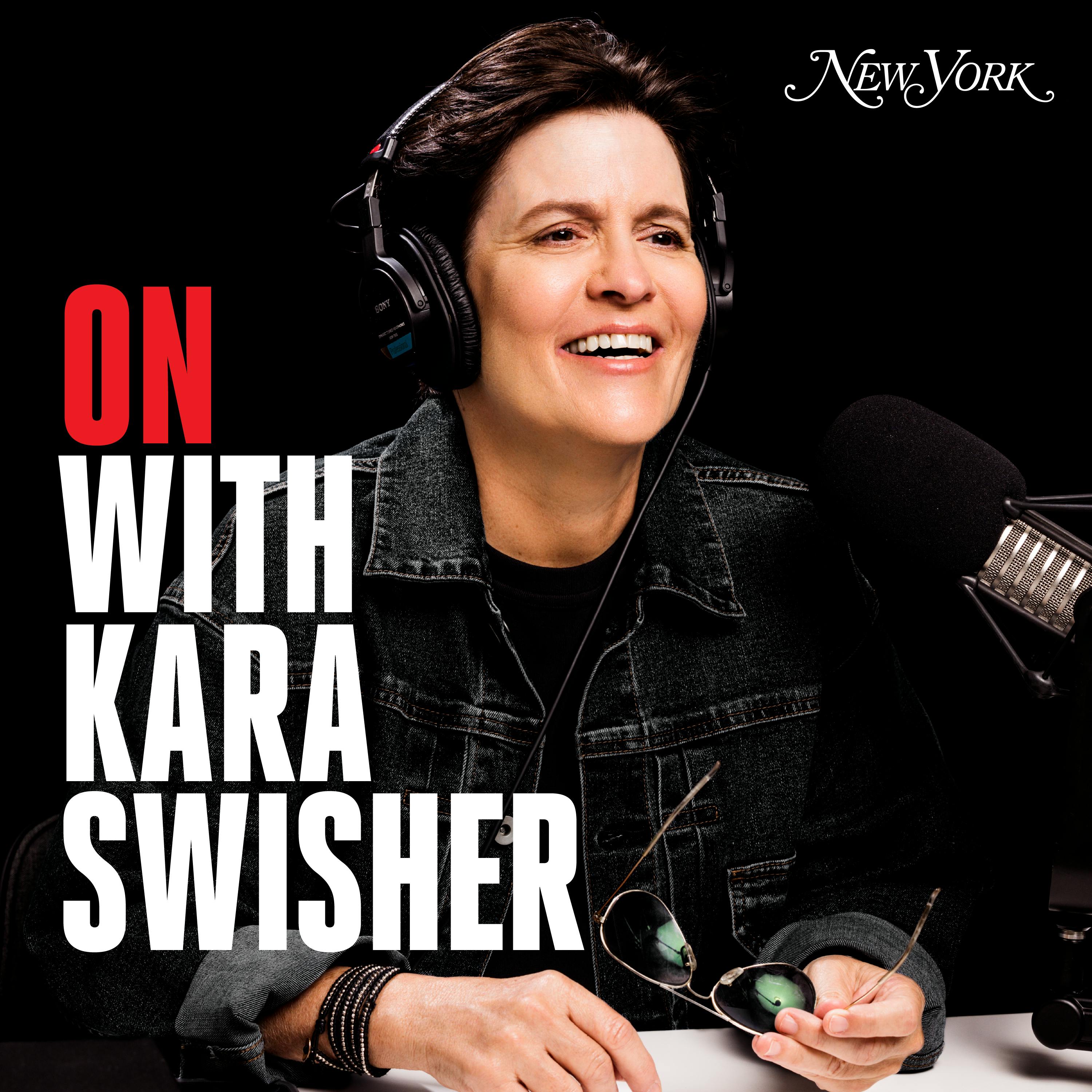
On with Kara Swisher
NPR CEO Katherine Maher on GOP Attacks, Editorial Criticisms & Digital Evolution
01:00:20
Loading summary
Transcript98 lines
- [00:13]
Kara Swisher
Hi everyone from New York Magazine and the Vox Media Podcast network. This is on with Kara Swisher. And I'm Kara Swisher. My guest today is Katherine Marr, the CEO of National Public Radio. And the timing couldn't be better. The Trump administration has essentially declared an all out war on public media. And this week the House is considering taking up a rescissions package to claw back all federal federal funding for public media. As NPR's CEO, Maher has been on the front lines defending her organization. And in March she testified before a Doge subcommittee chaired by Marjorie Taylor Greene and answered hostile questions about old tweets and statements and allegations of bias at npr. And NPR recently filed a lawsuit to fight an executive order demanding a stop to all federal funding for NPR and pbs. It's a very uncomfortable position for a news organization, especially a public media organization. But Maher hasn't shrunk away from the fight. I was interested in talking to her because I had known her a little bit from her time in tech and she did a great job at the various jobs she had. And it was an interesting hire for NPR to make to lean forward into the future. She's also juggling an enormously impossible problem of dealing with an older organization moving into the future and also the constant debate in this country about whether public media should be public media. Our expert question, though, comes from Alicia Montgomery, a former VP of audio at Slate who worked at NPR for over 17 and who had some really valid criticisms for NPR. And I think Catherine can take it, so stick around. Support for this show comes from HubSpot. Let's be honest, most business software promises the world but rarely delivers. Clunky interfaces, endless tabs, and AI that somehow makes work more complicated. HubSpot is actually doing something interesting with Breeze, their suite of AI tools. And Breeze is built right into their customer platform so you can get more done faster. They even have a whole fleet of AI agents that do work for you. Breeze agents can do everything from creating content to prospecting to handling service tickets, all to help you get results fast. And it's working. Marketing, sales and service teams are cutting sales cycles in half and saving hours on work every week. Go to HubSpot.com AI to get started today. Support for this show comes from yonder. While there's a lot to talk about how technology and apps can create immersive experiences oftimes, the most important place to immerse yourself is in the present moment. And nowhere is being present and more focused more important than in school. Yonder says they are committed to fostering phone free schools so students can learn without distractions, social media pressure or worries about being filmed. Yonder has put its years of experience forward so they can support schools throughout the whole process, from policy planning to culture transition and launch. Learn more@overyonder.com that's O V E R Y O N D R.com.
- [03:16]
Ad Voiceover
Support for this show comes from Pure Leaf Iced Tea when you find yourself in the afternoon slump, you need the right thing to make you bounce back. You need Pure Leaf iced tea. It's real brewed tea made in a variety of bold flavors with just the right amount of naturally occurring caffeine. You're left feeling refreshed and revitalized so you can be ready to take on what's next. The next time you need to hit the reset button, grab a Pure Leaf iced tea. Time for a tea break. Time for a pure Leaf.
- [03:48]
Kara Swisher
Before we get started, I want to ask a small favor of you. We're planning for the future of on with Kara Swisher and want to hear from you. To figure out how we can make our show Even better, visit voxmedia.com survey to get give us your feedback. Thanks and enjoy the show. Katherine, thank you for coming on On.
- [04:07]
Katherine Marr
Thanks for having me.
- [04:08]
Kara Swisher
So we have a lot to talk about, but let's start with the news because obviously a lot's happening. The House is planning to vote on a rescissions package that would strip funding from the Corporation for public broadcasting, or CPP. And the FCC is investigating NPR's corporate underwriting. And an executive order from President Trump is telling CPP and all executive agencies to stop federal funding for NPR and pbs. Trump has posted a lot about NPR and True Social, but I'll just read from just one in April, quote, all caps, no more funding for npr. A total scam. They are a liberal disinformation machine. Not one dollar. You're suing over an executive order. And we'll get to that shortly. But let's talk about the rescissions package first. How much money is at stake and what would the funding loss mean for NPR member stations and communities they serve?
- [04:52]
Katherine Marr
Yeah, so the rescissions package, excuse me, was we've known about it for some time and or the threat of it for some time. And earlier this week, President Trump sent a memo to Congress requesting that Congress rescind its prior appropriation of around $770 million for public broadcasting. That would be our next fiscal year and the fiscal year following that because we have a two year advance Appropriation, which was designed to insulate us from political pressure. So this is the first time, to our knowledge, that a resistance package has been proposed against public media. And we're expecting the House to take up that vote next week.
- [05:34]
Kara Swisher
And what, what is at stake here and what does it mean for NPR and the member stations?
- [05:39]
Katherine Marr
A lot's at stake. The federal funding that we receive is about for public radio. It's about $120 million a year. NPR has 246 member stations, but there are more stations than just that in public radio. All of those stations depend in some way on public, and they depend more on public funding. The more rural they are or, you know, the less wealth their community has. And so some of our stations might receive up to 50% of their funding from the federal government, tribal stations, stations in Alaska, for example. And if that funding goes away, those stations might not be able to continue to survive, which would end universal service to the nation as we know it. And stations that, even if they are able to survive that, so serve some of these communities with challenging topographies or not, a lot of wealth to support on their own would likely see a reduction in service because of the amount of investment it requires to, say, cover the rural parts of Appalachia or parts of the Great Plains, where the expanses are enormous and the weather conditions are tough. So a real impact immediately would be the loss of local journalists, the loss of local coverage, the potential end of certain broadcast stations across the nation, and really kind of a patchwork instead of a universal service for the whole country.
- [07:03]
Kara Swisher
Just. You're aware President Reagan did propose to rescind $37 million in funds back in the 80s provided by Congress for the corporate public blockchain. Did not pass.
- [07:13]
Katherine Marr
Oh, that's right.
- [07:14]
Kara Swisher
There's been attacks on NPR for many, many, many. There have been administrations, Republican administrations. A lot of listeners probably don't understand the organizational structure of the funding. Can you walk us through it? Just br. So people do understand.
- [07:28]
Katherine Marr
And if you hear me laughing, it's because a lot of people don't understand the organizational structure. We're very unusual even among public broadcasters. So we have independent stations that are often that are locally owned, locally operated. About 50% of them are associated with universities, usually public universities, land grant universities, and then the remainder are community stations. They're owned by a nonprofit in the community that operates the broadcast license. They have newsrooms which produce news or local public affairs shows or music shows. A lot of their programming is produced locally or is acquired from other media. Organizations, as well as including NPR, we have 246 of those stations as our member stations. Now. Member stations, they air NPR programming, they contribute news to NPR as these sort of top line organizations. So you hear local reporting on the ground, and that means that we are not actually a broadcaster ourself, we are a producer and we distribute that production to these local stations. But everybody is independent. And all of the local stations do their own independent editorial decision making about what's appropriate for the community that they serve, the lineup of the programming throughout the day, the types of programs that they produce independently.
- [08:47]
Kara Swisher
So for the past five decades, every Republican president except Gerald Ford has tried to defund, as I said, or reform public media. In 2011, the House actually voted to defund NPR. That effort died in the Senate. But Vivian Schiller, a former NPR CEO who was ousted around that time, recently told Vanity Fair, quote, independent journalism, federal funding, it's a toxic mix. Be clear, Shiller doesn't want a rescission pact to pass, but she's saying that federal funding for public media is untenable since 2011, even if it works in other countries. Is she right? Or what's the case for federal funding? Given the political elements that seem to. It's not a fresh new thing under the Trump administration. It's just probably nastier and more directed.
- [09:28]
Katherine Marr
It's not a new thing. And I completely understand the argument from a policy perspective that we could be having around. Should the federal government pay for public media? I would make arguments around the importance of universal access. I would make arguments about the fact that we do not have universal broadband in this country. Last mile has not been achieved. These sorts of news resources are critically important to many communities around the world. Or, sorry, not around the world. Around the country, we operate emergency services as the government's next gen warning system for natural disasters. I would make the argument even that public media as a public good is critically important to civic identity and to the ability for us to have civic engagement as an American public. When increasingly we're all sort of siloed off to our commercial media preferences. That's a legitimate conversation. What's happening under this administration is not a question of whether big government, small government, should we fund public media, not fund public media. It's really what the question is whether we are biased. And in raising that question, the administration is beginning to step on the independent editorial preferences of our local stations by denying them the ability to use their funding to purchase our programming to serve their communities, which is of course an infringement on their First Amendment rights. So to come back to Vivian's point, I understand her concerns and certainly I think that people over time have made valid points around the tension there. But you would not have the ability to maintain universal access without federal funding. There's a reason why more than a third of American newspapers have collapsed and 20% of Americans live in news deserts. It's because there is no market that will sustain them. And that's certainly true when it comes to ensuring broadcast for rural, remote, topographically challenging areas.
- [11:19]
Kara Swisher
So NPR stations have been significantly less dependent on federal funding for a while now now. Nonetheless, as you explain, if CPB's funding gets clawed back, it probably, as you noted, it's going to be catastrophic for a lot of these member stations. So if it does get pass, what is your plan B at this point?
- [11:35]
Katherine Marr
It is of course we are speaking to members of the House, we are speaking to senators about the value of all of this. I don't want to speculate too much because I think that there are so many unknowable factors in what would actually transpire. But essentially the facts of the matter are that our funding would end in the third quarter of this year. So that would be October. It's when the government's fiscal year begins. That would be when we would normally receive or our stations would normally receive their funding. That would force a contraction very quickly in the network. We are looking at how we sustain and support that. I think one of the critical pieces here is, I've mentioned universal service a number of times is how do we ensure that that service remains. It's tempting for organizations to put those licenses for broadcast up on the market. There are buyers for them. We would hate to lose that ability to ensure coverage of 99.7% of the nation where we are today. So we're looking at what those opportun opportunities would be. We're also looking at how we can continue to do this sort of news gathering that we do, but really thinking about what are the opportunities for greater efficiency, cost savings in both news gathering but also distribution. Right now, in order to maintain that level of service, we use satellite distribution, which is expensive. And so how might we be able to produce some savings there, not just for us, but for our stations. We're also talking to our stations about what it is that they can contribute to the bottom line of the network in of local coverage, reporting expertise. So I think that in all times of threat you. Well, hopefully in many times of threat you see communities try to come together and that's the spirit that I'm seeing across the public media sector is really around. How do we make sure that this remains something that the American people can rely upon?
- [13:27]
Kara Swisher
But in the immediate, it would be cuts to coverage.
- [13:30]
Katherine Marr
Presumably in the immediate it would be tough, right? I think some cuts to the type of programming that we do, you know, a reduction in some parts of service. Those conversations or what we're having right now is that. Do I know what that's going to be? I don't at this point. It's going. It's looking at a bunch of puzzle pieces to say, well, can we do this with that? Can we do that with this? I was on a call today with some international public broadcasters and the questions were, well, what could we do around international coverage? How would we sustain that, recognizing that many of them also face downward pressure? And so is there opportunities to work together?
- [14:07]
Kara Swisher
So let's move to the FCC investigation. Chair Brendan Carr says he is, quote, concerned that NPR and PBS broadcasts could be violating federal law by airing commercials. He's asking the FCC to investigate. Talk about how that's affecting your ability to secure corporate underwriters. People who listen to NBR know that they hear those corporate underwriters. They're not exactly commercials. But in theory, you could step up and fill some of the funding gaps if the rescission bill passes with these. Are corporate donors intimidated by these attacks? It's a way to put pressure on you.
- [14:40]
Katherine Marr
Oh, I definitely.
- [14:41]
Kara Swisher
I mean, it's specious. Everything that comes out of his mouth is specious. But you don't have to say that. I can say that myself.
- [14:46]
Katherine Marr
I think it is a way to put pressure on us. And I'll say that two things can be true. One is that the market for support for news is challenging. It's always challenging, but it's particularly challenging right now. All media organizations that do news production will tell you selling against news is hard. The second thing that I would say is that the macroeconomic conditions of this concern about the stability of the economy is something that is also challenging. And we, like all other media organizations, are looking at that. Our underwriters, however, have been remarkably supportive throughout this period. And so we have not yet, yet seen any significant pullback because of the FCC threat.
- [15:36]
Kara Swisher
Have you lost any corporate underwriters since his election?
- [15:40]
Katherine Marr
We had. We have. I mean, just based on broader market conditions. But there has been no conversation about the. There's been no conversation about the FCC investigation. And I personally had the chance to sit down with a number of the agencies that we work with across the country on my trips and travels and meetings with stations, and I. I've heard nothing but support, which is great. I mean, people recognize that the folks who listen to NPR are. They are not necessarily feeling as though the tone or the tenor or the quality of the news has changed just because this is something that's happening in the broader political context.
- [16:14]
Kara Swisher
So let's talk then about the executive order. It's called ending taxpayer subsidization of biased media. Ets, whatever. Anyway, it directs the CPB board and all the executive agencies to stop federal funding for NPR and pbs. Now, NPR and three member stations, Colorado filed lawsuit. And you said you're not suing because of the fund you're doing because of First Amendment issues. Explain what you're doing. Because it's an aggressive move by you to push back on these executive orders.
- [16:42]
Katherine Marr
It wasn't something that we came to lightly. And my first choice would not have been to get into litigation with the administration. Our job is to report on it, not to fight it. We didn't want to sort of step up to the plate as activists per se. I think that what our goal and objective was here was to clarify our First Amendment protections. If we did not challenge this order, it would stand. And it would stand in ways that would create confusion. It would stand in ways that could create a chilling effect around association and editorial choices. And on behalf of the independent press, we felt as though anytime that there is a threat to the First Amendment, it is part of our duty and obligation as members of the press to be able to challenge that. And so the order, from our perspective, has a number of issues. So the first and foremost is that it's a separation of powers issue. Congress has appropriated these funds. The executive is not in the position to tell anyone that those funds can't be used to acquire our programming.
- [17:45]
Kara Swisher
He lacks authority.
- [17:47]
Katherine Marr
He lacks authority. Exactly. We don't believe that this is a lawful order on a number of levels. The second is that it engages in retaliation. Right. We have been told essentially that the work that we do is something that the president doesn't approve of, and so therefore, he is going to defund us or ensure that we can't receive federal funding. And then from a First Amendment standpoint, it means that the stations themselves are deprived of their association rights to be members of npr. They're also deprived of their editorial rights to be able to choose that programming on behalf of their communities. The fact that the president has stepped in and so explicitly tied this defunding order to bias or his perceptions of Bias is a clear indication that this is not, in fact, a government efficiency argument. This is really meant to silence an organization that he does not appreciate and silence the ability of our local stations to continue to carry our programming.
- [18:43]
Kara Swisher
What are the larger implications for NPR doing this? What is the problem when you're saying we don't really want to do this, but we kind of have to. What was your greatest worry here?
- [18:55]
Katherine Marr
I mean, my greatest worry was the further politicization of the conversation around public media. We know already that there is significant criticism of public media and our intent and our purpose at this time. And we've been working at NPR and across our network to address some of those concerns, to demonstrate the relevant to a broader range of the American public, to ensure that we're reaching a representative portion of the American public. I think much of the criticism of NPR as either partisan in some sort of way or our audiences as being overtly left is blown very far out of proportion to the actual reality of what we know of our data and our reporting. But it's. But it is the case that that is a narrative in the public that we have an obligation to address. And my concern is that this makes us feel as though we are in some way in an adversarial posture to the administration, which is not the intent.
- [19:59]
Kara Swisher
Well, that's what a lawsuit is, right?
- [20:01]
Katherine Marr
Well, it is, but it's an adversarial posture in response to an adversarial action. And that adversarial action is one that we believe to be unconstitutional. So, I mean, if anything, I would say it's our patriotic responsibility to defend the First Amendment as a media organization.
- [20:18]
Kara Swisher
As you say, it draws you into the idea that you're adversarial and you're actually covering the president. At the same time, other meetings and organizations have taken the opposite tack. Right. By just paying off, essentially, I view.
- [20:29]
Katherine Marr
Our responsibility as being able to maintain that integrity and independence and clarifying that for anybody who would look and listen that we are not allowing ourselves to be compromised by political pressure. I think once you allow for some negotiation around demands from anybody, any elected official, what you are essentially doing is saying that the firewall is down and that we have space for influence that is anathema to our responsibility under the Public Broadcasting act, our mission and responsibility to the American public, it would be a violation of our statutory duties, but it is also unconstitutional. And so that's why we're taking this out.
- [21:10]
Kara Swisher
When you look at the other organizations that are doing that, like sort of falling into line how do you look at that acquiescence when you're seeing it, especially from corporate organizations? Really?
- [21:20]
Katherine Marr
I recognize that one of our advantages is that we are not part of a broader holding company. We're not part of a listed corporation that does allow us. Yeah, we have different considerations here. And so I see our responsibility here as far more akin to some of the challenges that the law firms and universities have taken up about maintaining freedom of inquiry and freedom of association. I always think it's, you know, the law firms, it's, it's really interesting. Every member who passes the bar is required to swear an oath of duty to the Constitution, which means defending it. You know, we are not required to do that as journalists, but historically that has been the role of the press. And so I see us as part of a pushback right now on a broader downward pressure on open space for inquiry in American public life.
- [22:15]
Kara Swisher
We'll be back in a minute.
- [22:25]
Katherine Marr
This episode is brought to you by On Investing, an original podcast from Charles Schwab. I'm Kathy Jones, Schwab's chief fixed income strategist. And I'm Liz Ann Saunders, Schwab's chief Investment strategist. Between us, we have decades of experience studying the indicators that drive the economy and how they can have a direct impact on your investments. We know that investors have a lot of questions about the markets and the economy, and we're here to help. Join us each week as we explore questions like how do you evaluate corporate bonds? And what sectors of the stock market are outperforming? So Kathy will analyze what's happening in the bond market and at the Fed and I'll give you our latest analysis of the equities market and the U.S. economy. And we often interview prominent guests from across the world of investing and business. So download the latest episode and subscribe@schwab.com on investing or wherever you get your podcasts.
- [23:21]
Kara Swisher
Support for this show comes from Indeed, your business is only as strong as the people who work there and INDEED can help you find your A team. Indeed Sponsored Jobs help you stand out and hire fast. With Sponsored Jobs, your post jumps to the top of the page page for your relevant candidates so you can reach the people you want faster and it makes a difference. According to data from Indeed Sponsored Jobs posted directly on Indeed have 45% more applications than non sponsored jobs. Plus with Indeed sponsored Jobs, there is no monthly subscription fees, no long term contracts, and you only pay for results. How fast is it according to their data? In the minute I've been talking to you. 23 hires were made on Indeed across the globe.
- [24:00]
Ad Voiceover
Globe.
- [24:01]
Kara Swisher
There's no need to wait any longer. Speed up your hiring right now with Indeed and listeners on this show will get $75 sponsored job credit. To get your jobs more visibility@ Indeed.com on just go to Indeed.com on right now and support our show by saying you heard about Indeed on this podcast. Indeed.com on terms and conditions apply. Hiring Indeed is all unique.
- [24:33]
Ad Voiceover
Support for this show comes from Pure Leaf iced Tea. You know that point in the afternoon when you just hit a wall? You don't have time for self care rituals or getting some fresh air. So maybe you grab a beverage to bring you back, but somehow it doesn't do the trick or it leaves you feeling even worse. What you need is a quality break, a tea break. And you can do that with pure leaf iced tea. Real brewed tea made in a variety of bold and refreshing flav with just the right amount of naturally occurring caffeine. With a pure leaf iced tea in hand, you'll be left feeling refreshed and revitalized with a new motivation to take on what's next. The next time you need to hit the reset button, grab a pure leaf iced tea. Time for a tea break. Time for a pure leaf.
- [25:22]
Kara Swisher
These many threats to npr, the rescissions package, the FCC investigation, Trump's executive order, they're coming at every angle. This was never it came at one or two angles, usually at once. And we didn't even get into the president's attempt to fire some of the CPB board members. Do you think NPR took the conservative threat to federal funding seriously enough? What could have been done back in 2011 when this was starting to build and even before that during the Reagan administration? Was there a way to have fixed this?
- [25:53]
Katherine Marr
So as I said, I think there are totally legitimate policy discussions to be had. Small government conservatives are always less likely to want to fund public service programs. That's what we are, public service program. We can make the arguments as to why there's value fun fact where local news exists, municipal bond ratings are better. You know, there are economic advantages to the work that we do that we're down to a community. And I think that's a great conversation for us to have. I wasn't there in 2011. I do think that there are ways in which we could have stepped into that conversation. I think that there are ways in which we could have worked on our own communication about our value to the public as a whole. I recognize that the, you know, we not that you think of nonprofits as marketing, but the amount of funding that we allocate to telling our own story and communicating our values is negligible. And so, you know, that's very much at odds with the way that other organizations communicate why they exist and talk to their audiences. Well, I mean, there are challenges over time with continuity of relationships in Congress as a whole there. I can't even even remember the number of freshmen legislators this year in the House. But there's a constant sort of renewal of conversation. And there's a lot of confusion of how we work. People think we're pbs. People think PBS is npr. People don't know the difference between public broadcasting and just turning on the airwaves. So there are some embedded challenges here that we could have been working to resolve to clarify our function, demonstrate our value, be able to speak to that more effectively in ways that resonate with conservatives and with liberals.
- [27:40]
Kara Swisher
You've also been subject to criticism, and let's talk about that criticism, about the controversies you started as CEO in March of 2024. A few weeks later, senior business editor at NPR, Yuri Berliner, wrote a piece that accused NPR of wokeness and liberal bias. You've been asked about it repeatedly, obviously, including at the DOGE subcommittee hearings in March, and it still has tremendous salience among conservatives. This is not a new thing. Is there anything that you thought he got right in bringing this up? And where did he miss the mark? I'm not a person. I think he did not. I will go on the record as saying I thought it was just not a lot of what he said was inaccurate.
- [28:17]
Katherine Marr
So factually we would agree. Right. The stories that he cited that was misleading in the way that he presented those stories. Other media organizations took a look at that. I think Eric Wemple at the Washington Post wrote a really good piece in review about our coverage. So I would agree with you that it is is sort of cherry picking in a way that appealed to certain narratives about media independence. That being said, I mean, the story that he wrote or the piece that he published in the Free Press was two weeks into my tenure. If anything, I would have preferred that he seek out a meeting with me, the new CEO, in order to share with me some of his concerns culturally, editorially or otherwise, and offered us the opportunity internally to address what those concerns might be. I'm cognizant of the criticism around the lack of conservative viewpoints in media as a whole. We recognize there aren't many journalists who identify as conservative. There aren't many. You know, most journalists identify as independent, so that is not necessarily the most salient point. But I would have welcomed that conversation because I think that when there is legitimate criticism, it's our duty to hold a mirror up to ourselves. We have to take it on board. We have to integrate it, and that would have been a good conversation. We never were afforded that opportunity. You know, there was no meeting with me, there was no conference conversation with his managers. There was no discussion of this internally. And instead it has become something of a grenade without a pin. Or maybe the grenade exploded, being passed around in the broader narrative around where NPR's priorities lie.
- [29:55]
Kara Swisher
There are legitimate criticisms. So we get an expert to send a question to each guest. And these are someone who I thought wrote a very legitimate piece in Slate. It comes from former vice president of audio at Slate, who worked at NPR for over 17 years. And I thought she raised some legitimate questions. So let's listen to her question. Hi, my name is Alicia Montgomery and I'm a former NPR journalist. My question is, in an organization that often takes years and a public scandal to respond to systemic issues within its own walls, including sexual harassment, the exploitation of temporary workers, and racial bias in coverage and hiring, is there such a quick and well resourced response to bad faith, faith inaccurate criticism like that of former editor Uri Berliner, and that coming from the Trump administration and its allies in Congress?
- [30:47]
Katherine Marr
And are you concerned that the conciliatory.
- [30:50]
Kara Swisher
And often apologetic tone of those responses, including your own congressional testimony, serves to undermine public confidence in NPR journalism and undermine the morale of NPR journalists at a time when they need to be doing the best work of their careers in service of our democracy? So talk about threading that needle. I think it's a very good question because you're not going to please everybody, right? You're in a kind of a jam here, unfortunately for you, I suppose it's.
- [31:18]
Katherine Marr
A tough spot here. What I'd say on the sort of response and mobilization is I wasn't there for some of the things that are referenced around me, too, around racial bias or discrimination. I'm aware of the stories and I can't speak for my predecessors as to why something was handled one way or another. My view is, is that were those things brought to my attention, we would move with similar alacrity. I have very low tolerance for any sort of abuse in the workplace or any sort of inequities in the workplace. It just isn't the kind of culture that I think we should create. I recognize that NPR has 50 years of culture and some of that culture from the beginning was structured around people and in ways that we've had to adjust over the years and are still working to do. In terms of, of the sort of conciliatory nature, I would differentiate between standing behind the journalism, which I think is excellent, and addressing some of the criticisms around the ways in which we talk to audience and, or the audiences that we have endeavored to serve. I think that it is incontrovertible that over the course of the last decade or two, actually three decades, NPR in the 80s determined that we were going to serve college educated people primarily. And all of the research that came out of that was oriented to people with some degree of college education. It does not reflect people with, you know, working collar professions. But that is a mistake on our part. And so when we're criticized for not reaching everyone, I believe that that is a fair criticism for us. I think one of the challenges is that over the course of, of those past three decades or so, you've seen the political alignment of the country shift as well. So in the 80s, a person's advanced degree was not necessarily an indication of their partisan orientation. Today, it's an extraordinarily strong indication of a person's political beliefs. So while we were continuing to serve that audience, that audience has changed. I think it's imperative that we recognize that and it's imperative that we think about how we serve audiences beyond that framework. 40% of the American public, I am pleased to say that one of the things that was happening before I arrived, but I've been a champion for, is doing that research and reaching out to understand who are the audiences that we have not engaged as a public broadcaster. That is our obligation. So that, to me feels very different and very legitimate to talk about. And this comes back to that. Any good learning organization has to hold a mirror up to what we do well and what we don't do well and what we get right and what we get.
- [34:05]
Kara Swisher
So speaking that a lot of it can be reactive, like we want to sort of address those issues that you may have been lacking in terms of representation or attitude or conservative voices or whatever. Right after the Berliner piece, NPR rolled out that editing initiative called Backstop. It's described as a process to ensure that all journalism across NPR platforms gets final editorial before air and publication. A lot of places have this. CNN has a lot of people do this, but people at the moment were quite sensitive to overreacting the other way I gu. And how it handled the controversy generally and Backstop specifically Wemple, who you mentioned, called the reaction epic cowardice and described Backstop as pandering. How do you bridge these gaps? Because if you do one thing, you're looking like you're pandering. If you do another, you look like you're an advocate of some sort or an adversary. To say the Trump administration in this case.
- [35:00]
Katherine Marr
Yeah, I would start by saying you have to do the right thing. What the optics are of the situation is it's not. Not that it is not important, but I think if you're living in D.C. and all you're thinking about are optics, you're not going to do the work that needs to be done. The reality is that npr, as it grew out of just being All Things Considered and Morning Edition into radio, digital podcasts, video production, we did not have the sort of centralized oversight or capacity from a standards and practice perspective to be able to see everything that was coming out the door. This was something that we should have done previously. It was something that we were resource strapped around. And like many mission driven organizations, when we had more resources, we just put them into more reporting and more production and more programming. So I don't think it is an act of epic cowardice to say we're bringing in content in.
- [35:57]
Kara Swisher
Not just cowardice, but epic cowardice.
- [35:59]
Katherine Marr
Epic cowardice, yeah. I'm known for my epic cowardice.
- [36:02]
Kara Swisher
I don't like modifiers myself.
- [36:04]
Katherine Marr
No. But I mean, I think that, you know, of course, I knew that there was going to be pushback. There was pushback in our own newsroom. But the editors that we've brought in have been not just accepted, they're recognized now that they are very, very thoughtful people. They're adding value to the work. The content analysts help us understand the type of programming that we're producing. For example, we do a lot more sports than I think anybody would have guessed. The additional standards and practices editors mean that we have the capacity not only to give guidance to our reporters and better training to younger report, but also to the sort of farm team of reporters that comes up through our local station system. So I reject that particular characterization.
- [36:48]
Kara Swisher
Well, there was the timing, right?
- [36:50]
Katherine Marr
Well, the timing is the timing. I was two weeks in, you know.
- [36:52]
Kara Swisher
Right, right. People have told me that Backstop could be an admission that Berliner's criticism is partially correct.
- [36:58]
Katherine Marr
I think. Look, I went to my editor in chief and I said, tell me what you need. This is an opportunity for us to talk to friends and allies about how we invest in our work. Tell me what you need. And she huddled her leadership. And this is what they came back with. They said, this is what we've been wanting to do for a while. Was the timing optimal? No, it wasn't. Was it something that has brought value to the organization? Absolutely. Would I do it again? I would. As I said, there's not always a right time to do something for optics. And I think, unfortunately, that's what D.C. runs off of, is a lot of optics. And that has held us back as an organization at times. And that's just not where I want us to be.
- [37:36]
Kara Swisher
So you yourself have become a lightning rod too, for conservative critics. They've criticized you as a variety of alleged misdeeds, including tweets you wrote before starting an npr. For example, in one tweet, you said Donald Trump was, quote, a deranged racist sociopath. Another, you recounted a dream you shared baklava with Kamala Harris. How do you, when you're going in to talk to these legislators now, how do you address that? I mean, I certainly couldn't be head of NPR given my history of tweeting or social media. But how do you deal with that? How do you persuade these legislators who are looking for instances of bias that you are open minded? Besides making shifts or increasing coverage or shifting or acknowledging there might be a problem? How do you persuade them?
- [38:19]
Katherine Marr
Well, I don't think I've given.
- [38:20]
Kara Swisher
Optics are something in D.C. right. And they're going to use any optic necessary.
- [38:26]
Katherine Marr
Look, I don't think I've persuaded everyone, but I think that being willing to listen to concerns is one piece of it. At the end of the day, I think our success is whether we serve the public well. And if anything, one way to think of me is competitive. Whatever my personal views are, they don't enter into my work. My work is really around achieving our mission. And the thing that would give me greater joy and satisfaction is that we demonstrate our relevance in such a way that a large percentage of the American population puts credibility and trust in our work. That, to me, is what success looks like. And that is not partisan. That's just public service. So, you know, I've had those conversations with legislators. I've had those conversations with critics. I think that there's something that people can respond to there at the end of the day also, you know, I'd be the first to say those were more than five years ago, more than half a decade ago, sometimes approaching a decade ago in a very different role. Even in that role, that was not a partisan aspect to my work. There's a strong firewall we're here to do the work.
- [39:33]
Kara Swisher
So yes, when I did defend you, I said, she's not the editor, so what's the difference, right?
- [39:39]
Katherine Marr
Is it ammunition?
- [39:40]
Kara Swisher
Yeah.
- [39:41]
Katherine Marr
Is it ammunition against me? Absolutely. Is it unfortunate? It is. Could you ask any member of our newsroom and say, has she ever interfered with a single thing we've done? Of course not.
- [39:51]
Kara Swisher
We'll be back in a minute.
- [39:59]
Katherine Marr
Avoiding your unfinished home projects because you're not sure where to start. Thumbtack knows homes, so you don't have to don't know the difference between matte paint, finish and satin or what that clunking sound from your dryer is. With thumbtack, you don't have to be a you just have to hire one. You can hire top rated pros, see price estimates and read reviews all on the app. Download Today.
- [40:25]
Ad Voiceover
Support for this show comes from pure leaf iced tea. You know that point in the afternoon when you just hit a wall. You don't have time for self care rituals or getting some fresh air. So maybe you grab a beverage to bring you back, but somehow it doesn't do the trick or it leaves you feeling it even worse. What you need is a quality break, a tea break. And you can do that with pure leaf iced tea. Real brewed tea made in a variety of bold and refreshing flavors with just the right amount of naturally occurring caffeine. With a pure leaf iced tea in hand, you'll be left feeling refreshed and revitalized with a new motivation to take on what's next. The next time you need to hit the reset button, grab a pure leaf ice. Time for a tea break. Time for a pure leaf.
- [41:14]
Katherine Marr
This Father's Day helped dad be all he can be with a gift from the Home Depot because he's not just dad. He's the handyman of the house, the plumber in a pinch and the emergency mechanic upgrade his gear this Father's Day with The Husky Mechanics 270 piece tool set from the the Home Depot. Now on Special buy for $119. A $695 value for every kind of dad. Find the perfect gift this Father's Day at the Home Depot.
- [41:47]
Kara Swisher
Before coming to npr, you worked in tech. You were the CEO of Web Summit and Wikimedia. Before that you were at Access Now, a digital nonprofit focused on digital civil rights. One of the things that was a longtime complaint I made it to people at NPR was the digitization of it. Now they have had digital hits like Tiny Desk, Concert Series and Podcast Up first but you've also said that NPR made a play for younger digital audience that backfired and it ended up alienating older listeners and contributing to the perception that NPR has liberal advice. Talk about how your history has informed you, because it's a very difficult move for an organization like npr. What is the strategy now? How did you come into it with your experience?
- [42:31]
Katherine Marr
Experience? Yeah. I was an unpredictable pick. No, that's not right. I don't think I was unconventional. That's what I meant to say. I was an unconventional pick. Yet much of my background has really been around how do you meet the moment with information? And how do you safeguard the rights of inquiry, speech and privacy of the public and ensure that folks have the access to information they need to think about how to go about their lives. Lives. In fact, since we were talking about sort of criticism, the work that I've done in the past has taken on different administrations at different times on both sides of the aisle. So where I come to this is sort of fundamentally, again, about that. Right. Right to inquiry, right to information. From a technology standpoint, though, I walked into NPR and I had memories of when I lived in D.C. the first time around, back in 2010 or so. NPR at that point, seen as being a real digital innovator. We were early to podcasting. We were early to building our own app. We had NPR1, which was personalization that people often still talk about how much they loved. I'm not saying it was perfect. I mean, that's like 15 years ago, technology. But I at the time really had high regard for the technologists, the product people at npr. My understanding is that over the course of the last decade or so, that wasn't afforded the same priority. There were tensions around the resource verses that went to radio versus digital. I think that those are false tensions. We recognize that radio has a certain listenership. It's of a certain age, it's a certain behavior. When we tried to increase the youth quotient of that listenership or the diversity of that listenership, it was not appealing to our older listeners, and fairly so. We were referencing cultural moments that weren't necessarily on their radar. We are actually really fortunate that we have this natural segmentation. Our listeners on radio tend to be Gen X and boomers, and then our listeners on digital are also increasingly boomers, but also Gen X and below. Right. So there's that Gen X straddle. I think that's a huge opportunity because we don't have to be all things to all people in all domains. We can segment really effectively in the digital space. We can understand how people are using our reporting and using the programming that we have. We can build Personas around what it is that they need. The classic NPR Persona was I get in my car, I commute, I get in my car, I commute home. And I would listen to those two tentpole programs. That is not the case anymore. People don't commute with the same regularity. Their time schedules have really changed. They're using their phones instead of radios in their kitchen while they're making breakfast or brushing their teeth. So how do we respond to that? How do we respond to the family that's using their smart speaker? How do we respond to the 30 something that takes their phone with them and it auto syncs to their car, never going to look up a dial? How do we think about people who are playing podcasts on their smart TVs? And those are visual mediums, an enormous percentage of tiny desk watching, which is, as you said, a hugely popular program, happens on smart TVs. So my sense of this is that we have delightful.
- [45:54]
Kara Swisher
That's because it's absolutely delightful.
- [45:56]
Katherine Marr
It is so delightful. What a great job. It's just pure joy. And there's a lot of our programming that has that kind of joy. If you listen to something like Planet Money or the Indicator, if you listen to shortwave, it's all curiosity and discovery. And I think there's an opportunity for us to lean into that. I was fascinated by some research that just came out internally around Gen Z and it found that the awareness of our brand has gone up dramatically in the last year, possibly because we've been in the news. The sense of affinity with what it is that we offer has also increased and the sense that we understand their generation has as well.
- [46:36]
Kara Swisher
So two things. How do you encourage innovation and that spirit inside of what is an inherently risk averse media organization, like many. Listen, you're not the only one. But how do you do that? How do you push people to think creatively and not go, oh, the tech lady is here to change us?
- [46:55]
Katherine Marr
Yeah, and I think that it's a really fair question because a lot of the innovation that has been proposed in NPR has not necessarily been nurtured in the past and much of it has actually gone outside. And so some of the really creative stuff that has come to us, we passed on, unfortunately. I think that part of that is creating a culture of better scouting. If you look at some of the most popular shows out of public radio over the course of its history, they have come from the local station productions. So you could look at Prairie Home Companion, you could look at Car Talk. These are sort of regionally specific shows that prove to have universal appeal. So how do we become better, better scouts of interesting work and recognize the creativity and diversity across the system where people are working with fewer prior constraints, they're working with greater constraints that allow for more flexibility and innovation. I think that that's one thing that I'd like us to do. The second thing is that some of our most successful internal innovations have come from our interns. They've come from people who were new to what was going on, who were learning the medium and were innovating with it. So how do we build on that, that energy and that fluency with emerging technologies and emerging media behaviors? And to me, that is around creating the space and allowing for clearly defined pilots where we give people the resources to go out and experiment and see what traction that actually gets.
- [48:27]
Kara Swisher
I just A couple more questions very quickly on AI. The news industry is coming to crossroads with it. It might steal ip, it might replace reporters, could become a source of rapid revenue. The tools are very powerful and possibly make you do your job better. According to NPR's Ethics Handbook, no NPR employees should ever put any of NPR's intellectual party into any generative AI system without NPR's prior consent. So I'd like you to talk a little bit about how you're looking at licensing NPR's IP to an AI platform like many media companies have done, including Vox and the New York Times, which just signed a deal with Amazon, New York Times, OpenAI. Yeah. And talking about incorporating AI into your news gathering writing. How do you think about it? How are you all thinking about it? I don't assume you're making AI hosts or reviving Fred Rogers, for example, but how do you can't revive him, but how do you think about it going forward?
- [49:25]
Katherine Marr
I was talking about this just earlier today with some other media leaders. And I think first just want to acknowledge that a lot of us feel behind in terms of our ability to be responsive to this. You cited a part of our policies which is the case. We don't want anyone putting any sensitive confidential data into some of these models. And at the same time, I recognize that if we aren't training or giving people the opportunity to experiment with how these models work, we're losing the opportunity for them to learn the benefits, be creative with the outputs, think about how this could work into their workflows. And and so we have been talking about how we actually create sort of a, an agreement with one of the companies in order to be able for that to be in house with ways that we are comfortable with from a data privacy and policy perspective. So we're definitely moving forward on that. Some of those things feel as though they're just on the cusp of change. The way that I've been thinking about this and with the folks who in our. One of the first things I did was set up an AI general manager who's responsible for thinking about where we go with this is trust. There are a number of, of efforts around watermarking and sort of developing credible training databases for organizations. We're not currently in a licensing place. I think that there is opportunity for us to explore that and opportunity for us to explore that with our station, network and potentially even with other public broadcasters outside the United States. If you look at the number of English language broadcasters, you could imagine innovation, which is another one of the things we're looking at around a model that is trained on public broadcasting. A model that allows for people, people to ask questions of high quality, high integrity. Institutions that have the advantage of having a lot of their content already available to the public. We're looking at how it can be used for dialogue and improving the ability for us to reach more voices. We've been experimenting with tools that allow for greater synthesis, like many organizations do, to be able to identify what questions we're not asking. And then for how we do make better use of our back catalog, which is tied of course to the potential licensing, but it's really around. We have this extreme ordinary 50 plus year archive, like many, many media organizations, but we're not using it. And particularly with audio, which is not a highly discoverable medium. Audio is so challenging. There's been very little product innovation in the experience of audio since podcasting came out. It's basically been like transcription and the ability to choose a spot and jump in. So what can that afford us in terms of context and the ability to make more of our content evergreen so that there's just more depth and richness. And how does that. Our network, which is also producing a tremendous amount of really excellent programming, how can we pull from across that so we're being more responsive, more dynamic and more personalized to the interests that people have wherever they are in the country?
- [52:20]
Kara Swisher
Yeah, make your own npr. Make your own NPR is something you could do.
- [52:26]
Katherine Marr
Absolutely.
- [52:27]
Kara Swisher
It's not AI in replacing people, it's giving audiences the things they want. Right.
- [52:33]
Katherine Marr
This was a principle for me when I was at Wikimedia. When I was at Wikimedia, we created an entity that was owned by the Wikimedia foundation, which is a nonprofit that was a for profit where we could work with companies that were already training on our data in order to be able to have contracts which would allow us to have financial support for Wikipedia's continued operations. That was enormously helpful to us. And when we looked at deploying into our own product, we were looking at, well, how do we think about consent, how do we think about auditing, how do we think about legibility, how do we think about being able to correct the data inputs in order to ensure that we're addressing issues of obvious bias in closed loop systems? So all of those are, you know, I'm a big believer that technology allows humans to do humans to do what humans are better at. And we should really be thinking of this as assistive in the sense that we direct and correct it, as opposed to thinking of it as replacing the work that, that our colleagues do today.
- [53:33]
Kara Swisher
Would you ever imagine having a for profit part of npr?
- [53:37]
Katherine Marr
I could see an opportunity for us to do that, absolutely. I mean, there are numerous nonprofits that have profit subsidiaries, particularly when you think about fee for service type products. Mozilla is one of them. Wikimedia foundation is one. I mean, there's lots. If we had something that was a compelling product, I don't see why we wouldn't think about that from a sustainability perspective.
- [53:57]
Kara Swisher
Yeah. And from AI, you could say, give me a conservative npr. Give me more conservative. You could do a lot of things which I think would be, would kind of shut them up a little bit. But last question. Attacking the media is a key part of Trump's playbook. They like to do that. And you all are a nice juicy target. But it can create a catch 22 scenario where fighting back makes, as you said, the news organization seem biased. And you noted here and elsewhere, the public media isn't good at telling its own story. You're obviously fighting against unconstitutional big government overreach here from my perspective. But what do you think the best way to fight back against all these attacks are in terms of telling your story? What is the story of NPR right now, if you could boil it down?
- [54:42]
Katherine Marr
I mean, I believe that we are here to. I believe that we're here to serve a nation in a time in which commercial alternatives are interested in serving subsets of the nation. The it is. You know, I don't want to get too academic about it, but I think that if you look at the way in which national conversations, national dialogues occur. Historically, they had to do with having some sort of commonplace to have them. You know, you can look back at the golden age of broadcasting. Far fewer reaches, resources. We're never going back there. I'm not suggesting that we are, but we can and are mandated to be the kind of place where you can have differing opinions and you can make yourself comfortably uncomfortable with people's perspectives that you might not have otherwise heard. So the purpose of NPR is, if anything, to think about how you create a nation of shared perspective, a nation that reflects the American experience and all of its diversity in a context in which we'll never all meet each other and we're never all going to agree. I think there's real value in that at the highest level. I think there's value in it from a civic infrastructure perspective that strengthens our democracy. And then, of course, there's the instrumental value of saying, look, we're providing information to people in a way that is high quality, subject to scrutiny, and committed to everyone. So there are multiple aspects of why our purpose matters in terms of how we have that conversation. I was called conciliatory by the colleague who called. I think that's fine. I think that there are sometimes tough choices that we have to make around recognizing our role and responsibility. I don't believe that we are a conciliatory organization editorially. I believe that we have a very independent streak there. And yet we have to recognize that our responsibility is to serve the public as a whole. Otherwise, we're not serving our public interest mission. So how do we have that conversation? Well, we have to reintroduce ourselves. We have to identify the things that are relevant to people who currently listen to us today, who might find interest in what we do. That's on us. That's our obligation to go out and have those conversations.
- [56:52]
Kara Swisher
Yeah, it's very hard to be conciliatory with an administration that's trying to kill you. I have to say it must be. It's a challenge.
- [56:59]
Katherine Marr
But I guess what I would say is that no person is a political platform. Right. This is the thing that when people talk about us as liberal or when people talk about our reporters as liberal, the reality is all of us are contradictory. We have often competing beliefs of. About matters of the day. And so while one person might care very much about one political topic that aligns over here in their backyards, they might care very deeply in a different direction. And if you speak to that complexity of the sort of lived American experience. People can find something for them in the work that we do. So the question is, there's a reason we say, all things considered, how do we make sure we're serving that range of interests so you don't have to care about everything, but there's enough that does resonate.
- [57:43]
Kara Swisher
Yeah, that's fair. Just don't let them take the tote bag.
- [57:45]
Katherine Marr
Katherine, I have so many tote bags. You want one?
- [57:50]
Kara Swisher
Anyway, I appreciate it. It's been a fantastic conversation and I appreciate your willingness to engage in one like this.
- [57:57]
Katherine Marr
Yeah. Thank you for the opportunity.
- [57:58]
Kara Swisher
It wasn't conciliatory at all. Anyway, thank you. Thank you.
- [58:02]
Katherine Marr
It's my pleasure. Thanks, Kara.
- [58:09]
Kara Swisher
On with Kara Swisher is produced by Christian Castro Roselle, Kateri Yocum, Megan Burney, Allison Rogers and Kaitlin Lynch. Nishat Kurwa is Vox Media's executive producer of podcasts. Special thanks to Eamon Whalen. Our engineers are Rick Kwan and Fernando Arruda and our theme music is by Trackademics. If you're already following the show, you get an NPR tote bag. If not, just go find an AI podcast and good luck with that. Go wherever you listen to podcasts, search for on with Kara Swisher and hit follow. Thanks for listening to on with Kara Swisher from New York Magazine, the Vox Media Podcast Network, and us. We'll be back on Thursday with more.
- [58:49]
Ad Voiceover
Support for this show comes from Pure Leaf Iced Tea when you find yourself in the afternoon slump, you need the right thing to make you bounce back. You need pure leaf iced tea. It's real brewed tea made in a variety of of bold flavors with just the right amount of naturally occurring caffeine. You're left feeling refreshed and revitalized so you can be ready to take on what's next. The next time you need to hit the reset button, grab a pure leaf iced tea. Time for a tea break. Time for a pure leaf.