Podcast
Our Hen House: Vegan & Animal Rights Movement | Stories from the Frontlines of Animal Liberation
Hosted by Jasmin Singer and Mariann Sullivan · EN
Join hosts Jasmin Singer and Mariann Sullivan for intimate conversations with leading vegan activists, animal rights advocates, and changemakers transforming our world. Each week, Our Hen House brings you inspiring stories from the frontlines of animal liberation, practical activism strategies, and the latest developments in the fight for animal rights. Whether you’re a seasoned activist or newly vegan, discover how to make a difference for animals through engaging interviews and actionable insights.
51episodes
Episodes
Newest firstAll episodes

Ventilation Shutdown PLUS, Veal Calf Rebranding, and a Chicken Crust Pizza Nobody Asked For: The Animal Ag Industry’s Week in Horrors | Rising Anxieties
6d ago00:19:06Tap to summarizeThe animal agriculture industry had a busy week proving it can always find new depths to plumb. From North Carolina State University researchers congratulating themselves on shaving four minutes off the time it takes to suffocate chickens, to the beef-on-dairy pipeline quietly turning male calves into a supply chain “opportunity,” to a USDA food safety apparatus held together with 9% fewer staff and apparently a prayer — there’s a lot to unpack. Oh, and plant-based food is quietly staging a comeback, which is the best reason to keep listening. Ventilation shutdown with humidity gets an endorsement — researchers found it kills broiler chickens about four minutes faster than heat alone, because apparently “slightly less horrific” is now a publishable finding Beef-on-dairy cattle are booming — and with them, a spike in bovine respiratory disease, because confining newborn calves in plastic hutches within days of birth has predictable consequences that take studies to notice USDA food safety complaints jumped nearly 40% after the Trump administration cut 9% of FSIS staff and shelved new salmonella standards for raw poultry — turns out fewer inspectors means more things slip through The Animal Agriculture Alliance is sounding the alarm about animal activists “posing as farmers” by supporting laws like Prop 12, a concern so elaborate it includes outrage over a goat yoga practitioner being counted in a farm coalition Plant-based food is returning to growth — a new Systemiq/ProVeg report says UK plant-based protein share could double by 2040, and retailers (not consumers) are the key lever; Tesco’s plant-based meat is already 33% cheaper than minced beef We are thrilled to expand the accessibility of our podcast by offering written transcripts of the interviews! Click here to read this episode's interview. _____________________________________________ Thank you for listening to the Our Hen House podcast! If you enjoy our podcasts, believe in our mission to effectively mainstream the movement to end the exploitation of animals, find community and solace in our shows and resources, and would like to show your support for vegan indie media, please make a donation today. Contributions of any amount will go towards our fundraising goal and are hugely appreciated. Our Hen House is a 501(c)(3) nonprofit organization, so it’s tax-deductible. Thank you for helping us create quality content! Subscribe to our show on Apple Podcasts, YouTube, or your favorite podcatcher, and don’t forget to leave a 5-star review! Check out Our Hen House’s other podcasts: The Animal Law Podcast, The Teaching Jasmin How to Cook Vegan Podcast, and the Antiracism in Animal Advocacy Audio Series. Follow us on social media! You can find Our Hen House on LinkedIn, Facebook, Instagram, TikTok, Threads, or Bluesky. The Our Hen House theme song is written and performed by Michael Harren.
Transcribe →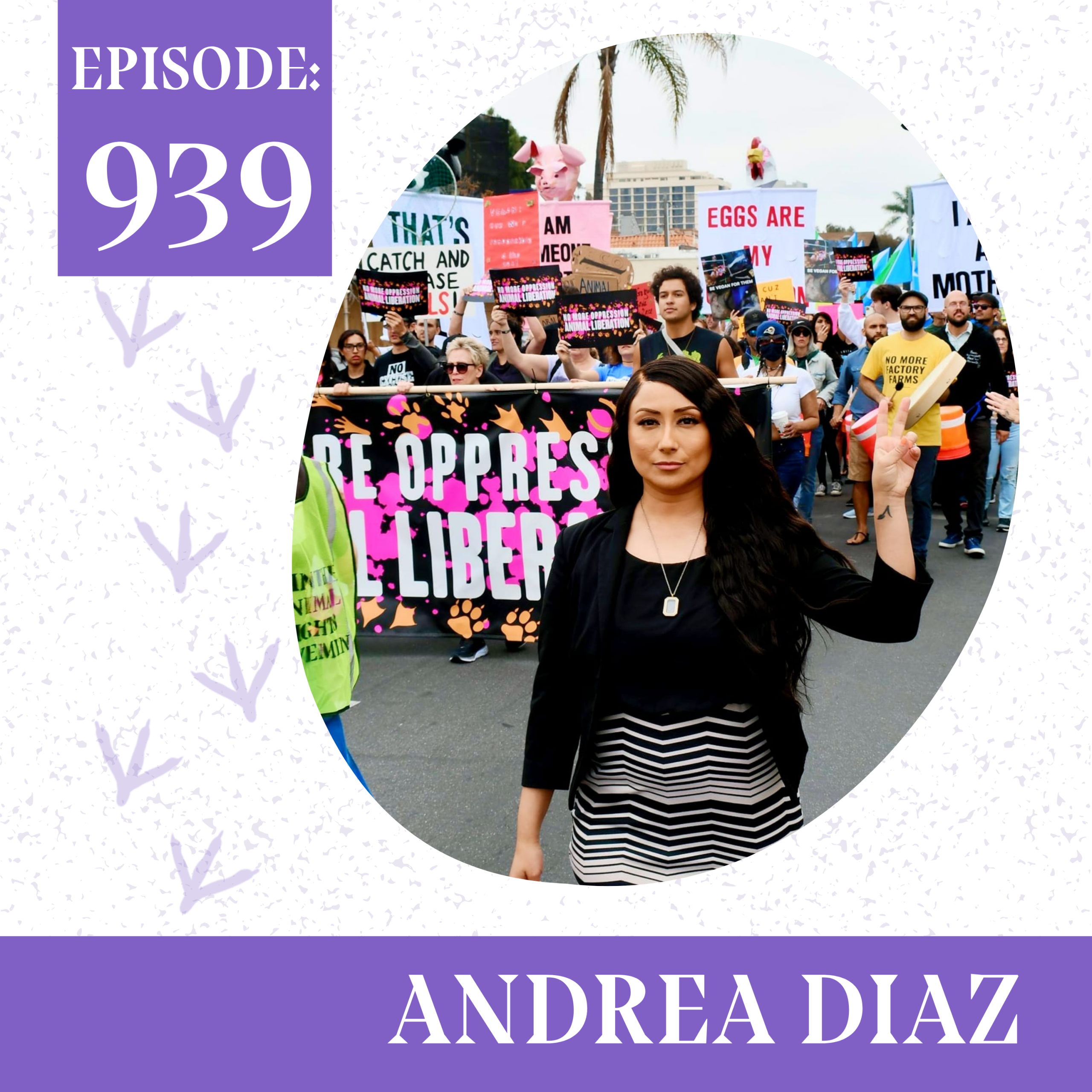
Buddhism, Animals & Advocacy: How Dharma Voices for Animals Is Transforming the Way Buddhists Think About What They Eat
1w ago00:37:08Tap to summarizeIn this episode of The Our Hen House Interview, Mariann Sullivan speaks with Andrea Diaz, Executive Director of Dharma Voices for Animals (DVA), the only international Buddhist animal advocacy organization. Andrea shares how DVA is working across Sri Lanka, Vietnam, Thailand, and the United States to align Buddhist teachings of compassion and non-harming with the dietary choices of the world’s nearly 360 million Buddhists — and why that work looks radically different in each country. Buddhism’s core teachings explicitly oppose harming animals — the Pali Canon’s first precept calls for abstaining from taking the lives of living creatures, and the Buddha specifically named trading in meat as one of five unethical trades DVA’s global programs meet Buddhists where they are, from distributing Sri Lanka’s first vegan cookbook and hosting youth Dharma retreats in Vietnam, to securing formal plant-based meal agreements at Thai temples through the Mindful Meals program The US is DVA’s most resistant market, where promoting veganism in Buddhist centers is often taboo — leading DVA to launch the Sustainable Sangha Collective to normalize plant-based options and the All Beings Coalition to unite influential Buddhist voices against factory farming The Bodhi Project offers a uniquely Buddhist approach to bearing witness, inviting practitioners to voluntarily reveal images of animal suffering in alignment with the Buddha’s own practice of opening himself to the reality of suffering Meditation and Buddhist practice can be a lifeline for animal advocates, helping activists move from burnout and anger toward sustainable, effective advocacy — and DVA’s monthly online meditation sangha is open to all, Buddhist or not The next 100 people to join DVA’s Dāna (giving) Circle as a monthly donor of $20 or more will receive a wildlife art print donated by artist Carl Brenders (retail value of $100+). ABOUT OUR GUEST Andrea Diaz is an animal rights advocate raised on a farm in South Phoenix, Arizona, who holds a Master of Global Animal Law from the Autonomous University of Barcelona and a Bachelor of Criminal Justice from Arizona State University. After going vegan overnight in 2016 following exposure to slaughterhouse footage, she channeled her lifelong passion for justice into organizing hundreds of campaigns and working as a factory farm and slaughterhouse investigator across three countries. Drawn to the teachings of the Buddha and a dedicated meditation practitioner, she now serves as Executive Director of Dharma Voices for Animals. We are thrilled to expand the accessibility of our podcast by offering written transcripts of the interviews! Click here to read this episode's interview. _____________________________________________ Thank you for listening to the Our Hen House podcast! If you enjoy our podcasts, believe in our mission to effectively mainstream the movement to end the exploitation of animals, find community and solace in our shows and resources, and would like to show your support for vegan indie media, please make a donation today. Contributions of any amount are hugely appreciated. Our Hen House is a 501(c)(3) nonprofit organization, so it’s tax-deductible. Thank you for helping us create quality content! Subscribe to our show on Apple Podcasts, YouTube, or your favorite podcatcher, and don’t forget to leave a 5-star review! Check out Our Hen House’s other podcasts: The Animal Law Podcast, The Teaching Jasmin How to Cook Vegan Podcast, and the Antiracism in Animal Advocacy Audio Series. Follow us on social media! You can find Our Hen House on LinkedIn, Facebook, Instagram, TikTok, Threads, or Bluesky. The Our Hen House theme song is written and performed by Michael Harren.
Transcribe →
The Hen Report: The Hen Report: “Call Your Senators” | Cage-Free Eggs, Humane Washing & the Save Our Bacon Act
2w ago00:28:11Tap to summarizeIn this episode of The Hen Report, Jasmin Singer and Mariann Sullivan are joined by Amber Canavan of PETA — and her rescued hen, Rosemary — to discuss PETA’s newly released white paper on the failures of cage-free egg labeling. Amber breaks down the gap between consumer perception and the grim reality of cage-free facilities and offers her conclusion that humane-washing labels are actively deterring people from going vegan. She also outlines how activists can take action on the Farm Bill’s dangerous Save Our Bacon Act and a hidden provision that would use taxpayer dollars to subsidize the fur industry. Cage-free isn’t cruelty-free: PETA’s white paper, based on peer-reviewed studies and government reports, reveals that cage-free hens still face overcrowding, poor air quality, higher rates of pecking, and barn fires — conditions Rosemary herself survived before being rescued. Humane washing may be blocking veganism: Labels like “cage-free,” “free-range,” and “certified humane” are among the most common reasons people give for not going vegan, making label accountability a critical front in animal advocacy. Legal pressure is growing: PETA is pursuing FTC complaints, cease-and-desist letters, and consumer protection litigation over deceptive egg and animal product labels — and is actively seeking people who feel misled at peta.org. Oppose the Save Our Bacon Act: Already passed in the House, this Farm Bill provision would strip states of the ability to ban the sale of pork derived from gestation crates and foie gras — contact your senators now by calling them at 202 224-3121 and by using PETA’s action alert at peta.org. Stop taxpayer subsidies for fur: A tucked-in provision (Section 3201[d]) would allow the struggling fur industry to use federal funds for foreign advertising — call your senators and oppose this section. RESOURCES Save Our Bacon Act on Congress.gov The 2026 Farm Bill PETA Action Alert We are thrilled to expand the accessibility of our podcast by offering written transcripts of the interviews! Click here to read this episode's interview. _____________________________________________ Thank you for listening to the Our Hen House podcast! If you enjoy our podcasts, believe in our mission to effectively mainstream the movement to end the exploitation of animals, find community and solace in our shows and resources, and would like to show your support for vegan indie media, please make a donation today. Contributions of any amount will go towards our fundraising goal and are hugely appreciated. Our Hen House is a 501(c)(3) nonprofit organization, so it’s tax-deductible. Thank you for helping us create quality content! Subscribe to our show on Apple Podcasts, YouTube, or your favorite podcatcher, and don’t forget to leave a 5-star review! Check out Our Hen House’s other podcasts: The Animal Law Podcast, The Teaching Jasmin How to Cook Vegan Podcast, and the Antiracism in Animal Advocacy Audio Series. Follow us on social media! You can find Our Hen House on Facebook, Instagram, TikTok, or Bluesky. The Our Hen House theme song is written and performed by Michael Harren.
Transcribe →
Billie Eilish Was Right, the Meat Industry Is Panicking, and a Calf Saw a Butterfly | Rising Anxieties
2w ago00:20:20Tap to summarizeThe latest episode of Rising Anxieties covers a week of predictable chaos in the animal agriculture world. Billie Eilish said what many of us were thinking — eating meat is inherently wrong — and the left proceeded to embarrass itself with a barrage of bad-faith counterarguments. Meanwhile, the federal government is finally going after Big Beef and Big Egg for antitrust violations (yes, really), industry insiders are losing sleep over animal advocates infiltrating their coalition, and one dairy farmer found cosmic meaning in a calf encountering a butterfly. Truly a week that had everything. Billie Eilish vs. The Left — Eilish said the quiet part out loud, and her own fanbase responded with “colonialism” and “no ethical consumption under capitalism.” The Vox article by Kenny Torella that broke it all down is required reading. The Meat Industry’s PR Problem — A poultry trade publication gently suggested that calling potential customers “city folk” might not be a winning strategy. The response was profanity-laced outrage. Checks out. Wolves in Farmer’s Clothing — Industry insider is very upset that animal advocates are forming alliances with farmers who practice slightly less horrific methods. The fact that it’s bothering her is, frankly, encouraging. DOJ and USDA Go After Big Beef and Big Egg — Antitrust investigations into the Big Four beef packers and major egg producers are underway, with a whistleblower program offering up to 30% of recoveries. The Herd Is Down, and It’s Your Fault — USDA Secretary blames the “radical left’s ongoing assault on ranching” for declining cattle numbers — not, say, droughts and wildfires, which she mentions separately as if climate change and its consequences are unrelated phenomena. We are thrilled to expand the accessibility of our podcast by offering written transcripts of the interviews! Click here to read this episode's interview. _____________________________________________ Thank you for listening to the Our Hen House podcast! If you enjoy our podcasts, believe in our mission to effectively mainstream the movement to end the exploitation of animals, find community and solace in our shows and resources, and would like to show your support for vegan indie media, please make a donation today. Contributions of any amount will go towards our fundraising goal and are hugely appreciated. Our Hen House is a 501(c)(3) nonprofit organization, so it’s tax-deductible. Thank you for helping us create quality content! Subscribe to our show on Apple Podcasts, YouTube, or your favorite podcatcher, and don’t forget to leave a 5-star review! Check out Our Hen House’s other podcasts: The Animal Law Podcast, The Teaching Jasmin How to Cook Vegan Podcast, and the Antiracism in Animal Advocacy Audio Series. Follow us on social media! You can find Our Hen House on LinkedIn, Facebook, Instagram, TikTok, Threads, or Bluesky. The Our Hen House theme song is written and performed by Michael Harren.
Transcribe →
End Animal Experimentation Now: Rise for Animals’ Lindsey Soffes on Ridglan, the Science of Alternatives, and Why Public Opinion Is Shifting
2w ago00:59:05Tap to summarizeIn this powerful episode, Jasmin Singer and Mariann Sullivan sit down with Lindsey Soffes, Head of Programs at Rise for Animals, to explore the growing movement to end animal experimentation. From the explosive Ridglan Farms story to landmark federal legislation, Lindsey breaks down why this moment may be a turning point for animals in laboratories — and what advocates can do right now to accelerate change. Ridglan Farms and the national spotlight: How years of grassroots activism, open rescues, and public outcry led to the rescue of 1,500 beagles from a Wisconsin dog breeding and research facility — and what it means for the broader animal research industry Shifting public opinion and bipartisan support: A 2025 Gallup poll found fewer than half of Americans find animal research morally acceptable, with opposition cutting across political lines — and what that means for federal policy The science of alternatives (NAMs): Why new approach methodologies like organoids and human-relevant in vitro systems are outperforming animal models, and why Rise for Animals is pushing back against industry efforts to frame NAMs as a “complement” rather than a replacement Federal legislative action: Updates on the FDA Modernization Act 3.0 and the SPARE Act — two bills that could fundamentally reshape how animal research is funded and regulated in the U.S. ARLO, the transparency database: How Rise for Animals’ public database of 40,000+ records exposes the systemic violence of the animal research industry — and how you can use it to investigate labs in your own community ABOUT OUR GUEST Lindsey Soffes is Head of Programs at Rise for Animals, a national animal rights organization working to end animal experimentation through exposure, advocacy, and public mobilization. With a background in law and mission-driven non-profit work, she leads investigative, educational, and community engagement initiatives that expose the hidden realities of the animal research industry, raise public awareness, support grassroots advocates, and advance animal liberation as a matter of justice. We are thrilled to expand the accessibility of our podcast by offering written transcripts of the interviews! Click here to read this episode's interview. _____________________________________________ Thank you for listening to the Our Hen House podcast! If you enjoy our podcasts, believe in our mission to effectively mainstream the movement to end the exploitation of animals, find community and solace in our shows and resources, and would like to show your support for vegan indie media, please make a donation today. Contributions of any amount are hugely appreciated. Our Hen House is a 501(c)(3) nonprofit organization, so it’s tax-deductible. Thank you for helping us create quality content! Subscribe to our show on Apple Podcasts, YouTube, or your favorite podcatcher, and don’t forget to leave a 5-star review! Check out Our Hen House’s other podcasts: The Animal Law Podcast, The Teaching Jasmin How to Cook Vegan Podcast, and the Antiracism in Animal Advocacy Audio Series. Follow us on social media! You can find Our Hen House on LinkedIn, Facebook, Instagram, TikTok, Threads, or Bluesky. The Our Hen House theme song is written and performed by Michael Harren.
Transcribe →
The Hen Report: “We’ve Got This” | Stop the Save Our Bacon Act
3w ago00:47:08Tap to summarizeIn this episode of The Hen Report, Jasmin Singer and Mariann Sullivan are joined by Matthew Dominguez, U.S. Director for Compassion in World Farming, for an urgent deep-dive into the Save Our Bacon (SOB) Act — dangerous preemption language hidden inside the Farm Bill that could strip states of their right to pass and enforce farm animal protection laws, wiping out decades of hard-won legislative progress. Save Our Bacon Act / EATS Act explained: The factory farming industry has embedded roughly 100 words into the Farm Bill that would federally preempt state-level animal welfare and food safety laws — including cage-free and gestation-crate bans in California, Massachusetts, and beyond. Call your senators now: The Senate Ag Committee is drafting its version of the Farm Bill with a target vote by end of May; call the congressional switchboard at 202-224-3121, ask to speak to your senator’s office, identify yourself as a constituent, and ask your senators to oppose any Farm Bill containing Save Our Bacon Act language. Broader implications: Harvard Law’s Animal Law Program identified up to 1,000 state laws — covering food safety, environmental protection, and consumer rights — that could be nullified if this preemption language passes. Bipartisan opposition and a growing coalition: Family farmers, food safety advocates, and even the MAHA movement are joining animal protection groups in fighting the bill, with Republicans and Democrats alike opposing the language. Incremental reform vs. abolition: Matthew addresses the debate over whether cage-free progress is meaningful, arguing that incremental wins — such as removing 140–150 million birds from barren battery cages — build the momentum needed for deeper systemic change. RESOURCES Save Our Bacon Act on Congress.gov Compassion in World Farming We are thrilled to expand the accessibility of our podcast by offering written transcripts of the interviews! Click here to read this episode's interview. _____________________________________________ Thank you for listening to the Our Hen House podcast! If you enjoy our podcasts, believe in our mission to effectively mainstream the movement to end the exploitation of animals, find community and solace in our shows and resources, and would like to show your support for vegan indie media, please make a donation today. Contributions of any amount will go towards our fundraising goal and are hugely appreciated. Our Hen House is a 501(c)(3) nonprofit organization, so it’s tax-deductible. Thank you for helping us create quality content! Subscribe to our show on Apple Podcasts, YouTube, or your favorite podcatcher, and don’t forget to leave a 5-star review! Check out Our Hen House’s other podcasts: The Animal Law Podcast, The Teaching Jasmin How to Cook Vegan Podcast, and the Antiracism in Animal Advocacy Audio Series. Follow us on social media! You can find Our Hen House on Facebook, Instagram, TikTok, or Bluesky. The Our Hen House theme song is written and performed by Michael Harren.
Transcribe →
Harvard’s Animal Law Clinic Is Closing, Chicks Are Still Being Ground Up, and the Meat Industry Is Panicking. Just Another Week. | Rising Anxieties
3w ago00:18:46Tap to summarizeIn this episode of Rising Anxieties, Mariann digs into the uncomfortable gap between what institutions say and what they do — starting with Harvard Law School’s baffling decision to shutter its fully-enrolled Animal Law Clinic. From there: the industry’s coordinated PR campaign against plant-based alternatives (spoiler: they’re scared), the ongoing farce of in-ovo sexing technology being “not ready” for the US market, and a children’s book about chickens that ends with a recipe. Listen in and then bring your spirits back up with five actual reasons to feel good about being vegan in 2026. Harvard Law School is closing its Animal Law Clinic despite full enrollment and a waitlist — raising serious questions about who’s pulling strings at one of the country’s most prestigious law schools The meat and dairy industries are playing offense against plant-based and lab-grown alternatives, and their own trade press admits it’s because they watched dairy lose 15% of sales to oat milk In-ovo sexing technology — which could end the mass killing of male chicks — is being dismissed by egg producers not because it doesn’t work, but because it might not be good enough forever A Saskatchewan chicken industry book for children promises “an accurate picture” of chicken farming and ends with a recipe — a bold choice Chris Bryant’s YouTube video “5 Reasons for Vegans to Be Optimistic in 2026” is worth watching immediately after this episode, as a palate cleanser We are thrilled to expand the accessibility of our podcast by offering written transcripts of the interviews! Click here to read this episode's interview. _____________________________________________ Thank you for listening to the Our Hen House podcast! If you enjoy our podcasts, believe in our mission to effectively mainstream the movement to end the exploitation of animals, find community and solace in our shows and resources, and would like to show your support for vegan indie media, please make a donation today. Contributions of any amount will go towards our fundraising goal and are hugely appreciated. Our Hen House is a 501(c)(3) nonprofit organization, so it’s tax-deductible. Thank you for helping us create quality content! Subscribe to our show on Apple Podcasts, YouTube, or your favorite podcatcher, and don’t forget to leave a 5-star review! Check out Our Hen House’s other podcasts: The Animal Law Podcast, The Teaching Jasmin How to Cook Vegan Podcast, and the Antiracism in Animal Advocacy Audio Series. Follow us on social media! You can find Our Hen House on LinkedIn, Facebook, Instagram, TikTok, Threads, or Bluesky. The Our Hen House theme song is written and performed by Michael Harren.
Transcribe →
“I’m Trying”: Filmmaker Ray Cruzzola on Documentary Activism, Regan Russell, and the Power of Storytelling for Animals
3w ago00:29:35Tap to summarizeIn this week’s interview, Jasmin and Mariann sit down with filmmaker Ray Cruzzola, founder of World Change Media, to discuss his moving documentary I’m Trying — a tribute to Canadian animal rights activist Regan Russell, who was killed in 2020 while protesting outside a pig slaughterhouse. Ray shares how he uses cinematic storytelling as a tool for social change, why he chose to center Regan’s story to connect audiences to animal advocacy, and what the film’s title means for all of us who want to make a difference but don’t know where to start. Regan Russell’s legacy: Who she was, how she died protesting Canada’s ag-gag Bill 156, and why her story resonates globally with animal rights activists and everyday people alike Film as activism: How Ray deliberately crafts each scene in I’m Trying to address audience fears, build empathy, and inspire viewers — especially passive vegans — to take meaningful action for animals Strategic storytelling for animal advocacy: Why leading with human stories (rather than graphic animal footage) can be a more effective bridge for reaching non-vegan and vegan audiences The Plant-based Treaty connection: How I’m Trying supports The Plant-based Treaty’s mission of policy-level change, with endorsement from Regan’s own family ABOUT OUR GUEST Raymond Cruzzola is a Toronto-based documentary filmmaker and founder of World Change Media, creating cinematic, story-driven content for nonprofits and social impact organizations. With over a decade of experience, his work spans documentary and short-form campaigns rooted in the belief that the power to reduce suffering carries a responsibility to act — inviting audiences not only to bear witness, but to respond. We are thrilled to expand the accessibility of our podcast by offering written transcripts of the interviews! Click here to read this episode's interview. _____________________________________________ Thank you for listening to the Our Hen House podcast! If you enjoy our podcasts, believe in our mission to effectively mainstream the movement to end the exploitation of animals, find community and solace in our shows and resources, and would like to show your support for vegan indie media, please make a donation today. Contributions of any amount are hugely appreciated. Our Hen House is a 501(c)(3) nonprofit organization, so it’s tax-deductible. Thank you for helping us create quality content! Subscribe to our show on Apple Podcasts, YouTube, or your favorite podcatcher, and don’t forget to leave a 5-star review! Check out Our Hen House’s other podcasts: The Animal Law Podcast, The Teaching Jasmin How to Cook Vegan Podcast, and the Antiracism in Animal Advocacy Audio Series. Follow us on social media! You can find Our Hen House on LinkedIn, Facebook, Instagram, TikTok, Threads, or Bluesky. The Our Hen House theme song is written and performed by Michael Harren.
Transcribe →
The Hen Report: “Moments Upon Moments” | Lobster Liberation, Anti-factory Farming & Animal Advocacy Strategy
4w ago00:33:33Tap to summarizeIn this episode of The Hen Report, Jasmin and Mariann cover a wide range of topics: Jasmin shares behind-the-scenes moments from her theater rehearsal, including an organic conversation about veganism, tallow lotion, and gelatin that unfolded among cast members without any agenda-pushing on her part. She also pays tribute to the legacy of Tommy Raskin, animal rights activist and son of Congressman Jamie Raskin, drawing from Jamie’s memoir Unthinkable. The hosts then dig into the story of marine biologist Emma Smart, who liberated a lobster from a UK fishmonger and faced a shockingly heavy-handed legal response, before closing with a rich discussion on Project Slingshot — a new UK campaign challenging factory farming with the slogan “Don’t Buy It” — and what it means for animal advocacy strategy. Project Slingshot & the anti-factory farming movement: Mariann breaks down this new UK pressure campaign, its broad definition of factory farming, its “Don’t Buy It” slogan, and the ongoing debate about whether explicit vegan messaging helps or hinders progress toward animal liberation. The lobster liberation story: Marine biologist Emma Smart rescued a lobster from a UK fishmonger, was strip-searched, and faced five criminal charges — raising urgent questions about how society and law enforcement respond to peaceful animal advocacy. Tommy Raskin’s legacy: A reflection on Congressman Jamie Raskin’s memoir Unthinkable and his son Tommy, a passionate animal rights activist whose final words called on people to care for animals and the global poor. Vegan identity vs. vegan options advocacy: Mariann draws a key distinction between advocacy that encourages people to go vegan versus advocacy that simply seeks to make vegan options more accessible and normalized. Kickstarting for Good & other opportunities: Applications are open for the Kickstarting for Good 2026 incubator (apply by May 31) and the Anima International 2026 Fellowship in Warsaw (apply by May 17); the Grassroots Animal Rights Summit is also coming to DC, May 15–17. RESOURCES I liberated a lobster and got crushed Don’t Buy It Why Factory Farming Need Cultural Pressure, Not Just Education Kickstarting for Good Anima International Fellowship Grassroots Animal Rights Summit We are thrilled to expand the accessibility of our podcast by offering written transcripts of the interviews! Click here to read this episode's interview. _____________________________________________ Thank you for listening to the Our Hen House podcast! If you enjoy our podcasts, believe in our mission to effectively mainstream the movement to end the exploitation of animals, find community and solace in our shows and resources, and would like to show your support for vegan indie media, please make a donation today. Contributions of any amount will go towards our fundraising goal and are hugely appreciated. Our Hen House is a 501(c)(3) nonprofit organization, so it’s tax-deductible. Thank you for helping us create quality content! Subscribe to our show on Apple Podcasts, YouTube, or your favorite podcatcher, and don’t forget to leave a 5-star review! Check out Our Hen House’s other podcasts: The Animal Law Podcast, The Teaching Jasmin How to Cook Vegan Podcast, and the Antiracism in Animal Advocacy Audio Series. Follow us on social media! You can find Our Hen House on Facebook, Instagram, TikTok, or Bluesky. The Our Hen House theme song is written and performed by Michael Harren.
Transcribe →
Anti-Factory Farming Is Not Quite a Plan: Creating a Big Tent | Rising Anxieties
4w ago00:15:08Tap to summarizeThe animal rights movement has found its big tent: everyone hates factory farming, right? In this solo rant, Mariann Sullivan ponders “anti-factory farming” as a unifying movement strategy — specifically, the inconvenient fact that being against something isn’t the same as having a plan to replace it. She also takes on a growing narrative that out-and-proud veganism is somehow the movement’s own worst enemy, and why she’s not buying it. The anti-factory farming “big tent” truly is a compelling rallying cry — but what’s actually inside the tent when you ask what comes after cage-free? Pricing meat truthfully would require raising its cost significantly, yet corporate campaigns tend to sell themselves on not raising the price of meat Passionate activists are often quietly (but not silently) shifting culture and the food scene in a vegan direction every day without blowing up the room Does abolishing factory farming without a clear vision of what replaces it risk reorganizing exploitation rather than ending it? We are thrilled to expand the accessibility of our podcast by offering written transcripts of the interviews! Click here to read this episode's interview. _____________________________________________ Thank you for listening to the Our Hen House podcast! If you enjoy our podcasts, believe in our mission to effectively mainstream the movement to end the exploitation of animals, find community and solace in our shows and resources, and would like to show your support for vegan indie media, please make a donation today. Contributions of any amount will go towards our fundraising goal and are hugely appreciated. Our Hen House is a 501(c)(3) nonprofit organization, so it’s tax-deductible. Thank you for helping us create quality content! Subscribe to our show on Apple Podcasts, YouTube, or your favorite podcatcher, and don’t forget to leave a 5-star review! Check out Our Hen House’s other podcasts: The Animal Law Podcast, The Teaching Jasmin How to Cook Vegan Podcast, and the Antiracism in Animal Advocacy Audio Series. Follow us on social media! You can find Our Hen House on LinkedIn, Facebook, Instagram, TikTok, Threads, or Bluesky. The Our Hen House theme song is written and performed by Michael Harren.
Transcribe →