Podcast
Parallax Views w/ J.G. Michael
Hosted by J.G. · EN
A podcast where politics, history, and culture are examined from perspectives you may not have considered before. Call it a parallax view.
60episodes
Episodes
Newest firstAll episodes

Trump and Netanyahu's War on Iran w/ Richard Silverstein
Mar 301:12:02Tap to summarize👉 Pitch in on Patreon and fuel the future of free-thinking conversations. https://www.patreon.com/parallaxviews Also visit our returning sponsor Mike Swanson's Wall Street Window for the best financial and trading newsletter around: https://wallstreetwindow.com/ On this edition of Parallax Views, returning guest Richard Silverstein of the Tikun Olam blog joins us to discuss his latest article, “Iran: Trump’s War of Annihilation.” Silverstein argues that Donald Trump has embarked on a dangerously escalatory military campaign against Iran, undertaken in close coordination with Benjamin Netanyahu, that risks massive civilian casualties, regional destabilization, and long-term blowback. In this conversation, Silverstein contends that the strategy of decapitating Iranian leadership—including the reported killing of Supreme Leader Ali Khamenei—rests on flawed assumptions drawn from past U.S. interventions in places like Iraq, Afghanistan, and Libya. Rather than producing regime collapse and democratic transition, he warns, such actions historically create power vacuums, fuel insurgencies, and entrench nationalist resistance. The discussion turns to domestic politics in both the United States and Israel, where Silverstein suggests the war may function as a political distraction for embattled leaders facing declining approval ratings and mounting controversies. He cites polling data indicating significant American opposition to war with Iran and explores what he sees as shifting public opinion in the U.S.—particularly among younger Americans—regarding Israel and Palestine. We'll also discuss what this means long-term for the U.S./Israel as well as Iran and the region as a whole, whether the Islamic Republic can survive this, and even delve into what this means for the Gulf state monarchies. Richard also discusses some of his recent articles on issues like the Israeli use of U.S. thermobaric weapons that are said to "vaporize" targets.
Transcribe →REPLAY: U.S.-Iran, Netanyahu Goes to Washington, & the Saudi-UAE Rivalry w/ James Dorsey
Feb 2501:25:40Tap to summarizeREPLAY OF AN EPISODE OF PARALLAX VIEWS FROM EARLIER THIS MONTH DUE TO A FAMILY CRISIS; PARALLAX VIEWS WILL BE BACK TO REGULAR SCHEDULE NEXT WEEK. MY APOLOGIES 👉 Pitch in on Patreon and fuel the future of free-thinking conversations. https://www.patreon.com/parallaxviews Also visit our returning sponsor Mike Swanson's Wall Street Window for the best financial and trading newsletter around: https://wallstreetwindow.com/ On this edition of Parallax Views, returning guest James M. Dorsey, independent journalist and scholar at The Turbulent World Substack, breaks down the latest developments shaping the Middle East. We start with the high-stakes U.S.-Iran talks, where Dorsey explains the deep mistrust between Washington and Tehran, the obstacles to a deal, and why, despite tensions, he doubts Trump seeks a full-scale war. We explore what military action against Iran could mean for the Gulf States, Turkey, and the Caucasus, and the broader question of regional stability. Next, we analyze Benjamin Netanyahu’s visit to Washington, D.C., his fraught relationship with Trump, and what’s at stake politically for Israel as elections approach. Dorsey explains what Netanyahu likely seeks from the former president on Iran and why mutual distrust may be defining their interactions. In the latter half, we dive into the rising rivalry between Saudi Arabia and the UAE, examining shifts in Saudi regional strategy, the UAE’s backing of militias and separatists, and the potential dangers this poses across North Africa, especially in Sudan. We also discuss the UAE’s growing closeness with Israel, Qatar’s positioning in the Saudi-UAE rivalry, and what these dynamics reveal about the future of Middle East geopolitics. All that and more on this edition of Parallax Views.
Transcribe →
As War with Iran Lurks in Wait, How Did We Get Here? w/ Dr. Arta Moeini
Feb 1901:03:20Tap to summarize👉 Pitch in on Patreon and fuel the future of free-thinking conversations. https://www.patreon.com/parallaxviews Also visit our returning sponsor Mike Swanson's Wall Street Window for the best financial and trading newsletter around: https://wallstreetwindow.com/ On this edition of Parallax Views, host J.G. Michael speaks with international relations expert Dr. Arta Moeini of the Institute for Peace and Diplomacy about the United States being on the brink of war with Iran. Moeini explains how we arrived at this dangerous moment and why escalating confrontation would be bad news for the U.S., Iran, Donald Trump’s presidency, and even Israel in the long run. The conversation examines how hardliners in both Washington and Tehran feed off one another, creating a volatile cycle of escalation. Moeini warns that any U.S. strike could trigger a powerful “rally around the flag” effect inside Iran that would marginalize moderates who oppose war. The discussion also explores Trump’s instincts on Iran, how his approach differs from traditional neoconservative thinking, and why sustained pressure campaigns can convince targeted states that they face an existential threat requiring a do-or-die response. The picture that emerges is stark: a grim geopolitical moment where miscalculation could have far-reaching consequences.
Transcribe →
The Epstein Files: Networks, the Spy Industry, Oligarchs, and More w/ Matthew Petti
Feb 1201:14:24Tap to summarize👉 Pitch in on Patreon and fuel the future of free-thinking conversations. https://www.patreon.com/parallaxviews Also visit our returning sponsor Mike Swanson's Wall Street Window for the best financial and trading newsletter around: https://wallstreetwindow.com/ On this edition of Parallax Views, J.G. Michael speaks with Reason journalist Matthew Petti about his reporting on Jeffrey Epstein, the Epstein network, and what newly surfaced emails reveal about Epstein’s attempts to enter the surveillance and security technology world in the final years of his life. Drawing from Petti’s article “Inside Jeffrey Epstein’s Spy Industry Connections,” the conversation examines Epstein’s ties to figures such as former Israeli Prime Minister Ehud Barak, connections to Russian oligarch Viktor Vekselberg, and the broader intersection of New York finance, global business elites, and intelligence-adjacent technology. The discussion explores why the Epstein files are unlikely to contain a single “smoking gun,” instead reflecting networks built on influence, ambiguity, and deniability that leave behind oblique references rather than clear paper trails. Petti also addresses the challenges of reporting on Epstein in an environment shaped by misinformation and why dismissing the entire Epstein story as moral panic — as some commentators have done — risks overlooking the real lessons about power, access, and elite networks revealed by the case. This episode focuses on separating reporting from speculation while examining what the Epstein story can still teach us about wealth, influence, surveillance technology, and the global connections that defined Epstein’s orbit.
Transcribe →
U.S.-Iran Talks, Netanyahu Goes to Washington Redux, & the Saudi-UAE Rivalry w/ James Dorsey
Feb 1101:25:40Tap to summarize👉 Pitch in on Patreon and fuel the future of free-thinking conversations. https://www.patreon.com/parallaxviews Also visit our returning sponsor Mike Swanson's Wall Street Window for the best financial and trading newsletter around: https://wallstreetwindow.com/ On this edition of Parallax Views, returning guest James M. Dorsey, independent journalist and scholar at The Turbulent World Substack, breaks down the latest developments shaping the Middle East. We start with the high-stakes U.S.-Iran talks, where Dorsey explains the deep mistrust between Washington and Tehran, the obstacles to a deal, and why, despite tensions, he doubts Trump seeks a full-scale war. We explore what military action against Iran could mean for the Gulf States, Turkey, and the Caucasus, and the broader question of regional stability. Next, we analyze Benjamin Netanyahu’s visit to Washington, D.C., his fraught relationship with Trump, and what’s at stake politically for Israel as elections approach. Dorsey explains what Netanyahu likely seeks from the former president on Iran and why mutual distrust may be defining their interactions. In the latter half, we dive into the rising rivalry between Saudi Arabia and the UAE, examining shifts in Saudi regional strategy, the UAE’s backing of militias and separatists, and the potential dangers this poses across North Africa, especially in Sudan. We also discuss the UAE’s growing closeness with Israel, Qatar’s positioning in the Saudi-UAE rivalry, and what these dynamics reveal about the future of Middle East geopolitics. All that and more on this edition of Parallax Views.
Transcribe →
ICE, Homeland Security, and the Long, Post-9/11 March to Police State USA w/ Jordan Liz
Feb 1101:01:22Tap to summarize👉 Pitch in on Patreon and fuel the future of free-thinking conversations. https://www.patreon.com/parallaxviews Also visit our returning sponsor Mike Swanson's Wall Street Window for the best financial and trading newsletter around: https://wallstreetwindow.com/ On this edition of Parallax Views, J.G. Michael speaks with Jordan Liz — Associate Professor of Philosophy at San José State University and a contributor to Common Dreams — about ICE (Immigration and Customs Enforcement), the Department of Homeland Security, and why Liz argues that the “Abolish ICE” movement represents not a radical departure but a necessary response to the post-9/11 transformation of American governance. Liz contends that ICE is not a longstanding institution but a product of the Bush administration’s Global War on Terror, created alongside DHS in an atmosphere shaped by fear, threat inflation, and national security panic. Rather than emerging as a neutral immigration enforcement body, Liz argues that ICE was embedded from the beginning within a broader security framework that treated immigration through the lens of counterterrorism — effectively recasting migrants as potential internal threats. This, he claims, helped fuel the militarization of policing and laid the groundwork for an expansive surveillance apparatus whose implications extend far beyond immigration policy. Drawing on arguments developed in his Common Dreams writing, Liz explains why he believes ICE cannot be meaningfully reformed. In essays such as “Abolish ICE — and DHS Too,” he argues that the very concept of “homeland security” fused immigration enforcement with civilizational and cultural anxieties about national identity, encouraging policies that frame immigrants as existential dangers to the nation’s “way of life.” In his view, this logic incentivizes perpetual expansion of enforcement powers, increased funding, and the normalization of aggressive tactics justified by ever-inflated threats. The conversation also explores Liz’s critique of DHS as an institution born from the War on Terror’s security paradigm. According to Liz, DHS consolidated vast surveillance and enforcement powers under a single umbrella, contributing to what he sees as the growth of a domestic security state capable of undermining civil liberties. His writing frequently warns that technologies such as biometric identification, data integration, and algorithmic policing expand ICE’s reach not only over undocumented migrants but over citizens as well, disproportionately affecting people of color and reshaping the boundaries of belonging in American political life. Liz connects these concerns to his broader philosophical work on race and the “politics of belonging,” arguing that immigration enforcement reflects deeper questions about who is recognized as fully American and who remains perpetually suspect. The discussion examines how narratives of cultural threat and national decline shape immigration debates, and how these narratives intersect with policy decisions, surveillance practices, and enforcement priorities. In addition, the episode addresses controversies surrounding ICE since its early years, the role of protest and public witnessing in challenging state power, and the human consequences of immigration enforcement, including the killings of Alex Pretti and Rene Good. Ultimately, the conversation grapples with a larger question: whether the post-9/11 security architecture has pushed the United States toward what critics describe as “Police State USA,” and what alternatives might exist for immigration policy outside the framework of national security.
Transcribe →
Is the World Order Really Dead?: Anti-Politics, Trump, & Davos w/ Joseph Sciortino & Grant Gallagher
Feb 1002:01:34Tap to summarize👉 Pitch in on Patreon and fuel the future of free-thinking conversations. https://www.patreon.com/parallaxviews Also visit our returning sponsor Mike Swanson's Wall Street Window for the best financial and trading newsletter around: https://wallstreetwindow.com/ On this edition of Parallax Views, J.G. Michael is joined by Joseph Sciortino and Grant Gallagher of The Rabble Report to examine the World Economic Forum (WEF), Trump, and the shifting global order through the lens of anti-politics — the growing antagonism between society and the political sphere. The conversation explores the ongoing crisis of faith in institutions and how political actors increasingly act as scavengers, exploiting anti-political sentiment for power. From there, the discussion unpacks the complex relationship between anti-politics and populism, clarifying how the two overlap while remaining distinct phenomena shaping contemporary political discourse. The episode then turns to the 2026 World Economic Forum in Davos, Switzerland, where leaders framed the apparent decline of the U.S.-led liberal international order in terms of “national interest,” marking a notable rhetorical shift among European elites. J.G., Joseph, and Grant analyze Mark Carney’s remarks on the role of Middle Powers, debate how much of this new positioning reflects genuine geopolitical change versus political theater and consider whether Europe and Canada are truly capable of decoupling from the United States. What does relative U.S. decline actually mean for the future of global hegemony? Is the liberal order ending; or merely transforming under new pressures and dependencies? The conversation also examines how populist rhetoric surfaced “invisibly” at Davos itself, the challenges facing European leadership, and how these dynamics connect back to domestic U.S. politics, including ICE, the specter of the Middle American Radicals (MARs), and much more.
Transcribe →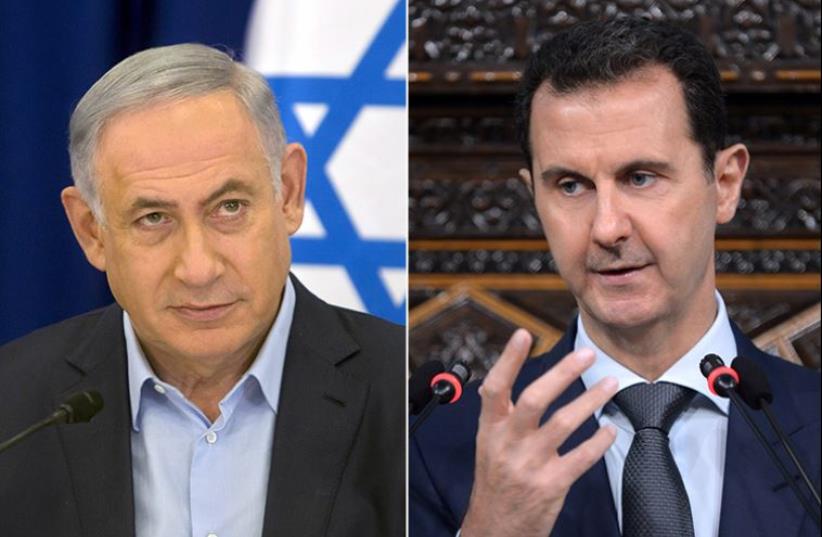
Leaked Documents Indicate Secret Dealings Between Assad & Israel w/ Patrick Hilsman
Dec 19, 202400:54:33Tap to summarizeYou're Listening to Parallax Views https://parallaxviews.podbean.com/ Support the Show on Patreon: https://www.patreon.com/parallaxviews Recorded: 12-18-24 On this edition of Parallax Views, journalist Patrick Hilsman, an editor at Turning Point Magazine, joins the show to discuss recent reports of leaked documents discovered after the overthrow of Assad in Syria that seem to reveal collaboration between the Assad regime and Israel. Although the documents have not been verified, the way the are written indicate they are either authentic or a carefully-crafted, elaborate hoax. Hilsman argues that if they are fake, and that is possible, they were written by someone incredibly well-researched. Hilsman will go into why there's some plausibility to the documents and how they relate to his reporting on the use of Israeli drones by Russia in, paradoxically, Syria itself. We'll go deep into the Israel-Russia relationship and how they have worked with each other over the years, especially in regard to weapons. In this regard Patrick recommends the book The Palestine Laboratory: How Israel Exports the Technology of Occupation Around the World. We'll also cover some odds and ends in both the Israel-Russia connections and how the relate to the leaked documents regarding Syria and Israel. Specifically, Patrick mention the Israel-Russia deconfliction line in relation to this story. The documents indicate that there were secret dealings between the Assad regime and Israel that were harmful to the Assad regime's ally Iran. Patrick will also discuss his time in Syria reporting on the first battle of Aleppo in 2012 and his experiences there. We'll also delve into the problems with overly conspiratorial ways of thinking when talking about international relations, the oversimplicity of "good guys vs. bad guys" when discussing nation-states and nation-state alliances, Israel's actions in Gaza, and much more. Guest Bio: Patrick Hilsman is a journalist and researcher who has covered the conflicts in Syria and Ukraine. He has been published by The Intercept, The Daily Beast and has had recent film work featured on PBS. He was a researcher for the Al Jazeera Documentary “the search for Assad’s executioners”
Transcribe →
The Great New Jersey Drone Invasion! w/ Matthew Petti
Dec 19, 202400:22:50Tap to summarizeYou're Listening to Parallax Views https://parallaxviews.podbean.com/ Support the Show on Patreon: https://www.patreon.com/parallaxviews Recorded: 12-18-24 On this edition of Parallax Views, a separate portion of the recent conversation between J.G. and Reason Magazine's Matthew Petti is presented. In the course of their most recent conversation, J.G. and Petti ended up talking about the recent flap of mysterious drone sightings that have occurred in New Jersey and seemingly spread to other states like Pennsylvania. These drone sighting and the sensationalistic response to them are akin to the UFO sightings of old, conjuring up a slew of conspiracy theories and, arguably, mass panic. Chief among those conspiracy theories is that the Islamic Republic of Iran is behind the drones. From Matthew's recent Reason Magazine piece entitled "No, an Iranian ‘mothership’ isn't attacking New Jersey with UFOs": Something weird is going on in New Jersey, and it's not just the swamp gas. Residents across the state have been calling in nighttime sightings of unidentified flying objects for the past month, including over military bases and President-elect Donald Trump's golf course. Neither local police nor the feds can explain what is going on—but Rep. Jeff Van Drew (R–N.J.) believes he has the answer. "Iran launched a mothership, probably about a month ago, that contains these drones. It's off the east coast of America," the congressman told Fox News on Wednesday, citing "sources who can't reveal who they are." Then he hedged his bets, saying that the "drones should be shot down, whether it was some crazy hobbyist that we can't imagine, or whether it is Iran, and I think it very possibly could be." So, the conspiracy theories have already started. We'll talk about that, but we'll also have a more general discussion about drones, drone hobbyists, the legal issues around shooting down drones, and much more!
Transcribe →
Analysis of Syria, Gaza/Palestine, Iran, Israel, Turkey, & More! w/ Matthew Petti
Dec 19, 202400:56:13Tap to summarizeYou're Listening to Parallax Views https://parallaxviews.podbean.com/ Support the Show on Patreon: https://www.patreon.com/parallaxviews Recorded: 12-18-24 On this edition of Parallax Views, Reason Magazine's Matthew Petti makes his long-awaited return to Parallax Views to discuss all things currently transpiring in the Middle East. We of course, look at Syria, but this episode also features more talk of Gaza and the continued bombardment of Gaza by Israel than the last few episodes that have dealt more exclusively with Israel/Palestine and Gaza. Matthew will offer his take on how the U.S. should approach the new regime in Syria and we'll delve into his thoughts on Jolani and HTS. Is Jolani truly reformed from his jihadist days? Time will tell, but Petti argues that his and HTS's history should not be whitewashed. We'll also discuss the Islamic Republic of Iran for a good portion of the conversation and the problems it has been facing, not the least of which is its weakening regionally by the overthrow of Assad in Syria. However, Matthew argues that the regime in Iran has been facing other problems as well and questions its adaptability in 2024 and beyond. Turkey will also come up in this conversation and we'll go pretty in-depth on a number of other topics as well. In particular, Matthew will expound on what he sees as the U.S.'s desire to replace the "Axis of Resistance" with an "Axis of Submission" (or Axis of Misery) that demands Arab populations and particularly Palestinians submit to U.S. and Israeli demands regardless of whether they are unfair to said populations. In this regard we'll discuss the Abraham Accords. We'll also discuss the Washington D.C. foreign policy blob and neoconservative triumphalism amongst other matters. At the end of the conversation Matthew will discuss some of his media criticism, specifically his latest Reason piece "CNN presented Syrian jailer Salama Mohammad Salama as a torture survivor".
Transcribe →