Podcast
Parallax Views w/ J.G. Michael
Hosted by J.G. · EN
A podcast where politics, history, and culture are examined from perspectives you may not have considered before. Call it a parallax view.
60episodes
Episodes
Newest firstAll episodes
Analysis of the Syria Situaiton & What It Means for the Region's Players w/ George Meneshian
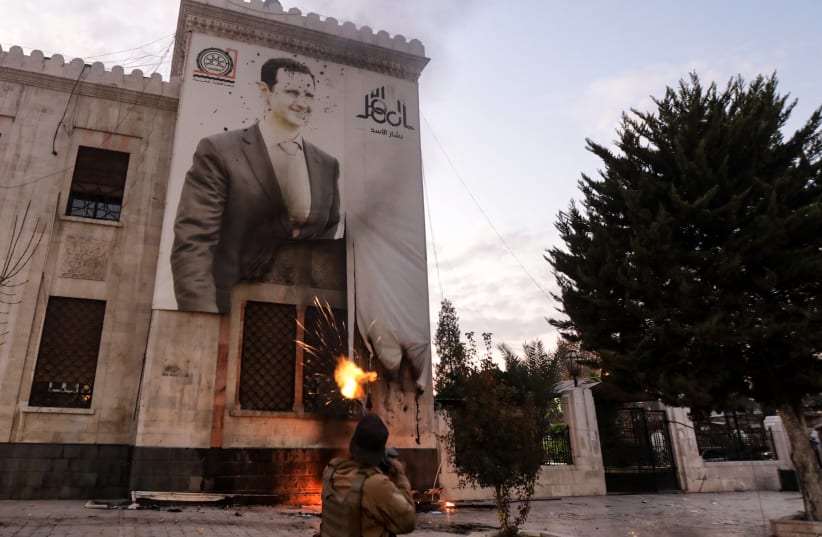
Dec 19, 202401:11:18Tap to summarizeYou're Listening to Parallax Views https://parallaxviews.podbean.com/ Support the Show on Patreon: https://www.patreon.com/parallaxviews Recorded: 12-18-24 On this edition of Parallax Views, the coverage and analysis of the situaiton unfolding in Syria continues, this time with George Meneshian, an Athens-based policy analyst specializing in the Caucasus and MENA. Meneshian bring his knowledge of the Caucasus and MENA to the table to explain what the downfal of Bashar al-Assad and his replacement of the Jolani-led HTS means for the regions. Meneshian offers a crash course in what needs to happen now for Syria to be stable, what the U.S. and European role should be in dealing with HTS, concerns about HTS and Jolani's Islamist and jihadist past, Turkey's regional ambitions, what the situation in Syria means for Armenia and Azerbaijan, what the downfall of Assad means for Palestinians, the events that were set in motino by the Hamas October 7th attack of 2023, Israel's actions in post-Assad Syria and occupation of the Golan Heights, Turkey and the Kurdish Question, Iran, and much, much more.
Transcribe →
Iran in the Crosshairs + Trump's Neocons w/ James Carden/Syria & the Caucasus w/ Eldar Mamedov
Dec 19, 202401:10:29Tap to summarizeYou're Listening to Parallax Views https://parallaxviews.podbean.com/ Support the Show on Patreon: https://www.patreon.com/parallaxviews Recorded: 12-18-24 On this edition of Parallax Views, in the first segment of the show James W. Carden, a contributing editor to The American Conservative and a former adviser to the U.S. State Department, returns to discuss his article "Iran: America’s Next War Of Choice", co-authored with Col. Douglas MacGregor, and "How the Neocons Won the Transition". We'll delve into what the overthrow of Assad means in relation to a weakened Iran. James believes we are closer than ever before to a potential conflict with Iran as Israel's Netanyahu and neoconservative ideologues in Washington D.C. are chomping at the bit for regime change in Iran. We'll also discuss the Israel-Turkey relationship and how that relationship may become more contentious over Syria, however Carden notes that, for the time being Turkey and Iran will cooperate with each other against their shared enemy of Iran. We'll also discuss a key player in Trump's transition team, Howard Lutnick, and how he seems to have his fingers all over Trump's rather neoconservative and foreign policy hawk appointments for the 2nd Trump administration. In the second segment of the show, international relations analyst Eldar Mamedov returns to discuss what the overthrow of Assad means for the Caucasus, with a particular focus on Armenia and Azerbaijan. With Iran's power now weakened in the region, Armenia has a lot to worry about from Azerbaijan, a country that says it wants "peace" with Armenia but only on its' own rather maximalist terms that are not going to be accepted by Armenia. We'll also discuss how the U.S. should respond to the new leadership in Syria, specifically the Islamist HTS led by Jolani, and what must be avoided to prevent instability in Syria. Moreover, Eldar and I will go over what Turkey's ambitions in Syria and the region are under the leadership of Erdogan.
Transcribe →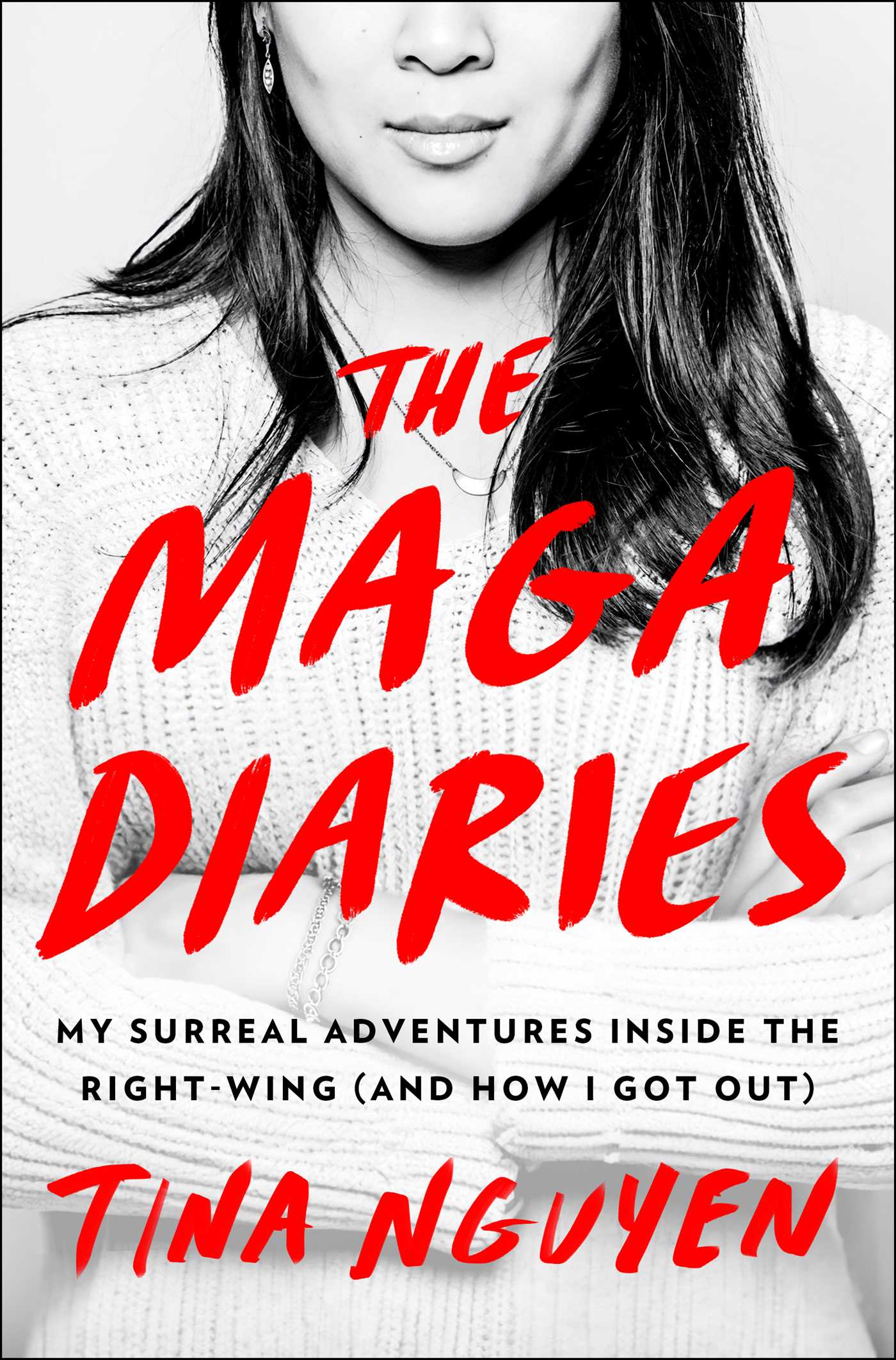
Trump & the America First Policy Institute + the MAGA Media Ecosystem w/ Tina Nguyen
Dec 16, 202400:40:02Tap to summarizeYou're Listening to Parallax Views https://parallaxviews.podbean.com/ Support the Show on Patreon: https://www.patreon.com/parallaxviews Recorded: 11-14-24 On this edition of Parallax Views, Tina Nguyen, author of The MAGA Diaries: My Surreal Adventures Inside the Right-Wing (And How I Got Out) and the resident "MAGA Whisperer" at Puck News, joins the show to discuss elements of her book, specifically the MAGA media ecosystem (ie: Tucker Carlson, amongst others), as well as the think tank she believes deserve more attention than Project 2025: the America First Policy Institute. Given that Linda McMahon, a key player at AFPI, is heading up the Trump transition team I reached out to Tina to discuss her thoughts on AFPI and how it fits into Trump's plans for his 2nd term. Tina argues that the Heritage Foundation, which drafted Project 2025, is an older institution than Trumpism with a conservative agenda that has been around for decades prior to Trumpism. AFPI, on the other hand, is a new institution and one that is grounded less in a decades-spanning conservative agenda and more in loyalty or fealty to President-elect Donald J. Trump himself. She says that while Heritage Foundation/Project 2025 figures will have a role in the Trump administration, it will be loyalists from AFPI that will be doing the management of much of the administration on behalf of Trump. All of this analysis is based on Nguyen's own contact with the MAGA world. We discuss all that and much more in the conversation on this edition of Parallax Views!
Transcribe →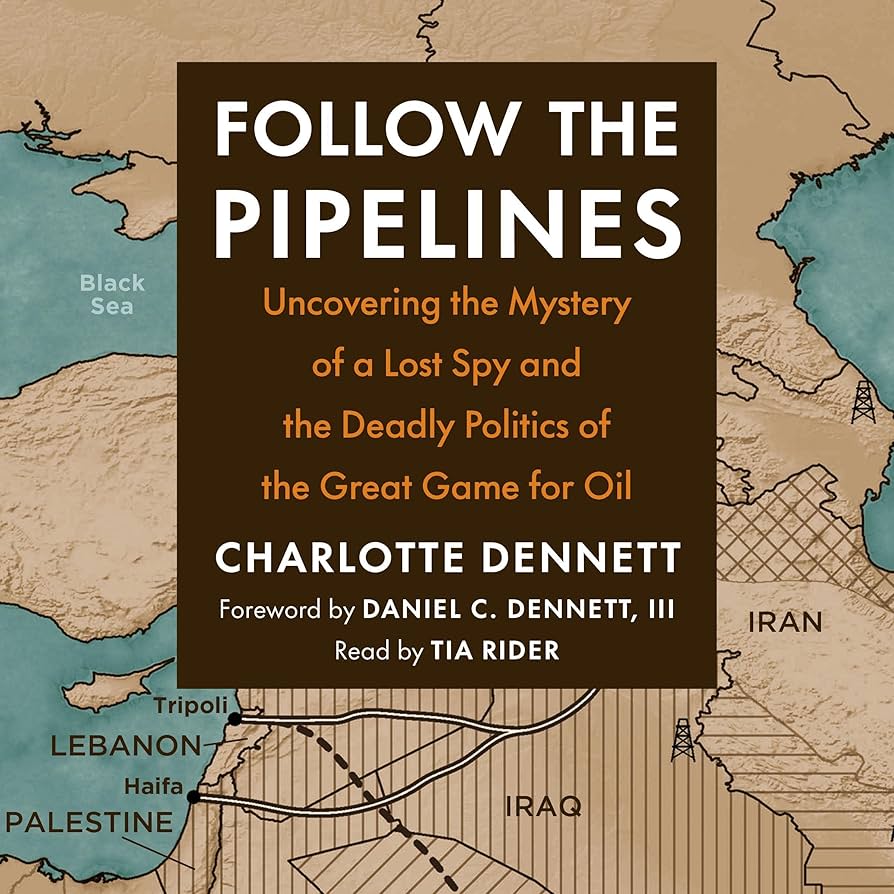
Syria and the Great Game w Charlotte Dennett
Dec 16, 202400:49:46Tap to summarizeYou're Listening to Parallax Views https://parallaxviews.podbean.com/ Support the Show on Patreon: https://www.patreon.com/parallaxviews Recorded: 12-11-24 On this edition of Parallax Views, journalsit and lawyer Charlotte Dennet returns to the program to discuss her book Follow the Pipelines: Uncovering the Mystery of a Lost Spy and the Deadly Politics of the Great Game for Oil, which features a forward by her brother, the late American philosopher and cognitive scientist Daniel C. Dennett. Previously, Charlotte, alongside Gerard Colby, co-wrote a book that has been mentioned previously on the program, Thy Will Be Done: The Conquest of the Amazon: Nelson Rockefeller and Evangelism in the Age of Oil. Follow the Pipelines came about as a result of Dennett's search for answers about the death of her father, Daniel Dennett, who was the U.S.'s master spy in the Middle East. Dennett died in a plane crash that remains shrouded in mystery. This led Dennett to uncover the world of what she calls "The Great Game for Oil". We discuss the relationship between war and oil pipelines in this conversation. Although Charlotte and I have discussed Follow the Pipelines before, this conversation will focus more on Syria and the Great Game in light of the overthrow of Syrian dictator Bashar al-Assad. For your benefit, Charlotte has provided maps from her book that will aid in understanding the conversation:
Transcribe →
Syria, U.S. Foreign Policy, and the Geopolitical Uncertainties of Our Current Moment w/ Graham E. Fuller
Dec 12, 202401:15:47Tap to summarizeYou're Listening to Parallax Views https://parallaxviews.podbean.com/ Support the Show on Patreon: https://www.patreon.com/parallaxviews Recorded: 12-11-24 On this edition of Parallax Views, J.G. reached out to a very interesting political analyst in his continued coverage of the situation in Syria with the fall of Bashar al-Assad and the ascendancy of the Islamist HTS led by Abu Muhammed al-Jolani. Graham E. Fuller specializes in long-range forecasting of geopolitics. In fact, Fuller is a former vice chair of the National Intelligence Council at CIA responsible for long-term forecasting. He also served as a CIA operations officer overseas for two decades, with much of his time being spent in the Middle East. He served as the CIA Station Chief in Kabul and is the author of such books as A World Without Islam (2010) and The Future of Political Islam (2003). He is a noted analyst on Islamist movements and continues to write extensively on issues pertaining to U.S. foreign policy, the Middle East, and geopolitics. Graham joined me for a conversation about Assad's overthrow and what it means for various geopolitical players including the U.S. Russia, Iran, Turkey, and the Gulf states. We ended up having a more broad discussion that led into many different areas including: - Explaining the phenomena that has come to be known as "Political Islam" sans the tabloid clickbait that has unfortunately something attended the non-academic literature on the topic - Graham's critique of John Mearsheimer's Realist school of thought in regards to international relations. Graham believes there is great value in Mearsheimer's analysis, but makes the case that Realism as a school of thought is too often mechanistic and deterministic in how it perceives the course of geopolitical trends - The U.S.'s endless "Search for Enemies" and the consequences that approach to foreign policy creates, in relation to, for example, the U.S.-China relationship - The question of HTS and its leader Abu Muhammed al-Jolani; how will the govern?; HTS's administration of Idlib; how al-Jolani is, in the immediate, approaching the West and Israel - Israel and Turkey's strikes in Syria; Turkey's geopolitical concerns over the Kurds in Syria; the far-right elements that have been unleashed in Israel, especially since the October 7th, 2023 attack and how that effects both Israel and the Middle East more broadly - And much, much more!
Transcribe →
The U.S. Economy, Syria, Ukraine/Russia, Israel, & Europe Amidst Trump 2.0 w/ Amb. Patrick Theros/Syria News w/ Dave DeCamp
Dec 12, 202401:24:52Tap to summarizeYou're Listening to Parallax Views https://parallaxviews.podbean.com/ Support the Show on Patreon: https://www.patreon.com/parallaxviews Recorded: 12-11-24 On this edition of Parallax Views, Ambassador (ret.) Patrick Theros returns to discuss the coming 2nd administration of President-elect Donald J. Trump in relation to the U.S. economy, the overthrow of Assad and the situation in Syria, the Russia-Ukraine conflict, Israel/Palestine, and the future of Europe. At the beginning of the conversation Amb. Theros explains what he thinks cost the Democrats the 2024 election. He makes the case that the Democrats failed to appeal what voters were most concerned about and threw too much money at political consultants who weren't able to lead the Democrats to victory. In this regard, Theros criticizes the approach of wonks. He also argues that a number of culture war issues (ie: woke, trans issues, etc.) did not resonate during this election & the Democrats did not do enough to explain to voters why Biden's economic policies were a long-term good. We then moved onto discussing the Trump's stated economic policies, particularly his plans for mass deportations of illegal/undocumented immigrants & tariffs. Theros argues that these two specific policies are at cross-purposes with each other. He also discusses Trump's tax cut plans. From there we move onto international relations and foreign policy. Theros gives his take on the Syria situation (the overthrow of Assad by Syrian rebels) as well as Israel and Turkey, both U.S. allies, could come into conflict over based on what is currently been reported about Israeli strikes there. We will discuss the dynamics influencing both Turkey's Erdogan and Israel's Netanyahu and how this could lead to some real geopolitical tumult in the region. Theros also offer his take on the Russia/Ukraine conflict, and offers what he believes is Trump's plan for ending the conflict and bringing about negotiations. We discuss EU and NATO's eastward expansion and how the approach of EU/NATO eastward expansion played into Putin's hands. However, Theros argues that Putin's amassing of military forces along the border and eventual invasion of Ukraine changed the paradigm. As much as one can criticize how NATO and the EU approached dealing with Russia in the past, Theros argues Russia crossed a line with its actions involving Ukraine in a way that cannot be rationalized by the EU/NATO eastward expansion discourse. This leads us into a conversation about the future of Europe and increased defense spending in Europe. In the course of our conversation Theros will also offer his criticism of populist politicians and express his concerns about the potential of the Trump administration to try and politicize the military. In the second segment of the show, Antiwar.Com newswire reporter Dave DeCamp returns to discuss the latest developments in Syria. As with others who have spoken on the program in the past few days, DeCamp cautions that we are in murky territory with how events will unfold in Syria going forward. We discuss recent reporting on Ukraine's assisting the HTS Syrian Rebels, delve into HTS and its leader Abu Muhammed al-Jolani, the Islamist nature of HTS, the best-case scenario for Syria under HTS rule, the weakening of Iran due to these events, thoughts on Trump's hawkish picks for his administration, and much, much more!
Transcribe →
Assad's Fall, Israel's Continued Bombardment of Gaza, and U.S. Foreign Policy w/ Annelle Sheline
Dec 11, 202400:58:17Tap to summarizeYou're Listening to Parallax Views https://parallaxviews.podbean.com/ Support the Show on Patreon: https://www.patreon.com/parallaxviews Recorded: 12-10-24 On this edition of Parallax Views, the Quincy Institute's Annelle Sheline returns to discuss overthrow of dictator Bashar al-Assad in Syria, U.S. foreign policy, and Israel's continued bombardment of Gaza. This is the first time Dr. Sheline has been back on the show since resigning from the State Department over the Biden administration's policies on Gaza. We'll discuss this uncertain moment in the Middle East where U.S. policy has gone wrong in the Middle East and beyond, Turkey, the U.S. and Israel's strikes in Syria; the Syrian rebel faction Hay'at Tahrir al-Sham (HTS) that has taken the Syrian capital of Damascus; Assad's dictatorship; U.S. double standards about international law in relation to Israel's action in Gaza; the possibility of continued conflict in Syria despite Assad's overthrow; the Kurds in northeastern Syria; concerns about Trump and Middle East policy under his administration; Iran and discourse around the "Axis of Resistance"; and much, much more.
Transcribe →
The 2024 Election, Why Kamala Harris Lost, and What to Expect from the 2nd Trump Presidency w/ Dr. Jack Rasmus
Nov 13, 2024Tap to summarizeIn this insightful episode of Parallax Views w/ J.G. Michael, political economist Dr. Jack Rasmus joins J.G. to dissect the reasons behind Donald Trump’s unexpected victory over Kamala Harris in the 2024 presidential election. The discussion is centered around Dr. Rasmus's article, "Why Trump Won—And Some Consequences," which explores the economic and political factors that led to Trump’s victory in both the electoral college and the popular vote. Rasmus presents an in-depth analysis of the socio-economic discontent that propelled Trump’s victory, offering a fresh perspective on the frustrations and disillusionment affecting American voters today. Dr. Rasmus argues that economic policies affecting the middle and working classes, alongside concerns over inflation, job stability, healthcare, and childcare costs played a pivotal role in the 2024 election. Dr. Rasmus addresses the now already common retort the economy could not have driven the outcome of the 2024 election due to the stock market booming, low unemployment rates, lowering of inflation, and a good GDP. He argues that media accounts of the economy have often cherry-picked statistics and do not necessarily deal with the economic well-being of average Americans. He offers statistic in support of his claims and makes the case for why many Americans felt their economic well-being was under siege. A key aspect of this discussion centers on why Kamala Harris lost, with Dr. Rasmus exploring what he terms “The Humphrey Effect.” Similar to Hubert Humphrey’s inability to distance himself from Lyndon B. Johnson’s policies during the 1968 election, Harris struggled to differentiate her platform from President Joe Biden’s. Rasmus argues that voters saw Harris as an extension of Biden’s policies rather than a fresh alternative, which weakened her appeal. Additionally, Dr. Rasmus contends that Harris’s focus on issues like the January 6th insurrection and identity politics, though central to her campaign, did not resonate with a wide swath of voters. Many Americans, rightly or wrongly, felt these issues were disconnected from their immediate economic concerns. Instead, inflation, job instability, and healthcare affordability were front and center for voters struggling to make ends meet. According to Rasmus, Harris’s perceived failure to address these economic pocketbook issues head-on left many working-class and middle-class voters disillusioned and created an opening for Trump to campaign on issues like no-taxes on tipping, etc. In a second Trump presidency, Dr. Rasmus expects sweeping economic and social policy changes that will impact Americans across various income brackets. Trump’s approach will likely center on increased tariffs, which, while meant to protect American industries, may raise consumer prices, impacting the pocketbooks of average Americans—though not as severely as some Democrats predict. Rasmus argues that while consumer goods prices will increase under the tariff agenda, he is more immediately concerned about inflationary pressures in the service sector as well looming recession in said sector, which could have far-reaching economic consequences. Rasmus anticipates that Trump will implement further austerity measures, reducing social spending on programs. In this regard we discuss what to expect out of Trump when it comes to social security. Rasmus also discusses the likely tax cuts for the wealthy that can be expected under this second Trump administration. Additionally, we delve into what Trump's second term may entail for climate change, tensions with China, foreign policy in the Middle East, and much, much more.
Transcribe →
The Steele Dossier & Private Spies w/ Barry Meier/The 1930s Coup Attempt Against FDR w/ Sally Denton/Russia and NATO w/ Paul Robinson
Jan 26, 2022Tap to summarizeOn this edition of Parallax Views, we have another "Triple Feature" for listeners. First up, former New York Times journalist Barry Meier joins us to discuss the saga of the private intelligence firm Fusion GPS, former MI-6 agent Christopher Steele of Orbis Business Intelligence, and the media coverage of the infamous Steele Dossier (which purported, among other things, that Vladimir Putin and Russia had "kompromat" on President Donald J. Trump vis-a-vis an alleged "pee tape" with prostitutes that was then used to blackmail Trump) as outlined in his book Spooked: The Trump Dossier, Black Cube, and the Rise of Private Spies. We delve into the hidden billion-dollar industry of corporate investigative firms, Jules Kroll, the mercenary nature of these firms, the connection between "vulture capitalist" Paul Singer and the saga that would come to be known as the Steele Dossier, oppo research in the world of politics, Fusion GPS's connection to a Russian oligarch, and much, much more. "Ping!! How Those Trump/Russia Stories Got Shopped to the Media" by Barry Meier - The Nation -11/2/21 Then in our second segment, prolific author Sally Denton joins us for a short conversation about her 2008 book The Plots Against the President: FDR, A Nation in Crisis, and the Rise of the American Right in light of the Janury 6th Capitol breach anniversary. Denton explains how powerful Wall Street forces, allied with various right-wing elements including Christian evangelicals, Nazi sympathizers, and militias, plotted a coup against President Franklin Delano Roosevelt due to the path he wanted to take the United States on vis-a-vis the New Deal. The plotters approached the "Maverick Marine" Gen. Smedley Butler, known for his seminal antiwar book War is a Racket, in the hopes that he would assist them. Instead of taking up their offer, Butler notified J. Edgar Hoover at the FBI. The plot was then eventually investigated by Congress. Know alternately as the Business Plot or Wall Street Putsch, this extent of the plans and how close they were to being executed have been a matter of heated historical debate over the decades. Media at the time denounced it as a hoax, but since then the question, again, has become how close the plot was to being carried out. Denton and I talk about all of this as well as the relevance of this story to our current times. "Why is so little known about the 1930s coup attempt against FDR?" by Sally Denton - The Guardian - 1/11/22 And finally in our third segment, Paul Robinson, professor in the Graduate School of Public and International Affairs at the University of Ottawa and a scholar on issues related to Russia and its history, joins us to discuss Russia, Ukraine, and NATO. In particular we discuss his Irrussianality blog post "Why Russia Fears NATO".
Transcribe →
The NSA, Surveillance Programs, & Domestic Extremism w/ Jim Bovard
Jul 22, 2021Tap to summarizeOn this edition of Parallax Views, controversial Fox News personality Tucker Carlson caused an uproar recently when he alleged that he has been spied on by the NSA (National Security Agency). Pointing aside one's opinions of either Carlson or his allegations, Parallax Views wanted to delve into the issue of domestic surveillance program and how the could potentially be abused in way that could target activists of the left and right. Are there ways in which the real issue of domestic extremism can be exploited to unsavory ends? In our highly politicized world it is easy to see how such abuse can occur. How a BLM activist could be labeled a "Black Identity Extremist", for example. Or how someone holding socialist views could be labeled domestic extremists. Although the issue of domestic extremism has gained renewed attention since the Janury 6th "Capitol Breach". But what of the potential for the misuse of this important issue? And what of the potential abuses of domestic surveillance programs? Joining us to unpack all those issues is libertarian gadfly James Bovard, author of such books as Attention Deficit Democracy, Public Policy Hooligan, and The Bush Betrayal. We talk about all the aforementioned issues as well as the dual problem of the Imperial Presidency and secretive entrenched bureacracies often referred to, for good or ill, as the "deep state". All that and more on this edition of Parallax Views. This conversation was inspired by Jim's latest article in The Daily Caller, "Why NSA Vs Tucker Carlson Is An Alarm Bell For All Americans".
Transcribe →