← Parenting for the Future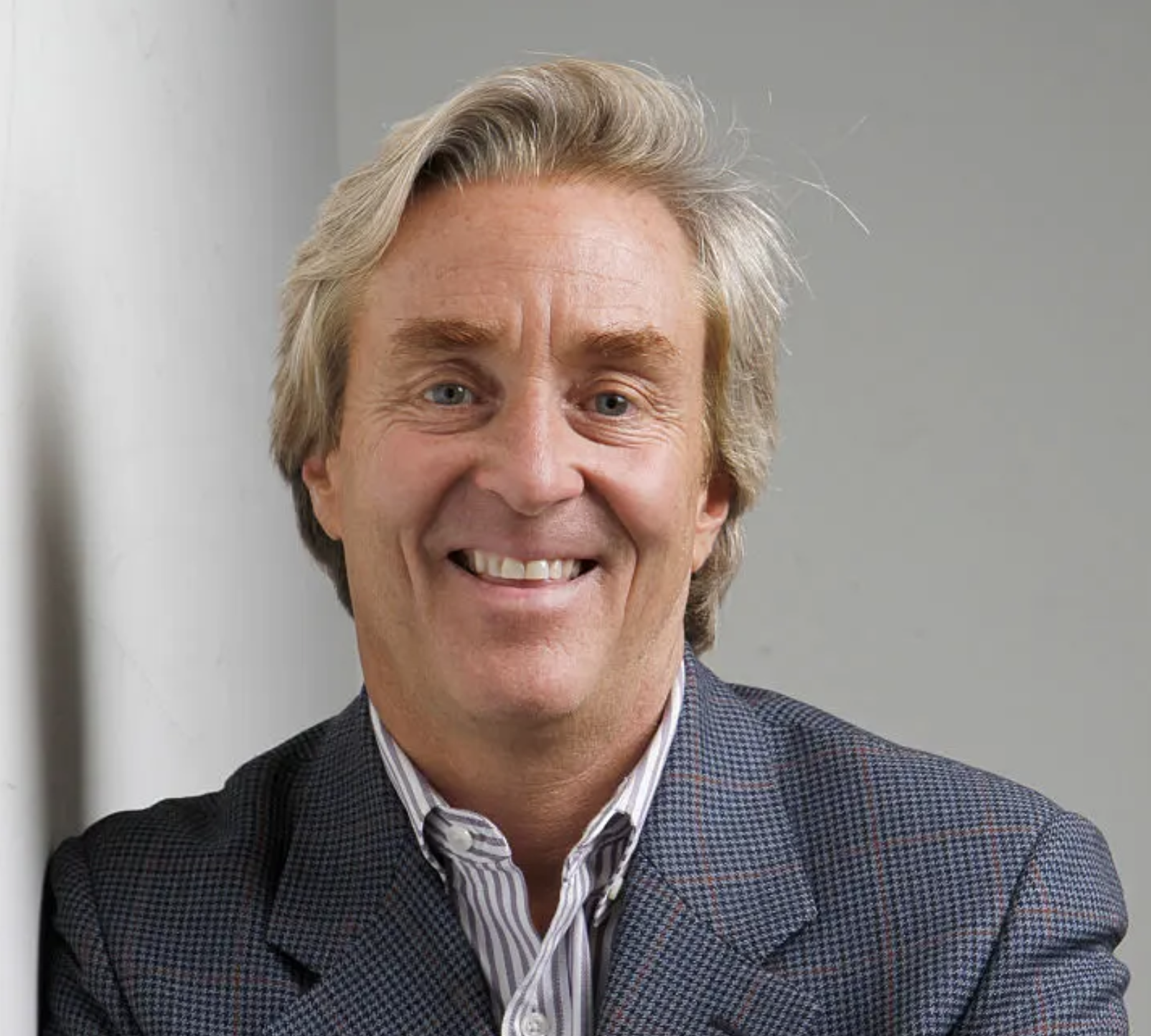
Parenting for the Future
Regulating Social and Digital Media : A Conversation With Jim Steyer
Loading summary
Transcript50 lines
- [00:00]
A
I started Ornod in 2013 and we make bike apparel. The best part of Shopify for me
- [00:06]
B
is our ability to run the business
- [00:09]
A
as essentially non technical people. We're able to admin everything on the back end, front end and sell things online easily. If Shopify were a bike accessory I
- [00:20]
B
think it would actually be the bicycle.
- [00:22]
A
It's the thing that you do the thing on. We run the business on Shopify. So start your free trial on shopify.com
- [00:30]
B
when it's time to scale your business. It's time for Shopify. Get everything you need to grow the way you want. Like all the way. Stack more sales with the best converting
- [00:42]
A
checkout on the planet.
- [00:44]
B
Track your cha chings from every channel right in one spot and turn real time reporting into big time opportunities. Take your business to a whole new level. Switch to Shopify. Start your free trial today. I am Petal Modest and this is Parenting for the Future. Welcome everyone. On this podcast we learn how to raise our children to find their unique voices so they can thrive in and positively impact the world in which they are coming of age.
- [01:18]
A
But the truth is, Congress has completely failed. They haven't passed the privacy law since Mark Zuckerberg was in diapers. It's pathetic. Shame on them. This has reshaped everybody's lives and they've just sat because of their political partisanship. But the fact that there's not a federal privacy law or laws regulating social media platforms is a joke. Absolute, abject failure of our political system in the 21st century.
- [01:41]
B
Jim Steyer is father to four children, an award winning professor at Stanford University, and the founder and Chief Executive Officer of Common Sense Media, the nation's leading nonpartisan organization dedicated to improving the lives of kids and families by providing the trustworthy information, education and impactful voice they need to thrive in the 21st century. Jim began his professional career as a law clerk for Justice Alan Broussard of the California Supreme Court. He served as a civil rights attorney, thereafter working for the NAACP Legal Defense Fund and while still in law school, he was a founder and original chairperson of the East Palo Alto Community Law Project, a non profit law office which served for over 30 years as the primary source of legal services for lower income families in East Palo Alto. His long standing commitment to disadvantaged children and to teaching, however, began decades ago when he was a remedial reading tutor to at risk kids in New York City public schools. Over the years he has taught reading and math to disadvantaged students in Harlem, East Palo Alto and Oakland, California and he spent more than 10 years as a volunteer teacher to second, third and fifth grade Raiders in East Oakland. Jim is also a nationally known author. Prior to launching Common Sense Media, Jim was Chairman and CEO of JP Kids, a leading educational kids media company. And before that, he was the founder and president of Children Now, a highly respected national advocacy and media organization for children. In 2012, Jim also co founded the center for the Next Generation with his younger brother, Tom Steyer. In addition to his activities as an advocate, author, and teacher, Jim serves regularly as an expert commentator on national TV and radio programs and has appeared on the Oprah Winfrey show, the Today Show, Good Morning America, Fresh Air, the CBS Morning Show, CNN, Fox News, MSNBC, and 20 20, among others. Jim has his BA from Stanford University and a JD from Stanford Law School. Welcome, Jim, to Parenting for the Future. We are so excited to talk to you today.
- [03:59]
A
Great to be here, Patel. I'm really glad to be speaking with you.
- [04:02]
B
So you grew up in New York City, one of three brothers. Your mom was a journalist and a teacher who taught in city schools and volunteered to tutor prisoners. Your dad interrupted his legal career to join the Navy and served on the legal team that prosecuted Nazi war criminals in Nuremberg. So it sounds like your parents were wonderful role models, but I'd like you to tell us a little bit more about the values that guide your upbringing and shaped you.
- [04:27]
A
Well, petal, thank you very much for the introduction and also for asking me about my parents, because they were actually huge factors in my life. My mom was a schoolteacher in Harlem, the South Bronx, in Hell's kitchen for about 35 years. So when we were little boys growing up in New York City, going to elite private schools, my mom was working in the toughest schools in New York City. And she would come home every night and talk to us about the disparities between what we were experiencing and the reality that she saw in schools. And my father was a lawyer. As you mentioned, he was born and raised in Brooklyn who came from a very poor background, but he shared my mom's values about the importance of equality and education. And they both reminded me and my two brothers that we were really lucky to have the education that we had and that we had a responsibility to do something with it. So they're absolutely transformational figures in my life.
- [05:20]
B
And it seems that that's where your sense of purpose came from. Because always, it seems to me, regardless of your wonderful education, like you said, you went to, you went to Stanford, you went to private schools in New York. You really have devoted your entire career to lifting others up. Would you say that it is your parents? It is that example. It's those conversations probably over the dinner table that give you this sense of purpose.
- [05:46]
A
No question. When we were growing up in New York City, that was just a few years ago, compared to the other families at the elite boys school that we went to, we were poor compared to everybody else, and we had a mom who worked. Both of my brothers and I were aware that in a comparative sense, we weren't from this really wealthy background. And second, our parents were always reminding us about how fortunate we were to have a good education, but how that wasn't the reality for everybody else growing up around us. So I would tell you that I knew by the time I was a counselor at age 15 at the fresh Air Fund Camp, which is a camp for kids in New York City who lived in Harlem or the South Bronx, that was my first job as a counselor at the Fresh Air Fund. And then after I graduated from high school, I spent almost a year teaching with my mom in one of the worst high schools in New York City. And so even when I went to Stanford as an undergrad, I used to get guys I played baseball with to go work in East Palo Alto with me as tutors. And I knew really early on that that was sort of what I cared about. And interestingly, it's very true for my younger brother Tom, who went on to fame and fortune as an investor and ran for president. I think he also would agree we were very fortunate to have this privileged educational background and not have to worry about paying the rent that gave us something to do with our lives. And quite honestly, that's guided my career ever since I got out of high school.
- [07:11]
B
And I think it's safe to say, you know, when returning now to Common Sense Media, that you were kind of ahead of your time for a long time in thinking about the influence that media had or has still has on all of our children. What finally led you, though, to found Common Sense Media itself? I think it was in 2003. And how was it going to be different from your other ventures involving children and the media?
- [07:34]
A
As you mentioned in the introduction, I actually started a law office in East Palo Alto when I was a law student with a couple of my friends, which then taught me how to be an entrepreneur, because I realized that there's a through run to my career because it's always been about low income, disadvantaged kids. I mean, I was a lawyer at the NAACP Legal Defense Fund, as you mentioned, after I clerked and I Was also a prosecutor in Oakland. When you're a prosecutor, you see the fallouts of society, let me tell you. And you see kids who come from broken homes, and you see kids who commit serious crimes and who end up their whole life in the criminal justice system. So the truth is, though, I was interested in changing the world for low income, disadvantaged kids always. But common sense came later. And I'll tell you why. I do think it's fair to say. I guess if I had any talent, I'd say one is that I'm very good at hiring other people who are smarter and more talented and more successful than me to come work with me. And the other is to see out and think about what's really happening. The first big child ABS group I started, Children now, was really successful. It was in 1989. At that time, the only big child abs group in the country was the Children's Defense Fund, founded by the godmother of child advocacy, Marian Wright Edelman, who's a legendary figure. And so I remember going to see Marion when I was a lawyer at the Legal Defense Fund and I was running this program that I convinced LDF to do called the Poverty and Justice Program with Deval Patrick. Marion was like, you'll never win in the courts on these issues. You should think about child advocacy. Child advocacy, Child advocacy. So this is like basically 1990, right? And I was already a professor at Stanford, and I teach civil rights and civil liberties, but I really teach about. But really civil rights, law and poverty. But what happened is, I saw, living in the Bay Area, that media was affecting everybody's perception of politics. And I really learned that from Norman Lear, the great creator of all in the Family, the Jeffersons. But he had created an organization called People for the American Way and also the Environmental Media association, where he was trying to educate the public about the two issues he cared about, which were democracy and the environment. And he used TV and movies to explain it to the public. So I watched that and thought, there needs to be a child advocacy group that can educate the public. I basically, at that point, saw that Hollywood could be hugely impactful, incredibly good at educating the public about disadvantaged kids. And I recruited many of the biggest people in Hollywood, for better and for worse, to help with that effort. And then we did all sorts of public education, public awareness campaigns about, do you know that one out of four kids in America is poor and that they don't eat and that they don't have health care and they don't get prenatal, Their moms don't get prenatal care. So how do you expect them to do well in school? And you know that there are millions of kids in foster care, half of whom end up in the criminal justice system. That was a defining moment in my career. So to me, Children now was a really breakthrough organization. And then we built this kids media company too. High quality educational TV shows because there was such a lack of that other than Sesame Street. And so that was a huge change for me because I was trained as a teacher and a lawyer. But I ended up looking at my career as a child advocate and parent. By the way you mentioned, I have four kids. I met my wife through child advocacy. And I really realized that you had to have the policy expertise on issues like early childhood education or parenting or child health care or improving education, but you had to educate the public about
- [11:22]
B
it too, or else it was dead. You couldn't get anything done.
- [11:26]
A
Politics worked. I think that people, and I think Washington is like, I don't know, I won't curse, but it's a. It's a shit show. I mean, Washington hasn't passed anything except in the last couple of years with the American rescue plan. You know, they failed children. The Congress has failed children big time.
- [11:45]
B
Big time.
- [11:45]
A
It's disgraceful. It's just so terrible. And by the way, it's also true at the state level too, oftentimes where we simply don't invest in the most obvious natural resource we have, which is kids. And the kids needed are not my kids, pedal, or your kid who's at Exeter. The truth is there are millions and millions of talented young people that don't have the opportunities I have. And they deserve to be invested in just as much as I was invested in or you were invested in and who our audience kids are invested in. And so part of it is just educating the public about that. Not in a political way.
- [12:23]
B
It's a survival issue. It's the future. What are we doing?
- [12:26]
A
And that's trite, but it's true. When I was running Children now, we were very successful. We were sort of the parallel organization of Marion Edelman and the Children's Defense Fund, but we were based in the west coast primarily. And I realized that politics was driven through media more than by wonky policy papers. So the one thing we did not have was we didn't have an army because kids don't vote. Take the issue of guns in America. Okay, so that's a travesty, right? You have this disgraceful situation in this country with hundreds of millions of Guns and kids being shot every week in school.
- [13:04]
B
In school.
- [13:05]
A
Part of the reason why there are no restrictions on guns is because there's this group called the National Rifle association, which. May they rot in hell for the damage they've done to our country. And I'm sorry if some of our listeners happen to be supporters of the nra, but they have removed all restrictions on guns, in my opinion. Now they talk about, let's just arm teachers. Well, that's a ridiculous solution, and it doesn't even merit discussion. But they were really, really effective. They had an army of members. So Children's Defense Fund never had members. Children now never had members. So in about early 2000, I took a year off because we had four kids by then, and also because I was trying to think about what I want to do next. And I wrote the first book that I wrote, which was about the impact of media on kids, because I started this media company that turned out to be pretty successful. And I realized that media didn't just have an impact on politics, but an impact on kids, for better and for worse. But what I was always trying to figure out was how did we create an army for kids? Because kids don't vote. So the people who have to be their army are parents and educators. So I came up with the idea of Common Sense Media. Basically, the way you get people in America to join things is you give them stuff for free. The NRA gives you a magazine. It gives you, like, reduced fees on your gun ownership. It gives you, like, free stuff, so you pay your 25 bucks a year. Same thing with AARP, the seniors lobby. AARP gives you all sorts of free stuff like discounts on Insurance or Motel 6 or this deal or that deal. That's why they have 35 million members, because they give seniors free stuff. I'm like, okay, what can we give people for free that will get them to join the most important child advocacy group in the country? Because I think of Common Sense Media as the most important child diverse group in the country, because it is. But that's not what the public or your listeners necessarily think of. They think of as this big media organization. So what I realized was, other than the pathetic PG13 rating system, nobody rated movies, TV, video games. The far right did. Jerry Falwell was always out there calling, ban these books.
- [15:18]
B
Don't get me started.
- [15:19]
A
Don't get me started. Okay. Banning books. Are you kidding me? But. But that. So. So the only guys who saw that were really constrained Christians, basically, who I respect, but they looked at it from a purely moralistic perspective and a political perspective. So I thought, yeah, we could create a rate like a Consumer Reports guide for parents and then marry that with a child advocacy group. So that was the idea behind Common Sense Media. And quite frankly, we are the go to place. And now we have 150 million users. And I hope all the parents in your audience use Common Sense because it's free. We should charge them, but we don't because we actually want to give that information to you so you can make decisions for your own children. I'm not going to lecture you, pedal and tell you to do with your 14 year old, but I can give you the information about movies or TV or video games or Internet. So we dominate that. So we are the dominant player. But at heart, we're this big child advocacy group. And also we built an educational pipeline with 110,000 member schools and created the field of digital literacy and citizenship, which is basically driver's ed for the Internet. Because once I started Common Sense, what we saw was that three years after it, the iPhones came and then all broke loose. And Facebook, you started with MySpace and then Facebook and then social and YouTube and then everything exploded. And we were sitting there as the biggest media advocacy group. And even though I'm technologically incompetent and cannot even turn on my computer, figure out how to tape this show with you today. What I thought is we can explain technology to parents and to young people and to the public. And so over time, we became not just the biggest child advocacy group, but also the biggest tech advocacy group. And because I'm an average member of the public, and I can also talk to politicians who are usually clueless about technology and explain to them this is why we need to regulate privacy. So I do think we were way ahead of our time.
- [17:29]
B
I could not agree with you more, Jim. And it's a perfect segue into this idea of digital citizenship skills, which has now become, in my mind, it's associated with Common Sense Media more than any other organization that I personally know. And it's these practices that will allow our children to make smart choices. So we have the ratings, which are phenomenal. And you know, I have to say, I put this stuff up on my blogs and my social media feeds all the time, all of the book choices and the sort of how you create community, all of that is phenomenal. But the digital citizenship skills will allow our children to make smart choices, think critically, and practice healthy habits as they engage online. And I don't remember where might be about A decade ago, you partnered with Howard Gardner from Harvard.
- [18:16]
A
Howard Gardner at Harvard. Even though Harvard is like a lousy boarding school in Massachusetts and it has a lousy ed school, I'm happy to be Stanford professor. So it's hard. We call, but Howard is the number one education professor in the United States. We created the field. There was no term digital citizenship until we came along. And what happened was Howard's research. He's also the father of multiple intelligence. So he's really one of the great American education figures in the last 200 years. So his research was about ethical dilemmas for young people in a digital media world. Everything bullying to privacy, to how do you treat people online in an anonymous environment? And he said to me, jim, you're not particularly intelligent, so maybe you could dumb down my theories for the masses. And I went, thank you, Howard. We will do that. And actually, out of the collaboration with Howard and his colleagues at Project Zero at Harvard Ed School, we created the field of digital citizens. We came up with a term, and we were initially dealing with stuff like cyberbullying. What we realized. I knew this from writing the Other Parent, and then really, when I wrote talking back to Facebook, that kids were developing their identities online. My daughters were photoshopping their images to try to look thinner and cuter. They were dealing with sexist, racist bullying. They were dealing with weight loss fears. They were living in a completely digital environment that I didn't understand, but where there were no rules of the road. So someone needed to create a curriculum for schools. That's why I call it Driver's Education for the Internet, because everybody has to take Driver's Edge right here and around the world. So we created Driver's Ed for the Internet and social media and called it Digital Literacy and Citizenship. And then it became incredibly popular, and we gave it away for free to all the schools in the United States. And then we started training the teachers. But every school is different, so you have to have staff that went out to the schools and superintendents, and you had to take that basic curriculum and then work with all schools from K through 12 so they could integrate it into their curriculum. But that turned out to be incredibly successful. We've been doing it for 15 years now. We have 1.3 million teacher members. The 80% of schools in the United States use our curriculum. We give away for free. It's funded by philanthropy, and it was the corollary, if you will, to the consumer platform, what I call the Consumer Reports Guide, the ratings and review platform that everybody uses for RE ratings, tv, video games, social media, et cetera. This was for educators and they love us because we give it away for free. And again, we're not political about it. We don't tell you who to vote for. We don't tell you this is not, there's not a Jewish or Christian version of the curriculum. We don't try to tell you what your views should be. We just say this is what you need to know for your kids. And we teach kids and parents in addition to the educators. So that's a huge part of what we've done and we're very proud of it.
- [21:17]
B
Yeah, no, and you should be. What are some of the key coverage areas of the curriculum? And I know it's K through 12 and obviously if I'm in kindergarten versus 11th grade, how I understand literacy, news media literacy would be different. But what are your sort of overall coverage areas?
- [21:35]
A
Here's the thing. We keep building in a curriculum out because we have the scale. We're the largest organization in the field globally, so. And we invest in this. So it started with stuff like cyberbullying, digital drama, privacy, hate speech, and being mean to other people online, particularly in anonymous context, because that's been going on since. But then we started seeing stuff like misinformation, disinformation. So we created a whole news media and news literacy component. We started see people manipulating the Internet and algorithms and other stuff to lie and call it basic facts into question. So then we built out news literacy. Now the big thing we've just added the curriculum is around mental health and the impact of media and digital technology on youth mental health because we're in a youth mental health crisis. So this fall, in fall of 2023, we will roll out to over 100,000 schools a whole new set of curricula for middle and high school students about mental health resources and also a lot of peer to peer stuff. So we're always evolving the curriculum based on that. Right now we're also looking at AI and how AI is going to shape kids in education. So I imagine over the next few years, in addition to doing this whole new mental health component, youth mental health component to the curriculum, we'll add stuff around AI and how to do that fairly and not cheat. We're always updating the curriculum and the truth is we had a 15 year head start on everybody else. I always try to think out like five years from now where people are really going to be. So that curriculum is core to what common sense media does.
- [23:18]
B
Let's talk a Little bit about social media. All these platforms that we can't seem to get enough of, whether it's Instagram, Twitter, Snapchat, you know, then Fortnite, Roblox games, all of that.
- [23:28]
A
Absolutely. Discord. Name them all.
- [23:30]
B
Discord. Exactly. These platforms whose very algorithmic models are built to keep users hooked. Like, let's just, that's just what it is. And let's talk about now this concept of platform accountability.
- [23:42]
A
Here's what I would tell you. There is no platform accountability. I mean, here's the thing. Because Congress has so completely failed the public, right? And to some extent you could say various presidential administrations have to, but the truth is Congress has completely failed. They haven't passed a privacy law since Mark Zuckerberg was in diapers. It's pathetic. Shame on them. This has reshaped everybody's lives. And they've just sat there and because of their political partisanship, I'm not referring to individual senators necessarily, but the fact that they don't have. There's not a federal privacy law or laws regulating social media platforms is a joke, but it's absolute abject failure of our political system in the 21st century. So what we did is we started passing laws in California. California, unlike Washington, is a functioning democracy and you can actually pass legislation here. And so the truth is these platforms are coining money. They are trillion dollar companies. That's why they want to addict you to their platform. That's why they want you to stay on their platform as long as possible, because they make money off you. Also, you are the product for an advertising based model like Facebook, right? Meta, whatever you want to call it. They sell your data, they Hoover up your data and sell it to advertisers. That's how they make money. Google pretty much does too. Any ad based model. Most of the companies you mentioned, they make their money by advertising and they put profits over public interest, always. Therefore you have to have privacy laws about what they're allowed to. Then their algorithms send you hates, violence, outrageous behavior is what gets you to stay. So the algorithms, all they want you to do is stay there as long as you can. And that's how they make more money off of you, right? What happens then is unless you regulate that, that's a wild wild west environment. And the pathetic reality is that the American federal government has failed to regulate this, even though the companies were all based here. And it drives the Europeans crazy. Europe is ahead of us because Europe has actually started to regulate some of this. So what we do at Common Sense Media Is one, we pass the national privacy law in California, because if it works in California, it basically becomes the law of land. Then we also did the age appropriate design code, and we have a law right now that's up in front of the California government that would actually hold the companies liable for addicting kids and for social harms they caused them. It won't put them out of business, but it will fundamentally fine it and will restrict their behaviors. So what platform accountability is, is making sure that technology is regulated in the best interests of kids and families and the public. Now you're about to enter this massive new era of AI, for example, and there's no regulation. Right. And so as a result, they get the platforms get away with whatever they want. And for the most part, what they sometimes nudge you towards is really bad for kids and teens because they're just trying to make money. And it's driven by the outrage factor too, which is what drives social media. I'm a First Amendment law professor at Stanford. There is freedom of speech in this country, but not freedom of reach. Freedom of speech doesn't mean freedom of reach. Why are you amplifying at YouTube or TikTok or Instagram? Dishonest misinformation that undermines our democracy or is incredibly damaging to young people. Why? Because you make money doing it. The reach part, the amplification part, not the speech part. Because our federal government has failed us for 20 years. And every parent listening to this should be outraged and should become a member of common sense media so that we can hold their feet to the fire.
- [27:23]
B
Absolutely. And I think that, you know, some states are starting to do some things, but I.
- [27:28]
A
So we led in California and Utah's two laws, one of which is good and one of which was bad. Say one of them. They just copied the law we wrote in California last year. They literally called us up and said, can we see the platform accountability bill that you ran in California last year? Right. And so we sent it to them and they basically just copied it and passed it. And it's a good law because it holds the platforms liable for as long as they do to kids. They passed this second law which allowed parents to read their kids emails and have a. So I don't think that's smart, and I don't think you should be a net nanny over your kids when they're 17 years old. I don't think that's the way you teach your kids to grow up. So we supported one of the laws, and we have a much broader law right now. In California that the industry will oppose and will try to torpedo. That will be genuine platform accountability. And all the big media platforms are scared of it. It's being carried by Senator Nancy Skinner, one of the most powerful senators in the state of California. And I think it's going to pass. And you're starting to see these bills in Utah. But the truth is it's the failure of the federal government to number one, pass laws and two, there's no digital regulatory agency. So the oversight is split between 100 different bodies, which means nobody oversees it. I'm a voter. Your listeners are voters. You should be really pissed off that our government at the federal level has failed to do this and they could. And last year we came very close to passing a federal privacy law, but we didn't want it to preempt the California law, by the way, because the California law is quite strong. It's very similar to the one we passed in Europe in 2018. So this is getting into the depths of politics. But here's what your audience should know. It's really important to have these laws. You should have platform liability. And we as parents have to speak up and demand that our voices be heard. And you can go to commonsense.org and join the movement.
- [29:16]
B
That's right, guys. Go to common sense.org and so what about the lawsuit pieces of this?
- [29:21]
A
Now you can bring lawsuits that are going to put pressure on these companies. Look, you just want to pressure the platforms as much as you possibly can and the legal solutions are part of it. Now you're going to see court challenges to all these cases and whether or not they survive will depend on certain judges, et cetera. But I think what you have is massive momentum on the side of parents. But we have to build an ongoing public voice movement around this because the technology companies are the richest companies in the history of the world have so much power. They have a lot of these legislators are in their pocket. And we're just kids advocates. So we don't have that same kind of money. Here's what we are on the right side of history. We have all the weapons in our arsenal. So attorneys general, state attorneys general starting bring cases, private lawyers are and we have the momentum on our side. But parents have to speak up and they have to support what we're doing. We need common sense laws and regulations of these platforms because democracy at stake, our kids futures and mental health is at stakeholders and in some ways global information and relationships are at stake and they shouldn't be held in this completely unregulated Wild west environment.
- [30:33]
B
This brings us right back full circle because, you know, our goal on this podcast is to give parents a new lens through which to understand the forces shaping the future, as well as cutting edge parenting tools and resources. And social and digital media are the defining phenomena of our time. And how, how we regulate them, educate our kids about them, and hold the media companies accountable will literally determine our very future, as you have said. I want to come back to this idea of why parents should be so incensed by the lack of regulation of social media companies. And that is our children's mental health and their very future. You and I know. Yeah. That the U.S. surgeon General and the American Academy of Pediatrics have declared a mental health youth crisis in the US the accelerated culture of comparison, the algorithms that feed off of negativity, fear and pessimism, and the ubiquitous presence of social media in the lives of our young people, it compromises their sleep, their ability to be present, to reflect, concentrate, to have positive self esteem. It's not okay that 44% of high schoolers in the US feel persistently sad or hopeless and that an increasing number of them have thought about or attempted suicide. So you are the nation's leading nonprofit advocate and you are about to launch this Healthy Young Minds campaign to address this crisis. You're perfectly situated to do it. So tell us now a little bit about the campaign itself because I really want to encourage all of us to get as involved as we can. What are the key areas of focus for the campaign?
- [32:06]
A
So there are several. And by the way, parents are at the heart of this. And yes, the US Surgeon General, Vivek Murthy and the aap, the American Academy of Pediatrics, are our partners in this campaign. So it has several elements. One is educate the public that there is a youth mental health crisis. But number two, give specific usable information and tools to parents and educators to help prevent this in their own kids and also the young people themselves. So that you have a lot of peer to peer education. So for example, I mentioned that we have this curriculum at over 110,000 schools. That means we're reaching, in the US alone, 20 million kids a year. So there's going to be a big component of that curriculum starting in the fall about youth mental health and about how to spot it, but also how it's okay to not be okay. You just said 45% of kids have. This was exacerbated by the COVID 19 pandemic, but that have sense of sadness, anxiety, hopelessness, in some cases suicidal Ideation. So there needs to be a ongoing discussion in schools about this in homes. But you also have to have more resources devoted to them for prevention as well as for treatment. So you have to have advocacy for more resources for prevention, treatment. You have to have public awareness so that the public understands there is a mental health crisis and it's okay if your kid is feeling depressed or anxious or you are, by the way, because a lot of adults do. And then there has to be very specific information and tools. So here's what to do about it. And so that is our campaign. It is going to be public awareness. It is education in schools, it will go to colleges as well. And then it's going to be advocacy so that we have the resources for both prevention and treatment. And that's sort of the way we look at everything. You have to speak to parents, got to speak to educators, got to speak to young people, and then you got to tell the politician, do your job, that we elected you for optimistic about the last. But like last year in California, we got $4.7 billion in the California state budget for mental health work. So now we're going to start to spend that in California and that will vastly increase the amount of services. We work with a lot of other organizations, health organizations, grassroots organizations, at the local level, community level, state level, to try to spread the word. And we are, yes, Common Sense is a big umbrella organization. And then we're gonna run probably 20 town halls around the United States and Europe in the next year or two where you bring together experts, but also young people's voices. I think you have to let young people talk about this and let their voices be elevated. So it's gonna be a campaign. We look at it as campaign.
- [34:42]
B
I love it. And I really like that you said you wanna amplify the voices of young people themselves. They are the ones who are living this. They are the ones who. Who will take us into the future. And we really need to hear their perspective and what their experience is. Maybe it will convince some of our, dare I say, politicians to do something. So thank you for sharing that and we would all be very, very happy to join you in whatever way that we can.
- [35:06]
A
You should go to commonsense.org this is so many resources that we have and we're happy to steer you to your local community. We're right about this. We are on the right side of history. And fundamentally, this is sort of common sense parenting for the digital age.
- [35:21]
B
That's right. I'm going to ask you one last question before we wrap up today and I will put this plug in and see. I know your brother ran for president, but I think that your energy and your enthusiasm and your ability to see around corners, because you have that. Jim, you know, maybe you should think about a presidential run, but don't even respond. I know what you're going to say. Don't respond. But here's my last question for you. I want you to share with us a word, a quote or thought that never fails to renew your courage and optimism and that might help us, give us parents the courage we need to parent for a world where all of our children can thrive. Because we need to be constantly reminded that optimism is non negotiable and courage is non negotiable. We have to keep persisting as we try to create a better future for our kids. So what keeps you going? What is your mantra, your thought, your word?
- [36:16]
A
So there was this guy who was in the 1960s and 70s, John Gardner, he was Secretary of Health, Education and Welfare. At age 80, became a professor at Stanford. So I have two quotes. So he wrote a beautiful thing called personal renewal. And I read, I don't know, about once a month to remind me about how to focus my life. Because I think you can always renew as a person, as an organization, as a family. You can always practice renewal. So he was in that first group who went up Mount Everest without, I think probably without oxygen. And they made it. And with a couple of Sherpas, he came down and he said, you never conquer the mountain, you only conquer yourself. I think that's really true in life. I think you always have to think about ways how you can, as a human being, renew yourself. And it isn't really the mountain, it's yourself. That's one quote that I think about a lot. Like all of us, I'm a flawed human being who has ways that I can, you know, and I hope for many more years continue to improve. But the other thing is, he wrote in the same piece something called meaning. So I will read it to you. Meaning is not something you stumble across like the answer to a riddle or the prize in a treasure hunt. Meaning is something you build into your life. You build it out of your own past, out of your affections and loyalties, out of the experience of humankind as it is passed on to you, out of your own talent and understanding, out of the things you believe in, out of the things and people that you love, out of the values for which you are actually willing to sacrifice something. The ingredients are there. You are the only one who can put them together into that unique pattern that will be your own life. Let it be a life that has dignity and meaning for you. If it does, then the particular balance of success or failure is of less account. So life is about meaning, is about renewal. When you work for kids, you make yourself happy and optimistic. It's a pleasure to be able to read John Gardner and share his wisdom with audiences and with you, petal, and help create a movement for kids.
- [38:28]
B
Thank you, thank you so much and thank you for that final thought. It's very, very, very poignant and I hope you will come back and you will visit with us and we look forward to continuing to support your work and to being part of the new campaign that you're launching.
- [38:44]
A
Thank you for having me, petal. I really enjoyed it. Your energy is terrific and thanks to the audience for listening.
- [38:50]
B
Thank you for listening. Please make sure to subscribe to the show wherever you get your podcast. Help me bring the show to more parents by subscribing, rating and reviewing it and by following me on Facebook, Instagram threads and Twitter. You can find me Petal Modest Send your questions and suggestions to Parenting for the future. Podcastmail.com thank you again for listening.
- [39:47]
A
Squatrocientos
- [39:50]
B
potencia riobi solo and the home depot precious validos.