Podcast
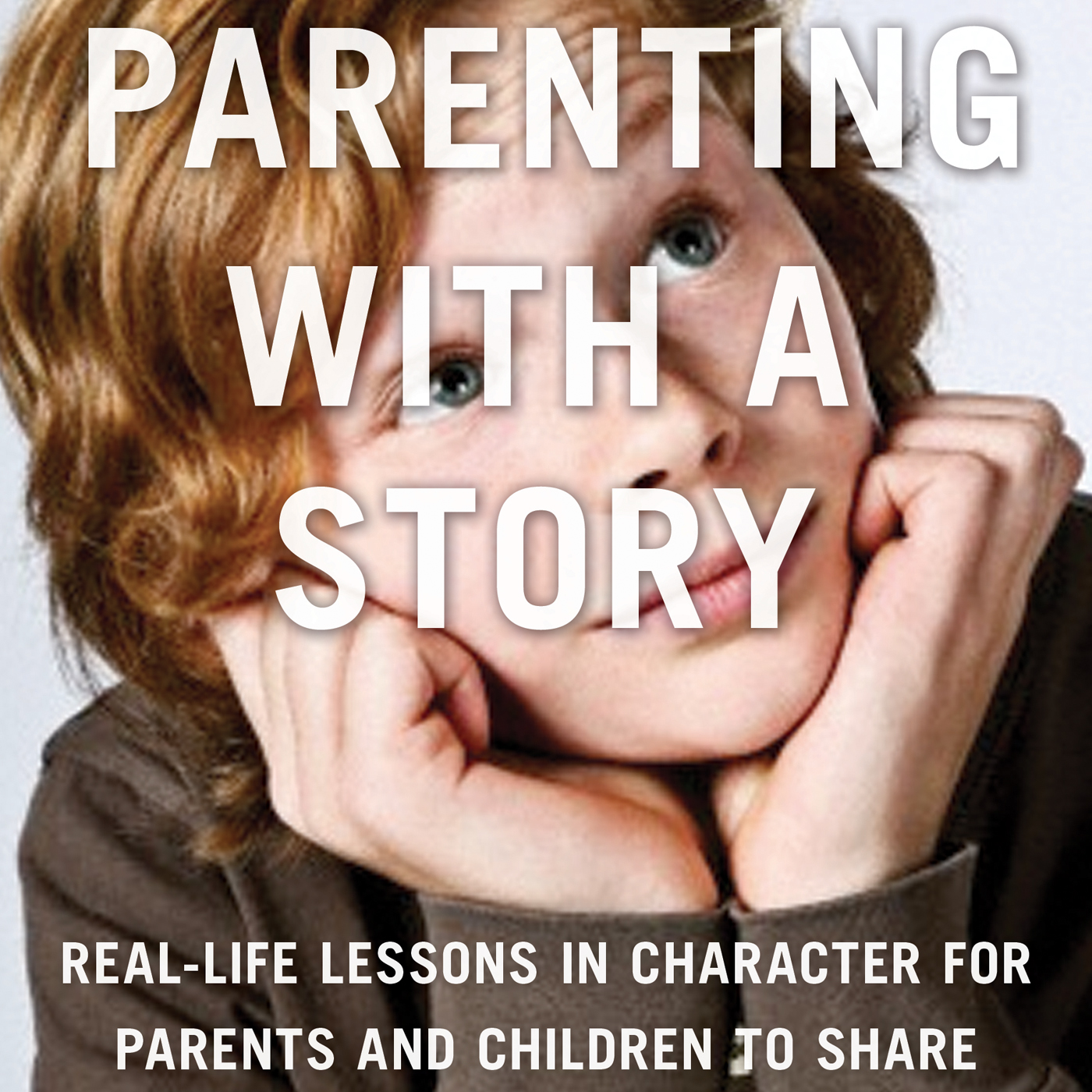
Parenting with a Story Podcast
Hosted by Paul Smith · EN
Tell a young person what to do – play fair, be yourself, stick to the task at hand – and most will tune you out. But show them how choices and consequences play out in the real world, and the impact will be far more effective and long lasting. Based on interviews with over 100 people from around the world and from all walks of life as they reflect on their most profound and unexpected moments of clarity about who they are and how they should treat others. The lessons help teach 23 powerful character traits that will help your child grow into the adult you’ll be proud to call your own. Character Traits include: ambition, open-mindedness, creativity, curiosity & learning, courage, integrity, self-reliance, grit, hard work, self-confidence, money & delayed gratification, health, positive mental attitude, dealing with loss, kindness, patience, fairness & justice, humility, respect for others, friendship, social intelligence, forgiveness & gratitude, appreciation of beauty.
10episodes
Episodes
Newest firstAll episodes
Father Behind “Jordan’s Law” Speaks Out
Apr 15, 202100:28:34Tap to summarizeI pushed my way through these kids, and ran over to the ambulance. In the back of the ambulance was my son, Jordan. He was partially conscious and covered in blood. . . The paramedic said he had internal bleeding and had to go to the hospital immediately. . . I jumped out of the ambulance and started asking, ‘What happened? What happened? What happened?’ Jordan Peisner after attack. December, 2016. KABC-TV. “And that’s when some of the kids ran up to me and said, ‘Look!’ And they showed me a video. It was of my son talking to a friend. And from behind comes this boy, who swings with all his might at my son’s head, and knocks him out. The sound still gives me chills. And down he goes, to the ground. And then you see kids running over — as my son is on the ground, eyes rolled back, and bleeding — and these kids are jockeying for position to take pictures.” Those are the words of Ed Peisner as he describes what happened to his 14-year-old son Jordan in December of 2016. In what was probably a game of “knockout”, the assailant had planned the attack with accomplices at the ready with cell phone cameras to videotape the shocking event all to generate likes and shares on social media. And while the attack was obviously criminal, the social media profiteering from it was not. Ed realized that unless someone figured out a way to remove the social media incentive, these horrific acts would continue. And so he did. Ed founded the Organization for Social Media Safety. And together with Marc Berkman, they began lobbying for legal reform. In one of their first victories, what’s now known as “Jordan’s Law” was passed in the State of California — the first law targeting social-media motivated violence. That law states that if you coordinate with someone to video tape their violent attack and post it on social media that you will be prosecuted as a accomplice. But in the process of ad...
Transcribe →The Spare Room
Apr 11, 202100:26:07Tap to summarizeImagine you’re driving home from work one night around 8 pm. It’s cold. It’s raining. And there’s a dirty, slushy, melting snow on the ground. You glance out the car window and you see a young girl huddled up on the side of the road. She looks cold, scared, alone, and injured. You pull over and invite her into your warm car, and take her to a diner for a meal. She doesn’t speak to you the entire time. She just sits there, staring down into her plate while eating, dripping gray water all over the seat. Your mind races though all of the unthinkable possibilities for what might have lead her to this place in life. When she finishes eating, still not having said a word, she peels herself off of the plastic seat, gets up, and heads toward the exit. You watch as her frail little back walks away from you. In two more seconds, she’ll be through the door and gone from your life forever. At that moment, what do you do? Emily Chang doesn’t have to imagine. She knows. Because this happened to her. At that moment what she decided to do was yell out, “Where are you going to sleep tonight”? The girl stopped. Her shoulders quivered a bit. And Emily continued, “I have a spare room.” That girl became the first of sixteen people over the last 25 years to have been blessed to spend some of the darkest times of their lives in the respite of Emily Chang’s spare room. An abused child bride. An unwanted boy with hydrocephalus. A girl raised in a brothel. And over a dozen other young people whose lives were changed for the better in Emily’s spare room. Emily documents their stories in her new book, Th...
Transcribe →THE App to Help Your Kids Manage a Budget, Track Chores, Earn Their Allowance, and Learn Financial Responsibility
Jan 28, 202100:29:16Tap to summarizeBenny Nachman, CEO of Jassby, joins me to explain how a new APP can both make your home life easier, while teaching your kids about smart money management. read more The post THE App to Help Your Kids Manage a Budget, Track Chores, Earn Their Allowance, and Learn Financial Responsibility appeared first on Paul Smith.
Transcribe →How NOT to Treat Your Mother-in-Law this Thanksgiving
Nov 23, 202000:05:51Tap to summarizeThis might be the strangest Thanksgiving most of us ever have, due to the Coronavirus. So, to help you make it a good one, here’s a Thanksgiving lesson in humility that will help you make sure your interactions with family this year are ones you’ll be proud of. . . read more The post How NOT to Treat Your Mother-in-Law this Thanksgiving appeared first on Paul Smith.
Transcribe →What an 8-Year-Old Learned About Life Working in a Hardware Store During Hurricane Season
Oct 16, 202000:04:25Tap to summarizeFinding out a hurricane is about to bear down on your hometown isn’t the kind of thing most people get excited about, especially when they’re eight years old. But then, most people aren’t like Jayson Zoller. read more The post What an 8-Year-Old Learned About Life Working in a Hardware Store During Hurricane Season appeared first on Paul Smith.
Transcribe →SOCIAL Disobedience: It’s like civil disobedience with your friends and neighbors
Jun 19, 202000:05:46Tap to summarizeThe past three weeks have been an almost non-stop parade of protests, all centered around the most recent tragic deaths that didn’t have to happen. “Yes, that’s terrible. But what can I do?” you might ask. After all, you already changed your Facebook profile for BlackOut Day. And you even attended a Black Lives Matter march. So, you’re good right? No, not really. Those things only signal that you’re on the side of making things better. But only on the side. As in, the sideline. If you actually want to make a difference, you need to get off the bench and into the game and that’s a lot harder than changing your profile picture. And it probably means getting knocked around a little. I don’t mean literally. This isn’t a call to violence. And I’m not suggesting you intervene in an active arrest or break the law in an act of civil disobedience (although both of those have their place, too). Here I’m talking about the kind of thing you can do on a daily basis by just calling out bad behavior when you see it — in your family, friends, and neighbors. And that takes courage. It might mean temporarily straining relationships with people you care about. In the worst situations, you might even lose a friend over it. But in most cases, you’ll end up earning new respect, from others, and for yourself. Instead of “civil” disobedience, let’s call it “social” disobedience. Because in this case, you’re rubbing up against generally accepted rules of social behavior, like “If you don’t have anything nice to say, don’t say anything at all,” or going along with what everyone else is doing even if you don’t agree with it. Or, more generally,...
Transcribe →Meeting Kenny Tedford
Nov 26, 201900:07:21Tap to summarizeI’ve been wanting to write this post for six years. Seriously. This is the day that I get to start telling the world about one of the most amazing human beings I’ve ever met. His name is Kenny Tedford. And he’s the subject of my new book that’s being published today, called Four Days with Kenny Tedford. And despite the title, it’s one I’ve been working on for over six years. So, I’m incredibly pleased to tell you that it’s finally on shelves today. I can also confidently say that it’s the most meaningful book I’ve ever written, or ever will. And once I explain to you a little about Kenny Tedford, you’ll understand why. Now, I’m going to have a lot more to say about Kenny and this book in other posts. In fact, I’ll probably bring him on my podcast and let you get to know him personally. But I think what I should do here is let you meet Kenny Tedford the way I met Kenny Tedford, which I explain on the first few pages of the book. So, if you’ll indulge me, I’m just going to share those first two and a half pages to you so you can see how we met, and get to know a little about Kenny. Excerpt from the Four Days with Kenny Tedford, page i. <span style="font-size: 14pt; font-family: arial, helveti...
Transcribe →An Angry Therapist’s Guide to a Meaningful Life
Oct 17, 201900:19:49Tap to summarizeMy guest this week is John Kim. He’s a licensed marriage and family therapist and one of the the pioneers of the online life coaching movement. Interestingly, he calls himself the “Angry Therapist.” It’s essentially an admission that, while he was a licensed therapist and life coach, he was no better off than the people he was helping — and admission that probably made him a more empathetic therapist. More to the point of our conversation, John is the author of a new book called, I USED TO BE A MISERABLE F*CK: An Everyman’s Guide to a Meaningful Life which we dug right into. John lays out 66 Dos and Don’ts in the book, some of which are listed below. The ones in bold we actually had time to talk about, and you can see exactly where in the conversation those came up. John was a lot of fun to talk to. So, please click play above and give enjoy the dialogue. But, be warned, I will fully pronounce the title of his book several times. John’s 66 Do’s and Don’t include: Do be vulnerable Don’t be a douche, don’t be a bully, and don’t whine Don’t choose passion over purpose (6:00)<a href="https://amzn.to/2IUiIX4" target="_blank" rel="noopener norefer...
Transcribe →What to Know Before They Go (to College)
Sep 18, 201900:25:21Tap to summarizeMy guest today is Dr. Pamela Ellis. She conducts research into the areas of high school of college transition, parent engagement, African-American males in education, and college completion. As part of that, she’s visited more than four hundred colleges and universities internationally to understand their cultures and their academic and social opportunities available to students. That’s allowed her to help hundreds of young people successfully navigate the college-admissions process, as well as advise universities and school districts as well. And she’s also the author of the book, What to Know Before They Go: College Edition. In the podcast, we talked about: The college admissions scandal involving Felicity Huffman and Lori Loughlin. (1:30) Should kids pay for their own college tuition? (3:20) Who should think about taking a gap year? (7:25) Dr. Ellis’ top tips for getting ready for college (11:50) That last one includes ideas like: Develop independence and self-awareness and self-advocacy Start in middle school<img loading="lazy" class="alignright wp-image-12711" src="https://leadwithastory.com/wp-content/uploads/2019/09/What-to-know-before-they-go-200x300.jpg" alt="" width="200" height="300" srcset="https://leadwithastory.com/wp-content/uploads/2019/09/What-to-know-before-they-go-200x300.jpg 200w, https://leadwitha...
Transcribe →Kids, Sex, and Screens: Upping Your Parenting Game
Aug 27, 201900:36:54Tap to summarizeIf you’re curious whether you should stalk your kids online (spoiler: you should, at least for a while), this is the woman to ask. My guest this week is Dr. Jillian Roberts. She’s a child psychologist, a professor, and the associate dean at the University of Victoria. And she’s also the author of the new book, Kids, Sex, and Screens: Raising Strong, Resilient Children in the Sexualized Digital Age. I asked Dr. Roberts to explain the problem she’s trying to solve with this book. She explained that when she first started practicing as a psychologist, the clients she had referred to her had trouble wetting the bed, or a failed math test, or a bully on the playground. But now the challenges she sees are much more acute: children being solicited online, being addicted to screens, and stumbling on sexual material before they’re ready. As a result, she’s devised what she calls a 7-Point Compass of solutions for parents to deal with today’s challenges. An outline of the compass is below. But please click play above and listen to our conversation as she explains each of them in more detail. Start talking early – before they get online. 5 or 6 years old Give unconditional love Don’t shame them when you find a child being curious Don’t react in anger Stay current – Be nimble and aware of online influences. Get a Snapchat account Teach them how to be a good digital citizen Follow them online, at least for a while, while they’re l...
Transcribe →