← Passion Struck with John R. Miles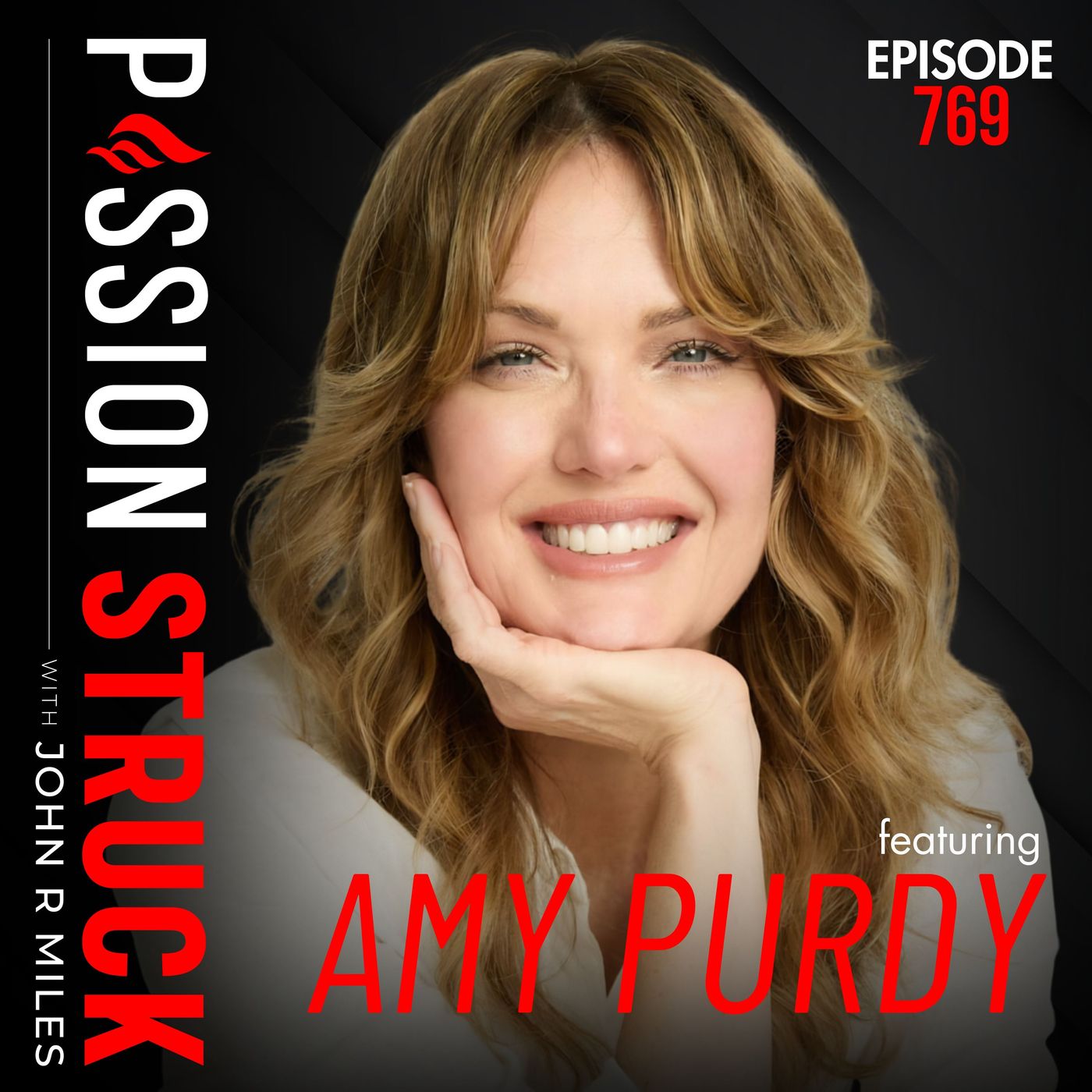
Passion Struck with John R. Miles
Amy Purdy on Resilience, Adversity, and How to Bounce Forward | EP 769
01:12:50
In this episode of Passion Struck, John R. Miles sits down with Paralympic medalist and bestselling author Amy Purdy to discuss resilience, adversity, gratitude, and reinvention. Amy shares the story of surviving meningococcal meningitis at age 19,...
Loading summary
Transcript100 lines
- [00:00]
Commercial Narrator
VRBO makes it easy to claim your dream summer spot with early booking deals. From homes with pools to poolside loungers. When you book a vrbo, you don't have to reserve any loungers. They're all yours. All you have to do is book early. Book with VRBO
- [00:17]
Liberty Mutual Spokesperson
and Doug, there's nowhere I wouldn't go to help someone customize and save on car insurance with Liberty Mutual. Even if it means sitting front row at a comedy show.
- [00:27]
Amy Purdy
Hey, everyone, check out this guy and his bird. What is this, your first date?
- [00:30]
Liberty Mutual Spokesperson
Oh, no. We help people customize and save on car insurance with Liberty Mutual together. We're married. Me to a human, him to a bird.
- [00:37]
John Miles
Yeah, the bird looks out of your league.
- [00:39]
Amy Purdy
Anyways.
- [00:39]
Liberty Mutual Spokesperson
Get a quote@libertymutual.com or with your local agent.
- [00:42]
John Miles
Liberty, Liberty.
- [00:43]
Amy Purdy
Liberty, Liberty.
- [00:47]
Lowe's Advertiser
During Memorial Day at Lowe's shop household must haves for less. Save $80 on a Char Broil Performance Series 4 burner grill to chef up something special. Plus get up to 45% off select major appliances to keep things fresh. Our best lineup is here at Lowe's. Lowe's. We help you save valid through 527 while supplies last selection varies by location. See lowe's.com for details.
- [01:10]
Amy Purdy
Visit your nearby Lowe's.
- [01:15]
John Miles
Coming up next on Passion Struck.
- [01:17]
Amy Purdy
When I first lost my legs, everybody told me what I couldn't do, that I wouldn't be able to snowboard again, that they didn't know what my life would look like either. They didn't know if I could go back to work as a massage therapist or I. I'd be able to wear the things I want to wear, my high heels or. And people would actually say, I'm so sorry. Really? You lost your. Like nurses would say that I am so sorry. It was just such a sad thing. And I didn't want this kind of story to be created for me, like this identity that I'm supposed to now take on because now I have a disability and that and it looks a certain way. I didn't want that to define what my life was going to look like. I wanted to figure out what my life was going to look like.
- [02:02]
John Miles
Welcome to Passion Struck. I'm your host, John Miles. This is the show where we explore the art of human flourishing and what it truly means to live like it matters. Each week I sit down with change makers, creators, scientists and everyday heroes to decode the human experience and uncover the tools that help us lead with meaning, heal what hurts, and pursue the fullest expression of who we're capable of becoming. Whether you're designing your future, developing as a leader, or seeking deeper alignment in your life, this show is your invitation to grow with purpose and act with intention. Because the secret to a life of deep purpose, connection, and impact is choosing to live like you matter. Hey, friends, welcome Back to episode 769 of Passion Struck. Whether this is your first episode or your 300th, thank you for being part of this global community committed to living intentionally, leading with purpose, and creating a world where every person feels like they matter. We're now entering week three of our May series, Forged in Adversity. Over the past two weeks, we've explored what it means to endure hardship and then began recovering from the emotional toll adversity leaves behind. Last week, Dr. Paul Conti and Dr. Guy Winch helped us examine the invisible wounds people carry. The emotional exhaustion, the trauma, the burnout, the internal narratives that quietly shape how we see ourselves and our lives. But eventually, recovery leads to a deeper question. What do we do with adversity once it changes us? And honestly, that's why today's conversation with Amy Purdy hit me so deeply. Because Amy's story is one of the most extraordinary examples I've ever encountered of someone refusing to let hardship define the limits of who they could become. At 19 years old, Amy contracted meningococcal meningitis and was given less than a 2% chance of survival. She ultimately lost both her legs below the knee, lost kidney function, lost her spleen, and nearly lost her life. But what struck me most in this conversation wasn't just her resilience. It was her philosophy. Amy doesn't believe adversity is something we simply get over. In fact, one of the most powerful things she says in this episode is that she doesn't even like the phrase overcoming obstacles, because some hardships never fully disappear. Instead, she believes adversity can become a catalyst, something that reshapes us, deepens us, and ultimately expands what we believe is possible. Today, Amy joins me to discuss her powerful new book, Bounce Forward, where she shares 21 tools for navigating uncertainty, grief, identity, loss, fear, and reinvention. And honestly, there were moments in this conversation that really stayed with me, especially her reflections on identity, because I think so many people quietly struggle with this. After adversity, you lose a career, a relationship, a version of yourself, a dream, a sense of certainty. And suddenly the question becomes, who am I Now? Amy's life is a masterclass in answering that question with courage. And maybe that's why this conversation feels especially meaningful right now during Mental Health Awareness Month. Because transformation isn't about pretending hardship didn't happen. It's about learning how to build a meaningful life alongside it. And so much of that connects deeply to the themes I explore in my upcoming book, the Mattering Effect. How adversity can either disconnect us from ourselves or become the catalyst that helps us rediscover meaning, purpose, and connection at such a deeper level. Before we dive in, one quick note. If this show has ever made a difference in your life, please share it with someone who might need it, leave a rating, or review and follow along on YouTube for full episodes. Now let's dive in to this incredible conversation with Amy Purdy. Thank you for choosing Passion Struck and choosing me to be your host and guide on your journey to creating an intentional life that matters. Now let that journey begin.
- [05:55]
Liberty Mutual Spokesperson
And Doug, there's nowhere I wouldn't go to help someone customize and save on car insurance with Liberty Mutual, even if it means sitting front row at a comedy show.
- [06:04]
Amy Purdy
Hey, everyone. Check out this guy and his bird. What is this, your first date?
- [06:08]
Liberty Mutual Spokesperson
Oh, no. We help people customize and save on car insurance with Liberty Mutual. Together. We're married. Me to a human, him to a bird.
- [06:15]
John Miles
Yeah, the bird looks out of your league.
- [06:16]
Amy Purdy
Anyways.
- [06:17]
Liberty Mutual Spokesperson
Get a quote@libertymutual.com or with your local agent.
- [06:20]
Amy Purdy
Liberty. Liberty. Liberty. Liberty.
- [06:25]
Lowe's Advertiser
During Memorial Day at Lowe's shop household must haves for less. Save $80 on a Char Broil Performance Series 4 Burner Grill Grill to chef up something special. Plus get up to 45 off select major appliances to keep things fresh. Our best lineup is here at Lowe's. Lowe's. We help you save valid through 527 while supplies last selection varies by location. See lowe's.com for details.
- [06:48]
Amy Purdy
Visit your nearby Lowe's.
- [06:55]
Liberty Mutual Spokesperson
And Doug, there's nowhere I wouldn't go to help someone customize and save on car insurance with Liberty Mutual. Even if it means sitting free front row at a comedy show.
- [07:04]
Amy Purdy
Hey, everyone, check out this guy and his bird. What is this, your first date?
- [07:08]
Liberty Mutual Spokesperson
Oh, no. We help people customize and save on car insurance with Liberty Mutual. Together. We're married. Me to a human, him to a bird.
- [07:15]
John Miles
Yeah, the bird looks out of your league.
- [07:16]
Liberty Mutual Spokesperson
Anyways, get a quote@liberty mutual.com or with your local agent.
- [07:20]
Amy Purdy
Liberty. Liberty. Liberty. Liberty.
- [07:27]
John Miles
I am absolutely, absolutely thrilled today to welcome Amy Purdy to Passion Struck. Amy, how are you today?
- [07:34]
Amy Purdy
I'm doing great. I'm so excited to be here.
- [07:37]
John Miles
I am so honored to have you on this show because I've been a huge fan of what you've been doing over the past decade plus and the impact that you're making. But I want to trace that impact back to a defining moment. Because I think oftentimes in life we have defining moments. Some of them are great defining moments like getting married or having a child. But other ones deal with adversity. And unfortunately, one of your defining moments happens to be tied to my birthday, July 15th, many years ago. What happened on that day that changed your life so dramatically?
- [08:17]
Amy Purdy
Well, I'll tell you that it started just like any other day. I woke up feeling great, as usual. I was 19 years old, I went to work. I was a massage therapist at that time. And I absolutely loved my job. I thought, this is what I'm going to do for the rest of my life. I wanted to be a massage therapist and I wanted to travel the world snowboarding. And I went to work feeling fine. About halfway through the day, I started to feel like I was coming down with the flu. My back was a little bit achy, my neck was a little bit achy. So I went home from work early. Didn't think that it was anything more than just a 24 hour flu. And within 24 hours of that first flu like symptom, I was in the hospital on life support where I was given less than a 2% chance of living. I ended up fighting for my life for about a month and I was put on life support immediately, put into an induced coma. It ended up not being the flu like we thought it was something called meningococcal meningitis, which we have no idea how I got it, but it's this very rare bacterial infection that got into my bloodstream. It spread like the flu or the cold. So all I know is somebody maybe sneezed on me in the elevator at work and maybe that's how I got it. But due to this little microscopic bacteria, over the course of two and a half months, I ended up losing my spleen, I lost my kidney function, I lost all the hearing in my left ear and I ended up losing both of my legs below the knees. And I fought, I fought for my life. I fought for the quality of my life. And that moment completely changed the direction that I would go in and completely changed my entire life and in fact took me places that I never could have expected.
- [10:06]
John Miles
It really reminded me of a guest that I had on the show a few months ago, whose name is Sandy Yazipovich. Completely different scenarios, but when she was about your same age. Just one day, all of a sudden, she realized that she was losing feeling in her hand. Next thing, she could barely talk because her mouth was unable to form words. And her, I think it was her sister, took her to the emergency room, and they determined that she had Giron Barre syndrome. Can never say that right? I always butcher it. But what was happening to her is her immune system had attacked her nerves, and it left her completely paralyzed up until her neck. And I understand that you both experienced something that I think we all fear, which is a priest giving you your last rites, and you're immobilized, so you can't really interact with them. What in the world was going through your mind at that point?
- [11:09]
Amy Purdy
I absolutely actually remember being in my hospital bed. It was the second day after entering the hospital. They didn't think I would make it through the night. The doctors and the nurses gave me less than a 2% chance of living. And I was going into full septic shock. I was getting ready to be placed into an induced coma because my lungs had collapsed. And I remember gasping for air. I remember my family was around me. Nobody knew what I had at that time. So they were all suited up in these yellow suits and masks. And so there was this barrier between me and all the people I loved who makes me emotional. And I. I remember the priest coming in, putting his hand on my forehead, giving me my last rites. And I will tell you what, it's probably not what you think as far as what I was thinking, but in that moment, I was actually okay. I was gasping for air, and I did feel like I was dying. However, something went through my head when he put his hand on my forehead. And I thought to myself. And everybody was holding hands, praying around me. I thought to myself, these guys think I'm going to die. It actually was a little bit humorous. For a quick minute in my head, I thought, everybody here thinks I'm going to die, but I'm not going anywhere. I am not going anywhere. I just remember just thinking that even though my body was gasping for air, and they ended up putting me into an induced coma at that point and paralyzing me, I was unaware from that point forward, completely unconscious of what happened that whole next week. But that next week, I fought for my life, even though consciously I wasn't aware that I was. I'll tell you, that's what's so amazing about the human body. I just remember when I woke up from this coma a couple weeks later, being so grateful for my body because it was fighting for me when I wasn't even fighting for me at that point, I was checked out completely, and my body was fighting for me that entire time to be able to get through this. And I went through all types of things that next week, my. My heart would flatline. They'd come in with shockers and shock my heart back into rhythm. My family thought multiple times that I was dying. They were all praying as hard as could be. As my blood pressure was crashing, my heart. Heart rate would shoot up. And then all of a sudden, it would level out. The nurses would say, this is it, everybody. This is it. This is the time. So everybody would be prepared for me to die. And then all of a sudden, things would come back and balance out. And it was a huge emotional roller coaster for my family, for me, I don't remember any of that, but. But when I woke up, I started to become aware of what I had gone through and what my situation was and just how different my life was going to be.
- [14:11]
John Miles
Sandy was telling me that in that moment when the priest was giving her the rights, she could see her parents there. She could see other family members there gathering. And of course, she couldn't talk to them or signal them in any way. And she kept pretty much saying the same thing you did. She was like, I think they think I'm going to die, but I'm not. No. And every ounce of me, that is not what my destiny is. And I wanted to ask you something else. She was in this paralyzed state for months, and she told me that she spent a lot of that time because she couldn't do anything else. Part of it was she would do counting games in her head to just pass the time. But other times, she was thinking about her life as it was up into that point, and then she would try to imagine how different it could be in a positive way when she emerged from this. Did anything like that happen to you?
- [15:06]
Amy Purdy
So I was definitely out and in a coma for a couple of weeks. And when I woke up, I had a couple defining moments, to be honest. One of them was I knew that I was going to lose both my legs below the knees when I woke up from the coma that I was in. In fact, right before they put me into the induced coma, my feet hurt so bad, and I asked my dad if I could see my feet. My dad said, we are not worried about your feet. We are worried about your life at this point. And I said, dad, please can I see my feet? They hurt so bad. So he lifted the sheets and my feet were purple, just dark purple. That's the last memory that I remember before I went into this coma. And so when I woke up from it, I was aware that my feet were in trouble at this point point, the bottoms of my feet were completely black. The tops were purple. My feet were swollen. In fact, my hands were purple. My fingertips were black as well. So they thought that I was going to lose my fingers and my feet. And in fact, they thought that I was losing my fingers more than my feet. And so I was very aware that I was in this dire situation where they were trying to save my feet. That was because I went into septic shock. So when you go into septic shock, your body pulls blood from your extremities to save your organs. And that's why I lost circulation to my extrem. Somebody's. And I remember the day that the doctor walked in and he said, if we do not amputate your legs here. And he pointed, or he put his hand on my shin. He said, if we don't amputate your legs here tomorrow, we're going to have to amputate them up here next week. And he put his hand on my thigh. And so the decision was made. Right. I had no choice but to go in and do this surgery. I had no idea what to expect. I had never seen an amputee before. I had never seen anyone with prosthetic legs before. But I remember being wheeled into the operating room and being so scared for my future, just having zero idea of what it could look like. And I think through that, fear is really where I found my strength. Like, through that, survival is where you find your strength. Because in that moment, I gave myself three goals. Just the three minutes that I was being wheeled down the hall into the operating room, I gave myself three goals. And the first goal was that I wasn't going to feel sorry for myself, because I wasn't. It makes me emotional to think about. I don't really talk about it this much, but because I wasn't a victim, and I wasn't going to act like a victim. And my whole family felt so sorry for me, and it didn't feel good. And so I didn't want to feel sorry for myself. And the second goal was that when I figured this whole mess out, I wanted to help others do the same and didn't even know what that meant. I just knew that as soon as I figured this out, I want to help others do the same. And my third goal was that I was going to snowboard again that year, because I had not missed a year of snowboarding, and I wasn't about ready to. So I would figure out a way to snowboard again. I was so passionate about snowboarding. That's really all I cared about. And so I gave myself those three goals going into the operating room. I think I did that because I needed something to pull me into the future and to hang on to and try to work towards. And so when I got out of surgery, that is what really became my North Star. Those three goals became okay. If nothing else, these are the three things that I'm working towards. And I'm so grateful that I had that moment. And you don't know your strength until you're forced to use it or until you're forced to find it. I'm so grateful that in that moment, that's what came to me, was these three goals. Because those goals changed the course of my life forever.
- [19:08]
John Miles
When did you realize that you had a goal and the possibility that you could become a Paralympian? Was that something that happened right away, or was this something that you journeyed into?
- [19:22]
Amy Purdy
It was something I journeyed into. Just one little step at a time, and I'll tell you why. First of all, snowboarding wasn't even in the Paralympic Games at that time, so it wasn't even a possibility. Snowboarding was in the Olympics, but not the Paralympic Games. All I cared about was snowboarding again. It was something that I was so passionate about. It made me feel alive. It's how I found my inner strength. It's fun and it's playful. There's no rules. My friends snowboarded. It felt creative. I just loved the lifestyle. It wasn't even a sport to me. I never even considered myself an athlete, to be honest. I was more of an artist because I painted a lot in high school, and my friends who are artists, they also snowboarded. So for me, snowboarding felt more like this creative outlet than an athletic endeavor. And all I knew is I wanted to figure out a way to snowboard again. And so that year, I ended up getting my prosthetic legs. My first pair of prosthetic legs I got a couple months after I lost my legs and we were going into the winter season, I knew that I had given myself the goal that I was going to snowboard again that year, and I did. About four months after getting my new legs, I was back up on a snowboard. It was maybe four and a half, five months, something in there. But that season, I was able to get back up on a snowboard. And it felt nothing like I expected. I didn't know what to expect. But I couldn't feel my feet on the ground. I couldn't feel my feet in the boots. I was slipping all over the place on the snow. I strapped into my snowboard. I think that was the first, first time that I got really fearful that maybe I can't do this. And this moment is going to tell me that I can't do this thing that I'm so passionate about. And I strapped into my snowboard and I stood up and I carved to my heel edge and it felt okay. And then I went to carve to my toe edge and my ankles wouldn't bend because they were just pipes bolted together. And I shot straight down this mountain and I fell. And my goggles went one way and my beanie went the other way and my legs, still attached to my snowboard, went full flying down the mountain, completely detached from me. And I, I was so embarrassed and I was so discouraged. And I thought to myself at that moment, I thought, okay, this is obviously not possible. But then in that same kind of breath, I had this thought which was, well, wait a second, hold on. Maybe it is possible if you figure out how to get your ankles to move the way you need them to. Maybe it's possible if I can figure out a way to keep my legs attached to my body. And it just again gave me a little bit of a reframe and a little bit of a goal to, to work towards. I'm happy. I never knew I had a problem solving brain until I was in this situation because suddenly a side of my brain kind of kicked in. Wait, maybe we can actually figure these things out. And so I went on a mission to figure out how to do that. I ended up building my first pair of snowboard feet because there weren't any on the market and being able to get up on my snowboard. I built those with my leg maker. So it's not like I made them from scratch. But we, we took different parts and pieces and put that together and there's wood and neon pink duct tape and just got these feet to, to move in the way that I needed them to. And I ended up being able to get on my snowboard again. And that was the beginning of my kind of Olympic and Paralympic journey. Then I never could have imagined that it would take me as far as it did. But one thing just led to the next at that point. And I, when I realized I could snowboard, we helped my Actually my husband and I, which he was my boyfriend at the time, he snowboarded a lot as well. We were both very passionate about it and we wanted to help others do the same. So we started a nonprofit organization called Adaptive Action Sports and we got athletes into snowboarding and helped to get it into the Paralympic Games. And then I went on to compete in the Paralympic Games and become a three time Paralympic medalist. But I never had the goal from the beginning that I was going to be standing on a podium as a Paralympic athlete. I just knew that I was passionate about snowboarding and I wanted to keep doing it. And as I moved forward, the path revealed itself and then ended up taking me further than I ever could have imagined.
- [23:43]
John Miles
Before we continue, I want to thank all of you who continue to support Passion Struck and share these conversations with others. One of the biggest themes in today's conversation with Amy Purdy is that transformation doesn't happen all at once. It happens one decision, one mindset shift, and one courageous step at a time. That's why I created a companion workbook for this episode along with weekly reflections and tools through the Ignited Life newsletter. You can download the workbook and explore more at my substack theignitedlife.net Now a quick break for our sponsors. Thank you for supporting those who support the show
- [24:21]
Liberty Mutual Spokesperson
and Doug, there's nowhere I wouldn't go to help someone customize and save on car insurance with Liberty Mutual. Even if it means sitting front row at a comedy show.
- [24:30]
Amy Purdy
Hey everyone, check out this guy and his bird. What is this, your first date?
- [24:34]
Liberty Mutual Spokesperson
Oh no. We help people customize and save on car insurance with Liberty Mutual. Together. We're married. Me to a human, him to a bird.
- [24:41]
Amy Purdy
Yeah, the bird looks out of your league.
- [24:42]
Liberty Mutual Spokesperson
Anyways, get a quote@libertymutual.com or with your local agent.
- [24:46]
Amy Purdy
Liberty, Liberty. Liberty Liberty.
- [24:51]
Lowe's Advertiser
During Memorial Day at Lowe's Shop household must haves for less save $80 on a char broil performance series four burner grill to chef up something special plus get up to 45% off select major appliances to keep things fresh. Our best lineup is here at Lowe's. Lowe's we help you save valid through 527 while supplies last selection varies by location. See lowe's.com for details.
- [25:14]
Amy Purdy
Visit your nearby Lowe's.
- [25:21]
Liberty Mutual Spokesperson
And Doug, there's nowhere I wouldn't go to help someone customize and save on car insurance with Liberty Mutual. Even if it means sitting front row at a comedy show.
- [25:30]
Amy Purdy
Hey everyone, check out this guy and his bird. What is this, your first Date?
- [25:34]
Liberty Mutual Spokesperson
Oh, no. We help people customize and save on car insurance with Liberty Mutual together. We're married. Me to a human, him to a bird.
- [25:41]
John Miles
Yeah, the bird looks out of your league.
- [25:42]
Liberty Mutual Spokesperson
Anyways, get a quote@libertymutual.com or with your local agent.
- [25:46]
Amy Purdy
Liberty, Liberty. Liberty. Liberty
- [25:52]
John Miles
Foreign. You're listening to Passion Struck right here on the Passion Struck Network. Now back to my conversation with Amy Purdy. Yeah, so first thing, I'm going to digress here for a little, for a couple moments. I love to ski. I consider myself a pretty good skier. I am a God awful snowboarder. And I think what ends up happening is your brain gets trained to be a skier, which is you're leaning into the mountain. And I remember the first few times I tried to snowboard, my default pattern kept going back to that and I kept face planning or worse yet, getting back whiplash and banging my head on the ground. And man, it's not fun.
- [26:35]
Amy Purdy
It's not. Actually. My dad said expert skier. He has skied for years and he had a hard time snowboarding as well. But a lot of people are like that. I think you're right. Especially as an adult, you get wired to think a certain way. You get wired to be able to ski and snowboarding. You think that they would cross over, but they really don't. Snowboarding is quite challenging and quite different movements. And then if you can imagine not feeling your feet on the snow, hovering almost like I'm hovering like a foot above the snow with all the variations and grooves and things that go on in the snow. That became a huge part of my. I think it became a huge challenge for me to figure out. And that challenge is actually what motivated me to figure it out.
- [27:23]
John Miles
Yes. I'm just mentally thinking about it and how much, whether you're skiing or you're snowboarding or water skiing, how much you pay attention to your feet and your ankles because it's so much of how you turn and everything. So. Yeah. Wow. I also wanted to mention to you, you may not have ever heard of this person. I hadn't until I happen to catch a spot on the news. His name is Noam Platt and he works for Tulane University and he's using printers to help children who are disabled. So he is now working with kids who in some cases are missing limbs or cerebral palsy or something else where they have major issues, where their disabilities don't allow them to function as a normal person would in society. And so he uses these 3D printers to create adaptive wheelchairs or adaptive Devices. And it's so cool. I think the organization is called, like, Make Good, but now what they're doing is they send out these devices to people throughout the country. And so people all throughout the US Are now making these devices that they kind of engineer in where he works at Tulane, and then they ship them out. So in their local communities, they can help people with disabilities, which I think is just a tremendous nonprofit that they're doing as well.
- [28:44]
Amy Purdy
I absolutely love that, and I'm so happy that you mentioned that, because we are starting a fund that will help with adaptive equipment to fund adaptive equipment. So we're actually looking for partners who are making adaptive equipment. So that may be a group that we can connect to.
- [29:02]
John Miles
Well, I will introduce you to Noam after we're done today. Well, I want to just stick on the Paralympics here just for a second. I know Oksana Masters. The other person you don't know, who I know is Dan Canasson, who you probably have interacted with as well. And I know Dan because I went to the Naval Academy and so did he. But a whole bunch of my friend group are Navy SEALs, and he is an ex Navy SEAL who, if the people don't know his story, he lost his legs to an explosion when he was, I think, in Afghanistan. But he also became a Paralympian. I wanted to ask you what is different in the Paralympian mindset than what you might have found in a typical Olympian mindset? Or do you think they're the same? Because I have found that they're a bit different.
- [29:56]
Amy Purdy
I think there's a lot of similarities, and I'm not an Olympian, so I don't know exactly the difference. Right. But I will say that Paralympians go through the same things that the Olympians go through, as far as the level of training, the level of commitment, the level of excellence, and the level of peak performance. But on top of that, we have incredible amounts of adversity, some of us more than others. And so that adds another layer of resilience and grit and creativity and innovation that has to come into play to be able to do the things that we love. I think also even more determination comes into play because, for example, I snowboarded before I lost my legs. I know what it feels like to snowboard with real legs, to be some an athlete with real legs who can do the things you want to do. But then once I lost my legs, I had to battle myself a little bit because I was always trying to get back to what it Felt like when I had legs and here I knew what I was supposed to do, I knew how to do it, I knew all the mechanics of it, but my body wouldn't do what I wanted it to do. And that was so frustrating. But that also, that challenge of trying to figure out my feet, every twist of the screw of my ankle would change the angle of my foot, and I would get just obsessed with figuring out how to get my ankles to move in the way that I needed them to so that I could do what I knew internally I could do. And so, in order to go through that, that took an enormous amount of determination. In fact, I snowboard with two prosthetic legs pretty much competitively this whole time for about 15 to 20 years. That entire time, I wasn't just training and on the snow and working out and doing all the things that the Olympians were doing, but I was also in our shop working on my legs every single day. In fact, between almost every run, going in, twisting a screw, going in, trying something else, adding something under my heel so I can bend my toe more, whatever it was. And then also with my sport, I was a snowboard cross athlete, and. Or I am a snowboard cross athlete. I've just since retired. But because of that, you're not just racing around berms and flags like racing, which takes one type of movement from your ankles, but you're also doing jumps, and you're having to land those jumps, and those are big jumps as well. There's a lot of features along the way, and that takes another type of motion from your ankle and. And your knees. And so I had to find this perfect in between of how I could take turns really aggressively, but also keep my knees bent and my ankles flexible enough to take jumps really flexibly. And so it became this, for me, an obsession to figure it out. But really, I think what led that was just this pure determination that I think. I know that Olympians are determined, but Paralympians have this extra layer of challenge, but also that creates an extra layer of determination and grit to get through that challenge.
- [33:19]
John Miles
So if it's okay, I'm going to give you my answer from looking at this, having interviewed both of them on the show. So I had this gentleman, Gary Hussey, who's a friend of mine, you probably have never heard of him. He lives in Ireland, and he is Ireland's top performance psychologist. He works full time with the Leister rugby team, but he also coaches their rugby team that goes to the World Cup. And then he is the performance coach for their Olympians. And he was telling me that with the people he works with, those who concentrate on the reason that they're doing this is to win a medal have already lost before they've even begun. And what I have found through my interviews is that the Paralympians and the Olympians have a completely different mindset when it comes to why they're doing what they're doing. Not every Olympian I would say that about, but I think you just described a lot of what makes Paralympians so much different and why I have so much respect for the sport. Because you're motivated by a completely different thing in many cases. Not that you don't want to win an award, because that is great, but you're doing it for a completely different purpose.
- [34:35]
Amy Purdy
And I think there feels like there is a deeper purpose. And that purpose can also be a little bit, to be honest, sometimes a little bit selfish, which is just. I want to figure out what I'm capable of, because I. When I first lost my legs, everybody told me what I couldn't do, that I wouldn't be able to snowboard again, that they didn't know what my life would look like either. They didn't know if I could go back to work as a massage therapist or I'd be able to wear the things I want to wear, my high heels or. And people would actually say, I'm so sorry. Really? You lost your. Like, nurses would say that, I am so sorry. It was just such a sad thing. And I didn't want this kind of story to be created for me, like this identity that I'm supposed to now take on because now I have a disability and that, and it looks a certain way. I didn't want that to define what my life was going to look like. I wanted to figure out what my life was going to look like. I wanted to figure out the possibilities. And so I think that I just. That also became a little bit of a driving force of just trying to shut the world out around me a little bit and really try to focus on why I'm doing what I'm doing and what does that mean to me. And so early on, that driving force, that why was. I want to create my identity. I want to create who I am in this world. I don't want the world to tell me who I'm supposed to be. And so that was my first, I think, why I was trying to figure this out. But then once I realized I could do it and I realized that other people at that time, weren't snowboarding with prosthetic legs. They were skiing, because there was a lot of support for skiing. That's when my husband and I became really passionate about, well, wait a second, you can snowboard with prosthetics. We want to help other people do this as well. And then that's when we started to realize, oh, my gosh, there's actually other people out there who snowboard with prosthetics, and they do it really well. We want to get this into the Paralympic Games, and that became this mission to help to get this sport into the Games. So that why has kind of changed a little bit. But I do think with Paralympians, we have. We experience and have experienced the depths of life, the deepest, darkest, hardest challenges that you can go through. And that builds character and builds something inside you that's just a little different than wanting to be the best in the world and win medals. There's just a little bit more of a purpose that's driving us. And therefore, I always say it has not been an easy journey at all, and it's just been full of challenges and adversities. But I would never change it because it's also made me more passionate and made me more creative and made me more purposeful. And that's something that I'm really. I'm grateful for, that's come along with the journey as well.
- [37:40]
John Miles
Amy, I just realized we have made it this far into the interview, and I haven't even talked about your Fantastic new book, Bounce 21 Tools to Live a Life Beyond Limits. And what we have just been talking about is one of those tools which is going from grief to hope. And I think doing it this way has actually shown that transition point in a very clear way, looking at the arc of your life. But I want to come to the introduction of the book because many people have heard your backstory, but they probably don't realize that you had another defining moment that happened around 2019 where the unthinkable happened. Can you take us to that moment?
- [38:28]
Amy Purdy
Absolutely. Once I figured out that I could snowboard on two prosthetic legs for 20 years, that's what I did. I chased my dreams and tried to figure out the possibilities and ended up going from competing in the Paralympics to winning three Paralympic medals to doing the TV show Dancing with the Stars and figuring out the possibilities there, and then went on a speaking tour with Oprah and wrote a book. And my life for those 20 years really was figuring out what was possible, feeling the strongest. I've ever felt in my life and really in control of my life. And it seems right when I got to the peak of that of I did it. I made it. Like you throw your arms up in the air and look back and you go, I did it. I just, I made absolute lemonade out of lemons. I made it. All of a sudden I got knocked off my feet again and I. I was actually. I was standing on stage doing a speech in Las Vegas in 2019, and I felt this great cramp in my left calf. And I didn't really think anything too much of it at first. Having prosthetics, you feel different aches and pains at times. But within 24 hours I was in the hospital where I was diagnosed with a massive blood clot from my hip down every artery of my left leg. And at first we had no idea what caused it, but ultimately we ended up finding out that really all these things I had been doing on two prosthetic legs that were very unnatural, if you will, to do on two prosthetic legs, that is what ended up injuring my leg. Because I was snowboarding seven hours a day, going to the gym afterwards, walking through airports, standing on stage speaking for an hour at a time, wearing three inch high heels, just functioning for me at my best. But all of those things were putting pressure on my popliteal artery behind my knee. And that artery eventually gave out, which I didn't even realize this was happening. It was a process that was going on that I didn't realize until I was standing on stage speaking and I felt this cramp. And so all of a sudden that artery decided to shut down, created a massive blood clot through my femoral artery, popliteal artery, and all the arteries below the knee. And all of a sudden it was a fight to save my leg and a fight to walk again for the second time in my life. And it was absolutely terrifying. It was something where nobody could give me a prognosis because I was so unique as it was having two prosthetic legs. In fact, the surgeon originally said, you're the worst case scenario already. Like you already lost your legs. So it's. We don't know what to tell you. And I just thought, but wait, I. I'm an athlete. I. Yes, and maybe a worst case scenario that I lost my legs below the knees, but I function at the highest level possible. I was just snowboarding seven hours a day up until a few days ago. And the surgeon I remember at that time also said, if you're lucky, maybe you'll walk to the mailbox and get your mail and back you to have good circulation for a prosthetic. And if you don't have blood in your leg. And. And so then it became a fight for the quality of my life, whereas 19 was a fight for my life. So this was a little bit different, and somehow this was a little bit more painful because I was just fighting for what I had and to keep what I had. And everything I had figured out all these 20 years. And I ended up going through, over the course of about four years, ended up going through 10 surgeries that included two additional leg amputations. On that leg, where we had to shorten my leg to try to get more blood flow, shorten it again. I had a whole reconstructive surgery of all the muscles below the knee. That. That was an experimental surgery. It was all to try to just coax my body into creating more pathways for blood. And it's just so interesting because you just don't know. You don't know when adversity is going to hit. And just because you've lived one story doesn't mean you don't have many more stories to live. And that's what that taught me. It just came out of nowhere. This became a new reality. It also was so incredibly challenging. I went through major grief, major anxiety, major overwhelm, total loss of identity. And it's something I decided to start doing, though, is for many years, especially as a speaker, people would ask me, how did you get through losing your legs in the first place and stay positive and keep going? And I didn't always have an answer of how I did that, because when I was 19, I was just resilient. And I don't know. I would literally just say, I don't know. I just did. I just got my legs and started walking and kept going. I forgot how hard it was. I forgot about the depths of it. I didn't pay attention when I was 19 to all the little things helping along the way. But this time when it happened, I did start paying attention to the things that were helping me along the way. And there were very profound things that. The moments where I thought, okay, I was just grieving the loss of who I am so hard five minutes ago, but now I'm okay. What happened in that moment? What helped me shift and get through that, where I could see a little hope. And I started writing those things down, the things that were helping me get through these moments of adversity. And those things became these tools that actually became the framework of this book. There's 21 of these little tools that I started just realizing that I was using that was helping me through these moments of adversity. And like you mentioned, grief to hope. That's the first chapter of the book. That, that chapter very much so is about loss of identity. Who am I? I've always been this person who people know, too. Or at least my. My. My vision of what people thought of me, too was no. Amy figures out what's possible. That's what she does. She climbs mountains and snowboards down them and does all this stuff. And I thought, if I can't even put my prosthetic leg on and take five steps to get into the kitchen without massive chronic pain, what can I even do? I can't walk on stage and speak. I can't do anything that I have worked all these years to do. I had to completely let go for the second time in my life of who I thought I was and sit with this uncertainty that there was no answers. There was nowhere I could look for hope because there was nobody else who had really experienced this in my situation that I knew of. And I had to just deal with it on my own, really, and find my way through. And eventually I did. And that's why I wanted to write the book, because it's. I think a lot of times people think that you're just resilient or you're not. Like, you're. That's just a resilient person who's. Who's really strong. But no, I've found. No, I think we just. Some resilient people maybe have just found their resilience and realized what they have to lean into that gives them resilience. And that's what I learned with myself. And I wanted to help others
- [45:46]
Lowe's Advertiser
during Memorial Day at Lowe's. Shop household must haves for less. Save $80 on a Char Broil Performance Series 4 burger or grill to chef up something special. Plus get up to 45% off. Select major appliances to keep things fresh. Our best lineup is here at Lowe's. Lowe's. We help you Save. Valid through 527 while supplies last selection varies by location. See lowe's.com for details.
- [46:09]
Amy Purdy
Visit your nearby Lowe's.
- [46:15]
Commercial Narrator
You never know where your next unforgettable experience will pop up. That's why bringing along an American Express card opens the door to rewards wherever you go. Morning coffee run with an old friend. Earn cash back. Weekend getaway. Earn miles. Dinner at the hottest restaurant in town. You get the idea no matter the place or the plan. Amex rewards your inner explorer. Learn about card options@americanexpress.com terms apply
- [46:46]
Lowe's Advertiser
during memorial Day at Lowe's Shop household must haves for less save $80 on a char broil performance series four burner grill to chef up something special plus get up to 45% off select major appliances to keep things fresh. Our best lineup is here at Lowe's Lowe's we help you save valid through 527 while supplies last selection varies by location. See lowe's.com for details.
- [47:09]
Amy Purdy
Visit your nearby Lowes do the same.
- [47:17]
John Miles
There is a aspect of the opening of the book that'll take me back to Dan Kanason. So one thing that that he and I both experienced was the term what it means to to be in a foxhole. And I understand that you were at a speaking in event and at the end of it a veteran comes up to you and says never get too far from the foxhole. What was he trying to tell you?
- [47:47]
Amy Purdy
Well, it was one of the first speeches that I had given in this new state, like in this new body. I'd gotten through these surgeries, but I was still, I believe I was still on crutches and I decided to I had canceled all these speeches, but decided at some point I gotta just keep on figure out a way to do it. And so I think I crutched on stage and now this became a new part of my journey. I was living adversity in real time. As I was talking about it on stage. I wasn't just talking about it like I was previously where I was looking back and saying, oh, I went through all this stuff, but now here I am. I was actually going through the thick of it at the time that I was standing on stage speaking. And I shared what I was going through and I shared that I had no idea what that outcome was going to be. I didn't know if I'd ever snowboard again. I didn't know if I'd ever walk again. I didn't know if I'd be out of pain is what my future was going to look like. I had learned some things and so I shared a little bit. I remember that speech I was sharing about courage and just learned some different things of moving forward and putting myself out there and living in this new body. But I got off stage and this very kind man came up to me and he said, I think that you went through this because previously you got too far from the foxhole. And he's there's nothing like Being in the foxhole, that makes you know what it is that you're fighting for that brings you so close to death and quality of life and what's meaningful in life. And it's not until you're in that foxhole that you really think about those deep questions of what's purposeful and meaningful in your life. And I took it as when I was 19, that was 20 something years before. And I. That was the foxhole, the depths of everything I had to go through when I lost my legs and I was 20 years out and I forgot just how not only how hard it was, but the things that were helping me along the way. And now I was like in the foxhole as I was standing on stage speaking. And he said, I think you'll be able to help more people through what you're learning now, because now you're close to the foxhole again. And I just really. I appreciated that he gave me that perspective because that also inspired me to write this book, because I thought, well, I am this time. I'm just so aware of how hard it is and what's helping me get through. And you talk about our adversities shaping us into who we become and how we can become these greater versions of ourselves because of the challenges that we've gone through. And that was that moment for me, of this is shaping me into a different version of myself. And so getting close to the foxhole is a blessing in itself.
- [50:40]
John Miles
When I read the book, what I really took from it was adversity is something to recover from, but it's more than that. It's something that can reshape who we become. And rather than returning to a previous version of life, I think what you're arguing is that hardship can be the catalyst for reinvention, expansion, and deeper purpose. And that's. That's one of the things that I loved about the book.
- [51:08]
Amy Purdy
Well, thank you. And absolutely, that's what it is. That's why I called it bounce forward and not bounce back. Because I think we talk about resilience and obstacles as just trying to either get back to who we were or get through it. Overcome obstacles. I've never liked the term overcome obstacles, because some obstacles you never overcome. I'll always have two prosthetic legs. I never overcame losing my legs, my leg. It's. I have to put my legs on every single day. I have a kidney transplant as well, of 25 years. And every single day I take medication. I'm aware that this is what's happening. So there's no overcoming the obstacle. I think that it's more about extracting everything you can from the challenge so that you can learn and grow and become maybe a more whole grounded version of yourself. It's not trying to just breeze through the challenge and get over it. And I remember actually even my manager had mentioned when I was writing this book, he said, I. He goes, I think this book is about getting through challenges faster. And I was like, no, that's the opposite actually. Because yes, I do hope that these tools do help you get through things easier maybe and where you don't get stuck in the problems. But at the same time, it's not about getting over them so that they're something of your past. It's about living a good life amongst them. It's about because we always have adversity and we're always going to have adversity. There's nothing more human than adversity. Every day we deal with adversities. And this book isn't just for the big adversities either. It's for the day to day, just small challenges that we all face. Just to reframe our perspective a little bit, to see things in a little bit of a different way, to see how we can use these challenges to actually be a catalyst to live a purposeful life versus thinking of challenges as something that holds us back, using them as opportunities to be able to do something different and take us maybe further than we realized we could ever go.
- [53:22]
John Miles
I think that is one of the things that holds so many of us back and it's one of your principles. We get so caught up in the fear of the unknown that we lose sight of the belief in possibility. And the way I always try to capture this is it's almost when you're in this position, like you're on the top of Mount Everest, you have to get to Mount Kilimanjaro and all you can see is the vastness and you have no idea how do you cross that chasm and that becomes this unknown hell that you find yourself in. And that's where so many people get stuck for you. I know one of the things that is big in your philosophy is to break things down into their smallest components and then use that to take action. So how would you do that? How would you explain that to a listener who might be stuck in. In that wanting to do something different, knowing they need to, but fearing it right now?
- [54:23]
Amy Purdy
I think first of all, I had heard at one point and it just really, it really changed my perspective on uncertainty. I Heard this quote that said, uncertainty is where the possibilities live. And it's that spot where you don't know what the future holds. So therefore anything's possible. Remembering that first of all, versus when we have a clear path, you know what to expect next. But when you don't have a clear path and you are floating out to sea and it can feel that way, felt that way when I was going through these surgeries, I felt like I am floating out to sea. I don't know if I'll ever walk again comfortably do the things I want to do again. I don't know where I'm going to end up. Right. But there's something magical about being in this complete space of unknown where anything's possible. It doesn't have to be the negative story that we're telling ourselves. Maybe we'll end up at shores that are more beautiful than we ever could have imagined. And I tried to adopt that at least belief in the moment that this could lead somewhere completely different and better than I'm envisioning. But the action of breaking things down so that you can start to move forward and get unstuck. I think I actually, I think that people ask a lot, how do you get unstuck out of certain situations that you're in? And I really do think it's moving. It's just the opposite of what stuck is. It's doing something. And it could even be. I didn't have legs for a long time and I was sitting in a wheelchair. I would just get on the floor and do push ups and sit ups and have a whole different kind of change of mind and energy after that. So sometimes it's just moving and getting out of your current situation that can help you move forward. But I really believe in compartmentalizing. And that's something that I realized that I learned when I was, when I first lost my legs and my kidneys at 19 years old. So I, I lost my legs, my kidneys, my spleen, the hearing in my left ear pretty much all at once. That was incredibly overwhelming. Moving forward. My weeks would look like doctor appointments that were just. I. I'd have so many doctor appointments, so many concerns. Would I need a kidney transplant? Do I need a hearing aid? My mom and I were just booking all these doctor appointments back to back as I was kind of trying to navigate all this, plus standing in prosthetics that were so uncomfortable and it was incredibly overwhelming. And what we decided was to try to time block these things right, and break them down, give me more Space in between them instead of trying to do all this stuff at once. Day one is just leg day, and maybe day two is just kidney day. And on leg day, I would only let myself think about leg day. Like, not even let myself think about maybe I'd need a kidney transplant. I was only focused on my legs that day. And then on kidney transplant day, that was the day I talked to my doctors about my kidneys. And I had to just put the fact that my legs weren't comfortable in the back of my mind and only focus on kidneys. And by time, blocking it helped me move forward. It helped me just take one step at a time without being so overwhelmed, because we didn't know the answers to any of these things. And so I just started to realize that that can be used in so many different parts of our life. Even when you have good overwhelm going on, and you've just got so much going on, you can't see straight, it's really prioritizing the most important things, putting the things that aren't as important aside, scheduling those at different times, and letting yourself to really be present in the moment with what you're dealing with right now. Complete it so that you then can put it behind and move forward onto the next step. And those little baby steps eventually become giant leaps. It just takes time to get there. But as long as you're moving forward, you're moving forward. It does not matter how slow, as long as you are just inching your way forward. Eventually you'll get to the other side. Things may look different than you ever expected, but they could also look better than you ever expected as well.
- [58:32]
John Miles
Well, yeah, you're definitely. It's like that analogy of pushing a boulder up a hill. When you start, it's feels almost impossible to do it. But once you start getting that kinetic energy, moving becomes easier and easier. And before you know it, you hit a neutral zone, a little plateau, and it goes even faster and then it just keeps building from there. So I love what you're describing. One of your other principles is going from giving up to finding your way. But I want to ask this in a different context. If I have done my research correct. I believe that at one point you were on your way to becoming an actress. Is this correct? Yes. And you were going to appear in one of my favorite films, I think, Kingsman. And you're training for this. What an amazing opportunity. But you end up having to make a choice. Can you walk us through what happened here and how you found your way through that decision
- [59:32]
Amy Purdy
thought that I was going to be an actress. I wanted to be. I always had that inside of me. I thought, I'm moving to Hollywood, I'm going to be an actress. And then when I. Even when I lost my legs, I got some pretty cool opportunities. I actually got to work with Madonna at one point because my legs were metal. And we created this cool character. And so that was the direction that I was on, even though I was snowboarding at this time. And I was actually training for the Paralympic Games. But it was maybe a year or so before the Paralympics that Warner Brothers reached out to me and asked me to audition for this film. And I did, and they like my auditions. So they flew me to London and they put me up for a month and they. We went through all types of auditioning, even coming up with the character, what the character looked like. She was henchman who did roundhouse kicks with her running blades that had. That were actually blades that would chop heads off. And I thought it was the coolest character. I actually thought this was so meant to be because it required being athletic. I could do all this stuff. I worked with some of the best martial artists throughout that whole month learning these roundhouse kicks. I was doing backflips, I was. I would be harnessed, and I was doing all these stunts in the air, and I. I felt like this is meant to be, that I can physically do this. I'm ready to do this. I have acting experience. I'm ready to go. And then what we realized is that the film was pushing, so we were signing contracts, and the film started to push into where it was going to overlap with the Paralympic Games. Well, it was my first Paralympics and I was already dead set to be going to the Paralympic Games because I also had sponsors that were relying on me to go to the Paralympics. And I was in a situation of do I want to do this film or do I want to do the Paralympic Games? And we ended up letting the film go. And. And in fact, actually, they had called at one point. They let me go because insurance was an issue that they didn't want me competing at the same time that I was supposed to do this film just in case I got injured. They didn't have somebody who could replace me. There's nobody really else out there who was two prosthetic legs and able to do at that moment what I was doing. And. And so they let me go. And I just remember it being absolutely devastating because I thought that, no, that was my big break and that was so perfect. I was like, that was for me. They ended up hiring an actress and just CGI in her legs. And I was, for a good. Gosh, for a good couple weeks there, I was devastated. I felt completely deflated. It felt like my dream had been ripped away from me, but it wasn't actually. So I ended up going home. I was in Florida when I got this news. I flew home and was like, gosh, I guess I'm not going to London now to do this. So I just threw myself into training for the Paralympics. Again, that was a compartmentalizing thing where I just thought, I got to get rid of that and jump 100% into training for the game so I could do the best that I can. And it was just a few weeks after that, I got a call from Dancing with the Stars, from the executive producer of Dancing with the Stars, to see if I wanted to do the show. And at that time, I had already been let go from so many fun, cool things like that. You just don't know what's going to happen, right? You get your hopes up, you think something's going to happen, then it doesn't. That I. I remember telling them I was super interested, but I was like, I am focused on the Paralympics. That is where my heart's at right now. So I even remember just thinking, if this happens, great. If it lines up, great. But I'm not getting my heart set on it. Well, as we got closer to the Paralympic Games, I think it was about two or three weeks before the Paralympics, they sent a contract over and said, we want Amy on Dancing with the Stars. Well, it happened to overlap with the Paralympic Games, and so at first we didn't think that I'd be able to do it, but we signed the contract, they flew out, my partner, Derek Hough, to Russia, where I would snowboard on the Olympic and Paralympic course for a couple hours each morning, and then I would dance with Derek a couple hours each night in this old Russian hotel. And all of a sudden, I went from Paralympics straight to Dancing with the stars 72 hours later, and I was on this show, and it was the most. Just magical, coolest experience of my life. That would not have happened the Paralympics and Dancing with the Stars would have not happened had I have done Kingsman and had I have done that film. And I actually think that I got so much more out of the Paralympics and out of Dancing with the Stars than I ever could have gotten from doing that film. I look back and I think that film was cool to do, but this was meaningful. To do. And it's. I would never change. That happened. And so it's just one of those things where it's. One door closes and another door opens. And I remember my leg maker, I was with him at the time when I got let go from Kingsman. And he said, I know that it's cliche, but I think God has bigger plans for you. And I just remember thinking, come on, what could be bigger than Warner Brothers blockbuster movie? And he was right. Dancing with the Stars changed my life. It gave me a platform I never could have imagined. It allowed me to connect with people and kids and just. It brought me into living rooms across the country and even across the world. And I. It changed the narrative of what it looks like to have a disability and what people think is possible with a disability. And it was just. It turned into the coolest experience. So I really believe that when things happen that we think are bad, it's not always. It's not. That's not always what's happening there, right? It's one door closes. You never know what path will open up on the other side. And you just have to believe that there's more out there and believe that there's more possible.
- [65:52]
John Miles
Amy, I love that because you went where I hoped you would go, because you just talked through a couple of your principles without me having to bring them up directly. So you just basically went through surrendering control. And sometimes you just have to let go and have hope on the other side of what's going to come next. And then you also went going from faith to meaning, having faith that something better was going to come. And it did. And that drove to a much more meaningful experience for you. So I do have to ask you a question. I see Derek and his sister, who's a little bit more famous than he is, but I see them dancing all the time in these videos. Is he as good a dancer as he looks like?
- [66:38]
Amy Purdy
He is? An absolute genius, I'm telling you. I don't know if I've ever met a genius like Derek Hough, seriously, because he's so creative. It was so amazing watching him create these dances. He would create them out of thin air, and he would get these just almost like divine downloads, these moments of inspiration as we're, like, working together. He's creating that dance in that moment. It's not like he's got it created. And he comes and teaches it to me. We go stand in this dance studio with no idea what we were going to do. It was another example of being in the Unknown that there's all these possibilities. We were just like, we don't know what this is going to look like. And he would get so inspired all of a sudden, just coming up with these ideas like, do this. He gets so excited about it because he's like, hold on, I have an idea. Do this, do that, do this. Move your body like this. Can you do this? Can you do that? Sometimes I would be just standing there in a position and he's, that's really pretty. Your body's creating the shape. Your legs are making this shape. Let's put that in. The dance thinks in these just very creative shapes as well. And so he would just build this dance from nothing. And it was just beautiful. It was such a cool experience. And it actually taught me that inspiration is contagious because he was so inspired and just inspired creatively, whether the producers, they give us a song and they give us a dance style, and you have to decide what to do with it. So he would get these ideas and just come in with so much energy and so excited of this is what I want to have you do. And so just being around that energy inspired me and inspired me to keep going, too, because it was not easy. It wasn't easy with prosthetic legs, doing these movements at all, doing them gracefully, doing them under pressure, where millions of people are watching, you're also being judged. And you also know it's going to live on YouTube for the rest of your life ever.
- [68:37]
John Miles
Yeah, that would be the most scary thing for me.
- [68:39]
Amy Purdy
Yeah, this is. It felt like the Paralympics every single week because the stakes were so high. But watching him be just so inspired me to not just keep going, but to be creative and wanted to continue to be creative in my life. And just that feeling of inspiration and passion and energy is just. It's such a cool feeling. It's such a driving force. And I really learned in that moment that inspiration is contagious. So when you're inspired, you inspire others to. To do and feel the same. And I think that's really powerful.
- [69:11]
John Miles
Amy, we've covered a lot today, and I wanted to go out talking about gratitude. Can you tell me how in your own life you have gone from loss, severe loss, to profound gratitude? And how a person who's listening to this could make this shift in their own life as well?
- [69:34]
Amy Purdy
I think that gratitude really became important in my life and apparent to me of just how important it was when I was going through my kidney transplant with my dad. So when I was 19, I lost my kidneys as well. And the week of my 21st birthday, I ended up having a kidney transplant. My dad donated his kidney to me, and I was so terrified to have that transplant because your health is everything. And they always say, this isn't a fix. This is a band aid. We don't know if your kidney will last a couple months. We don't know if your body will accept it. We don't know if your kidney will last a couple years. The average kidney transplant only lasted nine years at that time. And my dad and I Now just celebrated 25 years of our kidney transplant.
- [70:29]
John Miles
Wow, that's amazing.
- [70:31]
Amy Purdy
And the gratitude that I have grows stronger and stronger every day. And I think at the time that I had this transplant, all I could do. If you don't know how much time you've got left left, I didn't know. I didn't know how long I'd be healthy, if I would be healthy. But every day that I was healthy, I was grateful. And that was even the day after my transplant. Okay, well, things are working right now. I am grateful, right? And all of a sudden, a week later, and then a month later, and then a year later, oh, my gosh, I'm so grateful. I feel good. My kidney is working. It forced me to really be grateful. It forced me to be very present that every day I'm healthy, I'm grateful. There's something to. There's. I can do something with this day. As long as I'm healthy, I've got everything that I need. And so it really. This thing that was my greatest fear became my greatest gift because it's taught me the gift of gratitude. And so I took that. Even in these darker moments that I went through with this leg injury, I would wake up and at first feel this feeling of dread because I knew my leg wasn't healthy for quite some time. And my leg was in a lot of pain. And my initial thought when I would wake up in the morning would be. Dread would be, oh, my God, my leg hurts. Oh, my gosh. Like, I can't snowboard again. Like, almost like waking up in a nightmare over and over. But then there was one day where I woke up and I remembered that it was the 21st anniversary of my kidney transition transplant. And I just took a pause for a second thought. Hold on. Are you kidding me? This kidney has taken me 21 years. All the way through all these things, snowboarding and dancing and figuring out the possibilities, all the way through all these surgeries. Even at that point, there's maybe eight or Nine surgeries. This kidney has stayed strong every single step of the way. I am so, so grateful. Thank God for that. And thank God for my dad and just the opportunity to have the second chance at life. Just by leaning into that moment of gratitude that I had for my kidney, it completely changed my mood for the day. I didn't think in that moment about what I was losing because of my leg or the pain that I was in because of my leg. I was so grateful. And I stepped into my day completely different. My whole day was filled with full of gratitude. And I called my dad so grateful for him and just it completely changed the way that I stepped into my day and saw my life and it. And I still was dealing with all this adversity, but it changed the way I looked at it. It changed the way that I felt about myself. And so I since have created that a practice and I put that in the book as well. The book has a tool section in the back of every chapter of this is what you can do as well. And so in the gratitude section, there's a tool section that says, this is a morning exercise that I use every day and that I started using at that time, which was every morning. When I wake up before the day pulls me in different directions. Before I think of the dread or fears or what's on my to do list that day, I take a breath and for me, I think about my kidney. Because nothing makes me more grateful than my kidney. But for other people, you can think about your family or your dog or your warm coffee or just something, something that makes you feel grateful and just let yourself really feel that feeling of how grateful you are to have that thing, whatever it is. Don't just think about it. Don't just say, I'm grateful for it. Actually feel it. And when I wake up and I think about my kidney, I feel like the luckiest person in the world. And that changes how I step into my legs and then how I step into the world, how I step into my day. And I know that that can help other people as well. Gratitude is, I think, one of the greatest gifts that we can give ourselves.
- [74:31]
John Miles
I love it. Amy, where's the best place people can go to learn more about you and this incredible book?
- [74:37]
Amy Purdy
Well, thank you. You can go to my website, which is easy. It's just amypurdy.com and you'll see on there exactly where you can purchase the book. You can also go to my Instagram. I try to keep in touch with people on there as well. I love my community that I've been able to build over these years. And so Instagram is always a great place as well. But I'd say start in those two places.
- [75:01]
John Miles
And last thing I always love to ask guests, what does it mean for you to live a passion struck life?
- [75:09]
Amy Purdy
Oh, gosh. Well, I wouldn't be where I'm at if it wasn't for passion. I think that's where it all started. I was passionate about snowboarding. That got me through my greatest challenges and that led me places that I never could have imagined. So I think it's so important that you make sure you're doing the things that you're passionate about. And your passion doesn't have to be a career and it doesn't have to be a job and you don't have to make money from it. It is what fills your soul. And I think when your soul is filled with something that lights you up, then lights the way.
- [75:52]
John Miles
Amy, such a profound honor to have you here today and for the audience, I highly encourage you to purchase bounce forward. They're truly 21 tools that will help any listener who's out there today live beyond their limits. Thank you so much for joining us.
- [76:09]
Amy Purdy
Thank you so much for having me. It was wonderful.
- [76:14]
John Miles
That brings us to the end of today's conversation with Amy Purdy. And what stayed with me most is this transformation is not about returning to the person you were before adversity. It's about becoming someone deeper because of it. What I loved about Amy's perspective is that she doesn't romanticize hardship. She acknowledges the grief, the uncertainty, the fear, the loss of identity that can happen when life changes in ways we never expected. But she also reminds us that adversity can reveal strengths, possibilities, and purpose. We may never have discovered otherwise. And honestly, I think one of the most powerful ideas from today's conversation is don't have to wait until life feels perfect again to move forward. Sometimes growth begins the moment we stop asking, how do I get my old life back? And start asking what new life is possible from here. And next up in our Forged in Adversity series, I'll be joined by entrepreneur and Tom's founder, Blake Makoski to discuss this powerful new initiative. Enough. In that conversation, we explore what happens when outward success no longer feels internally sustainable and why so many people are quietly reaching a breaking point in modern life. Because sometimes adversity doesn't come from failure. Sometimes it comes from realizing that achievement alone is not enough to create fulfillment, connection, or meaning. I started doing this mantra based meditation practice for 40 days to reprogram my subconscious. Once I did that and really started to feel it in my body, not just say it out loud, but actually feel that I was enough. And then I also then started to see the how ridiculous it was that I didn't feel enough. It was almost like humorous to me because it really was. It was something I embodied. Everything changed. I simplified my life completely again. I stripped away a lot of the noise. I definitely stopped performing. You know, I just felt, okay, I'm enough just because I exist. If today's episode resonated with you, share it with someone who may need it. Please leave a rating and review on Apple Podcasts or Spotify and Explore more@theignitedlife.net until next time. Remember, adversity may change your path, but it does not diminish your potential. Sometimes it becomes the very thing that reveals it. I'm John Miles and you've been passion struck.
- [78:35]
Commercial Narrator
Are you really buying a car online
- [78:36]
John Miles
on Autotrader right now?
- [78:38]
Commercial Narrator
Really? I can get super specific with dealer listings and see cars based on my budget. You can really have it delivered or pick it up.
- [78:45]
Amy Purdy
I think kid is walking up the slide. Really?
- [78:48]
John Miles
Autotrader, Buy your car online?
- [78:49]
Commercial Narrator
Really?
- [78:51]
Liberty Mutual Spokesperson
I'm Jake Stauch, co founder and CEO of Cervel. We built Serval to automate the IT work that slows companies down. Onboarding password resets, access to applications. My laptop stopped working. While employees wait for help, their real work is put on hold. It desperately wants to automate this work and that's why they need Servil. You just tell Servil what you want to automate in plain English and it's built. No drag and drop workflows, no expensive consultants. Employees get unblocked and IT teams go from drowning in tickets to building what actually matters. With Serval, it becomes the AI engine powering the entire company. This is a new way to run it. We guarantee you'll automate 50% of all tickets and we'll prove it to you in a free four week pilot. Go to serval.com tickets that's S E R-V-A-L.com tickets.
- [79:51]
Commercial Narrator
Okay, can I be honest? When you're pregnant, everyone, and I mean everyone, has an opinion on what you should buy. The thing. Experienced parents agree on a Nanit Smart baby video monitor. You don't need separate products for video breathing, motion monitoring and figuring out sleep cycles at 3am Nanit has that all covered. One camera, one app, more peace of mind. Nanit tells you when baby's crying, standing or finally asleep. And video History catches all the cute moments you'll want to send to the group chat. You can check in on the app from anywhere, like book club or your own bed, which you'll be spending a lot of time in. Here's the best thanks to personalized sleep insights and guidance, NANIT parents get 36 more nights of sleep per year, starting from night one. Add it to your registry, or shop@nanit.com.