← Passion Struck with John R. Miles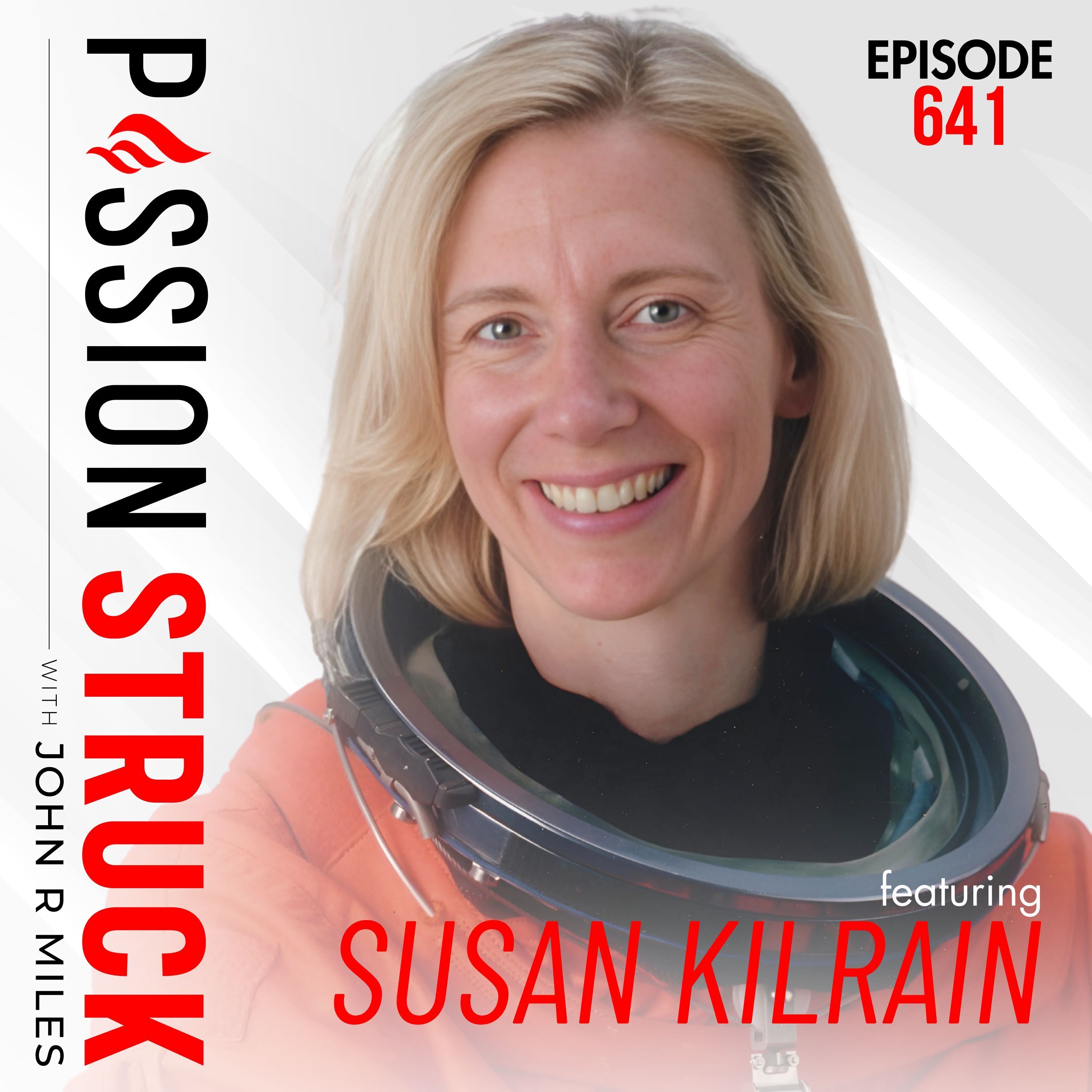
Passion Struck with John R. Miles
Astronaut Susan Kilrain on What It Really Takes to Get to Space | EP 641
01:07:54
Loading summary
Transcript124 lines
- [00:00]
Audible
Audible ignites your next action packed adventure with thrills of every kind. On your command, dive into the Silent Patient by Alex Michaelidis. A psychological thriller that will keep you guessing until the very end. Masterfully narrated by Jack Hawkins and Louise Freely. From electrifying suspense and daring quests to spine tingling horror and romance and far off realms, unleash your adventurous side with gripping titles. Discover exclusive Audible originals, hotly anticipated new releases and must listen bestsellers that hook you from the first minute. Because Audible knows there's no greater thrill than the one that speaks to you. Discover what lies beyond the edge of your seat. Start your free 30 day trial at audible.com wondery pod that's audible.com wondery pod.
- [00:47]
John R. Miles
Coming up next on Passion Struck.
- [00:49]
Susan Kilrain
I did approach my father and nervously thinking he wasn't going to support my dream and said, hey, I want to be an astronaut. And thankfully he said, you can be anything you want to be. I I think that's the key almost to every child's success and ability to dream is that they have somebody in their corner that says, yeah, I don't know what my dad was actually thinking. He was probably thinking there is no such thing as a woman astronaut, but or you're not smart enough or any of the above. But he just said, yeah, you can be anything you want to be.
- [01:20]
John R. Miles
Welcome to Passion Struck. Hi, I'm your host John R. Miles and on the show we decipher the secrets, tips and guidance of of the world's most inspiring people and turn their wisdom into practical advice for you and those around you. Our mission is to help you unlock the power of intentionality so that you can become the best version of yourself. If you're new to the show, I offer advice and answer listener questions on Fridays. We have long form interviews the rest of the week with guests ranging from astronauts to authors, CEOs, creators, creators, innovators, scientists, military leaders, visionaries and athletes. Now let's go out there and become Passion Struck.
- [02:03]
Welcome to episode 641. If you're new here, I'm your host John Miles and I want to thank you so much for discovering the podcast where our goal is to help you live like you matter. Today we're continuing our series on the power to do more. Not through hustle but or hyper productivity, but through purpose, presence and choosing what matters most. As I reflect on Tuesday's conversation with New York Times best selling author Oliver Berkman, one line keeps echoing, you don't have to do more to matter more. It was a freeing reminder that time is not a problem to solve. It's a space to inhabit. And in a world obsessed with war, Better, faster. What if the bravest thing that we can do is be fully present? But what happens when you've reached the mountaintop? When you've accomplished the impossible and suddenly the mission that wants to find you is over? That's exactly what we're diving into today with Susan Kilrain, a true trailblazer whose career has defied gravity in every sense. Susan is a former NASA astronaut, a US Navy fighter pilot, and only the second woman in history to pilot the space shuttle. She's logged over 470 hours in space, trained under extreme pressure and stared back at Earth from orbit. But what happens after you lose touch with the stars? In today's episode, we explore the relentless pursuit of a dream. From her first flying lesson at 17 to breaking through the glass ceiling of naval aviation. We discuss what it really feels like to sit on a launch pad rocket into orbit and return to a planet that suddenly seems so small. We discuss how Susan walked away from a high profile career to raise her kids. And what that transition taught her about identity, purpose and reinvention. And why today she's more passionate than ever about using her story to inspire, inspire future generations. I also have a personal connection to this conversation. When I was a midshipman at the Naval Academy, my physics instructor was astronaut Wendy Lawrence. I also have a personal connection to this conversation. When I was a midshipman at the Naval Academy, my physics instructor was astronaut Wendy Lawrence. I remember the moment she learned she'd been selected by NASA. It made the dream of spaceflight feel real to all of us. Susan lived that journey in her own right and I can't wait for you to hear how she continues to lead with courage, clarity and heart. If you've ever asked who am I? Without the title, what's next after success? How do I find meaning beyond the mission? This episode is for you. Don't forget to subscribe to my substack@theignitedlife.net I'll be sharing a deeper reflection from today's conversation with plus practical tools for navigating your own reinventions. You can also check out our merch line and find our playlist. If you're new to the show and want to dig in even more. And if you want to see this incredible dialogue in full, head over to YouTube @JohnRMiles. All right, let's get into it. Here's my high flying, deeply human conversation with astronaut Susan Kilrain. Thank you for choosing passionstruck and choosing me to be your host and guide on your journey to creating an intentional life. Now let that journey begin.
- [05:32]
I am so honored today to have Susan Kilrain join me on Passion Struck. Welcome, Susan.
- [05:38]
Susan Kilrain
Thank you, John. It's really nice to meet you.
- [05:40]
John R. Miles
Well, it's so nice to meet you and I can't wait to dive into this conversation. And I'm going to start here. You started flying airplanes, as I understand, when you were 16 or 17 years old, which is pretty remarkable. What drew you to aviation so early?
- [06:01]
Susan Kilrain
Well, growing up in Georgia, my dad was a medical student and we had, I have three brothers growing up and there was no money and to entertain us for free, he used to take us to the local airport to watch the airplanes take off and land. And I just fell in love with watching the airplanes and thought one day it would be really cool to fly airplanes. Of course, we didn't have any money, and it wasn't until I was a senior in high school, there was a program where seniors could present about how they would do something with one month of their time. If they were given a month off of school, what would they do that would prepare them better for the future? And I proposed that I would get my private pilot's license in that month. So my dad by then was out of medical school, had a little money, and I flew back home because I was at a, I was at an all girls private boarding school for the performing arts of all things. And anyhow, I went home and, and got my private pilot's license in one month.
- [07:10]
John R. Miles
Believe it or not, man, that's pretty amazing.
- [07:13]
Susan Kilrain
I flew two, sometimes three times a day. If the weather wasn't good, I just flew in the pattern. The first thing I did was took my written because that was going to take the longest time getting back. And so I got tutored really fast on the written and then I took the written and flew at the little uncontrolled airport at my, in my hometown.
- [07:37]
John R. Miles
And at that point in time was becoming an astronaut even a dot on your radar.
- [07:43]
Susan Kilrain
It was a lofty dream of mine. But I did approach my father and nervously thinking he wasn't going to support my dream and said, hey, I want to be an astronaut. And thankfully he said, you can be anything you want to be. And I think that's the key almost to every child's success and ability to dream is that they have somebody in their corner that says, yeah, I don't know what my dad was actually thinking. He was probably thinking There is no such thing as a woman astronaut, but. Or you're not smart enough or any of the above. But he just said, yeah, you can be anything you want to be.
- [08:22]
John R. Miles
Well, such pivotal advice, and one of the things I love to ask guests is about role models who shape their lives. And for me, I had a high school teacher who unfortunately said something to me that was a real negative that kind of shaped my life. But you credit a tough high school algebra teacher as being pivotal in your path. What about that experience? Change your trajectory.
- [08:50]
Susan Kilrain
Sarah Brown. She taught algebra and geometry. And until then, I didn't like math. I didn't think I was particularly good at math. And she was really hard math teacher. But for whatever reason, the way she taught clicked with me. And I think only six kids passed her class or at least passed the first grading period. And I had an A. And that sort of just became a source of pride and a challenge. And I 100% attribute Sarah Brown to my success going forward.
- [09:32]
John R. Miles
Was she part of the inspiration that made you want to do aerospace engineering, or did you pick that up somewhere else?
- [09:40]
Susan Kilrain
I want to say that at that time, I just wanted to be a pilot. The desire to become an aerospace engineer didn't take place until I was actually headed off to college and I went to Embry Riddle for my undergraduate degree. And somebody said, you're way too smart for aeroscience, which was the fly in degree for pilots, and you already have a private pilot's license and an instrument rating, so why waste all that money and time? And I got to thinking about it and I already knew I wanted to be an astronaut, so getting a degree in aerospace engineering made way more sense. And that's when I switched.
- [10:25]
John R. Miles
I've had a number of astronauts on podcast, and it's always interesting for me to hear their paths to becoming one. And a person we were talking about before you came on was Nicole Stott. And people sometimes think that their starting points are not going to get them to where they want. And I remember Nicole telling me that she ended up going to St. Pete Community College. And part of the reason she went there is because they offered a flight program so she could get her associate's degree and get a pilot's license at the same time. And then it led her to Embry Riddle like you did. But I think it's so interesting that so many younger people think in short terms about their starting point and that if they don't pick an Ivy League school or a top institution, it's going to stop them from Pursuing their dreams. What would be your thought on that for a listener who might be stuck in that cycle?
- [11:27]
Susan Kilrain
I think that most astronauts can prove that it's not a straight trajectory. If you read Scott Kelly's book, he was failing school and couldn't get into the Naval Academy. The beginning isn't the end is basically the message there. The beginning is just the beginning, and it's what you do from there. I was very fortunate. I got my degree in aeronautical engineering technically at Embry Riddle. But then I went to Georgia Tech for my master's degree in aerospace engineering, which set me up very nicely for test pilot school application in the Navy. And so it's really just a journey, and you come to a crossroad and you make a decision based on all the information you have. And it might be the right decision, it might not be the right decision, but there'll be other crossroads, and you just keep plugging along. As long as you can see a path to your dream, you just keep going.
- [12:36]
John R. Miles
And I wanted to ask you about one of the people you met along that journey who led you down the path of considering the Navy. I understand you had a chance to meet Dick Scobie, who was the commander of the Challenger mission. And he told you that if you wanted to increase your chances of becoming an astronaut, then you should consider the military. And for you, this was a huge leap, because at the time, there weren't many females flying aircraft at all.
- [13:06]
Susan Kilrain
That's true. I was working as an engineer for Lockheed in Atlanta, and my boss knew Dick Scobie, and my boss knew I wanted to be an astronaut, and I was very bored as an engineer. I was a wind tunnel project officer, and I would do a project in the tunnel. I'd write the report, and then I'd sit around twiddling my thumbs because then it was several weeks before I had another project. And talking to Dick Scobie, he said, if you want to really increase your chances of becoming an astronaut, you should join the military and become a test pilot. And that just sounded like the best idea ever to me, because I wouldn't be sitting at a desk anymore. I'd be flying, they'd be paying me, and I would increase my chances of getting selected as an astronaut. So I went off to the Air Force recruiter, and he politely said, I'm sorry, we're not taking any more women pilots this year. And that literally was the first time I'd been told no because of my gender. And I guess I had. Should have done more research and learned about the combat exclusion policy. And that's when I found out about it that women weren't allowed to fly a lot of the airplanes in the Navy and the Air Force. So they couldn't take very many women pilots.
- [14:25]
John R. Miles
Thinking about at that point in time, how did you emotionally process that? Being told that you had this dream and that because of policy you might not have the chance to pursue it? Was that, did you see it as a wall that had to be climbed? Or at the time, were you just really upset that those type of roadblocks were in place?
- [14:48]
Susan Kilrain
I almost always think of the word no as a challenge to find another way. And friend of mine said, why don't you go to the Navy recruiter? At the time I didn't even know the Navy had airplanes. But I looked it up and they did. So I went to the Navy recruiter and he said yeah, they would take me. And I had to wait for a class of women that had women in it. I couldn't go to aviation officer candidate school alone as the only woman. And so I showed up finally and there were six women in my class. And by day five, I was the only woman left. So I'm not real sure what the point of that was, but it worked out for the better. I, I think that the Navy was a better fit for me because I loved it, every bit of it almost. And yeah, no just means find another way.
- [15:42]
John R. Miles
I saw you and I had something in common in our Navy careers. We were both stationed in Key west and at the time, if I understand it, you were flying EA6s, I was.
- [15:53]
Susan Kilrain
Flying EA6a's not to be confused with the four seater EA6b and not to be confused with the A6, it's an A6 airframe, but we had electronic warfare pods on it. Basically it was a non combative mission of course because of the combat exclusion policy. And we would train our own ships to recognize and defend against enemy missiles. Basically.
- [16:22]
John R. Miles
Yeah, great duty station when I was there.
- [16:25]
Susan Kilrain
Not a bad place to live for sure, somebody had to live there. Not a bad place there too.
- [16:32]
John R. Miles
When I was down there, I was working for what's now called Joint Interagency Task Force south and we were doing counter drug interdiction, but there was a shoot down of an American aircraft over Cuba and this caused a worldwide crisis where all of a sudden we're at the epicenter of this and our two stars talking to the President and Secretary of Defense etc, figuring out how we're going to respond to this. So it got to be an interesting time for me to see real world situations play out in front of me.
- [17:10]
Susan Kilrain
Yeah, I don't know what year that was.
- [17:13]
John R. Miles
There was, yeah, like 96, 97, probably.
- [17:16]
Susan Kilrain
Yeah. When I was down there, a pilot defected to the States flying a Russian aircraft and landed there at the air base. So it's always exciting. You're only 90 miles from Cuba, so there's a lot of tension and a lot of excitement sometimes.
- [17:36]
John R. Miles
Well, that is for sure. Susan, in your career, I understand you've flown 30 different types of aircraft. Is there one for you that has been your ultimate favorite?
- [17:48]
Susan Kilrain
I have favorites, several favorites. For different reasons, of course. I flew. The F14, was the last airplane I was flying before I went off to NASA. And it is as fun as it looks in the movies to fly, but it was. It's big and it's a beast, and the cockpit is pretty large for me. So it was a lot of work flying. The F15 had the newer technology, so that was fun. F16, I fit in like a glove. It was awesome. And you could pull nine GS in an F16. That's just lots of different reasons to like different airplanes. And then you got the old stuff like the P51 or the. An old Piper Cub. Old stuff to fly. And those were fun, too.
- [18:37]
John R. Miles
Landing on an aircraft carrier is considered one of the most difficult maneuvers in aviation. And I read that you said it was one of the hardest things you've ever had to do until you became a mom. What made it so challenging?
- [18:53]
Susan Kilrain
Hard is scary. Very scary. The first time. One, you don't have an instructor with you. Nobody's dumb enough to fly with a nugget pilot landing on an aircraft carrier for the first time. And mind you, when I landed, all of my landings were in the daytime, relatively calm seas. But it's still very scary thinking that you have to be so precise in where you touch down. Everything has to be perfect. Your rate of descent, your airspeed, the point you touch down. And it's a boat floating in the ocean. It's small. I did luck out, though, because when the lead called out, see you, meaning they saw the aircraft carrier, I was flying formation, so I didn't have a lot of time to take my eyes off who I was flying off of. But I looked quickly and saw what I thought was the carrier. And literally, it was that proverbial postage stamp floating in the water. But as it turned out, I was looking at a fishing trawler. So by the time we flew over the aircraft carrier for the break and landing. That thing looked pretty big to me. But I did. I touched down, landed the first time, trapped. And then my whole brain shut down. It was like nobody was home. I was still at full throttle in case I had missed the wire. They're trying to give me instructions like to throttle back and to taxi, and I just wasn't. None of it was registering. And finally the air boss came on and said, we don't need extra power. Throttle back, wake up.
- [20:34]
John R. Miles
I'm not sure if you ever served with Slap Shot. Ted Carter. He was a backseater, and he was telling me that at this point, he was a squadron commander, and he decided to go fly with. With the newest pilot on their final check flight. He said they took off from the carrier and within 30 seconds lost an engine and started losing hydraulic pressure. And he. He told me that at that point he thought they were going to ditch, but he spotted a distant Runway that was going to be too short to land on, he thought. But he thought it was a better option than crash landing the plane in the ocean. So he guided this young pilot through the maneuvers, and they successfully landed. And I just think back to, how do you keep your calm in a situation like that?
- [21:27]
Susan Kilrain
That sounds a lot like my first F14 flight, my very first F4. Now you can imagine I'm in a squadron. The only female pilot on the East Coast. There were two on the west coast, and I'm the first one to come through after combat exclusion policy had been lifted. And the CO decides he's going to be my instructor. So there's not enough pressure as it is. But now I have the CO in my backseat, Cuddles Wyatt, Captain Wyatt, and he's a pilot, but he has no controls back there, so he can't do anything. He's just at my mercy. It's my very first flight. We take off, had an oil issue on one engine, had to shut it down. The hydraulics didn't cross over. So we're down one engine. The hydraulics, the attitude instrument, the attitude indicator. Went out to lunch. The weather came in. There's just one thing after another. And he's in my back seat trying to. I swear he would have crawled through that little hole between the cockpits if he could have and sat on my lap. But anyways, it all worked out in the end. I had to take an arrested landing back at Oceana. And it was really the best thing that could have ever happened to me because the CO now was like telling everybody, boy, she can handle the airplane.
- [22:45]
John R. Miles
No, that's What a terrifying few minutes.
- [22:49]
Susan Kilrain
It was awful. Literally awful. That was the second time my whole brain shut down after I landed and shut the engine down because you had to take the arrested land and do the hydraulic issue. Shut down right on the Runway. And my knees were just knocking as I was trying to get out of the airplane.
- [23:08]
John R. Miles
Man, I can only imagine. I have friends from my Naval Academy class who flew the F14 and then ended up flying the F18. And all of them tell me that they love the F14 because they said it was a pilot's plane and if you really were a great pilot, it would let your talent shine through. There was no. There was nothing that like in the F18. They said some of that could be compensated for, but they told me in an F14, you had to be a fantastic pilot to get the most out of the plane. Not sure.
- [23:41]
Susan Kilrain
Yeah, it wasn't a very forgiving airplane.
- [23:47]
John R. Miles
So, Susan, I want to share a story with you. Speaking of the Naval Academy, when I was there, I was going into my youngster year and taking physics. And my physics instructor was none other than Wendy Lawrence. And I remember later that year the exact moment she learned that she had been selected as an astronaut. But I want to go back to your algebra instructor, because for me, Wendy was that algebra instructor. She was so locked in and so professional and held us to such high standards that you never wanted to let her down. And so for me to see someone who has ended up becoming a mentor to me for decades personally step into this role that so many people just dream of, it made it for me so much more real. It wasn't just a distant dream and textbooks. It was happening right in front of me by seeing her do it. And I heard that the moment you got the call from NASA, you then went out for a run and then went and bought everyone at the bar drinks.
- [25:00]
Susan Kilrain
Her intel's pretty good.
- [25:04]
John R. Miles
Beyond the excitement, did you feel any immediate pressure that was creeping in at that point, like the weight of history as one of the first females selected into NASA?
- [25:15]
Susan Kilrain
Well, first of all, I did not expect to get selected at all. There were three women pilots interviewed. One from the Navy, and that was Pam Melroy. And one from the one from the Air Force. That's Pam Melroy. And then one from the Navy. And of the three, I thought I had the least chance of getting selected because I was the most junior, had the least amount of experience, and that they would never select more than one. I thought the other Navy woman had would be the number one pick. I had it Wrong on all accounts. They did take two and she wasn't one that was elected. So what do I know? And once again I didn't really think about it from being a woman's point of view. By then Eileen Collins had already flown as the first woman pilot of the space shuttle, so the pressure was off. And that seemed to be almost always the story of my career. Although I was the only woman in the F14 squadron coming through at the time. But Carol Holgren and Carrie Lorenz had already qualified out on the west coast by the time I was finishing up. So I just slipped through those doors some other woman opened.
- [26:29]
John R. Miles
Still had to be just an amazing feeling. And I, I had mentioned Ted Carter, slap shot. Ted ended up becoming a vice admiral, was superintendent at the Naval Academy and his aide was a young officer named Kayla Barron at the time. And Kayla had this aspiration of potentially becoming an astronaut, but she was a submariner. And she said to him, I don't think I have a shot. What does it take to be an astronaut? And he said, well Kayla, the first thing you have to do is apply or you have no shot at all. And he said the second thing is being in a submarine probably simulates the conditions that you're going to have to face being up in space pretty well. And third, you have a PhD in nuclear propulsion from Oxford, so I think you have some pretty good weight going behind you. But it just, it just showed me when he told me that story how much we self doubt ourselves when we're going after the things that we aspire to get.
- [27:33]
Susan Kilrain
Yeah, she was a perfect fit and ultimately of course she got into the astronaut office. But you do have to apply first. And he was right on every account. There's not a lot of difference between a submarine and a spaceship other than the fact that we have windows.
- [27:53]
John R. Miles
I was talking to, I can't remember his name, it might have been Dave Bowman off the top of my head, but he was a submariner who became an astronaut and he actually told me because I've served on some submarines and you can never get that smell out of your mind. And he actually told me that the smell on the ISS is the same smell.
- [28:13]
Susan Kilrain
The same.
- [28:15]
John R. Miles
Because they use the same rebreathers. Yeah, so he said the first time he opened the door he went through the same experiences that I did.
- [28:23]
Susan Kilrain
Yeah, it's when you're up there though, you're living in your own smells and you don't really notice it so much. But I always felt sorry for the person on the Ground who opened the door to welcome us home after two weeks in space. Because every smell generated, food, bodies, everything, it's, it just stays there. So it must be horrific.
- [28:53]
John R. Miles
So NASA astronauts undergo some of the most rigorous training in the world. I wanted to ask what was one of the most unexpected or shocking parts of the training that you couldn't even prepare for or people don't expect how to prepare for.
- [29:11]
Susan Kilrain
Wow. Honestly, coming out of test pilot school, the space shuttle was just another airplane to learn and fly. And you get pretty good at that at test pilot school. So the actual shuttle stuff was not that hard. It was long days and yes, demanding, but pretty typical of learning to fly any new airplane. It was more the fact that every day there's 12 hour days and there's no glamour in it. I think that the public thinks that there's a. Astronauts are walking around all glamorous and they're doing all kinds of cool stuff, but a lot of it is walking around in our long underwear doing emergency egresses out of a, out of a simulator. It's just, but it's day in and day out of training and I didn't have a family of my own at the time, so I could dedicate all that time without feeling the push and pull of your family at home. But I can imagine having a family at the time, it would have been really hard.
- [30:25]
John R. Miles
There's a reason for all that repetition. I remember Chris Cassidy, who we both know, telling me the story of his spacewalk that he did with Luca Parmatino, where it went horribly wrong. Luca got started getting some moisture in his space suit that was potentially going to cause him to suffocate. And when I talk Chris to Chris about it, he just tells me in the way Chris always does, he goes, I just let my military SEAL training and the training I got from NASA go into action. He goes, I didn't even think about it. I just did everything I did from muscle memory. And because we had simulated so many things, I knew exactly what I needed to do. So I guess there's a reason for all that training that they make you do.
- [31:12]
Susan Kilrain
Yeah, it's incredible from a pilot's perspective. I didn't do a spacewalk, but the launches and the re entries and landings, you train non stop over and over again with basically every emergency that they could possibly dream up and one emergency on top of the other. And yes, by the time you launch in space, you're, you feel very prepared and if anything were to go wrong, you would react just automatically.
- [31:47]
John R. Miles
Susan, you End up training for years for your first mission, like many astronauts do. But the space shuttle program is unpredictable. And one of the things that astronauts always tell me is no one knows the exact procedure for how astronauts get chosen. But there are a whole bunch of dimensions that get into it. Even geopolitical, how your personalities correspond with other people. You're flying with so many, what the mission is about. Did you ever worry that you actually might never get to fly?
- [32:19]
Susan Kilrain
Never worried about that at all. There have been very few astronauts that completed training and didn't get to fly. One or two passed away during training or on a flight somewhere before they had an opportunity to fly. I think there's only. At least in. In my time frame, there weren't any that didn't get to fly due to performance or their personality. Now there's probably one or two now because we're flying a lot less. But if you stick around long enough, you'll get to fly. And you can't control how many astronauts fly in a year. That's not. That's well above our pay grade. So I felt fairly confident I would get to fly because the shuttle was flying five, six times a year. They were short on pilots and our class was brought in with 10 pilots. And I was pretty sure and all of us did. All the pilots flew more than once if they wanted. And so I was pretty confident. What I didn't expect was that I'd be the first pilot to fly in the class. That was a surprise. And I'm absolutely positive it had nothing to do with my stellar performance in any way. I'm pretty sure Jeff Ashby, the class leader, would have been the first pilot to fly. But he pulled himself out of the rotation because his wife was. Had cancer. And so he didn't want to fly because he wanted to be there for her. And I'm thinking they probably had four or five pilots already penciled in for flights. And I was the. Maybe the next person. Well, let's just take her. We don't have her at doing anything. But there is more to it than that. Obviously the commander of the flight has to put his team together or at least have a say in personalities and make sure that you have a combination of rookies and experienced guys and that there's enough to expertise to do everything the mission called for. But yeah, nobody knows how that's all put together.
- [34:28]
John R. Miles
I just have to ask. You were going into a very dangerous profession when you were thinking about going up, did you know the design principles that after their expectations, I think were that one space shuttle was going to not come back. It was a number that I couldn't believe. I think it was like one out of. Was one out of 100. Maybe even less than that.
- [34:55]
Susan Kilrain
Was not slightly less.
- [34:57]
John R. Miles
Slightly less. And that was the design parameter. Did you all know all these things before you went up?
- [35:04]
Susan Kilrain
I did. I knew. But we had just lost Challenger, not all that much long ago. So I figured the odds were in my favor.
- [35:12]
John R. Miles
That's one of those things that after that happened, the scrutiny is going to.
- [35:15]
Susan Kilrain
Be so high that of course, statistics don't work like that. You toss a coin, and every coin toss is independent. But in fact, I. Both of my missions were on Columbia, and it wasn't that long afterwards that we lost Colombia, but it had nothing to do with Colombia. It had to do with the external fuel tank. But, yeah, we flew 200 and I don't remember how many flights, and we lost two shuttles. So the bean counters were right. Or should I say statisticians? Statisticians, yeah.
- [35:49]
John R. Miles
Well, let's talk about your first mission, STS 83. So my background research said as you were approaching this flight, you had two thoughts that crossed your mind. Don't screw this up, and when do I get to go to the bathroom? Which is hilarious, but also deeply human.
- [36:07]
Susan Kilrain
Yeah, people ask all the time, were you scared? What was going on in your mind? But honestly, what was going on in my mind was, don't screw it up. Especially on the launch pad. Because it had happened that a pilot, not to name any names, had not done all the things a pilot has to do. I think he did it in the right order, but not in the right amount of time. And it scrubbed the launch. And I definitely didn't want to be that pilot. And I also. There's a lot to do for a pilot on launch. And then the whole bathroom thing is really, seriously. Everybody said the quickest way to the next pit stop is to launch, because if you scrub a mission, it takes a long time to save everything and get out and go to the restroom. And I'm sure everyone knows that astronauts wear Depends basically when they launch and reenter. But I had taken said Depends home and found out that even in the privacy of my own bathroom, I could not pee in my pants. I just couldn't do it. And so I didn't have any confidence that was going to be what I would do. And, yeah, getting on orbit and activating the space toilet was important to me because it's a long time. There is a bathroom. It says on the door, last bathroom before space or something as you go up in the tower to get into the shuttle. And so there is one there. It's not pretty, it's not really meant for women, but you don't want to pass it up. So yeah, that's on your mind.
- [37:56]
John R. Miles
So I don't want to go that far into the two missions because I've heard you cover them a bunch of times on podcasts and people can go listen to them any anywhere else. But for the listener, your first mission, the one we talked about, SDS 83 was cut short. I think it lasted four days. And then you got a second chance. Not too much, not too long after that. STS 94, where everything went right, you got to fly, the scientists got to perform their experiment. So they got the added advantage of getting to fly twice. But what I wanted to ask you about is we often talk about all the things about going up to space and you prepare for weightlessness, you prepare for the sickness that you're going to have for the first few days. But how do you prepare emotionally for returning to Earth? Was there a psychological adjustment period for you?
- [38:52]
Susan Kilrain
I don't think there was a psychological adjustment about coming back to Earth. And you're just happy, I think really honestly happy to return to parody of Earth. And after a while you tend to miss gravity, you miss your family, you miss a good shower, your good food and whatnot. So for me, I don't that didn't cross my mind at all. And honestly, from a pilot's point of view, the launches and the re entries and landings were where it was all at. The orbiting Earth was just fun. Great view. I did very little science because I'm not a scientist. Rendezvous missions would have been more exciting just because there's the added piloting that you do for that. I don't think I had to prepare for coming back to Earth at all.
- [39:46]
John R. Miles
Yeah, I guess where I was going with it is some astronauts I've spoken to said that they get this post space flight blues because they feel like there's going to be this let down that once you've seen what you've seen up there, you might not ever get to see it again. And so that's what I was where I was going with it.
- [40:08]
Susan Kilrain
There's a lot of cases of astronauts that have come back to Earth and it was their last flight and they had never planned for what was going to happen on the other side of NASA and there is a letdown. Get this rock star status for a short period of time and Then you're back to being nobody, really. And even Buzz Aldrin, who walked on the moon, he had trouble when he didn't, wasn't going to fly again. And he sunk into depression and alcoholism and had a hard time dealing with that. And yeah, it's an issue for a lot of astronauts. For me, I chose to leave NASA because I had other dreams, other goals. I wanted a family. I, smartly or not, married a Navy seal. And so at some point I chose to leave the astronaut office so that we could keep our family together. We had baby two on the way when we moved in for the first time together.
- [41:15]
John R. Miles
I've heard you say that part of your thinking here was as you were raising your family, you had a very dangerous job, but your husband had one that was even more dangerous.
- [41:25]
Susan Kilrain
Yeah, we weren't able to get life insurance, that was for sure. And nobody was intentionally trying to kill me in my job. So, yes, I think they were both dangerous. And I couldn't wrap my head around what that would mean for our children. So I decided to stay on Earth, at least in the short term. It didn't look like he was leaving his job anytime soon.
- [41:52]
John R. Miles
At the time, did you think it was a temporary break or did you know it was going to be more permanent than that?
- [41:59]
Susan Kilrain
At first I just went up to NASA headquarters and it was a temporary break. But I don't know if you recall, Pete Oswald was a SEAL and he died. He was a CO down in Puerto Rico and he died in a training accident. And so they fast filled that with my husband and we had two kids at the time. So my decision there was. That was the time I had to make a big decision. Either return back to Houston and the astronaut office and fly in space some more, or head to Puerto Rico and leave NASA and rejoin the Navy. And ultimately I chose keeping our family together.
- [42:44]
John R. Miles
Well, I know for high achievers, we often struggle with identity shifts when we have to step away from a big career, especially one where we had such a lofty goal that we achieved. Did you ever feel like a piece of you was lost in that transition?
- [43:04]
Susan Kilrain
I think that I allowed myself to become my kid's mother. And yeah, you lose a lot of identity in that. I'm not saying it's right or wrong, but it did feel a lot like Groundhog Day, I will say. And I longed for that piece of myself where I was doing fun new things and using my brain for things other than trying to figure out how to get my tamper throw tantrum throwing kid up off the grocery store floor.
- [43:42]
John R. Miles
Well, I can't imagine being one of your kids. So what do your parents do? Well, my dad is this and my mom was an astronaut.
- [43:52]
Susan Kilrain
That's where they're at now. In the earlier days they just, they would just say it and then the teacher would inevitably not believe them or something. And then they stopped telling anybody because that everybody made a big deal out of it. And then it became ho hum. But now that they're all at the phases where they're just out of college, in college, going to college, there's, I think there's self pressure that they put on themselves that they have to do something amazing and achieve something great. And we try really hard not to put that pressure on them. But I have a daughter, we have a daughter, our oldest is in Navy flight school right now in Pensacola and she had never flown an airplane before. And here she is in Pensacola getting graded on these flights and some of them don't go well. And then she's crying and thinking what if I fail? And that's where the pressure is now coming in for her is what if I fail? And I'm like, well then you fail and you move on. I said she can't compare herself to me. I had a thousand flight hours going into now going into the Navy, she didn't have any. So handles it differently.
- [45:12]
John R. Miles
That's a big difference. But I think it's an important topic because I think that there is such a high achievement culture right now that kids or your kids age, my kids age are feeling, I know my daughter felt it in a big way and similar to you and your husband, we as her parents were not trying to put that pressure on her. It was self created and I think that's what's happening to a lot. So how have you seen yourself as a parent try to work through that? So because I agree with you, if you're going to fail at something, fail at it quickly so you can move on to the next thing and improve. But I think when you're young you don't think about it like that. I think that comes from decades of experience, how many opportunities you have to rebuild.
- [46:03]
Susan Kilrain
I agree and I honestly meant that being a parent is way harder than piloting the space shuttle. Honestly, without a doubt, their emotions are your emotions and their failures feel like you're failures. And I did learn from my father. I encouraged them to do whatever it is they wanted to do. Even if I could foresee there was some failure coming their way. It's hard to watch your kids Go down a path where they're going to fail, but you can't protect them from that because the earlier they start learning how to fail, pick themselves back up again and move on, the better. That's a valuable lesson that I think that everybody should let their kids learn on their own.
- [46:49]
John R. Miles
Well, and I think they're. The younger they are to learn some of those lessons, the better. Your failures as you get older have far more consequences than when you're younger.
- [46:58]
Susan Kilrain
Yeah. And you're typically much harder on yourself the older you get. You have a harder time forgiving yourself your mistakes the older you get.
- [47:10]
John R. Miles
Oh, that is so much truth to that. I want to talk about this realization that your kids are now getting older and you're ready to start a new chapter. And a lot of people come to passion Struck just for this element. Like, how do you reinvent yourself? I have so many people who are in the business world right now or coming out of the military saying, I don't even know how to approach this next chapter of my life. How did you go from being a Fortune 50 executive to a speaker, author, podcaster, et cetera? And in your case, you've now stepped into speaking, being a children's author, doing children's education, business leadership, board roles, etc. But it didn't start there. What was the turning point for you when you realized you were ready for a reinvention?
- [48:03]
Susan Kilrain
I did. When I finally retired from the Navy, I became a stay at home mom. And for 10 years, that's all I did. So you go out of the workforce for 10 years, it's challenging to reinvent yourself. And I just started small and speaking didn't come naturally to me. Like many people, they're speaking in front of a crowd is scary, but you face it head on and go for it. And so just little by little, and then a couple of doors opened up. I got asked to be on a board, and really it was by a family friend. So I know he was throwing me a bone there, but it took that really to get my foot in the door in my first board. And from one became the other, and one thing led to another. But you're. But where's your passion? What do you really want to do? And I got asked to be part of these STEM camps that work with middle school kids. And that's where I get my most joy, is doing these STEM camps. But audiences too. When you connect with an audience for whatever reason, it's very rewarding for me. I feel like I've inspired in some way and that's the whole point is now I'm at that phase of my life where I want to give back and want to inspire the next generation or guide or mentor or sponsor in any way I can. And so that's where I'm at.
- [49:37]
John R. Miles
I want to talk to you about your children's book, because I have written one and I'm going through the process right now of getting it published. What was the inspiration for you with your children's book? And maybe you can tell the audience a little bit about it, what it's about, etc.
- [49:52]
Susan Kilrain
It was during COVID We had all the kids at home, but a lot of time on our hands. And I thought I would write more of a memoir type book, not a children's book. And then I thought, you know what? I've always wanted to write a children's book. Let me set this aside. Because I was struggling with it. And I said, write that children's book I've always wanted. And I had seen a Facebook post from somebody who I didn't know, and he had co authored a children's book. And so I cold called him and said, hey, would you help me get this out the door? And he knew a publisher, he knew a woman in the UK who's a CPA who does space art on the side and thought she might be interested in illustrating it. And that's how it all came together. And it's an unlikely astronaut. And the message is, if I can grow up in my life and become an astronaut, kids today can grow up to do anything they want to do. And hopefully it inspires kids to reach for their very own stars.
- [50:58]
John R. Miles
I love the message and it resonates with what Wendy Lawrence talks a lot about. And that is so many people face setbacks, and at the first set, first setback, they feel like their dream is over. And I love how she goes into her own journey when I've talked to her about going to MIT and almost flunking out and having to double down to make her career a reality. And I know that's something she tries to bring to the younger generation. Was that part of the message you were also trying to convey?
- [51:32]
Susan Kilrain
Absolutely. Setbacks, they're just obstacles to figure out a way to go around. And so, gosh, you can't quit you. Absolutely. If you have a goal or dream out there, determination is the number one thing you need to have. It takes a lot of determination and resilience. Luck plays a big part in it, too. It's all those things. And I think NASA gets about 18,000 applications for every time they take astronauts. And so the odds were very slim I was ever going to make it. So I always like to point out how important it is to enjoy the journey to getting to your lofty dream, whatever it may be, because that may be it, you may not make it, and I very well may not have made it to space, but I absolutely love the journey.
- [52:32]
John R. Miles
Susan, there's something I wanted to ask you about. Oftentimes a spouse can feel like they're living in the shadow of their significant other, whether it's the male or female, who sometimes can be seen as the more powerful role by society's standard. And in your case, your husband became an admiral and he's the only admiral of his rank in the SEAL community. I have never met. Mitch Bradley was my second class when I was at the Naval Academy, and Jeremy Williams, who will probably hopefully become a three star, was my classmate. But I know Admiral olson and Admiral McRaven and. Etc. But I'm guessing you go into social circumstances and people don't know who you are. And when I look at the two of you, you have equal, if not higher footing than your husband given all the things you've accomplished. Did you ever. I'm not sure if I'm explaining the situation correctly, but did you ever feel like. Like people were looking at you, like in his shadow?
- [53:38]
Susan Kilrain
Sometimes I relished it. It's funny you bring that up because inevitably we would move to a new duty station, calling a king on campus, and eventually word would get around what his wife did and there would be a definite shift in how many people wanted to talk to me versus how many people wanted to talk to him. And so he always handled it really well, made funny jokes about it at the beginning, opening remarks. He would say, but I'm really sure you're here just to talk to my wife. It's been a fun joke in our family. I never felt overshadowed by him. I'm very proud of him. I always knew what I did in, in my mind. And sometimes I just like being his wife, period. End of story. And sometimes people know and they'll come up and talk to me about what I did, which is fine too. But sometimes I like flying in under the radar.
- [54:38]
John R. Miles
That's what I would like to do at times.
- [54:40]
Susan Kilrain
It's his event. In all the glory. Go to him. We've done a few tag team speeches for the Navy SEAL foundation, and they're pretty comical because you know how wives and spouses can be. And he'll Say, I can't believe she piloted the space shuttle. She can't even drive a car. That sort of thing. No, I think we're very even keeled about it. Neither one of us thinks we're that much to write home about. I'm always tickled when people want autographs, as is he. But he's in my place. He's in the very place right now where he came out in charge of thousands of people. Vice Admiral, Navy seal. And then don't let the door hit you on the way out. Yeah, now what?
- [55:34]
John R. Miles
Assistant to the Chairman of the Joint Chiefs of Staff.
- [55:36]
Susan Kilrain
Doesn't get much higher than that for a seal. And then you're like, now what? No, he's still working his way through the now what.
- [55:45]
John R. Miles
And just going back to that. Since you've been there, like, when you're facing that decision, what would be your advice for someone who might be listening?
- [55:53]
Susan Kilrain
The now what and now what is don't be afraid to jump in and do something that you have absolutely no experience in. I had not ever been on a board. Learn as much as you possibly can about being on a board. I am now a partner in a venture capital group. I know nothing about what that means, or at least I didn't know anything about what that means. But don't be afraid of doing something completely randomly different. And it may not work out or you may not enjoy it, but it's all an experience, a learning experience and something to put on your resume. And gosh, it's learning. I don't want to keep learning something new all the way until I die learning new things. I this isn't learning new things. You have to have challenges in your life. And so my daughter asked if we could climb Mount Kilimanjaro together. My youngest, she was 15. I said, okay, I'm not sure how I'm going to train for that at sea level, but we did it.
- [57:01]
John R. Miles
Well, that is awesome.
- [57:03]
Susan Kilrain
There's always another mountain to climb or another goal out there.
- [57:09]
John R. Miles
Susan I wanted to end with going back to NASA and the space program. As someone who was within NASA, you obviously knew there was going to become an ending point for the space shuttle at some point, and that regardless, we were going to have to move to something else. I personally, when the decision was made, didn't think it was going to be a move to commercial space travel. I thought NASA would continue on developing their own program. But what has surprised you most about now that we've moved to commercial delivery, and that'll be part one of the Question, so I'll let you answer that.
- [57:50]
Susan Kilrain
I think they haven't totally taken the government out of it, but putting it on the commercial side makes things happen faster. SpaceX came along fairly quickly. They exploded a lot of rockets on their way there, but eventually they got one that worked. And that time in between shuttle retiring and SpaceX being able to fly Dragon up to the International Space station, we were 100% dependent on the Russians getting us to and from this International Space Station. That was not a sustainable business model because the price doubled when the space shuttle retired for using the Soyuz. And So we needed SpaceX to come along and get us to and from the International Space Station. And I think that the relationship has worked out really well.
- [58:48]
John R. Miles
The only thing that surprised me, given they were given over two thirds of the budget, was that Boeing didn't beat them to the punch since they had such a, I would have thought, head start.
- [58:58]
Susan Kilrain
They did have a head start and they're still struggling. And I'm not sure if and when it's going to go again. They say it is, but speaking of.
- [59:08]
John R. Miles
That, Sunny Williams is someone else I know. If you were thinking about her shoes, talking about being on an accidental mission, I'm sure knowing her part of her was like, overjoyed because she got to stay up there longer and experience it longer. But after a while, what would be going through your mind?
- [59:29]
Susan Kilrain
For me personally, it would have hit hard. But for Sunny and Butch, who both of whom I know Sunny since before NASA days, Sunny for sure is in her happy place. Not only did she get an extended stay on the iss, she got a spacewalk and now holds the spacewalk record. And so she's doing just fine. I know that the media has put it out as they're stranded, they're stuck, we've abandoned them, how are they going to eat, blah, blah, blah. But they had supplies up there for them. They knew this was a possibility before they launched. So, yeah, it's sad. It's mostly sad for the folks left back on Earth who were expecting them to come home a lot sooner. It's like a military deployment that just won't end. But they're happy. They're in their happy place.
- [60:26]
John R. Miles
Yeah. I'm not sure if you even knew this, but Sunny, while she's been up there, became a distinguished graduate of the Naval Academy.
- [60:32]
Susan Kilrain
I did know that. I was hoping to go to her, the ceremony, but I'm not sure she's gonna make it. Yeah. And even if she is back, I'm not sure she's gonna be able to go. She will have just gotten back. Yeah.
- [60:49]
John R. Miles
It is amazing. And then the last thing I wanted to ask you is about the Artemis program because we've got two milestones coming up. One is to get back to the moon, but then the bigger one is going to Mars. And when you start getting into both of these, we're talking about potentially even longer duration missions, especially for Mars. And I remember talking to Chris Cassidy about this and he said, you don't realize, like the complexity of the Mars mission because we have landed a spacecraft there, but we've never launched one back to the, to come back home. And now you're talking about something that's going to be the size of, of a school bus or larger that we're going to have to land and then relaunch it. If you were one of these Artemis astronauts, like, what. How is it different for them than it has been for astronauts in the past?
- [61:45]
Susan Kilrain
I think one of the biggest differences right now is flights are few and far between. When I was in the office, there were 120 active astronauts. I think they have about 4:40 now. And some have been waiting more than six years for their very first flight.
- [62:03]
John R. Miles
Like John Kim.
- [62:04]
Susan Kilrain
Yeah, exactly. That's tough. And then now with everything going on in our country, there's got to be the feeling, what if things, what if we don't go back to the moon? What if Artemis is canceled? So all of that is really hard on the astronauts in the astronaut office now. There are so many things that have to be worked out on taking people to Mars that currently don't have answers. It's, they can be done, but they haven't solved those problems just yet. It's a long mission and he's right. We need to first land something on Mars, anything, and then relaunch it just to prove the technology we now, we didn't do that when we went to the moon. And I'm still to this day amazed that all of that went off successfully. We launched people to the moon and they made it back alive. But we were, it was a different time then and we were in a race mainly out of fear. And so we don't have that currently, although I'm not sure we shouldn't because we're not the only game in town right now. China is. China's gonna go to the moon whether we do or not.
- [63:28]
John R. Miles
What do you say to the people who bring up, well, we got to the moon in the 60s, how. Why is it so difficult for anyone to get back?
- [63:38]
Susan Kilrain
Because when we did it back then, our level of safety, our risk was completely different. We were willing to take much more risk back then to get the job done than we're willing to take now. And we're looking to go to a different part of the moon. We're looking to go to the polls where we hope to capitalize on some of the resources there. And we're not just looking to go to the moon, walk around, collect a few rocks and come back. Not to diminish what they did back in the 60s because that was still a miracle, but we're looking to put a presence on the moon and shuttle people back and forth to the moon. And so it's a whole different complex problem.
- [64:26]
John R. Miles
Yeah. Likelihood is you need a propulsion system to get to Mars, which is most likely, unless we invent something different, going to be nuclear. So. So you're going to have to develop some capability to have a nuclear refueling or some type of fueling capability on the moon, which means you're going to have to have permanent civilization up there with structures and everything else to sustain that type of living. So it's a big deal.
- [64:51]
Susan Kilrain
If we continue to not allow nuclear propulsion to launch from Earth, then you're either looking at a third three year round trip ticket to Mars and back, or you need to go to the moon first and propel it from there, or go somewhere first and propel it from there because it just takes too long with conventional fuels.
- [65:16]
John R. Miles
Yes. Well, Susan, we've discussed a lot today and it's been a really fun conversation. What's next for you? What excites you most about this, this next chapter of your life that you're currently in?
- [65:30]
Susan Kilrain
Well, I am actually writing that book I started so long ago, so that's taking up most of my time. I still, I do speaking engagements, the board. But for some, something new in our lives is my husband and I have started traveling together and that's where at that point in our lives where we've done a few trips, just the two of us without any kids, it's this kind of sweet spot between the time your kids are independent and your kids have kids.
- [66:04]
John R. Miles
Take advantage of it while it lasts.
- [66:06]
Susan Kilrain
Absolutely.
- [66:08]
John R. Miles
Well, Susan, it was such an honor to have you today. Thank you so much for joining us on Passion Struck.
- [66:13]
Susan Kilrain
It's my pleasure, John. It was nice talking with you.
- [66:16]
John R. Miles
And that's a wrap on this I inspiring conversation with Susan Kilrain. Her story reminds us that even when you've reached the highest altitudes, life's most meaningful moments are still grounded in who you choose to become next. As you process this episode, ask yourself what happens after you achieve your greatest goal? Can you walk away from identity defining work and still matter just as deeply? And how do you create a life that aligns with your next chapter, not just your last? What Susan shows us is that reinvention is not a fallback, it's a courageous act of leadership and that strength with heart is what carries us through every phase of growth. If you found this conversation valuable, please leave a five star rating and review. It helps others discover the show. Share this episode with someone navigating a big life change or wondering what comes next and check out the full video@YouTube.com rmyles you can find all links and resources mentioned today, including Susan's children's book, speaking and educational work@passionstruck.com and if you're part of an organization, school or leadership team looking to inspire change, purpose or reinvention, visit johnrmiles.com speaking I'd love to explore how we can bring this conversation into your community. Coming up next on Passion Struck, I have a beautifully insightful episode with Helen Yi Plin on emotional transformation, energetic healing, and the soul's journey towards authenticity.
- [67:44]
Helen Yi Plin
The first exercise I will ask people is if you already have a billion dollars in your bank account, you don't worry about money. You don't worry about a thing. You are healthy, happy, everything. What would you do? Will you still doing this exact thing that you do today? I will still meditate. No matter how much money I have, I still will tell people they should go meditate.
- [68:07]
Susan Kilrain
Same thing.
- [68:07]
Helen Yi Plin
If you can answer that question with clarity, that's really close to what you're here to do. I will still do painting. No matter my painting sells or not, I'm still painting. So that's like you know that you are in alignment with your soul's purpose.
- [68:23]
John R. Miles
Until then, chase the dream, reinvent the self and live life. Passion struck.